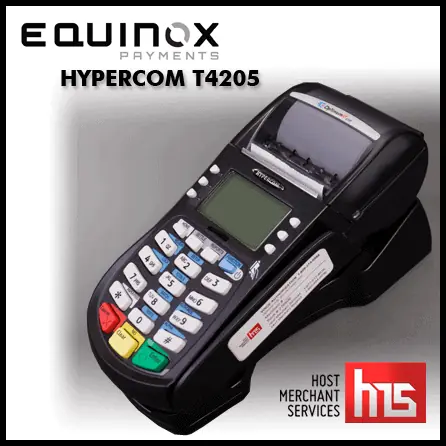
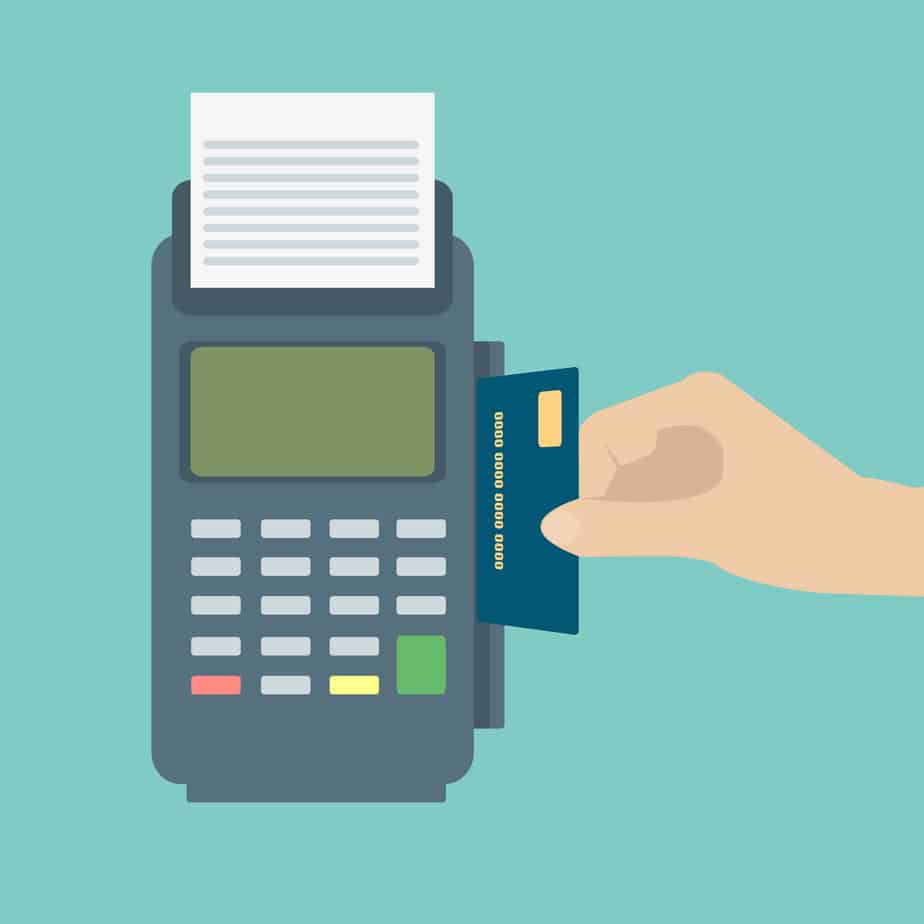
Host Merchant Services wants to take a quick moment to remind readers of The Official Merchant Services Blog, as well as its own merchants of a change that took place in 2011 with Hypercom — the company that manufactures one of the most popular brands of point of sale terminals that HMS provides.
In October, 2011 it was announced that Hypercom USA formally changed its corporate name to Equinox Payments, LLC. In addition to selling new Equinox terminals, software and services, the company continues to support the very popular Hypercom-branded products in the U.S.
Hypercom US was sold to private equity firm The Gores Group in August 2011 as part of a deal to allay competition concerns when Verifone acquired the rest of Hypercom’s global business.
Former Hypercom product names have remained unchanged, but products are now showing up in marketing materials as branded Equinox or co-branded Equinox and Hypercom. Equinox says they will maintain the Hypercom brand for an extended period of time to reinforce Equinox’s continued support of Hypercom-branded products and services. So it’s been a slow evolution, which is why HMS is offering this reminder. We wish to clear up any confusion with our merchants regarding Hypercom and Equinox due to the popularity of the T4205 Hypercom terminal among our various customers.
The Companies Involved
Equinox Payments, headquartered in Scottsdale, Arizona, is a leading payment terminal manufacturer and related secure software provider. Through its commercial offices in the United States, Latvia, Manila and Australia, and a service repair facility in Mexico, Equinox’s more than 200 employees deliver secure payment terminals, applications and services to hundreds of thousands of merchants. Equinox is a portfolio company of The Gores Group, LLC.
The Gores Group, LLC is a private equity firm focused on acquiring controlling interests in mature and growing businesses which can benefit from the firm’s operating experience and flexible capital base. The firm combines the operational expertise and detailed due diligence capabilities of a strategic buyer with the seasoned M&A team of a traditional financial buyer. The Gores Group, which was founded in 1987 by Alec E. Gores, has become a leading investor having demonstrated over time a reliable track record of creating substantial value in its portfolio companies alongside management. The firm’s current private equity fund has committed equity capital of more than $4 billion. Headquartered in Los Angeles, The Gores Group maintains offices in Boulder, CO, and London.
This is the latest installment in The Official Merchant Services Blog’s Knowledge Base effort. Well we want to make the payment processing industry’s terms and buzzwords clear. We want to remove any and all confusion merchants might have about how the industry works. Host Merchant Services promises: the company delivers personal service and clarity. So we’re going to take some time to explain how everything works. This ongoing series is where we define industry related terms and slowly build up a knowledge base and as we get more and more of these completed, we’ll collect them in our resource archive for quick and easy access. Today’s terms are card-not-present and card-present.
Card-Not-Present
A card not present transaction (CNP) is a credit card purchase made over the telephone or over the Internet where the physical card has not been swiped into a reader. We touched lightly on the topic in our Knowledge Base Entry on MO/TO found here.
CNP can be a major route for credit card fraud. If a fraudulent transaction is reported, the bank that hosted the merchant account that received the money from the fraudulent transaction must make restitution. Whereas in a swiped transaction the bank that issued the credit card is liable for restitution. Because of the higher risk, CNP transactions have a specific set of rules that is more restrictive than the rules for retail merchants.
CNP merchants must take extra precaution against fraud exposure and associated losses, and they pay higher rates for the privilege of accepting cards. Fraudsters bet on the fact that many fraud prevention features are not used for small transactions. Merchant associations have developed some prevention measures, such as single use card numbers, but these have not met with much success. Customers expect to be able to use their credit card without any hassles, and have little incentive to pursue additional security due to laws limiting customer liability in the event of fraud. Merchants can implement these prevention measures but risk losing business if the customer chooses not to use the measures.
Card Present
A type of transaction in which the card is present and is swiped through an electronic device that reads the contents of the magnetic stripe on the back of the card. Most transactions run through a payment processing terminal are of the card present type and that’s essentially what the terminal is there to do — validate the presence of the card by recognizing the consumer is present at the point of purchase.
This is the latest installment in The Official Merchant Services Blog’s Knowledge Base effort. Well we want to make the payment processing industry’s terms and buzzwords clear. We want to remove any and all confusion merchants might have about how the industry works. Host Merchant Services promises: the company delivers personal service and clarity. So we’re going to take some time to explain how everything works. This ongoing series is where we define industry related terms and slowly build up a knowledge base and as we get more and more of these completed, we’ll collect them in our resource archive for quick and easy access. Today’s term is:
Partial Authorization
Partial Payment Authorization is a specific type of transaction process based on new rules implemented by the card associations MasterCard and Discover in 2011.
MasterCard and Discover have implemented these rule changes that require merchants in the U.S. to support Partial Payment Authorization. Host Merchant Services is here to guide you through this change with a comprehensive explanation of what this means for you as a merchant. A Partial Authorization occurs when an authorization is attempted for the full amount of the transaction and there are not enough funds available to cover the full amount, so an authorization for the amount available in the account is returned. This allows the cardholder to use the card presented for the amount available and for the merchant to obtain an additional form of payment for the difference.
A brief summary of the process is that when a card is swiped and has insufficient funds, transaction processing terminals will now prompt the merchant to accept a partial authorization. As a merchant you need to pay attention to this, and note the terminal’s prompt. You then need to confirm with the customer if they are capable of paying the remaining balance. If they can, you complete the partial transaction and then finish with a transaction for the remaining balance. If they can not, you need to reverse or void the charge. If that seems a bit complicated, don’t worry, here’s the entire process in detail, followed by further resources, including step by step guides to use this with specific terminals, that you can download and print out for your convenience.
For more information on Partial Authorization, visit our FAQ on the topic:
This is the latest installment in The Official Merchant Services Blog’s Knowledge Base effort. Well we want to make the payment processing industry’s terms and buzzwords clear. We want to remove any and all confusion merchants might have about how the industry works. Host Merchant Services promises: the company delivers personal service and clarity. So we’re going to take some time to explain how everything works.
This ongoing series is where we define industry related terms and slowly build up a knowledge base and as we get more and more of these completed, we’ll collect them in our resource archive for quick and easy access.
Today’s terms are Level I, Level II and Level III Data.These terms are all related to Purchasing Card Data. There are different levels of data in the merchant account business. This three level system decides whether or not a transaction is qualified. When changes are implemented in the credit card processing industry, there are also changes in the regulations on how this data is processed, and it’s a good idea to know the difference between the various levels when thinking about data security and PCI Compliance.
Level I Data
Level I card data is typically associated with consumer transactions and limited purchase data returned to the cardholder. Level I purchasing card data includes the same information captured during a traditional credit card purchase transaction. This includes: total purchase amount, date, merchant category code and supplier/retailer name.
Level II Data
Level II purchasing card data includes the same information captured at Level I, plus the following: sales tax amount, customer’s accounting code, merchant’s tax ID number, applicable minority – and women-owned business status and sales outlet ZIP code. Level-2 data elements benefit the corporate/government/industrial buyer and can often be transmitted via a standard credit card point of sale terminal due to their restricted capabilities.
Level III Data
Level III purchasing card data includes the same information captured at Levels I and II, plus the following: quantities, product codes, product descriptions, ship to ZIP, freight amount, duty amount, order/ticket number, unit of measure, extended item amount, discount indicator, discount amount, net/gross indicator, tax rate applied, tax type applied, debit or credit indicator and alternate tax identifier. Level III is comprehensive line item detail. This data is equivalent to the information found on an itemized invoice, requires greater system capability which is provided through 3Delta Systems’ payment applications.
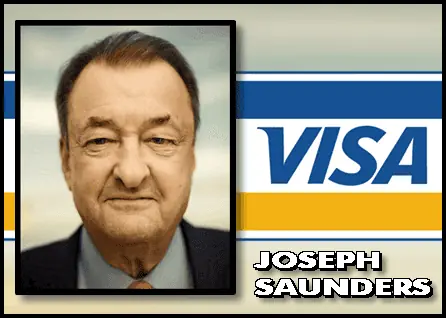
On May 2 it was revealed by Visa CEO Joe Saunders that the credit card giant was being investigated by the Department of Justice for violation of antitrust laws. One of the key elements of the DoJ’s interest in Visa for antitrust violations is its new fee, the Fixed Acquirer Network Fee (FANF) which went into effect on April 1, 2012. Saunders stated that the investigation began on March 13, prior to the fees taking effect.
Saunders revealed that Visa was being investigated during Visa Inc.’s Fiscal Q2 2012 Earnings Conference Call, which prompted The Official Merchant Services Blog to take its readers through the strange roller coaster ride that was Visa’s beginning of May in THIS BLOG HERE.
The strength of Visa’s earnings in the last quarter was framed immediately by Saunders in the conference call: Credit. As Saunders says, “In the U.S., payment volumes increased 6% for all products. Our star performer for fiscal second quarter was credit. Building on that, we continue to invest in new and expanded long-term credit relationships with our largest U.S. clients to drive growth in our core business.”
The other side of that statement, however, is debit. Where MasterCard took great strides — notably adding the nation’s largest debit card institution Bank of America, which switched from Visa.
Visa claims it was hampered by the Durbin Amendment in terms of making earnings from debit in the last quarter. As Saunders said in the conference call, “So far, the situation is playing out as we expected, and in line with our updated guidance for fiscal 2012 as well as our guidance for fiscal 2013. During the March quarter, U.S. aggregate debit payment volumes slowed to 2% growth and, as expected, has continued to decline in April. Interlink is bearing the brunt of the regulatory impact.”
Saunders then took a moment to emphasize the individual differences between Visa Debit — the well known Visa check cards that get swiped through terminals around the country — and Interlink, Visa’s PIN-debit product. Saunders noted that Visa’s swipe debit grew, but grew very slowly. And then went into detail about how Interlink was the company’s worst performer in the quarter, “We posted negative payment volume growth in each month of the March quarter. More recently, between the compliance deadline of April 1 and April 28, Interlink payment volume has experienced notable deterioration. Keep in mind, though, that in the March quarter, Interlink contributed less than 10% of U.S. debit revenue and about 2% of Visa Inc.’s overall revenue and was our lowest yielding product in the U.S. market. “
At this point in the call Saunders shifted into a very general discussion of Visa’s “strategies to compete” — essentially their new fees, including FANF, the Transaction Integrity Fee and a revised Network Acquirer Processing Fee. That led Saunders to discuss the Department of Justice investigation: “On March 13, prior to the April 1 implementation date, the U.S. Department of Justice Antitrust Division issued a civil investigative demand requesting additional information about PIN-authenticated Visa Debit and elements of our new debit strategies, including the fixed acquirer fee. In March, we met with the department twice and provided materials in response to the CID. We are confident our actions are appropriate and that our response to the DOJ supports that.”
More Commentary from Visa
During the question and answer period of the conference call, Saunders stepped up to defend Visa’s new fees. Saunders says that the fees are part of “the total structure we’ve put to deal with the Durbin regulation. We are not making money per se off of that fee. The combination of discounts and incentives that we have put together, I think, actually relate in a modest loss in the amount of $100 million a year. So we aren’t doing this with the intent of raising prices.”
Then another question comes up in the call asking about the outlook the company has for recovering from the losses in Debit due to Durbin. Saunders very vocally defends the company’s fees and strategies: “Let me just follow up on that and make perfectly clear one thing, and that is that we are never going to regain all of the market share that we had in the debit card business. Nothing that we say or none of our strategies suggest that that will happen or could happen. And nothing that we have done or thought about or said anticipates that it will happen. The environment has changed by regulation. We are operating in a different world, and we are going to live forever with less share than we once had.”
The TLDR Version from Visa
So essentially Visa’s CEO has revealed the company is being investigated by the DoJ for antitrust violations because its new fees could circumvent the point of the Durbin Amendment’s reform. But Saunders states the company is cooperating with the government probe, and stoutly defends the fees as not circumventing Durbin. Saunders says the fees don’t recoup the losses that the company will incur from the hard cap, and that the company is still taking a downturn in the debit sector even with the fees in effect. He admits that these fees are part of their strategy to deal with the legislation but feels that the company isn’t violating antitrust laws.
The transcript of the entire conference call can be read HERE at Seeking Alpha. Many thanks to them for providing it for use to bloggers and media outlets.
This is the latest installment in The Official Merchant Services Blog’s Knowledge Base effort. Well we want to make the payment processing industry’s terms and buzzwords clear. We want to remove any and all confusion merchants might have about how the industry works. Host Merchant Services promises: the company delivers personal service and clarity. So we’re going to take some time to explain how everything works. This ongoing series is where we define industry related terms and slowly build up a knowledge base and as we get more and more of these completed, we’ll collect them in our resource archive for quick and easy access. Today’s term is:
Merchant Account
A merchant account is a specific kind of bank account that allows businesses to accept payments by payment cards. These are typically debit or credit cards, but can also extend to EBT cards, checks, and gift cards. A merchant account is established under an agreement between an acceptor and a merchant acquiring bank for the settlement of payment card transactions. In many cases a payment processor like Host Merchant Services, is also a party to the merchant agreement. Whether a merchant enters into a merchant agreement directly with an acquiring bank or through a payment processing specialist such as Host Merchant Services, the agreement contractually binds the merchant to obey the operating regulations established by the card associations.
The best known card associations are Visa, MasterCard, American Express, Discover, Diners Club, JCB and China UnionPay.
This is the latest installment in The Official Merchant Services Blog’s Knowledge Base effort. Well we want to make the payment processing industry’s terms and buzzwords clear. We want to remove any and all confusion merchants might have about how the industry works. Host Merchant Services promises: the company delivers personal service and clarity. So we’re going to take some time to explain how everything works. This ongoing series is where we define industry related terms and slowly build up a knowledge base and as we get more and more of these completed, we’ll collect them in our resource archive for quick and easy access. Today’s term is:
Virtual Terminal
A Virtual Terminal is a form of secure online payment processing. Using these web-based applications to create a virtual terminal, a merchant can access over an interject connection all the needed credit card processing capabilities from any computer through a secure, password-protected login.
After logging into the environment, a merchant can manually enter credit card details and perform any credit card processing transaction that a Point-of-Sale Terminal would perform, including authorization, capture and refund.
The process looks a lot like going to a secure web site. It’s flexible and can be used from a variety of locations allowing a merchant to either replace their standard terminals or use this as an option for when they’re out in the field. Virtual Terminals are very easy to use, accessed via Secure Socket Layer Encryption (SSL), enable separate authorization and settlement transactions, connect to Address Verification System (AVS) and Card Verification Value (CVV) fraud tests and support multi-user access with multiple permissions. In short, you can run your entire payment processing protocol through a virtual terminal safely and securely.
For more information, you can review how the process works at this link.
You can also find out more about the virtual terminals Host Merchant Services offers at this link.
We’ve been working hard the past 7 months at The Official Merchant Services Blog to offer our readers a knowledge base — a place to come frequently to get clear and useful information about the payment processing industry. But we’re always looking to take things a step further. We want to offer more information and be even more helpful. I was recently inspired by this article over at UniBul’s Credit Card Blog which offers a definition of 21 confusing payment processing terms. Credit Card Processing has a lot of buzzwords that get used. This type of technical or industry language can sometimes make understanding statements very difficult for merchants.
Well we want to make these terms clear and remove the confusion. This is part of the ongoing service Host Merchant Services promises: the company delivers personal service and clarity. So we’re going to take some time to explain how everything works. This is going to be an ongoing series where we define industry related terms and slowly build up a knowledge base. We’ll start with the same term that kicked off the UniBul blog. But our coverage is going to go a bit deeper than just a definition. We’ll provide a little extra context. And as we get more and more of these completed, we’ll collect them in our resource archive for quick and easy access.
Acquirer
An acquiring bank (or acquirer) is the bank or financial institution that processes credit and or debit card payments for products or services for a merchant. The term acquirer indicates that the financial institution accepts or acquires credit card transactions from the card-issuing banks within an association. The best known (credit) card Associations are Visa, MasterCard, American Express, Discover, Diners Club, JCB and China UnionPay.
An acquirer is contacted to authorize a credit card or debit purchase. The acquirer will either approve or decline the debit or credit card purchase amount. If approved the acquirer will then settle the transaction by placing the funds into the seller’s account.
Every time you use your credit or debit card you are using the services of an acquirer. An Acquirer will charge a monthly and/or a per transaction fee to the stores or merchants to facilitate transactions. Acquirers need to be licensed with credit card companies, such as Visa or MasterCard.
To get a better understanding of how payment processing works, you can view this infographic.
Host Merchant Services finally gets to make this announcement official: All mobile payment solutions the company offers now feature both iPhone and Android compatibility.
On February 28, 2012 Host Merchant Services teased through its Facebook Page that it would have big news regarding HMS and Mobile Payments in March. But technical difficulties with the full release of Payfox’s Android solution held the news back until today. In the Android Marketplace, Payfox is now listed and available for download. You can see the listing here.
The App has been on the Android Marketplace since March 21. But now the rest of the support is in place to get the app working. The final piece of the puzzle was the card reader — UniMag II, Two-Track Secure Mobile MagStripe Reader. The device is a two-track, encrypted magnetic stripe reader that works with a wide variety of mobile platforms, including Apple, HTC, LG, Motorola, and Samsung devices. Use your mobile device to read credit cards, signature debit cards, gift cards, loyalty cards, driver’s licenses, and ID badges. The UniMag reads up to 2 tracks of information with a single swipe in either direction, providing superior reading performance for your mobile device. A merchant account is required to accept credit card transactions.
You can download the specs from the UniMag II data sheet right here. These are the Android devices supported by the reader:
HTC Aria
HTC Desire Z
HTC Eris
HTC EVO 4G
HTC EVO Shift 4G
HTC G2
HTC Hero
HTC Incredible
HTC MyTouch 4G
HTC EVO 3D
HTC Nexus One
HTC Incredible 2
HTC MyTouch 3G Slide
HTC MyTouch 4G Slide
HTC Thunderbolt
HTC Merge
LG Optimus T
LG Revolution
Motorola Droid 2
Motorola Droid X
Motorola Droid Pro
Motorola Milestone
Motorola FlipSide
Motorola Atrix
Motorola Droid 2
Motorola Droid 2 Global
Motorola Droid Bionic
Motorola Droid 3
Samsung Captivate
Samsung Droid Charge 4G
Samsung Epic
Samsung Epic 4G
Samsung Fascinate
Samsung Nexus S
Samsung Replenish
Samsung Infuse 4G
Samsung Continuum
Samsung Galaxy SII
Please Note
When you go to the Google Play Market and search for PayFox using your Android/Droid phone, the PayFox application will only display for those devices for which the application itself is compatible.
Red 5 Standing By
Our friends at Transfirst also wanted to offer some clarification about the use and licensing around the word Droid:
“Android and Droid are often used interchangeably when referring to ever-growing & increasingly popular line of smartphones that run on Google technology. The difference, for most purposes, is one of legal definitions and intellectual property. Android simply refers to the operating system and software that powers phones built by any of number manufacturers, including HTC or Motorola, and that run on any of the major carriers.
Droid, on the other hand, is a term coined and owned by LucasFilm Ltd., the licensing rights for which Verizon had to purchase in order to brand their specific line of Android Smartphones.”
In short, Androids are phones, and you can now use them to swipe payments. Droids are what Jawas scavenge. Though I’m sure the Jawas will happily accept mobile payments from all you moisture farmers out there. Ootini!
This is part 2 of The Official Merchant Services Blog‘s rebuttal of this New York Times Op-Ed piece titled “What Wikipedia Won’t Tell You” written by Cary H. Sherman, chief executive of the Recording Industry Association of America, which represents music labels.
The Real Slim Shady
Mr. Sherman in his article goes on to accuse Wikipedia of spreading misinformation. He tries to find a smoking gun by suggesting the tech giants have an agenda of their own. He accuses them of bias in terms of the story they present, saying they are bending the truth and not being neutral. He even attacks media outlets that supported SOPA for not “taking advantage of their broadcast credibility to press their case.”
This is amazing. In a piece crafted specifically to present the RIAA’s very biased agenda that is featured in one of those media outlets thus stretching the New York Times’ already damaged credibility — lest we forget Zachary Kouwe, Maureen Dowd or Jayson Blair — Sherman accuses his opposition of doing the exact same thing he is doing. Keep in mind, his own executives were gloating about how well the music industry is doing in 2011. But here he is saying the industry is still being harmed by piracy and that Wikipedia is not telling you the whole story. Sherman simply seems to not be as familiar with how the internet works as his employee Duckworth is. To borrow the ever-popular phrase, he’s doing it wrong. He says, “Misinformation may be a dirty trick, but it works.” Not on the internet. People find you lying to them, or manipulating them, and they either make a mockery of you or turn you off. Sorry Mr. Sherman but in this instance, Citation Needed!
First World Problems
Mr. Sherman makes another fatal mistake with his article when he types: “The conventional wisdom is that the defeat of these bills shows the power of the digital commons. Sure, anybody could click on a link or tweet in outrage — but how many knew what they were supporting or opposing? Would they have cast their clicks if they knew they were supporting foreign criminals selling counterfeit pharmaceuticals to Americans? Was it SOPA they were opposed to, or censorship?”
Sherman is playing off of a stereotype about the twitter-age, or Net 2.0 –that everything is simplified and broken down into tiny bits of information. That the online citizen isn’t getting the full story is in fact that’s his main idea. But Sherman has forgotten net 1.0, and the strength of what Google, Wikipedia and all of that data really is. Somewhere between twitter campaigns with STOP SOPA avatars and Sherman’s own e-mail inbox is this huge collective database of information, which includes the exact language of the legislation as written. Every single piece Host Merchant Services has written on SOPA has included this link:
Many other articles that covered this topic throughout the past year have given links to all of the relevant data and text. It’s the internet Mr. Sherman. The information is just a click away. Many people not only had access to the bill, they also read it. And so their protest was based on the bill itself. Not on the oversimplification you suggest.
Young, Wild but Not Free
Mr. Sherman then takes a wild swing at all of the people who protested SOPA, suggesting some of them are criminals: “But others may simply believe that online music, books and movies should be free. And how many of those e-mails were from the same people who attacked the Web sites of the Department of Justice, the Motion Picture Association of America, my organization and others as retribution for the seizure of Megaupload, an international digital piracy operation? Indeed, it’s hackers like the group Anonymous that engage in real censorship when they stifle the speech of those with whom they disagree.”
So just because people don’t agree with your agenda, they’re hackers who support Megaupload and want free music? That’s the kind of rookie debate tactic that gets you ridiculed throughout the internet. It’s also misinformation and a huge distraction from the topic. The Megaupload arrest is separate from the SOPA debate. This is obvious. The arrest was made under the current law. The FBI was able to crack down on piracy using what is currently in place. That the federal government was able to successfully attack piracy under the laws currently in place would seem to weaken Sherman’s position. In fact data collected on the topic has shown that once the government moved past the Napster issue that Mr. Sherman was so quick to cry about in the opening portion of his article, piracy started to take a huge hit. In fact, that PDF from the IFPI has some compelling statistics about how much piracy dipped after Limewire was shut down. Apparently the current laws have a lot of teeth if law enforcement goes after the pirates and doesn’t waste time going after citizens or forcing search engines and payment network providers to police the internet.
U Jelly?
The last straw with Mr. Sherman’s terrible presentation of his organization’s biased agenda comes from his short and shallow rejection of the Online Protection and Enforcement of Digital Trade Act (OPEN). This bill was drafted as an alternative to SOPA and PIPA. This bill was, excuse the irony, carefully devised by tech industry experts in the government — with an eye toward attacking online piracy but closing the wide open holes that the previous bills contained. The Official Merchant Services Blog helped break this story back in early December, with this blog, where we stated: “A bipartisan group of lawmakers have come out in support of a new law that has been proposed as an alternative to SOPA. Under this proposed legislation, the U.S. International Trade Commission (ITC) would be given the power to investigate claims of copyright infringement on foreign websites. The proposal would also allow the ITC to issue cease-and-desist orders to foreign websites that willfully engage in copyright infringement. The lawmakers demonstrate some clever ingenuity here with this proposal by tapping the ITC for the job of piracy oversight. The ITC already investigates patent infringement complaints and can bar infringing products from being imported into the U.S.”
In short, OPEN is an alternative that was everything Sherman asked for in online piracy legislation that we never received with SOPA or PIPA. It was well researched. It deals with the issues. It has input from tech industry savvy and knowledgeable politicians that know what they’re doing. But Sherman’s misinformation sums up OPEN like this: “The diversionary bill that they drafted, the OPEN Act, would do little to stop the illegal behavior and would not establish a workable framework, standards or remedies. It has become clear that, at this point, neither SOPA, PIPA nor OPEN is a viable answer.”
Forget You
Again Sherman glossed over some important aspects of his own organization’s rhetoric. This article found at The Verge cites the RIAA’s opposition to OPEN and its support of SOPA. The article quotes RIAA Senior Executive VP Mitch Glazier as saying that the ITC “clearly does not operate on the short time frame necessary to be effective.” Glazer cites the delays in the RIM vs. Kodak case — filed in January 2010 but now expected to be ruled on in September 2012 — as a prime example. Glazier sees these delays as hugely damaging, saying that each day a piracy-facilitating website stays online can cost millions of dollars to “American companies, employees and economy,” and be “an ongoing threat to the security and safety of our citizens.”
So again, it’s a case of what Sherman isn’t telling you, while simultaneously suggesting it’s Wikipedia or Google that are obfuscating the issue. The biggest problem with SOPA and what helped get it killed in Congress was that it left things extremely wide open to interpretation. The biggest boon to OPEN is that it requires investigation. Yes, that absolutely does take time. Time needs to be taken. The RIAA doesn’t seem to care about the affects that can happen when a law goes into place allowing swift shut down of websites based on willy nilly complaints or the hidden agendas of competitors. In fact, this is what is wrong with the RIAA’s stance on piracy. They want what caused the protest in the first place. They want to be able to quickly shut down sites with little to no oversight on how the plug gets pulled. So when an alternative is proposed that works more at the a proper speed with investigation, careful consideration of the circumstances and oversight, the RIAA has to denounce that suggestion.
The RIAA keeps pushing for legislation that mirrors SOPA. In fact, this will be the third consecutive year that Senator Ron Wyden [D-OR] will defend our country against the immense loopholes and abusive traits that the RIAA crusades for — Wyden took a stand and singlehandedly curbed the Combat Online Infringement and Counterfeits Act of 2010 (S. 3804) in 2010, and then was at the forefront of halting PIPA this year in the senate. What Sherman is telling us isn’t anything revealing about Wikipedia. No. What Sherman is telling us is that no matter how many times the government tells him that these laws are poorly written and open for abuse, Sherman will keep pushing for this to go through.
Courage Wolf
Host Merchant Services and all other payment network providers have a vested interest in this legislation because they keep getting named in it. These laws keep coming up that require payment processors to be involved in the policing of online content. The issue is just as important to merchant services as the Durbin Amendment. And so The Official Merchant Services Blog is once again here to keep people informed about these developments. The RIAA is singing the same old song about Napster and Piracy trying to push some sympathetic buttons with the people, but at the same time attacking the overwhelming opposition to their agenda, calling them misinformed — and criminal. Suggesting that internet users don’t go beyond twitter messages in the depth of their awareness of issues that pertain directly to the future of their internet usage. And the entire time the RIAA is engaging in this shell-game of misinformation, they’re also gloating about how profitable they’ve been able to make digital music transactions. They claim they know the internet. But Mr. Sherman acts like he still thinks it’s a series of tubes. He might know it’s not a truck, but he’s still doing it wrong.
We’ll leave you with the same message we had days ago when Sherman’s employees were tweeting “DECLARE THAT!”
The bottom line is if Lady Gaga and Pitbull online sales are robust and legit, it’s probably time to back off the Online Piracy rhetoric.