Tag Archives: mobile payments

E-Commerce: Robust and Full of Life

Today The Official Merchant Services Blog keeps on rolling along with the topic of E-Commerce. We’ve recently been looking at some of the interesting individual aspects of the sector, such as our blog about E-Commerce and Video Games the other day and our blog about Social Media Commerce yesterday. We’ve consistently reported how pervasive and commonplace online shopping has become over the past decade. Gone is the shiny newness of using a mouse to do all of your Christmas shopping. It’s now something mundane that we see most consumers in U.S. households doing when they need either the convenience of going online, or the power they have to find exactly what they want when local brick and mortar venues may not have the service or product desired.

A huge fuss has been made repeatedly over the past two years that Mobile Payment Processing, or M-Payments, are going to reap billions of dollars of profit worldwide and online shopping will shift and embrace shopping anywhere with one’s smartphone.

The King is Dead

This article from Jasper Bell at Econsultancy goes so far as to suggest that E-Commerce is dead and that a new hybrid concept, called Distributed Commerce. Bell calls it a “shift from this direct model, to an indirect, more agile way of selling.”

Bell cites the growth of social media and mobile phone usage. Bell discusses the power of what he calls “peer-influenced content” — essentially word of mouth advertising on social networks, or more simply put, you get turned on to a good or service because your Facebook friends tell you it’s cool or your twitter feed blows up — as a key factor in the paradigm shift.

He also demonstrates that the fluid ability to move from the virtual space on your mobile device to the physical realm of the area you are in and then back into the virtual realm of another device or a channel makes marketing and eventually commerce much more flexible and agile, keeping up with the consumer no matter where they go or how they get there. The International Data Corporation backs up that assertion with its findings that indicated 45% to 60% of smartphone users conducted due diligence on store prices and inventory from their devices. IDC also falls into line with companies like Garnter and Juniper about the healthy future of m-payments, predicting that by 2014 more than $50 billon will be spent on merchandise globally by consumers using their smartphones.

This agility for consumers to shop wherever using their phones as both assistants and payment option is something we have delved into with our look at the variety of Mobile Payments options. And Bell makes a really compelling point that people flip quickly between a product search on their phone’s internet access to a purchase ready state in mere clicks. Distributed Commerce is what Bell calls the evolution of E-Commerce. And it is probably the strongest reason why all of our coverage of mobile payments is still listed under the category flag of E-Commerce. We at The Official Merchant Services Blog already acknowledged this natural connection and kept them together in the larger picture of E-Commerce.

As Bell says in his article, “Commerce today is less about ‘selling in’ a channel but selling ‘through’ a channel, reaching out to consumers wherever they are and selling in that context.”


The Other Shoe

Bell’s compelling evidence for the rise of M-Payments sets his article on a course to then predict a downfall in E-Commerce. We think this is mainly due to his definition of E-Commerce referring primarily to shopping online through a PC or Mac desktop computer — ye old visit to amazon.com from your home computer. We of course lump M-Payments into the overall umbrella of E-Commerce. We also don’t feel the juggernaut that is E-Commerce is so easily deconstructed by the baby steps of M-Payments just yet.

Twenty Five Percenters

Juggernaut is too timid a term to describe E-Commerce. This infographic from Big Commerce asks the question “Will M-Commerce Overtake E-Commerce?” If you skip right down to the bottom of the graphic, the sub section titled “Brace Yourself” you find this stunning and overpowering fact: E-Commerce is expected to generate $1 trillion in revenue by 2014. The graphic also states that 54% of all retail purchases will be made online by 2014. Comparatively, M-Commerce is predicted to hit $119 billion worldwide by 2015. Mobile Payments are not going to be the death of E-Commerce just yet.

And this article by Media Post News says pretty much just that — estimating that even by 2017 m-commerce will match about 24.4% of the overall e-commerce pie. All of these projections point to staggering growth for mobile payments, but moving right along with that is the firmly established e-commerce sector that will continue to take more and more of the standard retail pie as it nom-nom-noms its way to massive revenue generation.

Big Time Processing Opportunities

What this means in terms of the payment processing industry and all the companies like Host Merchant Services that facilitate credit card transactions for merchants is simple: Our economy is going cashless. We are driving full steam ahead into a realm where we buy things with phones that will function like credit cards, or we just hop on a device/tablet/computer and click-touch-click our way to purchases. This means more and more of the purchases people make will carry the processing fees that credit card processors make their margin of profit from. As the economy becomes completely tied in to credit transactions through E-Commerce, payment processing becomes a standard. It’s something Merchants need to know about and that’s why The Official Merchant Services Blog exists.

Social Media Commerce: Tweet, Like, Buy

Today’s installment of the Official Merchant Services Blog is on the rise of E-commerce in social media. Last week, we covered the E-commerce offerings of the video game industry in detail. Today, I’d like to take a look at the role E-commerce is beginning to play in the realm of Facebook, Twitter and other social media websites.

Social Media User Base

Social media sites have expanded rapidly over the last few years.  For those who don’t remember, Facebook started out as a place strictly for college level students to network. Now all-inclusive, Facebook is the world’s most populated social gaming and media platform with 955 million users worldwide.

Twitter is second with over 500 million users worldwide, LinkedIn is third with just about 175 million, and Google + trails all three with about 90 million. With such a massive user base to reach out to, an E-commerce presence is the next logical step, and as usual, Facebook is taking the lead. This article will focus on what Facebook has done to streamline the E-commerce aspect of social media.

“Like” Pages

It’s safe to say most Facebook users are familiar with the “Like” button and similarly, the “Like” pages. These pages describe the interests and activities of the user, offer updates to certain products and promotions, as well as allow users to share their thoughts on those products.

The end goal of any merchants Facebook “Like” page is the get the most number of “Likes” and subsequently the most number of page views and purchases of your particular product. The problem lies with differentiating potential customers from current ones. If someone “likes” a page for a product, they may already own it, be saving their money for that product, or just think its neat but don’t want or need it. As of right now, Facebook has no way to separate these users.

Social E-Commerce

According to Facebook’s SEC Form Q-10, 1.6% of users spent over $1 billion on Virtual goods (accessories for virtual characters, tools in Farmville, etc) in the first six months of 2012. That is money spent on items never seen outside of the browser. If the market for non-tangible goods can be that lucrative, the market for actual goods Facebook users enjoy must be bigger.

Carol Rozwell, Vice President at the tech research firm Gartner had a call to action for merchants unsure of the potential for social media e-commerce.  “It’s crucial that organizations implement approaches to handling social media now. The effort involved in addressing social media commentary is not good cause to ignore relevant comments or solvable issues.” According to Gartner, although more than 50% of organizations track social media only 23% actually collect and analyze data.

In June, Facebook made a move to simplify mobile e-commerce payments by decreasing the number of steps involved in checking out, from seven individual steps to two, and eliminating the need to type. The Facebook mobile app SkyBucks, is another innovation in E-commerce, it allows you to charge your virtual accessories to your phone bill directly.

More recently, the social media giant rolled out an offer for stores using Shopify.  Since partnering, Facebook is now offering free $50 Facebook Ad credits. This is in addition to the credits from Google AdWords and Amazon Products that Shopify merchants already enjoy. The promotion is another step for Facebook in the E-commerce direction.

The “Want” Button

Above I identified a need Facebook had, the ability to discriminate between current and potential customers for their advertisers and business users. In early July, the Ecommerce Times had a story on Facebooks next big thing: The “want” button.

The button will allow users to create ‘wish list’ of products that they like or want, but do not currently have. Merchants will want to focus on who has marked their product as ‘wanted’ and who has not. The benefits of the “want” button go beyond sales. The button would allow for highly targeted marketing as well as a sharing of ‘wish lists’ between users. Ultimately the goal should be for the wish list to take its place among the social media landscape, along side a user’s general info and status updates.

For the Consumer

To the average consumer and Facebook user, this should add to the ease of purchases that has increased recently. With the additional “want” info that the site will collect, you will be able to see what your friends and family want, add similar items to your personal wish list, and research potential gifts for you friends discretely. All of which add value to Facebook’s ever-increasing platform.

For the Merchant

For merchants looking to expand on Facebook, the E-commerce addition will do wonders. The added marketing affects will help businesses increase name recognition and sales, while still connecting with the end user. It seems to me, that Facebooks E-commerce push will benefit all involved.

Keepin’ it Mobile

Today The Official Merchant Services Blog brings an update on Mobile Payment Technology.

The Mobile Payments Technology sector has been the topic of overt optimism for quite some time now. We’ve reported multiple times that industry analysts have predicted large gains in Mobile Payments profits over the short- and long-term future. Our article from 2011 showcased three different research groups and their take on the successful future they felt was in store for Mobile Payments.

More pieces of that predictive puzzle have been falling into place. According to a mobile payments survey conducted by IDC Financial Insights, mobile payments use in the United States has doubled. The May 2012 study looked closely at emerging pay method technologies and discovered that 33 percent of respondents had used their devices for mobile payments at least once.

IDC’s practice director, Aaron McPherson, told QRCode Press that “Based on our results, we expect to see continued growth in open-loop prepaid cards and mobile payments next year, and believe that the improvements being offered in electronic-bill delivery will break electronic-bill presentment and payment out of its doldrums as well.”

The Next Big Affirmation for Mobile Payments

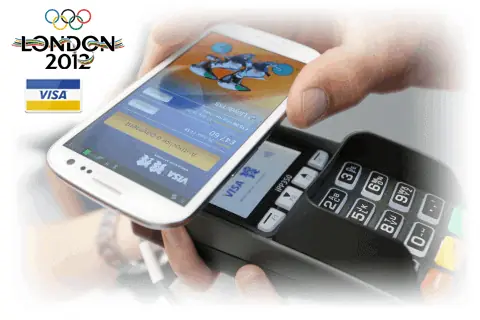
Visa is convinced new payment tech, including mobile payments, are definitely the trend of the future — so much so that the card association giant is poised to showcase the power of the future in the spotlight of the 2012 Olympic Games in London. One of the new technologies Visa is thrusting into the public eye at the Olympics is EMV Chip Cards — something we highlighted back in February. Visa is heavily invested in Smart Card technology so it’s no surprise the company is using its Olympic Games partnership to point some attention at its EMV efforts. But right alongside that EMV push, Visa is also Mobile Payment Technology as a safe and convenient payment option for consumers throughout the London games.

Jim McCarthy, Head of Products at Visa Inc., said “This summer we will be demonstrating the future of payments in London – a future where most consumers will rely on mobile devices, tablets and PCs to manage their daily financial lives.” Visa’s Olympics marketing push for the future of Mobile includes:

  • Visa Mobile Payments and Services: A limited edition of the Samsung GALAXY S III, Samsung’s Olympic Games Phone during the London 2012 Games, will be provided to Visa sponsored athletes and trialists. The device will feature an Olympic-branded version of Visa’s mobile payment application, Visa payWave. To make purchases, consumers simply select the Visa icon on the Samsung device and hold the phone to a contactless payment terminal to pay.
  • Visa Mobile Prepaid: During the London 2012 Games, Visa Inc. will also showcase its newest product – Visa Mobile Prepaid – the first mobile-based Visa product providing consumers in developing countries a payment account that offers Visa’s high standards of security, reliability and global interoperability. By accessing their Visa Mobile Prepaid account on their mobile phone, consumers can send and receive international remittances, pay bills, top-up wireless minutes, and access Visa ATMs.

Setting New Standards

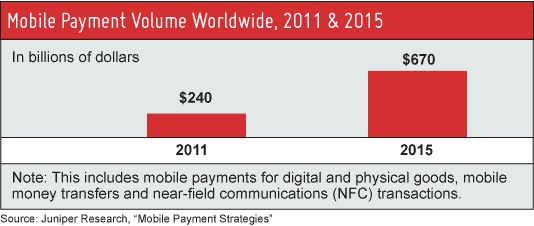
Looking at last year and then at this year’s statistics, Mobile Payments are doing their best to meet the bold predictions analysts have lined up for the future. The sector is growing rapidly and consumers in both the U.S. and around the world are embracing the convenience that the technology brings to their shopping habits. Juniper Research, a company that specializes in the identification and appraisal of high growth opportunities in various mobile telecommunications and applications sectors, put out a publication on July 5, 2011, titled “Mobile Payment Strategies.” Juniper predicted worldwide mobile spending would jump from $240 billion in 2011 to $670 billion in 2015.

Well Juniper is back with a new forecast that focuses on Near Field Communication (NFC) and this study predicts that in just five years the NFC Mobile Payments market will will exponentially increase and eventually exceed $180 billion — a whopping seven times what it is today. The study forecasts that one in four people from Western Europe and the United States will use NFC as a payment mechanism by 2017.

Juniper cites last year as a turning point for NFC payments and suggests that major consolidation of the technology is the impetus for the predicted growth in the market as consistent standards and protocols will help fuel rapid growth and assuage the security concerns of consumers. Juniper says that in 2011 major technology infrastructure standards were finalized within the NFC Mobile Payments market so that many mobile network operators committed to the market and NFC payment pilots from both mobile operators and financial institutions transitioned to commercial service. And the research firm pointed to NFC-enabled smartphone models being announced by almost all handset manufacturers and Google as a key factor for igniting interest in the mobile payment usage in the U.S.

“This is a critical time for the NFC retail payments market,” said report co-author Dr. Windsor Holden. “Despite the significant progress being made today, the full potential of the market can only be fulfilled if all ecosystem players are equally committed and mobile wallet consortia remain in place.”

News for Mobile Payments

Yesterday, The Official Merchant Services Blog defined the term Mobile Payment Processing for its readers. We bring this topic up frequently because it’s one of the hottest trends in credit card processing. Today we’re going to update our coverage of the topic. We have been framing almost every discussion of the topic around a set of studies done last year.

We’ve dug deeper on the topic to find new numbers — mostly from Internet Retailer and their very helpful industry statistics category.

The Mark of SORO

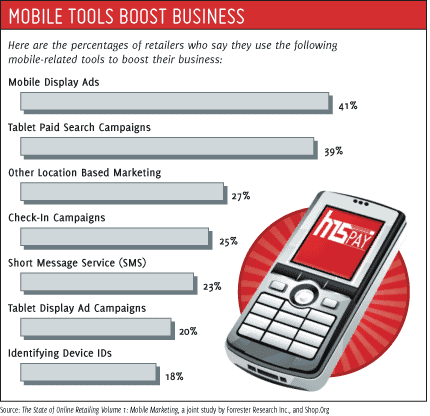
According to The State of Online Retailing Volume 1: Mobile Marketing, 91% of retailers have a mobile strategy in place. Produced annually in partnership between Shop.org and Forrester Research, The State of Retailing Online (SORO) study is the highly anticipated research that brings details of all aspects of eCommerce — from marketing, social media and mobile to KPIs, mobile and profitability — to the online retail community. For the first of two 2012 studies, Shop.org, RAMA and Forrester Research have embarked on a “deep dive” study of all things mobile marketing. Its findings are based on survey responses from 59 retailers, including merchants that operate stores, sell only on the web and manufacturers selling directly to consumers and details how retailers are implementing smartphone and tablet marketing into their sales mix.

According to the study, mobile generated 4.7% of total web sales for the retailers surveyed in 2011, with tablet users accounting for 3.2% and smartphone users accounting for 1.5%.

Essentially the data in the study indicates that e-commerce is slowly but steadily integrating more and more aspects of mobile commerce. The driving force spurring much of the conversion along appears to be coming from social media and e-mail campaigns. Mid-sized retailers — those with annual sales between $10 million and $100 million — say mobile e-mail optimization is their top tool for mobile marketing.

Also the study revealed the popularity of Quick Response Codes. The study says small and large retailers — those with annual sales of less than $10 million or more than $100 million, respectively — cite their use of quick-response codes or other barcode scanning tools as the top tool they use for mobile marketing, even though only 15% of smartphone users say they’ve ever scanned a codethe report says.

Burger King, Smart Phones and QR Codes

The information about QR Codes is significant when you factor in two of the latest breaking news stories in the mobile payments processing category.

First, Burger King just announced it has partnered with Qualcomm’s mobile commerce arm, Firethorn Mobile, for the BK Mobile Crown Card (BK MCC) initiative, which will start in 50 restaurants across Utah and surrounding areas. The platform will allow Android and iOS smartphone users to scan QR codes found on in-store counters and drive-thrus to make a payment via the BK MCC app, which is available on Google Play and the App Store. The transaction will then be processed through the user’s registered debit or credit card account.

Second, the NCR Corporation has developed a way to withdraw money from an ATM that uses your smart phone and a QR Code. According to this article by Digital Trends: “Developed by the NCR Corporation, the payments group within the company has created a way to withdraw cash from an ATM without having to pull an ATM card out of a purse or wallet.”

Here’s how the process works:

  1. A bank customer with an Android or iOS smartphone with a built-in camera approaches an ATM and launches the NCR application.
  2. After the app loads, the customer enters the four digit PIN number tied to their bank account on the smartphone touchscreen.
  3. When the pin is accepted, the app brings up all bank accounts related to the customer’s account.
  4. At this point, the customer can choose if they want to withdraw money from their checking or savings account.
  5. After picking an account, the customer chooses a dollar figure on the smartphone touchscreen. (In the NCR example, there are preset dollar figures in addition to a custom option to withdraw a specific amount of cash).
  6. Once the dollar figure is picked, the customer taps the scan button to launch the camera on the smartphone.
  7. Then the customer scans the QR code on the ATM screen with the camera application.
  8. The transaction is confirmed and cash is dispensed.
  9. The customer gets an electronic receipt on the smartphone screen as well.

According NCR management, the entire process takes about ten seconds to complete. In addition, someone waiting in line at an ATM could hypothetically run through all the first steps on the smartphone and would be ready to scan the QR code immediately when they reached the front of the line.

Mobile Commerce

Mobile Commerce Concerns [2023 Update]

Today The Official Merchant Services Blog turns its tech-obsessed eyes once again to the Mobile Payment Solution sector. Recently, Host Merchant Services became fully mobile and able to offer a mobile payment solution for Android and iPhone devices. This expansion continues, and HMS now also provides a payment processing solution for iPads as well. You can read about the expanded HMS Services in our April 9, 2012 Blog Entry.

Mobile devices are ingrained in the lives of consumers these days. Like the recurring ad sarcastically states, the smartphone beta test is over. And people are wandering around everywhere with their phone bringing their social media, camera, and buying power with them.

Suri, the voice of the iPhone, is holding the hands of stars from Samuel L. Jackson to Zooey Deschanel, helping them manage such difficult life tasks as making gazpacho to putting off cleaning till the next day on one’s calendar.

Coming with this ingratiation into our daily lives are two key elements.

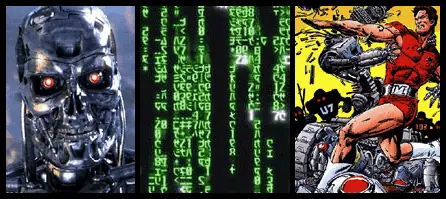
  1. We’re really just one artificial intelligence glitch/accident/sabotage away from launching the type of dystopian sci-fi worldview found in Terminator, The Matrix or Magnus Robot Fighter.
  2. We’re flying full force into a world where we’ll also start to wave our phones around like a Hogwarts Magic Wand, paying as we go from place to place, store to store.

Mobile Payments are brisk and bustling because people are buzzing to take advantage of the convenience they offer. Here’s a graphic based on data compiled by the AITE Group showing the trend in spending via smartphone in a 5-year stretch:

But it’s not all phones-n-roses. As one might expect, the state that’s home to Cyberdyne Systems and our eventual AI-overlords Skynet, has a university — the University of California — that did a study titled “Mobile Payments: Consumer Benefits and New Privacy Concerns.”

The bottom line of this study is that American consumers are still wary of what this convenient technology will bring. The study found some interesting answers to questions about consumer thoughts on their privacy.

The study found that respondents overwhelmingly oppose the revelation of contact information to merchants when making purchases with mobile payment systems and an even higher level of opposition exists to systems that track consumers’ movements through their mobile phones.

This article by Kit Eaton at Fastcompany.com dissects the numbers in the study. Eaton states that: “The numbers are stark. When asked if they thought their phones should “share information with stores when they visit and browse without making a purchase,” 96% objected to the tracking, 79% said they definitely would forbid it, and 17% said they “probably” wouldn’t allow it–meaning just 4% were indifferent or positive about the idea. When the question was instead about information sharing (phone number, address, and so on) at the actual point of sale, 81% objected to phone-number sharing–a mere 15% said they’d probably allow it and 3% definitely so. Similar figures emerged when the information shared was respondents’ home address. “

This is all well and good and you can download the study here at this link. But what the study seems to overlook is exactly how many people, many of the people most likely polled in that very study, are already well past the point of no return in terms of their privacy concerns.

Any of those who object to tracking are likely already being tracked by Google and Facebook, social media they use with ease and frequency from their smartphones.

All those who object to sharing contact information may have already shared this information easily and readily when making an online purchase in the past few years. And statistics indicate that e-commerce is booming and replacing brick and mortar in the retail sales tug-of-war.

Eaton catches on to this flaw in the study, and states in her article: “And that’s the key to unraveling this problem right there: When you do use a current-tech store loyalty card you are effectively voluntarily giving the store your personal information, and “tracking” yourself. It’s why the cards exist, of course–they’re partly there as a sales incentive, to get customers back in the door via money-off offers, but mainly so the store can collate information about customers and work out what kind of products to stock, what offers to run, and what future products to plan for.”

And Eaton even points out that in a Pew Research Survey, 71% of Americans use the internet for shopping — meaning that they’ve already typed in their personal contact information.

So essentially, Mobile Payments seem primed to take advantage of the marketplace. The worry over security is still genuine to some extent — identity theft and phasing scams and data breaches abound as we get more and more tech ingrained. But in the end, the American consumers already dove headfirst into this when they fell in love with social media. The tweets, the +1’s and the Likes have already been tracking you. So when Facebook transforms itself into Skynet, or simply when Facebook and Google go toe-to-toe with Visa in the titanic tussle for your smartphone swipes … your dollars will be as easy to find as your latest status update or check-in.

mobile payment

Mobile Payments [2023 Update]

A payment processing related story setting the blogosphere on fire right now is this study by Pew from their PewInternet and American Life Project that suggests that mobile payments — and swiping your phone to pay for things when you shop — will be the standard by 2020.

There’s been a wide variety of takes throughout the media on this study. It interests us here at The Official Merchant Services Blog because the future of mobile payments and mobile payment processing are topics we’ve been focusing on since our very beginnings.

  • First there was our infographic sharing an expansive look at Mobile Payments for the next couple of years.
  • Then there was our article offering tips for dealing with Mobile Payments.
  • Then there was our breakdown of three separate research firms and their predictions for Mobile Payments over the course of the next couple of years.
  • Beyond the articles, we also covered Mobile Payments in the blog here. We took a look through the Magic 8-Ball to see what was in store for Mobile Payments on October 18, 2011. Then on October 25, 2011, we asked the question Are Smartphones the Credit Cards of the Future? On January 23, 2012, we once again tried to peer into the future with Mobile Payments: 2012 and Beyond. On February 7 we examined the impact that Visa’s commitment to EMV chip cards could have on Mobile Payments. And on February 15, with the advent of spring training in the air, we took a silly take on the future of Mobile Payments, comparing it to the movie A League of Their Own.

The recurring theme in each of our articles and blogs: The future. All of the commentary, all of the studies, all of the research, and all of the stories released about Mobile Payments focus on the rise of Mobile Payments in the future. Just like this latest media blitz. Though the big difference this time is instead of Mobile Payments by 2014 or 2015, it’s looking further ahead … to 2020.

The Study Itself

You can download a PDF of the Study Here.

According to PewInternet itself, “The survey results are based on a non-random, opt-in, online sample of 1,021 Internet experts and other Internet users, recruited via email invitation, Twitter or Facebook from the Pew Research Center’s Internet & American Life Project and the Imagining the Internet Center at Elon University.  Since the data are based on a non-random sample, a margin of error cannot be computed, and the results are not projectable to any population other than the experts in this sample.”

The bottom line of the survey according to Pew is that within the next decade, smart-device swiping will have gained mainstream acceptance as a method of payment and could largely replace cash and credit cards for most online and in-store purchases by smartphone and tablet owners.

The media took that and ran with it …

Different Takes on the Same Story

One publication, Tech News World took the stance that Tech Leaders See Smartphones Replacing Credit Cards, Cash. The lead-in to their story reads: “Consumers may soon be able to leave home without pretty much anything but their smartphones and be confident they can pay their restaurant tabs or make purchases at stores without a hitch. There are still a few issues to resolve before mobile payments become ubiquitous, but a new survey suggests those hurdles will largely be cleared within the next eight years.”

Using the same source, though, Tricia Duryee wrote for AllThingsD that Mobile Payments Won’t Replace Cash or Credit for Another Decade, with a lead that reads: “It will take another eight years for cash and credit cards to be replaced almost completely by smartphones.”

Two different publications processing the exact same information from Pew and its survey, yet saying two very different things.

Venture Beat took a more straightforward approach, citing the statistics and headlining that 65% of Experts say Most People Will Adopt Mobile Payments by 2020. The story there focuses more on the numbers than the impact statement of replacing cash and credit. We particularly liked their lead as it asked an engaging question that sums up the whole Mobile Payments issue succinctly: “There’s no doubt that mobile payments are generating plenty of hype among the tech community, but how long will it be until they go mainstream?”

That’s essentially what the topic boils down to. Will it go mainstream? Predictions keep suggesting yes it will. Tech industry leaders keep pushing their companies toward this technology. And figures from this past holiday shopping season demonstrated a huge increase in mobile payment business. Seeking Alpha reported that mobile payment business increased 500% on Black Friday 2011 when compared to Black Friday 2010. There was definite movement in the industry, but the big number percentages cited by Seeking Alpha don’t tell the whole story. Mobile Payments are still a tiny piece of the consumer pie, nowhere near as big as online shopping or paying with credit cards, debit cards and even cash. The movement was big and noticeable but the percentages also act as a reminder that the totals are still very small compared to the other options.

Same Old Same Old

The study is fascinating, so if you have a chance definitely download the PDF linked above. And we’re happy to add it to our arsenal of indicators that the tech industry expects and wants big things from Mobile Payment Technology. But it’s still the same message that we covered with our Magic 8-Ball.

Mobile payments haven’t taken off as quickly as predictions suggest they should be. The Juniper study we covered in The Official Merchant Services Blog sets things in four years in the future. This Pew study sets things four years after that. So the boom is still very much capable of happening. But the same two things are holding Mobile Payments back in this country in 2012 that held them back in 2011:

  1. The technology isn’t developed fully yet.
  2. Security issues scare consumers.

The technology is sort of all over the place right now. You have a variety of different ways to process a mobile payment. And the biggest competitors in the industry (Google, PayPal, Amazon.com, MasterCard, Amex, Visa) are all still racing to outdevelop each other. Google Wallet is still not fully there yet. Near Field Communication (NFC)  is still only being tested on a small scale in the United States. The phenomenon simply hasn’t taken root.

And there’s the security concerns. People are already worried about credit card hacks, phishing scams and the security of their transactions with plastic or with online transactions. PCI Compliance is a hot button issue, especially in light of Global’s security breach this year as well as a 2011 DigiNotar Hack. So technology like NFC where people just wave their cell phone at a scanner make people nervous about how secure the transaction really is. And of course it was already shown this year at a security conference that the Square device from Square Up could be hacked and used to steal credit card information.

Chips Versus the NFC

And finally, let’s not forget that while Visa is heavily invested in the future of Mobile Payments, Visa’s hoping that the added security that the chip technology provides will overcome that obstacle and finally tap them into the billions of dollars of revenue that Mobile Payments are predicted to have in the coming years. Stephanie Ericksen, head of authentication product integration at Visa Inc. told Credit.com, “Since announcing our roadmap last year, we have seen strong interest among U.S. issuers large and small to invest in chip technology, as today’s milestone shows.”

So EMV and smart-chip technology, which has the edge in security, could be realized long before 2020.

Android Phone Now Takes Payments

Host Merchant Services finally gets to make this announcement official: All mobile payment solutions the company offers now feature both iPhone and Android compatibility.

On February 28, 2012 Host Merchant Services teased through its Facebook Page that it would have big news regarding HMS and Mobile Payments in March. But technical difficulties with the full release of Payfox’s Android solution held the news back until today. In the Android Marketplace, Payfox is now listed and available for download. You can see the listing here.

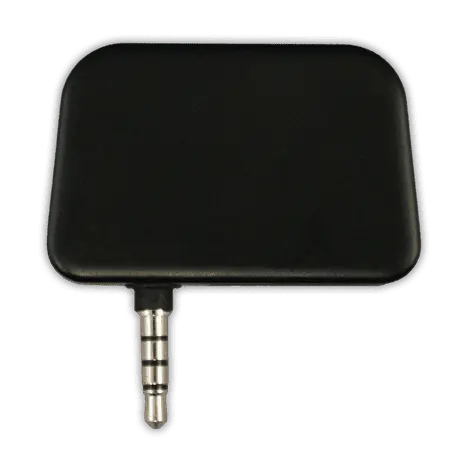
The App has been on the Android Marketplace since March 21. But now the rest of the support is in place to get the app working. The final piece of the puzzle was the card reader — UniMag II, Two-Track Secure Mobile MagStripe Reader. The device is a two-track, encrypted magnetic stripe reader that works with a wide variety of mobile platforms, including Apple, HTC, LG, Motorola, and Samsung devices. Use your mobile device to read credit cards, signature debit cards, gift cards, loyalty cards, driver’s licenses, and ID badges. The UniMag reads up to 2 tracks of information with a single swipe in either direction, providing superior reading performance for your mobile device.  A merchant account is required to accept credit card transactions.

You can download the specs from the UniMag II data sheet right here. These are the Android devices supported by the reader:

  • HTC Aria
  • HTC Desire Z
  • HTC Eris
  • HTC EVO 4G
  • HTC EVO Shift 4G
  • HTC G2
  • HTC Hero
  • HTC Incredible
  • HTC MyTouch 4G
  • HTC EVO 3D
  • HTC Nexus One
  • HTC Incredible 2
  • HTC MyTouch 3G Slide
  • HTC MyTouch 4G Slide
  • HTC Thunderbolt
  • HTC Merge
  • LG Optimus T
  • LG Revolution
  • Motorola Droid 2
  • Motorola Droid X
  • Motorola Droid Pro
  • Motorola Milestone
  • Motorola FlipSide
  • Motorola Atrix
  • Motorola Droid 2
  • Motorola Droid 2 Global
  • Motorola Droid Bionic
  • Motorola Droid 3
  • Samsung Captivate
  • Samsung Droid Charge 4G
  • Samsung Epic
  • Samsung Epic 4G
  • Samsung Fascinate
  • Samsung Nexus S
  • Samsung Replenish
  • Samsung Infuse 4G
  • Samsung Continuum
  • Samsung Galaxy SII

Please Note

When you go to the Google Play Market and search for PayFox using your Android/Droid phone, the PayFox application will only display for those devices for which the application itself is compatible.

Red 5 Standing By

Our friends at Transfirst also wanted to offer some clarification about the use and licensing around the word Droid:

“Android and Droid are often used interchangeably when referring to ever-growing & increasingly popular line of smartphones that run on Google technology. The difference, for most purposes, is one of legal definitions and intellectual property. Android simply refers to the operating system and software that powers phones built by any of number manufacturers, including HTC or Motorola, and that run on any of the major carriers.

Droid, on the other hand, is a term coined and owned by LucasFilm Ltd., the licensing rights for which Verizon had to purchase in order to brand their specific line of Android Smartphones.”

In short, Androids are phones, and you can now use them to swipe payments. Droids are what Jawas scavenge. Though I’m sure the Jawas will happily accept mobile payments from all you moisture farmers out there. Ootini!

Payfox for Android Coming Soon

On February 28, 2012 Host Merchant Services teased through its Facebook Page that it would have big news regarding HMS and Mobile Payments in March. The Official Merchant Services Blog is here to give you that big news.

Sort of.

The news is that Payfox will be usable for Android phones as well as the iPhones it has been compatible with for the past couple of years. Unfortunately that news is coming piecemeal. The announcement was slated for late March. But the project isn’t quite ready for launch. According to an ISS Bulletin from Transfirst:

“Although PayFox Android is currently not yet available … We are expecting a formal release in the next couple of weeks. “

In anticipation of the pending release, there is a new “PayFox Droid card reader” option opened up in Transfirst’s ELAPP™ software. The option is there, but the functionality isn’t ready yet. So it’s just a teaser of what’s to come. ELAPP™ is an innovative virtual application system that walks users through the merchant boarding process with intelligent rules for data entry.

Host Merchant Services E-Commerce Mobile Payments image

That’s not the only teaser, however. In the Android Marketplace, Payfox is now listed and available for download. You can see the listing here.

User tests by the staff here at The Official Merchant Services Blog show that the download works. And the app will then show up on your Android phone. But there is no reader equipment available yet and the transactions can’t yet be processed. The App has been on the Android Marketplace since March 21.

So all we’re able to confidently report right now is that the pieces for Android appear to be in place, just not fully ready. We will keep you posted with any updates or breaks in this story. Once it is ready, Host Merchant Services will be rolling out a detailed press release discussing the addition of Android to their already robust iPhone capability and how it relates to their full e-commerce service package that it offers merchants.

Merchant Services 2012 Events

2012 is heating up and the payment processing industry is getting things moving. Today The Official Merchant Services Blog reports on a major event that just happened, and brings you all the details on a major event that is coming up in the credit card processing industry.

What You May Have Missed

The GSMA Mobile World Congress just took place in Barcelona, Spain. The event is the combination of the world’s largest exhibition for the mobile industry and a conference featuring prominent Chief Executives representing mobile operators, device manufacturers, technology providers, vendors and content owners from across the world. It ran from February 27 to March 1 and featured a lot of push from Android devices — including the latest and greatest gadgets and apps from the Samsung Galaxy brand. But VeriFone, the credit card transaction terminal making company that Host Merchant Services provides free equipment for its customers from, also dropped a major announcement at the event.

This press release, carrying a byline directly from their event booth at the Mobile World Congress, states VeriFone announced: “The PAYMEDIA Universal Acceptance Platform (UAP), a complete suite of services and software that enables Mobile Network Operators (MNOs) to manage mobile wallet acceptance at merchant systems.”

This is VeriFone’s mobile payment system. The UAP is designed for mobile-network operators to offer merchants to accept digitall walled applications. Customers with Near Field Communications (NFC)smartphones with digital wallets will pay for items by tapping their phone near an NFC-enabled terminal. VeriFone offers the MX800 and MX900 series terminals to their Tier 1 retailers (merchants with annual sales exceeding $1 billion). These terminals were already usable with the NFC App Manager VeriFone created for the Google Wallet Trial. So UAP is one step forward for VeriFone giving them the ability to run mobile payments through their own branded applications and their own customers.

This is an interesting devleopment in light of the NFC problems Google and Google Wallet were facing recently. This shows that the allure of Mobile Payments is still very strong for companies. The predictions still center around billions and billions of dollars worth of growth in the next few years. So companies are still making major moves to tap into mobile payment solutions such as NFC.

The testing of NFC, however, still continues to be limited. As VeriFone demonstrates, it’s still not ready for the majority of merchants. Tier 1 merchants give a good testbed based on the volume of transactions, but the technology still isn’t being tested heavily in the rest of the marketplace. So the standard knock against NFC still exists: The majority of consumers are still hesitant to accept the payment method due to security concerns. Analysts continue to predict Mobile Payments will explode and the sector will boom, but consumer acceptance still remains an obstacle.

VeriFone states in their press release that they have a plan to address consumer acceptance. “The missing element in MNO’s mobile wallet plans has been the lack of focus on how to provision, integrate and manage wallet and value-added acceptance apps at merchants’ systems,” said Paul Rasori, VeriFone senior vice president of marketing. “VeriFone’s PAYMEDIA UAP bridges that gap in the NFC ecosystem by managing the complexities of mobile commerce acceptance and ensuring a seamless buying experience no matter what wallet, app or program consumers bring to stores.”

  • For more information about VeriFone’s UAP, click here.
  • For more information about the rest of the Mobile World Congress, this blog gives a decent recap.

What Is Coming Up

While you may have missed the Mobile World Congress in Barcelona, fear not — The ETA Annual Meeting and Expo is coming up. From April 17 to 19 the most diverse and comprehensive conference in the payments industry will rock Mandalay Bay Las Vegas. This year’s show brings together more than 3,500 payments professionals and suppliers to the industry for three days annually to provide peer-led education, networking, and one-of-a-kind partnership opportunities. Whether you want to learn more about the payments industry, showcase a new product, or are in the market for a new partner or channel opportunity, you will find everyone and everything at the 2012 ETA Annual Meeting & Expo, from merchant acquirers, financial institutions, payments processors, and alternative payment providers to value-added resellers, prepaid companies, and merchant sales teams. Some of the highlights for this year’s extravaganza include:

  • Opening General Session Keynote Speaker: Guy Kawasaki: Tech industry legend and the original Mac evangelist, Kawasaki will share his irreverent approaches to innovation. Learn how to create your own successful innovations, and. . . generate revenue.
  • 2012 Political Analysis: Charles E. Cook, Jr.: Cook, widely regarded as one of the nation’s leading authorities on US elections and political trends, will provide insight into the upcoming US elections. As an authority on policy-making and politics in Washington, Cook’s perspective on the 2012 political and legislative environment promises to be especially insightful as it relates to the unique challenges and concerns of our industry.
  • Educational SUPER Sessions: If you want to move from ordinary to extraordinary you need the latest and most complete information. Take a deep dive into these four fundamental industry topics at this year’s meeting: Sales, Technology / Products, Regulatory Issues and Social Commerce.

For more information about the expo visit this link.

1 Step Forward, 2 Steps Back [2023 Update]

We’ve been covering Mobile Payments here at The Official Merchant Services Blog since the very beginning. In fact, the Article Archive at Host Merchant Services has extensive coverage of the topic as well. It’s just too sexy a topic — everybody loves the allure of gadgets — and too fascinating a financial prediction — folks in the know are predicting Mobile Payments to boom in the billions between now and 2015-ish — to not continually cover Mobile Payments.

But I keep picturing a scene from the 1992 women’s sports movie A League of Their Own in my head every single time I look at the state of Mobile Payments in the U.S. The scene that resonates with me is the one where Marla Hooch — fearsome and uniquely striking power hitter for the team — is about to step into the batter’s box. But she’s getting confused. She steps into the box. Then back out of the box. The reason for her confusion? She’s getting contradictory signals from her Manager and her teammate. One wants her to swing away and unleash the fearsome potential of her staggering offense. The other wants her to play it safe and move the runner over for a better chance to score an efficient run. So there she goes, Marla Hooch, the powerhouse of the league. One foot in the box. Then out of the box. It’s the exact problem Mobile Payments currently faces. The power and potential of what it can do for commerce keeps getting highlighted in story after story, research after research. And then the biggest obstacle it faces keeps getting thrust in front of its face: Security.

Step Out of the Box

Google Wallet, one of the biggest lynchpins in the mobile payment industry’s bid to effectively take hold in the U.S. market was recently plagued by a security problem. This article from ExtremeTech notes the issues that happened to Google and its mobile payment system in a piece that discusses the pitfalls of its beta testing. A pair of bugs forced Google to shut down its pre-paid cards and Google Wallet took a huge hit on the nose in the press. This reinforced the public’s view that mobile payments are a bit scary because people think that their personal information — account numbers, social security information, credit card numbers — will get swiped from them out of thin air. The thought process being that if all they have to do to pay for an item is wave their phone in the air at a cash register, some sneaky net ninja can pluck the data right out of the very same air.

The article sums up the problem: “In the last week, there have been not one, but two exploits that could give a malicious individual access to your Google Wallet mobile payment app on Android. While the first is a root-only hack that Google couldn’t really be expected to plan for, the second affects all Android users and is simple to do.”

It goes on to suggest these bugs popped up due to a core problem with how google beta tests things.

Since that story broke, Google has gone on the offensive, and is now stating that the bugs are fixed. As this cnet article says: “Google has patched a hole in Google Wallet that could’ve allowed someone to access a user’s funds simply by resetting the PIN and using a prepaid card. The company said yesterday it has issued a fix that now prevents a prepaid card from being re-provisioned to another person. It has also restored the ability to issue new prepaid cards following a move on Monday to disable the use of such cards.”

These bugs were a major setback for more than just Google. The Mobile Payments landscape is bubbling with interest but it’s also saturated with variety. There are multiple avenues businesses are considering for their entry point into what research firms like Gartner predict will be big money very very soon. One of those avenues is Near Field Communication (NFC).  The underlying technology of NFC is described as: Near field communication (NFC) is a set of standards for smartphones and similar devices to establish radio communication with each other by touching them together or bringing them into close proximity, usually no more than a few centimetres. Present and anticipated applications include contactless transactions, data exchange, and simplified setup of more complex communications such as Wi-Fi. Communication is also possible between an NFC device and an unpowered NFC chip, called a “tag”.” 

This is the technology that Google tagged to be their entry into Mobile Payments. And so these bugs are a major hit for Google and NFC as a whole, taking one of the most hyped aspects of Mobile Payments down a peg in the industry.

Step Into the Box

In the midst of NFC taking it on the chin, Visa and MasterCard unleashed its EMV initiative — as The Official Merchant Services Blog reported on February 7. This is, in my mind, the Mobile Payments Marla Hooch being told to step into the batter’s box and knock it out of the park. Visa is invested heavily into Mobile Payments, and is prepared to drag the industry kicking and screaming into the future of profits that are being predicted for Mobile Payments. The EMV initiative hinges on chip technology being attached to cards, and for Mobile Payment evolution also being attached to smart phones. What Visa’s investment in this avenue brings is added security. This is huge. The security advantage addresses the biggest fear people have for mobile payments. Visa, much like Tom Hanks, wants Marla Hooch to get in there and swing away.

Going Sci-Fi

This article from Asia One adds another wrinkle into payment processing, and possibly the future of mobile payments: Biometrics. The article cites The Monetary Association of Singapore (MAS) as researching ways to make Debit card transactions more secure. And one of the avenues of research has been biometrics. This could really lead to a breakthrough in the march towards a cashless society, including the use of smartphones for mobile payments. Having biometric security measures on your phone would work in tandem with the chip technology that Visa is pushing, making both the unit you use to store the information — your phone — attuned to your own physiology; and the transmission of your transactions — the swipe of said phone in the air — attuned to a secure chip. Identity thieves and card fraud masters would be stymied on multiple ends and have to work very hard to stay ahead of that security curve in their mission to steal your information and then your money.

The Bottom Line

So What’s Marla Hooch going to do? It looks like Google is sticking with its plan and dedication to NFC. They sort of have to due to how invested they are into the technology already. And it’s no secret that Visa is very much tied into the future of mobile payments, chip card technology, and payment processing security. Both entities are full steam ahead. And with that much tech and finance industry strength behind the initiatives, Mobile Payments will get its chance to swing for the fences. We look for the Google Bugs to blow over and not really hinder Mobile Payments growth much at all in 2012.

For more information on Mobile Payments you can read from Host Merchant Services:

The Official Merchant Services Blog will continue to keep you up to date on the latest advances in Mobile Payments technology.