

Tag Archives: wall street journal

Ending Sales Tax Discrimination [2023 Update]

Today The Official Merchant Services Blog is taking a look at a bill being debated on the U.S. Senate floor this week.  Senate Bill 1832, also known as The Market Place Fairness Act could be the cause of the next big debate in the Payment Processing Industry.

The Law of the Land

In 1992 the Supreme Court ruled in the case Quill v. North Dakota that companies without a “substantial nexus” in the state where their customer lived didn’t have to charge sales tax.  Seemingly favoring Internet companies, this ruling was actually handed down two years before the first Web browser, and three years before Amazon ever sold it’s first book.  This law still stands today, and is the precedent for online retailers not having to pay state taxes on products shipping nation wide. This new bill looks to rectify that apparent “oversight.”

The Act Itself

The Marketplace Fairness Act would pave the way for states to require online sellers from out of state to begin paying the sales tax they’ve escaped for years. Senator Dick Durbin (D-Ill.) said “The Marketplace Fairness Act would level the playing field for small businesses by allowing states — if they so choose — to treat brick and mortar retailers the same as remote retailers.” Durbin, who is sponsoring this bill, is best known for authoring the Durbin Amendment, a piece of legislation that caused much controversy in the Payment Card Industry when enacted.

The National Conference of State Legislatures estimates the lost tax revenue at $23 billion annually. Senator John Rockefeller (D-W.V.) spoke on the issue, attempting to clear up some of the confusion, “To be clear this debate is not about imposing new taxes. Instead it’s just allowing a state to collect taxes they are currently owed under existing law, but are being systemically avoided.” As another benefit to small business owners, the law would only apply to business processing more than $500,000 annually.

Amazon Action

Amazon has been the most vocal in its support of the Marketplace Fairness Act since it’s introduction last year. Speaking before a congressional hearing, Amazon VP of Global Public Policy Paul Misener told lawmakers that the bill would facilitate the collection of one kind of tax that is already due, but goes largely unpaid.  Supporting the argument that it is not a new tax increase.

Opposition

Senator Jim DeMint (R-S.C.) published an op-edin the Wall Street Journal entitled “No Internet Taxation Without Representation.”  In the piece DeMint argues that citizens should not be taxed by governments in which they have no political voice — in this case states where they or their company are not physically based.  I would argue that this is a cost of interstate commerce, which has been reborn as interstate e-commerce.

DeMint does have a point when he mentions the nearly 10,000 state, local and municipal tax jurisdictions businesses would have to comply with nationwide.  He forgets to mention, however, that businesses have access to advanced tax software, such as TaxCloud, which can easily compute the sales tax for any state.

The Verdict

Here at The Official Merchant Services Blog, we see the potential savings this offers to the owners of small businesses nationwide.  The Marketplace Fairness Act provides an incentive for states to simplify their sales tax laws, as well as increase revenue from the ever-booming e-commerce industry. Hopefully this will decrease the sales tax burden shared by many small businesses. It simply makes it much easier for millions of business owners — and in turn the states — to collect the taxes already due. Only time will tell how much impact this legislation will have on e-commerce and credit card processing. We will stay on top of any new developments on this law, and how they affect you.
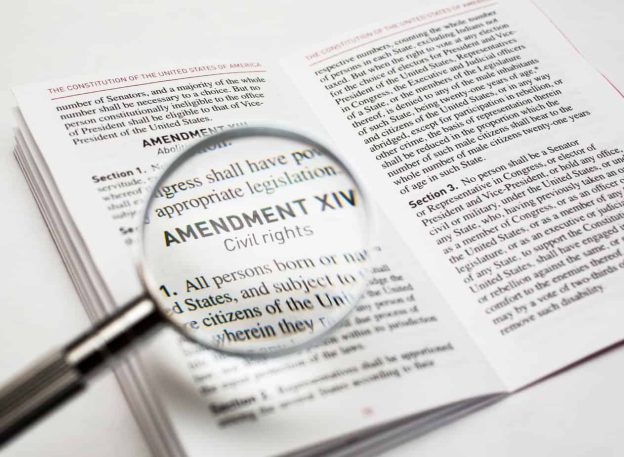

 
What Durbin Will Change

Roundup of What Durbin Will Change

The changes to interchange fees and debit card transactions brought on by the Durbin Amendment are just days away. The Official Merchant Services Blog is going to give its readers a quick hit of some of the chatter that is heating up the internet as we close in on the day the changes take effect. As with the previous articles, we’ll be using Host Merchant Services’ own Durbin Analysis as the foundation for comparison. We’ll be touching on 3 separate articles today so the comparison will be brief and focus on the highlights.

Citigroup Focuses on Credit Cards

The first article we find comes from The Wall Street Journal. This article points out how Citigroup is reacting to the changes that its competitors Wells Fargo and SunTrust are making because of the Durbin Amendment. Both of which were reported in our last Countdown To Durbin Blog, but can be summed up as both of those banks are going to implement a fee for debit card use that its customers have to pay each month.

Citigroup, according to the Wall Street Journal, is pushing an aggressive credit card campaign to its customers. Citi mailed an estimated 346 million credit card offers to North American customers in the third quarter of this year, the Wall Street Journal reported in the article.  The article suggests this move is at least partially motivated by a void that will be created by the Durbin Amendment:

“One potential void was created last year by an addition to the Dodd-Frank Act, which overhauled financial regulation. Known as the Durbin Amendment, the new rules, which go into effect in October, will limit the fees that banks collect from merchants each time a debit card is swiped, making cards far less profitable for the issuers.

As a result, some issuers are making debit cards less attractive by charging monthly fees and eliminating rewards. Citi is hoping to capitalize on this change by convincing dissatisfied debit customers to use its credit cards instead.”

This builds off of what our previous article found, that Durbin focuses on debit card transactions so one viable reaction to the Durbin changes is to switch focus to Credit Card Processing.

Consumer Reaction To “Too Many Fees”

The next article we cite comes from an NBC news affiliate in Indianapolis, IN, wthr.com. This article contains some evocative reaction from consumers regarding debit card fees. It cites what Regions Bank is doing in reaction to the changes from the Durbin Amendment:

“Regions issued a statement saying regulations have changed and, as a result, banks are adjusting how they cover the costs of providing debit cards. For some customers, that will mean a monthly fee for a debit card beginning in October. While Regions and other banks say the change is necessary, it isn’t popular.”

Which we have cited before as being a very popular reaction from banks regarding the federal regulations. This article quotes debit card using consumer reaction:

“I think it’s my money and I shouldn’t have to pay to use it,” said Andrea Moxley.

“Enough is enough. Too many fees,” said another woman.

This underscores the reaction that many of these articles are finding. Consumers, the group the legislation was supposed to help with its reforms, are not pleased with the shifted burdens that end up not helping them in the end.

Merchants Can Save

The final article we cite comes from Jennifer D’Angelo. It’s a blog of hers that goes into detail about how Merchants can take advantage of the Durbin Amendment changes to save money. D’Angelo suggests Merchants can save up to $1,200 per year because of the Durbin Amendment. She states:

“Under a new law called the Durbin Amendment that takes effect Oct. 1, any merchant that takes debit cards — from retail stores, restaurants, gas stations, and small businesses like chiropractor’s offices — could be eligible for up to $1,200 a year in savings on debit card processing.

In order to be eligible for savings, you need to ask your payment processor if they are passing along the benefits under the Durbin Amendment.”

It’s a very short piece that essentially suggests contacting your payment processor for more information about savings. But it does include the statistics about the cap the Durbin Amendment brings to debit card swipe fees (the previously reported 24 cents on the average purchase) as well as the cost of swipe fees in the past year (the also previously reported 44 cents on the average purchase). Which underscores how much of a difference the Durbin Amendment is forcing on the individual transactions.

These articles give three different perspectives on the Durbin Amendment: Bank, Consumer and Merchant. And gets right to the heart of the issue: Where will the savings that the legislation was designed to create actually end up going? Banks are making moves to protect the huge profit margins the fees provided them prior to the regulation. Merchants are capable of getting some savings, but it hinges on what their payment processors can do. And consumers may end up having to pay the same amount as fees get shifted to other, unregulated areas in the infrastructure of bank services.