Tag Archives: transactions

word writing text buy now business concept for asking someone to purchase your product provide good discount writing 166946211

What Are the Risks of the Convenient Buy Now, Pay Later (BNPL)?

Buy now, pay later has taken off over the past few years. Maybe it’s the psychological factor driving adoption and growth where the consumer gets instant gratification of being able to buy what you want right now. Or it’s the new watered-down form of financial engineering giving the masses freedom to make a purchase, even of small-ticket items.

There are benefits of this buy now, pay later phenomenon. However, there are considerable inherent risks in the behavior this program encourages. Below we’ll explore buy now, pay later, how it works, its pros and cons, and who are the biggest players offering the service.

What is Buy Now, Pay Later?

As the name suggests, buy now, pay later lets consumers make purchases now and then pay for them in installments. This segment of payment types is fast-growing compared to debit and credit cards. The service is a relatively cheap, if not free financing option that approves almost all types of customers. Another benefit to the shopper and one Fitch Ratings has cautioned about, is that buy now, pay later service seldom have reporting requirements to credit agencies about the debt a consumer is incurring, or even adverse payments histories resulting from these payment plans.

Convenience and speed by which a buy now, pay later allows shoppers to complete the transaction and get their product is another factor driving mass adoption of payment options.

How does the service work?

The actual client of the buy now, pay later industry is the merchants, not the consumer. Merchants partner with buy now, pay later service providers to sell their products to consumers. The service provider works a factoring service, taking on the risk in exchange for a small margin of the sale price and collecting the monthly payments from the consumer.

For consumers, the transaction can be potentially interest-free and without any fees, as long as the payments are made timely.

Why is it such a big deal?

Buy now, pay later is gaining a lot of traction lately. Large players offering the service are being listed on the stock market at lofty valuations. What was once offered as a service via a partnership with merchants, more and more businesses are considering building out their own offerings with more control over data and pricing. One of the largest consumer hardware companies, Apple, has partnered with Affirm to offer buy now, pay later services in select jurisdictions. This announcement came after the company is reported to be building its own services called Apple Pay Later, with Goldman Sachs.

In August 2021, Square announced that it would be acquiring Australian-based Afterpay for $29 billion in an all-stock deal, making the transaction the largest acquisition of an Australian company.

Many consider buy now, pay later a nascent industry with a huge opportunity for growth as it makes a small piece of the $3.4 trillion e-commerce industry, or the $7.1 trillion cashless transactions space.

What are the benefits?

Considerable benefits are driving the adoption overall, particularly the younger demographics. There is a general shift away from non-cash transactions. The convenience of conducting transactions quickly, and via mobile devices has been a prerequisite for some time. Now there is also instant gratification. Consumers who would have historically waited to save to make a purchase can now simply purchase right away and allot their savings to installment payments.

However, consumers have also become price-conscious over the past year and a half, prompting consumers to shop smartly. They have jumped at opportunities where BNPL  service providers offer the option to make interest-free installment payments in exchange for timely payments.

What are the risks?

Of the number of benefits available in the industry, the risks are also tantamount. There is the possibility of regulation which buy now, pay later service providers may be required to be treated like banks. They may also be required to disclose information on consumer credit and credit quality reporting. The industry may also come under further scrutiny of consumer watchdogs around the globe, where many of the program covenants are reminiscent of payday loans, including no interest or fees unless there is a late payment.

There is also the potential of consumers not realizing the limits of their own spending habits and may end up accumulating more debt than they can afford to make purchases of items they may not necessarily need.

That leads to the next risk, buy now pay later leads to overspending. Consumers purchase more often and are emboldened to spend on big-ticket items. Based on a survey by a buy now, pay later service provider, many consumers would balk at the purchase if the service was not an option. These exact facts and figures are used to market the product by the industry as more and more merchants see this as to quickly increase sales, cash flows, all without any consumer credit risk.

For merchants, they may lose out on 3-4% of the sale proceeds to the buy now, pay later service provider, but the added sales is more than the markup for any margin shortfalls. Plus, businesses may just be breaking even on the margin shortfalls as they no longer have to incur payment processing fees.

Who are the major Buy Now, Pay Later service providers?

There are several large players in the budding buy now, pay later industry. Many large consumer product companies are looking to capitalize on the payment industry shift by offering their own version of the service, namely, Apple Inc.’s Apple Pay Later.

One of the largest service providers in the industry is Swedish-based Klarna, with a valuation of nearly $46 billion. The company has processed $39 billion in payments in the first half of 2021.

Another major player is Afterpay, an Australian company that Square has just decided to pay $29 billion for. Other smaller players include another Australian-based company called Zip and the San Francisco-based Affirm.

businessman hand points to the word interest rate with a decreasing chart or graph 213338059

Interchange Downgrades: What They Are And How To Avoid Them

Interchange downgrades are a pretty complex subject to grasp. But, if you don’t take the time to learn how they work, you could be throwing a massive amount of your money down the drain each year.

Though many are avoidable, they are unfortunately quite common. Some providers intentionally allow customers to continue to experience downgrades because they make money in the margins based on their pricing strategies. In this article, we will be going over the fundamentals of an interchangeable downgrade, why they occur, and the things you can do to avoid them.

What Is An Interchangeable Downgrade?

Although you may not be familiar with this, interchangeable downgrades can happen anywhere and at any time. You may already be familiar with the term “interchange,” which is the cost card brands charge to conduct a credit or debit card transaction. 

So, each time you process a credit or signature debit card, it gets assigned to an interchange category. Each category differs depending on their rates and fees, which processors calculate the transaction’s cost. If everything runs smoothly, then each of the transactions will reach their target interchange category, which is a category that has the lowest possible rate and fee given the type of transaction. 

However, things can go wrong during this process. Whether this is because there wasn’t enough information provided or there were particular requirements that weren’t met, it allows transactions to jump from one category to another. This re-categorization can cause a transaction to be placed in an interchange category priced higher than the target category. 

When something like this happens, the rate increases, resulting in a more expensive transactional cost, and therefore the transaction has “downgraded.”

Why Do Interchangeable Downgrades Happen?

Unfortunately, downgrades are not uncommon to experience nowadays, and there are even specific situations that will immediately set off an interchangeable downgrade. The payment software, equipment, and processes that run the transactions play a massive role in ensuring everything goes according to plan. 

Not only that, but the more significant number of downgrades is because of how the business processes each transaction, or in other words, how it settles and authorizes transactions. Since these businesses tend to be the root of their downgrades, it welcomes the opportunity to look at the processing behavior to remove or reduce these downgrades.

What Are The Most Common Causes Of Downgrades?

Before you learn the ways, you can avoid these downgrades. It is essential to understand some of the common causes behind them, which are listed below:

  • Delayed Authorization

A “stale” authorization is another term for this situation. It happens when the interval between the first authorization and the credit card settlement is too long, usually exceeding 48 hours.

Authorizations must be settled for a business to receive money from a transaction. Cardholders must allow enough time to pass between authorizations and settlement. This will make sure they get their money in full in a timely way.

Many of them state the authorization needs to be settled within the first 24 hours, so you should make sure your batch settles at least once a day to avoid reductions due to stale approvals. If you don’t settle your transactions quickly enough, the authorization will expire, and the transaction will most likely downgrade.

  • Mismatched Authorization

It occurs when authorization and settlement amounts differ when they must always match. 

For a better understanding, let me give you an example:

Let’s say you are working as a cashier at a grocery store, and one of your customers just purchased $300 worth of items. You’ve swiped their card, but your customer decides they don’t want to buy a product.

When this change of heart happens, it brings their total down to $275. So now, the settlement amount is at $300 while the settlement amount has lowered to $275. You have to cancel the transaction and do it again; otherwise, you risk a downgrade. 

  • Failing To Use AVS

AVS stands for address verification system, a customer address verification tool that provides an extra layer of security for customers while at the same time simplifying the process for our payment gateway. The customer’s five-digit zip code, which stands for their address information, is necessary for card-not-present transactions to target their interchange categories. If a customer fails to enter their zip code, the transaction will downgrade.

How Can You Avoid Interchangeable Downgrades?

Although downgrades can’t always be avoided, you can make sure it doesn’t become a casual occurrence by following the measures listed below:

  • Pay special attention to the provider you are using, check that they offer different pricing programs that meet your needs, and provide all the information necessary about the practices you should follow.
  • Make sure AVS is required on any keyed transaction. Any trusted provider should make sure this feature is a requirement to avoid a breach in security and therefore downgrades. 
  • Always enter your sales tax and tip amounts separately from the total of your transaction. With a trusted provider, the system you are using for your transactions should have, without exception, separate fields for each amount to avoid mismatched authorizations.
  • Schedule your daily credit card batches to avoid stalling authorizations. You can even set up most POS systems, so your batches are settled automatically at a specific time every day. 

Final Thoughts

You need to understand every aspect of your credit card processing fees, and learning about interchange downgrades is an excellent way to start. Although they aren’t usually discussed, they are a widespread incident and can put you at a considerable disadvantage. However, now that you know all about them and the ways you can prevent them, this situation is bound to become a rare occurrence in your life. 

We hope you found the information valuable and exciting. Let us know in the comments other vital things you think we should know about our credit cards and processing fees. We would be glad to provide you with any extra information you need.

customer self service order drink menu with tablet screen and pa

Different Ways To Increase Conversions and Customer Retention With a Point of Sale System

Are you an online entrepreneur? If so, today we’re bringing you the only guide you’ll need for POS systems and customer retention strategies. In this article, we’re going to be defining all of these terms and giving you some tips and tricks of the trade so that you’re ready to rock the e-commerce world!

If you’ve had an online business for years or you’re starting a new brand, the chances are that you know how hard it is to make revenue. It’s a struggle selling all the inventory each month, paying for expenses, etc. Online business management can also feel cold and impersonal. 

You see a bunch of names scrolling past you on your screen, but you don’t know these people, and you’ve never seen their faces. How are you supposed to get them to trust you? Well, POS systems may be just the thing you need to build a loyal customer base that can get you through tough times.

Don’t Know What We’re Talking About?

Before we dive into this guide, we may have to define some terms. We’ll go one by one, so it’s easier. 

Firstly, what are conversions? Well, when we talk about conversions in eCommerce, what we’re talking about is your conversion rate, which you can calculate by figuring out what percentage of the people who visit your website make a purchase. If your rate is high, then that’s awesome; good for you! But if it’s not what you want it to be then, it may be time to innovate.

Secondly, we’ll talk about a more complex term: customer retention. What does this mean? Are we suggesting that you hold your customers’ hostage? No such thing! Customer retention is essentially your store’s ability to not only acquire new customers but also to get them to become regulars and help you stay in business even in tough times.

Finally, let’s approach the most important term of them all: point for sale systems. Well, a point for sale system (or POS) is a system that gives points to your customers each time they make a purchase. The goal is to redeem a number of these points for discounts, limited products, and rewards.

Incorporating this system into your business will exponentially increase the level of trust and engagement with your products, as customers will want to buy more from your store to gain access to special offers and benefits. But what else can it bring to your commerce and, most importantly, how can you implement it? We’re going to answer these questions now as we delve deeper into the topic of POS systems.

Make Inventory Management Seamless!

Everyone knows the disappointment of finding the perfect product only to realize it’s out of stock. There’s no worse feeling in the world. Undoubtedly, your customers get that same disappointment when they find out that one of your products is out of stock and they have to buy it from someone else. This is why you must keep track of all your inventory so you can keep this from happening.

POS systems are a great asset to avoid this situation since they help keep your inventory complete and up to date. All you need is a barcode scanner and a printer, and you’re good to go! 

By keeping track of your inventory, you can also offer customers the option of notifying them via email when the product they like is back in stock and available for them to purchase. This keeps customers from jumping the fence to buy identical products from another company while also improving your relationship with them.

Use It For Marketing!

Talking about all the rewards that people can get from your point-based system is a fantastic way to make your business more alluring.

Sponsored Instagram ads are great, but what if those ads could also promise customers that if they purchase a certain number of items, they earn points that they can then redeem for gifts, exclusive items, and more? This is how POS works in your favor; it plays into people’s FOMO (fear of missing out) by reminding them that if they don’t buy now, they might miss out on a chance to get limited items. 

Likewise, you can use POS rules in other forms of marketing like newsletters, coupons, and discounts. Newsletters are especially significant since they send a message right to your customer’s inbox, enticing them to all the beautiful things they can get if they buy from your store! This also helps you build a loyal customer base, as you can attach personal letters to these cards. This will make your customers find you more authentic and start to feel that they know you.

Launch A Customer Loyalty Program

This is the ultimate way to boost your sales and create a loyal customer base simultaneously! All you have to do is add a pop-up on your website saying that if customers contribute to your business each month, they can get exclusive deals, gifts, and discounts.

Depending on how much they spend, you can also add tiered rewards depending on how much they spend so that customers are more enticed to stay on your website longer or spend more money to get the rewards they want. This will help build a better relationship with your customers since it gives both of you a shared level of trust and intimacy as you reward them with limited products for supporting your business.

Conclusion

When it comes to running an online business, no one said it would be easy, but nobody said it couldn’t be fun, either! That’s why points programs are so popular. They’re the tried-and-true way to build a personal relationship with your customers so that they can support you through hard times and help you grow your business daily. 

As we all know, running a business can be very stressful and challenging, so ensuring you have loyal customers who have your back can be a massive relief during those times when you might be struggling greatly.

shopping online e commerce concept paper shopping bags on notebook keyboard depicts purchase of products and services on the 202873753

Payment Gateway Integrator For E-Commerce Websites

Are you the proud owner of an online business? Congratulations! Owning and managing an online business can be wonderful, but it can also be very stressful sometimes. With so many things to juggle, from inventory to listings and credit card frauds, it can prove to be exhausting running an online business. Through this article, we’ll be giving you all the tea on what a payment gateway integrator is, how safe it is and how you can use it to increase your revenue and expand your business!

In this article, we’re going to be answering all the questions you could have about payment gateway integrators, from what they are to how useful they are to your business, their safety, and integration methods. Anyway, without further ado, let’s get right into talking about payment gateways!

What Is A Payment Gateway?

Well, let’s start from the beginning: a payment gateway is an essential tool that makes it easier for your customers to pay for your products. If you’ve ever shopped for stuff online yourself, there’s a good chance you’ve seen these before. Whenever we want to purchase online, the website takes us to a secure payment gateway to complete the transaction quickly and safely! 

All online businesses have this, from giants like Amazon to small businesses on Shopify or eBay. Essentially, the payment gateway works with a third party authenticating the credit card and completing the transaction. These tools are vital for your business since they can do transactions for you and protect you against financial risks like credit card fraud. 

Once the payment gateway has gathered all the customer’s information and ensured that there’s no fraud involved, they redirect your customer back to your platform and send you the money! All forms of payment, from credit to debit cards to e-wallets to even bitcoin, manage transactions from this kind of gateway. 

How Is A Payment Gateway Useful?

Well, we can answer in several different ways. For starters, a payment gateway makes it easier for your customers to complete their transactions, saving you a lot of money by avoiding the forever sought-after online cart abandoners

These types of people most often leave their only purchases abandoned because they don’t understand the payment method or find it confusing. No one wants to deal with all that hassle. So, that is probably why these customers close the tab and move on with their day. 

Integrating a payment gateway into your platform is extremely important since it optimizes customer experience, especially at check out, which is the most vital part of the experience. Payment gateways are also helpful because this may shock you: not many people use cash anymore. In modern days, cash has become obsolete, and everyone buys everything either by card or online. 

What makes payment gateways so valuable is that they make the transaction easier and offer payment options familiar to the customer. 

How Does It Work?

While all this technical stuff may make it seem not very easy, it’s pretty easy, especially when thinking about it from a customer’s perspective. If you’ve done any shopping online, you know the drill: you see an incredible product on Instagram, their profile takes you to their website, you add your product to the cart and click on ‘buy.’ 

The website then takes you to another page where you can put in all your information (safely, of course), and once you click accept, boom, you’re done! You’ll receive your cornflower blue stapler in three to five business days!

But what happens in the background? Well, there are several steps that the system takes to make this process accurate. First, the system gathers all the information and puts it on your server. It authenticates all the information to ensure no credit card fraud, subtracts the amount from their card, and ultimately adds that amount to your server. Once that’s done, it authenticates the transaction, and you’re ready to go.

Is It Safe?

With change comes fear. More so, with brand new technological advancements comes the fear of getting robbed blind. Luckily, this method is not as dangerous at all. For starters, the payment gateway company is held accountable by following specific protocols such as not keeping and later selling customer information. There are many ways to make this process even safer, such as:

  • TLS Encryption: a TLS certificate that gives your customer the knowledge that their data is safe
  • PCI-DSS Compliance: standardized policy created by credit card companies that make the payment gateway more secure
  • Tokenization: creating a token that your customer has to enter, so you know the transaction is being made by them and not someone else (possibly their child stealing their credit card from their purse)
  • Two-Factor Authentication: This one also ensures no fraud by asking your customer to give the go-ahead for the transaction and their bank. 

To sum up, yes, it’s as secure as it can be!

How Do I Integrate It Into My Platform?

If you’re now convinced that your online business needs a payment gateway (and you’re right because it possibly does), here are some ways to get it.

For starters, you need to decide if you want to use a platform that already has a payment gateway built-in or if you want to add one to your already existing website. If you choose the first option, do some research on the platform you’re using and ensure they follow the necessary protocols. Suppose you’re going for the second option. In that case, you can look into third-party payment gateways like GPay or Amazon Pay, or you can customize it entirely by hiring API software developers to develop your very own payment gateway! 

Conclusion

Payment gateways are an essential part of your eCommerce business, which is why it’s essential that, as a business owner, you take charge and figure out exactly which options are best for you. It will not only bring more revenue but also keep you and your customers safe as you navigate the online marketplace!

bitcoin ethereum and other cryptocurreny coins on top of lottery tickets and money 219344635

Resorts World Las Vegas Partners with Gemini Crypto Exchange to Allow Patrons to Use Crypto Wallets

Resorts World Las Vegas is aiming to be the next exciting casino and resort on the Las Vegas Strip. Resorts World opened late June and is already accepting reservations for hotel stays.

The property made headlines nearly a month before it opened, as it will accept cryptocurrency payments. It is working with one of the world’s top crypto exchange teams to help take in these payments, making it all the more convenient for people to enjoy.

How the Cryptocurrencies Will Work

Resorts World will be unique from other resorts on the Las Vegas Strip in that Resorts will soon allow people to use their cryptocurrency wallets to complete transactions. Resorts is partnering with Gemini Crypto Exchange to produce new programs where patrons can use crypto payments while on site.

The two parties are planning efforts to make crypto payments available around all parts of the property. These include dining and entertainment spots. There are also plans to allow people to convert their dollars to crypto assets while at the property. Further details on what Resorts and Gemini will be doing soon remain unclear. But no matter what happens, Resorts World will become the most crypto-friendly casino and resort on the Strip.

The development is exciting, as Resorts World has been one of the most highly-anticipated properties in Las Vegas in years. The site is the first new ground-up resort development on the Las Vegas Strip in more than ten years. The property is also expected to become highly popular this year, as travel demand will likely increase as the year progresses.

What Potentials May Occur?

There are no details over how people can use their cryptocurrencies just yet, but it is expected that various spaces throughout the property will support these currencies. These include support for Bitcoin and other common choices.

The setup will likely entail people using digital currency wallets to pay for items. These include wallets that Gemini may support, although whether people will need to be members of the Gemini Crypto Exchange remains unclear.

The crypto support feature will help customers pay for many items with their currencies. A customer can possibly use an app and send a payment out through a QR code that links one’s private and public keys. The QR code transfer process ensures all payments are made safely and in moments.

Proper hardware and software will be necessary throughout the property to ensure these transactions can safely go forward. Whether people can use cryptocurrencies to get funds to play casino games remains unclear, although it is possible people could exchange whatever chips they win for cryptocurrencies. Proper support for various currency blockchains would still be necessary, especially since it can take a while for some chains to process transactions.

What Is Gemini?

Gemini Crypto Exchange is one of the world’s top cryptocurrency sales groups. Gemini provides a platform where customers can buy and sell cryptocurrencies. The platform is accessible at Gemini.com.

Gemini is one of the world’s oldest exchanges, as it was formed in 2014. Crypto traders worldwide trust Gemini for how it offers a simplified approach to managing cryptocurrencies. It is also a fully secure system that ensures all data remains encrypted and that all crypto transactions remain safe through the proper private and public key exchanges.

Gemini is popular for offering support for various cryptocurrencies. It can handle major options like Bitcoin and Ethereum, but it can also use small-value choices like Dai and Filecoin. People can also earn interest on some of their investments by securing their assets in unique accounts.

The service also simplifies how people can find currencies. It offers analytics systems to help people see what is happening with certain currencies. They can make decisions based on how these currencies are trending, plus they can use the data to back further research surrounding whatever is open for investment purposes.

About Resorts World Las Vegas

Resorts World Las Vegas opened in late June at 3000 South Las Vegas Boulevard. The new property is in between the Circus Circus resort and the Fashion Show Mall on the Strip. The area is in the middle of one of the world’s most popular thoroughfares for leisure and entertainment.

The property is associated with Hilton Hotels and Resorts. The Malaysian group Genting Berhad is behind the development, with the Nevada Gaming Commission providing full support. The property incorporates a few local Hilton hotels, including the Conrad Las Vegas and the Las Vegas Hilton. There will be more than 3,500 rooms and suites at the property.

Resorts World will be the most prominent opening on the Strip in years. The venue features a full casino with a poker room and sportsbook. The property is also home to the Sky Casino, a high-value property on the sixty-sixth floor. It is an intimate site that people can only access through reservations and by providing the necessary assets for playing games there.

The property also features a new theater operated by AEG Presents. The theater already has a few high-end bookings, with Celine Dion, Carrie Underwood, Katy Perry, and Luke Bryan all planning residencies at the theater in late 2021 and early 2022. Resorts World features multiple dining spots, including quick bite eateries and high-end restaurants like the Genting Palace and Kusa Nori restaurants. Additional features will appear throughout the resort in the coming years.

Customers can pay for experiences at many of these things at Resorts World Las Vegas through cryptocurrencies thanks to the property’s partnership with Gemini Crypto Exchange. This development will be an intriguing point to watch, especially as cryptocurrencies continue to be popular. Giving patrons at the resort the option to use cryptocurrencies to pay for what they enjoy at Resorts World Las Vegas will be a noteworthy move that other properties in the city could copy.

payment with card cash 34477154

What is a Credit Card Imprinter?

A credit card imprinter is a manually operated, non-electronic device that prints the face of your credit card and transfers it to a duplicate slip. After successfully printing your credit card, you sign it, and the owner or dealer tears off the perforated edge, keeps the original copy (above) and provides you with the hard copy (below). 

Credit card printers have earned a dubious reputation as one of the ever-growing ranks of obsolete or near-obsolete items such as cassettes and DVDs, landlines, and movie cameras. Most of these devices were about the same size and shape as a standard handheld adding machine. Most retailers and other businesses in the 21st century use some electronic barcode scanners. But some businesses still need a printer, especially when processing credit cards without a printer.  

Today, several companies use manual credit card devices such as these printers for many purposes, such as when they take a customer’s order and later want or need to enter the card details at a virtual terminal. It also works as a backup option if your electronic credit card scanners fail or a power outage occurs. 

A credit card printer essentially uses a small setup. Your card is secured with a piece of paper; Carbon paper can work if necessary. Typically there are three papers printed at once, so you can give the consumer and the issuer of the card a copy while you keep a copy to yourself. Old school card printers usually came with a personalized badge with your business information and the card data. Both of these features would appear on the same document out of convenience.

Other Concerns About Credit Card Printers and Manual Credit Card Transactions

Keeping a near-complete copy of a customer’s credit card information poses some security issues that you normally don’t need to fear. 

There are no fancy two-factor security and encryption functions here. The retailer makes a physical copy of the customer’s credit card information for further processing. You don’t have to worry about your receipts being hacked, but they can be stolen or copied. Any security should work for your business practices, including details on how they will store this data. 

You may want to keep the receipt for about 180 days, during which the customer can dispute the sale. If the receipts are no longer required, make sure that they are destroyed.

What does a credit card printer do? 

A credit card printer prints your credit card on a duplicate slip. One copy will be given to you and the other kept by the business owner. As the cardholder, you sign the receipt and agree to pay for any goods you purchase during the transaction. The owner sends the information to the bank. The money is then transferred to the merchant account after the lot is processed. Credit card printers are still necessary for many situations, despite advances in recent years. 


How Are Printers Still Used Today? 

Many companies still use credit card printers for a variety of reasons: 
Emergencies: If the company has a power failure, a printer is the only way to complete a credit card transaction. 

Record Keeping: When a small business owner processes credit cards through a virtual terminal, they must obtain the consumer’s credit card information to enter into the system later. A printer is the most efficient way to do this. 

Batch Processing: Small business owners often prefer to process all of their credit cards at once; printers allow the cashier to collect all of the relevant information from each customer and process a single batch at the end of the business day. It then moves to the owner’s merchant account in one transaction. 

Printers and Technology: Records Versus Efficiency 

Processing credit cards with an e-reader is probably the most efficient way of doing business. Printers are still useful when you only want to collect customer data for emergency purposes.

 How Manual Imprinting Machines Work

Manual imprinting machines slide over a reader with carbonless paperwork. The content it reads contains records on the service provider. The machine can use this to review details like the customer’s credit score and the card expiration date. The imprint is created by using the impact of the raised letters and numerals at the face of the credit card onto the carbonless paperwork. Typically, the service provider returns one reproduction of the carbonless shape to the customer, preserving different copies for processing with the credit score card company. 

Reasons to Use Manual Credit Card Imprint Machines 

Although many traders have in large part deserted these imprinters, they nonetheless keep a few advantages. For instance, card imprint machines no longer require energy or an online connection with a modem or Internet link to the credit score card processor. In addition, the physical imprint of the credit card affords traders a degree of safety towards charge-backs. It can help highlight certain particular purchases that someone made, making it harder for someone to try and issue a charge-back. The design ensures the safety of the deal while preserving its general accuracy and security when working well. 

Identity Theft Issues 

A predominant downside to credit card imprint machines is they reproduce a customer’s whole credit card data, including its expiration date and even the CVV that appears on the front or back of the card. Careless dealing of paper receipts leaves clients susceptible to credit card fraud and identity theft. In 2006, the Federal Trade Commission imposed a regulation that called for traders to truncate the numbers of credit cards and to mask the expiration dates on their paper and digital receipts. In addition, many traders require clients to deliver the safety code placed at the lower back of the credit card alongside the credit card quantity and expiration date whilst processing transactions by phone or online connection.

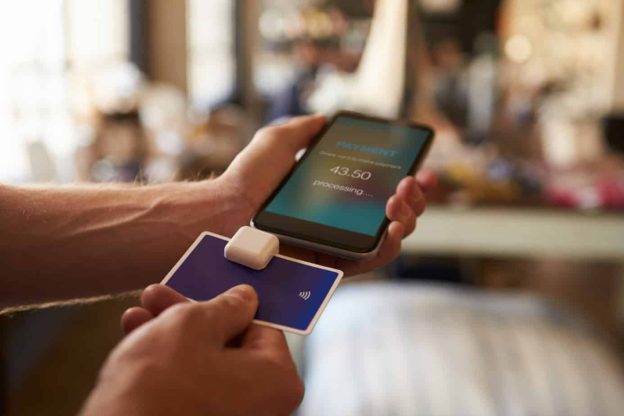
credit card payment app attached to mobile phone 67534402

Today’s Top Credit Card Machines Are Wireless

You can collect credit card payments from anywhere with a wireless card machine. Wireless models are among the top credit card machines you can utilize today. These connect online and help you manage payments from anywhere.

How Does This Work?

A wireless credit card machine uses the same standards for processing a payment as any of the other top credit card machines out there can handle. The machine sends a payment to a processor for authorization, who then sends that request to a card association and then an issuing bank. The device also lets you know if you can approve or decline a transaction.

Since the machine is wireless, it does not require a direct link to an online network or phone line. It will utilize a unique connection system that fits your needs.

What Is the Design?

Most wireless credit card machines are mobile devices. These include tablet or smartphone-shaped items with small screens that let you review payment data. These should also include ports to help you physically read cards. Some models can also support contactless payments.

Traditional POS solutions can also include wireless systems. These include setups that can link to a local Wi-Fi network. Wireless computing items are convenient for how you can start them up in moments and not worry about complicated wires and other things getting in the way.

Some wireless machines come with physical keypads. These allow customers to enter PINs or custom tip amounts. You can also enter in charge data through some setups. The programming in your device will link to many applications to give you further control over your work.

Connection Options

A wireless card machine will use one of many methods for getting online. It can use a wireless cellular signal to reach a phone number. 3G and 4G card machines are common, but some of the top credit card machines today can support 5G signals currently under development.

Other devices can use Wi-Fi connections to get online. You will require access to a suitable Wi-Fi signal to manage transactions, but such signals are ubiquitous enough to where you shouldn’t struggle to find anything of use.

What If You Can’t Get Online?

There might be cases where you cannot get online for any reason. There might be a power outage, or you might be in a rural area where online or cellular signals are hard to reach.

The top credit card machines can save payment data and process those payments when you reach a signal once again. The process ensures you are paid for all your transactions. But you must also ensure whatever payments you collect are legitimate and that the risk of them being declined for any reason will be minimal.

Check To See What Works For You

You can find many of the top wireless credit card machines through your merchant services provider. These machines are effective enough to handle many payments, plus it won’t take long for you to process your transactions from anywhere you go.

build trust with first-time customers

How Online Merchants Build Trust With First-Time Customers

Every business needs to build trust with its customers if they want to have lifelong clients. Customers who aren’t happy with the businesses they support will not trust them all that much. Those who do have trust in these businesses will keep returning to them and will be more likely to spend extra money on services with them. 

The increased assortment of retailers out there has made the need to build trust all the more essential. A customer can choose from many other options if one isn’t happy. The online retail world has especially grown during the global pandemic, as many people choose to shop online instead of through in-person sites.

Trust is especially critical for work, as most customers use trust as their main motivator when choosing who they will shop with and support the most. People want to be assured that they are getting the best possible experiences from businesses and that their payment data will stay safe without potentially being lost.

Online merchants need to recognize what they can do to build trust with first-time customers. Businesses can utilize a few points to grow their business efforts.

Simple Checkout

Customers are likely to trust businesses when they can check out well. Customers don’t want to deal with excess steps when completing their orders. They want checkout experiences that are sensible and easy to follow.

A successful checkout can entail many things:

  • The customer can utilize multiple payment methods, including credit cards or online transfer services.
  • All data will remain secure and protected.
  • People can check and confirm their purchase data to ensure they are buying what they want. The effort reduces the risk of purchase and shipping errors.
  • The checkout section can also include a space where people can enter in codes or other bits of data to get discounts.

Everything in the checkout section should be easy to figure out. Customers will feel more comfortable buying from a website when they see they can check out of a spot in moments.

A Quality Layout

Online merchants also need to ensure their websites are laid out well to where people can easily use them. A good layout can include many features:

  • A website can be easy to load. It should start working in a few seconds.
  • The website isn’t overly complex or convoluted. A website should have clear labels and directions for people to follow. Anything that lets the customer find what one wants in the least amount of time is worthwhile.
  • A page can also work well on mobile devices. People are shopping on mobile devices more than ever before. A page that is easy to read on a smaller screen is a necessity.
  • The images, videos, and other features on the website should come up in moments. The website should not require any plug-ins or other inconvenient items that might be tough to load.

Preventing Errors

Customers will lose trust in businesses when they commit errors. These include issues like shipping the wrong items, charging more for something, or getting things out late. Businesses must plan their work efforts to reduce bottlenecks and remove excess steps to ensure every action stays accurate and functional. The work should be about keeping people comfortable.

Businesses can review their business activities surrounding how they gather data and how they manage shipments. They can also check how each department communicates with one another, ensuring all payments and transactions can safely move forward without risking more losses than what is necessary.

Security Is Critical

Online retail will always have security risks, especially since people send their financial and personal data over a network while shopping. But online retailers can ensure every transaction remains safe and protected by reviewing their practices.

The website PYMNTS.com reports that data security is a critical deciding factor among people of all income levels. First-time customers are especially concerned with security, although older customers who might not be as online-savvy may also worry about what they find while online.

Online businesses can use a few points to help them keep their businesses safe and protected:

  • Proper firewalls are necessary for ensuring legitimate data can come through a network. Firewalls prevent unauthorized parties from trying to enter a website and steal data.
  • Encryption ensures that people can keep their payment data protected from outside parties. Bank-grade encryption and tokenization are especially critical for safety.
  • Online retailers can meet PCI DSS standards for storing card data. The efforts can include keeping card number databases protected while avoiding storage of certain details. All info can also be made available on a need-to-know basis.
  • A website must also be fully functional with no dead ends or broken links. A website that has exposed vulnerabilities is more likely to be hacked.

Proper security ensures customer data will stay safe. The work can be critical for ensuring there are no worries about what a business offers.

Communication Is Critical

Trust is also easier to attain when customers can communicate with a website. There are a few things an online retailer can do to help people interact with a website well:

  • A website can include active social media connections. A website can provide reports on what it offers and updates on different business events through Twitter, Instagram, and even LinkedIn.
  • The retailer’s customer service department should be accessible at all times. Chatbots are popular, although a toll-free hotline that works during certain hours may also be preferable.
  • A help section can also work on a website. A help section can include articles and posts that answer some of the more common questions people might have when doing things online.

Trust will be critical for the success of any online retailer. Trust has become essential, as customers aren’t willing to support businesses if they feel they cannot trust what they have to offer. Proper work is necessary for ensuring a business can move forward and become successful while bringing in more customers.

conceptual business illustration with the words electronic benefit transfer 111905607

How Can You Qualify For EBT Merchant Services?

Electronic Benefit Transfer or EBT merchant services will let you collect payments from people who have EBT accounts. You can help people who qualify for EBT benefits get access to the foods they need. You won’t spend anywhere near as much in processing EBT payments, as they are government-supported transactions. Your business will also become more popular, as customers who have EBT benefits can recommend your business to others.

You can only utilize EBT merchant services if your business qualifies to serve EBT customers. Your business must apply to be a part of the Supplemental Nutrition Assistance Program or SNAP before you can accept EBT payments.

What Stores Are Eligible?

Only eligible stores can use EBT merchant services. You must meet one of two standards established by the United States Food and Nutrition Service:

  1. You must have a substantial inventory of staple foods.

You will need three stocking units of three staple foods in each of the SNAP program’s four staple food categories. These four staple food categories are:

  • Fruits and vegetables
  • Breads and cereals
  • Meat, fish, and poultry
  • Dairy products

You must also have three stocking units of one perishable staple food item in at least two of these categories.

Your business requires 36 staple food stocking units here. A stocking unit is a measure of how many items you have in your inventory. Your business needs to provide enough food here, although the specific amounts you’ll require will vary by food.

  1. You could also derive at least 50 percent of your gross retail sales from sales of foods in the four staple food categories.

You can take your gross retail sales and remove non-food sales, prepared or heated food sales, and accessory food sales to see how much you are selling in staple foods.

Qualify For EBT Merchant Services: Provide the Necessary Info

Qualify For EBT Merchant Services: Provide the Necessary Info

You must also include the proper info on your business to qualify for EBT sales and EBT merchant services. You’ll need these points in your application:

  • Details on all the owners and partners in your business; tax numbers and other identifying features may be necessary
  • The estimated sales totals for each category of items you sell
  • Details on what you sell, including how you support the staple food categories
  • Banking info on where your SNAP deposits will go; these are the funds you will utilize to cover SNAP transactions at your business
  • Details on the EBT merchant services team that will provide you with the necessary equipment for processing EBT payments

The timeframe for when you will be approved will vary surrounding the backlog the government has for applications. It could take weeks or even months to get a response, but you can always check the application of your status online if necessary.

EBT merchant services will be there to help you collect EBT payments from eligible customers. You’ll help everyone with their needs, but you must also ensure you qualify for everything before you start accepting these payments from your business customers.

How Does EBT Work?

How Does EBT Work?

Electronic Benefit Transfer (EBT) is a system that enables individuals and families to receive government assistance benefits in an secure manner, without the need for paper checks or vouchers.

So how does EBT work? It begins by providing recipients with an EBT card to a debit or credit card. These cards are loaded with the benefits they qualify for, such as SNAP (Supplemental Nutrition Assistance Program) WIC (Women, Infants, and Children), or TANF (Temporary Assistance for Needy Families).

When making purchases at retailers recipients simply swipe their EBT cards through a point-of-sale machine. The purchase amount is then deducted from the balance on their card.

EBT transactions are processed instantly using networks. Recipients can also check their account balances online or by calling a toll number provided by the issuing agency.

It’s important to understand that EBT can only be used to buy approved items within categories. For instance, SNAP benefits cover food items, like bread, milk, fruits, and vegetables. Cannot be utilized for alcohol or tobacco products.

EBT has made the distribution of benefits and has helped to maintain the dignity of those who require government assistance by providing them with access, to necessary goods, without any social stigma.

Future of EBT and Potential Advancements

Future of EBT and Potential Advancements

As technology continues to progress so does the potential, for advancements in Electronic Benefit Transfer (EBT) systems. The future of EBT looks promising with possibilities on the horizon.

One area that shows promise is the integration of applications with EBT systems. This would allow users to conveniently access their benefits through their smartphones eliminating the need for cards or paper vouchers. With more and more people relying on smartphones for tasks this advancement could greatly enhance accessibility and convenience for individuals receiving benefits.

Another exciting advancement is the inclusion of biometric authentication methods in EBT systems. This involves using fingerprint or iris scanning technology to verify a user’s identity during transactions. Not only would this improve security by reducing fraud and unauthorized use but it would also simplify the process by eliminating the need for PIN numbers or passwords.

Moreover, ongoing research is exploring how blockchain technology can be utilized within EBT systems. Blockchain has garnered attention due to its transparent nature making it an excellent candidate for enhancing transactions like benefit transfers. By leveraging technology EBT systems could further enhance security measures. Streamline auditing processes.

Additionally, artificial intelligence (AI) holds potential, in advancing EBT systems.
AI algorithms have the capability to examine patterns, in data and provide predictions based on an individual’s needs and spending habits. This enables benefit programs to customize assistance programs effectively addressing requirements, with efficiency.

When envisioning the future of Electronic Benefit Transfer (EBT) we can anticipate advancements that offer immense potential. These developments encompass applications, biometric authentication methods integrating technology, and utilizing AI. Not do these advancements promise to enhance accessibility. They also aim to bolster security measures concerning benefit transfers.

Frequently Asked Questions About EBT