Tag Archives: tokenization

data breach glitchy words 187141456

How Businesses Should Prepare For a Data Breach [2023 Update]

You might not want to think about it, but there is always a potential your business could be hit by a data breach. The info you keep on your customers, your finances, and other sensitive factors could be at risk of being lost. You can prepare for a data breach if you look at how you’re managing your business and how you recognize whatever may work at any moment.

Establish a Relationship With Your IT Department 

what is a data breach

The first way to prepare for a data breach is to look at how your IT department operates. Most businesses assume their IT departments are all about keeping their websites online. But IT is also about reviewing data connections and preventing hostile parties from getting online.

You can produce a better relationship with your IT department to help establish more control over possible threats. You can request many points from your IT department to ensure everyone’s safety and protection while online:

  • Establish parameters for how you’ll use security setups and features for your workplace. These include hardware and software-based firewalls and antivirus programs.
  • Communicate with your IT department on how you’re handling your customers’ data. You can share how your business is complying with CCPA standards.
  • Have a fractional privacy officer on hand to help you review your IT efforts. A privacy officer can identify possible flaws and issues with your security and IT functions and provide guidance on how you can fix any problems you notice.
  • Produce a data mapping platform where you’ll illustrate how the data you collect will travel and where people can find and use it as necessary. The data map should include enough locations surrounding how you’re managing data and making it accessible for multiple situations.

Every system in your workplace needs proper controls to ensure you’re keeping your data secure and protected. Be certain when running your business that you have a plan for how you’re managing your data as necessary and that there’s a plan for where everything goes.

Data Breach – Plan a Response Team

A data breach response team can review whatever threats come with a breach and identify how to resolve the issue sooner. You can establish a response team with multiple positions:

  • Every response team needs a leader that will run the reaction effort.
  • A customer care representative will contact the public and provide info on the breach. The worker should ensure all customers are confident the situation works well.
  • A few members of the IT team should review the compromised data and identify any hacking issues or other threats.
  • The C-Suite team will also plan a response to the breach surrounding how data moves and how it will be preserved and saved. Any backups for whatever is working here will be necessary for everyone’s safety and protection.

All members of your response team should be easily accessible when the time for work comes. Everyone should have a plan for how they’ll manage the data in hand and keep it under control.

Data Breach - Plan a Response Team

Plan a Least Privilege Model

A least privilege model is a platform where your employees will only have access to the smallest amount of data necessary to manage your work. You can incorporate this point into your data protection plan to reduce the risk of employees spreading excess data amounts.

You can also use a tokenization system that disguises identifiable data and keeps the content in a secure space where it cannot be decoded. This point works with a least privilege model to reduce the identifiable data that appears when handling a transaction.

RBAC Also Helps

Another point to plan entails the roles people have when accessing data. An RBAC or role-based access control system will assign permissions to each employee based on their roles. While they can still interact with the least amount of necessary data, you can restrict your employees surrounding who will review the specific data you’re managing in your work. People who have more experience with certain systems may be allowed access to those setups, while those with less experience or work will not handle as many items here.

Data breach  - role based access

Review Your Current System

Check your current data storage system to reduce your risk of possible damage if your data ever becomes lost. Your current review can include a check on a few points to ensure everything you manage stays functional:

  • Look at your current encryption system. The encryption you utilize should be secure and should target payment info and identifiable data on customers.
  • Keep all software current by using the proper installations, patches, and other updates. Proper updates ensure all possible security risks are closed off, reducing the risk or severity of potential hacks or disruptions.
  • Monitor whatever software programs or other solutions you use when controlling data. Any security programs you use should be easy to control and configure.
  • Review the passwords people are using when handling data. All passwords should be kept private and complex to where they are hard for people to predict. You could establish a system where each password must have a specific number of characters or certain types of items.

Be Prepared For Possible Failures

While you should plan to succeed in everything you do, you should never assume you’re going to be successful every time you manage your business’ data. Having a response plan can make a difference, as it helps you contain possible damage and reduce the risk of the harm becoming worse than necessary. Proper control over your situation and how you’re managing your business is ideal to your success.

A data breach can be a scary concern for you to consider when running your business. But it doesn’t have to be a dramatic risk if you look at how you respond to the threat. Be sure you look at how you’re managing your data breaches and that you have a plan for what to do if one occurs. The work should be about ensuring everything stays safe in your business.
tokenization technologies chalk icon 221656736

4 Reasons To Use Tokenization

Tokenization is a unique practice that keeps the data you process safe. It replaces account numbers and other private bits of data with random numbers. The numbers combine to form a token that handles the data you collect.

The personal data inside a token will stay in a separate token vault. The vault includes the actual data relating to what is on a token. Any fraudster who tries to capture a token will find it useless, as the token does not include any viable data. All the details necessary for a transaction will enter a separate token vault that the fraudster cannot access.

Tokenization works for all sensitive pieces of info you wish to process. It works with credit card data, account names and numbers, passwords, files, and anything else you might transfer or use in your space.

Tokenization is a standard worth exploring when accessing and handling your data. Here are four useful reasons for why you should use tokenization for your work needs.

  1. Tokenization is more secure than encryption.

The process is different from encryption, as a token does not have a mathematical relationship with the original account. Encryption entails using a key that can decode the data in a set. But the key has some mathematical link to the data it will unlock.

A token will include random numbers that mask the actual data in an entry. For example, the last four digits of a credit card may appear in a tokenized report. The remaining data would be in a token vault or storage place kept separate. An outside party won’t have access to the vault, ensuring the content in the token remains safe and less likely to be compromised for any reason.

The problem with encryption is that a hacker can accurately produce a key for the encrypted data with enough effort. Hacking technology has evolved to where encrypted data can be broken into, although anything with more bits of protection would be tougher or impossible to manage. Tokenization eliminates that risk, as the hacker has no way to resolve the random strings of characters in each token.

  1. Tokenization does not require you to store sensitive pieces of customer data in your private system.

Tokenization works with a payment gateway to collect data without exposing customer information. Since card numbers and other pieces of data move to a separate vault, the info will not be open to any outside entities.

The tokenized data will stay in a separate off-site station. It can work in a cloud-based server to ensure you can access that data as necessary. The cloud-based design can also reduce security risks by using high-grade encryption data without any set physical location where something could be intercepted. The cloud system also reduces possible liabilities, ensuring all parties will have full protection over the content.

You can request anything to be tokenized, and the outside server will help you with the process. The server will collect whatever data you get from each token and will charge the right payment based on the content. Since the token doesn’t have the specific details on someone, outside parties won’t be capable of intercepting these details and using them in some form.

  1. Tokenization supports recurring payments.

Some customers might provide recurring payments, whether they are subscription-based clients or people who enjoy doing business with you. Their data needs proper protection and security to ensure their trust and comfort.

The token data for each client will remain the same with each transaction. While the private data is secured separately, the token will include the same data to identify the person completing a transaction. The effort takes less time to process, giving you further control over whatever works in your business.

The token can work for future transactions, but it still will not require any further sensitive bits of data to make things work. The same data on the outside system will work each time. The data remains identical and does not require the user to add anything new.

The customer can change one’s address or payment option as necessary, but that will require a new token. The new token can replace the old one in moments in your system, helping create a seamless approach to handling the data right.

  1. Tokenization can support some of the latest payment processes.

Payment technology has never been greater, as people can pay for items in many ways and with less effort. Tokenization makes this possible, as it provides a safe way to transfer card and account data from many platforms. The design provides a good way to help you manage payments and to get everything working right.

Tokenization works on mobile wallet platforms like Apple Pay or Google Pay. A user’s card data stays on one’s device as a token. The mobile platform will also add further safety measures like biometric identification support or other authentication features. But the mobile wallet system will still use the token to process the data.

Tokenization also works for in-app purchases. Each customer’s card info in an app features a separate token. The app can review whatever token is being utilized to complete a payment and process it from there. The customer doesn’t have to add one’s card data once more, as everything is already in the separate token vault. The process lets the customer pay for things faster.

The general process allows quick access to whatever payment methods someone wants to use. The design ensures all data can move through effectively enough without risking possible losses in whatever work someone wishes to plan.

All of these points about tokenization make it one of the best solutions you can use when handling sensitive pieces of data. Look at how well tokenization can work if you’re aiming to handle transactions in moments. It adds a safe approach to work you can trust for whatever needs you may hold when keeping your business running.

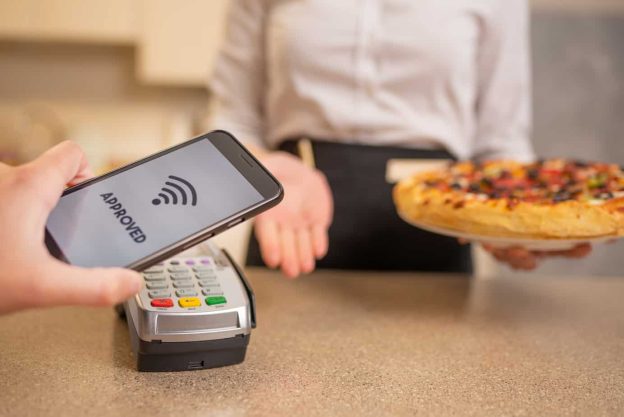
payment by contactless payment for pizza in a restaurant or cafe cashless payments banking services a new life according to the 190394627

Are NFC Transactions and Instant Payments Secure?

Near Field Communication or NFC technology has become one of the most popular features of mobile devices today. NFC technology helps run various contactless payment systems like Google Pay and Apple Pay. You can use an NFC payment system to make contactless transactions at various stores that accept these instant payments. Your business can also collect NFC payments if you have a processor that can read NFC signals. 

NFC payments are convenient, but these instant transactions can be vulnerable to theft and other concerns. You can use a few measures to ensure these are safe at your workplace.

The Main Concept

An NFC payment entails two devices wirelessly interacting with each other. The two devices should be about four inches apart.

An NFC chip in one item will transfer data to a receiver. For payments, the NFC chip sending the data is the smartphone or other payment device. The receiver will collect the payment data and then provide confirmation to the phone or device. The device may trigger its digital wallet to start working to finish the transaction.

The process provides instant payment. A receiver can collect credit card data or other payment info from the NFC chip on the smartphone, tablet, or whatever else one is using.

NFC payments are available on most mobile devices. Android 4.4 or later devices and iPhone 6 or later iOS devices can support NFC payments.

Some payment cards include NFC chips. You can tell there’s an NFC chip on a card if it has a signal showing a few waves coming from a card-shaped symbol.

The NFC payment process is popular for how people can complete a payment in less time. The fast scanning approach makes it easier for people to pay for things in moments. The contactless process is also useful, as it ensures a read without worrying about a card reader that might malfunction or a card that isn’t easy to read.

Close Distance Support

NFC payments require a close distance between the two objects. Since you need about four inches of space between the two items, it becomes hard for outside parties to try and steal data from a payment.

Some people may physically tap their devices on a sensor, but that is not necessary. It can take a second or two for the sensor to read the NFC signal.

Tokenization Is Critical

NFC payments are mostly secure thanks to tokenization. Apple Pay and Google Pay use tokenization technology to replace your real bank or card details with random numbers. The unique string of numbers is distinct to your transaction. Outside parties won’t be able to read your data and steal the content.

Two-Factor Authentication Is Necessary

Some NFC payments require two-factor authentication to work. You can supply the necessary second factor on whatever device you will use before making a payment. For Android devices, you can use biometric data or a PIN to confirm someone’s work. For iOS devices, you can use the Face ID or Touch ID system.

Common Risks and How They May Be Resolved

NFC transactions are secure and easy to process. But there are some risks to watch for as well. These issues are easy to correct if you use the right preventative measures:

  1. Data Corruption

Data corruption occurs when a criminal alters the data going to an NFC reader. The criminal adjusts the content to where it is corrupted and unable to be processed as necessary.

Any channels a business uses when processing NFC payments should be secure and encrypted to prevent data corruption. Check your data processor to see what you’re going to get out of a setup.

  1. Interceptions

An interception entails an outside part being a middleman when processing transactions between two NFC devices. The second party will collect the data and edit it before it moves to the intended recipient. The attack is tough to manage and not as common.

You’ll require an active-passive pairing to prevent interceptions. One device will receive the info, and the second will send the data. The process ensures data goes in one way between each party and not in both directions for each one.

  1. Theft

People can steal others’ mobile devices and use them to make NFC payments. The problem can be worse if a person doesn’t use a password protection system.

Customers must conduct their due diligence when planning their NFC payments. They can add passwords to their devices to prevent outside parties from accessing their data. They can also incorporate unique biometric details to add extra control.

Other Things You Can Do To Make Them Secure

You can also follow a few other ideas to help you make these NFC payments secure for everyone to follow:

  • Use a program that confirms authentic NFC payment portals. You can use a platform that prevents jailbroken devices from being accepted. These devices may use altered or modified versions of NFC payment portals. These systems might be vulnerable.
  • Keep all encryption keys you use in your workplace secure and private. These keys must be secure to prevent data from being stolen or incorrectly used.
  • Keep the NFC receivers you use safe from tampering. They should only be accessible when someone is ready to complete an NFC payment. Keeping the receiver out of reach when it isn’t needed ensures no one can alter the receiver’s data.
  • Provide instructions to your customers about how they can use NFC payments. Some customers might use their NFC payment devices wrong, making it harder for them to complete transactions. Customers will get used to what you provide after a while. The point especially encourages people who aren’t familiar with NFC payments to see what makes these so beneficial.

NFC technology is useful for many purposes, but it should work with care to ensure nothing wrong will happen in the work effort. Check on how your NFC system works and that you’ve got a system in hand to help you get something that works well.

Tokenization Makes Card Use Safe

Safeguarding Stored Cardholder Data with Tokenization

In this era of connectivity, consumers are increasingly concerned about the safety of their personal data. Leaders in the merchant services industry are actively engaged in developing new ways to protect customer information. Here at Host Merchant Services, we commit to security by providing our clients with tokenization, the most secure type of cardholder information storage available today. This system has enormous potential for any company that regularly utilizes credit card processing.

Tokenization involves taking in cardholder data and returning a token, a string of letters, numbers, and characters that represents and stands in place of the original data. Each token serves as a pointer for cardholder information, which is securely stored offsite in a cloud-based database. Since tokens do not contain cardholder data in and of themselves, they are essentially immune from the threat of hackers and identity thieves.

Tokenization And PCI Compliance

Tokenization and PCI Compliance

Through data tokens, merchants can safely store customer information with payment gateway providers like Host Merchant Services. This system is particularly well-suited for companies that charge customers on an ongoing basis. For example, businesses that offer subscriptions or memberships generally charge clients around the first of the month.

Storing large amounts of cardholder data for this purpose can create PCI compliance headaches. Essentially, when a merchant retains and stores a customer’s card information, it changes the level of compliance they have to adhere to for PCI DSS standards. You can review PCI Compliance in more detail here, but Tokenization helps to alleviate some PCI issues for merchants and boost transaction security at the same time.

Instead of storing cardholder data on-site, merchants can store tokens and simply pass these tokens to their payment processors at the appropriate times. Upon receiving these tokens, processors use the tokens to pinpoint cardholder data and generate unique credit card transactions. This system is fast and efficient while minimizing the risk of fraud and identity theft.

Helping  Businesses Small And Large

Helping  Businesses Small and Large

Token systems are ideal for smaller companies seeking to reduce their PCI compliance burdens while maintaining impeccable customer security. That said, companies of all sizes use data tokens to simplify their operations. For example, a tokenization-based payment processing system is useful for closely managing even a large-scale customer rewards program. The ability to store the tokens securely while not compromising customer cardholder data, lets a large company deftly keep track of and maintain their rewards program.

As credit card processing becomes ever more critical for modern commerce, many more companies will adopt this robust system of safeguarding customer data. Here at HMS, we are proud to offer tokenization as an integral part of our Transaction Express payment gateway.

A payment gateway is a system of technologies and processes that allow merchants to electronically submit payment transactions to various payment processing networks (i.e., the Credit Card Interchange and the ACH Network). Payment gateways may also provide merchants with transaction management, reporting, and billing services. Payment Gateways essentially bridge the gap between web-based payment options and credit card processors.  To take payments in a store, you must have a merchant account, to take payments online you must have a payment gateway.

Beyond the in-house Transaction Express gateway, Host Merchant Services also supports a variety of other Payment Gateways for your payment processing needs. We are able to customize a payment processing solution that fits your own individual needs. Here is a brief list of the Payment Gateways we support directly.

Services like the ones Host Merchant Services offers demonstrate how the payments industry is working tirelessly to prioritize information security.

Benefits Of Tokenization In Payments

Benefits Of Tokenization In Payments

Tokenization within the realm of payment gateways involves substituting payment information, like credit card numbers with an identifier or token. This token serves the purpose of enabling transactions without exposing the data. There are advantages to using tokenization in payment gateways;

  1. Enhanced Security: Tokenization provides security for information by preventing access and reducing the risk of data breaches. Since intercepted tokenized data is useless without the tokenization system it holds no value for attackers.
    PCI DSS Compliance; Compliance with Payment Card Industry Data Security Standard (PCI DSS) is crucial for businesses that handle cardholder data. By minimizing storage and transmission of information tokenization helps reduce the scope of PCI DSS compliance audits.
  2. Risk Reduction: Replacing card details with tokens significantly decreases the risk of transactions. Even if a token is somehow intercepted it cannot be easily exploited for transactions without access, to a system.
  3. Simplified Compliance: Tokenization assists in meeting regulations related to data protection and privacy.
    It ensures that customer data, which is sensitive is handled securely and in compliance, with requirements like GDPR, HIPAA, and others.
  4. Efficient Operations: Tokenization simplifies the process of integrating payment gateways into systems. By eliminating the exposure of card data during transactions developers can focus on integrating with the tokenization system making it a straightforward process.
  5. Building Customer Trust: Businesses that prioritize the security of payment information are likely to gain customer trust. Tokenization showcases a commitment to safeguarding customer data fostering trust and confidence in the brand.
  6. Convenient Recurring Payments: Tokenization proves advantageous for businesses offering subscription services. Once a card is tokenized it can be utilized for recurring payments without customers needing to enter their card details.
  7. Accelerated Transactions: ** Processing Speed;** Since tokenized transactions do not involve transmitting the information they can be processed rapidly resulting in enhanced efficiency, in payment processing.
  8. Support, for Multiple Channels: Tokenization can be used in payment channels, such as mobile and in-store transactions. This flexibility makes it a versatile solution for businesses that have payment requirements.

In essence, tokenization in payment gateways offers a security measure that minimizes the chances of data breaches and ensures adherence, to regulations. Improves the overall effectiveness and reliability of payment procedures.