Tag Archives: stop online piracy act

SOPA: Rebuttal of RIAA Opinion Pt. 2

This is part 2 of The Official Merchant Services Blog‘s rebuttal of this New York Times Op-Ed piece titled “What Wikipedia Won’t Tell You” written by Cary H. Sherman, chief executive of the Recording Industry Association of America, which represents music labels.

The Real Slim Shady

Mr. Sherman in his article goes on to accuse Wikipedia of spreading misinformation. He tries to find a smoking gun by suggesting the tech giants have an agenda of their own. He accuses them of bias in terms of the story they present, saying they are bending the truth and not being neutral. He even attacks media outlets that supported SOPA for not “taking advantage of their broadcast credibility to press their case.”

This is amazing. In a piece crafted specifically to present the RIAA’s very biased agenda that is featured in one of those media outlets thus stretching the New York Times’ already damaged credibility — lest we forget Zachary Kouwe, Maureen Dowd or Jayson Blair — Sherman accuses his opposition of doing the exact same thing he is doing. Keep in mind, his own executives were gloating about how well the music industry is doing in 2011. But here he is saying the industry is still being harmed by piracy and that Wikipedia is not telling you the whole story. Sherman simply seems to not be as familiar with how the internet works as his employee Duckworth is. To borrow the ever-popular phrase, he’s doing it wrong. He says, “Misinformation may be a dirty trick, but it works.” Not on the internet. People find you lying to them, or manipulating them, and they either make a mockery of you or turn you off. Sorry Mr. Sherman but in this instance, Citation Needed!

Host Merchant Services image about the Stop Online Piracy Act and the players involved.

First World Problems

Mr. Sherman makes another fatal mistake with his article when he types: “The conventional wisdom is that the defeat of these bills shows the power of the digital commons. Sure, anybody could click on a link or tweet in outrage — but how many knew what they were supporting or opposing? Would they have cast their clicks if they knew they were supporting foreign criminals selling counterfeit pharmaceuticals to Americans? Was it SOPA they were opposed to, or censorship?”

Sherman is playing off of a stereotype about the twitter-age, or Net 2.0 –that everything is simplified and broken down into tiny bits of information. That the online citizen isn’t getting the full story is in fact that’s his main idea. But Sherman has forgotten net 1.0, and the strength of what Google, Wikipedia and all of that data really is. Somewhere between twitter campaigns with STOP SOPA avatars and Sherman’s own e-mail inbox is this huge collective database of information, which includes the exact language of the legislation as written. Every single piece Host Merchant Services has written on SOPA has included this link:

Stop Online Piracy Act PDF

Merchant Services Document Download Graphic

Merchant Services Download Button

Many other articles that covered this topic throughout the past year have given links to all of the relevant data and text. It’s the internet Mr. Sherman. The information is just a click away. Many people not only had access to the bill, they also read it. And so their protest was based on the bill itself. Not on the oversimplification you suggest.

Young, Wild but Not Free

Mr. Sherman then takes a wild swing at all of the people who protested SOPA, suggesting some of them are criminals: “But others may simply believe that online music, books and movies should be free. And how many of those e-mails were from the same people who attacked the Web sites of the Department of Justice, the Motion Picture Association of America, my organization and others as retribution for the seizure of Megaupload, an international digital piracy operation? Indeed, it’s hackers like the group Anonymous that engage in real censorship when they stifle the speech of those with whom they disagree.”

So just because people don’t agree with your agenda, they’re hackers who support Megaupload and want free music? That’s the kind of rookie debate tactic that gets you ridiculed throughout the internet. It’s also misinformation and a huge distraction from the topic. The Megaupload arrest is separate from the SOPA debate. This is obvious. The arrest was made under the current law. The FBI was able to crack down on piracy using what is currently in place. That the federal government was able to successfully attack piracy under the laws currently in place would seem to weaken Sherman’s position. In fact data collected on the topic has shown that once the government moved past the Napster issue that Mr. Sherman was so quick to cry about in the opening portion of his article, piracy started to take a huge hit. In fact, that PDF from the IFPI has some compelling statistics about how much piracy dipped after Limewire was shut down. Apparently the current laws have a lot of teeth if law enforcement goes after the pirates and doesn’t waste time going after citizens or forcing search engines and payment network providers to police the internet.

U Jelly?

The last straw with Mr. Sherman’s terrible presentation of his organization’s biased agenda comes from his short and shallow rejection of the Online Protection and Enforcement of Digital Trade Act (OPEN). This bill was drafted as an alternative to SOPA and PIPA. This bill was, excuse the irony, carefully devised by tech industry experts in the government — with an eye toward attacking online piracy but closing the wide open holes that the previous bills contained. The Official Merchant Services Blog helped break this story back in early December, with this blog, where we stated: “A bipartisan group of lawmakers have come out in support of a new law that has been proposed as an alternative to SOPA. Under this proposed legislation, the U.S. International Trade Commission (ITC) would be given the power to investigate claims of copyright infringement on foreign websites. The proposal would also allow the ITC to issue cease-and-desist orders to foreign websites that willfully engage in copyright infringement. The lawmakers demonstrate some clever ingenuity here with this proposal by tapping the ITC for the job of piracy oversight. The ITC already investigates patent infringement complaints and can bar infringing products from being imported into the U.S.”

In short, OPEN is an alternative that was everything Sherman asked for in online piracy legislation that we never received with SOPA or PIPA. It was well researched. It deals with the issues. It has input from tech industry savvy and knowledgeable politicians that know what they’re doing. But Sherman’s misinformation sums up OPEN like this: “The diversionary bill that they drafted, the OPEN Act, would do little to stop the illegal behavior and would not establish a workable framework, standards or remedies. It has become clear that, at this point, neither SOPA, PIPA nor OPEN is a viable answer.”
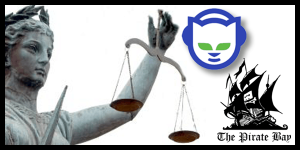
Host Merchant Services image of online piracy

Forget You

Again Sherman glossed over some important aspects of his own organization’s rhetoric. This article found at The Verge cites the RIAA’s opposition to OPEN and its support of SOPA.  The article quotes RIAA Senior Executive VP Mitch Glazier as saying that the ITC “clearly does not operate on the short time frame necessary to be effective.” Glazer cites the delays in the RIM vs. Kodak case — filed in January 2010 but now expected to be ruled on in September 2012 — as a prime example. Glazier sees these delays as hugely damaging, saying that each day a piracy-facilitating website stays online can cost millions of dollars to “American companies, employees and economy,” and be “an ongoing threat to the security and safety of our citizens.”

So again, it’s a case of what Sherman isn’t telling you, while simultaneously suggesting it’s Wikipedia or Google that are obfuscating the issue. The biggest problem with SOPA and what helped get it killed in Congress was that it left things extremely wide open to interpretation. The biggest boon to OPEN is that it requires investigation. Yes, that absolutely does take time. Time needs to be taken. The RIAA doesn’t seem to care about the affects that can happen when a law goes into place allowing swift shut down of websites based on willy nilly complaints or the hidden agendas of competitors. In fact, this is what is wrong with the RIAA’s stance on piracy. They want what caused the protest in the first place. They want to be able to quickly shut down sites with little to no oversight on how the plug gets pulled. So when an alternative is proposed that works more at the a proper speed with investigation, careful consideration of the circumstances and oversight, the RIAA has to denounce that suggestion.

The RIAA keeps pushing for legislation that mirrors SOPA. In fact, this will be the third consecutive year that Senator Ron Wyden [D-OR] will defend our country against the immense loopholes and abusive traits that the RIAA crusades for — Wyden took a stand and singlehandedly curbed the Combat Online Infringement and Counterfeits Act of 2010 (S. 3804) in 2010, and then was at the forefront of halting PIPA this year in the senate. What Sherman is telling us isn’t anything revealing about Wikipedia. No. What Sherman is telling us is that no matter how many times the government tells him that these laws are poorly written and open for abuse, Sherman will keep pushing for this to go through.

Courage Wolf

Host Merchant Services and all other payment network providers have a vested interest in this legislation because they keep getting named in it. These laws keep coming up that require payment processors to be involved in the policing of online content. The issue is just as important to merchant services as the Durbin Amendment. And so The Official Merchant Services Blog is once again here to keep people informed about these developments. The RIAA is singing the same old song about Napster and Piracy trying to push some sympathetic buttons with the people, but at the same time attacking the overwhelming opposition to their agenda, calling them misinformed — and criminal. Suggesting that internet users don’t go beyond twitter messages in the depth of their awareness of issues that pertain directly to the future of their internet usage. And the entire time the RIAA is engaging in this shell-game of misinformation, they’re also gloating about how profitable they’ve been able to make digital music transactions. They claim they know the internet. But Mr. Sherman acts like he still thinks it’s a series of tubes. He might know it’s not a truck, but he’s still doing it wrong.

We’ll leave you with the same message we had days ago when Sherman’s employees were tweeting “DECLARE THAT!”

The bottom line is if Lady Gaga and Pitbull online sales are robust and  legit, it’s probably time to back off the Online Piracy rhetoric.

Stop Online Piracy Act Sparks Unity?

The Official Merchant Services Blog is back from its brief holiday. Thank you for keeping up with us. We have a couple of treats to share with our readers today, though the posting is going to be brief. Host Merchant Services is gearing up its site and its services for the coming of 2012, including The Official Merchant Services Blog. Expect a return to the fast break pace and full industry coverage next week.

Stop Online Piracy Act

Up first for us is coverage of the Stop Online Piracy Act. You’ll hopefully recall that Host Merchant Services gave an in-depth analysis of the Stop Online Piracy Act a few weeks ago, getting out in front of the coverage of this controversial piece of legislation. What prompted this coverage was that the bill included payment processors in its extremely broad scope of oversight, letting the Department of Justice take action against merchant service providers — or Payment Network Providers as they are described in the bill’s wording — for the reported piracy of that processor’s merchants. This struck a chord with Host Merchant Services and other providers and brought the whole topic of online piracy into the arena of merchant services news.

GoDaddy Reverses Position

Outside of the entertainment industry support for the bill has been minimal. The bill has been soundly thrashed by most tech industry companies, ranging from Adobe to Google — you can read Google Executive Chairman Eric Schmidt’s comments on the bill here. Apple and Microsoft initially were part of a group that supported the bill, then changed their position quickly when the details of the bill were hashed out in a congressional hearing.

The latest company to do a full 180 on SOPA support is GoDaddy. Unfortunately, it may have been a bit too late. GoDaddy initially came out in favor of the bill, stating that the company opposed Online Piracy and supported the effort to stop this crime through the legislation. That prompted a harsh critical reaction from its customers, many gathering online to organize a boycott of GoDaddy.

GoDaddy relented and changed its position. As this politico.com article reports: “Go Daddy CEO Warren Adelman said in a statement that lawmakers can ‘clearly do better,’ even though the company stands by its original position that ‘fighting online piracy is of the utmost importance. It’s very important that all Internet stakeholders work together on this. Getting it right is worth the wait. Go Daddy will support it when and if the Internet community supports it,’ he continued.”

But the damage has already been done. Much like Bank of America taking a huge PR hit for its reaction to the Durbin Amendment, GoDaddy is now in the spotlight over the Stop Online Piracy Act. The article explains that GoDaddy was in a precarious position on this issue, as they had a vested interest in fighting piracy being a domain registrar: “The fight over Internet piracy has recently put Go Daddy in a precarious position: As a domain registrar with a vested interest in fighting illegal content, it sat opposite of other Internet companies that felt SOPA and the Protect IP Act threatened the Internet’s backbone.”

‘Unlikely Allies’

In one of the stranger developments linked to SOPA, it appears that the bill is acting as a unifying force for liberals and conservatives. According to this ology.com article Republicans and Democrats are banding together in their criticism of SOPA and becoming “unlikely allies.”

The bill, which was authored by Republican Lamar Smith does have some strong proponents besides just the Hollywood and the Recording Industry. The Better Business Bureau and various Chambers of Commerce back the bill on the very simple premise that online piracy is a serious issue and the crime is hurting businesses in the U.S. But as the article points out, the issue is deeper than that and has created allies among Republicans and Democrats: “The ‘netroots’ conservatives opposed to SOPA have some unlikely allies in liberal and libertarian bloggers. In the end, the battle over SOPA is as clear a case of big industry versus the little guy as there has been in recent years. As politics makes a turn toward the populist ahead of the “great recession” it is highly unlikely that the big studios will achieve a legislative victory here.”

Stay Up To Date on SOPA

The bill itself is currently tabled by Congress and likely won’t be dealt with until 2012. But you can keep up with the latest developments by continuing to follow the coverage Host Merchant Services. Also this google+ feed can be quite informative too: #SOPA

E-Commerce: News Briefs [2023 Update]

The Official Merchant Services Blog continues to follow some of the top trending stories in the e-commerce industry. E-commerce is an essential growth element in most retail businesses. This has been building for years, as online shopping becomes more and more a convenient and commonplace fact of life for the everyday consumer.

E-Commerce Sets Record Highs

It became clear that e-commerce is a titanic force in the marketplace when Cyber Monday sales results came trickling in. But the robust clicks business continued. Now reports are indicating that e-commerce had a record setting week. This internet retailer article said that consumer spending reached at least $1 billion on three separate days last week according to the web measurement firm comScore Inc. This means that three of the four recorded billion dollar spending days for e-commerce occurred last week –– the fourth was Cyber Monday 2010.

The statistical breakdown shows that shoppers spent $1.25 billion on Cyber Monday 2011, the single highest spending day recorded for e-commerce by comScore. This was followed up by $1.12 billion on Tuesday and $1.03 billion on Wednesday. In the time period between Nov. 1 and Dec. 1, 2011, consumers so far this holiday shopping season have spent more than $18.69 billion with online retailers ––up 15% from approximately $16.25 billion at the same point last year.

Will The Trend Continue?

The article quotes comScore chairman Gian Fulgoni as saying “As the deals from this week expire, it will be important to see the degree to which consumers return to the same retailers to continue their holiday shopping, thereby helping improve retailers’ profit margins, or if we experience a pullback in consumer spending—which has occurred in previous years—before promotional offers and spending intensity pick back up in earnest around mid-December.”

Free Shipping appears to entice online shoppers in a major way. According to the article 63.2% of all online transactions last week included free shipping. This makes a lot of sense, since free shipping evens the playing field in the bricks vs. clicks battle. With shipping costs taken out of the equation, it comes down to convenience and price. It’s much easier for shoppers to visit a website instead of fight crowds and stand in line. And the Cyber Monday deals –– many of which got extended past Monday prompting the nickname Cyber Week to emerge –– keep the pricing war ultra competitive.

SOPA Update

With e-commerce business booming so much in the holiday shopping season, the Stop Online Piracy Act (SOPA) and its latest developments become more and more important. According to this PC World article, a bipartisan group of lawmakers have come out in support of a new law that has been proposed as an alternative to SOPA.

Under this proposed legislation, the U.S. International Trade Commission (ITC) would be given the power to investigate claims of copyright infringement on foreign websites. The proposal would also allow the ITC to issue cease-and-desist orders to foreign websites that willfully engage in copyright infringement. The lawmakers demonstrate some clever ingenuity here with this proposal by tapping the ITC for the job of piracy oversight. The ITC already investigates patent infringement complaints and can bar infringing products from being imported into the U.S.

Host Merchant Services offered up an extensive analysis of SOPA, including the history and development of previous laws that affect online piracy and intellectual property rights.

What is notable about this new law being proposed?

new law being proposed

Two of the legislators supporting the use of the ITC as copyright infringement oversight are Ron Wyden [D-OR] and Zoe Lofgren [D-CA]. Wyden is notable because he was the one that effectively killed the Combat Online Infringement and Counterfeits Act of 2010 in the Senate. Lofgren is notable because she is one of Congress’ leading experts on the internet and has spoken out against SOPA on her own website. Having these two support a proposed law that seeks to combat online piracy is a pronounced development.

The new proposal seeks to clean up the problem of SOPA by giving it a more streamlined and functional process for copyright infringement claims. Under the new proposal the ITC could also investigate complaints of copyright infringement by foreign websites. Owners of the websites would be invited to present their side to the ITC, and the public would be notified of investigations, as the ITC does in patent investigations. ITC rulings against websites could be appealed to a U.S. appeals court. All of these aspects are different from the broad powers that SOPA grants to the Department of Justice.

As the article explains: “SOPA would allow the DOJ to seek court orders to stop online ad networks and payment processors from doing business with foreign websites accused of enabling or facilitating copyright infringement. The DOJ-requested court orders could also bar search engines from linking to the allegedly infringing sites and order domain name registrars to take down the websites and Internet service providers to block subscriber access to the sites accused of infringing.

SOPA would also allow copyright holders to seek court orders requiring online advertising networks and payment processors to stop supporting the alleged infringers if those businesses do not comply with requests from copyright holders. The court orders requested by copyright holders could target U.S. websites and services that enable or facilitate copyright, in addition to foreign websites.”

The proposal states its case as being a better alternative to SOPA here: “We found that using trade laws to address the flow of infringing digital goods into the United States makes it possible to avoid many of the pitfalls that would arise from other legislative proposals currently being advanced to combat online infringement. Namely by putting the regulatory power in the hands of the International Trade Commission – versus a diversity of magistrate judges not versed in Internet and trade policy – will ensure a transparent process in which import policy is fairly and consistently applied and all interests are taken into account. When infringement is addressed only from a narrow judicial perspective, important issues pertaining to cybersecurity and the promotion of online innovation, commerce and speech get neglected. By approaching digital good infringement as a matter of regulating international commerce, we are able to take all of these factors into account.”

In short, this proposal focuses on the copyright infringement that is at the root of the online piracy, instead of on the payment processors and e-commerce sites that could get caught up in the broad crackdown that SOPA could initiate.

What’s Your Major? E-Commerce

We noted this on our Facebook Page yesterday, but feel the need the mention it in our blog as well. E-commerce is now becoming a path of study in college. This Practical E-Commerce article links to 15 different e-commerce focused course programs being offered by various institutions, including Carnegie Mellon, University of Maryland, and Temple.