Tag Archives: square

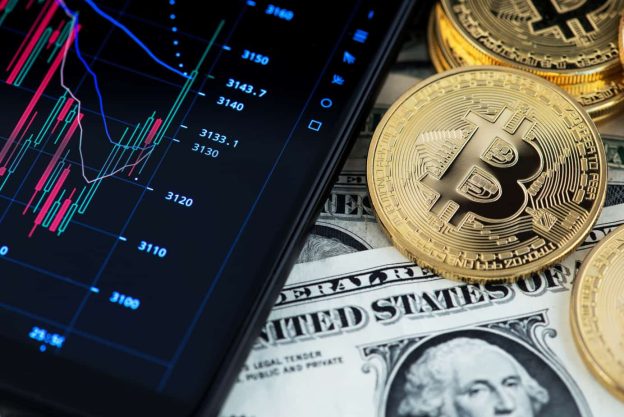
bitcoin cryptocurrency and banknotes of one us dollar next to mobile phone showing candlestick chart 142334515

Square Buys $170 Million Worth of Bitcoin

Bitcoin continues to remain one of the most intriguing investments on the market. Bitcoin has seen a massive rise in its value in the past year. Its value has risen from $30,000 at the start of 2021 to nearly $50,000 in March. Bitcoin also had a record high value of about $57,000 in late February.

One of the largest American financial service providers around is doubling down on its support for Bitcoin. Square announced it had purchased $170 million in Bitcoin. The total equals approximately 3,500 BTC as of March 4.

Much of Square’s support for Bitcoin comes as Cash App customers have helped boost the company’s revenue. Cash App is a mobile payment system developed by Square. Cash App consumers have been trading Bitcoin more than ever, leading to Square doubling its revenue in the fourth quarter of 2020. Cash App helps facilitate Bitcoin transactions to make them easier to run, helping boost peoples’ involvement with the currency.

Square’s purchase is the second such move the company has made. Square purchased $50 million in Bitcoin in October 2020. The total was about one percent of their assets. The company purchased Bitcoin, believing it would be a more viable currency for future international transactions. Bitcoin had a value of about $12,000 at the time.

Bitcoin now makes up about five percent of Square’s assets. These include its cash, securities, and cash equivalents.

Square is the latest company to focus on Bitcoin to diversify its investments and to bring in a potentially higher return on its cash. Other companies like Tesla have been investing in these currencies in the last few years. Tesla particularly acquired more than $1.5 billion in Bitcoin in early 2021, making it where Tesla’s share price is directly linked to Bitcoin’s value.

But the rise of Bitcoin for Square and others comes at high risk. Bitcoin is one of the most volatile investment options on the market today.

Statistics For Square

Square reported a few prominent statistics for Bitcoin and its Cash App use. These points are parts of why Square has invested so much money in Bitcoin:

  • Square reported there were about 36 million monthly Cash App users as of December 2020.
  • At least a million Cash App users bought Bitcoin for the first time in January 2021.
  • At least three million Cash App users utilized Bitcoin payments on the app in 2020. These include people who either purchased or sold Bitcoin.
  • The company’s fourth-quarter revenue from 2020 was $3.16 billion. The total is more than double the $1.31 billion it had in the fourth quarter of 2019. The value is also slightly over the $3.1 billion forecasts from industry analysts.
  • At least half of the quarterly income came from Bitcoin.
  • Square had a minimal customer acquisition cost in 2020. The company spent less than $5 per user. The effort is a sign of the company’s viral marketing efforts helping make it easier for the company to reach more people.
  • More money is flowing through Square’s platforms from both its mobile payments and its traditional storefront kiosks. The gross payment value in 2020 was $32 billion, a $4.6 billion rise from the prior year.

Cash App has also shown it is more viable to Square than its traditional seller business platform. Square had slightly less than $1 billion in revenue from its seller business platform in the fourth quarter of 2020. Part of the move could be due to many physical stores not being open and people focusing on online payments. But contactless payments and the simplicity of Cash App have helped, especially as people become more invested in the currency.

Focusing on Simplifying Bitcoin Efforts

Bitcoin trades are easy to complete with Cash App. Square developed the app to help people transfer funds, and its cryptocurrency feature helps people acquire Bitcoin and others in moments. The company focuses heavily on ensuring people can acquire these currencies while also helping them learn more about how they work. By providing these details, trading efforts can become more viable and accessible.

Stimulus Checks Helped

One reason why Square saw a significant amount of activity in 2020 came as Americans used Cash App to pick up their government stimulus checks. Americans were using Cash App to facilitate the collection process and to ensure they had the funds they needed as soon as possible. The app’s ability to convert funds to Bitcoin and other cryptocurrencies also helped people become more aware of these currencies and how they function.

How Square Stock Is Changing

Square’s Bitcoin investment has helped the company’s stock value rise in the past year. Square trades on the New York Stock Exchange with the symbol SQ.

Square has a value of about $215 as of early March 2021. The stock value grew from $65 in May 2020 to $150 in October 2020. The value went over the $200 mark in November and has stayed over that total since.

Square reports that its net income went from $391 million in the fourth quarter of 2019 to $294 million in the fourth quarter of 2020. Much of this may be due to the increased infrastructure necessary for keeping Square operational. But the ongoing growth of Square and the increased value of Bitcoin will help the company continue to grow and become useful for traders to explore.

Are There Risks?

There is one risk associated with Square’s move. While Square feels confident in Bitcoin, it remains one of the most volatile investments on the market. Bitcoin has a potential to rise or fall by thousands of dollars in value each day. Any investor who is interested in Bitcoin or any other similar investment should watch for the risks associated with doing so.

But the growth of Square and Cash App through Bitcoin shows how appealing the currency will be for many. Expect Square to become a more prominent company as it continues to support one of the most noteworthy trends on the market.

Payment Processing Company Square Raises Fees For Small Transactions

Small Fees Add Up Considerably for Square

Merchants who use the services of credit card processing giant Square, which was founded by a former PayPal executive, can no longer count on flat rates for payment transactions. According to a news report recently published by Bloomberg, Square has rolled out a new fee structure that no longer sticks to the 2.75% in-store transaction charges that the company had in place for years. The fee has been reduced to 2.6%;‌ however, there is now an additional charge of $0.10 per transaction, when the payment amount is $65 and under.

When Will the Change Take Place?

New Square users will be subject to the new pricing structure right away while existing merchants can expect to see the change in early November. In a blog post published by Square in October, the company explained that the new fee schedule corresponds to an effort to align with competitors in terms of transaction costs.

Industry analysts believe that Square is starting to feel the impact of operating costs related to acquiring new merchants, particularly those that have a higher volume of micro transactions. Square is doing business in a sector that sees retailers spending $108 billion every year to accept electronic payments, and the methods the company has widely utilized to sign up new clients include innovative card readers, terminals, mobile apps, and simplified point-of-sale systems;‌ these value-added services, which are heavily geared towards micro companies such as hot dog carts, translate into high operating costs. The $0.10 fee is intended to offset some of these costs, which can hurt a small businesses’ overhead.

Why the Increase?

When compared to other merchant processing companies, the new fee schedule posted by Square is typical; nonetheless, this is a company that has a disproportionate number of users for whom low-ticket transactions are their bread and butter, and they are the ones who are more likely to complain about being charged an extra $0.10. To a certain extent, Square risks losing clients such as the aforementioned hot dog cart operators, coffee shops, and convenience stores, but average retail transactions are estimated to be between $30 and $35. If anything, Square is attempting to gain more new clients, which could be at the expense of their current ones.

According to WCYB, an NBC‌ News affiliate based in Tennessee, small business owners in the region are not happy with the higher fees being charged by Square. The operators of a bakery, a cafe, and a catering provider explained that they will be passing on costs to customers, and they are strongly considering shopping around for a new merchant processor that specializes in small businesses.

Square Amends Terms of Service

Square Amends Terms of Service, Bans Gun Sales [2023 Update]

In a surprising move, Square card reader updated their terms of service agreement that every user must agree to before processing to include the ban of all sales of firearms, firearm hardware, and ammunition. Previously, the agreement had only excluded sales of guns and other weapons from online, mail order, and telephone sales outlets.

The move comes at a time when many brick and mortar gun stores and gun show vendors are doing more business than ever. This increase in volume is mainly due to recent legislation on the state and federal level to limit consumers’ access to certain types of weapons and ammunition. This fear of the unknown for the future has fueled a run on shops that are struggling to keep inventory on their shelves.

Some other notable businesses that ban weapon sales are eBay, a popular online –auction site, and PayPal. This leaves many reputable merchants with a question mark of who they can process their legitimate transactions with in a time when their business is experiencing exponential growth.  The finance arm of General Electric will also no longer provide funding to gun retailers.

Accept mobile payments

For those vendors that do business through gun shows and need a mobile processor for their smartphone or tablet, we offer a great alternative to Square. HMS has a number of mobile payment processing solutions that work with both iPhone and iPad as well as Android smartphones and tablets. For those merchants that have brick and mortar locations we can provide our lowest interchange plus pricing along with our wide variety of terminals and integrations into existing POS systems.

Gun show vendors usually require a mobile payment processing solution

At the end of the day this change to Square’s policy leaves many gun sellers without a means to accept credit cards in a time when business is booming. HMS is a great solution not only because we have many clients that are gun vendors but also because we can provide an affordable rate to maximize the profit from that next sale. I’ll finish with one last intriguing question: what is the best way to recycle all those obsolete little squares…?

Discover Teams Up with PayPal

Discover Teams Up with PayPal [2023 Update]

The Official Merchant Services Blog continues to shine its spotlight of educational information directly on the Mobile Payments Industry. This bristling business sector keeps creating buzz among payment processing persons as well as overall economic assortments. One minute people are predicting hundreds of billions of dollars in revenue will get generated by consumers embracing the cashless society model and conveniently swiping their phones to pay for every little thing that catches their eye. The next minute people are predicting U.S. consumers are too wary and cautious and not ready to expose their information to the cloud and the criminals trying to crack their way into that cloud.

This titanic tug-of-war between “the next big thing” that economic analysts desperately desire M-Payments to become and the “hold your horses hombre” caution that those same analysts caveat the slow acceptance in U.S. markets has been defining the media coverage of the Mobile Wallet Madness for more than a year. But the potential for prodigious profits has pushed the possibilities of mobile payment processing through the morass of misgivings.

Merchants United!

As we purposely pointed out to our peerless readers just mere days ago, the Merchant Customer Exchange was formed. This epic assemblage of retail industry giants teams Wal-Mart Stores Inc., Best Buy Co. and Target Corp, 7-Eleven  Inc., Alon Brands Inc., CVS Caremark Corp., Darden Restaurants Inc., Lowes Co., Sunoco Inc., Sears Holding Corp. and the Publix Supermarket chains into a mega-group of retail merchant might on a mobile wallet mission.

Coming on the heels of Visa’s saturation of the 2012 London Olympics with all things Mobile and all things Visa, the mighty mingling of the MCX merchants applied unforeseen amounts of pressure on the mobile payment marketplace.

Mobile Payment Paring: Discover and PayPal

On August 22 PayPal, owned by eBay, announced a deal with Discover Financial Services to bring PayPal access to the 7 million merchants in Discover’s network. This deal will begin in the second quarter of 2013 and the announcement was made a mere two weeks after Square partnered up with Starbucks to let customers pay with Square’s app at the 7,000 U.S. Starbucks locations.

Excelsior! Retail titans are teaming up with mobile gadgeteers in one mass scramble to make it to market before the U.S. consumer becomes firmly affixed on the easiest and most widespread brand — as is wont to happen with U.S. shopper market behavior.

The PayPal deal is a particular point of note because PayPal itself is pushing from the online marketplace back into the physical realm of brick and mortar. This may indeed help bridge the gap from e-commerce to old fashioned commerce, and that bifrost of payment processing could very well buttress mobile payment processing in a brave new world of cashles-sness and contactless transactions.

The super-powered pairing of Discover and PayPal drove stock prices for each company, with Discover gaining 3.9% and eBay gaining 2.5% on the market the day the announcement was made. This arrangement will greatly accelerate PayPal’s in-store payment efforts. By riding on Discover’s network, PayPal can get into more locations  and get there quickly. Best of all this movement doesn’t requiring any significant integration work by merchants. That potentially puts PayPal at a big advantage against rival mobile payment systems such as Google Wallet, Isis, and Square.
Discover is integrating PayPal’s payment system into its software, which will be uploaded to millions of point-of-sale terminals that support Discover Card payments. PayPal’s branding and rules will be presented to consumers who choose to pay in store with PayPal. PayPal currently has more than 50 million U.S. customers who will be able to take advantage of in-store payments.

Magic 8-Ball on Mobile Payments [2023 Update]

Magic 8-Ball on Mobile Payments: Outlook Hazy, Ask Again Later

Mobile Payments are getting a lot of press right now and are being heralded as the future of commerce. There are quite a few media sources playing the role of prognosticator, tagging Mobile Payments as a billion-dollar boom waiting to explode. But as we creep right up on the 2011 holiday shopping season, the actual impact of Mobile Payments is still short of its predicted potential. So today The Official Merchant Services Blog is going to take a brief look at Mobile Payments, shaking the topic up vigorously and seeing what the Magic 8-Ball (a potential holiday gift in itself) has to say about the whole thing.

Sunshine and Positivity

One of the most commonly quoted statistics about Mobile Payments can already be found in Host Merchant Services Article Archive in a story about Mobile Payments and how bright the future is: A Juniper Research study that predicts the value of all mobile money transactions will grow from $240 billion to $670 billion. That’s a hefty number and makes for sexy copy. Other stats cited often from the Juniper Research study are that digital goods will make up nearly 40% of the market that the $670 billion figure is drawn from. And that Asia, Western Europe and North America will make up nearly 75% of the entire market for those goods.

So that’s the good news. What’s the bad news?

Two Big Problems

The bad news is mobile payments haven’t taken off as quickly in the U.S. as the media reports suggest. The Juniper study sets things in four years in the future. So the boom is still very much capable of happening. But two things are holding Mobile Payments back in this country:

  1. The technology isn’t developed fully yet.
  2. Security issues scare consumers.

The technology is sort of all over the place right now. You have a variety of different ways to process a mobile payment. And the biggest competitors in the industry (Google, PayPal, Amazon.com, MasterCard, Amex, Visa) are all still racing to outdevelop each other. Google Wallet is still not fully there yet. Near Field Communication (NFC)  is still only being tested on a small scale in the United States. The phenomenon simply hasn’t taken root.

Security Concerns

Mobile Payment Security Concerns

The other major problem holding a Mobile Payment boom back in the U.S. is security. People are already worried about credit card hacks, phishing scams and the security of their transactions with plastic or with online transactions. PCI Compliance is a hot button issue, especially in light of Sony’s security breach earlier this year as well as the recent DigiNotar Hack. So technology like NFC where people just wave their cell phone at a scanner make people nervous about how secure the transaction really is. And of course it was already shown this year at a security conference that the Square device from Square Up could be hacked and used to steal credit card information.

All is Not Doom and Gloom

While there isn’t much anyone can do but wait when it comes to the technology being developed, Host Merchant Services provides a nice set of tips for addressing the security concerns.

And the Mobey Forum provides a whitepaper extensively reviewing the ability for NFC mobile payments to take hold, and detailing ways to make that happen.

Blogger Keith Cowing also wrote this interesting read on mobile payments, addressing the issue of security and the worries consumers have over eReceipts. In his blog he asks: “The world of retail is changing faster than it ever has before. Nobody had heard of flash sales, group buying, or NFC three years ago. One of the most exciting changes will be the adoption of mobile payments and eReceipts, which will combine to provide a paperless way to checkout and manage your expenses. But when mobile payments and eReceipts become widespread, who will own your purchase data and how will they use it?”

A very compelling question. He goes on to touch on many of the same talking points The Official Merchant Services Blog brings up about mobile payments. I’ll leave you with Mr. Cowing’s final point: “When a customer visits your website, walks into your store, makes a purchase, gets an eReceipt, or talks about your brand on Facebook, these are all touch points in an ongoing customer experience. Your brand is represented by every step along the way and doing the right thing for your customer is doing the right thing for your business. When it comes to mobile payments and eReceipts, providing a convenient and simple solution is part of the customer experience. “

That’s exactly what it’s going to take for Mobile Payments to reach those lofty Juniper Research predictions. The customer has to experience mobile payment as a convenient and simple solution to their transactions. That’s when the mass of consumers will just seamlessly shift their gears (and their dollars) into mobile payments.