Tag Archives: smartphone

Mobile Commerce

Mobile Commerce Concerns [2023 Update]

Today The Official Merchant Services Blog turns its tech-obsessed eyes once again to the Mobile Payment Solution sector. Recently, Host Merchant Services became fully mobile and able to offer a mobile payment solution for Android and iPhone devices. This expansion continues, and HMS now also provides a payment processing solution for iPads as well. You can read about the expanded HMS Services in our April 9, 2012 Blog Entry.

Mobile devices are ingrained in the lives of consumers these days. Like the recurring ad sarcastically states, the smartphone beta test is over. And people are wandering around everywhere with their phone bringing their social media, camera, and buying power with them.

Suri, the voice of the iPhone, is holding the hands of stars from Samuel L. Jackson to Zooey Deschanel, helping them manage such difficult life tasks as making gazpacho to putting off cleaning till the next day on one’s calendar.

Coming with this ingratiation into our daily lives are two key elements.

  1. We’re really just one artificial intelligence glitch/accident/sabotage away from launching the type of dystopian sci-fi worldview found in Terminator, The Matrix or Magnus Robot Fighter.
  2. We’re flying full force into a world where we’ll also start to wave our phones around like a Hogwarts Magic Wand, paying as we go from place to place, store to store.

Mobile Payments are brisk and bustling because people are buzzing to take advantage of the convenience they offer. Here’s a graphic based on data compiled by the AITE Group showing the trend in spending via smartphone in a 5-year stretch:

But it’s not all phones-n-roses. As one might expect, the state that’s home to Cyberdyne Systems and our eventual AI-overlords Skynet, has a university — the University of California — that did a study titled “Mobile Payments: Consumer Benefits and New Privacy Concerns.”

The bottom line of this study is that American consumers are still wary of what this convenient technology will bring. The study found some interesting answers to questions about consumer thoughts on their privacy.

The study found that respondents overwhelmingly oppose the revelation of contact information to merchants when making purchases with mobile payment systems and an even higher level of opposition exists to systems that track consumers’ movements through their mobile phones.

This article by Kit Eaton at Fastcompany.com dissects the numbers in the study. Eaton states that: “The numbers are stark. When asked if they thought their phones should “share information with stores when they visit and browse without making a purchase,” 96% objected to the tracking, 79% said they definitely would forbid it, and 17% said they “probably” wouldn’t allow it–meaning just 4% were indifferent or positive about the idea. When the question was instead about information sharing (phone number, address, and so on) at the actual point of sale, 81% objected to phone-number sharing–a mere 15% said they’d probably allow it and 3% definitely so. Similar figures emerged when the information shared was respondents’ home address. “

This is all well and good and you can download the study here at this link. But what the study seems to overlook is exactly how many people, many of the people most likely polled in that very study, are already well past the point of no return in terms of their privacy concerns.

Any of those who object to tracking are likely already being tracked by Google and Facebook, social media they use with ease and frequency from their smartphones.

All those who object to sharing contact information may have already shared this information easily and readily when making an online purchase in the past few years. And statistics indicate that e-commerce is booming and replacing brick and mortar in the retail sales tug-of-war.

Eaton catches on to this flaw in the study, and states in her article: “And that’s the key to unraveling this problem right there: When you do use a current-tech store loyalty card you are effectively voluntarily giving the store your personal information, and “tracking” yourself. It’s why the cards exist, of course–they’re partly there as a sales incentive, to get customers back in the door via money-off offers, but mainly so the store can collate information about customers and work out what kind of products to stock, what offers to run, and what future products to plan for.”

And Eaton even points out that in a Pew Research Survey, 71% of Americans use the internet for shopping — meaning that they’ve already typed in their personal contact information.

So essentially, Mobile Payments seem primed to take advantage of the marketplace. The worry over security is still genuine to some extent — identity theft and phasing scams and data breaches abound as we get more and more tech ingrained. But in the end, the American consumers already dove headfirst into this when they fell in love with social media. The tweets, the +1’s and the Likes have already been tracking you. So when Facebook transforms itself into Skynet, or simply when Facebook and Google go toe-to-toe with Visa in the titanic tussle for your smartphone swipes … your dollars will be as easy to find as your latest status update or check-in.


1 Step Forward, 2 Steps Back [2023 Update]

We’ve been covering Mobile Payments here at The Official Merchant Services Blog since the very beginning. In fact, the Article Archive at Host Merchant Services has extensive coverage of the topic as well. It’s just too sexy a topic — everybody loves the allure of gadgets — and too fascinating a financial prediction — folks in the know are predicting Mobile Payments to boom in the billions between now and 2015-ish — to not continually cover Mobile Payments.

But I keep picturing a scene from the 1992 women’s sports movie A League of Their Own in my head every single time I look at the state of Mobile Payments in the U.S. The scene that resonates with me is the one where Marla Hooch — fearsome and uniquely striking power hitter for the team — is about to step into the batter’s box. But she’s getting confused. She steps into the box. Then back out of the box. The reason for her confusion? She’s getting contradictory signals from her Manager and her teammate. One wants her to swing away and unleash the fearsome potential of her staggering offense. The other wants her to play it safe and move the runner over for a better chance to score an efficient run. So there she goes, Marla Hooch, the powerhouse of the league. One foot in the box. Then out of the box. It’s the exact problem Mobile Payments currently faces. The power and potential of what it can do for commerce keeps getting highlighted in story after story, research after research. And then the biggest obstacle it faces keeps getting thrust in front of its face: Security.

Step Out of the Box

Google Wallet, one of the biggest lynchpins in the mobile payment industry’s bid to effectively take hold in the U.S. market was recently plagued by a security problem. This article from ExtremeTech notes the issues that happened to Google and its mobile payment system in a piece that discusses the pitfalls of its beta testing. A pair of bugs forced Google to shut down its pre-paid cards and Google Wallet took a huge hit on the nose in the press. This reinforced the public’s view that mobile payments are a bit scary because people think that their personal information — account numbers, social security information, credit card numbers — will get swiped from them out of thin air. The thought process being that if all they have to do to pay for an item is wave their phone in the air at a cash register, some sneaky net ninja can pluck the data right out of the very same air.

The article sums up the problem: “In the last week, there have been not one, but two exploits that could give a malicious individual access to your Google Wallet mobile payment app on Android. While the first is a root-only hack that Google couldn’t really be expected to plan for, the second affects all Android users and is simple to do.”

It goes on to suggest these bugs popped up due to a core problem with how google beta tests things.

Since that story broke, Google has gone on the offensive, and is now stating that the bugs are fixed. As this cnet article says: “Google has patched a hole in Google Wallet that could’ve allowed someone to access a user’s funds simply by resetting the PIN and using a prepaid card. The company said yesterday it has issued a fix that now prevents a prepaid card from being re-provisioned to another person. It has also restored the ability to issue new prepaid cards following a move on Monday to disable the use of such cards.”

These bugs were a major setback for more than just Google. The Mobile Payments landscape is bubbling with interest but it’s also saturated with variety. There are multiple avenues businesses are considering for their entry point into what research firms like Gartner predict will be big money very very soon. One of those avenues is Near Field Communication (NFC).  The underlying technology of NFC is described as: Near field communication (NFC) is a set of standards for smartphones and similar devices to establish radio communication with each other by touching them together or bringing them into close proximity, usually no more than a few centimetres. Present and anticipated applications include contactless transactions, data exchange, and simplified setup of more complex communications such as Wi-Fi. Communication is also possible between an NFC device and an unpowered NFC chip, called a “tag”.” 

This is the technology that Google tagged to be their entry into Mobile Payments. And so these bugs are a major hit for Google and NFC as a whole, taking one of the most hyped aspects of Mobile Payments down a peg in the industry.

Step Into the Box

In the midst of NFC taking it on the chin, Visa and MasterCard unleashed its EMV initiative — as The Official Merchant Services Blog reported on February 7. This is, in my mind, the Mobile Payments Marla Hooch being told to step into the batter’s box and knock it out of the park. Visa is invested heavily into Mobile Payments, and is prepared to drag the industry kicking and screaming into the future of profits that are being predicted for Mobile Payments. The EMV initiative hinges on chip technology being attached to cards, and for Mobile Payment evolution also being attached to smart phones. What Visa’s investment in this avenue brings is added security. This is huge. The security advantage addresses the biggest fear people have for mobile payments. Visa, much like Tom Hanks, wants Marla Hooch to get in there and swing away.

Going Sci-Fi

This article from Asia One adds another wrinkle into payment processing, and possibly the future of mobile payments: Biometrics. The article cites The Monetary Association of Singapore (MAS) as researching ways to make Debit card transactions more secure. And one of the avenues of research has been biometrics. This could really lead to a breakthrough in the march towards a cashless society, including the use of smartphones for mobile payments. Having biometric security measures on your phone would work in tandem with the chip technology that Visa is pushing, making both the unit you use to store the information — your phone — attuned to your own physiology; and the transmission of your transactions — the swipe of said phone in the air — attuned to a secure chip. Identity thieves and card fraud masters would be stymied on multiple ends and have to work very hard to stay ahead of that security curve in their mission to steal your information and then your money.

The Bottom Line

So What’s Marla Hooch going to do? It looks like Google is sticking with its plan and dedication to NFC. They sort of have to due to how invested they are into the technology already. And it’s no secret that Visa is very much tied into the future of mobile payments, chip card technology, and payment processing security. Both entities are full steam ahead. And with that much tech and finance industry strength behind the initiatives, Mobile Payments will get its chance to swing for the fences. We look for the Google Bugs to blow over and not really hinder Mobile Payments growth much at all in 2012.

For more information on Mobile Payments you can read from Host Merchant Services:

The Official Merchant Services Blog will continue to keep you up to date on the latest advances in Mobile Payments technology.

Customer Service vs. Marketing? [2023 Update]

Much of the content I provide for The Official Merchant Services Blog I write like a news story. The goal there is to provide quality, insightful information on topics that relate to what we feel our visitors and merchants can use in their business. But this is still a blog. And today I’m going to take a more casual, more blog-like approach. In the end though it’s all going to come back to a very relevant point about customer service, e-commerce, and the holiday shopping season.

Good Call Gone Bad

I have ended my relationship with the Apple iPhone. Which is a pretty significant departure for me. I’ve had an iPhone since 2007. While I wasn’t the first in line to get one, I was still a very early convert and had one a couple of months after its launch. I “wow-ed” my friends with its touch screen technology, and became a loyal iPhone customer all the way up until this week.

What Caused Me to Leave the iPhone?

Poor customer service is what caused me to switch to a different smartphone plan and leave the iPhone. Here’s what happened:

I hadn’t upgraded my iPhone in awhile. I was still using the 3G. My battery was getting spotty. My internet connection through it was definitely showing its age. It was time for me to upgrade. And conveniently enough the iPhone 4S had just been released. I thought this was an amazing opportunity to upgrade right before Christmas. And luckily (or so I thought) for Apple, I had two phones to upgrade. I had purchased an iPhone as a Christmas present for my mom a couple of years back. And it was on my phone plan, and she was really unhappy with her internet speed on the phone. Win-Win for the Apple store right? Two phones to upgrade.

One Step Forward, One Step Out the Door

So I went into my local Apple store Monday evening looking to upgrade. At $200 per upgrade, I was basically walking through the front door with at the very least $400 to spend on their products.

That’s when things got all bizarro-world. Up was down, North was South, and making sales was not the salesperson’s goal this day. I was told that I could not upgrade my phone that day. That I had to do one of two things:

  1. Log onto their web-site and purchase the phone online directly from the apple store’s site. I was told this would take 1 to 2 weeks to deliver.
  2. Log onto their web-site and make a reservation to pick up a phone the next day. I was informed that I had a very specific window in which I could make this reservation (between 9 p.m. and 11 p.m. at night). I was told that I would run into high internet traffic and would likely have to refresh the page multiple times. I may not make it into the reservation quickly enough because of this (The salesperson compared it to bidding on something on eBay but in my head it sounded more like trying to obtain playoff tickets before they sell out). And I was told I had a very specific window of opportunity to make it into the store the next day to pay for my reserved iPhone.

And after explaining all that, I was ushered out of the store. Just like that, $400 walked out of their store.

Cool Like That

I have to ask: What is wrong with that business model? I mean, I fully understand there’s some marketing tactics being employed right now by Apple. Part of what makes Apple the brand that it is stems from their marketing of “cool.” That their style drives the demand in their product and that they can give that aura of being too cool to worry about beating their competitors with boring numbers. But how far does that extend? Is it a good move to let $400 walk right out of the door? What kind of customer service is that?

To get back to my misadventure, after walking out of the store with no service, I did indeed go home and jump onto the web that night. But instead of visiting Apple’s web site, I went to AT&T’s site –– my phone service and data plan provider. I just wasn’t even going to try and deal with Apple’s site. Especially with all of the obstacles they put in front of me. I did note that AT&T’s site would give me an upgrade to an iPhone 4S and promised 2-day  priority shipping. But I didn’t really investigate the details of what they were going to offer. I was that annoyed with the Apple Store’s treatment of me. I had been a loyal customer of this product for 4 years. I’d upgrade multiple times in the past. And never once experienced anything like this. Apple did not want my money. So as fascinated as I was by AT&T’s offer, it was time to move on.

Ex-Phone to the Next Phone

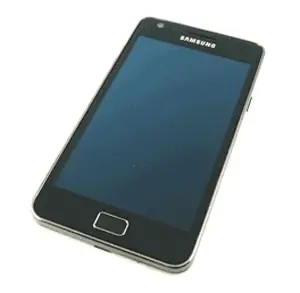
I upgraded my service plan and smartphone to a Samsung Galaxy S II. For the exact same price as the iPhone 4S.

My phone arrived last night. And now for the first time since 2007 I’m not using an iPhone. It all comes down to the customer service.

I’ve read stories explaining that demand for the iPhone 4S is higher than supplies. So that’s why this reservation process exists. However I question the circumstances that led up to this situation existing. The iPhone 4S was released in time for the holiday shopping season of 2011. The iPhone is an industry leader. And this is one of Apple’s biggest releases of the year. What prompted them to under produce?

I tend to think it’s part of their “oh so cool” marketing strategy. By under producing they help continue to stoke the flames of demand. It’s this slick new gadget from the hip tech company. And you want it even more because you can’t have it.

The Bottom Line

There is a lot of power in that strategy. But as I said to a friend of mine the other day at lunch, Microsoft will stay ahead of Apple on a lot of things simply because Microsoft would rather have my $400, and your $400 and everyone else’s $400. They’d rather make the sale. Customer service wins out over cool branding and hip marketing. And that’s something very important for merchants to remember heading into the most frenzied portion of the holiday shopping season. The iPhone 4S is trying to be the Tickle-Me-Elmo of the smartphone industry. The must-have/can’t-find item. And I am guessing that in the long-run losing out on my $400 isn’t going to hit them very hard. But that’s not a mistake smaller businesses can make.

It’s All About Service

Customer service is key. With e-commerce being so prevalent, consumers are blitzed by options. They can shop around by clicking from here to there. And your business needs to make an impression on customers. Especially those that walk into your brick and mortar operation with money in hand looking to purchase. If the Apple store had done anything to retain my business, they’d have kept me around for a few more years. Instead they showed me the door. Literally.

The Samsung Galaxy S2

I didn’t just decide to blast Apple without checking around to see what the deal was with this. And I do have a certain level of understanding about how the company has to now deal with their short supply and still move forward with trying to sell the product. I have a friend who went through the reservation process and was as flustered with it as I was just being told about it by the salesperson in the store. I also poked around to find some relevant stories and information on this.

Here’s a Conversation Marketing Blog about trouble with Apple Store customer service. The issue is completely different. But I did get a chuckle out of this image. And it underscores my overall theme here –– Customer Service needs to improve.

That blog led me to this article about Gary Vaynerchuk’s book The Thank You Economy. The book makes “a compelling case for why businesses need to adapt to the new reality that one-way push communications are no longer as effective as building a real, sustainable relationship with your customers.”

Which gets round to the whole reason this story exists on The Official Merchant Services Blog: Quality customer service is at the very heart of the Host Merchant Services business philosophy. As our CEO often says, “You stay with us because you’re happy.” It’s just that simple. No contracts, no termination fees, no tricks. Host Merchant Services will not run you off the way the Apple Store feels it can with customers who are looking to spend hundreds of dollars. It’s not part of the HMS philosophy.