Tag Archives: small businesses

Stimulus Bill Provides Second Round of PPP Loans

Stimulus Bill Provides Second Round of PPP Loans

Congress finally passed the much-awaited bill of further COVID-19 relief, which is especially beneficial for small businesses. This second stimulus bill was passed this week and included a second round of PPP loans to support all the affected range of small businesses.

The bill is also quite favorable to PPP borrowers as it comes with loan-forgiveness rule changes. This second round of PPP loans made to help small businesses are known as “second draw loans”. However, the law is still awaiting President Trump’s signature.

Although the rules for these second draw loans are quite similar to the original one, and businesses would be quite familiar with it, there are some drastic changes compared to the original program. Therefore, lenders and small businesses need to speed up to get hold of the process.

The legislation, further, includes some favorable changes to the loan forgiveness taxation rules. It has also added a simplified single-page loan-forgiveness application eligible for loan amounts of $150,000 or less.

How Significant is the Second Draw PPP Loans for Small Businesses? How to Qualify for It?

The second draw of PPP loans is considered to be the most significant development in the US legislation, particularly for the small business owners. Besides, the new legislation bill allocates approximately $284 billion. Under this scheme, the new loans are termed as second draw loans.

The loan limit allowed is $2 million. Also, the amount a particular business will be qualified to draw is estimated by taking the average monthly payroll in the previous year, which is then multiplied by 2.5. This means that with the help of the second draw of PPP loans, you can get funding to support 2.5 months of your payroll expenses.

Furthermore, the bill has special provisions and calculations for food businesses and restaurants. For them, the legislation has offered a larger loan amount, which is estimated by taking the average monthly payroll of 3.5 months.

For instance, if you are a small business owner having an average monthly payroll of $100,000 in 2019, then it would qualify for a loan amount of $250,000. And if you are a restaurant or a food chain owner with the same average monthly payroll last year, then you would qualify for a loan amount of $350,000.

As per the eligibility criteria, to qualify for this second round of PPP loans, you must have less than or equal to 300 employees. This has been reduced from the 500 employee threshold seen in the first round. Next, being a small business owner, you must have already used or are planning to use your original funding.

As seen in the first draw, small businesses can use their loan proceeds within 24 weeks. Additionally, they can use the borrowed funds for rent, payroll, and mortgage expenses.

The good news is that the bill has added some new expenses to their original list of “qualifying expenses.” These include workplace protection costs to safeguard one’s employees from COVID-19, operating expenses, and property damage cover.

Additional Criteria: 25% Revenue Loss

A small business applying for the second draw of PPP loans must prove and certify that it has lost a total revenue of 25% or higher in order to get qualified. This new feature is quite different from the original rules set up for qualifying for PPP loans.

In this rule, the small business just needs to state that its financial instability and uncertainty have made the owner go for the PPP loan. Under this 25% loss-of-revenue estimation, small businesses will need to compare their 2020 quarterly revenue, that is, their gross receipts, with the first, second, and third revenue quarters in the previous year.

To qualify for the second round of PPP loan, a borrower must show a loss of 25% revenue or more from a minimum of one quarter of this year compared to that particular quarter last year.

Besides, the second round of PPP loans is forgivable. However, one must spend 60% of the funds on payroll costs. Also, a majority of the small businesses will likely be using 60% of the loan amount on their payroll costs, since the amount depends upon 2.5 months of average payroll. And because they can utilize the funds over a period of 24 weeks.

When Forgiven, PPP Loans Won’t Be Taxable

As per the new legislation, the forgiven PPP loans won’t be taxable for the small business owner. It is applicable to all the existing PPP loans that fall under the original CARES Act, while also including the new second draw ones.

Previously, before the legislation was framed, the IRS (Internal Revenue Service) used to levy taxes on small businesses for their PPP loans. One good news for all small business borrowers is that their PPP loan will be forgiven while still being capable of deducting all their qualifying expenses, such as payroll.

Further, the new law states that emergency EIDL Grants and Advances will also not be taxable to the small businesses. The emergency EIDL Grants and Advances don’t need repayment in most cases and are considered forgiven.

The Simplified Forgiveness Application

The legislation further said that the SBA needs to create a simplified version of the PPP forgiveness application form suitable for small businesses requiring less than $150,000 PPP loans. This simplified application should be designed in a way to fit in one page.

The application will also include loan information, along with a valid certification from the small business owner, wherein s/he must declare and prove that the funds were appropriately used for the purposes and expenses qualified for. However, the certification should not include any calculations or any other additional or unnecessary information.

In fact, the SBA (Small Business Administration) already launched a single-page simplified PPP forgiveness application for all borrowers requiring a loan amount of $50,000 or less. Moreover, it is quite likely that the SBA will be using a similar application for other borrowers with less than $150,000 loans.

After the President signs the law, which is likely to happen as indicated by the White House, the Treasury and SBA are responsible for offering detailed and interpretive guidance and forms associated with the updated forgiveness rules. They are also tasked to provide thorough guidance on loan guidelines and application processes for the second draw of PPP loans.


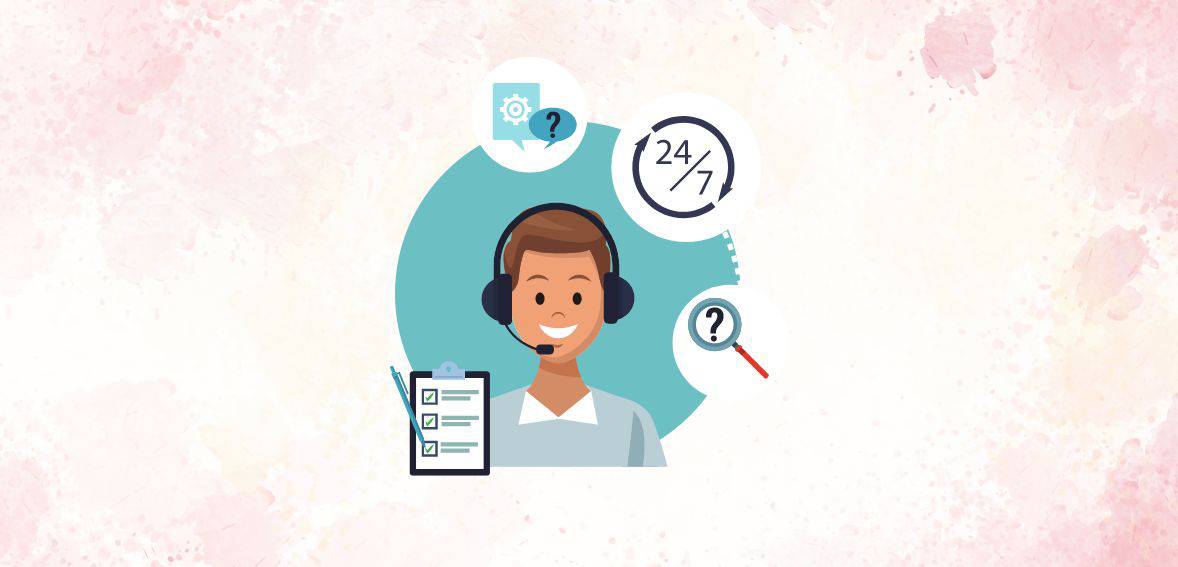
Customer Service: A Big Challenge for Payment Processors

The credit and debit card industry thrives on payment processors and the services they offer; unfortunately, customer service and support seem to be taking a backseat to other factors for many companies. At Host Merchant Services, we believe there is an unfortunate financial motive at play that explains why this is happening.

Consolidation is one of the reasons customer support seems to be lacking these days among the biggest payment processors. Investment bankers see great potential in this industry, and they are approaching big players to make them even bigger players. And therefore customer service has become a big challenge for payment processors.

Once an investment banking firm starts working with a payment processing firm, the prospect of a merger is never far behind. This is how Wall Street operates, and this is how major payment processors acquire their peers and get bigger. Unfortunately, this is also how customer support goes away.

The problem with these consolidated giants is that their customer support platform begins to suffer through growth. Value-added services start piling up, and the smaller merchants will take them because they are bells and whistles, which are always very appealing. The problem is that these features are offered at the expense of customer support. These companies become so large they have to use call centers where you are put on hold for a long period and speak with representatives who aren’t very helpful or knowledgeable about the industry and your account.

Granted, there is nothing wrong with a processing firm offering some bells and whistles for their customers such as free equipment. This would be a very valuable feature for a smaller business that is either starting or expanding to add a new location. In this case, the merchant would love to get new credit card terminals for free, but what about support for this service?

When payment processors offer too much and get too big, they tend to become merchant technology companies. This is when Wall Street investors recommend scaling back on customer support, which is a costly proposition for processors. This is also when online help desk packages are rolled out to replace call centers. There are some large credit card processing companies out there that don’t even have a phone number to call if you need help or would like to sign up. It’s not even an option, which we don’t think is right.

At Host Merchant Services, we believe that customer support is of greater value than the gimmicks the big guys offer. We also believe that customer support will be the next frontier of the credit card processing industry. Once big processors start losing market share due to inadequate merchant support channels, the industry will once again pay attention to this important aspect of the business.

The Importance of Customer Service In The Payment Processing Industry

In the dynamic world of payment processing, customer service plays a crucial role in ensuring smooth transactions and building strong relationships with merchants and consumers. Why is it so important? A knowledgeable customer care representative can handle difficult customers efficiently and help in the growth of the company. On the other hand, a bad customer care executive can ruin the deal and also destroy the company’s reputation.

Good customer service helps to build trust and confidence in the merchants as well as the customers. And especially when it is about any financial information trusted customer support is crucial. With a skilled customer support team any payment processor can easily develop a sense of reliability and enhance reputation.

Efficient customer service reduces frustration for all parties involved. Imagine waiting endlessly on hold or receiving generic automated responses when you need urgent help! Payment processors that prioritize personalized support not only save time but also ensure that issues are resolved quickly.

Outstanding customer service can lead to increased loyalty from both merchants and customers alike. Building long-term relationships requires going above and beyond mere transactional interactions. By delivering top-notch support consistently, payment processors can create lasting partnerships based on trust.

Any payment processor depends on fast and better payment processing and a strong and reliable customer support and service mechanism.

Quality Customer Service: Biggest Challenge for Payment Processors

Quality Customer Service:  Biggest Challenge for Payment Processors

1. High call volumes: For any customer service team high call volume is not a positive sign. If the call volumes are high then delays are natural. The delay starts with the call of the customer when no executive is free to take the call. The second part is resolving the issue after understanding the query or problem of the customer. This can lead to long wait times and frustrated customers.

2. Complex technical issues: Payment processing systems are complex, and when something goes wrong, it can be challenging to troubleshoot and resolve the issue quickly. Technical glitches or system downtime can significantly impact customer satisfaction.

3. Lack of communication: Effective communication between payment processors and their customers is crucial for providing quality service. However, there are often gaps in communication channels, leading to delays in resolving issues or providing updates on account statuses.

4. Fraud prevention: Payment processors must constantly stay vigilant against fraudulent activities that could potentially harm their customers’ accounts. Balancing security measures while ensuring a smooth user experience can be difficult.

5. Limited support hours: Many payment processors have limited support hours, which may not align with the needs of all customers who require assistance outside traditional business hours.

6. Language barriers: After globalization, many payment processing services provide their services globally. Language in different regions of the world varies and it leads to a strong language barrier. Language barriers become a significant challenge for customer service representatives trying to assist non-native speakers effectively. For the company, it adds more expenditure to hire and train customer support staff to cater to customers of different languages.

7. Ongoing training requirements: Customer support and services are always evolving. Therefore it is important to update the staff with proper training and orientation regularly. With evolving technology and industry regulations, payment processor staff need continuous training to stay updated on best practices for handling customer inquiries and concerns.

8. Integration issues with third-party software: Some merchants use third-party software that integrates with payment processor systems but may encounter compatibility issues or difficulties during implementation or troubleshooting processes.

9. Slow response time from other stakeholders: Occasionally, resolving certain customer queries requires coordination with external parties such as banks or card networks; however obtaining timely responses from these stakeholders can sometimes pose challenges

Strategies for Improving Customer Service in the Payment Processing Industry

Strategies for Improving Customer Service in the Payment Processing Industry

1. Prioritize Training: One of the most effective strategies for improving customer service in the payment processing industry is to prioritize training for your customer service representatives. Ensure that they are well-versed not only in the technical aspects of payment processing but also in providing excellent customer support.

2. Enhance Communication Channels: Customers want quick and easy access to the customer service representative. By offering multiple communication channels like phone, email, live chat, etc can lead to a good customer experience. Additionally, a comprehensive FAQ page on your website can help to answer the most common questions for your customers. Make sure these channels are easily accessible and staffed by knowledgeable representatives who can quickly address any concerns or issues.

3. Implement Self-Service Options: Empowering customers with self-service options can significantly reduce wait times and enhance their overall satisfaction. Provide online portals where customers can access account information, make payments, or initiate refunds without needing to contact a representative.

4. Monitor and Analyze Customer Feedback: Customer feedback is crucial for any company for improvement and growth. Therefore, payment processors should regularly monitor and analyze customer feedback to identify areas of improvement within their customer service processes. Use this valuable information to proactively resolve issues, streamline workflows, and enhance overall satisfaction.

5. Invest in Technology Solutions: Technology is ever-evolving. You should be ready to accept and implement new technologies in your customer service system. AI can easily reduce the burden on your staff by handling customer inquiries efficiently. Technologies such as artificial intelligence (AI) chatbots or interactive voice response systems (IVRs) to automate routine inquiries or provide instant responses outside regular business hours.

By implementing these strategies, payment processors can strengthen their relationships with merchants while fostering loyalty among end-users who rely on seamless transactions every day

How Does Decred Work?

Bitcoin Craze Generating Big Profits For Some [2023 Update]

Bitcoin is a topic that most people who spend time on the Internet have heard about. A Bitcoin is not a tangible coin like traditional currency. It is a virtual currency that can be bought, sold and mined electronically. For Andreas Kennemar and Marcus Erlandsson, an idea involving Bitcoins turned out to be beyond profitable.

Mining Computers

In the short span of four days, Kennemar and Erlandsson earned $3 million in revenue. How did they do this? KnCMiner, their company, does not actually own the virtual coins or trade them. Instead, they crafted a computer that is designed to mine the currency online. At $7,000 per unit, these computers are certainly more of an investment than the average desktop or laptop. During the second week of November, KnCMiner sold off all of its inventory when Bitcoin prices were skyrocketing. In a record four minutes, the men made an impressive $600,000.

How To Mine Coins

At first mention, the idea of mining a virtual currency may sound like an easy treasure hunt game to the average person. However, the process is very complex. Without the right electronic tools and equipment, mining a Bitcoin is difficult for a regular computer. There are several cryptographic puzzles that must be solved, and the average computer does not have the ability to compute them. This is where the two men who created the mining computers developed their idea. They used a special chip, which is called an Application-Specific Integrated Circuit or ASIC.

To build a coin, a computer has to calculate an encryption problem that is called SHA-256. The graphic card or ASIC does the processing, and the algorithm must be solved in order to create new coins. The process is commonly called solving a block. When a computer is successful in creating new Bitcoins, it will be verified with other processing computers in the network. The first person to solve a new block is the one who receives the coins. Currently, there are 25 Bitcoins per block with a limit of 3,000 per day before it becomes significantly harder to produce more coins.

The idea of this virtual currency certainly provides opportunities for creative people to make money, but some detractors also argue that the system is flawed or unsustainable.  If anything, the value of a Bitcoin has certainly proven volatile.  Here at “The Official Merchant Services Blog” we’ve covered a variety of aspects concerning virtual currency. We delved into tokenization just recently, which facilitates the processing of payments by creating virtual tokens instead of storing cardholder data in a way that is susceptible to breaches and hacks. We have also covered aspects of micro-transactions and how video games embrace both the concept of virtual currency and the sale of virtual items for real currency. Bitcoin and the ongoing developments in Bitcoin mining takes these concepts to a whole new level of depth and economic intrigue. We will continue to monitor and report on the Bitcoin story as it unfolds.

The Death of E-Commerce? [2023 Update]

I just sat down at my desk and took a few moments to read Antonio Regalado’s fascinating column on E-Commerce from MIT Technology Review. I recommend it to anyone who runs a business, or really anyone who plans to buy something in the next month or two — you know, during the Holiday Shopping Season.

It’s That Time of Year Again

With that holiday shopping season right around the corner the media spotlight on E-Commerce is about to get dialed up a few notches. The standard media grind of finding a new story to keep things fresh, yet rehashing the same old topics over and over again, is really quite fond of the E-Commerce tale since it basically hits every mark needed in a story this time of year. It’s well trod ground (retail sales figures during the time of year when people flock to shop retail), it’s fresh and flashy (buying with a smartphone is the new “it” thing) and it’s easy to write about (everyone’s got a smartphone and in between texts can probably offer an opinion about the story).

So there’s going to be a flood of “E-Commerce, it’s not just for kids anymore!” style pieces written, along with chart after chart of how many billions of dollars are being spent on products through the whiz bang-up new gimmicks of smartypants phones and interwebs tubes (it’s not a truck, but it powers a fleet of delivery trucks!)

It’s this pending recycle of the news cycle that Regalado’s piece really underscores. It’s starts with the subhead of the article, “E-commerce is an idea whose time has come and gone. Here’s why.” A bold statement when placed up against the pending flood of stories that are going to tell us that E-Commerce is (still) the next big thing.

But that’s the hook of Regelado’s article. And it certainly worked its magic on me and got me to read it.

More Than Meets the Eye

Regalado’s point isn’t that E-Commerce is done. It’s more that it’s becoming part of the everyday fabric of retail business. So he’s saying that E-Commerce has been merged into a total shopping experience and is no longer a new gimmick.

The article really slams this point home when it quotes Chris Fletcher, a research director at Gartner (who we here at HMS have used data and graphics from on this very topic). Fletcher told the MIT Technology Review’s Business Report, “we should stop calling it E-Commerce and call it just commerce,” and suggested that it’s really just a part of the shopping experience now.

This quote called up more than a few variants of the corny joke, “In China, they just call it food.” But the point is very well taken this year, and is something we’ve been alluding to for two years now at Host Merchant Services: The whole shopping experience has blending together with Online and Brick and Mortar since the very beginning.

Days of Future Past

This has really obvious but powerful ramifications for our company. As more and more people just accept online shopping as much a part of the process as window shopping or catalog shopping, the amount of credit and debit card transactions continues to increase. Those are the two most common methods of payment in this online environment. And so as the business evolves to the point where popping into a Macy’s ends up auto-texting you a free discount code on your next Macy’s purchase, payment card transactions become the norm.

Keeping an Eye on Heat Mapping

Oh and Regelado’s article really dives into that bit with your location spawning discounts:

” Threatened by the growth of low-cost online merchants, traditional retailers are reacting by following customers onto the Internet. Macy’s does it as well as any. On its website, it installs 24 different tracking cookies on a visitor’s browser. On TV, it runs ads with Justin Bieber that urge millennials to download its mobile app, which tells them which of the chain’s stores is closest to their location. Once inside, they can use the app to scan QR codes on a pillowcase or a pair of shoes. Online orders now ship from the backrooms of 500 Macy’s stores that this year began acting as mini distribution centers.”

Omnichannel marketing is the buzzword associated with this. But it’s something we’ve been discussing at HMS for awhile now. Our partnership with Barclay’s Mobile app opened this slick marketing tactic up to us ages ago. It’s really quite clever. The business uses its connection to your phone (and thus your own transaction history, your GPS location, as well as data that it can find in various places like social media) to track your buying habits.

I remember the first time the heat mapping aspect of Omnichannel Marketing was explained to me by HMS Tech expert Ken Hemmel.

He described a system where I’d be walking along on Main Street in Newark, which was where the Barclays app was being targeted, and I’d pop into a restaurant. I’d buy a meal and have a glass of a particular wine with that meal. The information would then prompt my phone the next time I walked past a wine and spirits store that was participating in the program. And I’d be given a coupon code to save money on a bottle of that kind of wine I had with my meal. This would combine transaction history, with GPS location and turn into an aggressive marketing tactic to get my business.

A Whole Store in Your Pocket

Another salient point Regelado’s article made really resonated with me personally. The article cites US Census economic data and states that only 5.2 percent of US retail purchases were made online in 2012. But then the article cites the effect of online research, noting that 80 percent of BestBuy customers said in a survey that they already searched for price information online before making a purchase in person. And that a third of them do so on a phone while inside the store.

So the last two purchases I made at BestBuy were an HD TV, which I searched for information on while in store, and a computer which I was shopping for online before I went there. I fell right into those statistics. I wanted to comparison shop and read reviews before making the purchase and had the device right there in my hand that let me do exactly that.

The only thing that held me back from ordering either  of these items completely online was impatience. I wanted the item that day. Which is exactly what Relegado’s article also gets into:

“But now [Amazon] and other Internet companies, including eBay and Google, are investing in same-day delivery—getting goods to people just hours after they order them. With their drop boxes and fleets of delivery cars, they’re bidding to eliminate one of physical retailers’ main advantages: immediate gratification.”

The suggestion is that technology is pushing retailers to evolve. They embrace social media, and online power, and create a shopping experience once again tailored to meet the needs and convenience of their customers.

Been There, Done That?

It reminds me of Warren Ellis and Darrick Robertson’s groundbreaking comic book, Transmetropolitan. Set in a Bladerunner-on-acid style future and revolving around a pastiche Hunter S. Thompson-inspired Gonzo journalist named Spider Jerusalem, the comic had a very humorous but also telling take on marketing and advertising in our near future. It suggested neural advertising bombs delivered directly to our brains, tracked by our own viewing habits, to offer us the products we’d be most interested in. As deft and powerful as that future marketing blitz was shown to be in the imaginary world of Transmet comics, the reality is we’re about to be in on the beta test of that entire concept with the way retail is evolving through E-Commerce.

iCloud Keychain to Now Store Credit Card Data [2023 Update]

Apple’s recent software update includes a new product called the iCloud Keychain. With the feature, consumers can save sensitive information in a secure online file. Specifically, Keychain will save passwords and credit card information for all of their Apple devices. The program also helps Internet users create safer passwords.  Given the new functionality allowing users to store credit card data and synchronize with the cloud, we thought this functionality would be of particular interest to our customers and blog readers.

Keychain Details 

The Keychain service operates on Safari in iOS as well as OS X Mavericks. Once it has helped a consumer select a secure password, it will store the information and synchronize it to the consumer’s iOS and Mac units.  The software upgrade also makes credit card processing easier for consumers as Keychain saves the user’s credit card number and expiration date. To abide by MasterCard and Visa regulations, the program is unable to store the Card Verification Value, or CVV, code.

As a result, consumers will still need to input this information manually. Users should keep in mind that the software can only operate in Safari on Mac. Therefore, users of Chrome or FireFox will need to use a different password storage provider. In addition, consumers must have the iOS 7 upgrade installed on their devices.

Installation Overview

While installing the OS X Mavericks upgrade, the system will automatically ask the user if he or she would like to establish iCloud Keychain. When the user approves the setup, the program will direct him or her through the security key creating and linking process. If consumers prefer to establish the program manually, then they can access Keychain through the iCloud settings screen on a Mac device. Once a user has accessed the program, he or she will need to enter the password information manually into the system for the Apple program to save it. Keep in mind that other devices can be added to the program. However, the system will require approval for each extra unit. Once Keychain receives authorization, it will automatically begin updating on that unit. If a user decides to remove Keychain from his or her device, then the cancelation procedure is easy to complete. To remove the program, just click on the settings option and turn off the “Approve with Security Code” feature. Users who change their mind can easily reactivate the program.

Keychain Offers Convenience

Credit card processing is easier for consumers who have Keychain on their iOS and Mac devices. The Apple program is secure and helps users create better passwords to safeguard sensitive information. Keychain is a system feature that provides extra security and overall convenience.

How to Save Money on Credit Card Processing Fees

Here at Host Merchant Services we guarantee to save our customers money every month on their credit card processing. We understand that some of you are wondering how we do this! Transparency is a key cornerstone of our customer service values, so we have no problem sharing our secret formula and show everyone out there exactly how we carve out superior savings for every single one of our customers. We believe that when you get your statement every month, you should understand every item, and it should match what you were promised in the sales process. One of the first things to understand when switching to Host Merchant Services is we utilize the most cost effective and fair pricing available in credit card processing. It is called interchange plus or “cost plus pricing.” Interchange is a set of rates and fees determined by the card associations (Visa, Mastercard, and Discover). What this means is that our merchants are able to clearly see what interchange categories they qualify for. Here are a few different interchange categories that merchants pay with the same consumer visa credit card. Keep in mind each interchange category has a percentage and a dollar amount included in the category.

Supermarket Credit 1.22% + $0.05
Small Ticket (Transactions under $15) 1.65% + $0.04
Standard Retail / Restaurant 1.51% + $0.10
Charity 1.35% + $0.05
Service Station 1.15% + $0.25
e-Commerce / Mail order & Telephone order 1.80% + $0.10

These examples are based on interchange plus pricing. They also don’t include processor markup, and we have the lowest in the industry! There are other types of pricing that processors will use. You may encounter three-tier pricing (1.79% Qualified, 2.49% mid-qualified, and 3.29% non-qualified) for example. Some merchants are priced flat rate (2.9%, or 2.75%) or flat rate plus surcharges. There is also the dreaded enhanced bill back! Once you understand your pricing and category you need to look at how you are accepting your credit cards. Credit cards that are taken face-to-face (card present) often cost less than cards that are taken over the phone or on the Internet (card not present). For example, retail swiped transaction of 1.51% versus an e-Commerce transaction of 1.80%. Card associations justify this increased interchange rate due to transactions not being face-to-face. The next step in saving money is learning how much money is currently being spent on average to take in each dollar on credit cards. This is called your effective rate. This is calculated by totaling all the money you are paying in fees divided by the total amount your business processes in sales and refunds. For example a merchant who pays $300 in fees to bring in $10,000 in credit cards has an effective rate of 3.00% ($300 / $10,000 x 100 = 3.00%). A few other pieces of information are important to solving the puzzle. The average ticket or average transaction amount is also critical to understanding your rates. The reason being is that a $.20 transaction fee is not a substantial amount of an average ticket of $100 ($.20 / $100 = 0.20%). However, take that same transaction fee on an average ticket of $10 ($.20 / $10 = 2.00%). This goes to show that merchants with larger average tickets pay lower effective rates on average. Lastly we want to look at other fees; many processors will charge monthly fees, statement fees, administrative fees, regulatory and product fees, PCI fees, and annual fees. Host Merchant Services will help you save money on these fees as well! You can learn more about this process through our Official Host Merchant Services Road to Savings Infographic. The best way to start the process is to have one of our industry experts analyze a current merchant statement. We will walk you through the confusing process by explaining what you are currently paying versus what you would pay with HMS. Along with the potential to save hundreds to thousands of dollars each year on your credit card processing, we’ve upped the ante with our new $100 Challenge.

Call us today at (877) 517-4678 and let us design a solution that dramatically improves your bottom line – we guarantee it!

AlignCloud and HMS partner up

Host Merchant Services, an industry leading provider of payment processing and e-commerce services for small and medium businesses, announced a promising new partnership with cloud consulting firm AlignCloud. This partnership is the product of extensive research and collaboration and the bold new alliance  represents an exciting opportunity for customers to benefit from the combined expertise of these two companies.

AlignCloud tailors services for cloud providers and end-users alike. From cloud readiness assessment planning to cloud vendor management, AlignCloud provides indispensable services for all cloud customers. For cloud hosting providers, AlignCloud can help providers train sales staff, draft sales plans and fully engage with Web marketing and SEO. With its focus on the cloud and web hosting market, AlignCloud is a natural referral partner for Host Merchant Services.

HMS CEO Lou Honick has aptly summarized the buzz surrounding this collaboration. “Our expertise in e-commerce, payment cost optimization, and security meshes perfectly with AlignCloud to create compelling offerings,” Honick said of the AlignCloud partnership. AlignCloud clients can now seamlessly access secure, reliable merchant services, PCI compliance solutions, and e-commerce.

In the business world, demand for cloud services has reached an all time high. As mobile devices become more important for business, public worries about information security keep pace. Cloud Hosting is a type of hosting platform that allows customers powerful, scalable and reliable hosting based on clustered load-balanced servers and utility billing. Web hosting services allow individuals and organizations to make their website accessible via the World Wide Web.

For AlignCloud’s customers, HMS has designed services to insure absolute peace of mind. According to AlignCloud CEO Stacy Griggs, the program will provide clients with “lower rates and better service for credit card processing, mobile payments and merchant services.” The experts at HMS combine technical knowledge with uniquely dynamic customer service. Through expertise in data security and fraud reduction, Host Merchant Services promotes more confident commerce, both for businesses and customers alike.

A cloud hosted website can be more reliable than alternatives since other computers in the cloud can compensate when a single piece of hardware goes down. Also, local power disruptions or even natural disasters are less problematic for cloud hosted sites, as cloud hosting is decentralized. Cloud hosting also allows providers to charge users only for resources consumed by the user, rather than a flat fee for the amount the user expects they will use, or a fixed cost upfront hardware investment.

For Host Merchant Services, the partnership with AlignCloud is part of their successful strategy to partner with the web hosting and cloud services industry. Companies like AlignCloud can better serve clients by integrating credit card processing into their offerings. Through Host Merchant Services, AlignCloud customers will experience hassle-free credit card processing with 24x7x365 hour technical support and responsive website.

Clients of AlignCloud can also earn extra revenue by referring their customers to the program.

Are Credit Card Rewards Points Programs Harmful?

Over the course of the past ten years, credit card providers have ramped up their efforts to woo consumers with point-based loyalty programs.

Custom gift cards and loyalty cards are a great way to encourage repeat business and so many merchants have embraced the concept that the credit card providers have pushed. These redeemable Transaction Cards let customers make flexible decisions when purchasing goods or services from a merchant.

Early in the history of credit cards, most financial institutions were too dignified to offer game-like rewards systems involving point accumulation. As time went by, it became increasingly clear that nearly all types of credit card users were energized and excited by point systems. In the early part of the last decade, easy credit led to a dizzying proliferation of rewards programs. Although credit limits and eligibility requirements have tightened in recent years, credit card issuers maintain loyalty programs as integral parts of their marketing initiatives.

On an individual, case-by-case basis, rewards programs create very attractive incentives for customers. The public record abounds with stories of individuals who use reward points to gain earn free flights, hotel stays and other financial advantages. Collectively, some loyalty programs inspire widespread exploitation and abuse.

Since point-based reward programs are textbook examples of gamification, it is little surprise that many program members are gaming these systems irresponsibly. These individuals have perfected cunning “ghost transactions” that earn points without adding real value to the economy.

One popular technique is to purchase numerous gift cards with credit, only to use the gift balances to pay off credit card balances in a circular fashion. Though most of these schemes are technically legal, they consume manpower and resources in an exploitative manner. Point churning is a zero-sum game that leads to more expensive payments processing for retailers. Ultimately, many of these increased costs are passed on to the general public.

Point system abusers only account for a small percentage of loyalty program members. Even for ordinary users, rewards programs aren’t always as beneficial as they first appear. Individuals who use loyalty programs need to read and understand the fine print of program rules and regulations. In many cases, gains from cashing in points are fully offset by the costs of using additional credit. At their best, loyalty programs are engaging systems that spur responsible spending. However, economists argue that aggressive rewards programs can distort incentives and upset natural credit use patterns.

Here at Host Merchant Services, we are sensitive to how responsible credit card use contributes to the health of the broader economy. We provide our customers with tools to better understand and fulfill the needs of the public. Flexible, responsive payment processing encourages consumers to use credit with caution and care.

Shopping Cart Templates

If your website runs an online store so that it can sell merchandise to customers, there are several methods that you can use to sell your product to the customer. However, the most efficient method of getting customers to buy your products easily is to use a shopping cart. There are many benefits to shopping cart templates.

Benefits of the Shopping Cart

When a website decides to sell a whole catalog of items, they will typically make it easier for customers to buy multiple items by allowing them to use a virtual shopping cart that will store all of their items until they decide to check out. It would be a hassle to have customers buy items one at a time, and the shopping cart eliminates this difficulty. It is common practice to make it as easy as possible for customers to purchase goods so that they don’t change their mind.

Not only does it make it easier on the customer, but on the credit card processing company as well. Shopping carts can be used to create a list of items that need to be shipped out on your end. This is a lot easier than going through one item at a time and matching it with the customer ID so that you can send it off to the correct place.

Coupons and Deals

The shopping cart idea also allows for the use of complex coupons and deals. For example, if you have a buy two get one item free sale, the shopping cart keeps track of the amount of items that the customer buys and will be able to implement the deal without any outside work. It not only keeps track of the amount of items that the customer buys, but can keep track of the total money spent that can be used for other deals. Without the shopping cart, it would be difficult to track this information.

Adding Items

It is really easy to add items to your product list with a shopping cart. If you have a quality shopping cart template, you will be able to enter this information into your website very quickly. If you have a website that is constantly changing the products or services that it offers, this could be vital.

Creating Your Shopping Cart

It can take a lot of work to construct a shopping cart from scratch, so you can save time by using shopping cart templates. These templates already have all the graphics and coding completed, and are easy to use. You will be able to quickly learn how to place the cart on your own website, add and remove items that the customers can buy, place in deals and coupon codes, and every other aspect of the cart.

Once implemented, customers will be able to use it to keep track of their items. They can then proceed to a checkout menu and enter in their information that will send the payment to your account, and give you detailed information about the placed order.

Conclusion

Customers are much more likely to purchase from an easy to use website that specializes in simplicity rather than a website that they need to adapt to. This is a waste of their time…so increase your sales and reduce wasted time by using a shopping cart for your online store today!