
Tag Archives: Samsung Pay

Contactless Payment Trends in 2020 – Apple Pay, Google Pay, NFC, and More

Amidst the global pandemic, many countries are resuming the routine life and easing the lockdown. However, recent studies have shown that around half of the US population is still worried about their health and how shopping, eating, and social interaction can affect it. Therefore, many businesses and shoppers are more inclined to make contactless payments, which has shown a 40% jump in the first quarter of 2020. As the payment trend has grown prominence, NFC-enabled payments across the world can exceed $130 billion within 2020.

What are Contactless Payments and Their Global Outreach?

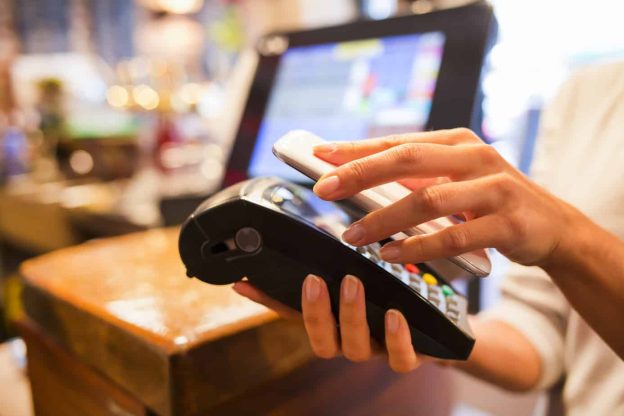
Contactless payment is a well-encrypted, secure payment mode to buy products or services using NFC (near field communications) enabled devices or cards. When the reader and payment device are near, it activates NFC chips to exchange encrypted data for money transfer. In simple terms, you wave your device in front of an NFC powered payment terminal to make purchases, contact free. But you also require NFC-encrypted payment apps such as Apple Pay, Google Pay, Fitbit Pay, or Samsung Pay on your mobile device to make the contactless payment happen.  Some credit and debit cards also have contactless capability embedded in chips that you can then wave or tap to pay on an NFC enabled reader.

Before the Coronavirus outbreak, this global trend wasn’t prevalent in the US, as only 10% of the consumers were using the technology. Europe however had the largest share in the contactless payment terminal market, due to an increase in smartcard rollouts and technological advancement. According to UK Finance, around 1/3rd of all the card-based payments happened through contactless methods in Q1, 2019. However, the Asian region has been slower to adopt NFC based technologies due to its efficient QR code system that doesn’t require select apps, or POS systems.

Coronavirus – The Driving Force for Contactless Payment in the US

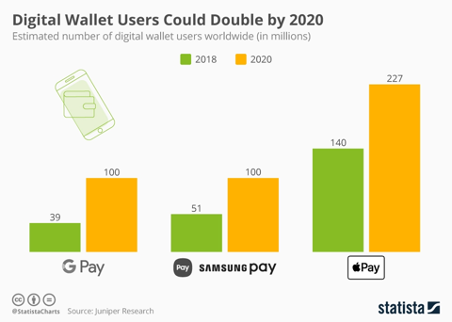
The number of digital wallet users worldwide has doubled in 2020, with Apple Pay and its 227 million users becoming the most prominent, according to the Wall Street Journal.
apple pay google pay samsung pay

https://www.statista.com/chart/19972/digital-wallet-users-double-2020/

The pandemic has redefined consumer priorities, making no-touch payments a necessity. New York Transit Authority laid the groundwork in May 2019, when it announced contactless payments for select subway lines. Being early adopters, they were still pretty late in the global market in relation to other significant metropolises, including London Underground System which adopted the technology in 2014. It is not only public transport, but the worldwide financial industry that relies on contactless payments today. In the Netherlands, every store allows no-touch payment methods, whereas the US didn’t have major adoption for NFC until 2019 when contactless payments increased by 150%.

Meanwhile, food services brands such as Starbucks, McDonald’s, and Dunkin’ led the way with their contactless payment apps. The wearable market also accelerated the adoption rate in the US with the popularity of smart watches and similar devices. The tech-giant, Apple, teamed up with many different brands to improve mobile payment experience. Scooter rental company Bird and clothing retailer Bonobos some notable partners offering NFC-enabled payment to Apple users, without the need for any third-party apps. Small businesses have also reported a 27% growth in the contactless payment made through smart cards and mobile phones.

Nevertheless, card issuers control the widespread adoption of contactless payment in the US. Analysts believe NFC-enabled technology can coexist with traditional card systems and mobile wallets as depicted by tech-savvy nation worldwide.
Should my Business Adopt Contactless Payments? [2023 Update]

A Guide To Contactless Payments

What are contactless payments, and how do they work? Are they completely safe, and should you opt for the convenience of contactless payments? Over the years, technology has changed, and it has brought innovations in the way we conduct business and also in the way we many things. One of the innovations in technology is contactless payments and the tap and go form of payments. This article will talk about how you can use contactless payments, and it will also help you differentiate between contactless and cashless payments.

Contactless Vs. Cashless Payments

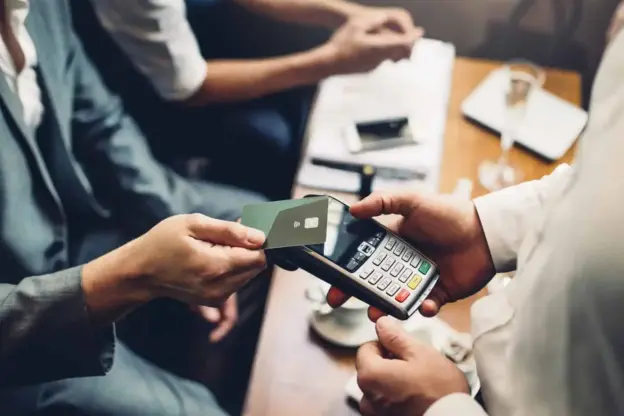
Contactless payments are two terms that are often used interchangeably, but these two terms are very different. Cashless payments are payments that are made without using cash and bank transfers, credit card payments, etc. are all categorized under cashless payments. Contactless payments are the form of payments that use radio frequency identification technology to make payments. Some examples include Apple Pay, Google Pay, and Samsung Pay. Instead of swiping your card, you simply wave your card to make payments, and you don’t require any signature or any pin number entered on the payment terminal. All you need to do is wave your card or smartphone near the payment terminal, and your payment is made. With smart phones, authentication may be required in the form of a pin, facial recognition, or a fingerprint scan.

What Are The Problems With Contactless Payments?

nfc apple pay google pay

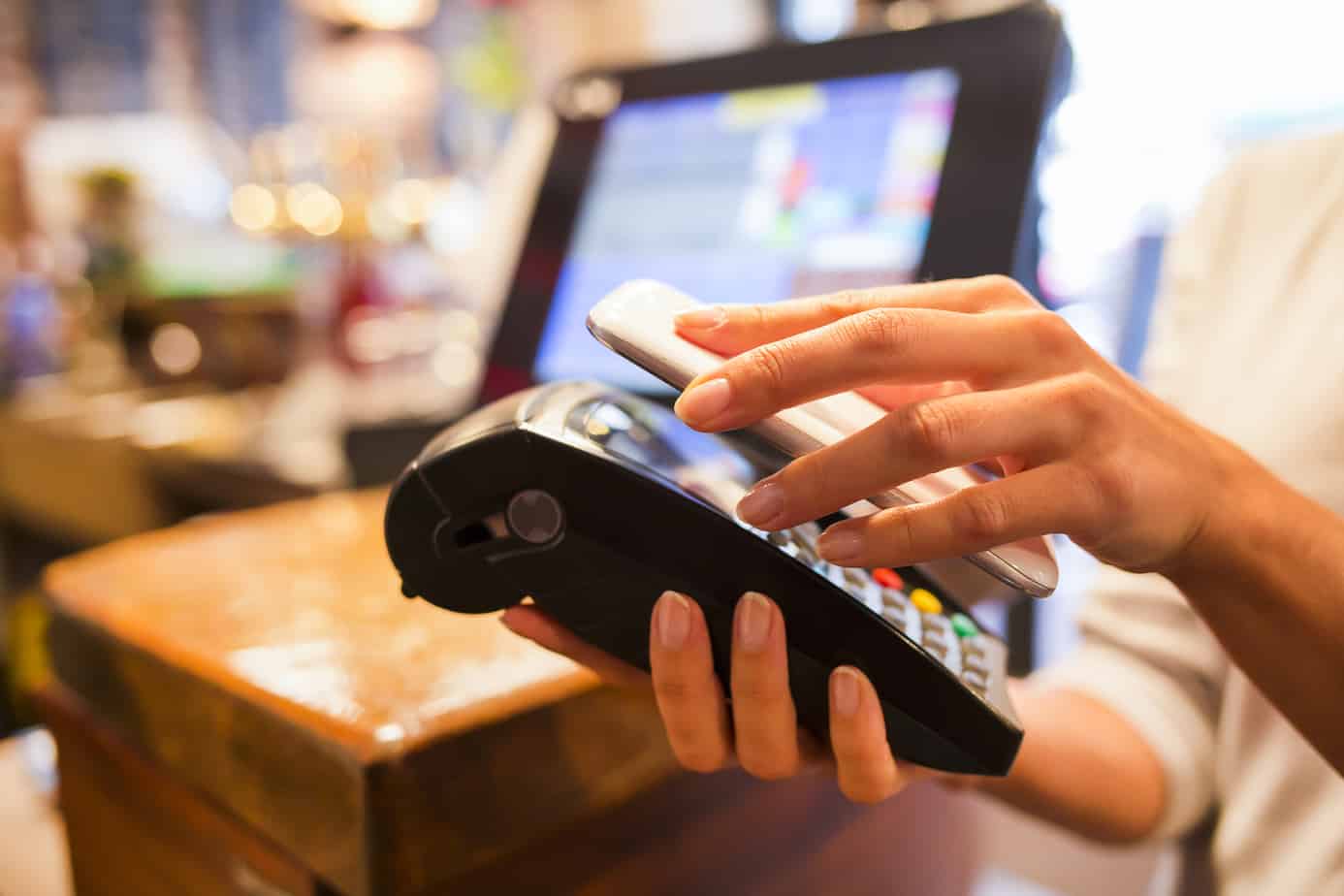
Many customers are using contactless payments with their smartphones.

Like every form of payment, contactless payments are not that perfect, and they come in with their own share of problems. With contactless payments, many customers worry about fraud and whether or not their financial information will be safe. The perpetrator needs to gain access to your card to make contactless payments, and in most cases, you are notified by your bank about unusual transactions taking place, and you can easily block that card. Over time, in-person fraud has become more and more challenging to carry out, and most forms of contactless payments are PCI compliant, which protects consumers.

Why Should Businesses Adopt Contactless Payments?

Contactless payments are easy to carry out, and they are also convenient for your customers. Customer convenience is the topmost priority for businesses, and therefore companies should work on adapting measures that help make things easier for their clients. Your clients will think that you have an upgraded and futuristic approach towards the way you do business, and it will leave an overall positive impression. With the advent of technology, there are many more payment options available like Apple Pay and NFC, and many people don’t merely rely on their credit and debit cards for payments. Some customers also use their fitness watches and their wristbands for contactless payments. If you’re thinking about accepting contactless payments, then you should also consider the type of customers your business attracts. If your business attracts people that are more technologically oriented, then installing contactless payment systems can be a good option for your business, but even if not, most contactless payment terminals still allow more traditional payments like EMV chip cards. At Host Merchant Services, most solutions we offer are enabled for NFC and contactless payments at no extra cost, so our merchants are ready when their customers begin adopting these technologies.

Frequently Asked Questions

Samsung Pay: What Is It and Where Can I Use It?

Using near-field communication (NFC), a Galaxy smartphone (or even smartwatch) that supports Samsung Pay allows you to make quick and easy retail purchases. All without having to fumble around with your wallet or purse. When you launch the Samsung Pay app on your phone, you simply hold the phone above the credit card terminal and then tap-and-go.

Here’s what really puts Samsung Pay ahead of the competition. Existing card readers recognize Samsung Pay. For terminals that do not support NFC, Samsung Pay also works with MST (Magnetic Strip Technology), enabling consumers to make a contactless payment on a terminal even with the old school magnetic strip technology. The MST technology differentiates Samsung Pay from Apple Pay and Android Pay, both of which are only equipped to use NFC technology. While the other mobile wallet apps are limited to merchants who provide NFC technology, Samsung Pay can be used anywhere traditional credit and debit cards are accepted.

How to set up Samsung Pay:

  1. Open the app on your phone
  2. Scan your credit card
  3. Use your fingerprint or PIN to secure the account along with an authorization code provided by the app
  4. Once you’re ready to use Samsung Pay, swipe up from the bottom of the display
  5. Swipe left or right to choose the card to use
  6. Verify your fingerprint for the app or enter your PIN
  7. Touch the back of your phone on the reader or hover your phone over the readerNFC contactless payments symbol
  8. Your phone will vibrate indicating payment

The following banks and services support Samsung Pay:

  • American Express
  • Mastercard
  • Visa
  • Bank of America
  • Chase
  • Citi
  • JP Morgan Chase
  • PNC
  • US Bank

Samsung Pay has expanded to the following countries and regions:

  • Australia
  • Belarus
  • Brazil
  • Canada
  • China
  • France
  • Hong Kong
  • India
  • Italy
  • Malaysia
  • Mexico
  • Puerto Rico
  • Russia
  • Singapore
  • South Korea
  • South Africa
  • Spain
  • Sweden
  • Switzerland
  • Taiwan
  • Thailand
  • United Arab Emirates
  • United States
  • Vietnam