
Tag Archives: retail industry

young woman shopping online on tablet computer 118512700

Shifts In Ecommerce and Brick-and-Mortar Retail

Retail industries have been changing over the past few years in ways no one could have expected. There are many exciting shifts to notice surrounding the industry. Many of these points involve shifts in how customers behave. These include changes for physical and online retail spots and how they will complete their work.

Direct-To-Customer Solutions

Many businesses are focusing on direct-to-customer services. Instead of working with third-party retailers to sell their products, they are directly interacting with customers.

While most direct-to-customer transactions in the past have been through outlet malls, many brands are directly selling their wares online. They are doing this to get away from third-party retail outlets and to establish direct links with their customers. Outlet mall staples like Nike, Levi’s, Tommy Hilfiger, Vineyard Vines, and Hanes have been investing more in online sales.

Direct-to-customer sales are especially popular for how a company can control its brand and establish customer loyalty. These businesses can also access more customer data, giving them the power to adjust their sales offers and promotions.

Customers are often more willing to purchase products from certain brands than others. These businesses are working towards promoting their brands to their customers. They will have more control over the work effort.

At-Home Services Are Prominent

People are becoming more interested in at-home services. These include ones where people can access things without having to leave their homes.

A good example comes from how online streaming providers like Netflix are making it easier for people to watch films and programs from home. People can subscribe to services or pay to rent a film if they wish. Customers often appreciate the convenience of these services, especially since they don’t have to spend lots of time having to travel somewhere to enjoy something.

Grocery stores have also been more reliant on delivery services. People can go to a grocery store’s website and then select the products they wish to purchase. These stores can then deliver those foods to the customers’ homes. This at-home service has become very noteworthy, as it shows how people are willing to take in anything in their homes if it is convenient.

Convenience and On-the-Go Transactions

One notable shift surrounding retail industries involves how many businesses are focusing on convenience. These include businesses that want to get people their products or services as soon as possible.

An example of this comes from the McDonald’s restaurant chain. The restaurant chain has been relying more on drive-through sales and less on dine-in transactions. The chain recognizes that people are becoming increasingly interested in such fast transactions. The work has even moved to where McDonald’s is closing many of its locations inside Walmart department stores.

The use of mobile payment wallets and contactless payment systems is another sign of how on-the-go transactions can work. NFC-based payments are faster and easier to support, making it easier for people to purchase what they want and to head out.

In-Store Enhancements

Many brick-and-mortar retailers are trying to keep their sites running. While more people are looking at online stores, traditional retailers are adding new features to help enhance their experiences. These include many things for the customer’s convenience:

  • People can purchase products from a store online and then drive over to the store to pick them up. Customers can do this without having to enter a store. A retailer must use inventory software and communication programs to ensure everything stays online.
  • Stores are accepting Apple Pay, Google Pay, and other contactless transaction platforms. These systems make paying for items easier to manage.
  • Retailers are also opening locations away from traditional malls. They are doing this to make their businesses more accessible and to provide a more personalized experience.
  • Augmented reality systems are also available through some retailers. These include systems where people can look in a mirror and see how certain fashions or cosmetics products might look on someone. The system is more convenient than if people tried on clothing or other products themselves.

These solutions are necessary for ensuring traditional stores can stay intact and catch up with the times. People are becoming more interested in various services, so adapting to their needs will be critical to the business’ success.

How the Pandemic Plays a Part

All these shifts in ecommerce and brick-and-mortar transactions show how the retail industry is changing. Businesses are taking more initiative, but behavioral changes are worth noting. The most significant point comes from how the global pandemic has changed customer behaviors.

People have developed new behavioral patterns over the past year. They are more comfortable with purchasing products online. They may want to acquire things as soon as possible as well.

The ecommerce world expanded in 2020, and there remains uncertainty over how the brick-and-mortar retail industry will survive through the pandemic. But businesses of all sorts are finding innovations and concepts to attract customers. They are focusing on how customers want more control over their experiences. They are also reviewing the unique ways customers want to interact with businesses.

But there also exists a concern surrounding foot traffic in businesses. It might be hard for some physical retail sites to manage their rent costs if they cannot get enough foot traffic. Businesses are researching details on how often people show up in their stores and what additional points might influence when people arrive. They can use these insights to figure out what promotions they should offer. But even then, changes in society surrounding the pandemic might make it harder for some businesses to bring in customers the same way they always have.

Whether it entails at-home convenience or directly getting in touch with a brand, customer behaviors are changing. It is up to businesses to look at how their online and physical retail spaces will react to those changes and shifts. It will be worthwhile for businesses to watch what happens next and how customers will continue to change their behaviors.
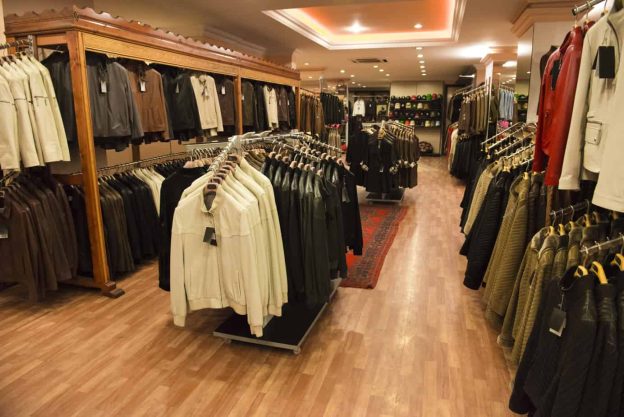

Leather Coats In A Retail Store Shop 26972495

Retail Trends for 2021

Times are changing in all industries, including the retail sector. Consumers don’t shop like they used to, but that doesn’t mean they aren’t spending money. They are just doing it in different ways and if retailers want to keep their sales high, they have to jump on board with what consumers want.

What do consumers want? Here are the latest trends.

Subscription Boxes Increase in Popularity

The subscription box sector is taking the world by storm and it’s not going anywhere anytime soon. Because of the personalization they offer and the excitement they bring for consumers, subscription boxes are popping up in places you’d least expect them. In fact, they could be a way to keep retailers in business when they otherwise may have lost their market.

Delivery is the New Norm

Stores are now offering delivery just like your local pizza joint and we’re not talking FedEx or UPS. Stores either have their own delivery service or they contract out to independent drivers. In our current climate, millions of consumers don’t want to leave their homes, but they want to shop. They’re more likely to shop at the stores that offer same-day or next-day delivery services.

Creating Fulfillment Hubs

Storefronts are quickly going by the wayside as fewer people shop in store. Large stores that were already hurting are quickly seeing a downfall in sales and many are going out of business. In their place aren’t new storefronts, but rather fulfillment hubs for larger stores and even places like Amazon. The distribution centers can offer faster shipping than they would from their central warehouses, increasing customer satisfaction.

Personal Shopping via Video

Video chat is becoming more and more popular and not just for business meetings. Today, personal shopping has gone virtual too. There’s something about being able to see the items even if it’s through a screen, but not on a webpage that makes people want to buy. It could have a lot to do with the personalization of having someone show you the products versus looking at them yourself online.

Private Labels are more Popular

Today, consumers are buying more private labels than ever before. They are skipping the brand names and opting for private labels – labels that provide a more intimate experience than customers are used to but want.

Merchants Have to Think Outside the Box

In today’s changing environment, every merchant must think outside the box. Shopping isn’t what it used to be, but many dare to say that it’s even better. If merchants do it right, shopping is more intimate, exciting, and fulfilling than ever before. Consumers get the products they want, the insight they want to provide, and the safety of contactless payments and curbside pickup.

It’s a changing world we’re living in, but it’s one that we need to continually adapt to and change if we are to compete. Merchants have a lot of opportunity in front of them and if they take advantage of it can be stronger and better than ever before.

Customer Service: Help Desk Stress Test

Today The Official Merchant Services Blog continues its special two-part series on Customer Service. We can’t stress enough how essential it is to focus on Customer Service –– especially now during the holiday shopping season when your business may be barraged with a lot more customers who have a lot more questions.

Yesterday, we shared with you a blog from Lauren Carlson at Software Advice. The blog gave detailed tips on how to prepare business and its customer support team for the holiday shopping season. Today we bring you the second half of Carlson’s customer service saga which focuses on utilizing the holiday season as a way to stress test your help desk.

Carlson suggests that “the holiday season represents a perfect laboratory for examining your business, as well as your performance at each point of customer contact.”

This is a compelling concept. As Carlson says, the holiday season gives you a chance to analyze your business –– especially the customer support side of it –– at super speed. Doing so lets merchants identify high performance areas that are effective under the added stress of the holiday season, as well as get some insight into areas that may need some improvement. To get merchants in the mindset of how the microcosm of the holiday season can fuel some quick on the spot analytics Carlson asks: “So you had 72 percent first-call resolution rates in August. Great. What about the day after Christmas?”

Carlson keys in on five areas of support that companies should examine during their holiday season to gauge their help desk.

How Effective is That Training?

Many merchants add seasonal help for the holiday shopping rush. It’s a tried and true method for the retail industry, for example, to take on some extra help at the end of the year to push through all that added hours and increase in customers. Carlson suggests this can be a catalyst for analyzing employee onboarding –– and get a good look at how effective your company’s system is for training and preparing new support staff.

She says “Companies should use this opportunity to examine the success of their training techniques, as well as the usability of their system.”

It’s really sound advice to keep track of your support staff’s effectiveness, and the holiday season definitely gives a merchant a focused period of time to quickly measure the staff’s performance.

How Well Do You Deal With Surprises?

The next area in help desk performance that Carlson says a company should measure during the holiday shopping season is something called The Collaboration Period. Carlson describes the first nine months of the year as a build-up or preparation period for a business. Mitch Lieberman, of Sword Ciboodle, calls that period the Coordination Period in Carlson’s blog. But, according to Lieberman, the holiday rush shifts into the Collaboration Period. Carlson quotes Lieberman as saying “Collaboration is when something is outside what could or should have been easily coordinated. Are you ready to collaborate on these emergency issues that you didn’t predict?”

Essentially, merchants can use this time to study how well support staff deals with surprises. How well can they go off script? How effectively can they cope with issues that crop up that weren’t prepared for and which aren’t on an FAQ or a PDF or a Guidelines e-mail.

Where Do the Problems Get Handled?

The next area of help desk effectiveness that Carlson suggests merchants should look at is peak load management. Businesses that bulk up with some seasonal help during the holiday rush tend to train those new employees on the basic level of support. They get training to help them stick to a script, deal with the first tier of issues in a protocol, or use the FAQ that was designed for the holiday season –– all really basic stuff. The intent being to keep the easy stuff out of the way of the veteran support team members, who are then expected to effectively handle the harder issues.

Carlson says some interesting statistics can be gathered through this dynamic: “Measuring the percentage of first-call resolutions compared to the percent of calls escalated will help to inform your peak load strategy. “

What’s Your Worst Case Scenario?

The next area Carlson says companies should analyze harkens back to the boy scouts mantra of “Be Prepared.” Carslon says “assume something bad is going to happen. It’s not pessimism. It’s good business. If you assume disaster will strike, you will have an emergency response system in place that’s ready to manage the disaster on all channels.”

It’s never good when disaster strikes. But it’s a much heavier burden on a merchant when disaster strikes during the high pressure holiday shopping period. So this is a good time period to gauge what a company’s emergency response process is. And, if things do go bad, get an up front look at how effective that protocol is. Being proactive, Carlson suggests, is the best approach. Use this time period to analyze your emergency procedures and tweak them to be the most effective they can be.  As Carlson puts it, “having proactive procedures mapped out for unforeseen emergencies will not prevent call spikes, but it can lower the spikes to a manageable amount.”

Are the Customers Satisfied?

The core element of your customer support team, and your help desk, is customer satisfaction. Is the customer happy? That’s what it all comes down to. Companies should be measuring customer satisfaction year-round. And Carlson’s blog concedes that point. But Carlson points out that the holiday shopping season heightens the importance of customer satisfaction. This is something The Official Merchant Services Blog has discussed during our series on holiday shopping as well. The stakes are higher during the focused frenzy that happens after Black Friday, so you need to make sure you’re keeping even the most basic tenets of customer service in mind at all times.

Carlson asks the question, “you might have great satisfaction rates during low-volume times of year, but is your support team still on par when things get hectic?”

She suggests something as simple as a survey of your customers asking how you did during the holidays –– basic feedback.

Host Merchant Services likes the idea of reaching out to the customers for feedback. It’s an effective way to continue to maintain the long-term relationship building goal of customer support. Or, simply put, it’s a nice way to let your customers know you value them and their input. HMS suggests utilizing your social media tools for a survey like this, as you can quickly interact with your customers through those tools and they can help you track and analyze the responses.

Conclusion

This is an effective checklist of ideas for merchants to monitor their customer support capabilities. There are some concrete suggestions here on ways to collect data that will help shape a company’s goals for delivering quality customer service. Carlson gives a lot of good tips in both parts of her series. The Official Merchant Services Blog is glad she shared these with us and hopes you find them useful too.

If anyone else has some tips or suggestions on how to improve customer service now in the holiday shopping season or any other time of the year, feel free to share in the comments section.