Tag Archives: Retail

start and fund online boutique

How to Start & Fund an Online Boutique [2023 Update]

Getting to start an online boutique for many aspiring entrepreneurs can be a dream come true. It’s an opportunity to color the lives and styles based on your creativity. However, getting to start a boutique involves a tremendous amount of work that can be daunting, and almost discouraging. You need to find the appropriate retail and warehouse space, acquire the right employees and all the relevant business licenses, and ensure that you have all the proper tax and incorporation paperwork filed with municipalities.

start an online boutique

Of course, with the help of the internet, starting an online boutique is much easier. Business owners can set up eCommerce stores and manage warehouse activities away from populous and in-demand urban centers as the storefront is now online. This degree of freedom can help merchants focus more on securing finances, the appropriate marketing channels, and the design aspect of their work. Whether you’re a serial online entrepreneur or a novice, below we look into what you need to do to start and fund an online boutique.

What’s your niche?

One of the best ways to build brand recognition and clientele is to be known for quality and have the best of something. You need to decide on what that something is. Specializing in a niche market within an online boutique will help focus on one specific small area, as you’ll be in the beginning phase of starting your online boutique.

Focusing on a niche will help to build expertise and further perfect that craft. This can generate cash flows that can fund other ventures as you branch out beyond your niche. A perfect example would be Donna Karan, who started with her Essentials line, which included seven articles of clothing positioned around the bodysuit to be mixed and matched. Donna Karan’s niche was the bodysuit. She later expanded a full clothing line a few years later with DKNY, followed by DKNY Jeans and DKNY for men in the years to follow.

You can grow to have many different design lines under your umbrella, but you need a cornerstone niche to get you started. That is just the beginning – it is the first step. There is still a tremendous amount of work yet to be done.

Start an Online Boutique – Sourcing material

Once you’ve decided on what your niche focus will be, you need to ensure your materials. This is one of the most critical elements for an online boutique. Once online shoppers receive their first order from you, their first impression of your product will be the material they feel. Quality and durability are vital for your branding and one that is expected to remain consistent at the very minimum or improve over time.

Start an Online Boutique - Sourcing material

Developing the proper relations for inventory and materials partners can be beneficial as you may get bulk discounts with some degree of assurance on quality, logistics, and delivery times. Unfortunately, developing this relationship takes a lot of effort and thorough vetting of numerous suppliers, checking hundreds of samples. The result will be the backbone of an online boutique’s operations and branding.

Online Presence

Establishing an online presence for your online boutique will be the next hurdle to cross. Since your online boutique may not have a brick-and-mortar presence initially, your storefront is your website. Merchants need to ensure an intuitively designed website interface guiding potential visitors through the consumer journey from landing to purchase.

There are several other strategies online businesses need to employ to spread the word, such as social media. There are numerous platforms merchants can use to target specific audiences.

Similarly, the online boutique can also set up accounts on popular online platforms such as Shopify, Amazon, or Etsy to reach consumers via established online marketplace brands.

Business Formation and Tax Registration for Online Boutique

Another fundamental requirement that entrepreneurs need to pay keen attention to is the different conditions of business formation. This may require a lawyer to guide you through the process and an accountant for the various financial and clerical paperwork to be completed. You must decide which state you should register your business in, where a company may be required to have a legal presence, etc.

Business owners will also be required to get a Federal Employer Identification Number from the IRS and form the basis of their state-level documentation. There will be requirements for state sales tax registrations that must be filed with respective state departments of finance/treasury. 

Compliance with federal and state-level tax authorities does not stop there. On an ongoing basis, the business will need to collect all relevant state-level sales taxes and file them with the tax bodies. Similarly, if companies hire employees or pay themselves, the applicable payroll taxes will need to be deducted from their paychecks and submitted to state and federal tax departments with their required tax filings.

Finally, businesses will need to ensure they can accept online payments. Merchants should carefully evaluate payment processing services to see that pricing is detailed and straightforward. What type of tertiary services do they offer, online gateways, virtual terminals, assistance in registering, and developing a website? Are there any early termination fees? These are all characteristics of payment processors that merchants would need to consider carefully.

Starting and managing a business is no easy feat. The internet and numerous online marketplaces and platforms have made that task a lot more feasible. Social media has helped eliminate intermediaries and reach consumers directly. Nonetheless, entrepreneurship still requires meticulous planning, a fanatical focus, tremendous grit, and a bit of luck. With hard work and time invested in the right partnerships, online presence, brand development, and compliance with tax regulations and business formation laws, aspiring entrepreneurs can be well on their way to starting their online boutiques.
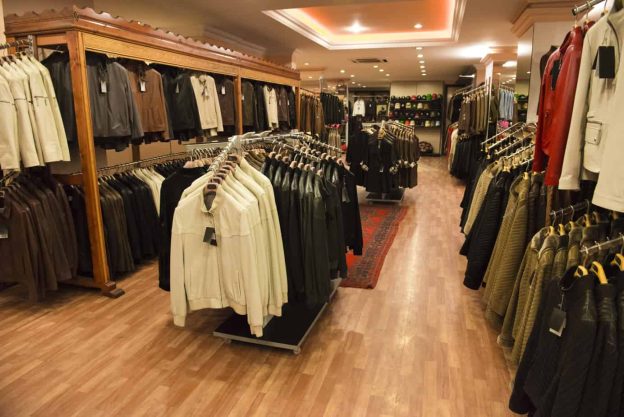

Leather Coats In A Retail Store Shop 26972495

Retail Trends for 2021

Times are changing in all industries, including the retail sector. Consumers don’t shop like they used to, but that doesn’t mean they aren’t spending money. They are just doing it in different ways and if retailers want to keep their sales high, they have to jump on board with what consumers want.

What do consumers want? Here are the latest trends.

Subscription Boxes Increase in Popularity

The subscription box sector is taking the world by storm and it’s not going anywhere anytime soon. Because of the personalization they offer and the excitement they bring for consumers, subscription boxes are popping up in places you’d least expect them. In fact, they could be a way to keep retailers in business when they otherwise may have lost their market.

Delivery is the New Norm

Stores are now offering delivery just like your local pizza joint and we’re not talking FedEx or UPS. Stores either have their own delivery service or they contract out to independent drivers. In our current climate, millions of consumers don’t want to leave their homes, but they want to shop. They’re more likely to shop at the stores that offer same-day or next-day delivery services.

Creating Fulfillment Hubs

Storefronts are quickly going by the wayside as fewer people shop in store. Large stores that were already hurting are quickly seeing a downfall in sales and many are going out of business. In their place aren’t new storefronts, but rather fulfillment hubs for larger stores and even places like Amazon. The distribution centers can offer faster shipping than they would from their central warehouses, increasing customer satisfaction.

Personal Shopping via Video

Video chat is becoming more and more popular and not just for business meetings. Today, personal shopping has gone virtual too. There’s something about being able to see the items even if it’s through a screen, but not on a webpage that makes people want to buy. It could have a lot to do with the personalization of having someone show you the products versus looking at them yourself online.

Private Labels are more Popular

Today, consumers are buying more private labels than ever before. They are skipping the brand names and opting for private labels – labels that provide a more intimate experience than customers are used to but want.

Merchants Have to Think Outside the Box

In today’s changing environment, every merchant must think outside the box. Shopping isn’t what it used to be, but many dare to say that it’s even better. If merchants do it right, shopping is more intimate, exciting, and fulfilling than ever before. Consumers get the products they want, the insight they want to provide, and the safety of contactless payments and curbside pickup.

It’s a changing world we’re living in, but it’s one that we need to continually adapt to and change if we are to compete. Merchants have a lot of opportunity in front of them and if they take advantage of it can be stronger and better than ever before.

Mobile Technology Trends for 2021

Mobile Technology Trends for 2021

Mobile technology continually improves and 2021 is bound to see some of the greatest changes. As we move into another year of living with social distancing, consumers want contactless payments and more capabilities from the comfort and safety of their own homes.

Mobile Wallet Security

It’s not enough to offer mobile wallet payment options next year. While customers want contactless payments, they also want security. Double authentication with mobile wallet payments is crucial.

Rather than just scanning the payment, users will need to enter a PIN or use the facial recognition feature. While it’s another step in the payment process, it’s still touchless and it decreases the risk of fraudulent charges.

Mobile Point of Sale

The Apple store used to be one of the only places you’d find a mobile ‘register.’ Today because of the need to have contactless payments and a way to get in and out of a store fast, mobile point of sale is more common everywhere.

mPOS units are great inside a store, checking customers out where they are rather than making them stand in line. Even big stores like Target are doing this. But, mPOS also helps merchants sell their products anywhere – farmer’s markets, trade shows, or mobile trucks.

Increased Use of AR and VR

Augmented Reality and Virtual Reality are becoming more mainstream for all industries, not just by technical companies. Healthcare companies travel, and educational companies are taking advantage too. They also provide more opportunities for companies to increase sales without seeing customers in the physical store.

Increased use of Chatbots

No one likes to sit on hold waiting for a customer service representative. Chatbots are making it easier than ever to answer customer questions instantly. This is just what customers want. In addition to everything mobile and touchless, they want instant answers without wasting time sitting on hold. Chatbots answer the most frequently asked questions quickly and if they can’t answer the question, they pass the customer onto a human advisor.

Social Shopping

There’s a reason social media influencers are the ‘big thing’ right now. Everyone wants what everyone else, which is why the rise in social shopping is so great. With the ability to scroll through Instagram or Facebook and buy what you see others buying, it increases sales quickly. Social shopping decreases the lag time between seeing an item and finding it in store or even online. It uses that instant gratification that customers love, making it easy to make impulse buys or just buy products/services they wanted while they’re thinking about it.

Mobile Technology is Making Changes

2021 is bound to be a year of big changes in the mobile technology industry. With possibilities abound, merchants can make the most of the opportunities to serve customers where and how they want service. With the ability to offer mobile and contactless payments, shopping opportunities, and even sales demonstrations, 2021 should be a year of promise and growth for merchants in all industries.

Plenty of Cheer During the 2019 U.S. Holiday Shopping Season

The numbers are in for the 2019 holiday shopping season, the final one of the decade, and retailers were pleased to learn that overall sales increased by nearly 3.5% compared to last year. Starting on Black Friday and culminating with last-minute shopping on Christmas Eve, retailers were definitely in the black this season, and this is despite the period being shorter than last year by six calendar days. E-commerce was the biggest winner with an increase of 18.8%, and the payments industry was pleased to see a greater volume of credit and debit card transactions along with digital payments.

e-commerce merchant optionsEven though online shopping accounted for a little less than 15% of the overall sales volume, it should be noted that the Cyber Monday shopping event continued to grow, particularly in the consumer electronics segment, which experienced a boost of 10.7% on a year-over-yer basis. Specialty apparel was the segment that shoppers expressed greater interest in compared to 2018, but even department stores posted a nice growth of 6.9% despite industry analysts warning that the heyday of American shopping malls is behind us.

According to the MasterCard Spending Pulse survey of retail activity during the holiday season, stores were prepared for the shorter shopping period this year; many retailers stepped up their omni-channel marketing efforts starting in early November. It should be noted that department stores actually saw a decline in their brick-and-mortar transactions, but they posted a 6.9% increase of their online sales.

Now that Christmas has come and gone, retailers are gearing up for the post-holiday blues, which tend to feature many gift returns or exchanges; a typical example is footwear, which tends to see a lot of exchanges because of size issues. Clearance and special discount situations will likely see a migration towards e-commerce channels, but brick-and-mortar retailers are ready to welcome more store traffic that should last through the first week of the New Year. Physical storefronts located within shopping districts have an advantage in this regard when merchants get together to organize entertainment and family events; the idea is to increase foot traffic at a time when many shoppers have time off work.

Wall Street Investors Also Enjoyed Holiday Cheer

The Santa Claus rally on Wall Street was delayed by just one day this year. According to market analysts at Nasdaq.com, exchange-traded funds that focus on the banking sector soared when traders returned to work after Christmas Day. This is good news for the payments industry, which does not exclusively rely on banks to stay busy. Consumers are warming up to alternatives to the traditional banking system; increased regulation and oversight along with a lack of flexibility by banks are driving consumers towards payment systems that they can manage from PCs and smartphones. Since providers of alternative banking services work closely with payments processors and clearinghouses, the future looks good for the payments industry.

5G Communications Could Change the American Retail Landscape [2023 Update]

5G Communications Could Change the American Retail Landscape [2023 Update]

In terms of telecommunications and payment transactions, the United States is strangely out of step with the rest of the world in some aspects. Paper checks, for example, are still used by many companies. The adoption of EMV technology by American retailers was slow enough to cause anxiety among providers of payment processing services. As for the fifth generation of wireless technology, commonly known as 5G, South Korea and China are examples of significant markets that rolled out 5G networks way ahead of the U.S.

How 5G Will Impact Brick-and-Mortar Stores

In major metropolitan areas such as Atlanta, wireless service providers have already upgraded their infrastructure to 5G. Widespread upgrades to 5G technology will take place over the next few years, and retailers have everything to gain from this development. In essence, 5G networks are able to handle vast amounts of data at much higher speeds; while it is easy to see how e-commerce operations can benefit from this technology, it is important to note that brick-and-mortar retailers will also be able to capitalize on this upgrade.

Mobile Payment Processing Systems

Retail storefronts do not have to compete against e-commerce because they can simply embrace it. With the advent of 5G, however, brick-and-mortar stores can give their e-commerce counterparts a run for their money through interactive experiences. Augmented reality features, for example, can let shoppers get more information about products on shelves, and they can also enable trying on clothes and putting on makeup prior to going into dressing rooms or approaching the cosmetics counter.

A more practical benefit of 5G technology as it relates to physical stores will be found at the point-of-sale. Payments industry analysts believe that 5G is the missing ingredient in the perfect recipe of true mobile payments, and this is something that merchant processing companies also believe will result in a digital payments revolution. That current lag experienced by shoppers who wish to pay with their smartphones at POS terminals should go away once 5G is implemented.

Mobile Shopping Trends

The use of digital wallets and other devices that enable contactless payments has been on the rise across Asia and Europe. In China, nearly 50% of retail purchase transactions are settled with digital wallets; in the U.S. only 23% as of July 2019. Another improvement that retailers can expect from 5G technology is to mobile equipment; brick-and-mortar stores that do not offer this option should start looking into ways of implementing it between now and the end of 2020.

The next major retail trend in the U.S. is expected to be a hybrid of mobile shopping and in-store pickups. A neighborhood pizzeria that offers takeout should strongly consider developing a native or progressive web app that enables mobile ordering and payments because this is what many consumers are showing a preference for: they want to browse menus, select toppings, and pay for their orders right from their smartphones, but they also want to be able to stop by the stores and physically retrieve their purchases.

Top 6 Retail Payment Trends in 2019

Point of Sale and Digital Payment Diversity Keeps Merchants on Their Toes

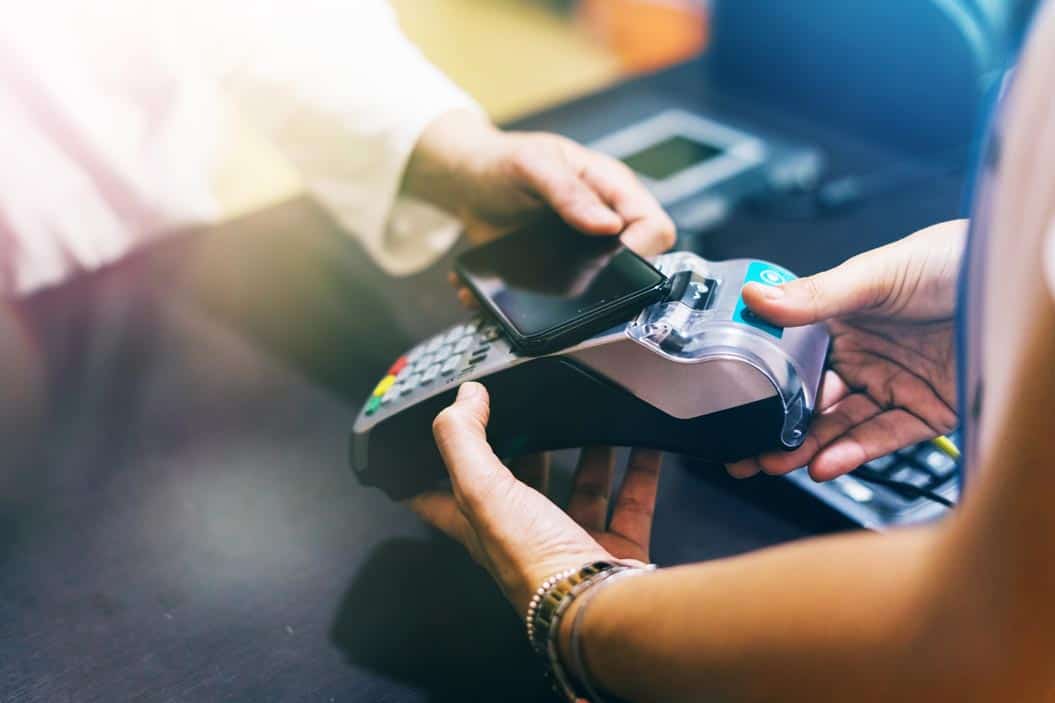
More than halfway through 2019, merchants are responding to the variety of paths consumers are choosing to pay for goods and services. From the mobile point of sale tablets retailers carry around the store to the tap-n-go options from both mobile wallets and contactless cards, consumers are adopting many options in making payments.

What must merchants do to win? Will the retail business flourish in adopting new technologies? To help answer these questions, we’ve assembled the patterns and forecasts that retailers should pay attention to in the coming months.

1. mPOS = Mobile Point of Sale

Payments made via mPOS, either a smartphone or other wireless device, are replacing the traditional point-of-sale terminal. Whether your local clothing store retailer walks up to you holding your potential purchase with a tablet to close the sale or your local coffeehouse spins a phablet toward you for your payment, mPOS is a growing trend offering merchants flexibility, as well as mobility to their paying customers. With the added functionality food trucks and other mobile businesses can have their POS in their pocket and not worry about recording the transactions in their accounting software when they get home.

2. Mobile Wallets

]In addition to big tech offering pay apps, retailers are creating their own app-based payments. Starbucks alone is the leader in all point-of-sale purchase apps, beating out big tech in the mobile wallet ambition. With loyalty programs offering points and discounts, retailers can leverage the consumer drive for convenience. Coffee drinkers like walking into their coffeehouse and picking up their cup of coffee waiting for them.

Mobile Wallet Payment Apps

3. Contactless Payments

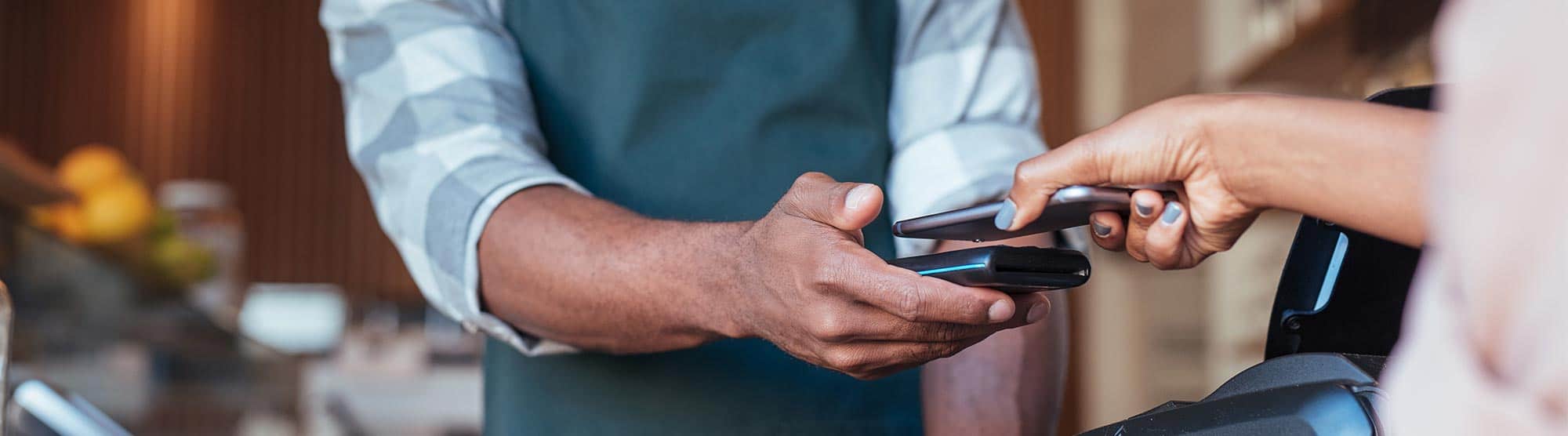
Using NFC, near-field communication, or “contactless cards,” allow you to tap and go much like the big tech pay mobile wallet technology. An estimated 100 million contactless Visa cards will be issued in the US in 2019. Instead of taking an average of 30 seconds to insert an EMV chip, contactless only takes 15 seconds, saving 15 seconds per transaction. Many mobile wallets also have this functionality including Apple Pay and Google Pay.  The upgrade to a contactless machine is easy and most good merchant services companies are supplying them for free.

NFC (near field communication)

4. Alexa, Order Me a Pizza

Consumers now want to tell Alexa, Google, or Siri to order and pay for a pizza, handle banking transactions, or pay their bills. Security still has a long way to go with voice-activated mechanisms handling point of sale for merchants. Selling online isn’t just having an ecommerce shopping cart. Integrating into the popular search giants is gaining a ton of traction in the online/convenience shopping community. In doing so, your products can be voice ordered through smart devices. I bet your local competitor isn’t doing that!

mobile voice-activated point of sale

5. Blockchain wallets and Money Transfers

Blockchain, the record-keeping technology behind bitcoin, can track transactions securely while keeping costs in check in machine-to-machine, M2M, exchanges. Security is also the sticking point on this technology thus far. Walmart is integrating blockchain technology into their mobile wallet to make it more secure and save money in transfers, which won’t rely on a third party. While blockchain is still in its early stages for retail it is picking up momentum in the back end of many payment apps.

6. P2P = Peer-to-Peer

Younger generations are turning to mobile apps that allow them to transfer money quickly and easily to one another such as Venmo. From payment for dog sitting to paying half the dinner bill, the next wave of consumers are more comfortable with using P2P payment apps than ever before. Now, Venmo is able to be used as an NFC mobile wallet and can be used the same as Apple Pay in retail locations. Call your merchant services provider to find out how to accept NFC at no additional charge. 

While new alternatives to the point of sale provide seemingly exponential choices in paying for something, most consumers still prefer the traditional methods, namely credit, debit, and cash. Even the most tech-savvy consumer with a mobile wallet in his pocket still carries cash and a credit card.

P2P peer-to-peer mobile payment apps