
Tag Archives: qr-code

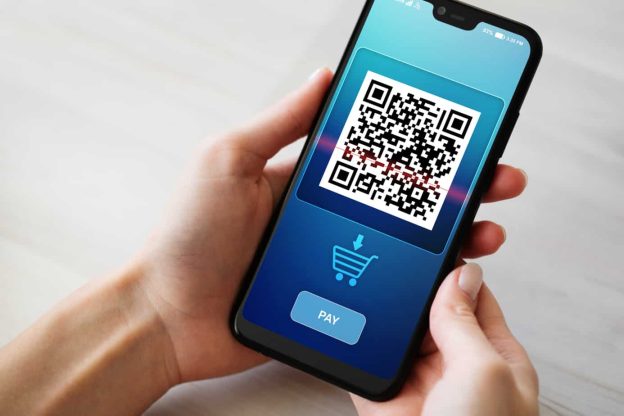
qr code mobile phone scan on screen business and technology concept 145543233

Facebook Pay Tests Use of Personalized QR Codes

QR codes are already helpful for containing more data than UPCs, plus they are encrypted and more secure than UPCs. QR codes have been critical for many touchless payment activities. Businesses are looking to facilitate more touchless payment solutions, so QR codes have never been more of a necessity. Programs like Venmo have especially been using these codes to manage safe transfers between people.

Facebook Pay is taking advantage of QR codes by testing person-to-person QR code payments. It will allow people to transfer funds between each other with one scan. The system can work for P2P deals, but it may also work well for traditional business purchases.

Facebook has not released details on how many people are testing the system. The group is slowly rolling this system out to identify what is working and how it can be used by the public. An emphasis on efficiency and safety will be critical.

The new QR code system will be similar to what Venmo already uses. But the new codes will be personalized to focus on specific people. These unique codes will ensure they can only work for specific P2P moves. It is exciting to see what might happen when getting it to work well, although details on when these codes will be available to the public remain unclear.

How Does This Work?

Facebook Pay’s new personalized QR codes entail a few steps:

  1. The user goes to the Facebook Pay carousel at the top of the screen.
  2. The user selects the Scan button.
  3. A QR code will appear on the screen. There will also be a unique URL at the bottom. The URL displays a unique code that matches up with the QR listing, confirming the data.
  4. The app then uses the device’s camera to scan the other person’s QR code.
  5. The user chooses the amount of money that will be transferred. This work includes whether the user will send money to that other person, or if the user will receive the funds from that someone.
  6. The payment will then be transferred after everything is confirmed.

Facebook Pay will also produce a payment link for those who want to utilize a more direct approach to handling payments. The process facilitates a secure process for transferring funds.

Each transaction will come with a different code. These codes will ensure each transaction is unique. The risk of an outside party copying or hacking into a system will be minimal, as a distinct code will work for each situation.

Focusing on Physical Payments

The new personalized QR code system will allow Facebook Pay to work for direct in-person transactions. Facebook Pay has already been supporting various online payments since its introduction in 2019. Facebook Pay is already part of various Facebook apps like Messenger, WhatsApp, and Instagram. But all earlier moves have been through the Facebook and Messenger apps. The P2P transaction support that Facebook Pay is seeking will improve how well people can complete these deals and get their accounts up and running.

The system would work for cases where someone needs to complete a payment with someone as soon as possible. These include situations where someone needs to pay for unexpected costs, or someone needs extra funds for some sort of activity. The new QR code system would help ensure people can complete these payments sooner.

Bringing New Attention

A critical part of why Facebook Pay is offering this feature is to increase awareness of the system. Most people aren’t fully aware of how Facebook pay can be utilized to transfer money between parties. But many may know about how they can purchase items through Facebook ads or the Facebook Marketplace. Providing personalized QR codes for P2P transfers will help people recognize what Facebook has to offer here.

Terms For Use

There are a few terms for users to follow when using these personalized QR codes from Facebook Pay:

  • All users must be at least eighteen years of age.
  • The only users that can use this feature right now are American customers. Facebook hopes to move this out to other countries soon.
  • Each person must have a supported payment method. These include a PayPal account or a Visa or MasterCard debit card. Facebook Pay can also support various prepaid cards or government-issued cards.
  • The system will remain free to utilize.

The terms are simple, but there is a potential they may change. Facebook’s current testing process will identify what will work for the QR code system.

When Is the Test?

Facebook Pay is currently testing these QR codes and should have them available to the public soon. Facebook has not divulged info on when these tests started or when they will end. It is possible more people will get access to these codes as the year progresses and Facebook refines the technology. It will make for an exciting point for those looking for a unique way to transfer money to others.

What About Novi?

The new feature for Facebook Pay is separate from Novi, Facebook’s cryptocurrency wallet. But there’s a chance that Facebook Pay could start working with Novi. The effort comes as Facebook continues to consider looking at a possible crypto choice.

A Potential For Growth

The Facebook Pay system makes it easier for people to transfer funds. The new QR code feature from Facebook Pay will produce an even more convenient approach to handling the effort.

The most substantial potential for Facebook Pay is that it could help create a viable P2P payment solution. Many people see Facebook Pay as a niche solution available mainly for Facebook users. But the special QR code support that Facebook Pay can handle will possibly make it closer to Venmo and other contenders. It could create a new system that makes it easier for people to complete transactions. It will be inviting for people to see how well Facebook Pay can work for their general payment needs.

Industry Terms: QR Codes

This is the latest installment in The Official Merchant Services Blog’s Knowledge Base effort. We want to make the payment processing industry’s terms and buzzwords clear. We want to remove any and all confusion merchants might have about how the industry works. Host Merchant Services promises: we deliver personal service and clarity. So we’re going to take some time to explain how everything works. This ongoing series is where we define industry related terms and slowly build up a knowledge base and as we get more and more of these completed, we’ll collect them in our resource archive for quick and easy access.

Today I will define the term Quick Response Code, or QR Code. These codes are two dimensional barcodes, sometimes called print based hypertext links, that are designed to be decoded at a high speed. QR codes are increasingly used to identify the URL of a company’s web site so that mobile phone users can photograph the code and retrieve information about the organization. Some companies have even created billboard-sized QR codes for this purpose.

The versatility of the codes doesn’t stop there, a QR Code can also contain a phone number, an SMS message, a link to a photo, contact information or just plain alphanumeric text, and the scanning device will respond by opening up the correct application to handle the encoded data appropriately. With the technology of mobile phones constantly expanding, especially within mobile internet, QR Codes seem like the perfect solution to quickly and efficiently bring mobile phone users onto the mobile web.


QR Codes can also be used to facilitate mobile payments. Recently, Barclays Bank launched a mobile commerce QR code campaign right here in Delaware, called BarclayCard Mobile Wallet.  The program works in conjunction with a merchant’s credit card terminal,  a customer’s smartphone and the corresponding BarclayCard app.  When paying for something, the merchant prints out a special kind of QR code and hands it to the customer, who uses the BarclayCard mobile wallet application to scan the code and authorize the payment.  We went over this program in detail here a few weeks ago, when our own Steve Myers was the first to use the app at National 5&10.  Advancements in technology will lead to expansion and advancement in the uses of these codes, including new games or more advanced methods of mobile payment.

NFC Taking Too Long?

When I first started writing for this website, and The Official Merchant Services Blog, a topic I was both fascinated with and completely astounded by was Near Field Communication (NFC). It seems fitting that on the eve of the National Football League’s 2012-2013 season debut — a rare Wedensday Night Football game — which features a gridiron battle between the Dallas Cowboys and New York Giants, two mainstays of the National Football Conference (NFC), that I would once again be tackling the topic of NFC. The first time I saw the acronym I thought it was talking about football.

It wasn’t.

It was talking about technology that was poised to revolutionize payment processing and make everyone’s phone their wallet. We were going to be radically transformed from a cashless society relying on plastic cards with magnetic stripes into a cashless society relying on waving around your smartphone at registers and terminals who pick up your signal and magically charge your account. One swipe of the phone, and no hassle whatsoever, as Near Field Communication did all of the talking back and forth between devices while you figured out what you were going to buy next.

But over the past couple of years, the dominance of NFC has pretty much mirrored the Dallas Cowboys own dominance of the NFC in which they play. A lot of hype, but not a lot of tangible financial results. The biggest proponent of NFC has been Google Wallet, but another giant of the NFC industry-in-waiting has been Isis. Just like the NFL season, Isis — the mobile-payment joint venture backed by AT&T Inc., Verizon Wireless and T-Mobile USA Inc. — is poised to get underway in September too.

VeriFone Systems Inc., a maker of payment terminals that Host Merchant Services offers for free to qualifying merchants that sign up with them, is working on the Isis project. Chief Executive Officer Doug Bergeron said in an interview with Bloomberg that VeriFone is preparing to introduce Isis in Salt Lake City and Austin, Texas.

Isis had initially planned to roll out its NFC-based mobile payment service in the first half of 2012. The joint venture tweaked its strategy last year, opting to use credit-card companies to handle transactions rather than the carriers themselves. This shift has taken time to implement because its been focused on ensuring payments can be made securely — the single biggest fear that consumers have voiced about mobile payments.

Are You Ready for some Mobile?

So now that Isis is on the cusp of kicking off NFC-fueled mobile payments in select areas, is this validation for the technology? It doesn’t seem that way. Google Wallet’s NFC-integration still hasn’t come to my local shopping areas. But many other mobile payment options have. I can and have bought movie tickets on my phone. This was done using the QR-Code technology which seems to have had a quicker integration into the U.S. Economy at large. It was something that many companies were already using for their marketing so utilizing the technology to work for payments was faster as it relied on infrastructure already in place, and consumer fears of security were lower since consumers had already opted in with the codes.

Toss Square’s partnership with Starbucks and PayPal’s partnership with Discover into the mix and it seems like the Mobile Payments industry has decided it wants to score an industry-wide touchdown with or without the help of NFC. In fact, Devindra Hardaware suggests in a column for VentureBeat that the industry could still make use of the ideas in NFC, but completely bypass the ground game entirely by going with an aerial assault guaranteed to score big with consumers: “There’s still plenty of room for mobile wallets to disrupt the way we pay — just look at the Pay with Square with app, which lets merchants charge you just based on your name and face. In many cases, you won’t even need to pull your phone out of your pocket.”

What Brand is Your Wallet? [2023 Update]

Today The Official Merchant Services Blog keeps examining the rapidly growing payment processing sector of Mobile Payments. With an never ending stream of deals being made by startups and established companies developing the latest gimmicks and technology to bring mobile payments and mobile wallets to the average everyday U.S. consumer driving the marketplace, it’s easy to get lost in a sea of mobile payment processing media hype.

In our blog yesterday we were able to see how some of that disconnect works. Visa pushed mobile payment technology aggressively at the London games. Their plans were almost scuttled by a malfunction with the processing terminals during a men’s soccer match between Great Britain and United Arab Emirates. The crowd was cranky as they were unable to pay for concessions using a mobile phone or a credit card. They had to resort to cash, and many patrons were unprepared for the anachronism.

This wrinkle in Visa’s mobile plans underscores how fragile mobile payment technology still is; and it also highlights how close we’ve come to a cashless society — the kind of society where mobile payments promise to be a thriving and convenient way to pay for goods and services.

The Knock on Mobile Wallets

The continued skepticism U.S. consumers have with mobile payments can be found summarized well in this L.A. Times article by David Lazarus. The main theme is something we’ve covered extensively in the past year: Mobile Payments are the future, but people are worried that the payment processing is not secure. It seems that for almost every story published about how mobile wallets are going to revolutionize e-commerce and make billions and billions of dollars in profit, there’s a story like this one that says consumers are worried about security, fraud and identity theft.

These are valid concerns. Much like regular old online shopping — which has become ingratiated into the average U.S. consumer’s shopping habits — the threat of tech savvy criminals stealing pertinent payment information is an ongoing issue. Everything from phising scams to data breaches affect e-commerce. But none of it has stopped the juggernaut from steam rolling consumer buying habits. Everyone shops online because of the ease and convenience. This is powered by how easy it is for people to be online, click some buttons and buy something. The power of convenience trumps security concerns.

This will happen for mobile wallets as well. Once the technology gets out in front of people they will flock to it because it is easy to use and available where they shop.

Convenience is the Key

So what I believe is the current obstacle holding Mobile Payments back from making a huge splash with U.S. consumers is the fractured marketplace. They’re not readily available at the store when you go there. There’s too many variations on the theme. And too many different companies trying to inject a new technological advance into the sector before it gets traction with consumers. We covered the top types of Mobile Payment technologies recently, and even keeping our analysis to just a few contenders we’re stuck noticing a competition between Near Field Communication driven “Swipe Phone” technology and QR-Code driven “Scan” technology.

iPhone 4S Drives Mobile Commerce

Recent reports by Monetate show it gets even simpler than that — Smartphones themselves. Gone will be the advertising slogan of Captial One, “What’s in your wallet?” that questions what plastic card you use. Instead it will be “What brand is your wallet?” Or rather, which smartphone are you using to pay for things with — iPhone or Android?

According to the data from Monetate, the answer used to be in doubt as late as Q4 2011; and is now a resounding iPhone by Q2 2012. Monetate released its E-Commerce Quarterly Report for the second quarter of 2012, and the figures showed some dramatic changes in smartphone usage driving e-commerce traffic.

According to the report, “Leading e-commerce websites receive 3.31% of their total visits from smartphones running Android, up from 1.76% last year and an increase of 85% in total shopping sessions. These same websites receive 5.41% of their traffic from iPhones compared to 2.45% a year earlier, an increase of 117% in total shopping sessions over the same time period.”

The data showed that in Q4 of 2011 websites received 1.99% of their total visits from Androids and just 2.25% of their visits from iPhones, suggesting the two competing smartphone systems were about dead even. The iPhone 4S was released that quarter however, and iPhones spiked way ahead of the Android.

Despite that spike in iPhone usage, the report indicated that shoppers on Android-powered smartphones converted better than iPhone users — Android converting at a 1.26% clip and iPhone at a 1.00% clip.

What Does This All Mean?

Well even with iPhone getting a bigger spike than Android, both phones grew their e-commerce usage in 2012. That means the goal of realizing those heady revenue predictions from companies like Juniper and Gartner Research are on course. The security concerns may make good copy for the media, but the real obstacle remains saturation in the actual physical marketplace. Give people more opportunities to pay with their phones and they will readily begin to pay with their phone. It will start off as some new gimmick people want to try. And then it will become second nature.