Tag Archives: PPP

PPP Round Two

PPP Round Two: What You Need to Know

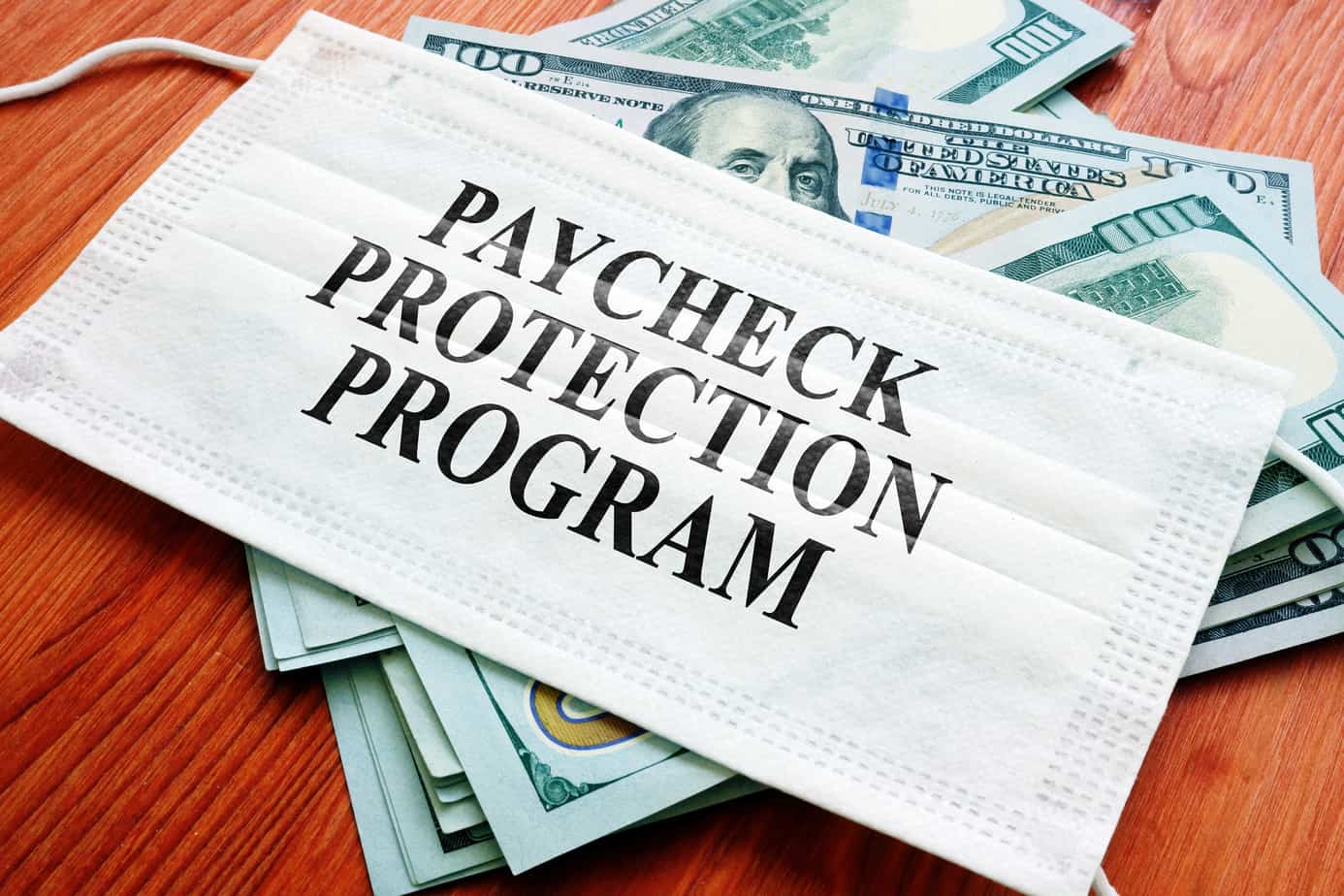
The Paycheck Protection Program is back and supposedly better than before, helping small businesses stay open during the pandemic. If you didn’t make the first cut or were confused by what was required and/or offered, here’s your second chance to get funds to help you stay afloat. Here’s what you need to know.

The Requirements

Businesses eligible for the second round of PPP loans must meet one or more of these requirements:

  • Proof of at least a 25 percent revenue deduction in any 2020 quarter versus your 2019 revenue for the same quarter
  • Proof you expended all or most of the first round of your PPP loan if applicable
  • Proof you have 300 employees or fewer

If you didn’t receive a PPP loan in 2020, the requirements differ slightly:

  • Proof you started your business before February 15, 2020
  • Prove you have no more than 500 employees
  • Proof you are still open and operating despite the pandemic

Proving the 25% Revenue Reduction

Businesses have two ways to prove the 25 percent revenue reduction, which is a requirement if you received the first round of PPP loans:

  • Prove your gross annual revenue was at least 25 percent lower in 2020 than in 2019
  • Choose a specific quarter from 2020 versus 2019 and prove the revenues decreased at least 20 percent for that quarter

How can you Use the PPP Funds?

The first round of PPP funds was limited to payroll, rent, and utility expenses.

The second round of PPP loans has looser guidelines and may be used for:

  • Operating expenses
  • Property damage costs (e.g., from public disturbances)
  • Supplier costs
  • Purchase of PPE for employees

Loan Forgiveness

The loan you receive and the amount that’s forgivable may vary. The forgiveness rules for the second round are similar to the first.

You must use at least 60 percent of the funds for payroll and your staffing level must be similar to the staffing levels before the pandemic. Any remaining funds beyond the 60 percent used on payroll must be spent on eligible operating expenses to keep the business running.

Businesses must apply for forgiveness when they expend all loan proceeds and before the loan’s maturity date. Businesses that don’t apply for forgiveness within 10 months of the covered time must make payments on the loan.

You apply for PPP forgiveness through the lender providing the PPP loan.

Ensure you Qualify Before Applying

The first PPP round was questionable as many businesses who claimed were ‘small businesses’ technically didn’t qualify for the loan.

The second round has tighter restrictions for qualifying and threatens an audit and legal trouble if the loans were taken under false pretenses.

If you’re a small business struggling and you meet the above requirements, contact your local bank authorized to offer the PPP loans and see if you qualify. It’s the best way to keep your company afloat while we navigate the rest of the pandemic throughout 2021.

Stimulus Bill Provides Second Round of PPP Loans

Stimulus Bill Provides Second Round of PPP Loans

Congress finally passed the much-awaited bill of further COVID-19 relief, which is especially beneficial for small businesses. This second stimulus bill was passed this week and included a second round of PPP loans to support all the affected range of small businesses.

The bill is also quite favorable to PPP borrowers as it comes with loan-forgiveness rule changes. This second round of PPP loans made to help small businesses are known as “second draw loans”. However, the law is still awaiting President Trump’s signature.

Although the rules for these second draw loans are quite similar to the original one, and businesses would be quite familiar with it, there are some drastic changes compared to the original program. Therefore, lenders and small businesses need to speed up to get hold of the process.

The legislation, further, includes some favorable changes to the loan forgiveness taxation rules. It has also added a simplified single-page loan-forgiveness application eligible for loan amounts of $150,000 or less.

How Significant is the Second Draw PPP Loans for Small Businesses? How to Qualify for It?

The second draw of PPP loans is considered to be the most significant development in the US legislation, particularly for the small business owners. Besides, the new legislation bill allocates approximately $284 billion. Under this scheme, the new loans are termed as second draw loans.

The loan limit allowed is $2 million. Also, the amount a particular business will be qualified to draw is estimated by taking the average monthly payroll in the previous year, which is then multiplied by 2.5. This means that with the help of the second draw of PPP loans, you can get funding to support 2.5 months of your payroll expenses.

Furthermore, the bill has special provisions and calculations for food businesses and restaurants. For them, the legislation has offered a larger loan amount, which is estimated by taking the average monthly payroll of 3.5 months.

For instance, if you are a small business owner having an average monthly payroll of $100,000 in 2019, then it would qualify for a loan amount of $250,000. And if you are a restaurant or a food chain owner with the same average monthly payroll last year, then you would qualify for a loan amount of $350,000.

As per the eligibility criteria, to qualify for this second round of PPP loans, you must have less than or equal to 300 employees. This has been reduced from the 500 employee threshold seen in the first round. Next, being a small business owner, you must have already used or are planning to use your original funding.

As seen in the first draw, small businesses can use their loan proceeds within 24 weeks. Additionally, they can use the borrowed funds for rent, payroll, and mortgage expenses.

The good news is that the bill has added some new expenses to their original list of “qualifying expenses.” These include workplace protection costs to safeguard one’s employees from COVID-19, operating expenses, and property damage cover.

Additional Criteria: 25% Revenue Loss

A small business applying for the second draw of PPP loans must prove and certify that it has lost a total revenue of 25% or higher in order to get qualified. This new feature is quite different from the original rules set up for qualifying for PPP loans.

In this rule, the small business just needs to state that its financial instability and uncertainty have made the owner go for the PPP loan. Under this 25% loss-of-revenue estimation, small businesses will need to compare their 2020 quarterly revenue, that is, their gross receipts, with the first, second, and third revenue quarters in the previous year.

To qualify for the second round of PPP loan, a borrower must show a loss of 25% revenue or more from a minimum of one quarter of this year compared to that particular quarter last year.

Besides, the second round of PPP loans is forgivable. However, one must spend 60% of the funds on payroll costs. Also, a majority of the small businesses will likely be using 60% of the loan amount on their payroll costs, since the amount depends upon 2.5 months of average payroll. And because they can utilize the funds over a period of 24 weeks.

When Forgiven, PPP Loans Won’t Be Taxable

As per the new legislation, the forgiven PPP loans won’t be taxable for the small business owner. It is applicable to all the existing PPP loans that fall under the original CARES Act, while also including the new second draw ones.

Previously, before the legislation was framed, the IRS (Internal Revenue Service) used to levy taxes on small businesses for their PPP loans. One good news for all small business borrowers is that their PPP loan will be forgiven while still being capable of deducting all their qualifying expenses, such as payroll.

Further, the new law states that emergency EIDL Grants and Advances will also not be taxable to the small businesses. The emergency EIDL Grants and Advances don’t need repayment in most cases and are considered forgiven.

The Simplified Forgiveness Application

The legislation further said that the SBA needs to create a simplified version of the PPP forgiveness application form suitable for small businesses requiring less than $150,000 PPP loans. This simplified application should be designed in a way to fit in one page.

The application will also include loan information, along with a valid certification from the small business owner, wherein s/he must declare and prove that the funds were appropriately used for the purposes and expenses qualified for. However, the certification should not include any calculations or any other additional or unnecessary information.

In fact, the SBA (Small Business Administration) already launched a single-page simplified PPP forgiveness application for all borrowers requiring a loan amount of $50,000 or less. Moreover, it is quite likely that the SBA will be using a similar application for other borrowers with less than $150,000 loans.

After the President signs the law, which is likely to happen as indicated by the White House, the Treasury and SBA are responsible for offering detailed and interpretive guidance and forms associated with the updated forgiveness rules. They are also tasked to provide thorough guidance on loan guidelines and application processes for the second draw of PPP loans.


This Proposal Would Allow Businesses to Get another PPP Loan

Congress has expressed interest in approving the next round of Paycheck Protection Program (PPP) loans. If this happens, small businesses can expect a wave of help coming their way. Following the approval, The Prioritized Paycheck Protection Program (P4) Act is a source of funding for small businesses. Businesses that employ less than 100 people can apply for aid through this program.

However, to be eligible for a second PPP loan, the business must have its first PPP loan entirely spent or near exhaustion. Moreover, they should display a 50 percent loss of revenue amidst the COVID-19 pandemic crisis.PPP paycheck protection program

Small businesses are hopeful that conditions on a second round of PPP funding are not too restrictive.

According to Senator Ben Cardin (D-Maryland), small businesses are facing a tough time, and will continue doing so for the near future. He urged Congress to take immediate action to help the businesses deal with the situation in the most efficient way possible. The lawmakers were quick to realize that the lockdown has been severely affecting small businesses. As the lockdown continues, it will continue to impact the small business community negatively. Hence, the approval is necessary for the second wave of PPP loans.

Cardin, the Small Business Committee‘s ranking member alongside other senators, Jeanne Shaheen and Chris Coons, put forward the bill before the Senate. In the House, U.S. Reps. Antonio Delgado (D-New York) and Angie Craig (D-Minnesota) have introduced a similar bill. Coons, a senator from Delaware, mentioned that the Paycheck Protection Program will enable many employers to seek federal aid. He also added that regardless of the closures coming to an end, numerous Delaware businesses would struggle to survive the damages caused by the recent COVID-19 crisis. The senators will initiate the plan in the upcoming Small Business Committee. The Treasury Secretary Steven Mnuchin assured the senators and expressed his open-mindedness for the idea.

It is important to mention that publicly traded companies won’t be eligible for the loan. Additionally, hospitality and lodging businesses chains can only access to a total of $2 million in loans. The legislation’s topmost priority is smaller businesses, particularly those in the restaurant and hospitality industries, as they have been affected most brutally during this pandemic crisis. The rest is for employers with fewer than ten staff members and businesses in rural areas. On the other hand, Kevin Kuhlman, Vice President of Federal Government Relations (NFIB), states that the 50 percent revenue loss is unreasonable, and it might stir conflict amongst many of its members.

According to him, if a business has had 25 percent or 30 percent revenue loss and not entirely 50 percent, they would still be faced with an existential threat, and their struggle should not be discounted, considering their high fixed costs and money owed to vendors.

PPP Funds Still Available yet Applications Slowing Down [2023 Update]

PPP funds disappeared in as little as 2 weeks when first released. The relaunch occurred on May 11, allowing more small merchants to take advantage. But, today the funds still exist and applications for the help are slowing down.

What are PPP Funds?

If you haven’t heard, PPP funds or the Paycheck Protection Program is a Small Business Administration Program providing small businesses with financial relief. The program gives employers an incentive to keep employees on payroll rather than letting them go.

With PPP, employers must keep employees on payroll for 8 weeks during the pandemic. The employer must also use the funds for payroll and other important bills, such as rent, mortgage, or utilities. The PPP funds should help keep the business running and employees off unemployment. In other words, it’s an attempt to keep your business open.

Why are Applications Down?

Many small merchants figured out their plan by now. They had their moment of panic when the PPP emptied within 2 weeks, leaving millions of businesses wondering ‘what now?’ That moment is gone. Businesses have done one of two things:

• Closing up shop and cutting their losses
• Created a plan to adapt to the current economy, change their offerings, and move forward

Many businesses think the Paycheck Protection Program has too many ‘unknowns’ and/or requirements. Yes, the loan may be forgiven, but only if you meet strict requirements. Many small business owners wonder if they met those requirements. What if things change?

ppp merchants loan covid-19 coronavirus

PPP is a program designed to assist merchants with maintaining payrolls through COVID-19

Worse yet, if you don’t apply for forgiveness, you must repay the loan. Many small business owners don’t want this extra load on their shoulders right now.

Are Small Merchants Coming Back?

As economies open up, with Georgia one of the first, business owners wonder if they should come back too. Is the largest worry over? Are consumers ready to spend money again?

All small merchants agree on one thing – we have to start somewhere. This may be why PPP applications are down. Business owners don’t want a bailout – they want to get back to doing what they love and that’s serving customers. If they delay things, take PPP and take their time planning, they may miss the boat.

The businesses that put their neck out there and tried it may succeed, leaving those that took the PPP in the dust. Is that where you want to be? Would you rather test the waters and slowly make a comeback on your own? Do you want government regulations breathing down your neck or do you want to reopen your business at your pace, doing what you’re comfortable doing?

PPP is a great opportunity for those that need it, but the numbers show that’s not a lot anymore. Small merchants want their business back. They don’t want another potential debt on their back that they can’t repay. It’s time for businesses to make a plan and see where they go.

Lenders Dealing with Emerging PPP Loan Fraud

PPP paycheck protection programLast month, a bank in Rhode Island bank was given an application for a $144,050 loan through the Paycheck Protection Program (PPP). PPP is an enormous federal effort that is designated to assist many small businesses that are severely affected by the Coronavirus pandemic. This PPP loan application was made on behalf of a restaurant located in Warwick, R.I. with about 18 staffs boasting an average monthly payroll of a $46,000.

Many suspicions arose after a bank official drove past the building, indicating that the restaurant had been closed before the pandemic. Many dumpsters were seen on the property, and notices ordering the halting of business were seen posted on the door and windows. This formerly popular restaurant had been shut down two years ago and federal prosecutors recently charged two men with conspiracy to commit bank fraud.

The case was the first criminal fraud prosecution related to the Paycheck Protection Program. Industry officials caution that it will likely be one of many charges related to this program. Banks are working hard to tackle misconduct in the $660 billion program, one former official calculated that fraud rates may be as high as 10% to 12%. Derek Cohen, a former federal prosecutor who currently represents white-collar defendants at Goodwin Procter, stated that the rate of fraud increases when government relief programs are assembled rapidly in response to any disaster.

A few weeks ago, many banks started accepting applications from new small business customers. Towards the end of March 2020, the Coronavirus relief law (CARES act) was enacted as the economic destruction caused by the pandemic spread. This law requires the SBA to register loans with the use of Taxpayer Identification Numbers (TINs) in order to stop the same borrower from receiving more than one SBA loan, an issue known as loan stacking.

Immediately after the loan has been submitted, the SBA’s E-Tran system gives a specific application number to the lender that is assumed to reduce most of the dangers of duplicate applications. Meanwhile, questions have arisen about the SBA’s system for examining taxpayer ID numbers. It is theorized that it is possible for fraudsters to manipulate the system and engage in loan stacking.

Recently, the Office of the Comptroller of the Currency held a feedback session with bankers concerning fraud in PPP. Most participants talked on condition of anonymity and stated that there remained a host of problems, such as fraudulent documents and payroll verification. In the course of securing Paycheck Protection Program (PPP) funds, small businesses have encountered difficulty, distress, and an absence of clarity on the rules of the program. The procedure was chaotic for lenders too, leaving the program exposed to fraud amidst an unprecedented SMB stimulus struggle. The urgency with which these lenders were expected to get applications and provide funding created opportunities for fraudsters to take advantage.  Time will tell how many fraudulent applications are caught and prosecuted, but while not perfect, the PPP has provided much needed relief to many small businesses.