
Tag Archives: payment options

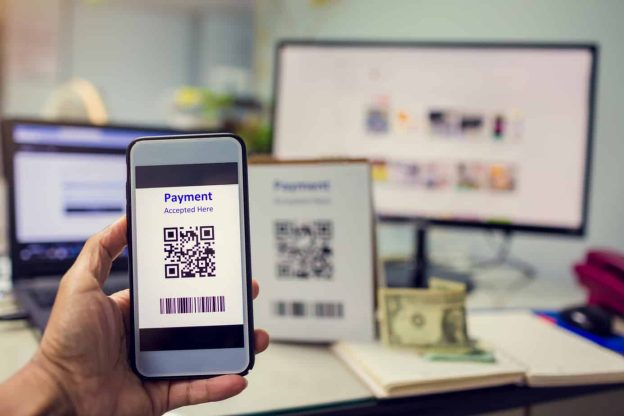
selective focus to customer hand holding smart phone to scan qr code payment 188176594

Advantages and Disadvantages of QR Codes

QR or the quick code has become a popular technology used extensively by many retailers around the world recently. Unlike the regular bar codes located on the commercial packaging, the QR code is a comprehensive code that can be scanned and decoded with smartphones. The best example of a company using QR codes for in-store payments is Starbucks.  

It may look as simple as the black and white squares, but these codes have the capacity to store a large amount of information. They make an excellent option for connecting the offline and online world seamlessly. Customers can make payments through QR codes by scanning them using their smartphones, and the retailers can accept payments directly to their bank accounts or mobile wallets with these codes. 

A Brief on its History

Denso Wave, a famous Japanese automobile manufacturing company, launched QR codes back in 1994. The main purpose of launching these codes was to deal with the limitations of barcodes. 

The quick response code was designed to store infinite information within small white and black squares. These codes started gaining popularity in Japan in 2002 when the country launched smartphones with the ability to scan and read QR codes. Since then the popularity of QR codes has skyrocketed.  

QR Code Advantages

A QR code is used as a marketing tool to attract more people to your business. It’s one of the ideal ways to turn your prospects into regular customers. Here are a few major benefits of using QR codes for your business.

  • Good for Networking

As mentioned earlier, QR codes are not the regular barcodes printed on your company’s package. It is a marketing technique that can get your customers to your Facebook, Twitter, and LinkedIn pages. Bringing your audience to your social media means higher engagement and more attention. These people will spread the word about your brand to their social media friends.

  • Call-to-Action

You can use QR codes to direct your audience to instructional posts, websites, landing pages, emails, and trailers. Businesses have started linking these codes to the email and call function where people are directed to your email page as soon as they scan the code. Some retailers allow their audience a huge discount if they scan the QR code. 

  • It is Versatile

Another advantage of QR codes is their versatility. You can use it for a wide variety of purposes ranging from social media marketing to online transactions. In addition to directing people to your landing pages and social platforms, a QR code can be used to make payments. You can integrate different payment methods into your QR code, thus allowing your audience to choose a convenient payment option.

  • It Makes You Creative

Ideally, the QR code is the black and white squares that can be scanned in simple taps. However, it comes with infinite creative possibilities. You can make it look super interesting by using a personalized and colorful QR code, designed for your business. It’s a great way to make your brand stand out from your competitors and attract a wider audience.

  • Your Customers Find Them Attractive

Customers like QR codes for a few reasons. For starters, they are easy to use. All your customers need is a simple scanning and they will be taken to your company’s landing page or email address. They no longer need to write the website address or remember the email. 

Besides, only a few people remember to visit your website later. QR codes make your customers’ life a lot easier by allowing them to visit your website by scanning the code. If you make it easier for your audience to find the latest offers and connect with your brand, there is a good chance they will convert. 

  • It Helps You Go Digital

With QR codes, you can save time and money on traditional advertising campaigns. It is the ultimate way of going digital with your business. You no longer need to get posters, flyers, and other paper materials for your company’s publicity. 

Instead, a QR code is all your customers need to find just about any type of information about your business – be it the latest product launch or your website’s landing page. It also saves you the cost of traditional marketing methods. Printing flyers and brochures can cost you hundreds of dollars. QR code, on the other hand, is a one-time investment.

Disadvantages of QR Codes

A QR code comes with a set of limitations for businesses and customers. Here are a few disadvantages of using QR codes.

  • Not the Best Customer Experience

QR codes were designed to direct people to the company’s social media, landing page, and other informative content in a single snap. However, your audience needs to download a QR code reader in order to make it work. So, for those who are not comfortable with installing a new software app on their device, the QR code is not a viable option.

  • You May Have to Offer a Better Reward to Your Audience

A QR code is useful for businesses that are willing to offer exciting rewards and promotional deals to their audience. So, just linking your social media or directing your users to your email may frustrate your customers, as this is the basic information. If you don’t have any special discount to offer, the QR codes might not work for you. 

  • It isn’t Accepted by all Customers

QR codes can get your business on a digital platform, but it is not embraced by customers looking for traditional marketing techniques. If your audience doesn’t know how to use the QR codes or they aren’t comfortable with it, they will never convert. So, it is better to stick to the conventional advertising methods than a QR code, which may confuse your target audience.

Bottom Line

These were the pros and cons of QR codes. While the technology works as a solid marketing tool to expand your reach to a wider audience worldwide, it comes with a few drawbacks.

word writing text buy now business concept for asking someone to purchase your product provide good discount writing 166946211

What Are the Risks of the Convenient Buy Now, Pay Later (BNPL)?

Buy now, pay later has taken off over the past few years. Maybe it’s the psychological factor driving adoption and growth where the consumer gets instant gratification of being able to buy what you want right now. Or it’s the new watered-down form of financial engineering giving the masses freedom to make a purchase, even of small-ticket items.

There are benefits of this buy now, pay later phenomenon. However, there are considerable inherent risks in the behavior this program encourages. Below we’ll explore buy now, pay later, how it works, its pros and cons, and who are the biggest players offering the service.

What is Buy Now, Pay Later?

As the name suggests, buy now, pay later lets consumers make purchases now and then pay for them in installments. This segment of payment types is fast-growing compared to debit and credit cards. The service is a relatively cheap, if not free financing option that approves almost all types of customers. Another benefit to the shopper and one Fitch Ratings has cautioned about, is that buy now, pay later service seldom have reporting requirements to credit agencies about the debt a consumer is incurring, or even adverse payments histories resulting from these payment plans.

Convenience and speed by which a buy now, pay later allows shoppers to complete the transaction and get their product is another factor driving mass adoption of payment options.

How does the service work?

The actual client of the buy now, pay later industry is the merchants, not the consumer. Merchants partner with buy now, pay later service providers to sell their products to consumers. The service provider works a factoring service, taking on the risk in exchange for a small margin of the sale price and collecting the monthly payments from the consumer.

For consumers, the transaction can be potentially interest-free and without any fees, as long as the payments are made timely.

Why is it such a big deal?

Buy now, pay later is gaining a lot of traction lately. Large players offering the service are being listed on the stock market at lofty valuations. What was once offered as a service via a partnership with merchants, more and more businesses are considering building out their own offerings with more control over data and pricing. One of the largest consumer hardware companies, Apple, has partnered with Affirm to offer buy now, pay later services in select jurisdictions. This announcement came after the company is reported to be building its own services called Apple Pay Later, with Goldman Sachs.

In August 2021, Square announced that it would be acquiring Australian-based Afterpay for $29 billion in an all-stock deal, making the transaction the largest acquisition of an Australian company.

Many consider buy now, pay later a nascent industry with a huge opportunity for growth as it makes a small piece of the $3.4 trillion e-commerce industry, or the $7.1 trillion cashless transactions space.

What are the benefits?

Considerable benefits are driving the adoption overall, particularly the younger demographics. There is a general shift away from non-cash transactions. The convenience of conducting transactions quickly, and via mobile devices has been a prerequisite for some time. Now there is also instant gratification. Consumers who would have historically waited to save to make a purchase can now simply purchase right away and allot their savings to installment payments.

However, consumers have also become price-conscious over the past year and a half, prompting consumers to shop smartly. They have jumped at opportunities where BNPL  service providers offer the option to make interest-free installment payments in exchange for timely payments.

What are the risks?

Of the number of benefits available in the industry, the risks are also tantamount. There is the possibility of regulation which buy now, pay later service providers may be required to be treated like banks. They may also be required to disclose information on consumer credit and credit quality reporting. The industry may also come under further scrutiny of consumer watchdogs around the globe, where many of the program covenants are reminiscent of payday loans, including no interest or fees unless there is a late payment.

There is also the potential of consumers not realizing the limits of their own spending habits and may end up accumulating more debt than they can afford to make purchases of items they may not necessarily need.

That leads to the next risk, buy now pay later leads to overspending. Consumers purchase more often and are emboldened to spend on big-ticket items. Based on a survey by a buy now, pay later service provider, many consumers would balk at the purchase if the service was not an option. These exact facts and figures are used to market the product by the industry as more and more merchants see this as to quickly increase sales, cash flows, all without any consumer credit risk.

For merchants, they may lose out on 3-4% of the sale proceeds to the buy now, pay later service provider, but the added sales is more than the markup for any margin shortfalls. Plus, businesses may just be breaking even on the margin shortfalls as they no longer have to incur payment processing fees.

Who are the major Buy Now, Pay Later service providers?

There are several large players in the budding buy now, pay later industry. Many large consumer product companies are looking to capitalize on the payment industry shift by offering their own version of the service, namely, Apple Inc.’s Apple Pay Later.

One of the largest service providers in the industry is Swedish-based Klarna, with a valuation of nearly $46 billion. The company has processed $39 billion in payments in the first half of 2021.

Another major player is Afterpay, an Australian company that Square has just decided to pay $29 billion for. Other smaller players include another Australian-based company called Zip and the San Francisco-based Affirm.

shopping online e commerce concept paper shopping bags on notebook keyboard depicts purchase of products and services on the 202873753

Payment Gateway Integrator For E-Commerce Websites

Are you the proud owner of an online business? Congratulations! Owning and managing an online business can be wonderful, but it can also be very stressful sometimes. With so many things to juggle, from inventory to listings and credit card frauds, it can prove to be exhausting running an online business. Through this article, we’ll be giving you all the tea on what a payment gateway integrator is, how safe it is and how you can use it to increase your revenue and expand your business!

In this article, we’re going to be answering all the questions you could have about payment gateway integrators, from what they are to how useful they are to your business, their safety, and integration methods. Anyway, without further ado, let’s get right into talking about payment gateways!

What Is A Payment Gateway?

Well, let’s start from the beginning: a payment gateway is an essential tool that makes it easier for your customers to pay for your products. If you’ve ever shopped for stuff online yourself, there’s a good chance you’ve seen these before. Whenever we want to purchase online, the website takes us to a secure payment gateway to complete the transaction quickly and safely! 

All online businesses have this, from giants like Amazon to small businesses on Shopify or eBay. Essentially, the payment gateway works with a third party authenticating the credit card and completing the transaction. These tools are vital for your business since they can do transactions for you and protect you against financial risks like credit card fraud. 

Once the payment gateway has gathered all the customer’s information and ensured that there’s no fraud involved, they redirect your customer back to your platform and send you the money! All forms of payment, from credit to debit cards to e-wallets to even bitcoin, manage transactions from this kind of gateway. 

How Is A Payment Gateway Useful?

Well, we can answer in several different ways. For starters, a payment gateway makes it easier for your customers to complete their transactions, saving you a lot of money by avoiding the forever sought-after online cart abandoners

These types of people most often leave their only purchases abandoned because they don’t understand the payment method or find it confusing. No one wants to deal with all that hassle. So, that is probably why these customers close the tab and move on with their day. 

Integrating a payment gateway into your platform is extremely important since it optimizes customer experience, especially at check out, which is the most vital part of the experience. Payment gateways are also helpful because this may shock you: not many people use cash anymore. In modern days, cash has become obsolete, and everyone buys everything either by card or online. 

What makes payment gateways so valuable is that they make the transaction easier and offer payment options familiar to the customer. 

How Does It Work?

While all this technical stuff may make it seem not very easy, it’s pretty easy, especially when thinking about it from a customer’s perspective. If you’ve done any shopping online, you know the drill: you see an incredible product on Instagram, their profile takes you to their website, you add your product to the cart and click on ‘buy.’ 

The website then takes you to another page where you can put in all your information (safely, of course), and once you click accept, boom, you’re done! You’ll receive your cornflower blue stapler in three to five business days!

But what happens in the background? Well, there are several steps that the system takes to make this process accurate. First, the system gathers all the information and puts it on your server. It authenticates all the information to ensure no credit card fraud, subtracts the amount from their card, and ultimately adds that amount to your server. Once that’s done, it authenticates the transaction, and you’re ready to go.

Is It Safe?

With change comes fear. More so, with brand new technological advancements comes the fear of getting robbed blind. Luckily, this method is not as dangerous at all. For starters, the payment gateway company is held accountable by following specific protocols such as not keeping and later selling customer information. There are many ways to make this process even safer, such as:

  • TLS Encryption: a TLS certificate that gives your customer the knowledge that their data is safe
  • PCI-DSS Compliance: standardized policy created by credit card companies that make the payment gateway more secure
  • Tokenization: creating a token that your customer has to enter, so you know the transaction is being made by them and not someone else (possibly their child stealing their credit card from their purse)
  • Two-Factor Authentication: This one also ensures no fraud by asking your customer to give the go-ahead for the transaction and their bank. 

To sum up, yes, it’s as secure as it can be!

How Do I Integrate It Into My Platform?

If you’re now convinced that your online business needs a payment gateway (and you’re right because it possibly does), here are some ways to get it.

For starters, you need to decide if you want to use a platform that already has a payment gateway built-in or if you want to add one to your already existing website. If you choose the first option, do some research on the platform you’re using and ensure they follow the necessary protocols. Suppose you’re going for the second option. In that case, you can look into third-party payment gateways like GPay or Amazon Pay, or you can customize it entirely by hiring API software developers to develop your very own payment gateway! 

Conclusion

Payment gateways are an essential part of your eCommerce business, which is why it’s essential that, as a business owner, you take charge and figure out exactly which options are best for you. It will not only bring more revenue but also keep you and your customers safe as you navigate the online marketplace!

man doing self registration for flight close up 55755139

6 Post-Pandemic Kiosk Business Ideas

Self-service kiosks have become increasingly prominent, as the industry will continue to grow by billions of dollars in the next few years. People have started using kiosks for many purposes in the past few years.

The global pandemic has especially made self-service kiosks more essential. These systems are considered safe and sensible, as they allow people to order and pay for items without having to contact others.

The most impressive part of the kiosk industry is that kiosks are becoming more varied and diverse. They can work for many unique transactions. You could take advantage of the self-service kiosk market by investing in one of many potential business opportunities. Here are six useful kiosk business ideas you could benefit from right now or after the pandemic ends.

  1. Food Pickup

One kiosk choice to explore entails food pickup kiosks. A customer can order foods online, and the person can then travel to a restaurant and use a kiosk to unlock a locker featuring whatever someone orders. The process keeps foods heated and fresh, plus it reduces the contact between customers and employees. People are choosing carry-out dining services more often than ever, so this could be an exciting kiosk option for investing.

This kiosk setup is similar to the automat. This system is a food service setup that was prominent in the mid-twentieth century. An automat is a place where prepared foods are in separate compartments. A customer can pay money to open one of these ports to take the food inside the space.

Expect this serving format to become more popular in the near future, especially as people look for food solutions that don’t entail as much human interaction as one might expect. The technology for automats already exists, so it is possible. A kiosk can link to the automat to allow the customer to peruse through foods and select the unique locker for ordering. The selected locker will open after the customer’s payment goes through.

  1. Cleaning Devices

People are looking for ways to ensure their items stay clean. From their phones to their eyeglasses, everyone wants to see their things are safe and germ-free.

That’s why investing in kiosks that support cleaning devices is a practical choice. Cleaning device kiosks link to systems that can clean various items. They can use ultrasonic light to kill off bacteria and gentle water jets to clean off their surfaces. The user places one’s object in a secure space, and the machine will do the rest.

One example you might find surrounding these kiosks entails eyeglass-cleaning stations. These kiosks have become increasingly common in airports. A user can utilize the machine to pay for a cleaning service. The user will then place the eyeglasses in the proper compartment and then let the unit spend a few minutes cleaning the glasses. It then triggers a drying that will clear off excess moisture, ensuring the glasses are clean and ready to wear again right away.

  1. Medical Tests

Another post-pandemic idea for a kiosk entails a medical testing kiosk. A customer can order a medical testing item from a stall by entering one’s payment information and selecting the specific test one wants to buy. The user can purchase an allergy test, hormone test, blood level test, or anything else of value.

A medical testing kiosk can be critical to anyone’s health. It can be more viable and convenient than visiting a pharmacy or going to a drive-through testing site. These kiosks can especially be helpful for people in urban areas where it might be tough for them to find tests in most places.

  1. Drink Services

Coffee shops can benefit from offering self-service kiosks. A coffee shop can introduce a machine where the customer can order a specific coffee and add other things to it as desired. The customer will pay for the coffee before it starts. The kiosk will then brew the coffee and deliver it to the customer through a dispenser with an included cup and lid.

This kiosk idea could be appealing if you can maintain it well. You’ll need to clean the mechanisms inside the kiosk on occasion. You’ll also have to refill its components to ensure you can keep on serving your customers. The kiosk would also require a consistent water connection to produce enough coffee or other drinks people order.

You could utilize one of these kiosks for any drink one wishes to order. You could create a self-serve beer or wine kiosk at a bar, for example.

  1. Health Monitoring

As people start to return to outside places more often, there might be some reluctance among people to enter some spots. Health monitoring kiosks could help review if the people entering a building are healthy and safe. A kiosk could monitor heat signatures and identify if a person’s body temperature is too high. A machine could also identify if someone is wearing a face mask. It could create an alert for when someone isn’t wearing a mask, producing a warning.

  1. Hotel Management

The last post-pandemic kiosk idea to follow entails hotel management kiosks. You could invest in kiosks that work in hotel lobbies and facilitate check-ins and check-outs. Hotels are expected to become busier as people start traveling again. Investing in kiosks in these places could be a good idea to explore.

A kiosk could allow a patron to check into one’s room. The user can pay for the hotel reservation and get one’s room key through the kiosk. The menu could also provide upsells and other offers that the customer could explore. These upsells could give the business more money if enough people install them.

All of these post-pandemic kiosk ideas show that the kiosk industry is viable and includes many ways for you to make money. Take note of all these options, and see if you can find a choice that works for what interests you the most.