Tag Archives: payment methods

digital marketing banking payment and online shopping businessman touching global business networking on colorful background 172987534

Trends to Global eCommerce Success

Global eCommerce is a necessity in this digital age. The borderless business has gained immense popularity. Most of the credit goes to social media, search engine marketing, SEO, and other digital marketing campaigns. Not only does it benefit retailers, but the advent of online businesses has made it possible for customers to shop for products from any corner of the world and make payments online. 

The mobile and internet are the main components that drive maximum sales for businesses running on a global scale. Even during the pandemic, global sales witnessed a growth of 25%, according to a report published by Statista. And, credit/debit cards and PayPal were considered the most sought-after options for payments. Here are a few common trends for global eCommerce success.

global ecommerce

Global eCommerce –Mobile Shopping – A New Normal

With land-based stores shutting down overnight, customers were left with no other option than to buy things online. Technological advancements and M-commerce have made customers’ lives a whole lot easier, as they can purchase just about anything with simple clicks. 

The product is delivered to their doorsteps and the payment is processed either online or through credit card machines. The Mobile e-commerce industry is expected to be worth $3.56 trillion in 2021, according to Oberlo. The pandemic has made mobile eCommerce an efficient way to shop for goods online, not only for customers but for B2B sectors and wholesalers as well. 

Global ecommerce trends - mobile shopping

This trend is expected to continue when the pandemic ends and everything goes back to normal. Considering its current popularity, it is safe to say that mobile shopping is not going out of trend anytime soon. 

Shopping Overseas is Easier than You Think

Going global was a big step for any business before the digital era. However, the Internet has transformed the way businesses are executed. You do not need a global presence to go global with your brand. Nowadays, buyers are often looking for purchases outside their countries. So, setting up a borderless business is a breeze. 

You don’t need to set up a warehouse or fulfillment center for international merchants or have a separate office in the countries you are covering. Cost-effective marketing combined with a broad range of advertising tools makes global business ideas a success for emerging businesses. Geographic targeting can help companies target the international audience and promote their brands to people based in different corners of the world effortlessly. As far as product delivery is concerned, many international courier delivery companies offer discounts on bulk shipping. So, you can have your products delivered to your international customers at a reasonable delivery cost and without any hassle.

Understanding the Product Market

Your product market is different for every region. For example, the demand for deodorant in China was always low because of biological reasons. Despite the solid marketing tactics, the product never gained popularity in this economy. 

So, a product market should always be your first consideration when going global. Research the demand for your product in the particular region, along with potential revenues, and opportunities. There is no point in targeting a region where there is no market for your product or an area where customers are not interested in your services. Research the market thoroughly before promoting your brand. 

Understanding the Product Market

Monitoring the Global Analytics

Analytics is the key to a successful global marketing campaign. Google insights tell you how your business is performing on a global scale and whether you are reaching your target audience. A global analysis gives you comprehensive details of your business’ performance in different regions. 

Check out the traffic to your websites and social media by country data. Note down the countries with the highest traffic and also the regions where you are attracting a large audience but low conversions. This shows that the demand for your product and services is high in certain regions, but people don’t buy from you because of the onsite barriers, such as language, currency conversions, and more. Focus on addressing these issues to extend your reach and build audience engagement. These stats show you the data that will help you target countries with the best product-market fit.

Local Language is Important

Another trend in the global e-commerce business is the language. The language is often a communication barrier for your international audience, especially in regions where English is not the first language. Translating your content, including product descriptions, return & refund policies, terms & conditions, and blogs into your audiences’ first language is the easiest way to connect with your prospects. It also increases your chances of converting your prospects into loyal customers.

Posting content in your customers’ native language has a significant impact on your brand’s success in international countries. You can offer a native experience to your target audience by getting your website translated into their native language. According to research by CSA, 65% of customers want website content in their native languages. 40% of customers do not buy products from a company that doesn’t translate the website content into their native language. 

Customers Prefer Different Payment Methods

One of the common mistakes of startups and SMEs is choosing a payment method that works domestically for the international audience. The payment preferences of customers vary by country. In some areas, PayPal is the most suitable payment option, while buyers in other regions may use credit and debit cards for online shopping. 

More and more customers are now adapting to digital wallet payment methods, such as Apple Pay, Google Pay, and PayPal for instant transactions. The online payment modes offer great perks. For starters, they transfer payments immediately. Moreover, they are easy to use.

Bottom Line

If there is one thing we have learned from these trends and stats, it is that global eCommerce is no longer a luxury, but a must for every business. The size of your business doesn’t matter, as it has nothing to do with your ability to go global. So, take advantage of these trends and expand your business on a global level.
businessman shopping online 40190793

How to Continuously Innovate your eCommerce Checkout Process

More and more businesses have pivoted from brick-and-mortar operations to an online presence. The prohibitive costs of physical outlets in urban centers coupled with the growing success of online platforms such as Shopify, Facebook, and Instagram, among many more, have fueled the shift. The technology and payment platforms have also facilitated businesses to transact efficiently, making eCommerce and mobile commerce the commerce of choice among consumers.

As a result of these changes, major eCommerce businesses have invested in augmented reality and other technologies to recreate virtual rooms to “try on” their products to gauge fit and appearance. However, imagine ten people walking into a retail outlet and filling up their carts with items throughout the store, and then eight just decide to leave without making a purchase. They abandon their carts right there and walk out. That is the current state of the eCommerce business.

Businesses can continue to innovate in the current environment by focusing on areas of friction, such as the eCommerce checkout. There may be many drivers for the current predicament, but the checkout process is one worth examining. Below, we look at some reasons to continuously innovate the eCommerce checkout process to help nudge consumers past the finish line.

What is the checkout page?

The checkout page on an eCommerce site is the last step of a consumer’s online journey map. Consumers land on this page after selecting one or more items they’d like to purchase after navigating the eCommerce site. At the checkout page, the visitor would submit their order, enter the billing and shipping information, along with their payment method and details.

The state of the current eCommerce checkout process

According to market research by Baymard Institute, nearly 70% of online shopping carts are abandoned. These are for consumers shopping on their desktops. The abandonment rate is over 80% on mobile devices. These rates are a testament to the fact that the eCommerce checkout process requires continuous innovation.

There are several reasons that consumers abandon a purchase at the checkout stage. Some of these include:

Unforeseen charges – additional fees are a significant reason consumers abandon a purchase as they can start to question the value of the item being purchased in light of higher cost. When the likes of Amazon offers 2-day shipping, even same-day shipping in specific markets, consumers may be dissuaded by a particular site still charging for it.

Burdensome process – maybe the eCommerce site requires you to set up a new account or log in to an existing one. Perhaps the overall checkout process has too many details required adding to the friction of completing a purchase. Maybe the site is just too slow. These points create a strain for the consumer and work against the business, leading to lost customers and sales.

Payment options – More and more consumers are shifting spending from cash to non cash methods such as debit and credit cards or even mobile wallets. Is your business equipment able to process payments for all the major non-cash payment options currently preferred by consumers?

Why do you need to innovate continuously?

Businesses need to tweak the user interface and experience for optimal results continuously. They also need to understand the exact drivers behind consumer behavior on their site to leverage that to convert a more significant number of visitors into paying customers.

A/B testing is an excellent way to learn where the friction is the greatest. Maybe customers don’t mind setting up a user account as much as they pay for shipping costs. Businesses may be offering too much incentive to nudge clients to set up an account; 10% may have sufficed instead of 15%.

All are a great way and reason to continuously test and innovate scenarios to learn from them and utilize the results to grow the business optimally.

Some areas to continuously innovate your checkout process.

Don’t require users to log in – yes, your business would have a treasure trove of data on visitors if they set up an account. However, getting them to make a purchase is the goal. Once you have contact, shipping, and payment details after completed purchase, you can continue to monitor visitors, build a profile of them, and offer incentives to create an account.

Don’t charge for shipping – This is difficult to stomach for small businesses, especially with shipping logistics stressed, and prices increase for transportation of goods. However, many prominent companies have spoiled consumer expectations in offering specific shipping for free. You may want to default to next-day shipping at a cost, which the customer can change to 2-days for the free version or vice versa. Offering alternatives still offers the free-of-cost option and the control to pay more to get the product faster.

Accept the right payment types: Payments and Fintech is a fast-growing and thriving industry. Currently, the most valuable venture-backed company is Fintech. There’s a tremendous amount of innovation in Fintech, with mobile wallets and a host of other payment options quickly experiencing mass-market adoption. If customers prefer to transact via specific payment methods, ensure that your business can accept it.

There have been many iterations in the ways consumers shop to the benefit of online eCommerce businesses. However, there are challenges for eCommerce businesses in monetizing consumer interest, and web traffic as nearly three-quarters of online shopping carts are abandoned. There is a tremendous opportunity to capitalize on this friction and continuously innovate the e-commerce checkout to improve the customer journey and convert more visitors into customers.

Frequently Asked Questions

clover on the go

Clover POS Systems Work With Many Payment Options

People who need POS system setups are finding it easier for them to accept more payment options through Clover®. Clover POS systems are prominent for how flexible they are in handling payments. These provide sensible interfaces that help people complete their transactions in moments, plus they never have to worry about inaccurate data.

Clover supports many payment options thanks to its hardware and software setups. Clover produces durable card-accepting items with customer-facing screens that help people choose what payment methods they will utilize. You’ll need this support to ensure you’ll have more control over your sales experience while satisfying whatever needs your customers may hold.

General Cards

Clover POS systems can support various payment cards. Clover produces card readers that feature screens that display payment information and details before customers can confirm their transactions. A card reader can feature a slot for chip-based cards and a swiping space for magnetic stripe-based cards.

You can program your POS system to handle credit and debit cards. You can adjust the display screen to show which card brands you can accept. Not all retailers can accept American Express cards, so having this option to edit the display screen is essential to its success.

Chip-based cards are typically more secure than stripe-based ones, as it is harder to steal data from chip cards. But Clover’s interface provides a safe body that prevents tampering and houses a secure space for cards that people cannot alter without breaking the system apart.

You can also support gift card transactions with a Clover system. Gift cards are ideal for businesses, as people who receive these cards are often more likely to spend extra money on their transactions. They might purchase more items after a while and even return well after they finish using their cards.

Contact-Free Payments

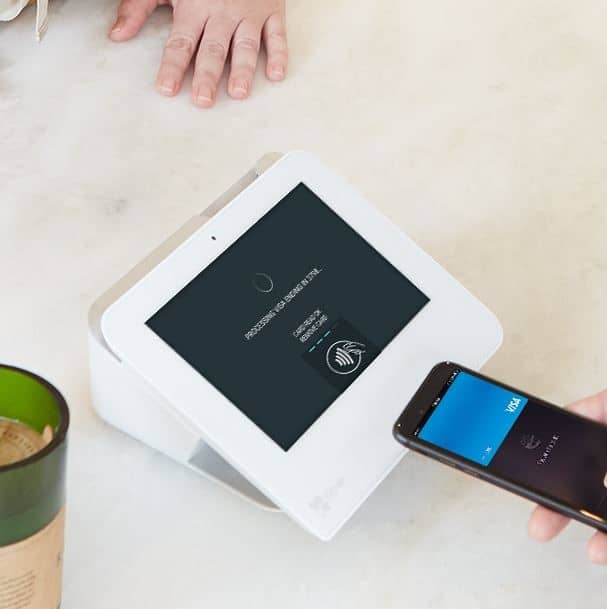
You can also use Clover POS systems to accept wireless or contact-free payments. NFC payment options like Apple Pay are very convenient. Clover makes POS setups that can collect NFC payments and other things that don’t require physical cards.

Clover produces systems that meet PCI compliance standards while handling NFC transactions. Clover will encrypt the data you collect and ensure all content goes in a secure database where nothing is stolen. The data transfer process also ensures the transaction is confirmed and secured as soon as possible.

Online Wallets

You can also accept online wallet payments through Clover. People are using online wallet systems like PayPal to complete transactions fast and without having to go into one’s credit lines. You can gather transactions from these accounts and move the money to your account in moments.

Clover can handle PayPal and other similar online transfer systems. It can use a secure online connection that encrypts all financial and wallet data while ensuring no identifying factors will be exposed to outside parties. The extra protection you utilize ensures you’ll have more control over how Clover works for your content.

Don’t Forget to Adjust Your System

You’ll need to adjust your user interface and display to ensure everyone knows what payment options you can support. Clover POS systems come with convenient interfaces and programming setups that let you control how you’re handling your funds. You can use Clover to monitor where your money is going, how people are paying for things, and anything else of interest to your business.

Clover POS systems are perfect for when you’re looking for something of value. You can use these systems to make it easier for you to accept payments that work your needs. Take note of how Clover can work for your business and how it can adapt to whatever payment methods you support when running your operation.

The Clover® name and logo are trademarks owned by Clover Network, Inc., an affiliate of First Data Merchant Services LLC, and registered or used in the U.S. and many foreign countries.

tokenization technologies chalk icon 221656736

4 Reasons To Use Tokenization

Tokenization is a unique practice that keeps the data you process safe. It replaces account numbers and other private bits of data with random numbers. The numbers combine to form a token that handles the data you collect.

The personal data inside a token will stay in a separate token vault. The vault includes the actual data relating to what is on a token. Any fraudster who tries to capture a token will find it useless, as the token does not include any viable data. All the details necessary for a transaction will enter a separate token vault that the fraudster cannot access.

Tokenization works for all sensitive pieces of info you wish to process. It works with credit card data, account names and numbers, passwords, files, and anything else you might transfer or use in your space.

Tokenization is a standard worth exploring when accessing and handling your data. Here are four useful reasons for why you should use tokenization for your work needs.

  1. Tokenization is more secure than encryption.

The process is different from encryption, as a token does not have a mathematical relationship with the original account. Encryption entails using a key that can decode the data in a set. But the key has some mathematical link to the data it will unlock.

A token will include random numbers that mask the actual data in an entry. For example, the last four digits of a credit card may appear in a tokenized report. The remaining data would be in a token vault or storage place kept separate. An outside party won’t have access to the vault, ensuring the content in the token remains safe and less likely to be compromised for any reason.

The problem with encryption is that a hacker can accurately produce a key for the encrypted data with enough effort. Hacking technology has evolved to where encrypted data can be broken into, although anything with more bits of protection would be tougher or impossible to manage. Tokenization eliminates that risk, as the hacker has no way to resolve the random strings of characters in each token.

  1. Tokenization does not require you to store sensitive pieces of customer data in your private system.

Tokenization works with a payment gateway to collect data without exposing customer information. Since card numbers and other pieces of data move to a separate vault, the info will not be open to any outside entities.

The tokenized data will stay in a separate off-site station. It can work in a cloud-based server to ensure you can access that data as necessary. The cloud-based design can also reduce security risks by using high-grade encryption data without any set physical location where something could be intercepted. The cloud system also reduces possible liabilities, ensuring all parties will have full protection over the content.

You can request anything to be tokenized, and the outside server will help you with the process. The server will collect whatever data you get from each token and will charge the right payment based on the content. Since the token doesn’t have the specific details on someone, outside parties won’t be capable of intercepting these details and using them in some form.

  1. Tokenization supports recurring payments.

Some customers might provide recurring payments, whether they are subscription-based clients or people who enjoy doing business with you. Their data needs proper protection and security to ensure their trust and comfort.

The token data for each client will remain the same with each transaction. While the private data is secured separately, the token will include the same data to identify the person completing a transaction. The effort takes less time to process, giving you further control over whatever works in your business.

The token can work for future transactions, but it still will not require any further sensitive bits of data to make things work. The same data on the outside system will work each time. The data remains identical and does not require the user to add anything new.

The customer can change one’s address or payment option as necessary, but that will require a new token. The new token can replace the old one in moments in your system, helping create a seamless approach to handling the data right.

  1. Tokenization can support some of the latest payment processes.

Payment technology has never been greater, as people can pay for items in many ways and with less effort. Tokenization makes this possible, as it provides a safe way to transfer card and account data from many platforms. The design provides a good way to help you manage payments and to get everything working right.

Tokenization works on mobile wallet platforms like Apple Pay or Google Pay. A user’s card data stays on one’s device as a token. The mobile platform will also add further safety measures like biometric identification support or other authentication features. But the mobile wallet system will still use the token to process the data.

Tokenization also works for in-app purchases. Each customer’s card info in an app features a separate token. The app can review whatever token is being utilized to complete a payment and process it from there. The customer doesn’t have to add one’s card data once more, as everything is already in the separate token vault. The process lets the customer pay for things faster.

The general process allows quick access to whatever payment methods someone wants to use. The design ensures all data can move through effectively enough without risking possible losses in whatever work someone wishes to plan.

All of these points about tokenization make it one of the best solutions you can use when handling sensitive pieces of data. Look at how well tokenization can work if you’re aiming to handle transactions in moments. It adds a safe approach to work you can trust for whatever needs you may hold when keeping your business running.

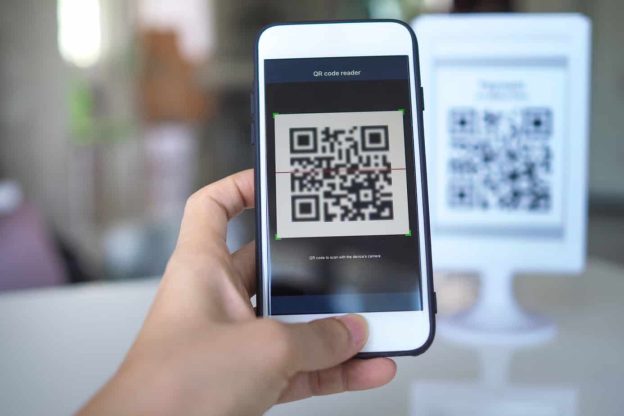
women hand uses a mobile phone application to scan qr codes in stores that accept digital payments without money and plastic 185122541

Emerging Trends In Retail, Payment Methods and Open Banking

Retailers are always looking for ways to make shopping more accessible and convenient for their customers. Part of this includes finding new ways to handle payments. Businesses want to be as open to their customers as possible. Helping them support whatever payment methods they wish to utilize is part of what makes everything work.

The trends surrounding the industry are among the most intriguing ones in the industry to watch. Retailers can make more money if they handle additional payment solutions, including some that are becoming increasingly common.

The Rise of Open Banking

Open banking is a practice where open APIs allow third-party developers to produce new applications around a financial system. Open banking helps people access their financial information from anywhere, helping them manage their funds and make payments.

Banking-as-a-service programs can allow people to access their funds from their bank accounts and to pay for items in moments. These apps let people pay for retail items in minutes.

Most of these banking-as-a-service systems will require firm data review standards. The work includes using secure connections and setups to prevent data from being lost.

These solutions would require two-factor authentication to protect data. Two-factor confirmation allows the user to confirm one’s identity and location. The user cannot log onto an account with a username and password, as a second factor will be necessary.

Open banking will work so long as the proper entities create unique platforms. More banks are starting up open banking platforms to help people connect with their funds. Retailers will also need to establish their own open banking accounts to help them accept funds. The flexibility of such setups and the general convenience will be necessary for ensuring everything works.

The Use of Mobile Wallets

Mobile wallets will likely become more prominent when managing payments. Retailers can accept mobile wallet transactions through NFC-ready devices or QR code readers.

Mobile wallets like Google Pay or Apple Pay can be convenient for many reasons:

  • Customers can link their debit cards or other banking information to a mobile wallet. Customers do not need to use their physical cards, nor do they need to visit an ATM to withdraw physical cash.
  • Mobile wallets allow data to move through in moments without outside parties. It works like a person-to-person platform to send funds in moments.
  • These wallets utilize QR codes to help transfer data. It is easier for mobile wallets to move data through QR codes, as the content remains encrypted and less likely to be lost or stolen.
  • Mobile wallets can also support cryptocurrencies and alternative forms of currency. Customers can send their cryptocurrencies to a retailer, who will collect the fiat currency equivalent of the crypto item. Some businesses might establish their own cryptocurrencies for use in their stores if this trend continues.

Most of the advantages work for customers, but retailers will find many things to love about mobile wallets:

  • Mobile wallets utilize tokenization to replace an account number with random characters. The system allows data to move through a network without revealing actual bank account details.
  • Retailers won’t spend money on added transaction fees. Since the transaction goes directly between the retailer and customer, there’s no need to move funds through a network. This point eliminates the interchange fees someone might spend when accepting credit card payments.
  • Retailers can also produce unique wallets for use in their business spaces. Such wallets provide a distinct branding space. Retailers can recommend certain things, or they can plan reward events that fit one’s needs.
  • There’s no need to wait for a card transaction to be approved. A mobile wallet deal will be approved right away if the customer has the necessary funds for the transaction.
  • People may be reminded to come to a retailer more often if that person uses a mobile wallet. The customer will find the wallet to be convenient, making that person want to shop at a certain space more often.

This payment method will be a boon for retailers and customers alike. More locations will likely start supporting this solution once they start noting everything that makes the work so advantageous and useful. It becomes easier for people to handle transactions when they have access to the right payment systems for their convenience.

Additional Biometrics

Biometrics will become a part of payment methods to watch. Biometrics is a physical review solution that makes it easier for people to confirm their details when shopping.

Biometrics can incorporate many solutions. These entail different physical parts and features, but they all produce the same result in reading data:

  • Iris scanning
  • Facial recognition
  • Fingerprints
  • Voice ID

A person would have to be physically present to manage any of these biometrics solutions, and the way they will work will vary by platform. A fingerprint scanner may work on a credit card, for example. The fingerprint must be read while the card is inside a reader for the card to work.

Biometrics may not be as prominent with some retailers, especially considering the cost to get some of these setups ready. But it may be a necessity for some places, like ones that sell high-value items. The security biometrics provides a positive solution for many uses, especially when managing the high-value or sensitive purchases that customers may make.

A Bright Future

The most significant part of these emerging trends in retail entails how various crimes may become easier to prevent. As the world becomes increasingly cashless, the risk of monetary fraud will also drop. Digital wallets and payments are also making people less reliant on traditional credit or debit cards, potentially reducing the risk of fraud.

Retailers will need to be aware of these trends and how they will change the market. The goal for these retailers should be to establish new ways of accepting and managing funds. Whether it entails accepting crypto tokens or supporting NFC or biometric-based transactions, retailers must note what they can do when collecting payments.

BNPL Schemes

BNPL Schemes Make It Easy To Spend, But Harder To Understand the Risks [2025 Update]

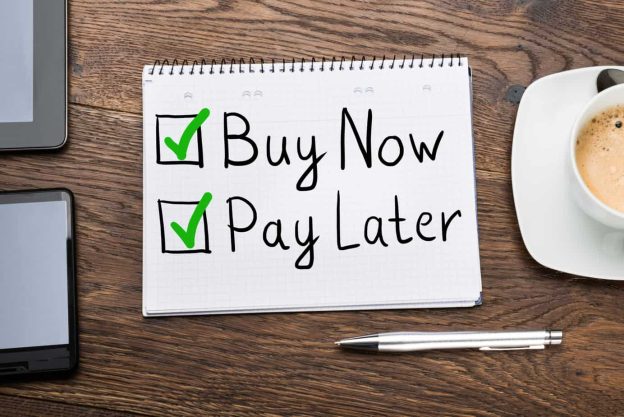
The concept of buy-now-pay-later transactions sounds convenient for many people. The idea allows a person to purchase a product on credit and then pay for it after an interest-free period. The customer can also pay for the item in installments. Online retailers have been using BNPL schemes for a while. They have also become available at some physical sites as of late.

While BNPL systems are appealing, there are many risks to consider. Sometimes a person might have less power over one’s purchase than what someone might expect. It is also tough for many people to fully understand some of the things they’ll get out of their schemes.

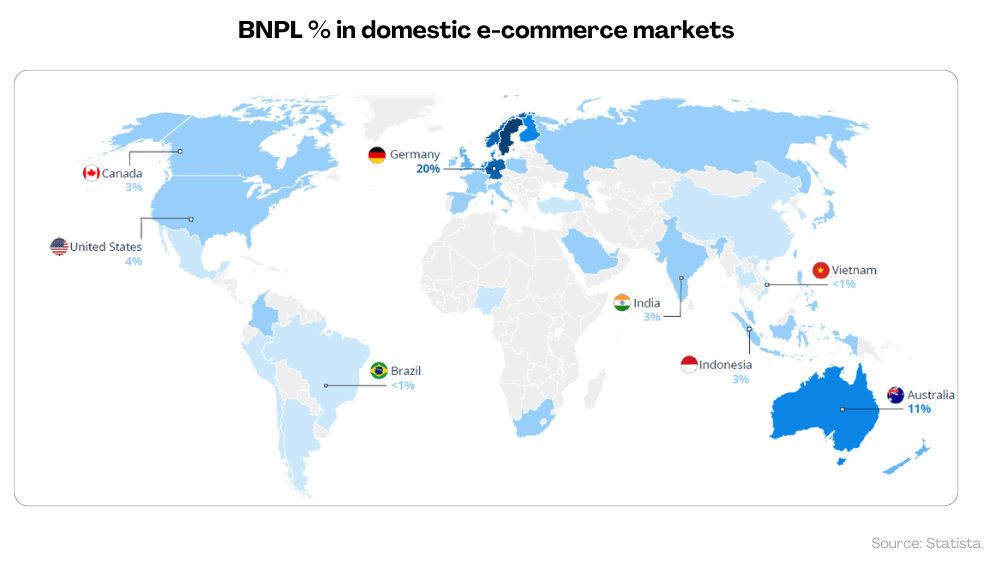
domestic market of bnpl

Sour: Statista

A BNPL provider could also help reduce the risks associated with these schemes by being more transparent and easy to understand. A BNPL team can work with security systems to protect everyone’s data, plus it could provide clear terms and conditions that people will want to read and understand. It will still be up to the customer to watch for the risks that come with whatever one wishes to manage.

BNPL Schemes – Different Limits

A BNPL scheme will often subject customers to lower transaction limits than what their credit cards might support. A BNPL website or service will require a customer to provide personal data before completing a transaction. A customer might need to allow access to websites or services that can review someone’s credit risk.

Alternative credit scoring may also work in some cases. The effort entails non-traditional methods for reviewing someone’s credit risk. Instead of focusing on what credit bureaus say, an alternative credit scoring process can entail looking at things like these:

  • Bill payments for various entities
  • What someone does on social media
  • Employment history
  • Property records
  • Any transactions someone makes with a government
BNPL Schemes - Different Limits

These points are radically different from whatever traditional credit bureaus can review. The review efforts make it that someone might have less purchasing power than if someone used a traditional credit card. The review process may also be invasive to where more of one’s data is being used in ways that someone might not prefer or expect.

Extensive Fees

Most people who use BNPL services don’t think about the fees they would pay if they don’t handle their work well. The costs can be significant at times:

  • Some BNPL fees can be several percentage points of the value of a purchase. These fees will keep the BNPL system operational while ensuring it can maintain a profit. The charge is also reflective of the convenience the system provides to its customers.
  • Late fees can be more than 50 percent of the value of one’s outstanding balance in some cases.
  • Some services may not have caps on how high the late fees can get.
  • A service could suspend an account if someone doesn’t complete a payment on time.

But a BNPL service won’t charge interest on outstanding payment amounts like what a credit card company would do. BPNL will gain its revenue from merchant fees instead of through annual fees or interest debt.

Payment Data Storage Is Necessary

A BNPL system will require a customer to store one’s payment data in a network. The customer’s security risk will be higher due to one’s data being open in a new platform. There’s no guarantee that a BNPL setup will always be secure for regular use either, producing a significant worry surrounding what someone can get out of the work.

Customers will put their data at risk of being lost when they deal with these transactions. But this doesn’t have to be as much of a concern if a BNPL provider manages things right. A BNPL solution should utilize the proper security features to ensure its safe operation. A BNPL system can work with many things, including:

  • Password protection, including two-way verification processes
  • Firewalls, including hardware and software-based ones that the BNPL service operates
  • Encryption support, especially for credit card data
  • Tokenization of transactions to replace personally identifiable information on a network

BNPL solutions will increase how many transactions a business can offer, as BNPL efforts can make a business more accessible and useful. But a BNPL service will not be as effective if one isn’t aware of everything that can work.

Complex Terms and Conditions

The terms and conditions surrounding BNPL schemes can be too convoluted for people to figure out. People who don’t understand these terms might fall victim to some of the risks associated with a BNPL deal. The BNPL app Klarna has an extensive terms and conditions listing that takes close to an hour for a person to read, for example.

The greatest worry is that most people don’t think to read the terms and conditions. The computer game retail site Gamestation had an April Fools’ Day gag this year where it said in its terms and conditions that anyone who didn’t click on a specific link that day when making a purchase would forfeit their souls to the website.

The prank showcased how people never read these terms before making purchases. It shows that people are often willing to skip these details when trying to complete a transaction. They want to pay for items right now and aren’t willing to wade through complex terms.

BNPL services are traditionally transparent when discussing their fees. They want to prevent their customers from collecting more rollover debt than what they can afford. But the terms and conditions sections can be complex and thorough to where it might be tough for people to afford certain things that they think they could purchase right away.

Caution Is Critical

BNPL schemes can be useful when ensuring people can get more access to different items they want to purchase. But a BNPL solution needs the right planning. Every customer must be capable of recognizing the risks associated with such a transaction. Failing to understand the concerns of a BNPL deal can be dangerous, especially considering how one’s financial data is being made open to everyone in the process.

foreign exchange 9978992

Cross-Border Ecommerce: Three Challenges Defining the Next Decade [2025 Update]

Cross-Border Ecommerce has been inviting for many people and businesses. People are interested in finding products from various corners of the world. Many people or companies also purchase items from countries that have lower tax levels. There’s also the advantage of groups expanding their reach by selling their wares to more parties.

There are many challenges surrounding the cross-border digital commerce industry that businesses must recognize. Any group that wishes to sell products to different countries must understand what they are doing when getting their plans ready. These entail more than just looking at how much it would cost to ship items out to different countries.

Cross Border Ecommerce

Localization

Localization is a significant challenge, as every international market has unique values and ideas. A business must use local concepts to help outside customers and provide them with shopping experiences that fit their needs. These include activities that match a customer’s culture, language, and other points. Before you begin you should always prepare a checklist about the probable e-commerce problems that you might face.

Localization is easy to follow if a few things work. A business can use a few of these points to make it easier to manage:

  • The business website must be multilingual. It should provide terms and ideas that the customers can understand.
  • Images and other media features can be adapted to fit unique outside needs. Some gestures and other concepts that are fine in one country may not be suitable in another, for example. New media points can highlight whatever values a culture may support.
  • A business should support whatever local payment methods work in an area. These include unique credit card networks, online payment systems, or anything else a country might support.
eCommerce trends for holidays in 2023

The best way a company can ensure localization is to consider whether its wares will be popular or viable in one country. For example, a tech goods store might not be as popular in countries with mostly rural populations or places where people don’t have access to some tech items. A business might also struggle to sell high-value goods in the poorest countries. Sticking with countries where a company could sell its items and be successful is ideal. It provides a safer approach to selling products while establishing a trustworthy environment for work.

Cross-Border Ecommerce – Shipping Issues

The next challenge to note involves shipping issues. International shipping is expensive enough. The cost can be high due to the extensive distance necessary for shipping items somewhere.

But many other points can influence what happens when shipping items. Some of these worries to watch for include these points:

  • Customs regulations can entail various new charges surrounding whatever products are being made available.
  • Shipping tariffs can also work alongside regular costs. A shipping company can impose unique tariffs surrounding sales to different countries as necessary.
  • The timeframe for shipping products across borders can vary surrounding time differences, weather changes, and the general distance. Some products might become obsolete or less viable if they take too long to ship out to some places.
  • Not all transit methods work in some parts of the world. Airfreight services may not be supported in some spaces, but land or sea shipments could work. Some transit options may also cost more depending on the situation at hand.
  • Some countries have restrictions on what products can and cannot be brought into their spaces. These limits may entail certain products being dangerous to a local ecosystem, for example.
  • Insurance may be required for some cross-border shipments. Insurance provides protection against items that are lost or damaged. But the extra cost may be too troubling, despite the insurance policy providing benefits if anything wrong happens.

All businesses that want to manage cross-border ecommerce efforts must understand the rules surrounding shipping products across borders. The added cost of shipping things overseas is a small part of the concern.

ecommerce store online
eCommerce Store Online

Currency Concerns With Cross Border Ecommerce

Every country supports unique currencies, whether it entails the American dollar, the Euro, the British pound, the Canadian dollar, or whatever else is around. But each currency is distinct in many ways. Some currencies might change in value a little more often than others.

But the most significant part of handling currencies involves how items are priced:

  • The exchange rate between a company’s native currency and a foreign can vary surrounding the two items. One currency may not be worth as much.
  • People in some countries have unique ideas for what they feel they should pay for items. These totals may be different from what people have in one country.
  • Some countries have unstable currencies, especially in places where the economy is volatile.
  • Some countries may support multiple currencies. These include countries where their economic structures aren’t fully organized. A country might list both the American dollar and the British pound as official currencies, for example.
  • While cryptocurrencies could help skirt one’s way around international exchange issues, not all countries will support them. People in some countries might not have the infrastructure or technical knowledge necessary to manage crypto payments.

All businesses interested in cross-border ecommerce must consider the currencies in the countries they will serve. They must review the exchange rates, the estimated values for products in those new currencies, and how these currencies are changing. Avoiding crypto options is also a sensible idea.

A business must also ensure its website can list a product with the right currency. A customer might abandon one’s shopping cart if that person sees a product in a currency outside what one normally uses. The customer might not feel the transaction is local. There’s also uncertainty over what a customer would have to spend in one’s regular currency.

These three threats are all essential concerns for businesses to consider if they want to engage in cross-border sales. These are worries that can influence how a business runs. But companies will have an easier time keeping things in check if they look at what works. Businesses can expand to more parts of the world if they use the right plans and consider what they will in new areas.