This is the latest installment in The Official Merchant Services Blog’sKnowledge Base effort. We want to make the payment processing industry’s terms and buzzwords clear. We want to remove any and all confusion merchants might have about how the industry works. Host Merchant Services promises: we deliver personal service and clarity. So we’re going to take some time to explain how everything works. This ongoing series is where we define industry related terms and slowly build up a knowledge base and as we get more and more of these completed, we’ll collect them in our resource archive for quick and easy access.
E-Commerce
Today’s term is Electronic Commerce, or E-Commerce for short. E-Commerce is the process of using the Internet or computer networks in order to buy or sell information, services, or products. This includes all transactions involved in conducting business over the fore mentioned networks. The act of buying or selling over these networks allows for secure paperless transactions to happen electronically. It has also given many businesses the ability to expand from local and regional markets to national and global markets.
Initially E-commerce just involved business to business transactions over private networks, it wasn’t until the mid 1990′s that it became completely open to the public. These businesses were using Electronic Data Interchange (EDI), which was a transfer of electronic data from computer to computer and Electronic Funds Transfer (EFT), which was an electronic transfer of money from one computer to another in order to do business with each other. Doing business like this guaranteed that the transactions would be completed in a faster and less expensive way. Advancing computer networking capabilities led to the public use of the Internet and opened the doors of E-commerce to the world.
E-Commerce has a major impact on the markets that businesses can reach. Businesses now have the ability to reach a large global market allowing for a greater return on their product sales. Retailers can sell more of a particular product at a lower cost, as a result of business being done online and not by man power alone, which gives them the ability to lower prices and increase sales. Although we may take advantage of E-commerce and the ease it creates in our daily lives, its benefit to the global economy is always changing and ever-increasing as technologies continue to develop. Everyday we see new businesses from all over the world implementing E-commerce into their business strategies, resulting in the growth of a “global community”.
Host Merchant Services offers a variety of E-commerce solutions to fit your business, including HMS Express, our own cutting edge in house payment gateway. HMS is able to interface with most of the major Payment Gateways out there, including Authorize.net. We also offer unparalleled protection for all of our merchants in the form of our PCI Compliance Initiative.
This holiday season, the Official Merchant Services Blog brings you the latest on Facebook’s newest venture, Facebook Gifts. On Tuesday, the company announced that any U.S. member can now send Facebook friends tangible gifts, which includes wine, digital gift cards and even charitable donations.
Facebook Gifts
The Facebook Gifts program, previously available only to some users of the social media site, began as the ‘Facebook Wish List‘ program we covered a few months ago. Since Facebook takes a percentage of every transaction, this program could also be the “gift” that gives significant profits to the company. The social network hasn’t revealed how much it has made from the service, but Facebook’s 170 million users in the U.S. could generate an estimated billion-dollar revenue stream for the now-public company.
In addition to the advertisements that run on Facebook, the company has been selling virtual goods. Since the line is blurring between socializing and shopping online, this move builds on the companies existing strengths.
From Virtual to Real Goods
Billy Pidgeon, senior analyst at Inside Network told the E-Commerce Times, “Google is stepping up in e-commerce, and we’re seeing that Pinterist has a laser focus on retail. At the same time, we’re seeing that online retailers such as Amazon and eBay are looking to get more social. This is really just the next step in greater convergence of the two.” Social media sites looking to enter the e-commerce market, and online retailers looking to enter the social media market continue to point to expanding e-commerce trendsas the reasoning for branching out.
“This is a major opportunity for Facebook and could generate hundreds of millions of dollars in revenue,” said Greg Sterling of Sterling Market Research. “However, user experience, privacy and security considerations are critically important here. In addition, the selection of products that are available is also important.”
After the disappointment of Facebook’s May IPO, this could be the holiday miracle that Facebook and its investors hoped would deliver the goods. At the very least, it could help the company end the year on an upbeat note.
Facing Facebook Facts
The different types of products available will most likely determine whether this will be the gift that keeps on giving or whether the company will face a negative reaction that could turn off some users. The integration of gifts could make the Facebook experience a more organic one, and in turn the project could reap more success. However there will always be some people who are wary of giving Facebook their credit card numbers and purchase histories.
In order for end-users to feel comfortable using their credit cards and making purchases on the site, Facebook needs to change the culture of the user experience and provide sufficient security assurances, there enlies the challenge.
Today the Official Merchant Services Blogbrings you some predictions for this holiday season. In particular, there are six key trends to watch. Over the last 12 months the E-commerce sector has rallied against challenging economic conditions and driven innovation in business and shopping models. A flurry of technical innovations, most notably the emergence and rapid adoption of Smart phone and Tablet technology, has transformed the shopper seller relationship. Fueled by mobile technology, E-commerce growth shows no sign of stopping. JP Morgan estimates that global E-commerce revenue will hit $963 billion next year.
1.) T-Commerce and M-Commerce
In 2011 web enabled mobile devices transformed E-commerce, opening up a new 24/7 channel to the consumer and creating innovative new ways to engage them, from QR codes to location based offers. In 2012 m-commerce will continue to gather momentum and could represent about 12% of e-commerce sales this holiday season, but it is T-commerce that’s particularly exciting. The rich functionality of the tablet shifts the traditionally transactional and bargain hunting online experience into a virtual store experience, making the web an almost tactile experience. Better still, mobile commerce is not exclusively for big brands with big budgets. Merchants large and small can harness the mobile channel without incurring heavy infrastructure costs. Smart mobile web devices are estimated to overtake the total number of PC’s in use, exceeding 1.8 billion, by 2013. With 1.8 billion consumers just a click away this is too big an opportunity for retailers to miss.
2.) Bricks and mortar in the cloud
The boundaries between online and offline worlds are becoming increasingly blurred, as retailers fuse their digital and real-world offerings. Barcode scanning services such as ShopSavvy help users find the best deal, by allowing them to scan the barcode and search for better offers online. However, the challenge with these applications is they fail to reward the store whose display instigated the purchase.
3.) Shopping with your social network
Getting a second opinion before committing to a purchase is nothing new, but now rather than taking a friend shopping you can take your entire social network with you. Retailers are becoming increasingly aware of the power of “the fan” and social will form an integral part of the E-commerce evolution in 2012. Retailers are now using social media outreach not just for brand awareness, but for product development and customer service too.
4.) Borderless shopping communities
2012 will see the rise of the local global e-marketplace. In 2012, international marketplace models will provide sellers of all sizes around the world with the opportunity to expand their operations internationally, without the cost intensive outlay traditionally associated with establishing local delivery models, storage facilities etc. Sellers will be able to dabble in international shopping communities and dedicate resources based on real world demand. This will open up opportunities with emerging markets, such as China, India and Brazil.
5.) Flexible, Local shipping models
According to a report by Forrester in January 2011, shipping issues were one of the most common reasons for cart abandonment in Europe. It’s true that the Internet has created a global marketplace, but local market shopping preferences must be taken into account. In 2012, flexible shopping models will be vital for growth.
6. ) Online shopping gets personal
The old adage “Information is power” takes on new meaning in 2012 as retailers seek to capture the attention spans of information savvy internet shoppers. Today’s online retailers can acquire huge volumes of data on both their potential and existing customers based on user browsing habits. In 2012 data exchange between retailers and social networks will begin to provide solid business models for social platforms and offer new insights into the mind of the shopper. What matters most to retailers however is how their marketing teams translate this wealth of data into meaningful and timely communications with customers. To engage consumers in 2012 and beyond, retailers must learn how to harness user specific data to provide timely, personalized and relevant communications.
Host Merchant Services provides e-commerce solutions to our merchants that let them take payments smoothly and efficiently. We can help you navigate through the busy bustle of holiday shopping and find the transaction processing services that serve you best. The Official Merchant Services Blogwill also continue to provide insight on how merchants can maximize these opportunities.
Today, the Official Merchant Services Blog shines a light on a little known holiday that falls between Black Friday, and Cyber Monday called Small Business Saturday.
Since Host Merchant Services has many small businesses in its customer base, we wanted to take a moment to spotlight this newer day of shopping focus and frenzy. This is the third year that American Express is promoting Small Business Saturday, which encourages consumers to shop from small, local businesses on Nov. 24.
The Basics
First of all, what is Small Business Saturday? It is a shopping holiday created byAmerican Express, held on the Saturday after Thanksgiving during one of the busiest shopping periods of the year. It’s not that old. It was first celebrated on November 27, 2010. Small Business Saturday is designed to be a counterpart to Black Friday and Cyber Monday –– which featurebig box retail and e-commerce stores respectively. Small Business Saturday encourages holiday shoppers to patronize smaller, local retail businesses.
Benefits For Consumers
The most basic perk to the Small Business Saturday campaign is that it gives money back to consumers for shopping at local small businesses. As defined by American Express at their Small Business Saturday Page here: “You can receive a one-time $25 statement credit when you register any eligible American Express® Card and use that Card to make a purchase of $25 or more at a small business on November 24, 2012.”
Benefits For Merchants
A survey by American Express found 93% of consumers believe shopping at small businesses is important, and are backing that sentiment up by spending about a third of their discretionary income at local small businesses. This prompted AMEX to initiate the campaign in the first place. And if you are a small business merchant, AMEX is going the extra mile to get you involved in the perks and promotions of this holiday.
Even if you are a late-comer to this event, there is still quite a lot of value to be had from participating in Small Business Saturday. The $25 credit program applies no matter what else you do. But there’s also these amazing resources still available:
From AMEX you can get free in-store signage, and a free online marketing kit.
AMEX also offers a free personalized ad, which geo-targets potential customers
You can use AMEX’s Go Social app to create mobile-based deals for your American Express card-wielding customers.
A joint venture from Google and YouTube offers up My Business Story which lets you create custom videos using YouTube’s editing tool to entice your customers.
For inspiration, you can even view some Small Business Saturday Success Stories on American Express’s website.
Too Early To Tell?
So what do you think? Will Small Business Saturday catch on? Cyber Monday seems to be gaining some traction, fueled by the rapid growth in online shopping and e-commerce, and standing on the precipice of a predicted boom in mobile payment business. Black Friday is still going strong, with big chains like Toys”R”Usand BestBuy fueling it year in and year out. Is there room for Small Business Saturday? Are you a small business merchant and have you participated in this event last year? Will you be doing it this year? Feel free to share you thoughts and insights on this bold campaign from AMEX.
Today’s edition of the Official Merchant Services Blog will take a look into the newest data breach, involving NY-based Barnes & Noble Inc.
Barnes & Noble revealed last week a “sophisticated criminal effort” had taken place at 63 stores, resulting in hacked PIN pad devices putting some of its customers at risk. The company discovered the hacking in September, but did not disclose it until recently on the advice of federal authorities. Security experts at the FBI have admitted that immediate disclosure in data breaches can make it harder for investigators to find the perpetrators.
In response, the chain has ceased using all PIN pads in its stores, and it has identified the affected locations in California, Connecticut, Florida, New Jersey, New York, Illinois, Massachusetts, Pennsylvania and Rhode Island.
“The tampering, which affected fewer than 1% of PIN pads in Barnes & Noble stores,” the company said in a news release, “was a sophisticated criminal effort to steal credit card information, debit card information, and debit card PIN numbers from customers who swiped their cards through PIN pads when they made purchases. This situation involved only purchases in which a customer swiped a credit or debit card in a store using one of the compromised PIN pads.”
Barnes & Noble said its customer database was unaffected, and that none of the compromised PIN pads were at its college bookstores. The company also said the breach did not affect e-commerce sales, customers who bought online or through company’s Nook e-reader and Nook mobile app remain safe.
The bookseller is also working with the payment card networks, banks, and card issuers to identify accounts that may have been compromised. The company expects to have to go through a re-validation process before it again is deemed to be Payment Card Industry (PCI) compliant.
Although unfortunate, this data breach could have been prevented by discontinuing the use of unnecessary equipment. PIN pads for terminal are no longer a cost benefit to a company, since the Durbin Amendment. Durbin makes PIN Debit rates the same as Swipe Debit rates (as long as the bank is large enough to qualify), essentially eliminating the need to a PIN pad altogether. Check out our blog post on the differences between PIN and Swipe Debit here. Fewer PIN pads would reduce tampering of terminals and theft of cardholders PIN numbers.
In the meantime, Host Merchant Services continues to offer the lowest PCI Compliance rates in the industry, as well as a vigorous PCI Compliance Initiative that seeks to inform and educate everyone interested as to the details of the process, step-by-step.
Certified Hosting, a leading web hosting services company, announced today a new partnership with Host Merchant Services that will enable webmasters to use merchant services with their web hosting plans. All Certified Hosting customers, including those on shared web hosting, virtual private servers (VPS hosting), and dedicated server hosting plans, are now able to apply for Payment Card Industry (PCI) compliant payment processing that is delivered to Certified Hosting’s high standards of customer service.
“Certified Hosting offers a range of ecommerce hosting services,” says Kacy Carlsen, co-founder and CEO of Certified Hosting. “We have made it easy for our customers to get up and running with an online store using the latest scripts and rock-solid hosting services. Quality merchant services are an essential part of a good ecommerce strategy for any business, and we are proud to announce Host Merchant Services as our chosen payment services partner. We are confident that Host Merchant Services will deliver the quality of service our customers have come to expect, at an affordable price.”
As a leading web hosting provider, Certified Hosting balances cost against quality of service. The company’s reliable web hosting services come with a 99.999% uptime, at a price that is affordable to new and growing businesses. Similarly, Host Merchant Services offers professional payment processing with fees that are clear, fair, and incredibly low. Typically, each type of credit or debit card transaction incurs a different fee, depending on the risk associated with it. Some merchant service providers charge merchants predetermined fees, meaning that merchants always pay the highest rate, regardless of which card has been used. Host Merchant Services charges merchants using a system known as Interchange Plus. Interchange Plus ensures that merchants only pay the fees that have actually been incurred, plus a small surcharge for administration. As a result, merchants using Host Merchant Services can reduce their payment processing expenses and more accurately project the cost of future transactions.
“There are no other industries where customers pay unnecessarily high charges,” says Carlsen. “Yet merchants routinely pay fixed fees for payment processing that do not reflect the actual transaction cost. At Certified Hosting, we provide fairly priced services thanks to Host Merchant Services. And now we can offer credit card processing to match. Even better, Host Merchant Services is – like Certified Hosting – an honest, upfront company that does not surprise merchants with hidden fees and charges.”
Another factor in Certified Hosting’s success is the company’s unlimited web hosting services, with no charges for customers who use a lot of disk space or bandwidth. The payment processing industry is full of complex terms and conditions, including additional charges buried deep in endless documentation. Host Merchant Services removes several common surcharges in the industry, with free applications, free setup, a free virtual terminal and an affordable payment gateway. Merchants are simply charged for the transactions they carry out, making accepting credit cards online more affordable and, crucially, more predictable.
“The most important thing about Host Merchant Services is that payment processing is made simple,” says Carlsen. “Host Merchant Services has no hidden charges, no expensive setup fees, and no unpredictable fees. With Host Merchant Services, our ecommerce hosting customers can quickly apply online, be approved in minutes, and begin taking payments in as little as 24 hours. We hope customers will take advantage of this new partnership so they can spend less on payment processing and maximize their profits.”
Certified Hosting has a proven record of excellent customer service, going the extra mile to help customers grow their online businesses. With this new partnership, Certified Hosting allows customers to get started right away with an affordable and efficient solution for payment processing.
This is the latest installment in The Official Merchant Services Blog’sKnowledge Base effort. We want to make the payment processing industry’s terms and buzzwords clear. We want to remove any and all confusion merchants might have about how the industry works. Host Merchant Services promises: we deliver personal service and clarity. So we’re going to take some time to explain how everything works. This ongoing series is where we define industry related terms and slowly build up a knowledge base and as we get more and more of these completed, we’ll collect them in our resource archive for quick and easy access.
What is Downgrade Fee?
Today we will define the term Downgrade Fee. This fee is a surcharge added to the Discount Rate of the total processing fees for a transaction. There is no standard on what a Downgrade Fee must be called so the terminology can vary by processor. A Downgrade Fee may be assessed for a variety of reasons including a customer’s card type, issuing bank, how the transaction is entered and other merchant actions.
Under a Tiered Pricing model more than 50% of a merchant’s credit card transactions experience Downgrade Fees, on average. Downgrade Fees generally cost merchants an additional 1%-3% per transaction on top of the Qualified processing rate. Host Merchant Services saves merchants money on these fees by using the Interchange Plus pricing system. For an in depth analyses of Tiered Vs. Interchange Plus Pricing, see here and here.
The main cause of these Downgrade fees, are card-not-present transactions. These transactions occur frequently with MO/TO or E-Commerce processing, however the downgrade itself can be avoided. As a security measure, processors who charge Tiered pricing tend to raise rates on transactions where risk may be involved. In these cases since the merchant has not physically handled the card, there is a downgrade fee applied. This can be avoided however, by requiring additional information from the customer. When a merchant requests a cardholder’s CVV code, the 3-digit code on the back of a Visa or MasterCard, another layer of security is applied thus avoiding the potential downgrade, and saving the merchant money on fees. Additional information helpful in avoiding Downgrade Fees, are cardholders’ billing ZIP code and numerical street address, this is known as an Address Verification System, or AVS.
Downgrade Fees are often the fees that merchants report as “hidden fees” because they are rarely disclosed before the merchant account activation. Host Merchant Services advises merchants to request as much information as possible when keying in sales, as to avoid downgrades, as well as charge backs. This added knowledge, and our Interchange Plus system of pricing creates a culture of savings for all of our merchants.
Today The Official Merchant Services Blog is going to get a bit personal, for me at least. I’m going to take a moment to talk about print media, and its withering industry. Or, think of it this way: I’ll be talking about the rise to power of E-Commerce — the industry that has helped deliver excruciating body blows to print media over the past decade, knocking it to the mat time and time again.
My history with print media goes back. Way back. All the way back to the beginning of my own career. I’ve worked for four different newspapers, the most high profile being the Asian Edition of the Wall Street Journal at the turn of the millennium. I’ve illustrated various comic strips and published my own comic book. I’ve worked for a printing company in Delaware. Along the way I’ve essentially learned how to make a printed publication from beginning to end; the only skill I lack is the ability to actually push the buttons on a printing press. But every other step, from concept to creation to pre-production to layout and design to editorial to post production I’ve done during my career.
And all of these skills are endangered because of E-Commerce. (Well not really; most the skills translate easily into the virtual media world which is why I’ve been able to transition my career; but everything involving production kind of gets tossed out the window, replaced with skills revolving around web safe colors, pixel sizes and screen ratios).
A really vast, somewhat oversimplified recap of the internet’s impact on newspapers, comic books and book publishing can be summed up by my own career. One of the companies I used to work for, Gannett (publisher of the USA Today), used to have an empire built on small to mid-size suburban community newspapers. They were everywhere. Including Lansdale, PA — where I worked for a time. Gannett was slow to embrace online news though. And the transition from the late 1990s to the aughts left Gannet in a position to streamline and essentially drop a lot of those small and mid-size papers from its stable.
At the same time, I was trying my best to get some traction going in my quest to be a freelance illustrator for comic books. Things didn’t quite work out. I never became the regular artist on The Flash or Spider-man like I dreamed of doing when I was younger. I did however get paid for doing a few projects and got quite a bit of my art published.
Still, steady work was hard to find. And the comic book industry appeared to be dying because of the problems that all of print media now faced.
The major publishers (DC Comics and Marvel Comics) were no longer selling millions of copies of their books. In fact, sales these days are horribly low, with top books barely cracking 100k in sales volume. This reduction in volume can be linked to its distribution channel. Comics stopped appearing in mainstream outlets because the sole distributor of the material, Diamond, only catered to specialized direct market hobby shops (comic book shops). You couldn’t find them at the local supermarket or the local 7-11 anymore. The comic book “rack” was gone. I’d go so far as to make the claim that today, in 2012, the two major comic book companies are really just stables for intellectual properties. Disney and Time Warner wanted Marvel and DC not so much for their ability to publish millions of paper periodicals every month. Instead they wanted the comic book companies for the properties that could at any moment be turned into $100 million blockbuster movie franchises.
So the comic book industry ended up being sold as a niche hobby, and stopped being made as a mass medium periodical. Big companies bought the two biggest publishers of those comics just to keep the ideas and licensing on ice for future movie potential. Print media, it is dying.
And then then there was the issue with comic strips. Newspapers shrunk the comics section over decades. When Action Comics first appeared in newspaper print in thge 1940s, the comic strip took up half a broadsheet, which back then was much larger than the broadsheet sizes for newspapers of today. But by the time Bill Watterson and Gary Larson gave up on two of the most popular comic strips of all-time (Calvin and Hobbes and The Far Side), the newspaper strip had shrunk to 3 tiny postage stamp sized panels shoved into the back end of the feautres/lifestyle sections of most papers.
Then the internet hit newspapers big time, as people went online for their news. They got the stories for free. And newspapers could no longer compete. Comic strips were a casualty of that shift in media.
So right now, survival instinct is kicking in for the comic art form. The internet allows both the strip and the comic book format room to breathe, and easier distribution. Penny Arcade is what I feel to be the best example of the modern comic strip, giving renewed life to the art that newspapers were choking out of their shrinking pulp empire. Penny Arcade can publish in color (because it’s online), can publish unorthodox sizes (because it’s online) and offer their content for free (online). They then make a killing selling collected editions (many sales being made … online) of the same content daily readers get for free. They adapted and brought the art form onto a new stage. Meanwhile … print media continues to not adapt.
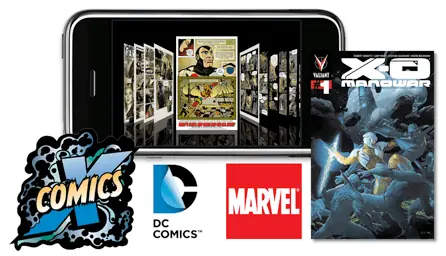
Comic Books are starting to finally embrace the changing landscape. ComiXology offers Marvel, DC and independent publishers through their mobile application. You can purchase and download all of your favorite comic books directly to your iPhone, Android, iPad or Kindle. You no longer need to go to direct order hobby shops. Your comic books no longer need to take up physical space. They’re right there at your fingertips — your entire collection just a thumbtap away. While they may be a bit unwieldy and tiny on the smartphones, they look rather luxurious and eye-popping on a larger device like a Kindle (where, not so surprisingly, I’ve been reading my comic books in 2012).
That brings me to the Kindle — or more generally, the reader devices and THIS BLOG HERE from Michael Essany at Daily Deal Media. The article resonates with me. A number of my close friends used to work at Borders Books and Music in their twenties. Last year the local Borders closed up shop. And all we currently have in our local area is a Barnes and Noble located in the Christiana Mall.
The most striking thing about their store in the mall is when you walk in their front door you are immediately overwhelmed by their eBook section, with large signage telling you all about the Nook (their version of the Kindle).
That sight at my own local big box book store really drives home Essany’s second paragraph, when he writes, “Although many avid readers are mourning the noticeable loss of traditional big box and mom-and-pop book retailers, the economics of eCommerce and the popularity of eBooks are quickly dispatching publishing companies, paperback publications, and even print magazines to the trash receptacle of history.”
The point Essany is making was driven home even further when I attempted to make a quick trip to that Barnes and Noble for a book on a work-related topic: Web Design. I knew the right section of the store to go to, but couldn’t find the title I was looking for. I used their interface terminal in the store to look that title up. Apparently it was in stock as an eBook. And I could order a regular print version of it from there, but had to order it as an online purchase and have it delivered to my house days later. The entire point of my trip was to get the book that day, otherwise I’d have gone online when I got home from work instead. So I kept browsing, and found every single book they had under the topic of web design was only available either through an online purchase or as an eBook.
E-Commerce is winning
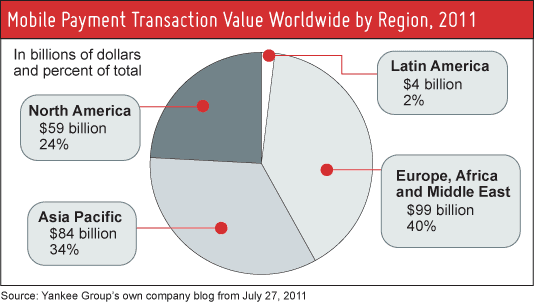
In terms of printed media E-Commerce is absolutely dominating. Essany cites a statistic to back up this outlook, writing that according to the Yankee Group (a research company we’ve cited ourselves when they made projections on The Future of Mobile Payments), consumers will purchase approximately 381 million eBooks next year with an average selling price of $7.
Most impressive
My own research for this very blog during last year’s holiday shopping season demonstrated what to me has become a very obvious aspect of the economy: shopping online is a common thing for people to do. That means E-Commerce is making buckets of money. Each one of those transactions are part of the payment processing industry. The foundation is there. People have found the convenience of shopping online so powerful that it outweighs the risk of fraud. So more and more people have taken to solving their shopping problems online. I know that I myself do this. It’s so much easier to look for a product online and know you’re getting what you want with a few clicks, than it is to go trudging out to a store that may or may not have the item you want.
Last year in a Blog Post about the upcoming holiday shopping season, I reported “A 2010 survey conducted by Google and OTX found that 35% of internet users start their holiday shopping prior to the end of summer, months ahead of Black Friday. This trend is only continuing to grow as consumers find online shopping convenient to their shopping habits, easy to do, and the wide selection lets them find great deals on price.”
This trend in shopper behavior combines with the rise of virtual media like eBooks like Voltron to form a very powerful lion-fisted, right-left combo to the solar plexus of Print Media’s crumbling empire.
And you know what? I’m OK with this.
I’m a voracious reader. But I’m also under the thrall of the convenience of online shopping. I truly do turn to the internet first for most products I’m interested in. This is heightened when I want to purchase a book, a magazine or a comic book. It’s just so much easier. The only time I’ve wanted to wander into a book store to buy a book was when I wanted it right then, with no wait on delivery. And I found the remnants of the only big chain bookstore in my local area to have already forced the decision upon me: If I wanted a book about web design, I needed to go directly to the web to get it.
I’ve been using the ComiXology app this year. And when the company that I once worked for (Valiant Comics) as a production intern returned to the comic book industry after a long hiatus, publishing a comic book I once did post production work for (X-O Manowar), I immediately jumped onto my phone to purchase it. I find that I read more web comic strips than I ever read in a newspaper. I find I go to the web for my news. Or my phone. I’ve even found myself reading straight up only published electronically eBooks this year. I still prefer printed books, but for me they’ll be online purchases. I’ll buy the collected editions of comics I like, but do so online. I’ll buy printed books of titles I really just want to curl up with and turn the pages of, but I’ll make the purchase online. It’s gotten so pervasive in my life that I now buy tickets to sporting events online, brands of tea I can’t find at my local supermarket online, all of my roller derby referee equipment and rules books online. I even bought my ticket to The Avengers on my phone through Fandango and had it delivered to my phone as a mobile ticket.
E-Commerce is where it’s at. And publishers of the written word need to embrace this shift. Maybe it’s easier for me to do so because I work in the payment processing industry and get to see firsthand how big and booming E-Commerce is.
Today The Official Merchant Services Blog is going to address an e-commerce issue that perhaps gets overlooked by a lot of merchants — effective design of your online shopping experience. Previously we offered a 2-part series on free, open source online shopping carts that are available. But just having the basic elements there for functionality is only part of the process. Your site should integrate e-commerce into its experience seamlessly so that visitors effortlessly make the transition from stopping by to actually purchasing.
Design plays a huge role in making this happen.
What is E-Commerce?
E-Commerce refers to the buying and selling of products or services over electronic systems such as the Internet and other computer networks. The term may also refer to the entire online process of developing, marketing, selling, delivering, servicing and paying for products and services. You can review a detailed explanation of E-Commerce in the Host Merchant Services Article Archive at this link here.
Why is E-Commerce Important?
E-Commerce is important because of how commonplace it has become in the daily lives of consumers. Shopping online has blossomed and grown in the past decade, and sales figures show that it is a standard. Merchants need to offer online shopping alternatives and can make quite a lot of profit by offering good online shopping solutions.
E-Commerce Tips
To assist merchants in making their e-commerce venture robust, well designed and profitable, we’re going to offer up a series of tips focused on improving e-commerce through strong design elements. Here’s our list of tips:
Navigation
Navigation is probably one of the most basic, and yet most often mangled aspect of strong e-commerce design. All online shopping sites have to allow their customers to navigate through the products to find the stuff the customer wants to buy. But so many sites out there have difficult or clunky navigation. Make sure your site offers a smooth, easy to navigate experience and you’ll get your customers clicking “purchase” much more frequently.
A Detailed Product Catalog
Tied right into navigation, is the single most important element merchants need to consider — the product catalog. This is what you are selling and it needs to be seamlessly incorporated into your website. Your product catalog needs to have detailed information about the products you are selling.
Database Search Capability
This is an extension of the previous element. If you have a large product catalog, then you need to offer your customers the ability to search through that catalog. Essentially you need to give your customers a database searching tool that will help them drilldown through your catalog to quickly find what products they are interested in.
Product Images
Your catalog needs to contain clean, easily readable images of the products. You should consider offering images from multiple angles — this is of course product dependent — so that your customers can feel safe that they are getting the most information possible about what they buy. One of the long-standing concerns about buying online is that customers feel like they’re being conned because they can’t view the product right there in front of them. Offering multiple angles can assuage some of those fears. Also you must balance the issue of image file size versus resolution and quality of image. You want to keep images small enough that they don’t distract from your catalog, but detailed enough that they give the customer a good look at what they’re buying. One solution that a lot of sites use these days is a Content Delivery Network (CDN).
Contact Information
Your E-Commerce solution needs to contain an easy to use, and easy to find, contact information area. Many sites make finding contact information a bit of a treasure hunt — sometimes requiring using the site map just like a treasure map. Keeping contact information visible and easy to use helps you with long-term customer service goals. And your contact information can also assist you in making sales. If a customer has special needs or requests involving a product they want to buy, they may need to contact your business directly. Making them hunt around for the ability to contact your business could cost you a sale.
Checkout Process
Integrating your online shopping cart into your site is extremely important. It was the primary reason we ran through our two-part series on open source shopping carts. Those 10 carts were advertised because of their cost efficiency (free) and because of their online support. Having a strong support community from an open source shopping cart gives you a safety net for things like your checkout process. Your checkout process needs to be smooth. It needs to be just a series of clicks and a small form (usually credit card information). Your customers want to click to purchase, click to confirm and get the shopping done. That’s the biggest draw of an online shopping cart — the internet makes it easy and convenient. So your checkout process needs to play on that, and get your customers through the checkout fields as easily as possible.
Payment Options
Building off of the checkout process, a good online shopping cart needs to present the various payment options to its customers in a clear, concise and easy to read manner. You want to offer your customers a variety of payment options. This includes all forms of credit and debit transactions, including gift card — even EBT where applicable. You want to make sure coupon codes and gift certificates are also shown clearly and have easy to use forms for completion. Merchant Services Providers, like Host Merchant Services, make it easy for merchants to offer any and all forms of payment for their online shopping cart. So it’s really just a matter of contacting your merchant services provider to make sure your e-commerce is customized to offer the maximum amount of payment options.
Related Products
This is an E-Commerce enhancement that helps improve your shopping experience. You an see this in a variety of forms. It can be something as simple as a list of products that fall under the same “category” your customer was searching, or as over the top as what Amazon does with its Customers Also Bought These Items lists that you get when shopping there. No matter what your approach, though, you should consider offering some type of related products feature in your online shopping cart. This helps establish return business in a very meaningful way as it gives customers targeted advertising to products they may also be interested in purchasing.
Shipping Rates Calculator
This should be standard on any and all e-commerce sites. Letting the customer control and maximize their shipping options directly will lead to more sales. Shipping costs have always been one of the biggest obstacles E-Commerce has faced, so making it transparent and giving customers the ability to reduce their costs manually helps keep them hooked on the potential sale of your product.
Store Policies
And last, but not least, try to make any and all relevant store policies displayed prominently on the site during the perusal and during the purchase portion of the experience. This includes things like return policies and refund policies. Be as up front about what it is you can and unfortunately can not do for your customers and your E-Commerce site will avoid some serious customer service headaches.
That’s just the basics of what The Official Merchant Services Blog suggests merchants do to make their E-Commerce and online shopping experience powerful and persuasive for their customers.
Earlier, The Official Merchant Services Blog began a series on free Open Source E-Commerce solutions that are available. We cited this article by Nova Scotian writer Vangie Beal, which lists her top 10 free online shopping carts. Today we finish up our review of Beal’s list.
Before We Get Back to the List
Before we pick up where we left off yesterday, we’d like to take a moment to look at some of the wealth of information on e-commerce that Host Merchant Services offers through this blog and its article archive.
You can read the HMS Overview of E-Commerce here.
You can learn about the HMSExpress Payment Gateway here, and read about why it’s useful for a budding online business in the September 20, 2011 blog here.
This September 22, 2011 blog details 8 easy steps for starting an online business.
You can learn about the customizable e-commerce and payment processing solutions that Host Merchant Services provides here.
Our January 3 blog gives a review and preview of E-Commerce from 2011 to 2012.
You can sign up for a merchant account with Host Merchant Services and get started with your online business here.
And now, back to Beal’s list. We left off yesterday with number five on the list, Magento. So let’s move on to number six …
Number Six: OpenCart
OpenCart arrives on Beal’s list as number six. This shopping cart, according to Beal, is quick and easy to install. Storeowners can select a template, add products and start taking orders online seamlessly after the download. The built-in template system lets merchants switch up quickly or migrate their site’s current design into OpenCart, giving added flexibility. Other features are a mutli-store capability to manage more than one store from one administrator interface, tax zones, shipping method controls, back-end store administration tools and support for a variety of payment gateways and languages.
OpenCart, says Beal, is a free open source software published under the GNU GPL License and its server requirements include Web Server — preferably Apache — PHP 5.2 or higher, MySQL, Curl and Fsock.
Number Seven: osCommerce Online Merchant
The osCommerce Online Merchant comes in at number seven on Beal’s list. This e-commerce solution is a free offering that comes with features and tools to help merchants manage the front-end catalog and back-end administration of an online store.
This software is released under the GNU General Public License and version 2.3.1 provides a basic template layout structure to customize the catalog. The Administration Tool, according to Beal, lets merchants configure the online store, insert products for sale, manage customers and process orders. The software is supported by a large community of more than 256,000 storeowners, developers, service providers and enthusiasts, as well as additional support from mailing lists and the osCommerce Newsletter. Server requirements for this software include PHP v4 or better — though 5 or higher is recommended — and MySQL v3 or higher.
Number Eight: PrestaShop
PrestaShop cracks Beal’s list at the number eight spot. This customizable, PCI compliant, e-commerce solution will handle everything from Web store set-up to managing customers and orders according to Beal. Storeowners create and manage the front-end catalog as well as marketing campaigns. They can customize orders and change shipping options. PrestaShop is available in English, French and Spanish — and also offers an additional 41 translations. This software is published under the Open Software License v3.0 and its server requirements include Linux, UNIX or Windows, Web Server — Apache 1.3 or later, IIS 6 or later — PHP 5.0 or later and MySQL 5 or later.
Number Nine: Zen Cart
Zen Cart makes it onto Beal’s list as the number nine entry. One of the draws of Zen Cart is this software is a free and open source shopping cart designed by a group of show owners, programmers, designers and consultants — essential it’s designed by the people that use it for the people that use it. It has the similar setup that a lot of the above mentioned carts have. It uses a template system to select a design and configure product categories, discounts, shipping options and payment options. The cart incorporates a WYSIWYG page editor for modifying non-database pages. Since it’s a bit of a community derived product itself, Zen Cart’s support is through its community contributed additions and documentation as well as its online forum found on its website.
Number Ten: ZeusCart
Rounding out Beal’s top 10 list of open source e-commerce solutions is ZeusCart, a web-based PHP/MySQL shopping cart that boasts a rich user interface and an easy-to-use shopping cart that meets the cutting edge of Web 2.0 evolution. ZeusCart, according to Beal, is targeted toward small and medium storeowners and offers inventory management, attribute-driven product catalog services, category management, built-in CMS and SEO-friendly URLs. It also comes with the standard features such as discounts, taxation, shipping options, integration with multiple payment gateways and e-mail templates. It is licensed under GPL 2 and can be installed on any server where a PHP interpreter, MySQL database server and a web server is present.
That’s Beal’s top 10 list. What other open source e-commerce shopping carts do you know of? Have you any experience with the ones on this list? Feel free to share you experiences in our comments section.