What are contactless payments, and how do they work? Are they completely safe, and should you opt for the convenience of contactless payments? Over the years, technology has changed, and it has brought innovations in the way we conduct business and also in the way we many things. One of the innovations in technology is contactless payments and the tap and go form of payments. This article will talk about how you can use contactless payments, and it will also help you differentiate between contactless and cashless payments.
Contactless Vs. Cashless Payments
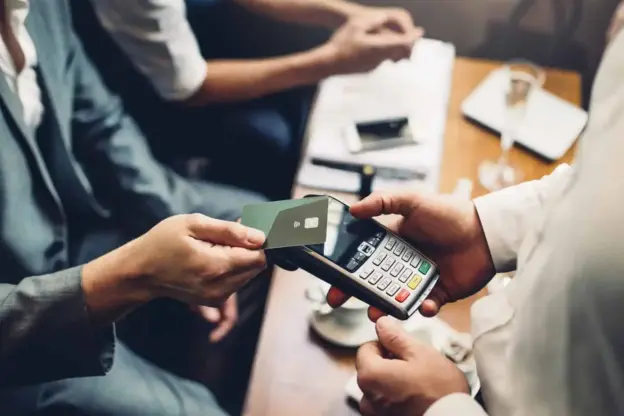
Contactless payments are two terms that are often used interchangeably, but these two terms are very different. Cashless payments are payments that are made without using cash and bank transfers, credit card payments, etc. are all categorized under cashless payments. Contactless payments are the form of payments that use radio frequency identification technology to make payments. Some examples include Apple Pay, Google Pay, and Samsung Pay. Instead of swiping your card, you simply wave your card to make payments, and you don’t require any signature or any pin number entered on the payment terminal. All you need to do is wave your card or smartphone near the payment terminal, and your payment is made. With smart phones, authentication may be required in the form of a pin, facial recognition, or a fingerprint scan.
What Are The Problems With Contactless Payments?
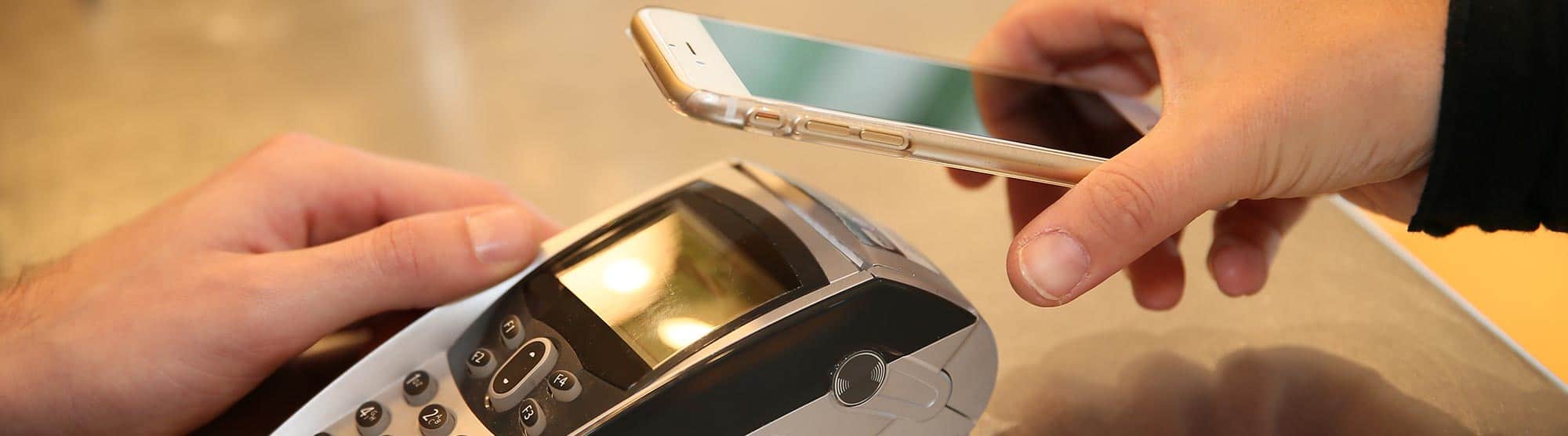
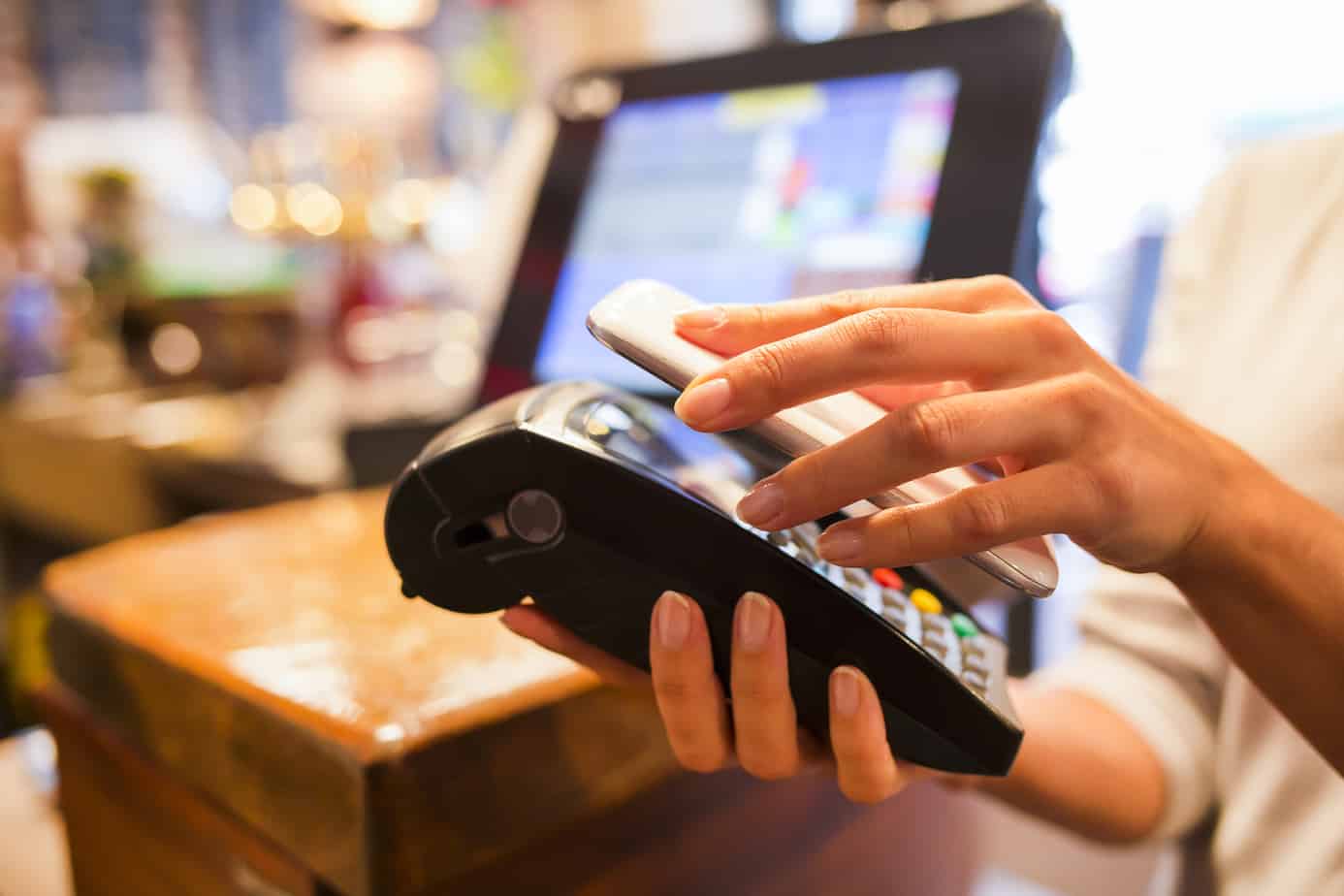
Many customers are using contactless payments with their smartphones.
Like every form of payment, contactless payments are not that perfect, and they come in with their own share of problems. With contactless payments, many customers worry about fraud and whether or not their financial information will be safe. The perpetrator needs to gain access to your card to make contactless payments, and in most cases, you are notified by your bank about unusual transactions taking place, and you can easily block that card. Over time, in-person fraud has become more and more challenging to carry out, and most forms of contactless payments are PCI compliant, which protects consumers.
Why Should Businesses Adopt Contactless Payments?
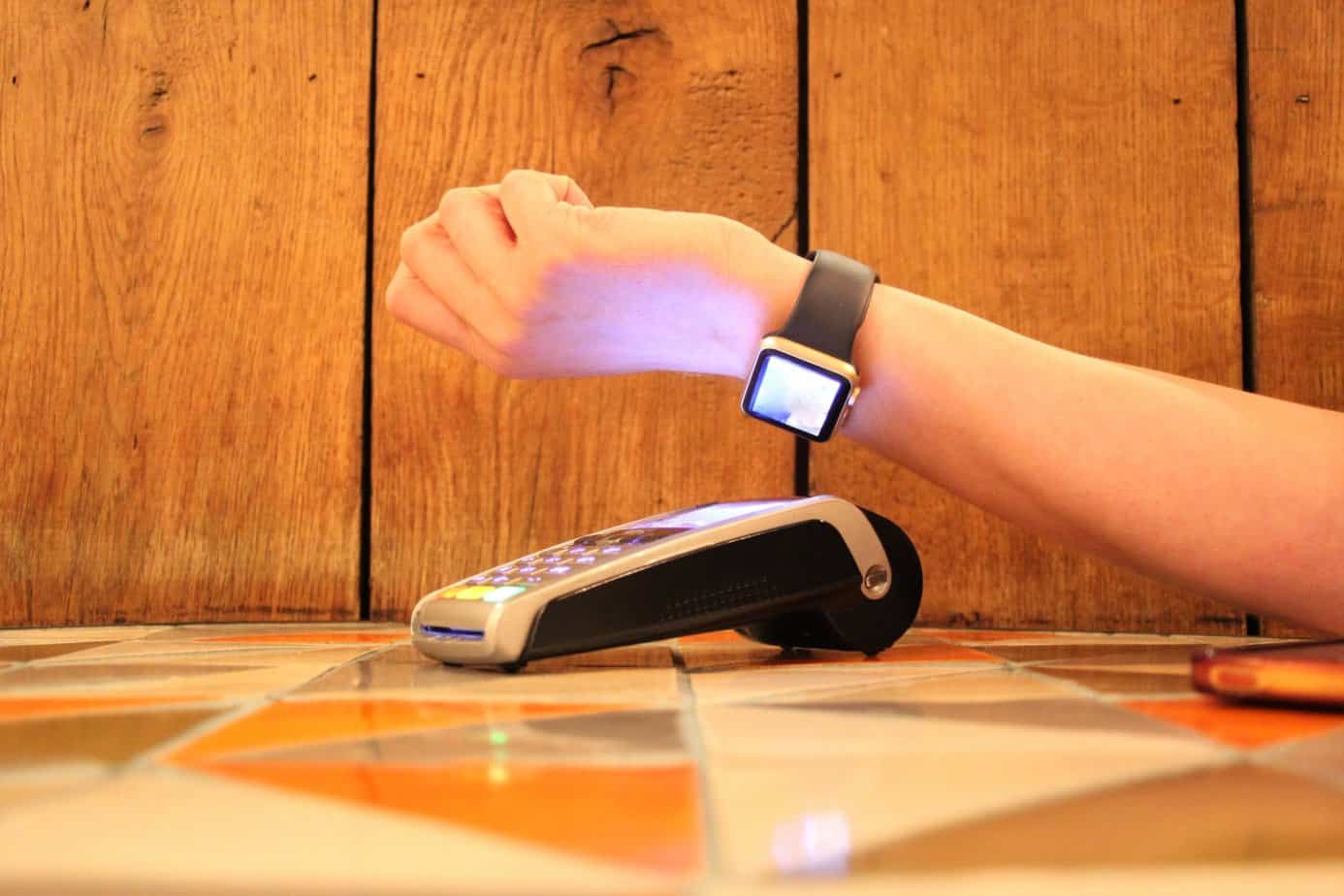
Contactless payments are easy to carry out, and they are also convenient for your customers. Customer convenience is the topmost priority for businesses, and therefore companies should work on adapting measures that help make things easier for their clients. Your clients will think that you have an upgraded and futuristic approach towards the way you do business, and it will leave an overall positive impression. With the advent of technology, there are many more payment options available like Apple Pay and NFC, and many people don’t merely rely on their credit and debit cards for payments. Some customers also use their fitness watches and their wristbands for contactless payments. If you’re thinking about accepting contactless payments, then you should also consider the type of customers your business attracts. If your business attracts people that are more technologically oriented, then installing contactless payment systems can be a good option for your business, but even if not, most contactless payment terminals still allow more traditional payments like EMV chip cards. At Host Merchant Services, most solutions we offer are enabled for NFC and contactless payments at no extra cost, so our merchants are ready when their customers begin adopting these technologies.
The COVID-19 pandemic and the resulting stay-at-home orders across the globe and country during the past few months has led to a significant reduction in both the number of merchant services transactions and dollar sales in our country. With predictions of a global decline in GDP, there are few bright spots in the economic fallout. One concrete result of the pandemic is a move to touchless transactions in efforts to reduce the spread of the virus.
Cashless Society
COVID19 Pandemic Has Merchants Looking for Solutions
After the World Health Organization warned that banknotes may spread coronavirus, they recommended using contactless payments to mitigate the spread. Not to mention, microorganisms can transfer to credit cards at point-of-sale terminals during credit card processing, and PIN pads carry similar health risks. And because retailers had to shut down and sell online exclusively, the use of cash is disrupted due to the shutdown.
Global Scale
Depending on the spread of the virus, the public health response, and the effectiveness of the fiscal, monetary, and broader public response, the global GDP would potentially decline by 1.5% in 2020 after two to three months of economic lockdown in Europe and the United but would decline by 4.7% after a resurgence of the virus in China and continued spread in the United States and Europe.
A slowing global payment-revenue growth is expected to cost the payment industry $165 billion to $210 billion in 2020 revenue. The net interest-margin component, which is the source of 60% of payments revenues, accounts for 20% of the decline. The transaction component, which is the source of 40% of payments revenues, is responsible for 80% of the decline. A 1.5% economic contraction would lead to an 8-12% reduction in payment volumes.
Local Scale
Due to stay-at-home orders and the close of non-essential businesses, total transactions and dollar sales fell nearly 50% and more than 25% respectively in the weeks following shutdown orders. Active merchants dropped by 25% with more than a quarter of merchants posting no transactions at all. Urban areas showed sales decreasing by 22.5% since the first week of March while medium-sized cities have decreased 26.5%, small cities 26.5%, and rural areas 31.1%.
Despite the drop in card-present sales (nearly 50% drop in March), card-not-present sales only decreased by 15.2%. Sales for on-site technical services such as plumbing, heating, and contractors remains steady perhaps due to stay-at-home restrictions. Also sales between 5 am and 11 am are increasing, accounting for the special hours for seniors and high-risk shoppers, as well as for customers looking to shop outside of traditionally busy hours.
Host Merchant Services
During these turbulent economic times, depend on a stable and reliable payment processor to partner with your business to minimize the impact of worldwide instability. Payment processing should be the least of your concerns. Delivering personalized service and clarity, Host Merchant Services takes the time to explain your payment processing. We want you to understand your monthly statement, and we will ensure that your statement matches our promises during our sales presentation. If you do have questions, you can reach a live representative any time, any day. HMS offers wonderful customer service, as well as great rates.
Host Merchant Services even explains where our profit lies in the pricing structure to be fully transparent in all directions. Pricing fairness and transparency is our strategy in helping our customers find success with their businesses.
Apple Pay allows Apple iPhone 6, 6s, 6, 7, 8, 6 Plus, 6s Plus, 7 Plus, 8 Plus, SE, X, XS, XS Max, XR, 11/Pro, 12/Mini/Pro/Max, 13/Mini/Pro/Max and Apple Watches to pay for good and services with a built in NFC chip. Apple Pay has made huge leaps in acceptance in 2021 and 2022, and contactless and NFC payments are gaining traction in general. Here is a list of the retail stores, apps (both retail and transit), colleges and universities, and nonprofits currently accepting Apple Pay in 2021, 2022, and beyond:
The cashless paradigm has gone from credit and debit cards to smartphones, and the next logical step appears to be wearable devices such as smartwatches and fitness trackers; however, it should be noted that wearable digital payment systems do not necessarily need to be part of smart devices. In early 2017, market research firm Tractica issued a forecast that suggested more than $500 billion worth of wearable retail transactions will be made in the year 2020; nonetheless, a more recent estimate by MasterCard Europe revises this projection closer to a billion dollars.
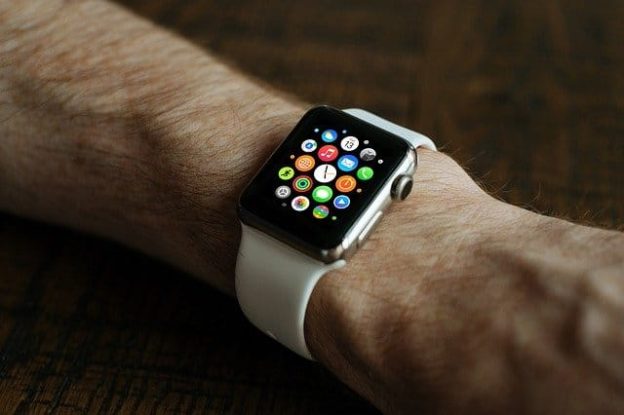
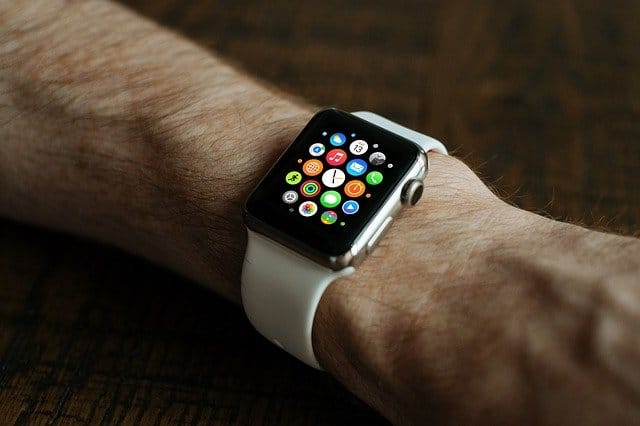
Contact-less payments technology is at the heart of this wearable digital wallet revolution, which is powered by Radio-Frequency Identification (RFID) and Near-Field Communications (NFC). These solutions are not exactly new; in the United States, RFID key fobs were marketed to drivers about a decade ago for the purpose of facilitating the process of paying for fuel purchases right at the pump. NFC payments were initially designed almost exclusively for smartphone, but smart wearable devices such as the Apple Watch, which links with the iPhone and the iPad, are making more sense as digital wallets.
MasterCard has a good reason to follow the wearable payments segment; the debit and credit card giant has a good opportunity to catch up to its rival visa in terms of global market share through wearable devices, which are not limited to smartwatches. Consumers who do not particularly care for smartwatches and prefer more traditional analog and digital versions can get watch straps equipped with contact-less payment technology, and MasterCard wants to be the primary processor in this regard. The company started working with luxury watchmakers in Sweden and Switzerland about a year ago, but MasterCard has recently struck partnerships with manufacturers of aftermarket watch straps to give more consumers the ability to pay with accessories they wear.
Mobile point-of-sale transactions are taking hold in Asia and Europe more so than in North America. At European brick-and-mortar stores, 61% of transactions are already contact-less, and about 16% are made with wearable devices. One aspect of wearable devices that is resonating with consumers is that many of them coming on the market are of the passive kind, which means that they do not rely on smartphone batteries to operate; this technology has been around since the key fob days, and it is regaining interest as an alternative to mobile devices such as smartwatches and smartphones, which only allow digital wallet transactions as long as their batteries will last.
With a predicted rush in 2020 for more merchants and customers to jump onto the contactless payment cards bandwagon, PSCU announced earlier this week that they are fully prepared to handle whatever will be coming their way over the following year.
Having already rolled out more than half a million NFC (Near Field Communication) enabled cards via natural reissuance to members amongst 14 owner credit unions, the credit union service organization (CUSO) PSCU anticipates that they will be distributing in excess of 3 million new NFC enabled cards throughout 2020 to more than 100 credit unions.
By keeping themselves ahead of coming payment innovations, PSCU can help to ensure that its owner credit unions members’ accounts are most frequently used, and by offering NFC enabled cards to owners, Jeremiah Lotz, managing vice president of digital experience and payment products at PSCU said, “We help our credit unions achieve top of wallet status” as the adoption of tap to pay solutions continues to rise.
The second yearly Eye on Payments study by PSCU has shown that 25 percent of respondents make transactions with an NFC enabled card a few times per month. They have cited reasons such as ease, convenience, speed, and security, while non-users stated that the stores they frequent aren’t as of yet accepting NFC enabled card transactions.
With an ever-increasing number of merchants each year opting into NFC technology and accepting NFC enabled payments, it’s believed that more consumers will begin to adopt the technology and participate. As many as 95 percent of all payment card terminals feature NFC enabled capabilities, according to Visa, and as of October 2019, 80 percent of the top 10 merchants were accepting NFC transactions.
Jeremiah Lotz has also stated: “Credit unions should be prepared to not only offer contactless cards to their members, but also have information readily available to educate members on how to use these new payment methods and ascertain whether a merchant’s point of sale terminal is contactless enabled.”
The PSCU’s original model is scale and collaboration, and for more than the past 40 years, the company has leveraged its influence on behalf of credit unions and their members. To this day, PSCU provides an end to end competitive advantage that helps to enable the secure growth of credit unions, making sure that they are able to meet ever-evolving consumer demands.
According to Visa Inc’s Canadian unit, Canadians are now more comfortable than ever with the use of mobile payment technology, with as many as 52% of 1,000 people polled in a recent survey saying that they contactless transactions regularly. In addition to this, 80% said that they consider contactless payments as “a very convenient way to pay,” and 45% praised their security.
In the first quarter of 2019 alone, near field communication made via platforms such as contactless credit cards, wearables, and mobile devices saw an increase of almost 25% since the previous year, accounting overall for 51.5% of total transactions made.
There are eight stand-out provinces of Canada that are really leading the way when it comes to contactless payments. The province of New Brunswick has seen 51% of its transactions become contactless followed by Saskatchewan (51.6%), Alberta (52.1%), British Columbia (53.5%), Ontario (54%), Nova Scotia (55.2%), Manitoba (58.2%), and Prince Edward Island leading the charge at 59.2% of all transactions.
One huge factor that has contributed to the increase in contactless payments is the recent rise of the digital wallet. Technologies such as Apple Pay and Google Pay, while they may have started somewhat slowly, soon started to pick up speed as Canadians started to realize the benefits and ease of simply paying with their phones, which most of us, especially the millennial and Gen Z generations, will more than likely have in our hands already anyway, as opposed to searching for their credit cards.
It should be worth noting too that, while contactless transactions in Canada make up 51.5% of all transactions, in the neighboring U.S., that figure drops to a pretty staggeringly low 3%. In spite of being one of the highest adopters of smartphones in the whole world (at a rate of 77% in 2018), statistics show that as much as 89% of all U.S. consumers are still shunning mobile payments, making the U.S. one of the lowest adopters of contactless technologies in the world, and Canada one of the highest.
Google Pay allows Android phones, tablets or digital watches to make tap-to-pay purchases. Near field communication (NFC) allows the Android device to transfer the credit card information over to a point of sale system, making transactions fast and easy. By saving your cards to your Google Account, you’ll receive the same rewards and discounts when you use Google Pay as you would with a normal credit card. Google Pay also offers peer-to-peer and online payment services. The following are the stores, apps, sites, and transit systems that accept Google Pay:
Which Retailer In The US Accepts Google Pay In 2024?
A store that accepts Apple Pay or Samsung Pay will also accept Google Pay. You might notice the Apple Pay symbol on store entrances, but it’s often used as a general term for all mobile payments. Apple Pay and Google Pay use the same NFC technology, allowing tap-and-pay transactions.
However, it’s worth noting that not all big names in the US have adopted mobile payments. Some smaller businesses haven’t made the switch, primarily due to the costs associated with NFC terminals provided by banks, which can eat into their profits.
You can use Google Pay to buy goods or services at the following retailers:
MTA Metro-North and Long Island railroads New York metropolitan area
Portland Hop Fastpass
What Is Google Pay?
Google Pay is a digital payment service by Google that allows users to make purchases using their Android devices at physical stores and on compatible websites and apps, including the Google Play Store. In 2023, Google Pay is the most trusted mobile payment app with 25.2 million users in the US alone.
To use it, people connect their credit or debit cards to Google Pay. This linked card is then used for both in-person and online transactions. For payments at stores using Android devices, Google Pay employs NFC to communicate with payment terminals. Additionally, when users are logged into their Google account on the Chrome browser, they can use Google Pay on websites offering this payment option.
How Google Pay Works?
ApplePay, GooglePay, and other contactless payments are gaining acceptance.
To start using Google Pay, download the Google Pay app and link it with your preferred payment method, such as a credit or debit card. While many banks, credit unions, and other financial services support Google Pay, confirming if your specific card is compatible is essential.
Once set up, Google Pay allows you to make online and in-store payments. For in-person transactions, tap your phone on the payment terminal, similar to a contactless card. When shopping online, choosing the Google Pay option at checkout streamlines the process by automatically filling in your payment and shipping details, eliminating the need for manual entry each time you make a purchase.
Safety Features of Google Pay
When transacting with Google Pay, it uses a special encrypted number instead of revealing your credit card details. This adds an extra layer of security.
Plus, if you ever lose your device, you can use Google’s Find My Device feature to erase any important data remotely. For added security, you also have the option to log into your Google Pay account from another device and remove any linked cards or bank accounts.
Understanding Google Pay Fees
Google itself doesn’t impose any fees when you use Google Pay for tap-and-pay or online transactions. However, it’s essential to note that your card issuer might have charges associated with your purchases.
Transaction Charges:
While Google Pay doesn’t have transaction fees, any fees applicable to your physical card usage still stand. For instance, standard interest charges and penalty fees may apply if you use a credit card via Google Pay and don’t clear your bill on time.
However, Google Pay is rolling out some additional “convenience fees” for some specific transactions. As of 2023, the stance Google has around the charges by its application is unclear. Apart from this, there are no charges currently charged by the application Google Pay.
Credit Card Linked With Google Pay:
When you link a credit card to Google Pay, remember that your credit card company might charge the merchant a fee of up to 4%.
Some merchants may then pass this fee to you, adding it to other transaction charges. This could mean you end up paying as much as 6% extra for your purchase. To avoid unexpected costs, asking merchants about fees before using Google Pay is a good idea. A linked debit card or bank account can help sidestep these higher charges.
Using Google Pay Abroad:
If you use Google Pay while traveling or making purchases in a foreign currency, be aware of potential fees from your bank or card provider.
These include foreign fees, typically around 3%, applied to non-USD transactions. Remember that these fees can vary based on the specific card you have linked to Google Pay.
Conclusion
In 2023, Google Pay emerged as a versatile digital payment solution, trusted by millions in the US. Offering convenience across various platforms—from retail giants like Costco and Macy’s to popular apps like Airbnb and Doordash—it simplifies transactions with robust safety measures.
While it generally doesn’t impose fees, users should consider potential card issuer charges and international transaction fees. Overall, Google Pay is a reliable tool for seamless and secure payments across various outlets.
Frequently Asked Questions
Q: Where can I use Google Pay for transactions?
Absolutely! You can use Google Pay or Google Wallet wherever you spot those handy contactless or Google Pay symbols. Keep an eye out for them on the payment terminal screen or cash register during checkout.
Q: Can I use Google Pay for purchases at Walmart in 2023?
Currently, Walmart doesn’t accept Google Pay as a payment method. It’s always good to check for your preferred stores’ most current payment options.
Q: How do I get started with Google Pay?
Setting up Google Pay is a breeze. Locate the app on your phone, and if it’s not already there, just grab it from Google Play. Add your card linked to your Google account by confirming a few details. You can even snap a picture to add a new card. Once everything’s set, unlock your phone, tap, and you’re ready!
Q: Is Google Pay secure?
Absolutely! Google Pay offers enhanced security compared to traditional magnetic-stripe cards. It’s not just convenient; it’s also swift. Unlike chip card transactions that may take a bit, contactless payments with Google Pay process in a flash. Plus, you get a handy payment confirmation on your phone, making it easy to spot any fishy activity. In case of loss or theft, you can lock your device using Android Device Manager, securing your info.
Q: Can Google Pay be used for payments at Target?
Yes, you sure can! Target happily accepts any contactless payment, be it contactless credit/debit cards or digital mobile wallets. Simply tap your contactless card or mobile device over the payment terminal and follow the prompts on the reader screen.
Q: Does Walgreens support Google Pay?
Absolutely! Walgreens is all in for contactless payments. Whether tap-to-pay credit cards, Apple Pay, or Google Pay, they’ve got you covered. Just wave your contactless card or mobile device over the payment terminal and follow the prompts on the reader screen.
Using near-field communication (NFC), a Galaxy smartphone (or even smartwatch) that supports Samsung Pay allows you to make quick and easy retail purchases. All without having to fumble around with your wallet or purse. When you launch the Samsung Pay app on your phone, you simply hold the phone above the credit card terminal and then tap-and-go.
Here’s what really puts Samsung Pay ahead of the competition. Existing card readers recognize Samsung Pay. For terminals that do not support NFC, Samsung Pay also works with MST (Magnetic Strip Technology), enabling consumers to make a contactless payment on a terminal even with the old school magnetic strip technology. The MST technology differentiates Samsung Pay from Apple Pay and Android Pay, both of which are only equipped to use NFC technology. While the other mobile wallet apps are limited to merchants who provide NFC technology, Samsung Pay can be used anywhere traditional credit and debit cards are accepted.
How to set up Samsung Pay:
Open the app on your phone
Scan your credit card
Use your fingerprint or PIN to secure the account along with an authorization code provided by the app
Once you’re ready to use Samsung Pay, swipe up from the bottom of the display
Swipe left or right to choose the card to use
Verify your fingerprint for the app or enter your PIN
Touch the back of your phone on the reader or hover your phone over the reader
Your phone will vibrate indicating payment
The following banks and services support Samsung Pay:
American Express
Mastercard
Visa
Bank of America
Chase
Citi
JP Morgan Chase
PNC
US Bank
Samsung Pay has expanded to the following countries and regions:
Apple Pay allows Apple iPhone 6, 6s, 6, 7, 8, 6 Plus, 6s Plus, 7 Plus, 8 Plus, SE, X, XS, XS Max, XR, and Apple Watches to pay for good and services with a built in NFC chip. While not yet ubiquitous, Apple Pay is getting there. In the meantime, here is a list of the retail stores, apps (both retail and transit), colleges and universities, and nonprofits currently accepting Apple Pay:
You can use Apple Pay to pay for goods at the following stores with millions more:
ACE
Albertsons
Apple
Baskin Robbins
Best Buy
Chick-fil-A
Costco
Crate & Barrel
Disney Store
Duane Reade
Dunkin Donuts
Foot Locker
GAP
Crew
Jersey Mike’s
jetBlue
Levi’s
Macy’s McDonald’s
Nike
Office Depot/OfficeMax
Panera
Petsmart
Pizza Hut
Safeway
Sephora
7 Eleven
Staples
Starbucks
Subway
Target
Trader Joe’s
Walgreens
Walt Disney World
White Castle
Whole Foods
These apps and websites accept Apple Pay, along with many more:
Airbnb
B&H – photo, video, pro audio
Chipotle
Dunkin Donuts
Etsy
Fandango
Groupon
Grubhub
Hotel Tonight
Hotwire
Instacart
Jet
Lululemon
Lyft
MLB
Panera
Seamless
Sephora
Staples
Starbucks
StubHub
Target
Ticketmaster
Wish
Use Apple Pay when using these transit apps:
Caltrain San Francisco Peninsula and Santa Clara Valley
*CTA and Pace Chicago metropolitan area
MBTA Boston metropolitan area
Metrolink Los Angeles metropolitan area
MTA Metro-North and Long Island railroads New York metropolitan area
NJ TRANSIT New Jersey and New York metropolitan area
RTC Las Vegas metropolitan area
RTD Denver metropolitan area
*TriMet, C-TRAN, and Portland Streetcar Portland and Vancouver metropolitan area
Ventra (CTA, Pace, and Metra) Chicago metropolitan area
*Tap and pay via Apple Pay
The following colleges and universities accept Apple Pay:
The University of Alabama
Duke
Oklahoma University
Temple University
*Johns Hopkins University
*Santa Clara University
*Coming later this school year
Donate by way of Apple Pay to the following nonprofits, in addition to others:
American Red Cross
Children’s Miracle Network Hospitals
Chron’s & Colitis Foundation
Global Giving
RED
Jude Children’s Research Hospital
Save the Children
United Way
WNET New York Public Media
WWF
Naturally, these apps that come standard on an iPhone accept Apple Pay:
A joint venture between AT&T, Verizon Wireless and T-Mobile known as Isis Mobile Wallet has released a revolutionary mobile payments app that promises to change the way people pay for goods and services. The trio of mobile service providers are ecstatic to finally debut this mobile payment platform right before Black Friday and the rush of the holiday shopping season, as this technology lets consumers conveniently utilize their mobile phone to pay for goods and services. Use of the platform makes it easier for merchants to accept a wider variety of payments and the Isis system itself encourages repeat purchases through loyalty programs tied into the app and its software.
The debut of Isis also heralds a huge step forward for Near Field Communication technology (NFC), a topic we’ve been consistently covering since our Official Merchant Services Blog began.
What Is the Mobile Wallet Platform?
The Isis Mobile Wallet platform is a completely free mobile application that utilizes NFC technology to allow consumers to pay for purchases by waving their mobile device in the air at a terminal that captures the pertinent information out of thin air. The mobile payment industry has been dealing with one large obstacle from NFC recently, as Apple hasn’t made its iPhones compatible with NFC. And so an Isis representative said that iPhone support would come at a later time. Until then, the app is available on all other compatible phones, but users should be aware that downloading the app could cost money if they are not subscribed to a monthly plan with unlimited data.
How the Platform Works
The NFC technology used in the mobile payments app allows mobile devices to transfer information when they are tapped together. Merchants who use devices with this technology can accept payments quickly and securely from customers who have compatible devices. But wait, there’s more.
Mobile payments represent just one of the benefits of the Isis app. Merchants can offer loyalty rewards to customers through the app. These rewards can be earned and stored directly on a mobile device. We’ve delved into some of these types of incentives in our coverage of the Barclays bPay app, as well as social gifting articles. The basic idea of what’s happening is the app is giving customers yet another avenue for savings through their mobile device, in hopes to spur more purchases. Discounts are automatically deducted from a sale when Isis is used to pay for a product or service. There’s no need for merchants to have cards or keychains printed, and customers do not have to worry about keeping track of dozens of loyalty cards.
Some specific incentives that are tied with the Isis debut: Isis Mobile Wallet customers can use My Coke Rewards and Isis to get three free drinks at select vending machines, while Jamba Juice is giving away 1 million free smoothies to Isis users. Purchases made from an American Express Serve account through the Isis wallet are eligible for a 20 percent discount (up to $200).
A PIN is used to protect personal information if a phone is lost or stolen. The wallet can be locked when a phone is lost to prevent information from being breached.
Phone Compatibility With NFC Technology
NFC technology requires a cellphone user to have personal payment information stored on their phone. The sensitive nature of this information means that extra precautions must be taken. An enhanced SIM card that specifically details that it has been made for secure data storage must be used in conjunction with the application. Interested customers will have to get an enhanced SIM card to run Isis. They will also have to download the app on Google Play or get signed up at retail stores run by the three carriers.




 Having already rolled out more than half a million
  According to Visa Inc’s Canadian unit, Canadians are now more comfortable than ever with the use of mobile payment technology, with as many as 52% of 1,000 people polled in a recent survey saying that they contactless transactions regularly. In addition to this, 80% said that they consider contactless payments as “a very convenient way to pay,” and 45% praised their security.