
Tag Archives: NFC technology

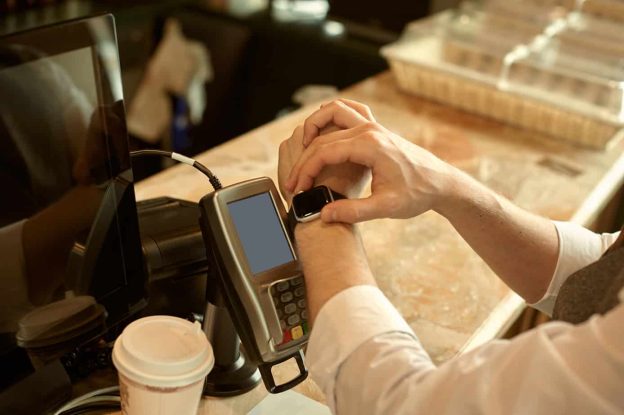
man using smart watch to pay in restaurant nfc contactless convenient payment service 215885687

Smart Payments Association Says 2021 Is a Pivotal Year For Wearable Payments Tech

People have been using wearable items for many purposes in the last few years. They have gone beyond fitness bands and include items that can store schedules, send messages, and read online reports.

People can also pay for products and services with wearable tech items. Wearables like wristbands and watches can link to someone’s credit card or banking information. A person can send one’s data on a wearable to a payment kiosk to pay for something in moments.

It’s also easy for people to program their wearables. People can charge them and link them to online networks where they can provide their payment data. They can link credit cards, bank accounts, online wallets, and other setups to their wearables. They can use these to pay for items without having to bring out any other traditional materials. It provides a secure and quick effort for managing payments.

The rise of wearable payments has prompted the Smart Payments Association to produce a new white paper surrounding the subject. The SPA said in 2017 that wearables are intriguing payment opportunities to explore. But the SPA is now saying that the industry is growing. Wearables have become more flexible, plus customers have never been more willing to use contactless payments than now. The extensive value of the market makes it to where businesses will likely want to get in on it and find new ways to support these payments.

Sales Are High

The Smart Payments Association reports that about 20 percent of proximity payments in 2020 were made with wearables. Global wearable payment totals have risen to about $500 billion in 2020. The number is more than 3.5 times higher than what people had spent in 2017.

The SPA’s report is confirmed by a similar study from Grand View Research. GVR writes that the United States wearable market will rise to about $80 billion in 2028.

The Asia-Pacific market is also expected to be the fastest-growing field in the next few years. HTC, Huawei, and various other Asian businesses have been actively developing new wearable items. Their goal is to mass-produce more items that can work in various spaces while also being affordable for everyone.

The sales totals suggest that the wearable industry won’t be going anywhere any time soon. The field will likely grow in prominence where people can easily find and program these wearables to their liking.

Adoption and Development Are Spreading

The SPA also says that more groups are adopting the use of smart payments through wearables. The production of smartwatches, bands, and rings has risen in the past few years. More companies are entering the field or have plans for doing so very soon.

Apple has thrown its hat in the race by patenting a new smart ring. Apple’s new patent shows it will use a sensor-based gesture setup that allows the customer to waive one’s ring in front of items to complete transactions. The sensor would also notice its position versus other devices, including various Apple items like the iPhone or iPad. The Apple ring would be comparable with the McLear Payment Ring being used in some parts of Europe.

Other companies have also made moves suggesting they may produce new devices that support wearable payments. Google recently acquired Fitbit, although it took a while for the acquisition to be approved by industry regulators.

Peloton also acquired three separate firms that create wearable items. These include companies that produce AI-based solutions to identify how someone might function while exercising.

What New Technologies Will We Find Soon?

The SPA’s report shows that wearable payments will become more prominent as time progresses. More items will be under development soon, and businesses will need to start finding ways to support these items.

There are many aspects of the wearable industry worth watching:

  • Near Field Communication or NFC technology will become essential for businesses to accept soon. NFC systems allow wearables to communicate with payment systems.
  • The variety of wearables available for sale will expand. This point comes as the sensors necessary for wireless transactions are becoming smaller than ever. The rise of the smart ring market proves this point, although sensors could be incorporated in key chains or other compact items.
  • Contactless POS terminals will also become popular. Businesses may find these worthwhile, as they are easy to install and use. They can work anywhere, plus they cost less than most businesses might expect.
  • Wearables may also become more efficient to where users won’t have to charge a battery. These include passive solutions that use electromagnetic induction to stay functional and transfer data to a card reader or another setup.
  • People can also link their wearables with any smartphones or other devices they have. They can check their financial accounts on their phones to confirm their transactions if they wish. The support gives customers more control over their money, as they will know what they are doing when spending on things they want to buy.

Customers and businesses will be more likely to adopt these payments as the technology advances and progresses. The increasingly affordable nature of wearables will also be a positive for the field to watch.

An Exciting Future

People are always looking for convenient ways to handle payments. Wearable technology brings the best of both worlds, as it brings together functional items with high fashion. The industry is growing, and more wearable products are available than ever before. The industry will especially become more noticeable as people continue to wear these products and make them all the more viable. 

It will be intriguing to watch how wearable payments evolve. The SPA writes that 2021 will be an essential year for the industry, as the potential for more products to be made available will be significant. People can expect to find new products soon, plus retailers will be more willing to offer support for wearables. Expect more businesses to get on board and start producing exciting new items that can support wearable payments.
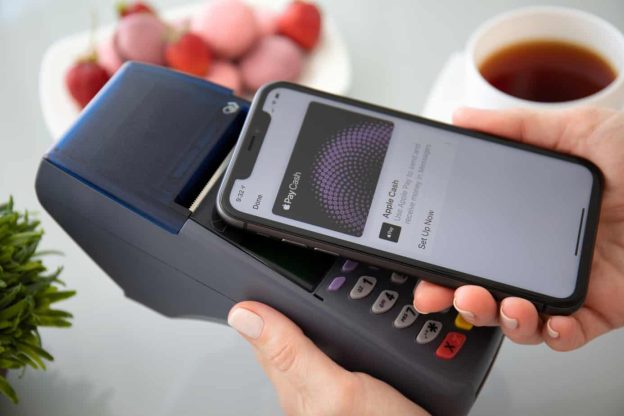
woman hand holding apple iphone 11 pay pass online terminal 162910035

Why Are Apple Pay, the Starbucks App, and Samsung Pay More Successful Than Other Mobile Wallets?

The odds are you’ve heard about many online wallet solutions. These systems let customers link their credit or debit cards to a wallet setup. The customer can then complete a transaction through one’s phone or another NFC-enabled device. It offers a convenient way to handle payments. It ensures people can complete transactions with physical cash or with a credit or debit card.

There are two mobile wallets that are more successful than the others. Apple Pay has become a staple in the mobile payment industry, while Samsung Pay has also been growing in prominence.

There’s also one unique app that is rising in prominence. The Starbucks coffee chain has a dedicated app people can use when purchasing items from various Starbucks locations.

eMarketer writes that there are about 25 million Apple Pay users and 12 million Samsung Pay users in the United States. These totals are based on how many people have completed at least one transaction with these wallets in the last six months. The Starbucks app has an even greater user base of about 28 million.

But what makes these three payment solutions more popular than other mobile wallets? Let’s take a look at what makes these so prominent.

Apple Pay

First, let’s look at Apple Pay, the most prominent of the online wallet programs around. Apple Pay was one of the first such wallets out of the gate, as it was introduced in 2014.

Apple Pay uses NFC technology to transfer payment data. A user can waive an Apple Pay account over an NFC reader to transmit funds. The system can work on many Apple devices, including the iPhone and Apple Watch.

Apple Pay offers many positives:

  • Customers don’t need online connections to use Apple Pay. All payment data stays in the cloud, ensuring the content can move forward as necessary.
  • Apple Pay uses a biometrics-based system where the user can touch a specific part of one’s phone or watch or another device that uses the setup. The two-part ID system ensures only the right person will initiate the transaction.
  • Most payment networks and banks support Apple Pay. The system ensures people can use the wallet in more places.

The immense popularity of the iPhone and other Apple devices will also ensure that Apple Pay will become more accessible in the future. As more people use the latest Apple devices, more retailers will accept Apple Pay payments.

Like with many other Apple features, this only works on Apple devices. But Apple’s products are still popular enough to make Apple Pay a highly sought-after solution for managing payments.

Samsung Pay

Samsung Pay has also been around for a while, as the system started in 2015. It is slightly different from Apple Pay in that while it stores payment data in a cloud, the tokens it produces will go from the cloud to the device when the purchase is made. An online connection will be necessary in this case.

What makes Samsung Pay useful is that it is easier to use it in more locations. Samsung Pay uses a Magnetic Secure Transmission or MST system to transfer data. It can work in more POS readers, including non-NFC magstripe readers. MST technology is easier to find on devices than NFC technology.

An MST system uses a few steps to work:

  1. The device will produce a magnetic signal like what you’d produce on a traditional magstripe card when you swipe it.
  2. The card reader will identify the signal. It will find the card number and other pieces of security data.
  3. The POS terminal will read the card data and process the transaction from there. You’ll get a note on your phone through a cloud network after the transaction is complete.

Samsung Pay doesn’t have as much of a reach as Apple Pay, although it is still a prominent choice of note. The Samsung S6 and S6 Edge phones will make the system more popular.

The Starbucks App

The idea of a single company’s app being highly popular among mobile wallets sounds surprising. But there aren’t many companies that are as widespread as Starbucks.

The Starbucks app lets people load money from a separate credit or debit card to the app. The customer can then use the app at any Starbucks location to pay for the coffee or whatever else someone orders at the location.

The app features a useful setup and is ideal for people who frequently visit Starbucks. But there are many other reasons why the Starbucks app is so popular. These points may help show other retailers why starting their apps might be a good idea:

  • The Starbucks app provides rewards to regular customers. People can earn points they can use for various free purchases, giving them an incentive to return for future purchases.
  • There’s more loyalty attached to the Starbucks app. Since it isn’t preloaded on the phone like the other wallets for specific devices, people can choose to download the app if they tend to do business at Starbucks more often.
  • The app gives Starbucks regular customer insights and data. The company can use this data to provide rewards and other features to its customers. Starbucks also keeps the data to itself, ensuring its security.
  • The app also supports various debit and credit cards. This feature may be thanks to Starbucks’ immense reach and power, but it does help the company take in more money and handle payments well.
  • Since the transactions come through physical devices, it is easier for Starbucks to manage these deals without risking chargebacks and other common concerns.

All three of these mobile wallets are very popular for different reasons, but they all have one thing in common. They make it easier for people to complete their transactions. It is no surprise that they are all prominent in today’s online world and continue to be useful to many people.