Tag Archives: NFC payments

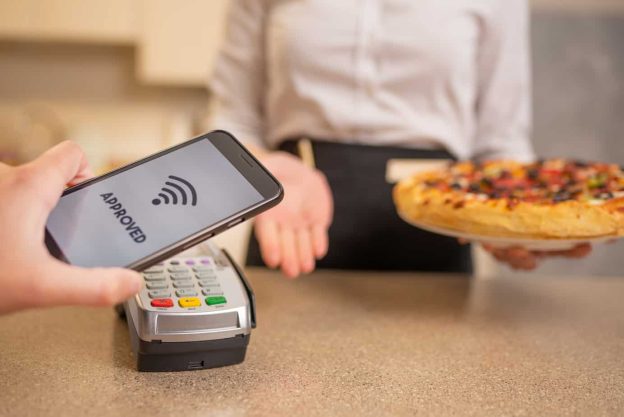
payment by contactless payment for pizza in a restaurant or cafe cashless payments banking services a new life according to the 190394627

Are NFC Transactions and Instant Payments Secure?

Near Field Communication or NFC technology has become one of the most popular features of mobile devices today. NFC technology helps run various contactless payment systems like Google Pay and Apple Pay. You can use an NFC payment system to make contactless transactions at various stores that accept these instant payments. Your business can also collect NFC payments if you have a processor that can read NFC signals. 

NFC payments are convenient, but these instant transactions can be vulnerable to theft and other concerns. You can use a few measures to ensure these are safe at your workplace.

The Main Concept

An NFC payment entails two devices wirelessly interacting with each other. The two devices should be about four inches apart.

An NFC chip in one item will transfer data to a receiver. For payments, the NFC chip sending the data is the smartphone or other payment device. The receiver will collect the payment data and then provide confirmation to the phone or device. The device may trigger its digital wallet to start working to finish the transaction.

The process provides instant payment. A receiver can collect credit card data or other payment info from the NFC chip on the smartphone, tablet, or whatever else one is using.

NFC payments are available on most mobile devices. Android 4.4 or later devices and iPhone 6 or later iOS devices can support NFC payments.

Some payment cards include NFC chips. You can tell there’s an NFC chip on a card if it has a signal showing a few waves coming from a card-shaped symbol.

The NFC payment process is popular for how people can complete a payment in less time. The fast scanning approach makes it easier for people to pay for things in moments. The contactless process is also useful, as it ensures a read without worrying about a card reader that might malfunction or a card that isn’t easy to read.

Close Distance Support

NFC payments require a close distance between the two objects. Since you need about four inches of space between the two items, it becomes hard for outside parties to try and steal data from a payment.

Some people may physically tap their devices on a sensor, but that is not necessary. It can take a second or two for the sensor to read the NFC signal.

Tokenization Is Critical

NFC payments are mostly secure thanks to tokenization. Apple Pay and Google Pay use tokenization technology to replace your real bank or card details with random numbers. The unique string of numbers is distinct to your transaction. Outside parties won’t be able to read your data and steal the content.

Two-Factor Authentication Is Necessary

Some NFC payments require two-factor authentication to work. You can supply the necessary second factor on whatever device you will use before making a payment. For Android devices, you can use biometric data or a PIN to confirm someone’s work. For iOS devices, you can use the Face ID or Touch ID system.

Common Risks and How They May Be Resolved

NFC transactions are secure and easy to process. But there are some risks to watch for as well. These issues are easy to correct if you use the right preventative measures:

  1. Data Corruption

Data corruption occurs when a criminal alters the data going to an NFC reader. The criminal adjusts the content to where it is corrupted and unable to be processed as necessary.

Any channels a business uses when processing NFC payments should be secure and encrypted to prevent data corruption. Check your data processor to see what you’re going to get out of a setup.

  1. Interceptions

An interception entails an outside part being a middleman when processing transactions between two NFC devices. The second party will collect the data and edit it before it moves to the intended recipient. The attack is tough to manage and not as common.

You’ll require an active-passive pairing to prevent interceptions. One device will receive the info, and the second will send the data. The process ensures data goes in one way between each party and not in both directions for each one.

  1. Theft

People can steal others’ mobile devices and use them to make NFC payments. The problem can be worse if a person doesn’t use a password protection system.

Customers must conduct their due diligence when planning their NFC payments. They can add passwords to their devices to prevent outside parties from accessing their data. They can also incorporate unique biometric details to add extra control.

Other Things You Can Do To Make Them Secure

You can also follow a few other ideas to help you make these NFC payments secure for everyone to follow:

  • Use a program that confirms authentic NFC payment portals. You can use a platform that prevents jailbroken devices from being accepted. These devices may use altered or modified versions of NFC payment portals. These systems might be vulnerable.
  • Keep all encryption keys you use in your workplace secure and private. These keys must be secure to prevent data from being stolen or incorrectly used.
  • Keep the NFC receivers you use safe from tampering. They should only be accessible when someone is ready to complete an NFC payment. Keeping the receiver out of reach when it isn’t needed ensures no one can alter the receiver’s data.
  • Provide instructions to your customers about how they can use NFC payments. Some customers might use their NFC payment devices wrong, making it harder for them to complete transactions. Customers will get used to what you provide after a while. The point especially encourages people who aren’t familiar with NFC payments to see what makes these so beneficial.

NFC technology is useful for many purposes, but it should work with care to ensure nothing wrong will happen in the work effort. Check on how your NFC system works and that you’ve got a system in hand to help you get something that works well.
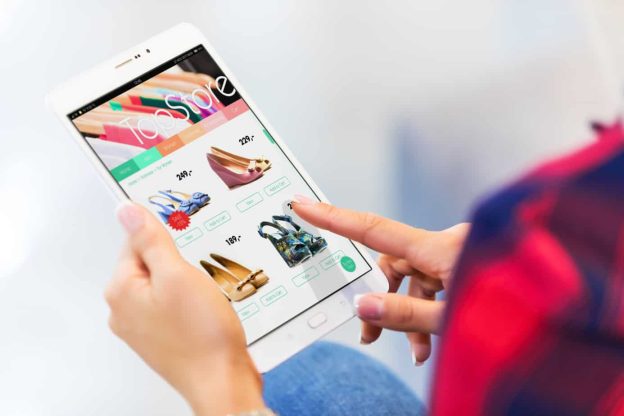
young woman shopping online on tablet computer 118512700

Shifts In Ecommerce and Brick-and-Mortar Retail

Retail industries have been changing over the past few years in ways no one could have expected. There are many exciting shifts to notice surrounding the industry. Many of these points involve shifts in how customers behave. These include changes for physical and online retail spots and how they will complete their work.

Direct-To-Customer Solutions

Many businesses are focusing on direct-to-customer services. Instead of working with third-party retailers to sell their products, they are directly interacting with customers.

While most direct-to-customer transactions in the past have been through outlet malls, many brands are directly selling their wares online. They are doing this to get away from third-party retail outlets and to establish direct links with their customers. Outlet mall staples like Nike, Levi’s, Tommy Hilfiger, Vineyard Vines, and Hanes have been investing more in online sales.

Direct-to-customer sales are especially popular for how a company can control its brand and establish customer loyalty. These businesses can also access more customer data, giving them the power to adjust their sales offers and promotions.

Customers are often more willing to purchase products from certain brands than others. These businesses are working towards promoting their brands to their customers. They will have more control over the work effort.

At-Home Services Are Prominent

People are becoming more interested in at-home services. These include ones where people can access things without having to leave their homes.

A good example comes from how online streaming providers like Netflix are making it easier for people to watch films and programs from home. People can subscribe to services or pay to rent a film if they wish. Customers often appreciate the convenience of these services, especially since they don’t have to spend lots of time having to travel somewhere to enjoy something.

Grocery stores have also been more reliant on delivery services. People can go to a grocery store’s website and then select the products they wish to purchase. These stores can then deliver those foods to the customers’ homes. This at-home service has become very noteworthy, as it shows how people are willing to take in anything in their homes if it is convenient.

Convenience and On-the-Go Transactions

One notable shift surrounding retail industries involves how many businesses are focusing on convenience. These include businesses that want to get people their products or services as soon as possible.

An example of this comes from the McDonald’s restaurant chain. The restaurant chain has been relying more on drive-through sales and less on dine-in transactions. The chain recognizes that people are becoming increasingly interested in such fast transactions. The work has even moved to where McDonald’s is closing many of its locations inside Walmart department stores.

The use of mobile payment wallets and contactless payment systems is another sign of how on-the-go transactions can work. NFC-based payments are faster and easier to support, making it easier for people to purchase what they want and to head out.

In-Store Enhancements

Many brick-and-mortar retailers are trying to keep their sites running. While more people are looking at online stores, traditional retailers are adding new features to help enhance their experiences. These include many things for the customer’s convenience:

  • People can purchase products from a store online and then drive over to the store to pick them up. Customers can do this without having to enter a store. A retailer must use inventory software and communication programs to ensure everything stays online.
  • Stores are accepting Apple Pay, Google Pay, and other contactless transaction platforms. These systems make paying for items easier to manage.
  • Retailers are also opening locations away from traditional malls. They are doing this to make their businesses more accessible and to provide a more personalized experience.
  • Augmented reality systems are also available through some retailers. These include systems where people can look in a mirror and see how certain fashions or cosmetics products might look on someone. The system is more convenient than if people tried on clothing or other products themselves.

These solutions are necessary for ensuring traditional stores can stay intact and catch up with the times. People are becoming more interested in various services, so adapting to their needs will be critical to the business’ success.

How the Pandemic Plays a Part

All these shifts in ecommerce and brick-and-mortar transactions show how the retail industry is changing. Businesses are taking more initiative, but behavioral changes are worth noting. The most significant point comes from how the global pandemic has changed customer behaviors.

People have developed new behavioral patterns over the past year. They are more comfortable with purchasing products online. They may want to acquire things as soon as possible as well.

The ecommerce world expanded in 2020, and there remains uncertainty over how the brick-and-mortar retail industry will survive through the pandemic. But businesses of all sorts are finding innovations and concepts to attract customers. They are focusing on how customers want more control over their experiences. They are also reviewing the unique ways customers want to interact with businesses.

But there also exists a concern surrounding foot traffic in businesses. It might be hard for some physical retail sites to manage their rent costs if they cannot get enough foot traffic. Businesses are researching details on how often people show up in their stores and what additional points might influence when people arrive. They can use these insights to figure out what promotions they should offer. But even then, changes in society surrounding the pandemic might make it harder for some businesses to bring in customers the same way they always have.

Whether it entails at-home convenience or directly getting in touch with a brand, customer behaviors are changing. It is up to businesses to look at how their online and physical retail spaces will react to those changes and shifts. It will be worthwhile for businesses to watch what happens next and how customers will continue to change their behaviors.

Apple Pay And Google Pay Icons 145949978

How to find stores that accept Apple Pay, Google Pay [2023 Update]

Google Pay and Apple Pay offer a convenient and secure way to pay for goods and services with nothing more than your smartphone. But, how to find stores that accept Apple Pay and Google Pay in 2023?

If it’s been a while since you gave them much thought, you’ll be surprised to learn they are both accepted at thousands of stores from major retailers and websites to smaller businesses.  If you’re looking to accept Apple Pay for your business you can get started here.

Invest In Crypto. Get A $10 Bonus
Before you leave your wallet behind, it’s a good idea to double-check that the store will actually accept one of these payment options. Here’s how to easily find stores that accept Apple Pay and Google Pay.
 
How to Find Stores That Accept Apple Pay And Google Pay

find stores that accept apple pay and google pay

apple pay symbols

  Invest In Crypto. Get A $10 Bonus

Using Apple Pay
To use Apple Pay, you will simply need to hold your iPhone up to a wireless credit card machine at the store and use Touch ID to complete the transaction. You don’t need to launch the Wallet app or even wake up your iPhone — it will happen automatically when it’s in range of the wireless terminal – this is called contactless payments.

Apple Pay is accepted in so many places, it’s hard to maintain a complete list. You can use this payment system in boutique stores, hotels, grocery stores, retailers, many apps, and participating websites with supporting merchant services.

A sample of stores that accept the payment include:

  • Restaurant and fast food chains such as Jamba Juice, Jersey Mike’s, Jimmy John’s, Baskin Robbins, McDonald’s, and White Castle
  • Target accepts Apple Pay in the US at all locations.
  • Retailers like Gamestop, Disney Store, Best Buy, Kohls, Five Below, Petco, and Petsmart
  • Office supply retailers Staples, Office Depot, and OfficeMax accept Apple Pay
  • Gas stations such as Chevron, Texaco, and ExxonMobil
  • Major drug stores including CVS and Walgreens
  • Grocery stores like Publix, Meijer, Albertsons, Trader Joe’s, and Whole Foods
  • Costco accepts Apple Pay but only Visa and Visa Debit cards linked to the Apple Pay wallet.


Notably, Walmart still does NOT accept Apple Pay and is unlikely to accept it in the future. Major discounters such as Dollar Tree and Dollar General DO NOT accept Apple Pay.  Home improvement stores Home Depot and Lowes also do not take Apple Pay as of 2021.  Kroger is another notable major retailer that does not accept Apple Pay in 2021.

The Apple Pay payment system is now accepted in 21 countries and it is supported by dozens of U.S. banks, credit unions, and credit card issuers.

Finding Stores That Accept Apple Pay
Unfortunately, locating stores near you that accept this payment system still isn’t straightforward. Aside from looking for the Apple icon on a drive-through or store window, there are two main options available.

The first is to open the Apple Maps app on your iPhone and search for a store. After tapping on the store’s name, you can bring up more information. The Useful to Know section usually displays the Apple icon if the store accepts the payment method.

Another option is the Pay Finders app which uses crowd-sourced data from users of the payment system and information provided by business owners. You can view nearby stores on a map or search their database.

google pay symbolFinding Stores That Accept Google Pay
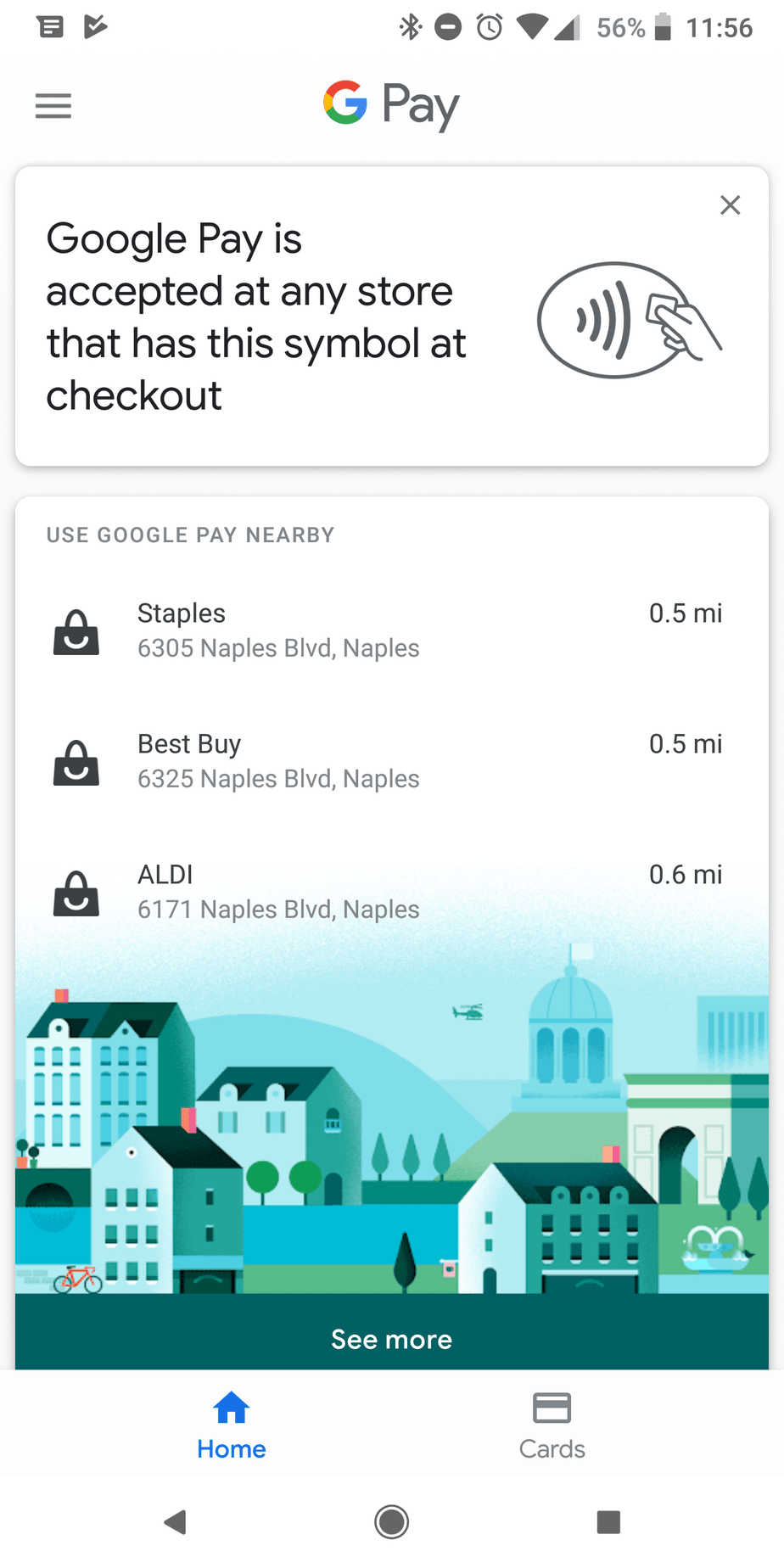
Google Pay has now replaced Android Pay which a redesigned app that makes it easier than ever to find stores nearby that let you checkout with your phone. Once you have cards added to your account, you can find nearby retailers from the Home tab of the app. When you reach the list of cards, pay attention to the last two.

The second-to-last card is an informational card with the NFC payment icon that allows you to use your phone as a digital wallet when Google Pay isn’t accepted. The last card is labeled “Use Google Universal Contactless Payment Symbol logoPay Nearby.” When you select this option, it will automatically show the three closest stores that accept the payment method. You can also choose “See More” for a longer list. The list will include everything from fast food chains and retailers to gas stations and grocery stores.
An ever-growing number of retailers are adopting NFC-compatible payment technology to improve customer convenience and credit card processing security. With greater efficiency, shorter lines, convenience, and security, mobile payments are certainly here to stay with benefits for customers and merchants alike. And it is not difficult anymore to find stores that accept Apple Pay and Google Pay. 

 
Google Pay Nearby Location Tool
Google pay locations list
 

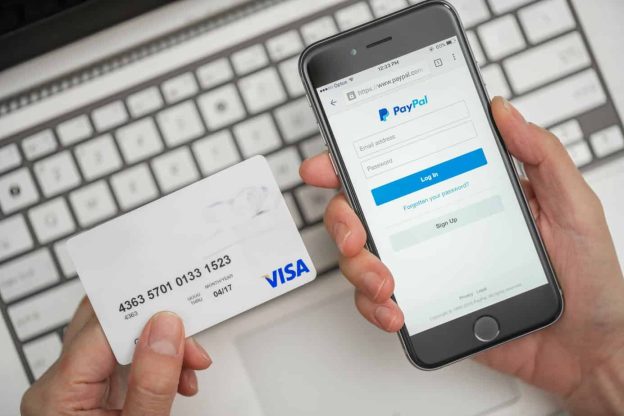
paypal and visa partnership

What the PayPal and Visa Partnership Means for the Future of Payments

Discovering Visa and PayPal were partnering up has shaken up the credit card processing industry. It is believed that everything from merchant services to eBay will be affected. Some immediately lauded how the partnership will enhance in-store NFC payments. The most cynical critics believe Visa, with PayPal under its watchful eye, will be better suited to tackle competition like Checkout.

The major reason this partnership has stunned the industry is because company heads at Visa and PayPal previously expressed opinions that could be interpreted as being diametrically opposed to ever working together.

Visa CEO Charlie Scharf has stated that payment players – merchant services, credit card processors, etc. – were either against Visa or with Visa. He believed “co-opetition” did not reflect how the traditional payment ecosystem and standard network model had operated for over five decades. The success of PayPal’s ACH and the many accounts it held contradicted this and, for Visa, made PayPal a serious concern.

Meanwhile, Dan Schulman, CEO at PayPal, has made it quite clear he saw PayPal as a new and unique entity after its break from eBay. Schulman has made it clear that he was running a very different enterprise. He stated the company was primed to look at consumer options and, yes, partnerships. As the driving force behind ACH, PayPal was pretty much indifferent to tender types.

Among the most interesting notions to come out of the partnership is that it will energize in-store NFC payments. Others took issue with PayPal’s business model being totally overshadowed by its new partner’s traditional credit card processing. Some analysts wondered if Visa would force PayPal to disband its business model and take on a more traditional credit card processing operation. Whatever is to come, the market took notice of the potential disadvantages. The day after the announcement, PayPal saw its stock ending down 6.75%.

Visa is the biggest credit card network in the world. PayPal is the world’s largest digital payment network with an estimated 188 million active users. PayPal’s merchant services are beloved by vendors and businesses globally. PayPal also has dormant accounts that this partnership could reinvigorate with accountholder incentives.

Still, while one can make it look good on paper, all the credit card processing in the world cannot guarantee this will work.