Tag Archives: NFC

nfc vsqr code

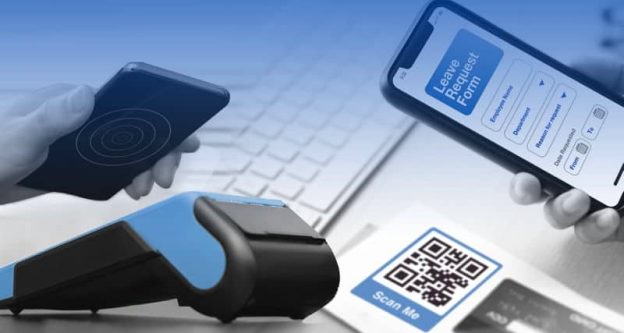
NFC vs QR Code

With the COVID pandemic still being a major concern of people, sharing essential information with the citizens through effective means has become a necessity for the government. People are now more concerned about their safety than ever before. A report published by Walker shows that customer satisfaction and their experience will become the major factor that sets a brand apart from the competitors in the market. 

To improve customer experience, businesses have started embracing modern technologies that could connect the offline and the online world. Now, the question is “which one is better”? Should you rely on QR codes or are NFC tags a better alternative? Let’s have a look:

NFC and QR codes are an innovation in the modern eCommerce technologies. Both offer unique functions, but with the same goal – to offer a seamless and safe user experience to your customers. Let’s understand each product and later we will discuss the differences, features, and benefits.

What is NFC?

NFC stands for Near Field Communication, a system that enables uninterrupted and smooth communication between two electronic devices in close proximity. It consists of a small chip. The appearance may look a little dull, but the performance of these chips is pretty impressive. According to technavio, 25% of mobile payments will be processed by NFC in 2021.

User Cases and Compatibility 

The best use of this technology is for electronic, contactless payments. You must have seen the customer queue at the supermarket, where each customer swipes their cards at the POS to complete the transaction. It is NFC. In addition to payments, NFC is used for sending media files, documents, directions, mobile numbers, and files in other formats.

Despite being new to the market, NFC has garnered a lot of attention among smartphone users recently. The technology is compatible with Android and iOS devices, in fact, the number of Android devices compatible with NFC has increased in the past few years. 

iPhone users have also witnessed consistent growth in near-field communication technology. Some iOS devices are capable of reading the NFC code from the home screen without having to install any mobile app. 

Why Use NFC?

NFC is not as old and popular as QR codes, but the technology is globally accepted for contactless payments. Its popularity has skyrocketed after the pandemic. Here are a few reasons why businesses should use NFC tags:

  • A Wider Scope: the user case of NFC goes beyond contactless payments. Businesses have started using these tags for marketing. The NFC cards are designed for businesses looking for a smart way to share their contact details with their prospects. These cards direct your prospects to your website or email for easier and faster communication.
  • Convenience: It only needs one tap from customers’ end to sign up for the company’s loyalty program. So, if the customer experience is concerned, nothing outperforms NFC tags. Customers can use the NFC tags to collect and redeem reward points with a single tap.
  • Security: NFC is one of the safest technologies. It catches data from customers’ devices located within their acceptable radius.

What are QR Codes?

QR codes were launched as a better and powerful alternative to the barcode for inventory. It was designed in such a way that people could scan these codes from any angle with just about any device without any hassle. Introduced in 1994, the QR code reading has made a big impact not only in the inventory management market but it can be used in transferring digital information. 

QR codes are small square-shaped boxes that can be scanned vertically and horizontally through any smartphone that has the barcode-reading function enabled. QR codes offer great flexibility. Like NFC, these codes can be used for making contactless payments at any retail store. You could also use it for location sharing and marketing.

Most businesses embed their website URL into these square boxes, allowing their audience to visit their website without having to memorize the URL. Similarly, QR codes are used to direct people to your blogs, landing pages, social media accounts, and other sales channels. Recently, many social media sites have embraced QR codes to enable a smooth and seamless information sharing experience for users.

Why Use QR Codes?

Over 9 million families scanned QR codes at least once in 2018, shows a report published by Statista. It is one of the most convenient ways to share information, transfer payments, and direct your customers to your commercial sites.  Here are a few reasons why QR codes are better than NFC tags.

  • Versatility: QR codes are used for all types of websites, social media accounts, and mobile apps. For instance, a QR code that directs your user to your mobile app link can increase your app downloads. You can also share QR codes for product links, your email, landing pages, and more to extend your reach.
  • Ease of Use: QR codes can be scanned from any angle as long as you have a smartphone with QR code reading functionality enabled. Some mobile cameras have a built-in QR scanning feature, while others need to download an app to scan these codes. Either way, the scanning part is super simple. 
  • Customizable: QR codes are customizable. Businesses can use customized codes that match their brand’s logo and looks relevant to their business practices. You don’t have to settle for the traditional black and white square boxes for the QR codes. Add interesting colours, put a nice background, and design a nice QR code that is relevant to your brand.
  • Security: Another major advantage of the QR codes is that they are used for the purpose they were designed for. They offer a high level of security to both customers and merchants.

Which One is Better?

Both NFC and QR codes deliver excellent performance when it comes to marketing, payment processing, and transfer of information. QR codes, however, are more advanced and relatively better than NFC. These codes can be scanned easily, allowing you to process your transaction in the fastest and easiest possible way.

veterinary customer paying with the smartphone 144486397

6 Contactless Payment Methods For Your Vet Clinic Checkout [2023 Update]

People are using contactless payment methods more than ever. While the move towards contactless payments had started before the global pandemic, the issue has hastened this shift. People are more willing to complete these payments because they know they are safer to follow. But there’s also the benefit of how easy it is to complete payments through such means.

Veterinary clinics can benefit from many of these contactless payment methods. You can use six different methods to help your vet clinic bring in revenue from your customers. These are convenient solutions to use at your clinic’s checkout station, plus they can support various features.

These payment solutions are vital when you consider the worries your clients might hold. Pet owners often have various concerns surrounding their pets’ health. Asking for payment may be insensitive or harsh at times. A contactless payment solution will be ideal for ensuring the client stays comfortable and that there will still be a way for that person to pay for a pet’s needs.

Customer-Facing Devices

The first contactless payment method to explore entails using a customer-facing device. You can place a terminal on the client’s side of the counter. The terminal will link with a virtual terminal that you control.

Using a customer-facing device will be easier to follow than if someone had to give you a card. The customer will also feel comfortable, as that person will always control one’s card. The card will stay intact, plus the person doesn’t have to give out more details than what one might be comfortable with sending at a time.

You will need to initiate the transfer through a virtual terminal browser. The client will then follow the prompts on the customer-facing device to complete the payment.

Everything will stay in a secure cloud system. The cloud computing system will ensure you can access the data you collect from anywhere. But you’ll need to ensure your setup is fully secure and encrypted while meeting all PCI standards for operation.

NFC

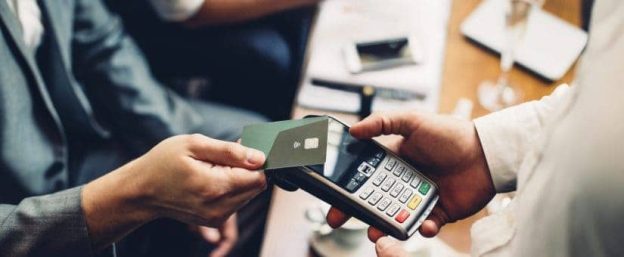
Near-field communication or NFC payments are very popular today. An NFC payment allows a customer to wave a card or another device over a terminal. The device can include a phone, band, or another item that features the customer’s payment data.

The NFC transaction process is contactless and provides a faster way to complete the payment. It also uses heavy-duty encryption that ensures the card’s data will not be lost when transferred.

Some NFC-based solutions like Google Pay and Apple Pay come with two-part verification features. A customer could add a fingerprint or a small code to a transaction to confirm one’s identity. Considering how much money someone might spend at a vet clinic on a pet’s needs, using a payment method that is safe and secure will be essential to review. An NFC transaction allows the customer to complete the payment without risking anything being lost in the general process.

EMV

The EMV chip-based card platform has been used by vet clinics for a while now. But it is becoming increasingly contactless, as card brands that support the EMV platform no longer require signatures for transactions on EMV-based devices.

Your vet clinic doesn’t have to retain payment receipts anymore if you use EMV payments. The process does not require much physical contact. You won’t have to pass a pen or pad to anyone anymore. It is easier to manage the payment, plus your business becomes greener by saving on paper.

You can use your virtual terminal to load up your receipts without having to print anything of value. You can text or email digital receipts to your customers as they request them.

Website Collection

Another choice is to collect customers’ data through your website. People might be more comfortable paying for services online instead of in person.

A customer can review the outstanding balance someone has for services at your clinic. You can provide a login account or other data for the customer to access. The customer can then pay for the services as necessary.

The website can also include complete invoices for people to review. You can upload all billing data online to help people see what they are paying for, reducing the risk of billing errors. The process is ideal for some of the more expensive things you might provide to people.

Phone Collection

Another solution to see involves secure phone payments. You can establish a phone payment system through a cloud-based virtual terminal. The terminal will be accessible by phone app and can connect the payment info people provide to your records.

The customer will provide one’s payment data through a phone app or a mobile version of your website. The customer can also provide a fingerprint or other secondary verification signal for one’s security.

The virtual terminal can collect the customer’s data to ensure you know who makes legitimate payments for a pet’s needs. You can contact the customer if you notice any discrepancies surrounding the transaction you’re planning.

Upfront Collection

The last of the contact-free payment options for your vet clinic involves collecting a client’s card and other data before providing services for their pets. You can ensure the customer’s data is on hand by collecting it once. The customer can submit new payment data as necessary or if the person wants to use a different payment method for the transaction.

By collecting the data, you can charge people based on the services they utilize. You can then send digital copies of their receipts. The effort reduces the stress associated with paying for things. The point is especially critical for more emotional needs, including surgeries and end-of-life practices surrounding one’s pets.

These six solutions for your vet clinic are worthwhile solutions worth trying. Be sure when planning your efforts that you know what you’re getting out of a system. You will have an easier time managing your clinic when you see what works for your general needs.

How Self-Service Retail Has Advanced and Helped Consumers Amid the Pandemic

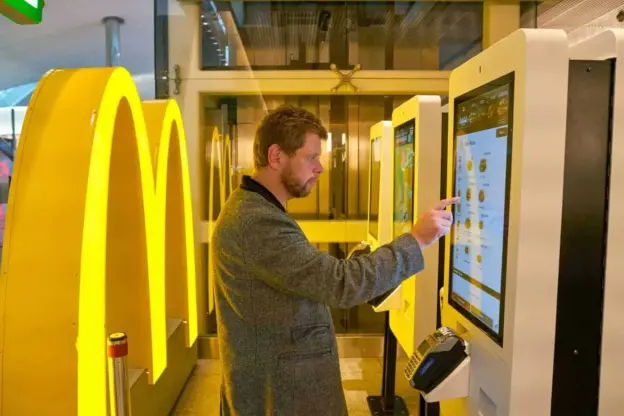
Self-service kiosks and other devices have become a commonplace at many retail sites over the years. From kiosks at fast food restaurants that accept orders to self-checkout aisles at grocery stores, self-service retail has never been more visible than now.

The self-service or unattended retail industry has especially become more essential during the global pandemic. Self-serve kiosks and other unattended items help reduce human interactions and have been preferred by many during the pandemic. But the industry is still evolving, and there’s a potential for new developments further down the road. Some of these changes include efforts in making kiosks safer and making people feel comfortable with them.

Significant Growth

The self-service retail market has been growing in value in the past few years. PYMNTS.com reports that the self-serve market will likely grow to about $46 billion in value by 2027. The growth includes a compound annual growth rate of about 7 percent from 2020 to 2027.

Meanwhile, people are continuing to use more contactless payment solutions. PYMNTS.com also states in the same report that the contactless payment market is currently valued at $40 billion and will likely grow to $100 billion by 2026. Self-service kiosks and other stations can support contactless payment methods, making the industry likely to keep on growing in prominence.

What Makes Self-Serve Retail Useful?

People are finding self-serve retail stations to be safe during the pandemic, but there are many other positives worth noting. These include benefits that support the retailers:

  • Self-service stations help businesses save on labor costs.
  • It is easier for businesses to serve more customers when they have kiosks and contactless stations on hand. Customers can access these features at any time while a business is open, including during off-peak hours.
  • Customers will have more control over their purchases. They will see everything available at a site, or they can select different payment methods for whatever works.
  • The risk of errors is minimal through self-serve spots. People can confirm their orders before paying for them, plus there’s no risk of someone mishearing or misinterpreting someone’s request.

More Consumer Spending

Self-service stations can also potentially increase sales numbers at businesses that offer them. Research and Markets writes that self-service kiosks can increase customer spending by about 30 percent on average. The rise is from people being more willing to spend money on purchases because they have more control over their orders.

Self-service kiosks could help reduce the income hit that stores have experienced as of late. Customers have been using physical stores less often in the past few years. The trend had been around before the pandemic, but the pandemic has accelerated that concern.

Meanwhile, people are more willing to buy products on kiosks, voice-activated devices, mobile devices like smartphones or tablets, and call centers. They want control over their orders, and they especially want more options when buying products. Self-service stations will be critical to how well businesses can thrive as the economy evolves and shifts.

When Will Businesses Adopt Self-Service Stations?

While self-service kiosks have become critical for sales during the pandemic, businesses that have explored these have held off on introducing them. Many enterprises have delayed their 2020 plans for introducing kiosks, as they saw limited revenues that year. They hope to bring in new stations in 2021 and 2022. The increased demand for these stations will especially make it where businesses will want to fast-track the development of new kiosks.

A General Concern of Cleanliness

There is one worry surrounding self-service retail spaces and how effective they can be. People aren’t interacting with others when checking out, but they are interacting with tables, trays, and touchscreens that others utilize each day. Some customers may also be using carts and baskets that others keep touching. They use them to store their purchases before bringing them to these kiosks to finish their orders.

The point proves that not all self-service retail items will be completely clean. But the perceived risk that customers have about these self-service features is lighter than if someone were to checkout with another person in a spot. Still, people might be more comfortable with using these kiosks if they know everything in those spots are clean and safe to use.

New technologies are still in development to make these self-serve spots cleaner. UV-powered antibacterial coatings or sensors may be utilized around these stations to keep them clean, for example. But business employees may still need to clean off these stations on occasion to ensure everyone stays comfortable.

NFC Technology Could Reduce the Risk

Another solution that could make self-service kiosks cleaner and more appealing entails NFC support. Kiosks could use NFC payment systems that allow people to purchase items through a completely contactless method. The customer can specify one’s order and wave a product over a sensor as necessary. The person will then waive a phone or other device linked to a payment account to pay for the purchase.

Amazon has been utilizing such a system at its Amazon Go stores. The “Just Walk Out” system lets people shop while being monitored by weight sensors, security cameras, and identification tags on items in these stores. Amazon’s system also uses deep machine learning to identify what items were purchased and what needs to be restocked the soonest.

While most businesses likely won’t have technology as advanced or complex as what Amazon uses, it is possible they could start working with more unique systems that reduce contact points. The general goal of the self-service industry will be to eliminate all contact points, providing an environment that everyone will feel comfortable with.

The growth of the self-serve industry will be worth exploring. People appreciate having more control over their orders. Businesses are also finding their own benefits through these systems. Expect the field to keep growing and to expand with new technologies that will make self-service stations more convenient and sanitary. Trends show that these kiosks are growing in popularity, so taking advantage of that trend will be critical to success.

What Are NFC

What Are NFC, Apple Pay, and Google Pay?

Today, consumers either don’t use cash or they try to avoid it as much as possible. Many even avoid using their credit card, and thanks to NFC, or ‘Near Field Communication,’ it’s possible.

What is NFC?

NFC allows two devices near one another to ‘talk’ to exchange payment information. Apple Pay and Google Pay are two of the most common NFC type payments used today, although there are others. How do they work and what should users pay with them?

Apple Pay – How it Works

As you probably guessed, Apple Pay is a payment option for Apple users. Customers may also use their Apple Watch to make payments. When a user is near an NFC terminal where they want to make a payment, they do the following:

  • Unlock the phone or watch using face ID or entering the passcode
  • Hold the phone near the NFC reader
  • They’ll hear a beep or feel a tap when the transaction is complete
  • The screen will show a check mark to show it’s done

Using these steps will pay with the default card set up in Apple Pay. If you want to use a different card, you must switch cards in the app before paying.

Google Pay – How it Works

Google Pay is the equivalent of Apple Pay but for Android phones. Users store a credit card in the Google Pay app and use the default card for contactless payments.

Users use these steps to pay with Google Pay:

  • Unlock the phone or watch
  • Hold the phone or watch near the NFC reader
  • Their device will show a blue checkmark when it’s complete
  • The user’s device will buzz when the payment is complete

Are NFC Payments Safe?

Consumers and merchants have reason to worry about NFC payments’ safety. It seems like it would be riskier, but there is less risk using NFC payments than a credit card.

Since you don’t have to share any personal information or even show a picture ID, there’s a lower risk of the consumer’s information being stolen. Users also have to unlock their phone for the payment to take place, so unless a thief has the passcode, they couldn’t use the Apple or Google Pay function.

Also, both Apple and Google Pay have the option to switch the function off from any device. If a user’s phone is stolen, they can shut off the payment app via any internet-enabled device.

Why is NFC the Wave of the Future?

NFC payments were popular before, but the pandemic further popularized NFC. People were almost forced to adopt the technology, which made it more widely spread. Now that people know how it works and that it’s safe, they are more likely to use NFC payments moving forward.

As a merchant, it works to your benefit to adopt the technology in your store. Consumers will patronize businesses they know keep them safe, and adding NFC payments to your checkout process is a sign of safety.

AfterPay Announces In-Store Availability for Apple Pay and Google Pay Users

Putting further pressure on credit cards, AfterPay now offers support for Apple Pay and Google Pay in select US retailers starting in July 2020. The Australian-based mobile app that offers “Buy Now, Pay Later” (BNPL) installment options, AfterPay is offering Apple Pay online and in physical stores and Google Pay as an in-store option in the U.S.

Despite paying a fee to Apple and Google to allow its installment payments to be made via their smartphone digital wallets, AfterPay’s costs of rolling out to new merchants are still reduced. The deal will also help drive customer adoption. Allowing customers to complete payment in four installation payments, AfterPay does not charge upfront fees or interest, similar to AfterPay online.

AfterPay In-Store Tap and Pay

At the point of sale terminal, customers can tap the card icon in the AfterPay app to activate the AfterPay card in the Apple wallet. Among the first retailers to offer Apple Pay with AfterPay, Forever 21, Skechers, Fresh, and Solstice Sunglasses are participating in the rollout. Operating in Australia, New Zealand, and the U.S., AfterPay operates under the name ClearPay in the U.K.

Introduced four years ago in Australia and New Zealand, AfterPay’s in-store offerings comprised 24 percent of total sales with nearly 40,000 shops offering the service. AfterPay is offered by more than 55,000 retailers across the globe with nearly 10 million active users.

BNPL Increasingly Popular Due to COVID-19

Thanks to COVID-19, BNPL companies are soaring in popularity. Consumers looking to stretch their dollar are hoping to buy time until incomes are restored in the wake of a reeling economy. With a clear aversion to financial risk, millennials have been shifting away from credit cards since 2009. Avoiding credit card interest and fees, consumers are not only leaning on BNPL platforms but also on debit cards, as well.

“As we enter the second half of the year and retail re-emerges across the world, its critical we help our partners drive business growth,” both online and offline,” Nick Molnar, co-founder and U.S. CEO at AfterPay, said in the press release. “As a proven solution for driving incremental sales and new customer growth, we are thrilled to introduce our new omnichannel solution to U.S. retailers as they begin to open their doors and bring shoppers back to their physical stores.”

Host Merchant Services

If your business is considering an upgrade to your point of sale system, Host Merchant Services can help with every step of the way. HMS delivers fantastic service without the headaches. When you work with HMS, we consider you part of the family. As part of our family, we want your business to grow. That’s why we offer exceptional service with no contracts and no hidden fees. Businesses stay in the HMS family for our high-quality service and super low rates. You won’t find exceptions in fine print. How can Host Merchant Services help your business navigate the challenges posed by the pandemic?

Everything You Need to Know About Contactless Payments During COVID-19

Contactless payments allow consumers to pay for goods or services without needing to physically swipe a card in a machine or pass the card to another person. By tapping a phone or card on or near a terminal, near-field communication (NFC) enables the consumer to transmit payment information without physically touching anything. For a variety of reasons, U.S. consumers were slower than their global counterparts in adopting the technology, but due to the fear of COVID-19 infection, they are quickly catching up.

A new study from Visa shows that more than two thirds of customers say they would switch to businesses now offering contactless payment solutions. And more than three quarters of consumers say they have changed how they pay due, in part, to the COVID-19 pandemic. The study involved a survey asking 250 business owners around the world their view of business operations in a post-COVID world, as well as a survey of 1,000 adult consumers asking about their payment and shopping habits.

And in a MasterCard survey of 1,000 Americans, 51 percent used contactless payments at the point of sale in March or April 2020, and half of those people said the COVID-19 pandemic prompted them to try the technology for the first time. Roughly half of U.S. consumers told MasterCard they’re using cash less, or not at all, due to the pandemic.

The pandemic rushed U.S. consumers to a place where the rest of the world already lived. In 2018, only 3 percent of cards in use in the U.S. were contactless as opposed to 64 percent in the U.K. and 96 percent in South Korea, according to a study by global management consulting firm A.T. Kearney.

The Federal Reserve’s annual “Diary of Consumer Payment Choice” showed cash, which was the #1 payment method last year, came in second to debit cards this year. Credit cards were a close third place.

Here are just a few points regarding contactless payments:

  • Contactless Payment Most Important Safety Measure
    The Visa survey reports 46 percent of consumers believe contactless payments are the most important safety measure for retailers to provide.
  • Signature Required
    One thing contactless payments cannot help are required signatures. Some retailers are still requiring signatures even in the middle of a pandemic.
  • Public Transit
    Contactless payments allow commuters to speed through a subway turnstile versus waiting in line to load money onto a transit swipe card.
  • Digital Coupons & Loyalty Points
    Some grocery stores still require customers type in their phone number to redeem digital coupons and receive loyalty points despite simultaneously offering contactless payments. One workaround is asking the cashier to type in the number.

Consumers are rewarding businesses that put COVID-19 safety measures at the top of their priorities. With more and more consumers adopting contactless payments in response to COVID-19, businesses who offer the technology are finding an increase in demand.

Host Merchant Services

Don’t run the risk of losing out on business: Host Merchant Services can help your business implement contactless payment capability. Depend on a stable and reliable payment processor to partner with your business to minimize the impact of worldwide instability. Payment processing should be the least of your concerns. Delivering personalized service and clarity, Host Merchant Services takes the time to explain your payment processing. We want you to understand your monthly statement, and we will ensure that your statement matches our promises during our sales presentation. If you do have questions, you can reach a live representative any time, any day. HMS offers wonderful customer service, as well as great rates.

Host Merchant Services even explains where our profit lies in the pricing structure to be fully transparent in all directions. Pricing fairness and transparency is our strategy in helping our customers find success with their businesses.

Google Pay to Offer Digital Bank Accounts by 2021

In early August 2020, eight banks in the US have announced that they are partnering with Google to offer digital-first bank accounts directly in the Google Pay app. The partner banks will manage the financial side of these accounts while Google will provide the front-end, intuitive user experience, as well as financial insights exclusive to Google’s digital bank accounts.

Offering built-in budgeting tools, as well as the financial insights, the Google Pay app will launch sometime next year. Known internally as the “Cache” project, the partnership originally started out last year with two financial institutions.

An extension of Google’s original ventures into digital bank accounts from Citi and Stanford Federal Credit Union (SFCU), the partnerships now include six additional banks, namely Bank Mobile, BBVA USA, BMO Harris, Coastal Community Bank, First Independence Bank, and SEFCU.

With the intent to help customers benefit from useful insights and budgeting tools while keeping their money in an FDIC or NCUA-insured account, Google will enable a digital experience that can meet the evolving needs of a new generation of customers.

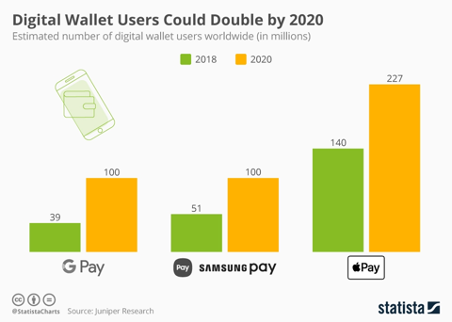
Up from 39 million global users in 2018, Google Pay is estimated to grow to 100 million users this year. Offering a complete digital banking service next year, Google did not indicate whether or not customers will have access to physical debit cards issued either through Google or through its partners.

Google Pay is an app allowing users to pay online or make contactless payments with their phone. Protected with multiple layers of security, paying with Google Pay is a fast and simple alternative to paying with cards. Using an encrypted number instead of your actual card number, Google Pay allows you to pay with your phone while your details stay secure. In addition to enabling rewards programs and cash back programs from a bank or PayPal, Google Pay also enables loyalty programs from chains.

Host Merchant Services

Depend on a stable and reliable payment processor to partner with your business during the upheaval of 2020. Payment processing should be the least of your concerns. Delivering personalized service and clarity, Host Merchant Services takes the time to explain your payment processing. We want you to understand your monthly statement, and we will ensure that your statement matches our promises during our sales presentation. If you do have questions, you can reach a live representative any time, any day. HMS offers wonderful customer service, as well as great rates.

Coca-Cola Introduces New “Pour by Phone” Contactless Technology

Contactless payments have been there since the 1990s, but the COVID-19 pandemic has brought it to the limelight. Moreover, the trend is here to stay for a more extended period, given the circumstances.

Recently, the global beverage brand, Coca-Cola, is all set to add a variant by launching a contactless option for its consumers’ feasibility regarding pouring their beverages. A touchscreen-operated dispenser would deliver around 200 drink options with a simple tap on the smartphone.

According to Chris Hellmann, Coca-Cola Freestyle’s vice president, “All Coca-Cola beverage dispensers are safe with recommended care and cleaning. However, given these uncertain times, people may prefer a touchless fountain experience.”

Speaking of this, this newly launched contactless solution makes selecting and pouring a drink just a few clicks away for consumers.

How Pour By Phone Works

All it takes for the customer is to scan the QR code on display, leading them to the cloud, bringing the Coca-Cola Freestyle user interface to the phones. Following this, they can feel free to select their favorite drink and flavor from the menu. Before making its way to the Coca-Cola, the idea was run through initial testing at Firehouse Subs, Five Guys, and Wendy’s locations in Atlanta.

We intentionally designed this so anyone with a smart device could pour a drink,” Michael Connor, chief architect of the Coca-Cola Freestyle, said in a statement. “When you have a tray or a sandwich in one hand, you don’t want to deal with downloading an app.” He also added that they have invested time and effort and went the extra mile to ensure necessary steps have been taken to make the solution easy and fast and the experience super-reliable.

The Need of the Contactless Technology

By this summer, the software will be available at around 10,000 Coca-Cola Freestyle dispensers. Also, all of the dispensers will be compatible with contactless technology by the year-end.

As per a study from Civic Science, about 65 percent of people going to a restaurant choose to pour drinks on their own than having a waiter do it for them.

It is pertinent to mention that QR code now making waves once enjoyed a maligned status. However, it has managed to come up as the enabler of contactless commerce. This development came in when China-based Alipay and rival Tencent’s started making use of QR code and went to fulfill their endeavor of standardizing it.

Subsequently, a consortium of platforms has emerged normalizing the use of QR codes to process transactions. Walgreens now accepts payment through the platform of Alipay while Apple is upping its game via Apple Pay. In addition to this, even Walmart has also altered its Walmart Pay app to incorporate QR codes and adopt the new touchless technology.

Final Thoughts

Ever since the COVID-19 crises erupted, many experts suggested contactless payments to curb the spread of the virus through cash, debit, or credit cards.

The news of contactless dispensers is another addition as going contactless became the new normal amidst the COVID-19 global crisis considering that many businesses resorted to the contactless payment option. All eyes are now on how these touchless dispensers by Coca-Cola would fair in the coming future.

Accepting Contactless Payments. What You Need to Know.

Your customers don’t want to touch your credit card machine.

It’s nothing personal, they don’t really want to touch anything that they don’t have to these days. Luckily for those of us that still use hand held or counter top credit card machines to either swipe or dip the chip to accept payment, contactless solutions are easy and inexpensive to implement. Chances are, the machine you currently have already has the hardware required to do this, so it might just be a matter of calling your merchant services provider to get instruction on how to enable it and allow your customers to utilize their contactless payment methods on it.

Contactless payment methods come in three common forms. Your customers will either have a smart phone, a smart watch, or an NFC enabled credit card. All of these use NFC, short for Near Field Communication, as the underlying way to perform the transaction. How exactly NFC works is beyond the scope of this article, suffice it to say, it allows your device or card to talk to a properly configured credit card terminal so long as it is within about 1 inch of the reader. It’s easy, it works reliably and it’s reasonably secure.

You might be wondering, ‘if all you need to be is an inch away from a reader, isn’t it possible for someone to get close to my customer and steal their card information?’ Yes and no. While it is technically possible to intercept the signal, the hacker wouldn’t be able to do much with the information. Smart pay devices like Apple Pay do not directly transmit sensitive card holder data in the transaction. Instead, they submit a unique one-time pass code to the credit card reader, which then sends that pass code to a very secure data center operated by your bank. The bank is then able to communicate with Apple to retrieve the actual card information. A process that happens within a fraction of a second and is completely out of scope of the interaction of the customer with the payment device itself.

To start allowing your customers to use contactless payments, start by checking if you’re already setup with it. The best way to check is to read the wording of the credit card machine when it comes time for the customer to give their payment. If it only says “swipe, dip or enter card” when it is ready to accept payment, it might not be setup for contactless. If you see the word “tap” anywhere, you’re already good to go. Find a customer that wants to use their phone, watch or NFC enabled credit card and try it out. It’s nothing more than holding the device within an inch of the face of the credit card machine.

If you don’t see the word “tap” and holding an NFC enabled payment method near the machine does nothing, you still likely do not need to buy a new machine. Now is the time to call your merchant services provider. Either you have a machine made in the last 5 years and it’s just a matter of asking customer service to help you get it enabled, or you’re due for a new machine. Most providers will provide a free terminal replacement. If they don’t, get a new merchant services provider. They fight fiercely to acquire and retain customers, so the relatively small cost of replacing your terminal for free is worth it to them to keep you as a customer. If not, there are plenty of providers out there that will happily give you a modern terminal if you switch to them.

As consumer sensitivity to sanitary habits in the retail environment continue, NFC is a great way for you as a retailer to make sure your customers continue to feel safe making purchases. The security of the payment itself, coupled with the fact that any would-be coronavirus’s can’t make the 1 inch jump through thin air, make NFC the go-to choice for payment acceptance. It’s either already ready to go, or you have a couple of free options to get it setup, you’ve got nothing to lose.

Contactless Payment Trends in 2020 – Apple Pay, Google Pay, NFC, and More

Amidst the global pandemic, many countries are resuming the routine life and easing the lockdown. However, recent studies have shown that around half of the US population is still worried about their health and how shopping, eating, and social interaction can affect it. Therefore, many businesses and shoppers are more inclined to make contactless payments, which has shown a 40% jump in the first quarter of 2020. As the payment trend has grown prominence, NFC-enabled payments across the world can exceed $130 billion within 2020.

What are Contactless Payments and Their Global Outreach?

Contactless payment is a well-encrypted, secure payment mode to buy products or services using NFC (near field communications) enabled devices or cards. When the reader and payment device are near, it activates NFC chips to exchange encrypted data for money transfer. In simple terms, you wave your device in front of an NFC powered payment terminal to make purchases, contact free. But you also require NFC-encrypted payment apps such as Apple Pay, Google Pay, Fitbit Pay, or Samsung Pay on your mobile device to make the contactless payment happen.  Some credit and debit cards also have contactless capability embedded in chips that you can then wave or tap to pay on an NFC enabled reader.

Before the Coronavirus outbreak, this global trend wasn’t prevalent in the US, as only 10% of the consumers were using the technology. Europe however had the largest share in the contactless payment terminal market, due to an increase in smartcard rollouts and technological advancement. According to UK Finance, around 1/3rd of all the card-based payments happened through contactless methods in Q1, 2019. However, the Asian region has been slower to adopt NFC based technologies due to its efficient QR code system that doesn’t require select apps, or POS systems.

Coronavirus – The Driving Force for Contactless Payment in the US

The number of digital wallet users worldwide has doubled in 2020, with Apple Pay and its 227 million users becoming the most prominent, according to the Wall Street Journal.

apple pay google pay samsung pay

https://www.statista.com/chart/19972/digital-wallet-users-double-2020/

The pandemic has redefined consumer priorities, making no-touch payments a necessity. New York Transit Authority laid the groundwork in May 2019, when it announced contactless payments for select subway lines. Being early adopters, they were still pretty late in the global market in relation to other significant metropolises, including London Underground System which adopted the technology in 2014. It is not only public transport, but the worldwide financial industry that relies on contactless payments today. In the Netherlands, every store allows no-touch payment methods, whereas the US didn’t have major adoption for NFC until 2019 when contactless payments increased by 150%.

Meanwhile, food services brands such as Starbucks, McDonald’s, and Dunkin’ led the way with their contactless payment apps. The wearable market also accelerated the adoption rate in the US with the popularity of smart watches and similar devices. The tech-giant, Apple, teamed up with many different brands to improve mobile payment experience. Scooter rental company Bird and clothing retailer Bonobos some notable partners offering NFC-enabled payment to Apple users, without the need for any third-party apps. Small businesses have also reported a 27% growth in the contactless payment made through smart cards and mobile phones.

Nevertheless, card issuers control the widespread adoption of contactless payment in the US. Analysts believe NFC-enabled technology can coexist with traditional card systems and mobile wallets as depicted by tech-savvy nation worldwide.