Tag Archives: mobile wallets

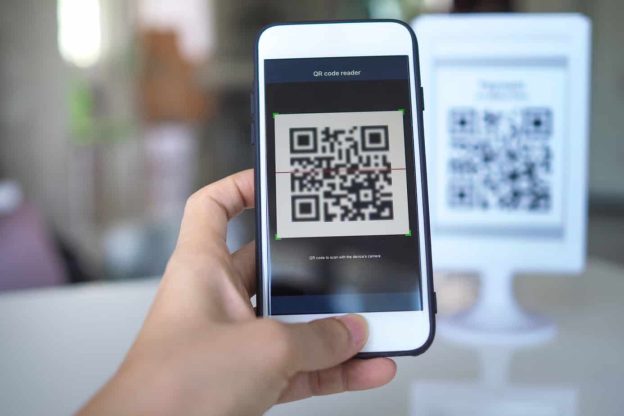
women hand uses a mobile phone application to scan qr codes in stores that accept digital payments without money and plastic 185122541

Emerging Trends In Retail, Payment Methods and Open Banking

Retailers are always looking for ways to make shopping more accessible and convenient for their customers. Part of this includes finding new ways to handle payments. Businesses want to be as open to their customers as possible. Helping them support whatever payment methods they wish to utilize is part of what makes everything work.

The trends surrounding the industry are among the most intriguing ones in the industry to watch. Retailers can make more money if they handle additional payment solutions, including some that are becoming increasingly common.

The Rise of Open Banking

Open banking is a practice where open APIs allow third-party developers to produce new applications around a financial system. Open banking helps people access their financial information from anywhere, helping them manage their funds and make payments.

Banking-as-a-service programs can allow people to access their funds from their bank accounts and to pay for items in moments. These apps let people pay for retail items in minutes.

Most of these banking-as-a-service systems will require firm data review standards. The work includes using secure connections and setups to prevent data from being lost.

These solutions would require two-factor authentication to protect data. Two-factor confirmation allows the user to confirm one’s identity and location. The user cannot log onto an account with a username and password, as a second factor will be necessary.

Open banking will work so long as the proper entities create unique platforms. More banks are starting up open banking platforms to help people connect with their funds. Retailers will also need to establish their own open banking accounts to help them accept funds. The flexibility of such setups and the general convenience will be necessary for ensuring everything works.

The Use of Mobile Wallets

Mobile wallets will likely become more prominent when managing payments. Retailers can accept mobile wallet transactions through NFC-ready devices or QR code readers.

Mobile wallets like Google Pay or Apple Pay can be convenient for many reasons:

  • Customers can link their debit cards or other banking information to a mobile wallet. Customers do not need to use their physical cards, nor do they need to visit an ATM to withdraw physical cash.
  • Mobile wallets allow data to move through in moments without outside parties. It works like a person-to-person platform to send funds in moments.
  • These wallets utilize QR codes to help transfer data. It is easier for mobile wallets to move data through QR codes, as the content remains encrypted and less likely to be lost or stolen.
  • Mobile wallets can also support cryptocurrencies and alternative forms of currency. Customers can send their cryptocurrencies to a retailer, who will collect the fiat currency equivalent of the crypto item. Some businesses might establish their own cryptocurrencies for use in their stores if this trend continues.

Most of the advantages work for customers, but retailers will find many things to love about mobile wallets:

  • Mobile wallets utilize tokenization to replace an account number with random characters. The system allows data to move through a network without revealing actual bank account details.
  • Retailers won’t spend money on added transaction fees. Since the transaction goes directly between the retailer and customer, there’s no need to move funds through a network. This point eliminates the interchange fees someone might spend when accepting credit card payments.
  • Retailers can also produce unique wallets for use in their business spaces. Such wallets provide a distinct branding space. Retailers can recommend certain things, or they can plan reward events that fit one’s needs.
  • There’s no need to wait for a card transaction to be approved. A mobile wallet deal will be approved right away if the customer has the necessary funds for the transaction.
  • People may be reminded to come to a retailer more often if that person uses a mobile wallet. The customer will find the wallet to be convenient, making that person want to shop at a certain space more often.

This payment method will be a boon for retailers and customers alike. More locations will likely start supporting this solution once they start noting everything that makes the work so advantageous and useful. It becomes easier for people to handle transactions when they have access to the right payment systems for their convenience.

Additional Biometrics

Biometrics will become a part of payment methods to watch. Biometrics is a physical review solution that makes it easier for people to confirm their details when shopping.

Biometrics can incorporate many solutions. These entail different physical parts and features, but they all produce the same result in reading data:

  • Iris scanning
  • Facial recognition
  • Fingerprints
  • Voice ID

A person would have to be physically present to manage any of these biometrics solutions, and the way they will work will vary by platform. A fingerprint scanner may work on a credit card, for example. The fingerprint must be read while the card is inside a reader for the card to work.

Biometrics may not be as prominent with some retailers, especially considering the cost to get some of these setups ready. But it may be a necessity for some places, like ones that sell high-value items. The security biometrics provides a positive solution for many uses, especially when managing the high-value or sensitive purchases that customers may make.

A Bright Future

The most significant part of these emerging trends in retail entails how various crimes may become easier to prevent. As the world becomes increasingly cashless, the risk of monetary fraud will also drop. Digital wallets and payments are also making people less reliant on traditional credit or debit cards, potentially reducing the risk of fraud.

Retailers will need to be aware of these trends and how they will change the market. The goal for these retailers should be to establish new ways of accepting and managing funds. Whether it entails accepting crypto tokens or supporting NFC or biometric-based transactions, retailers must note what they can do when collecting payments.
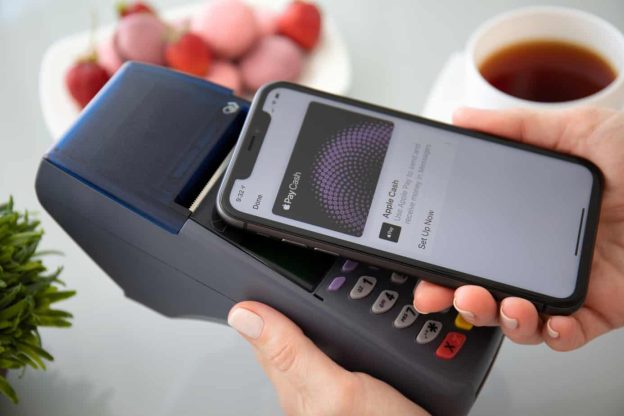
woman hand holding apple iphone 11 pay pass online terminal 162910035

Why Are Apple Pay, the Starbucks App, and Samsung Pay More Successful Than Other Mobile Wallets?

The odds are you’ve heard about many online wallet solutions. These systems let customers link their credit or debit cards to a wallet setup. The customer can then complete a transaction through one’s phone or another NFC-enabled device. It offers a convenient way to handle payments. It ensures people can complete transactions with physical cash or with a credit or debit card.

There are two mobile wallets that are more successful than the others. Apple Pay has become a staple in the mobile payment industry, while Samsung Pay has also been growing in prominence.

There’s also one unique app that is rising in prominence. The Starbucks coffee chain has a dedicated app people can use when purchasing items from various Starbucks locations.

eMarketer writes that there are about 25 million Apple Pay users and 12 million Samsung Pay users in the United States. These totals are based on how many people have completed at least one transaction with these wallets in the last six months. The Starbucks app has an even greater user base of about 28 million.

But what makes these three payment solutions more popular than other mobile wallets? Let’s take a look at what makes these so prominent.

Apple Pay

First, let’s look at Apple Pay, the most prominent of the online wallet programs around. Apple Pay was one of the first such wallets out of the gate, as it was introduced in 2014.

Apple Pay uses NFC technology to transfer payment data. A user can waive an Apple Pay account over an NFC reader to transmit funds. The system can work on many Apple devices, including the iPhone and Apple Watch.

Apple Pay offers many positives:

  • Customers don’t need online connections to use Apple Pay. All payment data stays in the cloud, ensuring the content can move forward as necessary.
  • Apple Pay uses a biometrics-based system where the user can touch a specific part of one’s phone or watch or another device that uses the setup. The two-part ID system ensures only the right person will initiate the transaction.
  • Most payment networks and banks support Apple Pay. The system ensures people can use the wallet in more places.

The immense popularity of the iPhone and other Apple devices will also ensure that Apple Pay will become more accessible in the future. As more people use the latest Apple devices, more retailers will accept Apple Pay payments.

Like with many other Apple features, this only works on Apple devices. But Apple’s products are still popular enough to make Apple Pay a highly sought-after solution for managing payments.

Samsung Pay

Samsung Pay has also been around for a while, as the system started in 2015. It is slightly different from Apple Pay in that while it stores payment data in a cloud, the tokens it produces will go from the cloud to the device when the purchase is made. An online connection will be necessary in this case.

What makes Samsung Pay useful is that it is easier to use it in more locations. Samsung Pay uses a Magnetic Secure Transmission or MST system to transfer data. It can work in more POS readers, including non-NFC magstripe readers. MST technology is easier to find on devices than NFC technology.

An MST system uses a few steps to work:

  1. The device will produce a magnetic signal like what you’d produce on a traditional magstripe card when you swipe it.
  2. The card reader will identify the signal. It will find the card number and other pieces of security data.
  3. The POS terminal will read the card data and process the transaction from there. You’ll get a note on your phone through a cloud network after the transaction is complete.

Samsung Pay doesn’t have as much of a reach as Apple Pay, although it is still a prominent choice of note. The Samsung S6 and S6 Edge phones will make the system more popular.

The Starbucks App

The idea of a single company’s app being highly popular among mobile wallets sounds surprising. But there aren’t many companies that are as widespread as Starbucks.

The Starbucks app lets people load money from a separate credit or debit card to the app. The customer can then use the app at any Starbucks location to pay for the coffee or whatever else someone orders at the location.

The app features a useful setup and is ideal for people who frequently visit Starbucks. But there are many other reasons why the Starbucks app is so popular. These points may help show other retailers why starting their apps might be a good idea:

  • The Starbucks app provides rewards to regular customers. People can earn points they can use for various free purchases, giving them an incentive to return for future purchases.
  • There’s more loyalty attached to the Starbucks app. Since it isn’t preloaded on the phone like the other wallets for specific devices, people can choose to download the app if they tend to do business at Starbucks more often.
  • The app gives Starbucks regular customer insights and data. The company can use this data to provide rewards and other features to its customers. Starbucks also keeps the data to itself, ensuring its security.
  • The app also supports various debit and credit cards. This feature may be thanks to Starbucks’ immense reach and power, but it does help the company take in more money and handle payments well.
  • Since the transactions come through physical devices, it is easier for Starbucks to manage these deals without risking chargebacks and other common concerns.

All three of these mobile wallets are very popular for different reasons, but they all have one thing in common. They make it easier for people to complete their transactions. It is no surprise that they are all prominent in today’s online world and continue to be useful to many people.

Apple’s Passbook to replace Gift cards

Today the Official Merchant Services Blog, along with the rest of the world, will take a look at the new iPhone 5 being debuted in California today.  Specifically, we will look at one of the new iOS 6 features called Passbook.

Passbook is a new app, exclusive to iOS 6, the feature lets users store and quickly retrieve electronic versions of tickets, boarding passes and merchant cards all in one place according to executives at the WWDC 2012 today.

The app aims to replace almost all paper tickets, coupons and plastic gift cards that might be taking up space in a user’s wallet.  Apple already has partnerships with a number of airlines, retailers and venues including Virgin Air, Delta, and Starwood Hotels.

In a demo, senior Vice President of iPhone software Scott Forstall showed how to use the app with a San Francisco Giants baseball ticket.  The feature will also work with Starbucks and Apple Store gift cards.  Adding to its already intriguing features, the app is dynamic, so users will be notified of any flight delays or gate changes. Users can also be alerted when near a movie theater that they have tickets to or rewards points that can be redeemed.

The app uses a special QR code that can be scanned by the participating retailer to redeem that ticket or coupon. Done with a particular card in Passbook? A virtual shredder “shreds” it on screen.

Is it a mobile wallet?

Well no, Apple hasn’t announced any kind of payment feature yet for the Passbook app, but don’t rule that out just yet.  With the migration towards digitizing all of this info, as well as the time and location based triggers that give you what you need, when you need it this app is the one to watch in the festival of new software coming out of Cupertino, CA.

Passbook will roll out along side iOS 6 on September 19th, and the iPhone 5 will be begin shipping September 21st. As usual, we here at Host Merchant Services will keep you updated with all of the breaking news in the mobile payments world.

Discover Teams Up with PayPal

Discover Teams Up with PayPal [2023 Update]

The Official Merchant Services Blog continues to shine its spotlight of educational information directly on the Mobile Payments Industry. This bristling business sector keeps creating buzz among payment processing persons as well as overall economic assortments. One minute people are predicting hundreds of billions of dollars in revenue will get generated by consumers embracing the cashless society model and conveniently swiping their phones to pay for every little thing that catches their eye. The next minute people are predicting U.S. consumers are too wary and cautious and not ready to expose their information to the cloud and the criminals trying to crack their way into that cloud.

This titanic tug-of-war between “the next big thing” that economic analysts desperately desire M-Payments to become and the “hold your horses hombre” caution that those same analysts caveat the slow acceptance in U.S. markets has been defining the media coverage of the Mobile Wallet Madness for more than a year. But the potential for prodigious profits has pushed the possibilities of mobile payment processing through the morass of misgivings.

Merchants United!

As we purposely pointed out to our peerless readers just mere days ago, the Merchant Customer Exchange was formed. This epic assemblage of retail industry giants teams Wal-Mart Stores Inc., Best Buy Co. and Target Corp, 7-Eleven  Inc., Alon Brands Inc., CVS Caremark Corp., Darden Restaurants Inc., Lowes Co., Sunoco Inc., Sears Holding Corp. and the Publix Supermarket chains into a mega-group of retail merchant might on a mobile wallet mission.

Coming on the heels of Visa’s saturation of the 2012 London Olympics with all things Mobile and all things Visa, the mighty mingling of the MCX merchants applied unforeseen amounts of pressure on the mobile payment marketplace.

Mobile Payment Paring: Discover and PayPal

On August 22 PayPal, owned by eBay, announced a deal with Discover Financial Services to bring PayPal access to the 7 million merchants in Discover’s network. This deal will begin in the second quarter of 2013 and the announcement was made a mere two weeks after Square partnered up with Starbucks to let customers pay with Square’s app at the 7,000 U.S. Starbucks locations.

Excelsior! Retail titans are teaming up with mobile gadgeteers in one mass scramble to make it to market before the U.S. consumer becomes firmly affixed on the easiest and most widespread brand — as is wont to happen with U.S. shopper market behavior.

The PayPal deal is a particular point of note because PayPal itself is pushing from the online marketplace back into the physical realm of brick and mortar. This may indeed help bridge the gap from e-commerce to old fashioned commerce, and that bifrost of payment processing could very well buttress mobile payment processing in a brave new world of cashles-sness and contactless transactions.

The super-powered pairing of Discover and PayPal drove stock prices for each company, with Discover gaining 3.9% and eBay gaining 2.5% on the market the day the announcement was made. This arrangement will greatly accelerate PayPal’s in-store payment efforts. By riding on Discover’s network, PayPal can get into more locations  and get there quickly. Best of all this movement doesn’t requiring any significant integration work by merchants. That potentially puts PayPal at a big advantage against rival mobile payment systems such as Google Wallet, Isis, and Square.

Discover is integrating PayPal’s payment system into its software, which will be uploaded to millions of point-of-sale terminals that support Discover Card payments. PayPal’s branding and rules will be presented to consumers who choose to pay in store with PayPal. PayPal currently has more than 50 million U.S. customers who will be able to take advantage of in-store payments.