Tag Archives: mobile wallet

electronic payments and secure transactions 199796283

Five Reasons to Accept Credit Card Payments through a Virtual Terminal

The economy has been on a roar, and consumers are confident and are happily opening up their purses to get out, spend, and plan vacations they’ve been delaying for some time. Today the U.S. economy is bigger than it was at the beginning of 2020, primarily driven by consumer spending. This is giving rise to more and more business starting up. In 2020, 4.4 million new companies were started, increasing 24% from the year prior. 

This is all welcome news for businesses looking to cater to such consumers ready to spend. However, challenges abound for businesses as the spending habits of consumers have significantly changed over the past two years. Cash is no longer king. People just don’t like to use cash as a means of transaction. In fact, three out of ten consumers don’t even use any cash in any given week. While there has been a strong surge of cashless transactions over the past year, not all businesses are prepared to thrive in this rapidly fluid environment. These businesses need to accept noncash modes of payment such as credit and debit cards and ACH/eCheck payments seamlessly and securely.

Point of Sale (POS) systems are aplenty, but not every business needs POS equipment as they may not be client-facing. Or they may not have the wherewithal to outlay cash for such devices just as they are starting to bootstrap their business. For many companies, the best solution is a virtual terminal. Below, we look at a virtual terminal, how it works, and why your business may need one.

What is a Virtual Terminal?

A virtual terminal is an internet-based payment processing application that lets merchants accept payments anytime, anywhere, on any device with an internet connection. Whether a business accepts payments via phone, mail, fax, email, or in person, merchants can use their existing devices such as a desktop PC, a laptop, or a mobile device such as a tablet or smartphone as their POS.

To make life easier, you can purchase a small card reader to plug into your laptop or smart device. However, it isn’t a necessity. All your business needs are internet access, a merchant account, a payment gateway, and a browser.

How does a Virtual Terminal work?

Virtual terminals are set up in coordination with your payment processor/ payment gateway. You start by simply logging into your merchant account or payment gateway and initiate the virtual terminal. From there, you would select the payment type, debit, credit, or ACH, and enter the sales details such as the amount to be processed and any other information pertinent to the transaction.

To enter the card data, you can key it in and any billing/security information required. If the business has a USB card reader plugged into the laptop or mobile device, the card data can easily be swiped. The transaction is then submitted, and within seconds, the merchant receives confirmation of the card either being approved or denied. With a virtual terminal, businesses have the option to email the receipt to the client and process any refunds or track the sales history of the company.

Keep in mind that if a business is not using a card reader to collect card data instead of keying it in, it is classified as a card not present transaction, even if the cardholder is right there in front of you. This results in higher processing rates, which can be mitigated by accepting ACH/eCheck payment and utilizing a card reader.

Why does your business need a Virtual Terminal?

Below are some reasons why your business may need a Virtual Terminal.

Save money on POS equipment – merchants don’t need to buy additional equipment to process payments via a virtual terminal. Businesses can use their laptop, tablet, or smartphone. With a virtual terminal, companies quickly eliminate a major headache of paying hefty upfront equipment costs and reading the fine print of equipment agreements to ensure they are not locked into a long-term non-cancelable contract for outdated POS.

Ease of use – A virtual terminal offers much peace of mind given all the friction it eliminates. A retail business that may have relied on a single POS device to be shared at peak times to get payments processed can now have each of its employees log into the virtual terminal account to process the payment. Businesses can easily track which employee processed which transaction; a level of accountability is not readily available with a single POS passed around.

Recurring Payments – businesses can easily set up recurring payments by scheduling a specific transaction on repeat. Once you process a payment for a particular service or product and enter all the card and billing details, it can be set as a recurring transaction.

Insight: The data stored on a virtual terminal lets business owners track their payment history and can help them plan for peak times in terms of inventory and staffing. Critical data about consumers, what they spent money on during a particular time of the year is also easy to track. This level of insight can help businesses build a loyalty program or run a very targeted marketing campaign.

Over the last few years, consumer spending habits have experienced seismic shifts driven by smartphone technology and a lesser inclination towards the hassle of carrying around currency and coinage. It’s much easier to swipe a phone to pay for something rather than pull out a wallet, hand over cash, and possibly hear that they don’t have change. If they do, count it and stow it all away.

Even as merchants come to terms with the new paradigm, they still loathe spending an excessive amount upfront for POS equipment. Alternatively, virtual terminals are an excellent option for businesses to accept all types of payment methods. Traditional laptops or smartphones can easily be used as the makeshift POS device to settle the transaction as long as you have a payment gateway and merchant account setup up.


Payment Processing Trends for 2021

Payment processing is constantly evolving, but the pandemic pushed things even further along. In 2021, chances are we will see even more changes (all good) to help merchants make payment processing an even smoother process than before.

Understanding the payment processing trends for 2021 and how they affect your business is the key to staying competitive in the new year as we continue to fight the pandemic and all that it has caused.

Cashless Payment Options

Today, consumers don’t want to use cash. They want contactless payment options, whether that means paying online before coming into the store or using their phone to pay in store. The key is that no cash exchanges hands and consumers don’t have to touch shared machines that other people have touched.

Increased Use of Biometrics

With an increase in online and mobile payments being made, biometrics are even more important. Fraud, hacking, and lost phones are common and serious risks when opting to utilize mobile payments. Biometrics provides another mechanism to prevent fraud by requiring a higher level of security, either your face or your finger.

Peer-to-Peer Payments

Splitting checks, buying group gifts, and covering the rent with a roommate is easier today with peer-to-peer payments. But consumers are so accustomed to making instant payments to their peers that they want the same capabilities with merchants. Not only does it allow for contactless payments, but it allows faster payments pushing consumers through the purchasing channels quicker.

Buy Now Pay Later Options

With the onset of the pandemic and many people suffering financial losses, buy now pay later opportunities are in high demand. Merchants who sell high-ticket items do themselves a favor by offering buy now pay later options on their website. This helps increase sales and even consumer loyalty when merchant helps them out by making products more affordable over time.

Mobile Wallets

Mobile wallets like Apple Pay were already in high demand, but 2021 will bring even more popularity for these payment options. Customers want contactless payment options and merchants who don’t offer it will be left in the dust. Offering payment options like Apple Pay, Google Wallet, and Android Pay are the way of the future, merchants who don’t offer it will be left behind for stores that do.

Take Advantage of 2021 Payment Processing Trends

The payment processing trends for 2021 promise a lot of things for merchants, including more sales. In a competitive world where consumers are trying to do their best to remain socially distant, be as contactless as possible, and afford the items they need/want, merchants have to step up.

If you want to be competitive, it’s time to think outside of the box. Cash and swiped credit cards aren’t the only way to accept payment. In fact, they are the old school ways to collect payments. Most consumers today want something much more sophisticated, contactless, and cutting edge.

Top 5 Mobile Wallet Trends to Watch

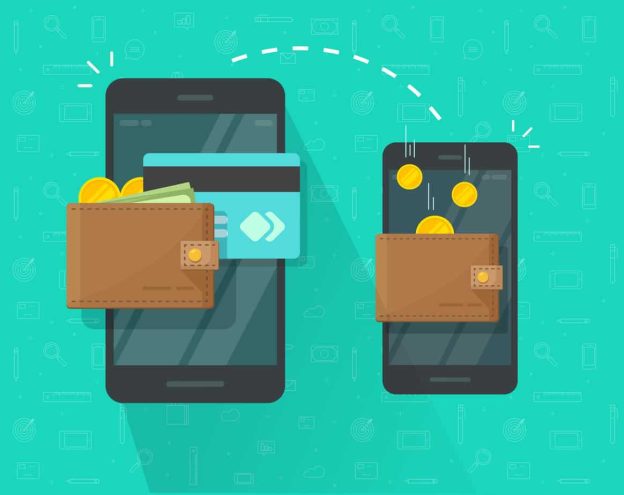
There are many recent advancements in merchant services and credit card processing, but one in particular that is gaining significant interest is mobile wallets. Once considered only a niche service, mobile wallets have greatly expanded and are now widely used by consumers. In fact, 24% of consumers use mobile wallets for their transactions daily. Mobile wallet transactions exceeded $4.250 billion in 2018 and are expected to reach $13.979 billion by 2022. Innovations and improvements will only continue with advancements expected in security and ease of convenience. Below are the top five mobile wallet trends that merchants, credit card processors and consumers should keep an eye on.

Mobile Banking

The first mobile wallet was created by Apple with their Apple Pay mobile wallet. Other companies came up with their own mobile wallets, like Google Pay and Samsung Pay built by competitors. Banks and other financial institutions are adjusting to cashless transactions and are creating their own digital wallets with notable names like Zelle and Venmo in the industry.

NFC Mobile Wallet Payment

Biometrics

Biometrics have been available for many decades, but were mostly included in high security access systems. The component costs of this technology have dropped significantly making it easier for product manufacturers to include biometrics in smartphones. Fingerprint scanners and facial mapping are now available features in many of today’s phones. This technology helps provide additional layers of security to facilitate mobile wallets and seamless transactions.

Payment Terminals

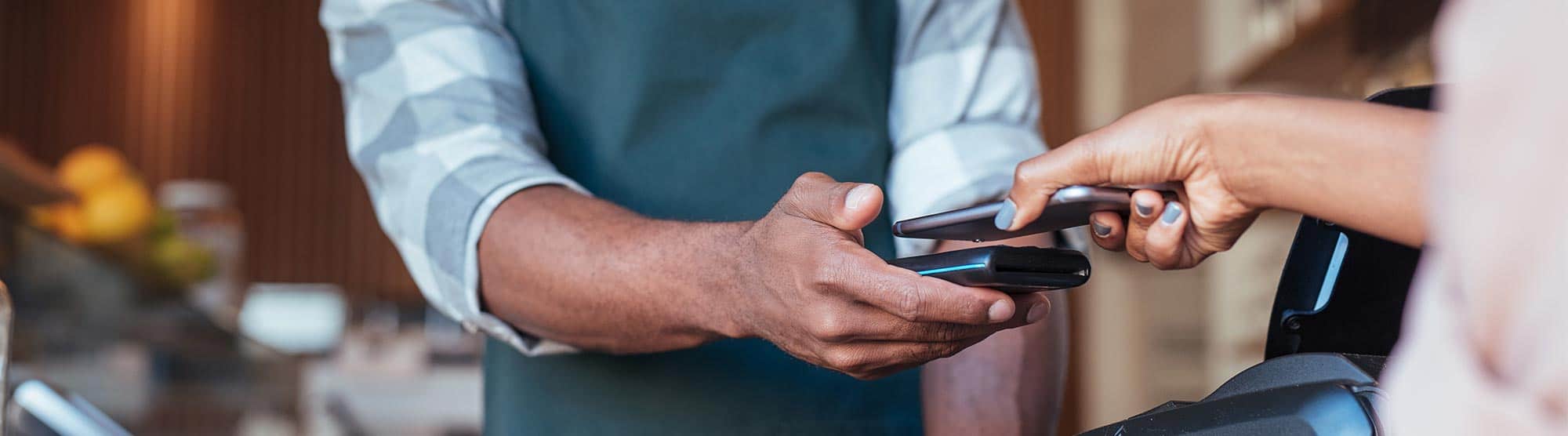
NFC, or Near Field Communication allows two devices, one a POS system and a smartphone to communicate. Upon checkout, a customer will hold their phone near the terminal and the NFC chip will facilitate the transaction without revealing any card numbers. This technology has enabled greater acceptance of mobile wallets and cashless transactions.

NFC (near field communication)

Artificial Intelligence

While Artificial Intelligence (AI) has had little impact in mobile wallets thus far, the promise of automating and enhancing customer experience is sure to become mainstream. AI can be used for chatbots to help facilitate transactions and to interpret users’ voice commands like with Siri or Alexa. Mobile wallet providers will take advantage of AI to interact with customers in a smarter way and reduce the need for additional staff at businesses.

Blockchain and Cryptocurrency

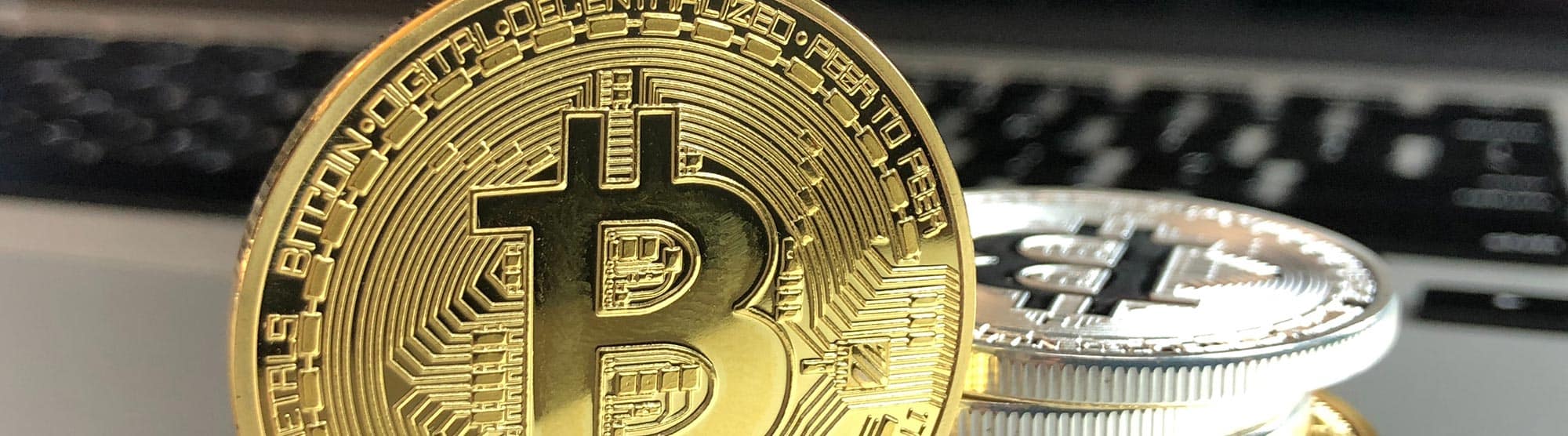
Blockchain technology is used to let people share valuable data in a secure way that can’t be tampered with. While blockchain is the foundation of cryptocurrency, it can also be used separately to facilitate more secure transactions. Broader acceptance of blockchain will drive the enhanced security that leaves many consumers wary of using mobile payments to begin with. Numerous mobile apps already support cryptocurrencies such as Bitcoin and their inclusion into mobile wallets is nearly inevitable.

Blockchain Bitcoin Global Cryptocurrency

Loyalty Programs

Customers always appreciate loyalty programs and business love them for customer retention. Mobile wallets will continue to incentivize consumers for frequent purchases at their favorite restaurants, coffee shops and other retail stores. Look for this trend to definitely continue with broader acceptance of mobile wallets.

These are the top mobile wallet trends to expect over the next few years. Consumers will continue to become more technologically savvy and demand that business take mobile wallet payments.

Customer Loyalty Program

Isis Mobile Wallet is Here

Isis Mobile Wallet Debuts Using NFC Technology

A joint venture between AT&T, Verizon Wireless and T-Mobile known as Isis Mobile Wallet has released a revolutionary mobile payments app that promises to change the way people pay for goods and services. The trio of mobile service providers are ecstatic to finally debut this mobile payment platform right before Black Friday and the rush of the holiday shopping season, as this technology lets consumers conveniently utilize their mobile phone to pay for goods and services. Use of the platform makes it easier for merchants to accept a wider variety of payments and the Isis system itself encourages repeat purchases through loyalty programs tied into the app and its software.

The debut of Isis also heralds a huge step forward for Near Field Communication technology (NFC), a topic we’ve been consistently covering since our Official Merchant Services Blog began.

What Is the Mobile Wallet Platform?

The Isis Mobile Wallet platform is a completely free mobile application that utilizes NFC technology to allow consumers to pay for purchases by waving their mobile device in the air at a terminal that captures the pertinent information out of thin air.  The mobile payment industry has been dealing with one large obstacle from NFC recently, as Apple hasn’t made its iPhones compatible with NFC. And so an Isis representative said that iPhone support would come at a later time. Until then, the app is available on all other compatible phones, but users should be aware that downloading the app could cost money if they are not subscribed to a monthly plan with unlimited data.


How the Platform Works

The NFC technology used in the mobile payments app allows mobile devices to transfer information when they are tapped together.  Merchants who use devices with this technology can accept payments quickly and securely from customers who have compatible devices. But wait, there’s more.

Mobile payments represent just one of the benefits of the Isis app.  Merchants can offer loyalty rewards to customers through the app.  These rewards can be earned and stored directly on a mobile device. We’ve delved into some of these types of incentives in our coverage of the Barclays bPay app, as well as social gifting articles. The basic idea of what’s happening is the app is giving customers yet another avenue for savings through their mobile device, in hopes to spur more purchases. Discounts are automatically deducted from a sale when Isis is used to pay for a product or service.  There’s no need for merchants to have cards or keychains printed, and customers do not have to worry about keeping track of dozens of loyalty cards.

Some specific incentives that are tied with the Isis debut: Isis Mobile Wallet customers can use My Coke Rewards and Isis to get three free drinks at select vending machines, while Jamba Juice is giving away 1 million free smoothies to Isis users. Purchases made from an American Express Serve account through the Isis wallet are eligible for a 20 percent discount (up to $200).

A PIN is used to protect personal information if a phone is lost or stolen.  The wallet can be locked when a phone is lost to prevent information from being breached.

Phone Compatibility With NFC Technology

NFC technology requires a cellphone user to have personal payment information stored on their phone.  The sensitive nature of this information means that extra precautions must be taken.  An enhanced SIM card that specifically details that it has been made for secure data storage must be used in conjunction with the application. Interested customers will have to get an enhanced SIM card to run Isis. They will also have to download the app on Google Play or get signed up at retail stores run by the three carriers.

mobile wallet

$500 million Processed Through Mobile Wallets in [2023 Update]

U.S. consumers spent over $500 million through mobile wallets on their smartphones last year. While this is miniscule as compared to the overall merchant services industry, where trillions of dollars that are spent annually through plastic credit and debit cards, it does signal a growing trend in the industry. Mobile wallet apps have experienced slow adoption rates in the U.S. but are projected to grow. According to Berg Insight, the industry could reach $35 billion annually by 2017.

While this figure still is just a fraction of the overall payment processing industry, it is a technology that as consumers adopt they will start to expect the infrastructure in any store they wish to spend money in. This presents a problem for small-businesses. For one, the physical machines can be expensive and require complicated installation. Some systems might not integrate into existing POS terminals at all. In addition to the implementation hurdles, policies must be formed to train staff on the procedures of actually taking a payment.

A short time ago, HMS announced a partnership with Barclays US to get the word out about the bPay mobile wallet initiative. bPay is a mobile wallet that has been initially rolled out in the Wilmington and Newark areas of Delaware. In the initial rollout, Host and bPay are looking for small and medium-sized businesses that are interested in being setup to take payments via the customer’s smartphone and a QR code that is presented on the POS system. In addition to the time savings offered, the platform also supports mobile marketing features such as SMS text and in app advertising.

Some merchants wonder why they should implement a solution like this if taking plastic cards isn’t broken. The answer is that in reality, the consumer is king. And because of stores like Starbucks, which has a mobile wallet integrated into their mobile app, paying with your smartphone is creeping into mainstream culture. As the industry continues to grow consumers will want to buy more than just coffee on their iPhone. Forward thinking merchants that want to stay ahead of the curve should look to implement a solution now as to not fall behind.

Businesses that are interested in learning more about getting setup to accept bPay transactions should give our payment experts a call at 877-517-4678 today!

bPay Gaining Momentum in Newark, Wilmington

In the last update regarding the bPay mobile wallet initiative we covered the fact that Host Merchant Services is now partnered with Barclays to grow the adoption of this very innovative and versatile form of payment.

To recap…

bPay is a two pronged application that benefits both businesses and consumers. Merchants can market to consumers with compelling offers directly through the application and SMS marketing. They also have the added value to accept credit cards through a mobile wallet and contactless payment terminal.

Consumers get the convenience of a secure mobile wallet and weekly deals from local businesses. These exclusive offers are just that, exclusive. They are only offered through the bPay app and can only be redeemed by paying with the app as well. They also have the ability to load all of their credit cards into their wallet so that they have the flexibility to pay with many different accounts and not just locked into one.

Now what?

With the previous successes in Wilmington near downtown and Lower Market Street and a strong presence on Main Street and near the UD campus in Newark, Barclays is looking for the next area that is poised to grow and adopt the bPay system to engage and benefit both businesses and consumers alike. One area that both HMS and the team at Barclays believe would benefit the most is the Trolley Square neighborhood. Trolley has a dense concentration of businesses that fit the bPay mobile wallet profile.

Businesses and customers both benefit from the increased speed of bPay transactions. For the business, there is no need for the cashier to swipe a card, verify ID, print out a receipt and get a signature. Multiply this over the course of hundreds of transactions a day and the time savings is huge.

For the customer, the time savings is minimal but the focus is more around convenience. The ability to choose which card he would like to pay with by just a few taps on his smartphone and then quickly scanning the barcode. This eliminates the need to dig in his pocket to fish out his George Castanza wallet and then try and find which card to use.

The bottom line here is that mobile payments and more specifically mobile wallets like bPay clearly have added value for both consumers and business owners alike. The technology and adoption is no longer the fledgling product of just a few years ago and moving forward is only going to grow. That makes right now an ideal time for businesses and consumers to adopt the system.

For businesses in the Wilmington and Newark, DE area that are interested in getting more information please email us at admin@hostmerchantservices.com.

Industry Terms: QR Codes

This is the latest installment in The Official Merchant Services Blog’s Knowledge Base effort. We want to make the payment processing industry’s terms and buzzwords clear. We want to remove any and all confusion merchants might have about how the industry works. Host Merchant Services promises: we deliver personal service and clarity. So we’re going to take some time to explain how everything works. This ongoing series is where we define industry related terms and slowly build up a knowledge base and as we get more and more of these completed, we’ll collect them in our resource archive for quick and easy access.

Today I will define the term Quick Response Code, or QR Code. These codes are two dimensional barcodes, sometimes called print based hypertext links, that are designed to be decoded at a high speed. QR codes are increasingly used to identify the URL of a company’s web site so that mobile phone users can photograph the code and retrieve information about the organization. Some companies have even created billboard-sized QR codes for this purpose.

The versatility of the codes doesn’t stop there, a QR Code can also contain a phone number, an SMS message, a link to a photo, contact information or just plain alphanumeric text, and the scanning device will respond by opening up the correct application to handle the encoded data appropriately. With the technology of mobile phones constantly expanding, especially within mobile internet, QR Codes seem like the perfect solution to quickly and efficiently bring mobile phone users onto the mobile web.


QR Codes can also be used to facilitate mobile payments. Recently, Barclays Bank launched a mobile commerce QR code campaign right here in Delaware, called BarclayCard Mobile Wallet.  The program works in conjunction with a merchant’s credit card terminal,  a customer’s smartphone and the corresponding BarclayCard app.  When paying for something, the merchant prints out a special kind of QR code and hands it to the customer, who uses the BarclayCard mobile wallet application to scan the code and authorize the payment.  We went over this program in detail here a few weeks ago, when our own Steve Myers was the first to use the app at National 5&10.  Advancements in technology will lead to expansion and advancement in the uses of these codes, including new games or more advanced methods of mobile payment.

Apple’s Passbook to replace Gift cards

Today the Official Merchant Services Blog, along with the rest of the world, will take a look at the new iPhone 5 being debuted in California today.  Specifically, we will look at one of the new iOS 6 features called Passbook.

Passbook is a new app, exclusive to iOS 6, the feature lets users store and quickly retrieve electronic versions of tickets, boarding passes and merchant cards all in one place according to executives at the WWDC 2012 today.

The app aims to replace almost all paper tickets, coupons and plastic gift cards that might be taking up space in a user’s wallet.  Apple already has partnerships with a number of airlines, retailers and venues including Virgin Air, Delta, and Starwood Hotels.

In a demo, senior Vice President of iPhone software Scott Forstall showed how to use the app with a San Francisco Giants baseball ticket.  The feature will also work with Starbucks and Apple Store gift cards.  Adding to its already intriguing features, the app is dynamic, so users will be notified of any flight delays or gate changes. Users can also be alerted when near a movie theater that they have tickets to or rewards points that can be redeemed.

The app uses a special QR code that can be scanned by the participating retailer to redeem that ticket or coupon. Done with a particular card in Passbook? A virtual shredder “shreds” it on screen.

Is it a mobile wallet?

Well no, Apple hasn’t announced any kind of payment feature yet for the Passbook app, but don’t rule that out just yet.  With the migration towards digitizing all of this info, as well as the time and location based triggers that give you what you need, when you need it this app is the one to watch in the festival of new software coming out of Cupertino, CA.

Passbook will roll out along side iOS 6 on September 19th, and the iPhone 5 will be begin shipping September 21st. As usual, we here at Host Merchant Services will keep you updated with all of the breaking news in the mobile payments world.

Visa’s V.me, a new breed of mobile wallet

The Official Merchant Services Blog again looks into the mobile wallet world today, by introducing the new product from Visa, Inc. called V.me.  Last week we discussed in detail the BarclayCard mobile wallet system, which has come here to Delaware at participating locations in Newark and Wilmington.

Visa plans to roll out its own version of a mobile wallet solution by the end of this year.  Although the Card Issuer is the largest in the world, the entrance seems late in a game filled with tough competitors.  Visa has been testing a beta of the program with five large online retailers.  Buy.com, Bidz.com, Cooking.com, Modnique and PacSun are the retailers currently offering the e-commerce side of the service on their web sites.  Customers have the option when checking out to sign up for the program, set up the account and add a card, all without leaving that merchant’s site. Buy.com went live with V.me first in May; the others followed suit a few months after.

The program will eventually allow mobile device users to pay for goods from participating merchants at physical locations, most likely by the end of 2012.  V.me uses a ‘hybrid’ security system of the device’s secure element, as well as cloud servers to store customers’ card credentials.  This technique is reportedly more secure than the Isis system of storing card information directly on a device’s SIM card.  In August, Google decided to upgrade to a cloud based system of storing card data, however they kept reliance on the phone-based element to house a prepaid virtual card that initiates transactions and identifies users.

Visa will also include a location-based offers service with V.me, that will likely use geo-tagging to identify customers most visited locations, and market offers accordingly.  Competitor Google Wallet, while nearly a year old, has struggled due to the reliance on NFC-based technology that is not wide spread enough yet.  Other companies such as Apple Inc., and MasterCard have also announced their entrance into the mobile payment game.  Apple, with its Passbook wallet feature expected in the new iOS 6 will feature QR code reading technology.  MasterCard announced a mobile wallet program in May, called PayPass wallet service that claims to be open to third parties for development and flexible to a wide variety of payment brands.

In summary, Visa’s V.me is one of the mobile wallets that I’ll be eagerly waiting for, however it seems a long way off from implementation now. For Delawareans, Barclays’ Barclay Card Mobile Wallet app seems to be the only one to hit the ground running here in the First State. A watchful eye will be kept on this close race of Banks, Card Issuers and Credit Card Processors to see who will be the one to win Mobile Wallet Dominance.

What Brand is Your Wallet? [2023 Update]

Today The Official Merchant Services Blog keeps examining the rapidly growing payment processing sector of Mobile Payments. With an never ending stream of deals being made by startups and established companies developing the latest gimmicks and technology to bring mobile payments and mobile wallets to the average everyday U.S. consumer driving the marketplace, it’s easy to get lost in a sea of mobile payment processing media hype.

In our blog yesterday we were able to see how some of that disconnect works. Visa pushed mobile payment technology aggressively at the London games. Their plans were almost scuttled by a malfunction with the processing terminals during a men’s soccer match between Great Britain and United Arab Emirates. The crowd was cranky as they were unable to pay for concessions using a mobile phone or a credit card. They had to resort to cash, and many patrons were unprepared for the anachronism.

This wrinkle in Visa’s mobile plans underscores how fragile mobile payment technology still is; and it also highlights how close we’ve come to a cashless society — the kind of society where mobile payments promise to be a thriving and convenient way to pay for goods and services.

The Knock on Mobile Wallets

The continued skepticism U.S. consumers have with mobile payments can be found summarized well in this L.A. Times article by David Lazarus. The main theme is something we’ve covered extensively in the past year: Mobile Payments are the future, but people are worried that the payment processing is not secure. It seems that for almost every story published about how mobile wallets are going to revolutionize e-commerce and make billions and billions of dollars in profit, there’s a story like this one that says consumers are worried about security, fraud and identity theft.

These are valid concerns. Much like regular old online shopping — which has become ingratiated into the average U.S. consumer’s shopping habits — the threat of tech savvy criminals stealing pertinent payment information is an ongoing issue. Everything from phising scams to data breaches affect e-commerce. But none of it has stopped the juggernaut from steam rolling consumer buying habits. Everyone shops online because of the ease and convenience. This is powered by how easy it is for people to be online, click some buttons and buy something. The power of convenience trumps security concerns.

This will happen for mobile wallets as well. Once the technology gets out in front of people they will flock to it because it is easy to use and available where they shop.

Convenience is the Key

So what I believe is the current obstacle holding Mobile Payments back from making a huge splash with U.S. consumers is the fractured marketplace. They’re not readily available at the store when you go there. There’s too many variations on the theme. And too many different companies trying to inject a new technological advance into the sector before it gets traction with consumers. We covered the top types of Mobile Payment technologies recently, and even keeping our analysis to just a few contenders we’re stuck noticing a competition between Near Field Communication driven “Swipe Phone” technology and QR-Code driven “Scan” technology.

iPhone 4S Drives Mobile Commerce

Recent reports by Monetate show it gets even simpler than that — Smartphones themselves. Gone will be the advertising slogan of Captial One, “What’s in your wallet?” that questions what plastic card you use. Instead it will be “What brand is your wallet?” Or rather, which smartphone are you using to pay for things with — iPhone or Android?

According to the data from Monetate, the answer used to be in doubt as late as Q4 2011; and is now a resounding iPhone by Q2 2012. Monetate released its E-Commerce Quarterly Report for the second quarter of 2012, and the figures showed some dramatic changes in smartphone usage driving e-commerce traffic.

According to the report, “Leading e-commerce websites receive 3.31% of their total visits from smartphones running Android, up from 1.76% last year and an increase of 85% in total shopping sessions. These same websites receive 5.41% of their traffic from iPhones compared to 2.45% a year earlier, an increase of 117% in total shopping sessions over the same time period.”

The data showed that in Q4 of 2011 websites received 1.99% of their total visits from Androids and just 2.25% of their visits from iPhones, suggesting the two competing smartphone systems were about dead even. The iPhone 4S was released that quarter however, and iPhones spiked way ahead of the Android.

Despite that spike in iPhone usage, the report indicated that shoppers on Android-powered smartphones converted better than iPhone users — Android converting at a 1.26% clip and iPhone at a 1.00% clip.

What Does This All Mean?

Well even with iPhone getting a bigger spike than Android, both phones grew their e-commerce usage in 2012. That means the goal of realizing those heady revenue predictions from companies like Juniper and Gartner Research are on course. The security concerns may make good copy for the media, but the real obstacle remains saturation in the actual physical marketplace. Give people more opportunities to pay with their phones and they will readily begin to pay with their phone. It will start off as some new gimmick people want to try. And then it will become second nature.