Tag Archives: mobile payments

target wallet

Target Pay Coming Soon

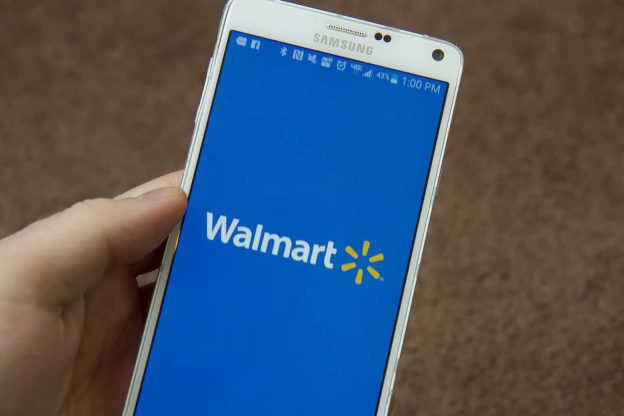
Apple, Android, and Google have their own pay services, where people can make payments directly from their devices. Recently, Wal-Mart joined the bandwagon when it released Walmart Pay. Target is now joining the game, planning to release its own payment service, Target Pay, later this year. Although Target has not decided if the service will be part of the Cartwheel Coupon App, the main Target app, or perhaps a feature of both apps, mobile payments are definitely coming to Target.

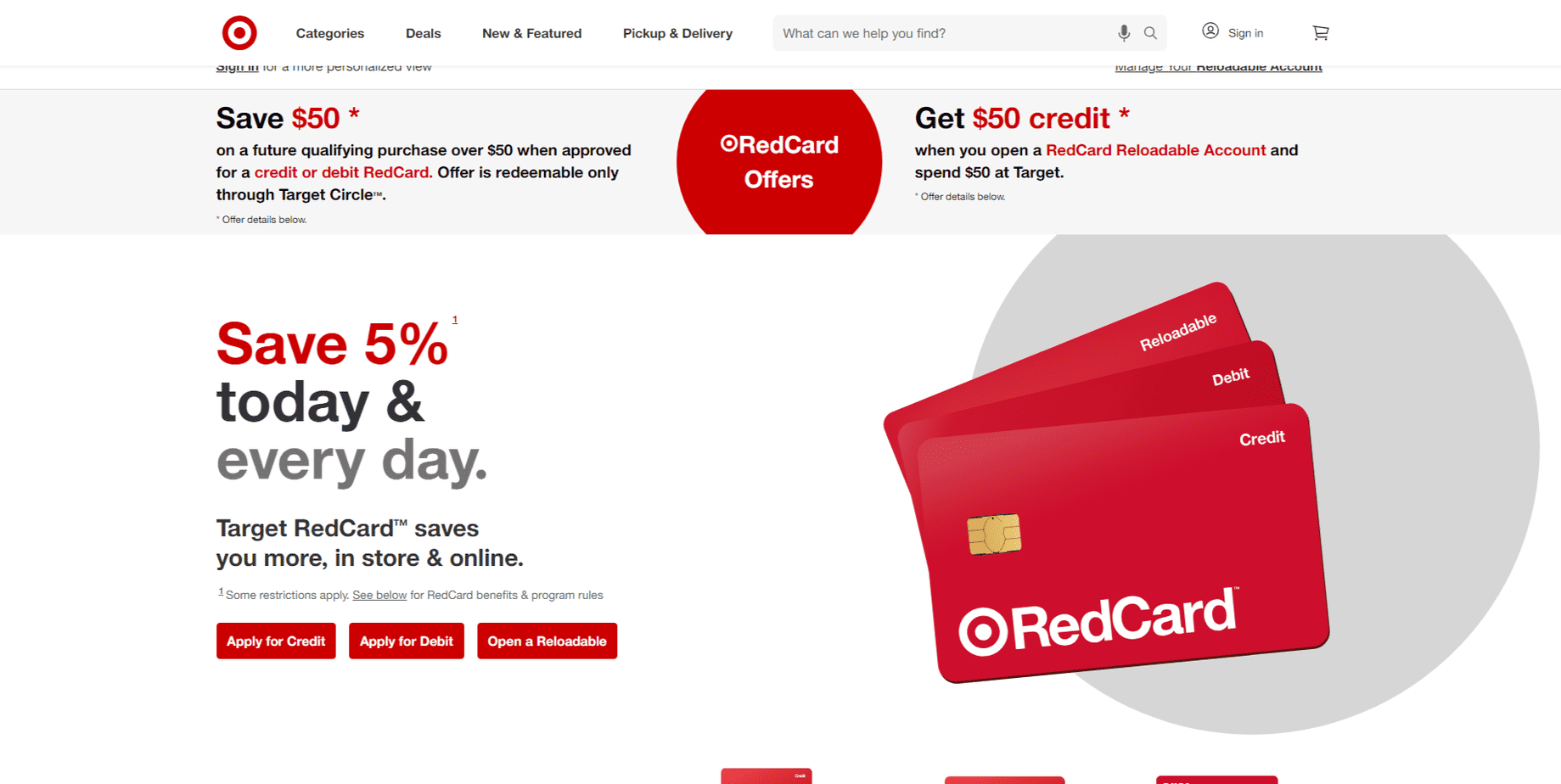
This means that customers can leave their credit cards at home. If the feature is anything like Walmart Pay, Target customers will scan a QR code with their phone to initiate payment processing. Target Pay will only be available to REDcard customers. At least, at first. This differs from retailers like Walmart and Kohl’s, which offered an option for mobile payments to all of their customers from the start. Target does say that it will allow customers to use and earn rewards as well as process payments. This is very similar to what their retail competitors are already doing.

The announcement comes after Target saw a drop in its in-store sales and a rise in its online sales over the holiday season. Overall sales have been flat year after year, which was also hurt further by sales in electronics and entertainment, which have declined. However, online transactions have increased by 30%. It is hoped that by extending a mobile payment option, Target can increase its sales. Significant growth in both numbers could easily put Target at an all-time high.

While options like Apple Pay will continue to be allowed online, users will find that they cannot use those payment services in-store. The only in-store mobile payment service that Target will accept will be its own. However, users will be able to use Target Pay online. For Target, mobile payments could mean new opportunities, and it remains to be seen how their service will stack up against their competitors.

Recent Updates – Target Pay And Target Wallet

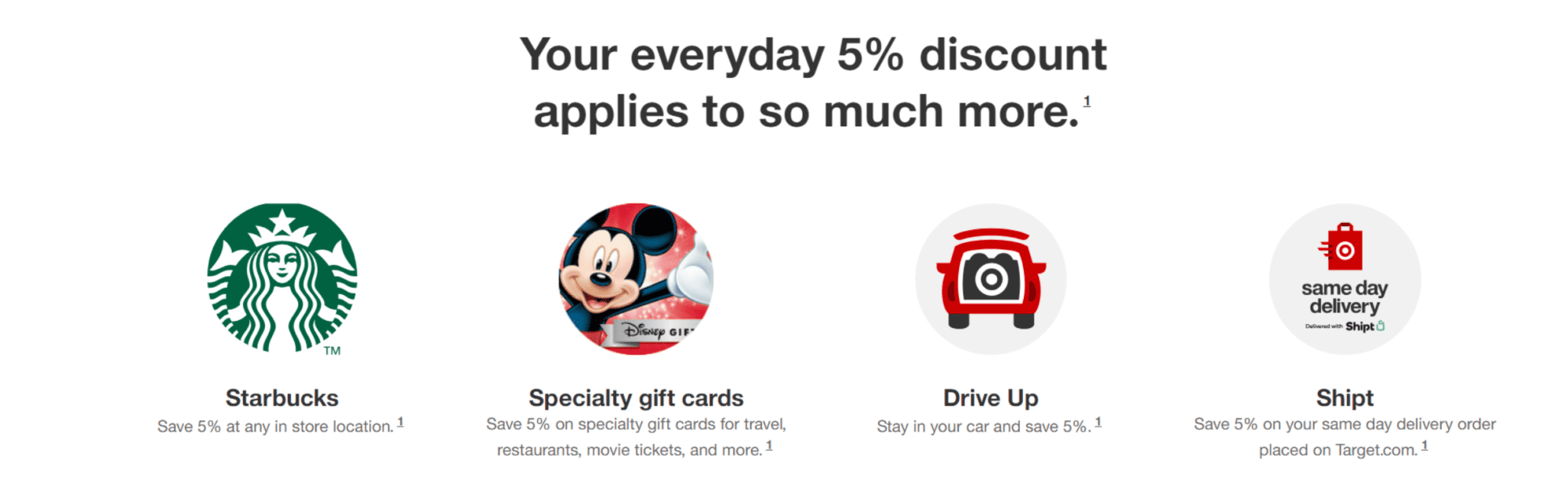
In a recent update shared on their company blog, Target announced the integration of a Wallet feature in their app, revolutionizing the checkout process for shoppers. With Wallet, customer can easily pay with their Target REDcard and access savings through Cartwheel with just one scan of their smartphones at checkout. The initiative aims to expedite the payment process while consolidating digital discounts, Cartwheel offers, weekly ad coupons, and the 5 percent discount for REDcard holders into a single, convenient location. Target also revealed plans to enhance Wallet’s functionality by enabling the storage and use of Target gift cards.
Mike McNamara, Target’s Chief Information and Digital Officer, emphasized that Wallet in the Target app is designed to streamline the checkout experience significantly. He highlighted the added convenience for customers of having a unified platform for handling payments, discounts, coupons, and gift cards.

This development is part of Target’s broader strategy to amplify its presence in the eCommerce arena, a move that could potentially escalate its market value by 20 to 30 percent in the next two years, as per analyses by Barron’s magazine. Target’s proactive strategies to outperform Amazon have led to a noticeable increase in online sales, with eCommerce accounting for 4.4 percent of their total sales in the most recent fiscal year—a jump from 2.8 percent in fiscal 2016, outpacing growth at Walmart.
Target pay

Furthermore, Target’s launch of exclusive in-house brands, like the children’s apparel line Cat & Jack, contributes to its upward trajectory. The retailer plans to introduce 12 unique brands by the end of 2018, with eight slated for release during the 2017 holiday season, spanning various categories from baby and children’s items to men’s and women’s apparel and home goods.

Benefits of Using Target Wallet

Target’s Wallet revolutionizes the checkout experience, offering shoppers benefits for smoother, safer transactions. This mobile payment option streamlines purchases by allowing a single barcode scan from your phone, directly integrating discounts and loyalty rewards into the payment process. With advanced security measures, including encryption and biometric authentication, Wallet ensures your payment details are safe. Additionally, its support for contactless payments and real-time updates enhances convenience and customer peace of mind.

How to Set Up and Use Target Wallet

Setting up and using Target’s Wallet for seamless payments is simple and quick. Follow these steps to get started easily:

1. Download the Target app: If you don’t already have it, download the Target app on your mobile device. It is available for both iOS and Android versions.

2. Create or sign in to your Target account: To use Wallet, you’ll need a Target account. If you don’t have one, create a new account by providing the required details. If you already have an account, sign in.

3. Navigate to the Wallet feature: Once you’re signed in, locate the Wallet feature within the Target app. It is usually found in the main menu or navigation bar.

4. Add your payment methods: In the Wallet section, you can add various payment methods, such as credit cards, debit cards, and even Target gift cards. Enter the necessary information for each payment method you wish to use.

5. Set a preferred payment method: If multiple payment methods are added, you can choose one. This will be automatically selected when making a purchase using “Wallet.”

6. Verify your identity: Target may require you to verify your identity for security purposes. You can do this by providing additional information or following a verification process.

7. Start using Wallet for payments: Once you’ve completed the setup process, you can start using Wallet to make payments in-store. At the checkout, open the Target app, navigate to the Wallet feature, and scan the barcode presented by the cashier.

Security Features of Target Wallet

With Target’s Wallet, you can enjoy the convenience of making contactless payments using your mobile device. It’s a secure and hassle-free way to complete your shopping transactions at Target.

Target prioritizes your security with Wallet by incorporating encryption, tokenization, biometric and multi-factor authentication, and continuous fraud monitoring. These robust security features safeguard your information, providing a trustworthy and stress-free shopping experience.

Compared to other mobile payment options like Apple Pay, Walmart Pay, CVS Pay, and Kohl’s Pay, Target’s Wallet stands out for its accessibility across all Target stores, comprehensive security features, and seamless integration of loyalty and discount programs. Unlike these competitors, Wallet is designed to enhance Target’s shopping experience, making it a uniquely convenient choice for Target customers.

Older Millennials Are More Likely to Use Mobile Payments

Mobile payments are still a new development for most consumers. They are clearly marked on most retail payment terminals, and most banking apps offer the ability to make transfers and deposits with just a few taps. However, most people still slide their card, reluctantly slip it into the chip reader or hop on a computer to move money around. Why are customers so slow to use a technology that seems so easy and convenient? Deloitte’s 2016 Mobile Consumer Survey offers some interesting statistics about mobile payments, and it seems to suggest age plays a roll along with lifestyle.

A poll of 2,000 internet users between the ages of 18 and 75 in the United States participated, and the group most likely to take advantage of using a mobile phone for payment is the older end of the millennials spectrum. This group, ages 24 to 35, said they made purchases this way at least once a week. Older millennials are twice as likely to use mobile payments as their 18 to 23-year-old counterparts, and three times more inclined than the generation just before them. Though it should be noted that this older group, ages 35 to 44, is a growing market and actually saw a 6% increase in utilization. It is also interesting to note that there was a significant 3% drop in usage among younger millennials.

Overall, the survey shows that mobile phone payments are used to transfer money or make payments in coffee shops and fast food establishments approximately 40% of the time and to a much lesser degree at restaurants, clothing stores, and grocery stores.

Millennials are a huge segment of the buying public, and they have the ability to move the smartphone purchasing option forward, so it may become the new normal in the near future.

Samsung Pay Rewards

In a world where digital media and the use of mobile apps are taking over, the new Samsung Pay Rewards system is seemingly one that is built for long term success. Not only will customers be able to use the service to track their mobile payments, but use of the app also allows for current subscribers to benefit directly from simply using the system as a form of payment in their everyday purchases. This is because the new rewards program offers tiers of reward benefits based on the sheer number of transactions logged by the app.

These Samsung Rewards points are not only able to be redeemed through a simple cashback transaction, but can also be used in the acquisition of gift cards, memberships, and other forms of merchandise. This adds a whole other dimension to the relevancy of the rewards program on a global scale, as customers are now able to use their accumulated points on a variety of different potential reward benefits. While rivaling credit card rewards services which are now beginning to expand their available redemption options, the service will surely look to benefit individuals who enjoy choices.

Despite the introductory success of the Samsung Pay program, a statute of limitations is currently in effect due to the limited number of cell phones and service companies which provide the app as a platform. Without a current cellphone subscription to one of the four more high-end Samsung Galaxy phones, the mobile app is not compatible. Ultimately, as Samsung Pay continues to revolutionize mobile payment services as well as provide a credible rewards network, the company will look to expand the platform for its app in the hopes of maximizing its potential consumer pool.

“Selfie Pay” is the New Way to Make Purchases

Did you ever think you would be able to pay a bill with a selfie? Facial recognition is being rolled out as a way to authorize online transactions in markets in Europe as you read this. MasterCard’s “Identity Check Mobile,” also known as Selfie Pay, is being launched in Austria, Belgium, the Czech Republic, Denmark, Finland, Germany, Hungary, the Netherlands, Norway, Spain, Sweden and the UK. In these markets, MasterCard customers (who wish to) can download an app and authorize online payments by snapping a selfie or scanning their fingerprint with their smartphone. This is following a trial introduction of a similar program using biometric technology in the U.S., Canada, and the Netherlands. According to MasterCard, the app will be accessible throughout the rest of the world at a later date in 2017.

The facial recognition authorization app was designed to enhance security and speed up transactions that don’t occur in face-to-face situations. With Selfie Pay, e-commerce is going to benefit, since customers won’t have to remember a password every time they make a purchase. Instead of memorizing a long password requiring a capital letter, a special character, and at least one number, the app works by memorizing your face with a digital ‘map’. After the Identity Check Mobile app is downloaded, users are asked to take a photo of their face. That picture is used as a point of reference for the user from then on. In the event that someone tries to bypass the system by holding up a picture of the person, for example, Identity Check Mobile sends a prompt for the user to blink.

So what kind of encryption is in place to protect the sensitive user data? A MasterCard spokeswoman said, “As an industry, we are moving toward storing biometrics in all instances at the device level. Fingerprints are stored at the device level, and we are currently prototyping facial recognition to be converted and stored as encrypted code on some devices.”

FitPay: A Truly Wearable Payment Option

In the fragmented world of mobile payments, one company is taking advantage of unifying existing technologies for the benefit of shoppers.

FitPay is a California company that was envisioned by veterans of the mobile payments industry. This innovative tech firm has paid close attention to shoppers who have been largely underwhelmed by “contactless” mobile payments powered by the near-field connectivity (NFC) chips found in select smartphones.

Tech giants from Apple to Google to PayPal have attempted to disrupt the mobile payments scene through various methods. Digital wallets, NFC smartphones, and even key chain fobs have not become ubiquitous, and one of the reasons for the lack of widespread adoption is that major tech firms are trying to establish a new standard of payment instead of leveraging existing technology.

FitPay sees a problem with coming up with a new payment standard. When it comes to transactions at the cash register, the United States has proven to be averse to change. One clear example of this aversion is the implementation of the Europay MasterCard and Visa (EMV), which is not moving along as swiftly as industry analysts expected.

FitPay: Taking Advantage Of The Emerging Technology

FitPay: Taking Advantage Of The Emerging Technology

Instead of coming up with yet another new payment system, FitPay is taking advantage of two technologies on the rise: wearable smart devices and EMV terminals. The company has developed an API with a corresponding SDK that can marry credit and debit cards to wearable devices such as smartwatches. Part of the strategy is to give shoppers a functional enticement to wear their smartwatches by allowing them to make payments at EMV terminals.

The idea behind being able to pay with smartwatches and other wearable devices is that many shoppers do not feel comfortable taking out their smartphones at the checkout lines. With smartwatches, however, they are already wearing the device loaded with a credit or debit card that they can use anywhere an EMV system has been implemented. This new and exciting contactless payment platform is scheduled to launch in November, just in time for the busy holiday shopping season.

What Are Wearable Payment Options

What Are The Wearable Payment Options

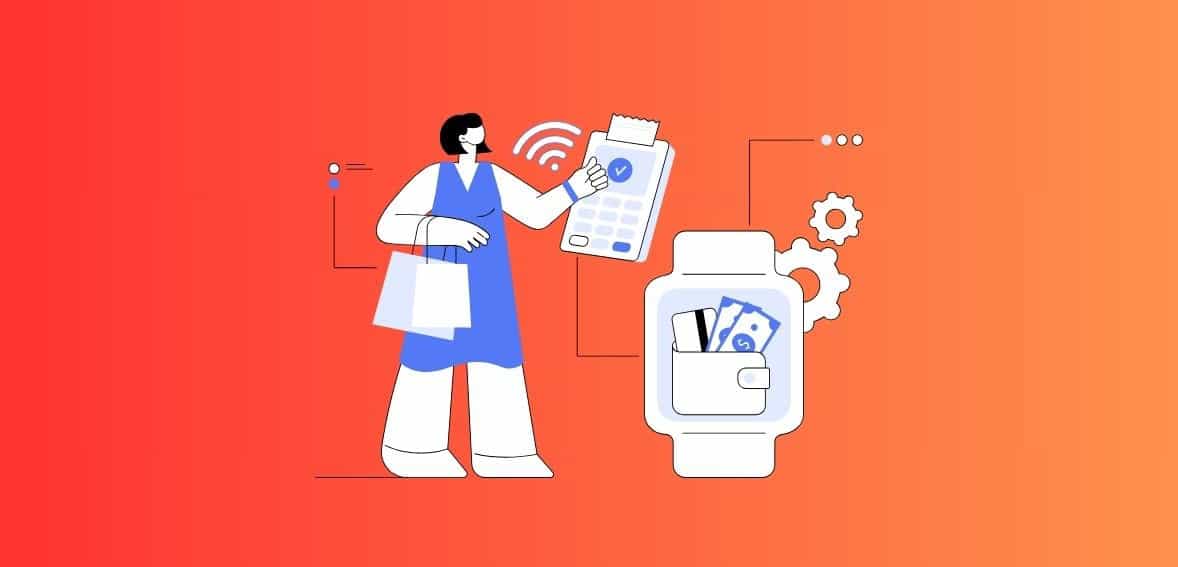
Well, it’s pretty straightforward. A wearable payment option refers to using devices that you wear on your body to make payments without needing cash or cards. These devices can come in forms like smartwatches, fitness trackers, bracelets, or embedded chips in clothes or accessories.

The way these wearable payment options function is through a technology called near-field communication (NFC). By connecting your device to your bank account or credit card information you can securely transfer money with a tap or wave of your wrist. This removes the hassle of rummaging through wallets and purses to find the card while waiting in line at a store.

One of the key benefits of using wearable payments is their convenience and ease of use. With this technology strapped to your wrist or attached to your clothing, making a purchase becomes as effortless as lifting an arm or touching a button. There’s no need to carry around bulky wallets filled with cards that could potentially be lost or stolen.

When it comes to security concerns about adopting this payment method, rest assured that wearable payments come with security features that safeguard against fraud and unauthorized transactions. Many devices nowadays require authentication, such, as fingerprint scans or facial recognition before processing any payments.

Like any technology wearables also have limitations and drawbacks. Some retailers haven’t upgraded their point-of-sale systems to accept NFC payments which limits the places where wearable payment options can be used for purchases.

However, we shouldn’t forget that these technologies offer exciting possibilities for developments in transaction methods. There might be some limitations as compared to cards and wallets that are common today, but the future is promising.

How Does It Work?

Wearable payment devices such as smartwatches or fitness bands allow individuals to link their bank accounts or credit cards through an app. This integration enables transactions with a tap or a swipe, on these devices. This feature enables individuals to make payments by tapping their device on a compatible point-of-sale terminal.

When you make a purchase the device uses Near Field Communication (NFC) technology to send encrypted payment data to the merchant’s terminal. The transaction is then processed instantly deducting the specified amount from your linked account.

This seamless integration eliminates the need to carry wallets or search for cards at checkout counters. With a tap of your wrist, you can effortlessly breeze through payments without dealing with cash or swiping cards.

In addition, many wearable devices offer features like transaction history tracking and budget management tools that help users stay organized and effortlessly keep track of their spending habits.

In terms of functionality wearable payment options are designed with user-friendliness and intuitiveness in mind. They utilize existing technologies such as NFC and biometrics to ensure transactions while providing convenience at every step.

Benefits Of Using Wearable Payment Options

Benefits Of Using Wearable Payment Options

The advantages of using payments are all about convenience and ease. Of fumbling through your wallet or bag to find your credit card you simply need to tap your wrist or wave your hand over a payment terminal. It’s quick and seamless. It removes the hassle of carrying cards.

Another great thing about wearable payments is how they simplify transactions in places. Especially during festivals when the shops are crowded, this payment option comes as a blessing.

Wearable payments also offer a layer of security compared to traditional methods. With features like authentication and tokenization, it becomes much harder for unauthorized individuals to access your information. This gives you peace of mind knowing that even if you misplace your device it would be challenging for someone to carry out fraudulent transactions.

Moreover, wearing smart devices that integrate payment capabilities means fewer items to carry around or potentially lose. By consolidating functions into one compact accessory – such as a smartwatch or fitness tracker – you have everything conveniently accessible on your wrist without the need for bulky wallets.

The advantages of utilizing wearable payments are centered around convenience, speed, enhanced security features, reduced clutter, from cards, and increased opportunities for integrating loyalty rewards programs.

Limitations Of Using Wearable Payments

However, it is important to acknowledge that wearable payment options also have their limitations and drawbacks. It is crucial to consider these factors before embracing this technology.

A key limitation is the issue of compatibility. Not all devices or merchants support wearable payment options, which means there may be situations where you cannot use your device for transactions. Additionally, different wearables may have varying levels of compatibility with payment platforms making it challenging to switch between devices without facing obstacles.

Another drawback is the reliance on technology and battery life. Wearable devices require a power source to function hence it becomes necessary to ensure that your device remains charged at all times. If your device runs out of battery while you’re, on the go you will be unable to make any payments until it is recharged.

There are concerns, about the security of payments. Even though encryption and authentication methods have improved there is always a risk of data breaches or hacking attempts. Storing information on a device that could potentially be lost or stolen raises understandable security concerns.

The cost can also be a barrier for some people considering payments. These devices often come with a high price tag compared to traditional payment methods like credit cards or cash. Additionally, there might be fees associated with using wearable payment platforms or services tied to wearables.

The Future Of Wearable Payment Options

Undoubtedly the future of payments looks promising. With technology advancing and a growing demand for convenience wearable devices are becoming a part of our daily lives. They seamlessly integrate into our routines. Enhance how we carry out transactions.

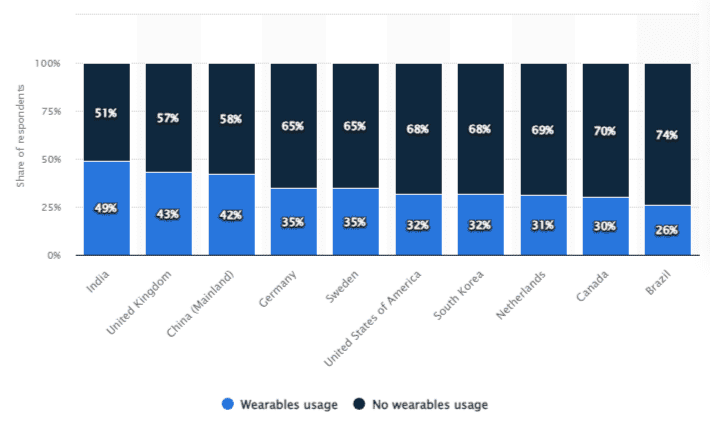
Source: Statista – Wearable devices usage in selected countries as of September 2023

One captivating aspect of the future of payments is the potential for convenience. Just imagine a world where you can effortlessly pay for your morning coffee or groceries by tapping your smartwatch or bracelet eliminating the need to rummage through your wallet or purse. Wearables can make transactions faster and more efficient than before.

Furthermore, as technology continues to evolve, so do security measures surrounding wearable payments. Biometric authentication such as fingerprint scanning or facial recognition can provide an extra layer of protection against fraud and unauthorized access to personal information.

We can anticipate innovations, in payment options as we move forward. There will likely be a range of wearables that cater to individual preferences and styles. The range of possibilities is vast, from fitness trackers that also function as payment devices to clothing that has payment capabilities built in.

Mobile Rent Payments May Kick off Soon

For the majority of individuals in the property management sector, a checkbook is a vital device that lets vast sums of money be transferred from one point to another without carrying briefcases full of bills. It is also a perfect way of making payments tenuously (mainly rent payments and even utility bills). With millennials promptly flinging over check books for mobile payments, however, it has made the rental industry rethink if it should start implementing mobile payments. For the majority, that is a tool that is to be applied soon.

In 2000, it was noted that the use of checkbooks dropped by almost half of what was used in previous years. A report from WePay indicated that more than 52% of millennials have never actually used checks; this makes a sound case for seeking an alternative mode of payment.

One famous developer, Jonathan Eppers who is the founder and Chief Executive of RadPad, believes that the perfect solution might be all that is needed, with satisfactorily expedient and robust mode making it as easy to pay your rent as it is to pay cash.

For instance, RadPad has by now been used to make transactions of an accumulative total of 120 million U.S. dollars in rent. However, Eppers points out that the mobile payments technology is new to many individuals.

For property management managers, it wasn’t necessary for them to change before. There was no reason for them to shift since checks worked fine for them. Furthermore, because rental houses were primarily occupied, it wasn’t necessary to make things more convenient to attract more tenants since they would just show up either way.

That might be changing, however, as many firms comprised of huge names such as Square are making an entry into the rental market and providing these services.

The major thing to take into consideration is that the situation on the ground that will make paying rent more convenient for tenants might not be put into place during the coming days. It might require a condition such as the introduction of an enhanced economy or purchasing homes becoming much more popular than renting.

For this reason, it is advisable for a landlord to get ready for such prospects and have a new rent payment method in place.

Walmart Pay

Walmart Pay to Deepen Information about Shopper Habits

Businesses are striving to stay on top of trends in consumer behavior, and mobile payments have been a hotbed of activity. Walmart Pay just rolled out nationwide, and the company is hoping that the app will help them collect more information about how customers use their products and make purchasing decisions. Credit card processing has seen huge changes recently, and new mobile payment apps like Walmart Pay and Apple Pay are certainly capitalizing on this trend.

Mobile Applications are seeing a ton of investment from the tech sphere, and Walmart is only one of the many companies trying to launch their propriety applications for their customers. The applications are supposed to make purchases easier for consumers. The app can track purchase history, which will allow customers to reorder frequently purchased items.

The application also speeds up the checkout process in-store, which is intended to increase the frequency that customers will visit Walmart and open their wallets. Walmart Pay is also intended to provide more information to the company. Businesses of all sizes are interested in the big data trend, and this application will help them further analyze the purchases and products that customers are viewing.

Walmart Pay also incorporates mobile payments, another major industry trend. Other apps like Apple Pay have been allowing consumers to create e-wallets that allow them to pay using their smartphones. This has been a major shakeup for credit card processing firms, and there have been many startups looking to help companies take mobile payments. While mobile payments have yet to catch on in a major way in the United States, Walmart is hoping that they can help move the needle on this.

The company is rolling out the application nation-wide, after testing the product in smaller markets across the United States. The application does not yet support third-party e-wallets, but customers can currently connect the application with debit, credit and prepaid cards. The company might decide to pair with Apple Pay in the future, but for now the options are slightly more limited. Time will tell if this application sees mainstream adoption. One thing is for sure, the evolution of e-wallets and retailer applications is going to be a transformative force for firms that do credit card processing.

Isis Mobile Wallet is Here

Isis Mobile Wallet Debuts Using NFC Technology

A joint venture between AT&T, Verizon Wireless and T-Mobile known as Isis Mobile Wallet has released a revolutionary mobile payments app that promises to change the way people pay for goods and services. The trio of mobile service providers are ecstatic to finally debut this mobile payment platform right before Black Friday and the rush of the holiday shopping season, as this technology lets consumers conveniently utilize their mobile phone to pay for goods and services. Use of the platform makes it easier for merchants to accept a wider variety of payments and the Isis system itself encourages repeat purchases through loyalty programs tied into the app and its software.

The debut of Isis also heralds a huge step forward for Near Field Communication technology (NFC), a topic we’ve been consistently covering since our Official Merchant Services Blog began.

What Is the Mobile Wallet Platform?

The Isis Mobile Wallet platform is a completely free mobile application that utilizes NFC technology to allow consumers to pay for purchases by waving their mobile device in the air at a terminal that captures the pertinent information out of thin air.  The mobile payment industry has been dealing with one large obstacle from NFC recently, as Apple hasn’t made its iPhones compatible with NFC. And so an Isis representative said that iPhone support would come at a later time. Until then, the app is available on all other compatible phones, but users should be aware that downloading the app could cost money if they are not subscribed to a monthly plan with unlimited data.


How the Platform Works

The NFC technology used in the mobile payments app allows mobile devices to transfer information when they are tapped together.  Merchants who use devices with this technology can accept payments quickly and securely from customers who have compatible devices. But wait, there’s more.

Mobile payments represent just one of the benefits of the Isis app.  Merchants can offer loyalty rewards to customers through the app.  These rewards can be earned and stored directly on a mobile device. We’ve delved into some of these types of incentives in our coverage of the Barclays bPay app, as well as social gifting articles. The basic idea of what’s happening is the app is giving customers yet another avenue for savings through their mobile device, in hopes to spur more purchases. Discounts are automatically deducted from a sale when Isis is used to pay for a product or service.  There’s no need for merchants to have cards or keychains printed, and customers do not have to worry about keeping track of dozens of loyalty cards.

Some specific incentives that are tied with the Isis debut: Isis Mobile Wallet customers can use My Coke Rewards and Isis to get three free drinks at select vending machines, while Jamba Juice is giving away 1 million free smoothies to Isis users. Purchases made from an American Express Serve account through the Isis wallet are eligible for a 20 percent discount (up to $200).

A PIN is used to protect personal information if a phone is lost or stolen.  The wallet can be locked when a phone is lost to prevent information from being breached.

Phone Compatibility With NFC Technology

NFC technology requires a cellphone user to have personal payment information stored on their phone.  The sensitive nature of this information means that extra precautions must be taken.  An enhanced SIM card that specifically details that it has been made for secure data storage must be used in conjunction with the application. Interested customers will have to get an enhanced SIM card to run Isis. They will also have to download the app on Google Play or get signed up at retail stores run by the three carriers.

The Death of E-Commerce? [2023 Update]

I just sat down at my desk and took a few moments to read Antonio Regalado’s fascinating column on E-Commerce from MIT Technology Review. I recommend it to anyone who runs a business, or really anyone who plans to buy something in the next month or two — you know, during the Holiday Shopping Season.

It’s That Time of Year Again

With that holiday shopping season right around the corner the media spotlight on E-Commerce is about to get dialed up a few notches. The standard media grind of finding a new story to keep things fresh, yet rehashing the same old topics over and over again, is really quite fond of the E-Commerce tale since it basically hits every mark needed in a story this time of year. It’s well trod ground (retail sales figures during the time of year when people flock to shop retail), it’s fresh and flashy (buying with a smartphone is the new “it” thing) and it’s easy to write about (everyone’s got a smartphone and in between texts can probably offer an opinion about the story).

So there’s going to be a flood of “E-Commerce, it’s not just for kids anymore!” style pieces written, along with chart after chart of how many billions of dollars are being spent on products through the whiz bang-up new gimmicks of smartypants phones and interwebs tubes (it’s not a truck, but it powers a fleet of delivery trucks!)

It’s this pending recycle of the news cycle that Regalado’s piece really underscores. It’s starts with the subhead of the article, “E-commerce is an idea whose time has come and gone. Here’s why.” A bold statement when placed up against the pending flood of stories that are going to tell us that E-Commerce is (still) the next big thing.

But that’s the hook of Regelado’s article. And it certainly worked its magic on me and got me to read it.

More Than Meets the Eye

Regalado’s point isn’t that E-Commerce is done. It’s more that it’s becoming part of the everyday fabric of retail business. So he’s saying that E-Commerce has been merged into a total shopping experience and is no longer a new gimmick.

The article really slams this point home when it quotes Chris Fletcher, a research director at Gartner (who we here at HMS have used data and graphics from on this very topic). Fletcher told the MIT Technology Review’s Business Report, “we should stop calling it E-Commerce and call it just commerce,” and suggested that it’s really just a part of the shopping experience now.

This quote called up more than a few variants of the corny joke, “In China, they just call it food.” But the point is very well taken this year, and is something we’ve been alluding to for two years now at Host Merchant Services: The whole shopping experience has blending together with Online and Brick and Mortar since the very beginning.

Days of Future Past

This has really obvious but powerful ramifications for our company. As more and more people just accept online shopping as much a part of the process as window shopping or catalog shopping, the amount of credit and debit card transactions continues to increase. Those are the two most common methods of payment in this online environment. And so as the business evolves to the point where popping into a Macy’s ends up auto-texting you a free discount code on your next Macy’s purchase, payment card transactions become the norm.

Keeping an Eye on Heat Mapping

Oh and Regelado’s article really dives into that bit with your location spawning discounts:

” Threatened by the growth of low-cost online merchants, traditional retailers are reacting by following customers onto the Internet. Macy’s does it as well as any. On its website, it installs 24 different tracking cookies on a visitor’s browser. On TV, it runs ads with Justin Bieber that urge millennials to download its mobile app, which tells them which of the chain’s stores is closest to their location. Once inside, they can use the app to scan QR codes on a pillowcase or a pair of shoes. Online orders now ship from the backrooms of 500 Macy’s stores that this year began acting as mini distribution centers.”

Omnichannel marketing is the buzzword associated with this. But it’s something we’ve been discussing at HMS for awhile now. Our partnership with Barclay’s Mobile app opened this slick marketing tactic up to us ages ago. It’s really quite clever. The business uses its connection to your phone (and thus your own transaction history, your GPS location, as well as data that it can find in various places like social media) to track your buying habits.

I remember the first time the heat mapping aspect of Omnichannel Marketing was explained to me by HMS Tech expert Ken Hemmel.

He described a system where I’d be walking along on Main Street in Newark, which was where the Barclays app was being targeted, and I’d pop into a restaurant. I’d buy a meal and have a glass of a particular wine with that meal. The information would then prompt my phone the next time I walked past a wine and spirits store that was participating in the program. And I’d be given a coupon code to save money on a bottle of that kind of wine I had with my meal. This would combine transaction history, with GPS location and turn into an aggressive marketing tactic to get my business.

A Whole Store in Your Pocket

Another salient point Regelado’s article made really resonated with me personally. The article cites US Census economic data and states that only 5.2 percent of US retail purchases were made online in 2012. But then the article cites the effect of online research, noting that 80 percent of BestBuy customers said in a survey that they already searched for price information online before making a purchase in person. And that a third of them do so on a phone while inside the store.

So the last two purchases I made at BestBuy were an HD TV, which I searched for information on while in store, and a computer which I was shopping for online before I went there. I fell right into those statistics. I wanted to comparison shop and read reviews before making the purchase and had the device right there in my hand that let me do exactly that.

The only thing that held me back from ordering either  of these items completely online was impatience. I wanted the item that day. Which is exactly what Relegado’s article also gets into:

“But now [Amazon] and other Internet companies, including eBay and Google, are investing in same-day delivery—getting goods to people just hours after they order them. With their drop boxes and fleets of delivery cars, they’re bidding to eliminate one of physical retailers’ main advantages: immediate gratification.”

The suggestion is that technology is pushing retailers to evolve. They embrace social media, and online power, and create a shopping experience once again tailored to meet the needs and convenience of their customers.

Been There, Done That?

It reminds me of Warren Ellis and Darrick Robertson’s groundbreaking comic book, Transmetropolitan. Set in a Bladerunner-on-acid style future and revolving around a pastiche Hunter S. Thompson-inspired Gonzo journalist named Spider Jerusalem, the comic had a very humorous but also telling take on marketing and advertising in our near future. It suggested neural advertising bombs delivered directly to our brains, tracked by our own viewing habits, to offer us the products we’d be most interested in. As deft and powerful as that future marketing blitz was shown to be in the imaginary world of Transmet comics, the reality is we’re about to be in on the beta test of that entire concept with the way retail is evolving through E-Commerce.

Should Nonprofits Accept Donations on Credit Cards?

Larger charities such as the American Red Cross and the American Cancer Society are easily recognizable. People like to donate to charities that have a reputation for doing meaningful work and spending their money sensibly. However, even these organizations have to seek out donations constantly to keep up and running. For smaller nonprofits and charitable causes that are just getting off the ground, seeking out donations can easily become a full time job.

Accepting credit cards for nonprofit charities is one way an organization can easily increase the volume of their donations. American society lives by their plastic, both debit and credit, so a nonprofit that is not poised to accept donations from a card is going to have a harder time procuring donations.

Some nonprofits do not accept card donations simply because they do not want to spend the small monthly price. This thinking can be somewhat backwards though. If the increase in donations is great enough, it will offset this small monthly cost. In order to accept card donations, a nonprofit has to establish a merchant account and is required to pay certain fees. The fees vary depending on the merchant account and the types of cards that will be accepted.

If the nonprofit already operates a website, accepting cards through the site is a very quick and easy way to increase donations. Many studies have shown that people spend more on their cards than they do with cash. This is true whether they are shopping for groceries or donating to a charity. By accepting cards on the website, a nonprofit will see increased donor amounts.

donations

Donate Online

If the nonprofit is a smaller organization and does not run a website, they can still accept credit cards. With a mobile card reader available for smartphones, an organization can accept cards a lot faster and easier than before. Many smaller merchants, nonprofit and otherwise, now use these readers so that they can accept cards on the go, say for example at a gala or other fundraising event.

Some organizations do indeed prefer credit cards for nonprofit donations because they generally mean larger donations. Another bonus for accepting cards is the ability of the donor to set up a recurring monthly payment. This is fantastic for a nonprofit because it means a steady, dependable stream of funds. Donors do not have to remember to send in a monthly check or cash, the money simply comes out of their account every month.

As the number of recurring donors increases, it becomes easier for the nonprofit to budget and forecast out spending. This also might allow them to increase services or programs offered to the people or cause they serve.

There are many aspects to consider when deciding if a nonprofit should or should not accept credit cards. The size of the organization, the size of the normal donation and the possibility of setting up recurring payments are all factors to consider. In addition, the operator of a nonprofit needs to research their options in regards to fees and choose the one that charges the least amount. Host Merchant Services has the lowest fixed monthly fees and uses interchange plus pricing in order to deliver the best value for your nonprofit or charity.

There are also added benefits for the donor to use their credit card to donate. If they have a card that offers rewards they can earn points while donating to a good cause. If they are near a certain reward, it is possible that they might even donate more than they would have otherwise. While this seems shallow to other charitable givers, remember that a donation is gladly received no matter what the donors underlying reasons may be.