As the pandemic continues and more people turn to online shopping versus running into local convenience stores, the industry has seen a decline of almost 2 percent since 2019. Consumer spending habits changed drastically as everyone tries to stay safe.
Fortunately, smart tech helps keep convenience stores relevant in society by thinking outside the box and helping stores offer services they didn’t offer before.
How are Convenience Stores Changing?
With fewer people commuting and/or fewer people making traditional brick-and-mortar purchases, merchants are finding ways to meet customers where they need it.
For example, 7-Eleven and other large convenience stores implemented delivery services. Some partnered with companies like Shipt and DoorDash, while others offer their own delivery services within a specific radius.
Convenience stores also offer contactless payments for their credit card customers and self-checkout choices for consumers who want as little contact as possible.
Some convenience stores in large areas, such as airports, are utilizing Amazon’s ‘Just Walk Out’ technology which recognizes the items a customer takes and charges the purchases to their credit card. Amazon has used the technology in their retail stores for a while and convenience stores are taking advantage, too.
Focus on How you can Instill Convenience
The name of the store says it all – ‘convenience.’ It’s why millions of people subscribe to Amazon Prime – they can have what they need/want to be delivered the next day usually. They don’t have to leave their home and still have the convenience of what they need in hand.
As the pandemic continues and the convenience store industry sees almost a 2 percent decline, it’s important to think outside the box.
How can smart technology help you give your customers the convenience they desire?
Credit card processing is big. While most stores already accept credit cards, instilling contactless payment methods is the key. Customers want as little contact as possible. When they feel safe shopping in your store because of the minimal contact, they’re more likely to shop at your store.
Smart apps and mobile payments are another great option. Whether you partner with a delivery company like DoorDash or you do your own thing – providing customers with contactless delivery gives them the option to stay loyal and safe.
If delivery isn’t an option for your convenience store, consider curbside pickup. This offers your customers another way to get the products they need without unnecessary contact.
Think Outside the Box
Today, it’s all about convenience and safety. Customers are even willing to pay more in certain situations if they know their safety is protected.
Show your audience you care about their wellbeing and will do whatever is necessary to keep them safe while providing the products they know and love.
As the pandemic continues and the industry continues declining, it’s about who stays in front of the issues, utilizing smart technology and giving customers alternative ways to shop and pay so they have the products they need and continue to patronize your business.
The Mobile Payments Technology sector has been the topic of overt optimism for quite some time now. We’ve reported multiple times that industry analysts have predicted large gains in Mobile Payments profits over the short- and long-term future. Our article from 2011 showcased three different research groups and their take on the successful future they felt was in store for Mobile Payments.
More pieces of that predictive puzzle have been falling into place. According to a mobile payments survey conducted by IDC Financial Insights, mobile payments use in the United States has doubled. The May 2012 study looked closely at emerging pay method technologies and discovered that 33 percent of respondents had used their devices for mobile payments at least once.
IDC’s practice director, Aaron McPherson, told QRCode Press that “Based on our results, we expect to see continued growth in open-loop prepaid cards and mobile payments next year, and believe that the improvements being offered in electronic-bill delivery will break electronic-bill presentment and payment out of its doldrums as well.”
The Next Big Affirmation for Mobile Payments
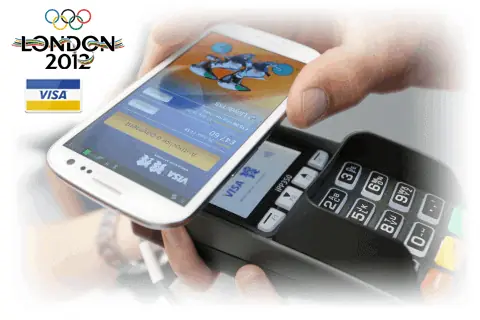
Visa is convinced new payment tech, including mobile payments, are definitely the trend of the future — so much so that the card association giant is poised to showcase the power of the future in the spotlight of the 2012 Olympic Games in London. One of the new technologies Visa is thrusting into the public eye at the Olympics is EMV Chip Cards — something we highlighted back in February. Visa is heavily invested in Smart Card technology so it’s no surprise the company is using its Olympic Games partnership to point some attention at its EMV efforts. But right alongside that EMV push, Visa is also Mobile Payment Technology as a safe and convenient payment option for consumers throughout the London games.
Jim McCarthy, Head of Products at Visa Inc., said “This summer we will be demonstrating the future of payments in London – a future where most consumers will rely on mobile devices, tablets and PCs to manage their daily financial lives.” Visa’s Olympics marketing push for the future of Mobile includes:
Visa Mobile Payments and Services: A limited edition of the Samsung GALAXY S III, Samsung’s Olympic Games Phone during the London 2012 Games, will be provided to Visa sponsored athletes and trialists. The device will feature an Olympic-branded version of Visa’s mobile payment application, Visa payWave. To make purchases, consumers simply select the Visa icon on the Samsung device and hold the phone to a contactless payment terminal to pay.
Visa Mobile Prepaid: During the London 2012 Games,Visa Inc. will also showcase its newest product – Visa Mobile Prepaid – the first mobile-based Visa product providing consumers in developing countries a payment account that offers Visa’s high standards of security, reliability and global interoperability. By accessing their Visa Mobile Prepaid account on their mobile phone, consumers can send and receive international remittances, pay bills, top-up wireless minutes, and access Visa ATMs.
Setting New Standards
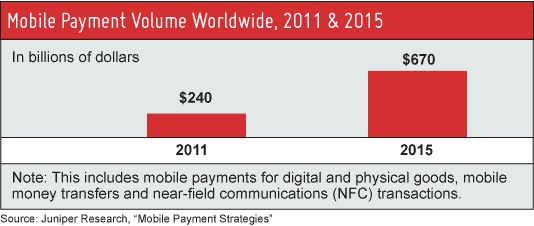
Looking at last year and then at this year’s statistics, Mobile Payments are doing their best to meet the bold predictions analysts have lined up for the future. The sector is growing rapidly and consumers in both the U.S. and around the world are embracing the convenience that the technology brings to their shopping habits. Juniper Research, a company that specializes in the identification and appraisal of high growth opportunities in various mobile telecommunications and applications sectors, put out a publication on July 5, 2011, titled “Mobile Payment Strategies.” Juniper predicted worldwide mobile spending would jump from $240 billion in 2011 to $670 billion in 2015.
Well Juniper is back with a new forecastthat focuses on Near Field Communication (NFC) and this study predicts that in just five years the NFC Mobile Payments market will will exponentially increase and eventually exceed $180 billion — a whopping seven times what it is today. The study forecasts that one in four people from Western Europe and the United States will use NFC as a payment mechanism by 2017.
Juniper cites last year as a turning point for NFC payments and suggests that major consolidation of the technology is the impetus for the predicted growth in the market as consistent standards and protocols will help fuel rapid growth and assuage the security concerns of consumers. Juniper says that in 2011 major technology infrastructure standards were finalized within the NFC Mobile Payments market so that many mobile network operators committed to the market and NFC payment pilots from both mobile operators and financial institutions transitioned to commercial service. And the research firm pointed to NFC-enabled smartphone models being announced by almost all handset manufacturers and Google as a key factor for igniting interest in the mobile payment usage in the U.S.
“This is a critical time for the NFC retail payments market,” said report co-author Dr. Windsor Holden. “Despite the significant progress being made today, the full potential of the market can only be fulfilled if all ecosystem players are equally committed and mobile wallet consortia remain in place.”
2012 is heating up and the payment processing industry is getting things moving. Today The Official Merchant Services Blog reports on a major event that just happened, and brings you all the details on a major event that is coming up in the credit card processing industry.
What You May Have Missed
The GSMA Mobile World Congress just took place in Barcelona, Spain. The event is the combination of the world’s largest exhibition for the mobile industry and a conference featuring prominent Chief Executives representing mobile operators, device manufacturers, technology providers, vendors and content owners from across the world. It ran from February 27 to March 1 and featured a lot of push from Android devices — including the latest and greatest gadgets and apps from the Samsung Galaxy brand. But VeriFone, the credit card transaction terminal making company that Host Merchant Services provides free equipment for its customers from, also dropped a major announcement at the event.
This press release, carrying a byline directly from their event booth at the Mobile World Congress, states VeriFone announced: “The PAYMEDIA Universal Acceptance Platform (UAP), a complete suite of services and software that enables Mobile Network Operators (MNOs) to manage mobile wallet acceptance at merchant systems.”
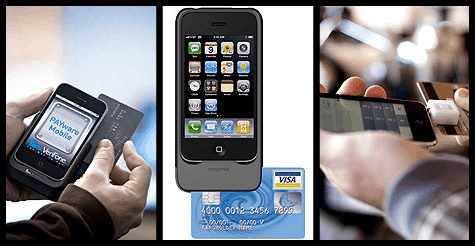
This is VeriFone’s mobile payment system. The UAP is designed for mobile-network operators to offer merchants to accept digitall walled applications. Customers with Near Field Communications (NFC)smartphones with digital wallets will pay for items by tapping their phone near an NFC-enabled terminal. VeriFone offers the MX800 and MX900 series terminals to their Tier 1 retailers (merchants with annual sales exceeding $1 billion). These terminals were already usable with the NFC App Manager VeriFone created for the Google Wallet Trial. So UAP is one step forward for VeriFone giving them the ability to run mobile payments through their own branded applications and their own customers.
This is an interesting devleopment in light of the NFC problems Google and Google Wallet were facing recently. This shows that the allure of Mobile Payments is still very strong for companies. The predictions still center around billions and billions of dollars worth of growth in the next few years. So companies are still making major moves to tap into mobile payment solutions such as NFC.
The testing of NFC, however, still continues to be limited. As VeriFone demonstrates, it’s still not ready for the majority of merchants. Tier 1 merchants give a good testbed based on the volume of transactions, but the technology still isn’t being tested heavily in the rest of the marketplace. So the standard knock against NFC still exists: The majority of consumers are still hesitant to accept the payment method due to security concerns. Analysts continue to predict Mobile Payments will explode and the sector will boom, but consumer acceptance still remains an obstacle.
VeriFone states in their press release that they have a plan to address consumer acceptance. “The missing element in MNO’s mobile wallet plans has been the lack of focus on how to provision, integrate and manage wallet and value-added acceptance apps at merchants’ systems,” said Paul Rasori, VeriFone senior vice president of marketing. “VeriFone’s PAYMEDIA UAP bridges that gap in the NFC ecosystem by managing the complexities of mobile commerce acceptance and ensuring a seamless buying experience no matter what wallet, app or program consumers bring to stores.”
For more information about VeriFone’s UAP, click here.
For more information about the rest of the Mobile World Congress, this blog gives a decent recap.
What Is Coming Up
While you may have missed the Mobile World Congress in Barcelona, fear not — The ETA Annual Meeting and Expo is coming up. From April 17 to 19 the most diverse and comprehensive conference in the payments industry will rock Mandalay Bay Las Vegas. This year’s show brings together more than 3,500 payments professionals and suppliers to the industry for three days annually to provide peer-led education, networking, and one-of-a-kind partnership opportunities. Whether you want to learn more about the payments industry, showcase a new product, or are in the market for a new partner or channel opportunity, you will find everyone and everything at the 2012 ETA Annual Meeting & Expo, from merchant acquirers, financial institutions, payments processors, and alternative payment providers to value-added resellers, prepaid companies, and merchant sales teams. Some of the highlights for this year’s extravaganza include:
Opening General Session Keynote Speaker: Guy Kawasaki: Tech industry legend and the original Mac evangelist, Kawasaki will share his irreverent approaches to innovation. Learn how to create your own successful innovations, and. . . generate revenue.
2012 Political Analysis: Charles E. Cook, Jr.: Cook, widely regarded as one of the nation’s leading authorities on US elections and political trends, will provide insight into the upcoming US elections. As an authority on policy-making and politics in Washington, Cook’s perspective on the 2012 political and legislative environment promises to be especially insightful as it relates to the unique challenges and concerns of our industry.
Educational SUPER Sessions: If you want to move from ordinary to extraordinary you need the latest and most complete information. Take a deep dive into these four fundamental industry topics at this year’s meeting: Sales, Technology / Products, Regulatory Issues and Social Commerce.
We’ve been covering Mobile Payments here at The Official Merchant Services Blog since the very beginning. In fact, the Article Archive at Host Merchant Services has extensive coverage of the topic as well. It’s just too sexy a topic — everybody loves the allure of gadgets — and too fascinating a financial prediction — folks in the know are predicting Mobile Payments to boom in the billions between now and 2015-ish — to not continually cover Mobile Payments.
But I keep picturing a scene from the 1992 women’s sports movie A League of Their Own in my head every single time I look at the state of Mobile Payments in the U.S. The scene that resonates with me is the one where Marla Hooch— fearsome and uniquely striking power hitter for the team — is about to step into the batter’s box. But she’s getting confused. She steps into the box. Then back out of the box. The reason for her confusion? She’s getting contradictory signals from her Manager and her teammate. One wants her to swing away and unleash the fearsome potential of her staggering offense. The other wants her to play it safe and move the runner over for a better chance to score an efficient run. So there she goes, Marla Hooch, the powerhouse of the league. One foot in the box. Then out of the box. It’s the exact problem Mobile Payments currently faces. The power and potential of what it can do for commerce keeps getting highlighted in story after story, research after research. And then the biggest obstacle it faces keeps getting thrust in front of its face: Security.
Step Out of the Box
Google Wallet, one of the biggest lynchpins in the mobile payment industry’s bid to effectively take hold in the U.S. market was recently plagued by a security problem. This article from ExtremeTech notes the issues that happened to Google and its mobile payment system in a piece that discusses the pitfalls of its beta testing. A pair of bugs forced Google to shut down its pre-paid cards and Google Wallet took a huge hit on the nose in the press. This reinforced the public’s view that mobile payments are a bit scary because people think that their personal information — account numbers, social security information, credit card numbers — will get swiped from them out of thin air. The thought process being that if all they have to do to pay for an item is wave their phone in the air at a cash register, some sneaky net ninja can pluck the data right out of the very same air.
The article sums up the problem: “In the last week, there have been not one, but two exploits that could give a malicious individual access to your Google Wallet mobile payment app on Android. While the first is a root-only hack that Google couldn’t really be expected to plan for, the second affects all Android users and is simple to do.”
It goes on to suggest these bugs popped up due to a core problem with how google beta tests things.
Since that story broke, Google has gone on the offensive, and is now stating that the bugs are fixed. As this cnet article says: “Google has patched a hole in Google Wallet that could’ve allowed someone to access a user’s funds simply by resetting the PIN and using a prepaid card. The company said yesterday it has issued a fix that now prevents a prepaid card from being re-provisioned to another person. It has also restored the ability to issue new prepaid cards following a move on Monday to disable the use of such cards.”
These bugs were a major setback for more than just Google. The Mobile Payments landscape is bubbling with interest but it’s also saturated with variety. There are multiple avenues businesses are considering for their entry point into what research firms like Gartner predict will be big money very very soon. One of those avenues is Near Field Communication (NFC). The underlying technology of NFC is described as: “Near field communication (NFC) is a set of standards for smartphones and similar devices to establish radio communication with each other by touching them together or bringing them into close proximity, usually no more than a few centimetres. Present and anticipated applications include contactless transactions, data exchange, and simplified setup of more complex communications such as Wi-Fi. Communication is also possible between an NFC device and an unpowered NFC chip, called a “tag”.”
This is the technology that Google tagged to be their entry into Mobile Payments. And so these bugs are a major hit for Google and NFC as a whole, taking one of the most hyped aspects of Mobile Payments down a peg in the industry.
Step Into the Box
In the midst of NFC taking it on the chin, Visa and MasterCard unleashed its EMV initiative — as The Official Merchant Services Blog reported on February 7. This is, in my mind, the Mobile Payments Marla Hooch being told to step into the batter’s box and knock it out of the park. Visa is invested heavily into Mobile Payments, and is prepared to drag the industry kicking and screaming into the future of profits that are being predicted for Mobile Payments. The EMV initiative hinges on chip technology being attached to cards, and for Mobile Payment evolution also being attached to smart phones. What Visa’s investment in this avenue brings is added security. This is huge. The security advantage addresses the biggest fear people have for mobile payments. Visa, much like Tom Hanks, wants Marla Hooch to get in there and swing away.
Going Sci-Fi
This article from Asia One adds another wrinkle into payment processing, and possibly the future of mobile payments: Biometrics. The article cites The Monetary Association of Singapore (MAS) as researching ways to make Debit card transactions more secure. And one of the avenues of research has been biometrics. This could really lead to a breakthrough in the march towards a cashless society, including the use of smartphones for mobile payments. Having biometric security measures on your phone would work in tandem with the chip technology that Visa is pushing, making both the unit you use to store the information — your phone — attuned to your own physiology; and the transmission of your transactions — the swipe of said phone in the air — attuned to a secure chip. Identity thieves and card fraud masters would be stymied on multiple ends and have to work very hard to stay ahead of that security curve in their mission to steal your information and then your money.
The Bottom Line
So What’s Marla Hooch going to do? It looks like Google is sticking with its plan and dedication to NFC. They sort of have to due to how invested they are into the technology already. And it’s no secret that Visa is very much tied into the future of mobile payments, chip card technology, and payment processing security. Both entities are full steam ahead. And with that much tech and finance industry strength behind the initiatives, Mobile Payments will get its chance to swing for the fences. We look for the Google Bugs to blow over and not really hinder Mobile Payments growth much at all in 2012.
Today The Official Merchant Services Blog updates our outlook on Mobile Payment Technology and the rampant predictions for its success in the near future. We have previously covered the topic with this blog entry on Tuesday, October 18, 2011. The parameters of that blog are still pretty much the current state of Mobile Payments. But there have been some very interesting developments from the end of 2011 and moving into the first quarter of 2012.
Black Friday Boom
The Black Friday business blitz revealed some healthy news for Mobile Payments. According to this article from Seeking Alpha, mobile payments business increased 500% from 2010 on Black Friday. According to the article, PayPal mobile reported the huge increase, coming in at 511% to be exact. PayPal Mobile also noted that there was a 350% increase in mobile shopping on Thanksgiving 2011 when compared to 2010.
According to numbers from the aforementioned IBM research, 17.37% of all consumers used a mobile device on Black Friday to visit a retailer’s site. And 9.73% used a mobile device to make a purchase. The Seeking Alpha article quoted Amanda Pires from PayPal. Pires suggested that this year’s holiday is proving to be the largest mobile holiday shopping season PayPal and eBay has ever seen, and then quoted Pires directly as stating: “The retailers that are taking advantage of mobile shopping are going to win. We expect mobile shopping to continue to be strong throughout the holiday season.”
This is good news for Mobile Payments, as Host Merchant Services research has shown in the past that there have been some bold predictions for growth in Mobile Payments, but that the services were slow in taking hold this year in the U.S. Growth like the numbers cited from Black Friday 2011 should fuel more positive momentum for that consumer payment option.
From 2012 Onward
All of this brisk business in the mobile payments sector is indicative of the forecasting that analysts and reporters have been making for the technology. But the obstacle that our Magic 8-Ball suggested hurts the industry still remains: Consumer confidence. There’s still trust issues with mobile payments. This article by Eric Savitz from Forbes really delves into the heart of what we at Host Merchant Services have been saying about Mobile Payments.
Savitz says: “There’s a common thread between these points: there has to be something fundamentally changed about the current point of sale model in order for mobile payments to take off. It’s about added value and convenience to the consumer, and the ability to drive more customers, loyalty, efficiency and lower risk for the merchant and banks and operators involved in the payments process. Think of contactless “tap and pay” credit cards – you may have one in your wallet right now, but you still swipe it anywhere you go. As a consumer, there’s nothing more convenient or inherently better about tapping your card vs. swiping your card if all that matters is making the payment. Would the time spent setting up and configuring a “mobile wallet” be worth it if the only difference at the cash register of Macy’s is that you wave a phone over a terminal rather than swipe a card through one? Doubtful.”
That’s what Host Merchant Services has been saying. It’s about convenience to the consumer. The worries about security are valid. E-Commerce has faced the same problems with security and the same worries. But people have adopted online shopping — as seen with the same Black Friday and holiday shopping season boom in 2011 — to the point where it’s now just a common part of the shopping experience. People can’t even remember back 10 years where online shopping was new, awkward and insecure. It’s just part of their lives now.
And for Mobile Payments to jump off the same type of conversion of consumers has to take place. Convenience will outweigh security concerns and people will just accept the behavior as part of the way they shop. That’s where the Mobile Payments Industry stands right now. On the edge, waiting for the breakthrough that will rocket it into everyday life for shoppers. It has to grow beyond gimmick. Because gimmick won’t carry it forward. It might be easy to do, but as Savitz points out, if there’s no reason to swipe your phone over just using your card in your wallet, people won’t bother.
Small Businesses Susceptible to its Charms
One inroad Mobile Payments are making with consumers is through small businesses. This article from Newsfactor.com delves into how small businesses are seeking mobile payment solutions that free them from reliance on traditional payment solutions. The article discusses how Square has been shaking things up with the changes its made to its business model in 2011, becoming an entire processing solution itself and making its card reader more readily available to merchants. The article then mentions how Gartner Research data shows that the Mobile Payments Industry surged to $86.1 billion in 2011. The article notes that Square is just one of many viable options that are helping fuel the growth the sector is seeing.
HMSPay
Host Merchant Services recognizes the huge growth potential in this sector of the industry. Beyond their coverage of the latest developments and news that take place in Mobile Payments, Host Merchant Services offers its own mobile payment solution, HMSPay. The solution utilizes a card reader that is attached to a smartphone and an application on the phone which transforms it into a payment processing terminal, complete with signature field and e-mailed receipts.
So What’s Next?
Savitz’ article suggests that the potential breakthrough for Mobile Payments will take place in 2012. And that the catalyst for this breakthrough will be through value added applications of the process. He cites Google Wallet and Isis as showing the most promise in being a catalyst because they both go beyond just having the swipe gimmick and offer “services delivered on top of the payment itself.” He says these additional services will be what prompt consumers to shift into mobile payments. He offers these bullet points:
Deals and offers: Highly targeted, relevant offers based on prior buying patterns and current location. Imagine receiving a time-sensitive text message or in-app alert with a coupon to your favorite electronics store after your digital wallet “checks in” that you are within the store.
Digital receipts and account information updated in real time to give a comprehensive view of personal and linked accounts while also displaying loyalty rewards status.
Real-time, customizable alerts to certify that the purchases being made in an account are valid, based on your phone’s proximity to where the purchase is being made.
So it appears that one promising avenue for the evolution of mobile payments is to essentially make them a virtual wallet “plus.” Something that does more than just allow you to pay with a swipe of your phone. Something that collects the relevant data and helps you manage your shopping right there, at your fingertips. Something that tracks your own shopping trends and makes you aware of deals, then lets you conveniently take advantage of those deals.
It’s a compelling point. Host Merchant Services sees the value in such a transition. The technology works to make the consumer’s shopping experience convenient and comprehensive — something a shopper can’t even consider they could do without in previous years. That’s what happened with e-commerce, after all.


 Well Juniper is back with
 The testing of NFC, however, still continues to be limited. As VeriFone demonstrates, it’s still not ready for the majority of merchants. Tier 1 merchants give a good testbed based on the volume of transactions, but the technology still isn’t being tested heavily in the rest of the marketplace. So the standard knock against NFC still exists: The majority of consumers are still hesitant to accept the payment method due to security concerns. Analysts