As part of an ongoing series covering the basics of payment processing, The Official Merchant Services Blog is going to discuss Batch Processing today. You may have seen the term come up before –– possibly in reference to your statement or when your merchant account representative first met you.
What is Batch Processing?
Providing quick and efficient service is key to a successful enterprise. This is also applicable to the process of accepting credit card payments as processing your transactions quickly will also ensure prompt and timely receipt of payments for your products. And that’s where Batch Processing comes in.
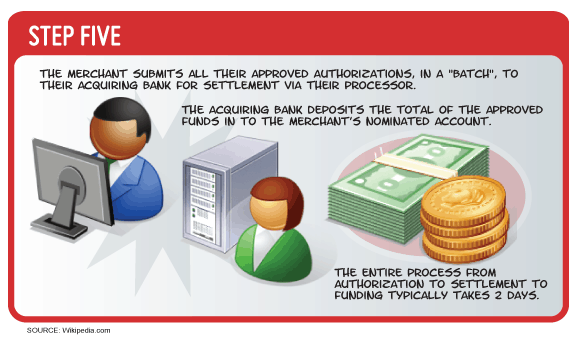
Batch processing is the mass processing of dozens of credit card transactions. It tends to be much more convenient to batch process hundred of orders at a certain time during the day, instead of each and every time they are received. A lot of merchants process their batch at the end of business. E-commerce businesses have batch processing built into their payment gateways. In fact, Step Five of our “How Payment Gateways Work” graphic details the daily “batch.” In fact, using a payment gateway will help simplify your batch credit card processing as it will help you coordinate the many functions that are necessary to process your payments. This form of card processing also has the benefit of being secure and this will certainly be a value added to your customer service.
How does Batch Processing Work?
Here’s an infographic that explains the batch process as it happens:
Batch credit card processing works well with small businesses where several credit card transactions are processed simultaneously, in the batch. With this, there is a definite lower risk of credit card fraud and you will be able to offer your customer and your business the assurance of transaction security.
The one con to Batch Processing
On occasions where there is a problem with the credit card payment, the seller may not know till the next day. Batches get processed with a lag. Host Merchant Services has 2 day processing. So there can be some issues with payments due to that lag. But the company has a qualified representative available 24 hours a day, 7 days a week, to help you with any issues you encounter in processing your transactions.
The Official Merchant Services Blog switches its focus today back to e-commerce. After the boom in mobile phone usage this past weekend from Black Friday on through Cyber Monday, it’s becoming increasingly clear that smartphones and mobile internet users are becoming very important parts of the e-commerce industry. As such, businesses that utilize e-commerce need to consider including the mobile phone element in their online shopping capability.
This increase in the importance of mobile usage –– most notably mobile payments –– is leading many e-commerce businesses to develop mobile apps. These mobile apps let those businesses customize their service and stay in touch with their consumers who prefer to connect via mobile networks. The trend is moving e-commerce mobile solutions away from the traditional Wireless Application Protocol (WAP) sites. That’s a paradigm shift in the industry. E-commerce businesses are developing and designing their own applications –– or at the very least branding their own versions of mobile apps.
Applications Over Surfing
E-commerce leaders are finding out that users prefer using a mobile application instead of going to a business through their mobile phone’s web interface. This article from The Hindu Business Line quotes Amarjit Batra of OLX.in as saying: “We found users more comfortable in having a mobile application than opting for mobile web search or using WAP sites.”
This change in e-commerce puts an emphasis on having payment gateways accessible across different mobile platforms. To put it simply, a business with a mobile payment aspect to its e-commerce presence needs to have a mobile payment system compatible with Android, iPhone and Blackberry.
Host Merchant Services is staying ahead of this curve, offering a series of customizable e-commerce solutions to its merchants. Included in that package are mobile payment services apps that work on both iPhone and Android. HMS keeps its options flexible so that its merchants can tap into the rapid growth in mobile payments.
Mobile is Key to E-Commerce
This growth is looking like a trend for businesses in the burgeoning mobile payments market. Juniper Research is often cited as predicting the Mobile Payment Industry is going to blossom from a $240 billion industry to a $670 billion industry by 2015. This makes it very helpful for businesses to recognize consumer behavior in terms of their mobile device usage. Google Analytics provides a great free source of tracking for e-commerce merchants to monitor traffic from mobile devices. That’s a great first step for a business to determine what kind of mobile payment option or customization might be needed for the e-commerce a merchant is already doing. At least get an indication if there is a need for mobile payments or a customized and branded mobile app for your business.
The move towards individual businesses dabbling in their own branded app development also extends from the fluid nature of the industry as it grows and evolves. With so many different companies –– Google, PayPal, Visa to name some of the giants –– all coming up with their own variation on mobile payments, the flexibility to customize and brand their own version of mobile payment services is extremely important for all players involved in the process. This includes merchants themselves as well as merchant services providers.
Stitching it all Together
Besides just crossing platforms between the major mobile carriers, the applications being developed need to integrate web services and payment options into the solution. Essentially the goal is to make e-commerce seamless for mobile users as well as internet users. The whole range of potential business needs to be taken into account with a business’ e-commerce package. And that’s why the focus is on customization.
Sachin Singhal, e-commerce expert for Naaptol, underscores this in the Business Line article when he told them: “A mobile app is more user-friendly than having a WAP site. However, integrating the payment window with it makes the application complete.”
Host Merchant Services has been aware of this trend from its beginning. And that’s why the company offers powerful tools to its merchants that help them complete this integration –– giving them an across the board e-commerce solution that caters to mobile users and internet surfers alike. HMSPay and HMSExpress are both important elements that allow the company to capitalize on this trend and give online businesses the flexibility they need to cater to the huge growth happening in mobile payment sector.
The Official Merchant Services Blog is here to share information with merchants to get them better prepared to understand how the payment processing industry works. This premise stems from Host Merchant Services and its philosophy to bring trust to the industry.
Payment processing can be confusing. And nowhere is that more evident than in a merchant’s processing statement. One of the ways some processors make their money is by hiding fees within the arcane labyrinth of a monthly statement, making the fees and the numbers difficult to understand.
Host Merchant Services believes that when one of its merchants receives their statement every month, that merchant should understand the items on the statement and that the fees should match what was promised in the sales process.
So in an attempt to help everyone understand that process better, The Official Merchant Services Blog is going to shine a spotlight on statements and see what there is to see.
What Is a Merchant Statement?
Every month, you receive a Merchant Statement from the company that processes your transactions. These transactions include Debit and Credit Card Transactions. This statement summarizes your net sales for all the cards that you process. It also provides your monthly transaction volume as well as provides you with an itemized list of your daily transactions. You can also see the majority of your debit and credit card processing fees. This is where we’re going to shine the spotlight, as this is where fees get hidden. Your fees on your statement include:
your transaction fee
your monthly discount rate for your Credit Cards
your monthly terminal fee (if you do not own your credit/debit card machine).
your Interchange charges
any chargebacks
third-party transactions
credit adjustments
The tricky part about these fees is that each company assembles their statement in a different way. Each payment processing provider has a unique statement layout structure, so most of the characteristics of the statement are the same but are put there in a different order. It forces merchants –– especially those who have used more than one processor in their time in business –– to do all of the eagle-eyed investigating themselves.
We’ll stick to the basics and then when that’s done, we’ll take a moment to explain why Host Merchant Services might be a little less confusing than other Payment Network Providers.
Card Deposit Summary
It’s pretty common for the Card Deposit Summary to be prominently displayed in a merchant statement. A lot of times it’s the first item a merchant will see on their statement. The phrasing may be a tad different –– perhaps it’s called a fund summary –– but for the most part it’s the opening line on each merchant services provider’s statement. The summary tends to include a laundry list of statement data, such as:
Amount of transactions incurred in that month
The dollar amount of those transactions
What credit cards were used
Any discount or coupon usage charges
Often this information is presented as individual daily line items, but some payment processors may combine all the data into one section.
Credit Card Fee Summaries
After the deposit summary information, most statements provide some sort of variation of how much the credit card issuer charged per transaction. This is usually called the Summary of Card Fees. As we explained in a previous blog series, a lot of payment processors offer a tiered pricing plan. And this is the section of the statement where you will see fees being charged for “qualified transactions.” That term specifically relates to your qualified tier in the pricing plan you signed up for. This section should include any fees, discounts and rates applied to transactions made through your merchant count. Most payment processors provide a complete list of card fee categories in this section, since qualified and non-qualified pricing tiers differ. Also included should be a listing for gross sales amounts per credit card and any fees and discounts applied to specific card transactions.
Transaction Fees
This section is an extension of the Summary of Card Fees section. This section lists each fee related to card transactions in dollar amounts. This can be a daunting section to sift through as the terminology used in this section is extensive. There is no shortage of card fee categories, and you’ll see chargebacks and batch header fees and ACH return fees mentioned here. This is why Host Merchant Services says payment processing can be confusing. The statements sometimes overwhelm merchants with tiny fees and cryptic buzzwords. Within that morass, the black hat companies will hide fees that some merchants aren’t aware they are paying or –– even worse –– aren’t aware they don’t even need to pay.
No Hidden Fees Guarantee
Now that some light has been shed upon the statement, and we can see where the fees get hidden and where the confusion takes place, it’s time to take a look at a much simpler way of doing this: Host Merchant Services offers a processing plan with no hidden fees. The company offers its merchants an Interchange Plus pricing plan. So right off the bat, there are no tiered pricing plan issues, so its merchants are not hit with “non-qualified” tier penalties and fees. Host Merchant Services also eschews a long-term contract. So there is no application or set up fee. No annual fee. No Non AVS Adjustment fee. Host Merchant Services does not penalize you with termination fees. Host Merchant Services also does not lock its merchants into contracts for equipment. The company provides free equipment, including free terminal paper. The prices that the company quotes during the application process are grandfathered, and will not increase at all during the lifetime of the business relationship.
It’s a simple and straightforward plan, really. Host Merchant Services shows you exactly what you will be charged on your monthly statement. The company has swept away many of the added charges that other companies hide on statement fees. And then the company sticks to the plan they quoted its merchant. The company will be happy to review your statement and help you find areas where you can save money each month.
So monthly statements may be extremely confusing –– to the point where one thinks it is being done on purpose. But using some of the guidelines put forth here, or using Host Merchant Services itself, you can find your way through the puzzle that is payment processing.
The Official Merchant Services Blog is going to be quick today. The Holiday Shopping Season is still going great and merchants are still reaping the rewards of the boost in business. But we wanted to take a moment to step out of the holiday shopping mindset and look toward the future. We’d like to point you to a new law before Congress that could have a huge impact on e-commerce and your company’s website: The Stop Online Piracy Act.
The Basics
Let’s get the basics out of the way first. What is the Stop Online Piracy Act (SOPA)? The Stop Online Piracy Act (SOPA) is also known as H.R. 3261. It was introduced in the House of Representatives on October 26, 2011 by Lamar Smith [R-TX] and a bipartisan group of 12 initial co-sponsors. This bill, intended to help stem online piracy and backed by companies like Disney, Viacom, and Time Warner, has set off the alarms of many sites and companies on the internet because it essentially allows the government and private corporations to censor entire sites that they fear are illegally distributing copyrighted material.
Host Merchant Services has provided an extensive review and analysis of the bill here. We look at the entirety of the law and its controversy, as well as a very focused review of what the law has to say about merchant service providers so that our merchants can get an idea of what is in store for them if this bill passes.
What it Means for Merchants
SOPA is being fueled by the entertainment industry, and as such it contains language that allows for a very broad sweeping attack on copyright infringement –– throughout the internet. A Gamespot Article found here calls it “the law that will break your internet.” What it means for businesses and their websites, as well as payment processors, is the law allows copyright and trademark holders to contact advertisers and others who do business with sites that encourage or even allow infringement to ask them to stop. There is no requirement that those copyright holders contact the offending businesses first.
While on the surface this may seem like a great idea because it does give the Department of Justice the teeth it needs to attack online piracy, opponents of the bill argue that the legislation could have ramifications for innocent companies that provide a storefront for a wide variety of small businesses. With a large site like Amazon or eBay, having to take proactive measures to police piracy among their many sub-merchants is a herculean task that could all be unraveled by just one person with an axe to grind. And that gets right to the heart of the problem with the law: the way it is currently written there would be no way to determine that the person reporting the piracy was being truthful.
In short, your business could be interrupted by your website getting shut down. Your website could get shut down due to a report through one of many different channels. Since payment processors are included in this law, it could be something as simple as someone making a claim of piracy about your site, but doing so against your processor, and so your processor has to suspend your site’s ability to take payments.
Moving Forward
The Official Merchant Services Blog will keep you updated on this law as it develops. Currently the most interesting tidbits are:
Maria Pallante, Registrar of U.S. Copyrights, has endorsed the legislation.
Lamar Smith, sponsor of the bill, has backed off his initial aggressive support of the stance, and can be quoted as saying “I’m not a technical expert on this. I’m trying to ferret this out.”
Microsoft, Apple and other members of the Business Software Alliance have backed away from supporting the bill 5 days after the initial hearing before the House Judiciary Committee.
Any questions about SOPA? What are your feelings about this law? Do you think it could interrupt your business? Do you think it has the potential to be abused by web surfers with an axe to grind? Do you think it can effectively police online piracy?
As a merchant, things should be off and running for you right now. Black Friday has come and gone. Small Business Saturday has burned brightly. And Cyber Monday has counted its clicks. Holiday Shopping Season 2011 is officially underway no matter what metric you use to note the start.
The Official Merchant Services Blog is here to help you maximize on the rest of the shopping season. Just because Cyber Monday has come and gone, doesn’t mean your e-commerce solution is on cruise control. This is the time of year that payment processing bulks up as consumers still rush to find those perfect gifts for loved ones and friends.
It remains important to help continue to drive traffic to your website or through your front door, and keep the holiday shopping flowing. We’re going to offer you some tips on how to maximize that business and ride the wave of the holiday blitz.
Hire More Help
Whether you are running your business completely online, through a brick and mortar storefront or both, the holiday shopping season will add a lot more sales for you to process. And that adds more strain and stress to your daily operation. Don’t be afraid to hire more staff, even temporary staff, to help see you through the season. The long-term benefits of a smoother, customer service friendly, holiday shopping season will offset the cost of the new help. And as numbers keep rolling in from Black Friday and its subsequent shopping focused events, it looks like 2011 is going to be brisk and bustling with business.
Give Your Customers Incentives
Just because the big “deal” hunting days are over, doesn’t mean the incentives stop for you. Continue to come up with new incentives to give your customers. Find new deals and new programs you can tie into the holiday shopping season. Seasonal coupons? Gift Certificates? Gift cards and loyalty programs? Bonuses for specific payment, such as Host Merchant Service’s Add Discover on Discover Program? All of these are ideas that can help you continue to attract more business through the holiday shopping season.
Continue to Push Marketing Campaigns
Small Business Saturday offered a lot of free and useful marketing materials. Black Friday practically markets itself. But the rest of the Holiday Shopping Season is wide open for marketing campaigns –– long and short term. Now’s the time to consider something quick and flashy like a coupon ad through Groupon or Living Social. Be creative and keep pushing the marketing. It will continue to drive your business through the holidays.
Pay Attention to Pricing
Black Friday and Cyber Monday sales figures show that shopping is very healthy right now as consumers have hit the ground running with their holiday shopping lists. But many consumers themselves keep reporting to the media that they’re being much more savvy this year. They’re looking for the best deals and comparison shopping. The boost in online and mobile shopping –– which makes comparing prices as easy as opening a new tab and clicking a button –– has consumers looking at the price tag. So roll up your sleeves and do your homework. Now is the time where you find out what pricing adjustments you need to make (raising or lowering them) to stay competitive against the deals being offered. Just as it’s become easier for your customers to comparison shop, it’s also easy for you to stay on top of prices.
Keep Your Eyes Open
The internet is being used by your customers. And you can use it too –– for a lot more than just staying on top of what your competitors are pricing goods and services at. Learn what strategies and campaigns they are doing. Or what strategies and campaigns other businesses that aren’t competitors are doing. Be open to finding any extra information that can give you an edge. You can do this web surfing or participating in social media like Facebook or Twitter or even just talking to your customers face to face when they walk into your store.
These are just a few quick tips that barely scratch the surface of what you can be doing to keep this holiday sales boost going. What other ideas have you heard of? What ideas have you seen, or used, that haven’t been working? Do you think the brisk sales will continue or will the holiday shopping season start to fade quicker? Feel free to share any comments you might have on the topic.
Today is Cyber Monday. And The Official Merchant Services Blog has been running a series on the Holiday Shopping Season that has basically been building up to today. Previous blog posts predicted that Online Shopping was beginning to really bit into Black Friday sales and that a general shift in consumer shopping habits was taking place. We had discussed that holiday shopping was beginning earlier and earlier each year due to the convenience of online shopping and the prevalence of deals to be had before Black Friday. We also pointed out that Cyber Monday had entrenched itself as a follow-up to Black Friday.
And judging by my own e-mail box today, Cyber Monday is taking no prisoners this year. I found deals from Amazon, LivingSocial and Newegg all waiting for me when I woke up. Each of these were targeted to my own buying habits too. So they got my attention.
Clicks Take it to the Bricks
Another thing that got my attention: The numbers coming in for Black Friday itself. As this article from Bloomberg stated quite clearly: “Online shoppers didn’t wait around until Cyber Monday to start their holiday shopping.”
The article references statistics from an IBM research unit called Coremetrics, and states that 20% more consumers shopped online this Black Friday than did last year. The data collected also states that 39% more online shopping happened on Thanksgiving Day itself. The ease of online shopping is infiltrating the traditional brick-and-mortar retail event and Host Merchant Services’ analysis of this year is holding true –– sales numbers across the board rose from 2010, so overall Black Friday had a boost for retail, but clicks from e-commerce continue to grow and cut into the sales from bricks.
Black Friday Was Still a Boom for Retailers
In fact, this article from Internet Retailer details some of the strong sales numbers from Black Friday: “Sales were also strong at bricks-and-mortar stores, reports ShopperTrak, which monitors traffic and sales at major malls and retail chains. Total Black Friday retail sales rose 6.6% year over year to $11.40 billion, while foot traffic increased 5.1%.”
Looking Toward the Future
The Black Friday business blitz also revealed some healthy news for another topic Host Merchant Services has been covering this year: Mobile Payments. According to this article from Seeking Alpha, mobile payments business increased 500% from 2010 on Black Friday. According to the article, PayPal mobile reported the huge increase, coming in at 511% to be exact. PayPal Mobile also noted that there was a 350% increase in mobile shopping on Thanksgiving 2011 when compared to 2010.
According to numbers from the aforementioned IBM research, 17.37% of all consumers used a mobile device on Black Friday to visit a retailer’s site. And 9.73% used a mobile device to make a purchase. The Seeking Alpha article quoted Amanda Pires from PayPal. Pires suggested that this year’s holiday is proving to be the largest mobile holiday shopping season PayPal and eBay has ever seen, and then quoted Pires directly as stating: “The retailers that are taking advantage of mobile shopping are going to win. We expect mobile shopping to continue to be strong throughout the holiday season.”
This is good news for Mobile Payments, as Host Merchant Services research has shown in the past that there have been some bold predictions for growth in Mobile Payments, but that the services were slow in taking hold this year in the U.S. Growth like the numbers cited from Black Friday 2011 should fuel more positive momentum for that consumer payment option.
What is Cyber Monday?
Cyber Monday is the Monday immediately following Black Friday. This day was created by companies who wanted to recommend people to shop online. What started off as a promotional strategy has quickly become one of the biggest online shopping days of the year. It is also the easiest way for analysts to break down the “clicks vs. bricks” battle of online shopping strength compared to retail store shopping strength.
What are the benefits of Cyber Monday?
Extremely last minute deals, since you’re online and can go right up to the very last second of the deal.
Online only deals, as e-commerce sites specifically target your business they offer deals online that you can’t find in brick and mortar stores.
Shop anytime you want, which is extremely attractive to consumers as they get to work shopping into their schedule.
Convenience of shipping, which is the ultimate thing that online will always have over retail. Just a couple of clicks and none of the hassles.
Greater range of shopping, which means consumers aren’t limited to places they can reach in their local area. Online shopping is worldwide.
Compare prices. As an online shopper you can pretty much just tab right over to the competition to directly compare prices.
Coupon or promo codes. Just like retail stores, coupons and promo codes fuel even bigger savings online.
No waiting in line. Back to the convenience, it can’t be stressed enough how much easier it is to shop online because of simple things like not having to stand in line.
E-Commerce is Thriving
All of the benefits of Cyber Monday play right into the bustling e-commerce industry. E-commerce continues to grow as it becomes a more and more accepted and convenient method of holiday shopping. Cyber Monday is today. The deals are most likely sitting in your email box as well. Click your way around and see what’s available. Holiday shopping is shifting rapidly and the power of e-commerce and online shopping solutions need to be embraced by merchants since consumers are embracing them so readily.
Let the shopping season begin! Black Friday is here, and the traditional marker for holiday shopping is off to an unusual start for 2011. The Official Merchant Services Blog is taking today’s blog entry to give you a bit of a roundup on the event.
It Started Early
The first sign that this year’s Black Friday was going to be different than others was that it got started earlier than ever. Crowds lined up for midnight openings at Best Buy, Target, Kohl’s and Macy’s as retailers angled to get first crack at consumers’ tight holiday budgets. Wal-Mart opened even earlier at 10 p.m. and Toys ‘R’ Us started at 9 p.m. The Holiday Shopping season, as reported by The Official Merchant Services Blogpreviously, has been adversely affected by online shopping and e-commerce. Statistics show that shoppers — using the convenience of clicks over the late-in-the-year discounts of bricks — had been starting their holiday shopping as early as May and as late as August. The kicker being, Black Friday was potentially going to lose some of its draw. So this year retailers pushed and pushed and pushed, edging the event right into Thanksgving Day — well evening — itself.
Consumers Are Out in Force
Right now there are contradictory reports coming in about how successful this move was for retailers. One article from CNN suggests moving Black Friday into Thanksgiving was a success. The article quotes Tom Julian, president of Tom Julian Group, a retail consultancy in New York as saying: “Taking Black Friday into Thanksgiving Thursday has proven successful.”
The article then goes on to say: “Despite some backlash against such early store openings on Thanksgiving Day, the move seemed to pay off. At some Target stores, lines were more than twice as long as last year, according to the company. Men’s Angry Birds pajamas were one of the biggest sellers, along with televisions, game systems and cameras, spokeswoman Kristy Welker said.”
The article pointed out that lines at Sears, KMart, Macy’s and Toys’R’Us were all longer than previous years and business was ready to boom.
The Impact Might Not Be High
Despite the good numbers and fast start for Black Friday this article from CBSNews and its Early Show says that this year’s holiday shopping season could be a “bit of a bust.” The article takes a look at the big-picture of the economy and tries to see how even with a fast start, 2011’s Holiday Shopping Season could end up being a negative. The article stated: “this year, it might take more than one Black Friday to get retailers – and the U.S. economy – out of the red. Quijano added on ‘The Early Show,’ that while analysts project a 2.8 percent increase in Black Friday sales this year, that’s actually smaller than 2010, which saw a 5.2 percent boost.”
The article suggested consumers are wary and though they may be out in force, their shopping habits are more selective than usual: “In a national survey by the National Retail Federation, more than 50 percent of those who plan on shopping said they will wait to see if this weekend’s bargains are worth getting out and fighting for.”
And the article quoted Marshal Cohen, chief retail analyst of NPD group, a marketing research services firm as saying: “There is no stimulus package, there is no jobs program, there is no tax rebate that the president’s put on the table, so it’s really up to the consumer to go toe the line themselves.”
Black Friday: Is It Worth It?
That brings us to this Digital Trends article, which suggests that Cyber Monday — and overall the convenience and growing popularity of e-commerce itself — is going to really cut into retail shopping and Black Friday in a big way this year and in the coming years. The article states: “Not only have brick-and-mortar retailers felt the push of Cyber Monday sales, but some companies like Amazon and eBay are beating in-store retailers to the punch by opening for business Thanksgiving morning. The lure and ease of the Internet has also evolved e-commerce and altered the shopper’s frame of mind, which all might be heralding the end of Black Friday as we once knew it.”
The article puts it simply that the lines and the hassle of sidewalk and mall shopping on one day of the year doesn’t give enough value to consumers when stacked up against the ease of click shopping online. The deals aren’t big enough compared to what shoppers find online. And there just isn’t any fighting that needs to be done to get to the products. No one shoves you out of the way when you slide your mouse or type in a browser menu bar.
Don’t Forget Groupon
Beyond the convenience factor, there’s also the fact that the deals on Black Friday are not as compelling as they used to be. And that’s because sites like Groupon and Living Social have been consistently blitzing consumers all year long with deep discount savings day in and day out. The Holiday Shopping Season is no exception. And so now consumers have a lot more options than just standing in line at BestBuy at midnight fighting over an item. They can shop around on the web and find something that may save them more and avoid the line entirely.
In Conclusion
It looks like this year’s Holiday Shopping Season has gotten off to a strong start. Black Friday is nowhere near being “dead.” It’s just that the numbers indicate this may be a really good year for shopping overall. Because of that, despite an increase in sales this year Black Friday’s impact might still be getting watered down. In other words, yeah, the numbers will be up for Black Friday, but that could just be a byproduct of all numbers being up this quarter. Holiday Shopping booms all over. And Black Friday numbers benefit. But many still feel that e-commerce is going to continue to grow faster and faster, eating into brick-and-mortar retail numbers. The Bricks vs. Clicks battle still seems to favor the clicks.
Host Merchant Services, payment network provider of both retail processing services and an entire lineup of customizable e-commerce solutions tailor made to a merchant’s specific needs, is able to help you maximize your potential in both areas. We can help you navigate through the busy bustle of holiday shopping and find the transaction processing services that serve you best.
Black Friday is just hours away. The big sales, and the huge discounts are all locked and loaded. But for now, The Official Merchant Services Blog is going to take a moment to pause. The calm before the storm. We would like to wish everyone following our blog a very happy Thanksgiving holiday!
So while you’re getting ready to dine on turkey and trimmings, Host Merchant Services is going to offer you up some fun facts about Thanksgiving, its history, and the bird it centers on:
Talking Turkey
According to the National Turkey Foundation the U.S. raised a whopping 244 million turkeys in 2010. Of those birds, approximately 46 million found themselves roasting in ovens across the country last Thanksgiving. That number is on the rise in 2011. An estimated 248 million turkeys will be raised for slaughter in the U.S. this year, up 2 percent from 2010’s total, according to the U.S. Department of Agriculture’s National Agricultural Statistics Service.
National Geographic states: “Minnesota is the United States’ top turkey-producing state, followed by North Carolina, Arkansas, Missouri, Indiana, Virginia, and Indiana. These “big six” states produce two of every three U.S.-raised birds, according to data compiled by the U.S. Census Bureau. U.S. farmers will also produce 750 million pounds (340 million kilograms) of cranberries in 2011, which, like turkeys, are native to the Americas. The top producers are Wisconsin and Massachusetts.”
History of the Holiday
Though many competing claims exist, the most familiar story of the first Thanksgiving took place in Plymouth Colony, in present-day Massachusetts, in 1621. More than 200 years later, President Abraham Lincoln declared the final Thursday in November as a national day of thanksgiving. Congress finally made Thanksgiving Day an official national holiday in 1941. Sarah Josepha Hale, the enormously influential magazine editor and author waged a tireless campaign to make Thanksgiving a national holiday in the mid-19th century, and is often cited as having an impact on getting Lincoln to declare it a holiday. Hale was also the author of the classic nursery rhyme “Mary Had a Little Lamb.”
What Was On The Menu?
The traditional foods we tend to associate with Thanksgiving were most likely not part of the menu that day in Plymouth. The feast was organized by Governor William Bradford and attended by some 50 English colonists and about 90 Wampanoag American Indians. It lasted for three days and had some foods that might surprise you. That National Geographic article suggests that the Wampanoag killed five deer for the feast. And that the colonists shot wild fowl –– which could have been geese, ducks, or the turkey we all associate with the feast. And it is regarded that some forms of Indian corn dishes were also served. The article also suggests that the Indians supplemented the venison with fish, lobster, clams, nuts, and vegetable dishes like pumpkin, squash, carrots and peas.
Retconning Turkey Day
The aforementioned National Geographic Article also suggests Plymouth wasn’t really the first Thanksgiving. It states that American Indian peoples, Europeans and other cultures around the world often celebrated the harvest season with feasts and gatherings, many of which gave thanks to higher powers for their survival and their sustenance. In 1541 Spaniard Francisco Vásquez de Coronado and his troops celebrated a “Thanksgiving” while searching for New World gold in what is now the Texas Panhandle. After that, a similar feast was held in 1564 by French Huguenot colonists in present-day Jacksonville, FL. English colonists and Abnaki Indians feasted together in Maine’s Kennebec River around 1607. And Jamestown, VA colony celebrated the arrival of a food supply ship that ended a brutal famine in 1610.
More Facts About the Holiday
Some quick tidbits:
Benjamin Franklin wanted the turkey to be the national bird of the United States.
The annual Macy’s Thanksgiving Day Parade tradition began in the 1924.
Congress to passed a law on December 26, 1941, ensuring that all Americans would celebrate a unified Thanksgiving on the fourth Thursday of November every year.
Since 1947, the National Turkey Federation has presented a live turkey and two dressed turkeys to the President. The President does not eat the live turkey. He “pardons” it and allows it to live out its days on a historical farm.
Each year, the average American eats somewhere between 16 – 18 pounds of turkey.
Californians are the largest consumers of turkey in the United States.
Although, Thanksgiving is widely considered an American holiday, it is also celebrated on the second Monday in October in Canada.
The heaviest turkey ever raised was 86 pounds, about the size of a large dog.
Turkeys will have 3,500 feathers at maturity.
Male turkeys gobble. Hens do not. They make a clucking noise.
For the past couple of weeks The Official Merchant Services Blog has been preparing you for the Holiday Shopping Season. We’ve discussed a lot of different strategies and services that merchants can use to boost their businesses on Black Friday and Cyber Monday. Much of what we’ve covered also applies to going forward through the entire shopping season.
Today we’re going to focus on a new “day” that’s been added to the rush and crush. Sandwiched in-between Black Friday and Cyber Monday is a new kid on the block: Small Business Saturday. Since Host Merchant Services has many small businesses in its customer base, we wanted to take a moment to spotlight this newer day of shopping focus and frenzy.
The Basics
First of all, what is Small Business Saturday? It is a shopping holiday created by American Express, held on the Saturday after Thanksgiving during one of the busiest shopping periods of the year. It’s not that old. It was first celebrated on November 27, 2010. Small Business Saturday is designed to be a counterpart to Black Friday and Cyber Monday –– which feature big box retail and e-commerce stores respectively. Small Business Saturday encourages holiday shoppers to patronize brick and mortar businesses that are small and local.
How it Did Last Year
One of the key elements of the campaign last year was its social media push. Small Business Saturday has a Facebook page –– found here –– and last year AMEX bought advertising inventory on Facebook that it gave to its small merchant account holders for the purpose of promoting them and the event. The Social Media buzz generated 1.5 million likes on Facebook, as well as getting 13p public and private organizations and 41 politicians involved in supporting and publicizing the effort.
The bottom line? The event did indeed boost sales. According to AMEX executive Mary Ann Fitzmaurice Reilly, the event provoked “a 28 percent rise in sales volumes for our small business merchants versus the same day in 2009.”
What’s 2011 Bring To S-B Saturday?
The most basic perk to the Small Business Saturday campaign is that it gives money back to consumers for shopping at local small businesses. As defined by American Express at their Small Business Saturday Link Here: “You can receive a one-time $25 statement credit when you register any eligible American Express® Card and use that Card to make a purchase of $25 or more at a small business on November 26, 2011.”
Sync your Foursquare account to your American Express Card here.
FedEx this year also gave away 40,000 $25 gift cards, which have all already been claimed.
Also, AMEX continues its robust social media marketing through the event, giving $100 in free Facebook advertising to 10,000 qualifying merchants.
Why You Should Get Involved
A survey by American Express found 93% of consumers believe shopping at small businesses is important, and are backing that sentiment up by spending about a third of their discretionary income at local small businesses. This prompted AMEX to initiate the campaign in the first place. And if you are a small business merchant, AMEX is going the extra mile to get you involved in the perks and promotions of this holiday.
Even if you are a late-comer to this event and have missed out on the free Facebook ads or the free gift cards from FedEx, there is still quite a lot of value to be had from participating in Small Business Saturday. The $25 credit program applies no matter what else you do. But there’s also these amazing resources still available:
You can use AMEX’s Go Social app to create mobile-based deals for your American Express card-wielding customers.
A joint venture from Google and YouTube offers up My Business Story which lets you create custom videos using YouTube’s editing tool to entice your customers.
YourBuzz –– a tool that allows users to read and respond to customer reviews and online mentions in one location –– is offering $200 in free advertising credits on LinkedIn Ads ($100 for 6,500 business owners) and Facebook ($100 for 10,000, which is all used up).
FedEx offers a 20% discount on printing for Small Business Saturday-related promotional materials through Nov. 26.
Too Early To Tell?
So what do you think? Will Small Business Saturday catch on? Cyber Monday seems to be gaining some traction, fueled by the rapid growth in online shopping and e-commerce, and standing on the precipice of a predicted boom in mobile payment business. Black Friday is still going strong, with big chains like Toys”R”Us and BestBuy fueling it year in and year out. Is there room for Small Business Saturday? Are you a small business merchant and have you participated in this event last year? Will you be doing it this year? Feel free to share you thoughts and insights on this bold campaign from AMEX. I know I’m particularly interested in hearing about what kind of use you’ve gotten out of the social media marketing tools AMEX is providing with this.
Today The Official Merchant Services Blog continues its ongoing series to get you ready for the Holiday Shopping Season. A previous blog entry looked at the next big thing, virtual gift cards. But we figured we’d take a moment to focus on the old school mainstay, and offer insight into why merchants should offer their customers regular old plastic gift cards.
The Numbers Are Telling
Getting the obvious out of the way first: Gift Cards, Gift Certificates and Loyalty Programs are big business. According to one report, businesses sold $23 billion in gift cards in the U.S. in 2010. The consumer perspective is pretty straight forward: they are convenient for both the shopper and the recipient of the card. This blog article here goes into detail about why they are convenient and popular with shoppers.
But what about your business? Why would gift cards and loyalty programs be good for your business?
Here’s a rundown on some of the most prominent reasons to start running a loyalty program and offering gift cards:
Increase in Sales
You’re about to see a lot of new foot traffic (or click traffic if you’re reading this from an e-commerce perspective). And a gift card program will heighten the sales potential you have this Holiday Shopping Season. From impulse buys to people who just aren’t quite sure if the person they’re shopping for has a particular item, the gift card steps in and provides more chances for consumers to purchase something from your store.
Getting Sales Referrals
Gift Cards take two to tango. The person buying the card, and the person receiving the card, are both potential long-term customers for your business. It could be that the person buying the card knows the recipient likes your store but doesn’t know what specifically to buy from you for them. Or it could be the other way around, and the gift giver likes your business and wants to introduce the recipient to your goods or services. The real power in gift cards is that they inherently refer your business beyond just one customer shopping one time.
Free Marketing Tool
A Loyalty Program and the Gift Cards you run through it are powerful forces for the marketing of your business. Building off of the previous point of the ability of the cards to refer new business, Gift Cards put your brand and your business out there for new customers and for repeat customers. A good loyalty program spreads the word about your business with each individual gift card.
Customer Retention and Business Events
You can also use Gift Cards as rewards in events or campaigns your business engages in. Or just simply use them as rewards to loyal customers. The goal of long-term customer retention is made that much easier when you have the power to give back to your customer in such a way that it keeps them coming back. The customer gets the gift card in appreciation of their business. And then comes back to you to use it for more purchases.
The Opposite of ‘Breakage’
Breakage is described in this blog about gift cards as people purchasing a gift card, and then the card not being used. It often gets touted to merchants as a way to make money on gift cards as that is money being spent on future purchases in your store that never get made. So just using straight mathematics, you make more money from breakage. You get to virtually sell items more than once. But as that blog points out, the benefits of good loyalty programs and gift cards are really focused on lowering the amount of breakage.
You want the card to get used. Why? Because people tend to spend more than the gift card is worth. It’s been reported that consumers who do use gift cards tend to spend an average of 35% more than the value of the card. Which makes a lot of sense from a consumer stand point. Gift Cards let them make purchases on expensive items they may not have initially thought were in their price range. Simply put, you have a $50 gift card to a store you like, that $100 item you had your eye on seems a lot more within reach.
You want this business. You sell more than you initially sold the card for. And you cultivate long-term relationship potential. Breakage looks good in black and white numbers, but the goal is get happy customers that keep coming back to your business.
Get Going with Gift Cards Now
Those are some of the very basic reasons why Gift Cards and Loyalty Programs can help give your business a quick boost right as we enter the Holiday Shopping frenzy. Host Merchant Services offers a robust set of services to help you process gift cards quickly and easily. The company takes the hassle out of the process with complete turn-key solutions that are focused on increasing customer loyalty for you. And we offer tiered branding customization options for the card program you select. For more information on what Host Merchant Services offers, you can click here.