Tag Archives: merchant services

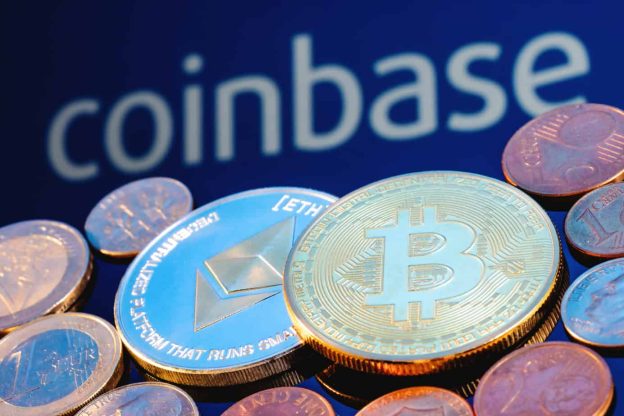
Coinbase Registers with the SEC

Coinbase Registers with the SEC

On May 10th, Coinbase announced that it had filed for a registration statement with the Securities Exchange Commission (SEC). The announcement came along with their reports for the first quarter of 2022, where they reported missing the revenue estimates that were previously given by analysts and sending shares down as much as 19%.

In a released statement from Coinbase discussing their registration statement with the SEC, the statement was intended to be used for potential prospective offerings, including the sale of new securities. However, new securities won’t be immediately available.

This statement, and their recent Q1 results, came during a major sell-off in the crypto market which has been referred to by some as a crypto crash, with Bitcoin dropping below $30,000. Coinbase has lost more than 70% of its value since late March.

Coinbase commented on its goals and approach to capital structure over the years, stating that its aim has always been to raise capital at the lowest cost possible to its shareholders. They expect that the shelf registration would speed up the process of issuing securities to a matter of days, which they hoped would allow them to time the market conditions better.

While these are the company’s statements on the matter, the reality is that their decision could have been driven by other factors, such as the uncertainty surrounding crypto assets regarding the U.S. federal securities law, as well as the mounting pressures for crypto regulation.

Coinbase reported, in their filing, that the SEC traditionally doesn’t confirm the status of crypto assets as securities in advance. Since the evolution of crypto assets and their classification is still ongoing, it’s difficult to predict how to classify them. The only crypto assets that the SEC has given a definitive view on are Bitcoin and Ethereum, which they don’t see as securities. However, Coinbase stated that the SEC’s views are not binding for courts, other agencies, or even the SEC itself. Coinbase believes that should the SEC change its approach, it could have a significant impact on the business.

Other crypto assets have yet to be ruled out as securities by the SEC under their current rules, though the company’s analysts argued that none of the assets traded on their platform are considered securities.

For their part, Coinbase gave a warning on their filing for people investing in crypto assets. They warned that should the SEC, or any other regulatory authority be it national or foreign, determine that a crypto asset traded on the platform was a security, Coinbase wouldn’t be able to continue offering said asset until they could do so in a compliant manner.

This statement helps shed light on Coinbase’s decision to file with the SEC, as they seem to be preparing in advance to offer crypto assets on their platform that are considered a security by the SEC or any court.

The registration has more potential benefits for Coinbase, as it would allow them to provide the company’s crypto products and assets on top of those from third parties. As of now, there is regulatory uncertainty regarding the company’s yield-generating activities such as staking and lending. These could eventually be considered securities, but the filing would allow Coinbase to act quickly on that matter.

Coinbase also revealed that it had received investigative subpoenas from the SEC regarding its stable coin and yield-generating product plans. Should these be classified as securities, the registration could help the company keep these services afloat by meeting the necessary compliance measures.

In the last part of their statement, Coinbase mentioned that they believed this shelf registration statement would enhance the company’s flexibility, as well as enable access to other capital markets more efficiently and effectively when market conditions were optimal.

inflation moderates slightly

Inflation Moderates Slightly in March 2022 After Increasing for 8 Months

The consumer price index (CPI) fell from 8.5% in March to 8.3% in April, according to the report from the U.S. Bureau of Labor Statistics, failing to meet the expectations of Wall Street for consumer prices and inflation. Economists had previously forecasted a drop to 8.1% for the same time period, owing to raises in rates from the Federal Reserve. However, it still was the first drop in eight months. While experts believe that inflation may finally have peaked, others feel that the Federal Reserve will need to be more aggressive regarding the interest rates for things to return to normal levels.

This is reflected in the way that prices went up. The consumer price index went up 0.6% for most items between March and April, with the exception of groceries and gas. Wall Street expected a rise of only 0.4%, given that the increase was 0.3% in March. The fact that the increase doubled is a sign that inflation is still a factor.

This increase in prices caused the stocks to end lower once more. The Dow Jones Industrial Average finished 1% lower, or over 300 points,the same day the report was released. The S&P 500 meanwhile fell 1.6%, and Nasdaq Composite fell by 3.2%.Some of the heaviest hits were felt in the Tech industry, with companies such as Netflix, Amazon, Apple, and Tesla falling by 3% or more due to the continued offload of shares by investors.

This data has worsened the state of the crypto market, as well as further eroded the confidence of its investors. Bitcoin’s price fell another 7% to reach around $29,000, its lowest point since the late 2020-early 2021 surge in price. Though it has since stabilized at around $30,000.

While food, shelter, and vehicle prices surged, gas prices fell around 6%, which helped counteract the overall increase and slow the rate of inflation. Experts believe that the peak of inflation has most likely been reached, but that the prices will continue to be above the Fed’s expectations during 2023. The chief economist of Comerica Bank, Bill Adams, stated that the slower inflation seen in April was most likely an effect of March’s gas price surge, itself owed to the Russia-Ukraine war.

This slow down of inflation, after a 40-year high, paints a slightly better picture after months of price increases. Still, April was the second-highest inflation level in four decades. The Federal Reserve set a 2% rate of inflation as its target, but experts expect that to rise to 5% or 6%, one of its highest points in history.

Chris Zaccarelli, chief investment officer of Independent Advisor Alliance, stated that the Fed would need to raise rates more quickly and to higher levels in order for things to stabilize. He predicted at least four 50 bps rate hikes during 2023. On May 10th, one day before the report was revealed, United States President Joe Biden referred to inflation as his top domestic priority and the mainproblem that families are currently facing. This increased escalation in inflation is owed, in part, due to disruptions in supply chains caused by the worldwide COVID-19 pandemic.

credit card processing trends

Trends in Mobile Credit Card Processing for Fall 2021 and 2022

Over the last 12 months, almost every retailer felt the need to shift from the in-store traditional payment methods to the new-age digital methods. Businesses have also understood that this shift has a vast scope – it is not just a momentary reaction to the prevailing coronavirus pandemic, but a long-term trend. IBM’s U.S Retail Index study revealed that the transition to digital payment was speedy due to the pandemic, which otherwise would have taken five years. E-commerce purchases are predicted to grow by 20% this year. 

Even in these uncertain economic times, retailers can be confident that online and hybrid shopping will continue to grow. Today, the customers have become more aware and want more flexibility and security in mobile solutions from these brands. And therefore, brands cannot just sit quietly. 

We know that even if the pandemic ends, the e-commerce growth and related customer needs are here to stay. For businesses to keep up with the competition, they must shift to modern payment methods. This article will discuss six trends in mobile credit card processing for fall 2021 and 2022 that will make their way into the future.

#1 E-Wallets

With the increasing number of smartphones, e-wallets have become the most convenient mode of payment for consumers. A mobile wallet syncs your bank accounts and credit cards and turns your smartphone into a contactless payment device. According to some statistics, the global estimate of smartphone users in 2021 was 3.8 billion, compared to 2.6 billion in 2016. A smartphone has become a necessity as it gives you apps for every need from banking to driving, social to nutrition tracking related to all aspects of your life. 

55% of Americans use their smartphones when shopping, all due to the increasing use of e-wallets like Google Pay and Amazon Pay. With mobile wallets becoming popular and the growing use of peer-to-peer transfers, the security of these apps has also increased. E-wallets are going to change the way how we pay now. It is one of the most significant trends in mobile credit card processing that cannot go unnoticed. 

#2 Social Shopping

A retailer’s most remarkable ability is being able to use personal relationships to his advantage and engage their customers in their business. More than 78% of customers trust the recommendation of their friends and family for shopping, so brands can count on social media sharing and engagement as a better proof of purchase than a direct message to the consumer.

Retailers can hire social media influencers for promotion and make use of social media tools to get to know their customers better. They can further promote positive reviews, give better customer service and sell directly on the platform where their customers spend substantial time. 

#3 Contactless Payments

During the pandemic time and earlier, we would hesitate to touch cash as we did not know how many hands the bill was exposed to. With credit cards, handing them over to the cashier for a swipe and typing your card pin is avoided to minimize the touch. Things have changed much over the past months, and Mastercard’s survey suggests the same. The survey says that more than 51% of people use cashless payment in some form. Contactless payments are now more secure than the traditional swipe method with scanning technology to complete the transactions. All this is possible because of the encrypted microchips and mobile apps.

#4 Mobile POS Devices

As more and more consumers use contactless payments, retailers align their shopping experience with POS technology. With the help of mobile POS, retailers can accept payments anywhere as these are wireless devices and not connected to checkout locations. This gives even the smallest brick and mortar storse the flexibility to offer customers multiple checkout locations. With various payment solutions, customers can safely pay in line with social distancing norms. More than 73% of customers want more checkout options with advanced technology. Having said this, mobile point-of-sale devices are fast becoming a necessity for retailers large and small.

#5 Biometric Authentication

If someone had talked about authenticating a process using biometrics five years ago, it would seem like a scene from a futuristic movie. Now this process is everywhere and most of use this technology daily to unlock our phones. Biometric authentication consists of fingerprints, face, and voice recognition that we use today to unlock e-wallets. Biometric authentication gives more security as it is unique to each customer, and due to this trust, the technology attracted huge investments. According to a study by Mobile Payment Authentication & Data Security, by the year 2024, the use of biometric authentication is expected to grow more than 1000%, with a transaction value of more than $2.5 trillion. By the end of 2019, transactions valued at $228 billion were already authenticated by biometric technology.

#6 Flexible Payments

With consumers demanding more convenience and security while using mobile wallets for payments, the pandemic has also forced them to maintain and stick to a budget. Retailers now offer options like installments or Buy Now Pay Later to their customers. With enhanced security, convenience, and accountable spending, consumers have accepted these offers enthusiastically. Consumers get maximum flexibility with the zero-interest installment schemes which the retailers offer at the point of sale. It helps the customers to make large purchases easily without worrying about the having the full payment up front. The popularity of e-commerce and online shopping is growing drastically. The mobile payment strategy of the retailer will play a significant role in the purchase pattern of their customers. This strategy is almost 80% responsible for the rise or fall in sales. If the customer is getting complete flexibility in payments, multiple payment choices, and a streamlined checkout process, nothing can stop him from completing the decisive step of the final purchase. 

Bottomline

As the digital world is changing fast, all kinds of e-commerce stores and other retailers need to adapt to the latest payment trends as soon as possible. With contactless payments and e-wallets offering complete convenience to consumers, they are becoming popular at an unimaginable speed. If your customers get absolute security along with seamless checkout, they will keep coming back to shop at your store. Therefore it is important for all fintech companies to keep a watch on. One thing is certain – that even if the pandemic ends, the e-commerce growth and the related customer needs are here to stay. For businesses to keep in the competition, they must shift to modern payment methods.

merchant services

Top Merchant Services Trends to Watch in Fall 2021 and 2022

The past year has been full of surprises for merchants, processors, and everyone involved in the payment processing ecosystem. There have been many unexpected highs and lows, but overall the trajectory of the industry has been positive despite some immense challenges. We saw the evolution of payment channels to handle consumer demands and COVID-19 threats. Governments imposed social distancing rules. Customers of all ages quickly shifted to contactless digital payments. There are many important and emerging trends to watch in merchant services through fall 2021 and into 2022.

COVID19 had a major impact on the economy over the past 18 months. While it isn’t going away anytime soon, we have reasons to be optimistic about the future. A study by JP Morgan showed that about 54% of consumers said that they started using digital payment tools more due to the pandemic. There have been significant developments in the industry, and looking at the trends we have all the reasons to be excited about merchant services in 2022.

Here are the top merchant services trends to watch in the fall of 2021 and 2022.

#1. Online Shopping Changed Digital Payments

When we had the COVID-19 first wave, we saw more and more consumers using online services. And businesses had to adapt to the new situation. A study showed that more than 76% of companies agreed that most consumers are now using different payment methods. Digital wallets are now a new normal and people are using them in buying all types of things over the internet. Even those customers who were not comfortable sharing their financial details with businesses have started to shop regularly. More than 18% of the consumers shopped online for the first time during the pandemic. People became confident and habituated to online payments. 38% of consumers said that even after COVID-19 is entirely gone, they will continue to shop online more. This is one of the most encouraging signs for merchant services trends that are going upwards in 2022. It is expected that even after 2022 it will grow exponentially.

#2. Spending and Tracking Tools for Payments

During the pandemic, the businesses saw that consumers had a different paying pattern. They also saw that consumers needed to manage their spending accurately too. With the rise of multiple digital wallets, consumers are getting added advantages. With wallets, the biggest advantage is that they now have a clear picture of how, when, and where they spend their money. This trend was accelerated further due to the COVID-19 pandemic. There are many mobile apps that offer wallets and quick payment options. They also offer you options to manage your spendings and also provide financial advice. With the use of AI (Artificial Intelligence) in future apps, it will be easy to track and control spendings.

#3. Increased Use of Biometric Authentication

The first factor that shook the payment industry is PSD2. The industry will see a significant impact on the growth trends next year. This is also because the time limit to implement the PSD2 strong customer authentication was ending soon. From January 2021, the transactions without any multi-factor verification will be automatically declined. We will witness a significant increase in the use of biometric tools for payment verifications. A study by Juniper Research also predicted that the use of biometric verification for transaction value would be more than $210 billion just in 2021. And the figure will touch $3 trillion by the end of 2023. This trend will increase in the coming years. With the introduction of compulsory biometric verification, people have started to trust online payment gateways. They feel it is far safer now to spend online. Thus the increased use of biometric authentication has boosted the trend in a positive direction.

#4. Global Rise in Real-time Payments

With the COVID-19 pandemic, experts predicted that real-time payments would see good growth in the US. This trend was increasing in 2021 where the value of real-time payments increased by more than 50%. But it did not just limit the growth to the US. One of the studies predicted that real-time payments will grow at a rate of 29% globally between 2020 and 2025. COVID-19 started the trend of real-time payments and will also accelerate its growth in the next year too.

#5. New Focus on 5G Technology

The year 2020 also saw a prediction about the growing importance of 5G and IoT. Where the pandemic accelerated many expected trends, the adoption rate of 5G slowed down. At the same time, far more people were spending much time at home, entertaining themselves over the internet. The number of people who shopped online grew exponentially. And the 4G could have not matched this overload. It failed miserably. 46% of businesses agreed that they lost sales due to slow checkout times. All credit to the 4G technology. The businesses wanted a frictionless in-store experience for their customers. So they now have started shifting their focus to 5G technology to overhaul the store checkout time. The sooner 5G technology is adapted by the market, the better results for merchant services trends in 2021 and 2022.

#6. A Steep Rise in Subscription Models

The pandemic saw many businesses launching their subscription models because of the business need. The customers were also looking for more benefits and they also showed great interest in subscription-based services. More and more customers were planning to increase their subscriptions from what they had earlier, and the age group of 18-34 years was a frontrunner in this trend. Surprisingly, this trend was not limited to digital services only. The famous Pret A Manger coffee chain started its in-store subscription service for coffee in the UK. The subscription model was a success and many businesses will use it and replicate a similar success for their products and services.

#7. Crypto Payments Go Mainstream

Anything that can boost the entire ecosystem of merchant services in the coming years is the use of crypto payments. The fintech companies have been working to find more real-world use for cryptocurrencies. Initially, it was a big challenge to start a system of crypto payments. Big projects like Facebook Libra saw significant setbacks due to regulations. 2021 saw a breakthrough in eCommerce payments. Many big payment processors announced that they would be enabling payments in cryptocurrencies at merchant locations as a priority. This is encouraging and will certainly boost the online payment numbers in the years to come.

#8. Using AI and Machine Learning to Prevent Fraud

AI is comparatively a new technology. But the rate it is growing is astonishing. And the banking sector was the pioneer in implementing this technology. As this technology grows, the online payment gateways will get more secured and robust. For the last few years, online crimes have been increasing rapidly. And the only way to control this is AI implementation that can learn fast and respond with enhanced security. Banking sectors need to expedite the process of implementing AI systems because during the corona pandemic online transactions grew multifold. And fast implementation of AI to protect consumers and merchants is the need of the hour. Although a recent report shows that banks have spent more than $217B for implementing AI. And they plan to implement it further and faster to safeguard consumers from any type of fraud.

#9. Payment Apps with the Customer Loyalty System

Businesses are not only adapting digital payments but also encouraging their customers. They are pushing their customers to use the digital mode for transactions. To do so they offer rewards, discounts, loyalty points, and various other loyalty schemes to their customers. The customers have responded well. Each time they make a transaction, they get benefits. This is a mix of traditional and digital systems. The customer loyalty program has been successful in the past and it will still define merchant services trends in 2022 and beyond.

#10. Peer-to-Peer Payments Merchant Adoption

Another prediction that came true was about the increase in peer-to-peer payments. In the US alone, more than 50% of consumers are now using P2P apps. The use of cash has been declining. The use of apps to send money to family and friends is increasing rapidly. And this will see faster growth in the next few years. But this growth will not be for the US alone. Other regions like South America will also see an explosion in the use of such apps. P2P networks have been positively pushing the merchant services trends since the beginning of the pandemic. And it is expected that this trend will continue to grow upwards for many more years to come.

low risk on wooden blocks and coins stack on wooden table rrisk concept in business or investment 191313013

What Do Merchant Services Interpret As Low-Risk Accounts?

Merchant services providers will dictate the rates you spend over your risk level. A merchant services provider will review your risk level surrounding your operations and how often you manage returns and other issues.

A high-risk business will spend more on interchange fees and other markups. It may also have more stringent contract rules and other standards for operation, with the business showing too much unpredictability in how it can handle its funds.

So what types of merchant services accounts are low-risk ones? Some businesses will have a lower risk because they don’t handle as much money, or they are in industries that are a little different from what people are used to managing. You can check your current efforts to see whether you are at high or low risk in managing your work.

How Much Money Is Being Handled?

Online merchant services will deem businesses that operate less money on average as being low-risk entities. The values of any chargebacks or returns will be minimal for these entities.

A low-risk company may be one that handles less than $20,000 each month. It could also be a company where the average credit card transaction one processes is worth less than $500. It is easier for some merchant services teams to support businesses that don’t handle as much money, as the potential value of losses will not be as dramatic.

What Industry Do You Follow?

Your business’ industry can dictate your business’ risk value. A merchant services team can review your MCC code to determine which field you work in, thus helping dictate the rates you wish to manage.

Stores that sell traditional clothing products, household goods, and other common items might be low-risk places. But a spot that sells things like firearms, timeshares, gambling-related activities, and other potentially high-value or volatile items might be a high-risk company.

The Number of Chargebacks

Your risk may also come from the chargebacks you collect. A chargeback entails cases where someone’s credit card purchase is refunded due to an error or other issue. A business with fewer chargebacks will have less of a risk.

A chargeback takes a bit to manage, as it involves moving money back and reversing various fees and charges. Some online merchant services might not accept businesses that take in too many chargebacks unless they can produce substantial rate hikes.

What Country Do You Operate From?

The country you work out of may also influence your risk. A low-risk company is traditionally one located in a country that is financially and economically stable. These include countries that have strong standards for which businesses can operate and how they can work online. Some of the more prominent low-risk countries include the United States, Australia, the United Kingdom, Canada, Japan, and various places in the European Union. Since the risk starts low there is always a risk when working with different countries due to their currency as well.

Do You Handle Returns?

Not all returns on your credit card transactions come from chargebacks. Your customers might also return products they purchased with you. They are still entitled to credit card refunds for their returns.

Your business will have a higher risk if you have too many people completing returns. These returns are often likely for clothing and personal care products, but they can occur at any point.

Talk with the merchant services team you wish to contact for your credit card processing needs to see what your risk is and what rates you can utilize. Don’t forget to review your business yourself to see what it is doing right or wrong and if you need to make certain changes to keep the risk of operating your business under control.

alphabet letter block in word high risk on wood background 159541643

Why is a Business Considered High Risk For Merchant Services?

High risk businesses are subject to more expensive merchant service charges than others. A business will spend more to process each transaction if it is a high-risk entity. It could also be subject to increased charges. Contract terms for the business could also be restrictive. Some companies may even have some of their revenues tied up in rolling reserves. They may not get those funds in their reserves until weeks after they are paid. 

The issues that come with being a high-risk business for merchant services are significant. But what would cause a business to become high-risk in the first place?

You must be aware of these concerns that can cause a business to become risky for merchant service providers. There’s always a chance you might fall into this category.

High Risk Business For Merchant Services – Top reasons

The Industry May Be Risky

The most common reason why a business can be considered risky is because of its format. Businesses in certain fields are more likely to experience chargebacks, fraud, and other concerns.

High Risk Business - Online electronic sales

Some of the industries that are often high-risk include:

  • Adult product businesses
  • Bail bonds
  • Online electronics sales
  • Debt services
  • Timeshares
  • Telecommunications sales, including for VoIP services or calling cards
  • Travel services
  • Firearm dealers, including those who sell ammunition
  • Software downloads
  • Dating and personal sites
  • Online auctions
  • Multi-level marketing programs
  • General business opportunities; include promotions where someone could invest in a business endeavor that hasn’t gotten off the ground yet

These industries and many others have higher chargeback rates than others. Their financial stability and legality can also be in question in some cases. There’s a chance a company might shut down or become heavily regulated, causing its risk to increase.

The Products or Services Are Questionable

A business can also be a high-risk one if it sells products or services that might be of concern to some merchant service providers:

High Risk Business - selling memberships
  • A company sells expensive items. These include customized vehicle parts, high-end computing systems, and many other high-price things.
  • A business can provide memberships or other items that entail automated recurring billing processes. Billing errors often occur here, thus leading to chargebacks.
  • A business could sell items that banks might ban. These banks could prohibit the sale of certain products or services. While some banks may allow these sales, the fact that others will not do this could increase a company’s risk.
  • Some of the products a website offers can be future deliverables. These include things like event tickets, hotel or transportation reservations, and other things that will be scheduled for later. A business may issue chargebacks or returns for cases where these events are cancelled or the purchaser has buyer’s remorse and wants to walk back the transaction.

These threats are significant ones that can occur among many businesses. A business can review its operations to see what types of items or services it sells to determine its risk.

MATCH Listing

High-risk businesses will be on the MATCH list. The Merchant Alert To Control High-Risk list highlights merchants whose accounts have been terminated in the last five years. The MATCH list highlights companies that have struggled to manage their accounts and have been deemed unable to work with them as desired.

Not Enough Financial Data

A merchant service provider may list a business as high-risk if it doesn’t have enough company financials to review. A business must have enough money to support its chargeback liabilities. A company that doesn’t have enough proof to show it can handle chargebacks will be charged more.

Not Enough Financial Data

This problem is more prominent among newer businesses. But more established companies could also have the same issue. Some businesses may be willing to conceal their financial data to reduce the risk of losing funds.

Poor Credit

A business could also have a poor credit rating. The weak rating may be due to a business running up significant debts and being unable to manage its inventory. A business with a weak credit score may be high-risk due to how it might be unable to manage chargebacks and other threats. A business needs to manage its funds well, or it will be unable to get a better credit rating going forward.

Time In Business

Most business owners don’t assume that the amount of time they’ve spent in business will influence their risk. But businesses that have been around for a while won’t be as risky to merchant service providers. A long-running business will be more established and will have an idea of how it can run its operations. It will be more stable, thus reducing its general risk.

Online Operation

A business can reduce its risk for chargebacks by managing physical card transactions. But companies that don’t see the actual cards these customers use will be high-risk entities.

A business that operates online will complete CNP or card-not-present transactions. These deals allow someone to enter one’s card data online. While a website might offer a secure platform for transactions, there’s always the chance that someone might engage in card fraud. Someone who isn’t the proper customer might take the physical card and enter it into a website for a purchase. The risk of purchase fraud will increase the general risk that the business holds.

Check Your Business Status

Take a good look at your business and see how it operates and functions. Be aware of what it is doing and that you have control over how you operate things. Look at what you sell and how your finances look, especially if you’ve been around for a while. Your review can help determine if your business is a high-risk entity and if you’re going to spend more on credit card processing efforts.

But don’t think that if you’re a high-risk business operator you can’t find merchant services. You can still look for many merchant services that can support high-risk entities. But be advised that you will still pay more for the service than if you were at a lower risk than what someone is often willing to afford or support.

conceptual business illustration with the words electronic benefit transfer 111905607

How Can You Qualify For EBT Merchant Services?

Electronic Benefit Transfer or EBT merchant services will let you collect payments from people who have EBT accounts. You can help people who qualify for EBT benefits get access to the foods they need. You won’t spend anywhere near as much in processing EBT payments, as they are government-supported transactions. Your business will also become more popular, as customers who have EBT benefits can recommend your business to others.

You can only utilize EBT merchant services if your business qualifies to serve EBT customers. Your business must apply to be a part of the Supplemental Nutrition Assistance Program or SNAP before you can accept EBT payments.

What Stores Are Eligible?

Only eligible stores can use EBT merchant services. You must meet one of two standards established by the United States Food and Nutrition Service:

  1. You must have a substantial inventory of staple foods.

You will need three stocking units of three staple foods in each of the SNAP program’s four staple food categories. These four staple food categories are:

  • Fruits and vegetables
  • Breads and cereals
  • Meat, fish, and poultry
  • Dairy products

You must also have three stocking units of one perishable staple food item in at least two of these categories.

Your business requires 36 staple food stocking units here. A stocking unit is a measure of how many items you have in your inventory. Your business needs to provide enough food here, although the specific amounts you’ll require will vary by food.

  1. You could also derive at least 50 percent of your gross retail sales from sales of foods in the four staple food categories.

You can take your gross retail sales and remove non-food sales, prepared or heated food sales, and accessory food sales to see how much you are selling in staple foods.

Qualify For EBT Merchant Services: Provide the Necessary Info

Qualify For EBT Merchant Services: Provide the Necessary Info

You must also include the proper info on your business to qualify for EBT sales and EBT merchant services. You’ll need these points in your application:

  • Details on all the owners and partners in your business; tax numbers and other identifying features may be necessary
  • The estimated sales totals for each category of items you sell
  • Details on what you sell, including how you support the staple food categories
  • Banking info on where your SNAP deposits will go; these are the funds you will utilize to cover SNAP transactions at your business
  • Details on the EBT merchant services team that will provide you with the necessary equipment for processing EBT payments

The timeframe for when you will be approved will vary surrounding the backlog the government has for applications. It could take weeks or even months to get a response, but you can always check the application of your status online if necessary.

EBT merchant services will be there to help you collect EBT payments from eligible customers. You’ll help everyone with their needs, but you must also ensure you qualify for everything before you start accepting these payments from your business customers.

How Does EBT Work?

How Does EBT Work?

Electronic Benefit Transfer (EBT) is a system that enables individuals and families to receive government assistance benefits in an secure manner, without the need for paper checks or vouchers.

So how does EBT work? It begins by providing recipients with an EBT card to a debit or credit card. These cards are loaded with the benefits they qualify for, such as SNAP (Supplemental Nutrition Assistance Program) WIC (Women, Infants, and Children), or TANF (Temporary Assistance for Needy Families).

When making purchases at retailers recipients simply swipe their EBT cards through a point-of-sale machine. The purchase amount is then deducted from the balance on their card.

EBT transactions are processed instantly using networks. Recipients can also check their account balances online or by calling a toll number provided by the issuing agency.

It’s important to understand that EBT can only be used to buy approved items within categories. For instance, SNAP benefits cover food items, like bread, milk, fruits, and vegetables. Cannot be utilized for alcohol or tobacco products.

EBT has made the distribution of benefits and has helped to maintain the dignity of those who require government assistance by providing them with access, to necessary goods, without any social stigma.

Future of EBT and Potential Advancements

Future of EBT and Potential Advancements

As technology continues to progress so does the potential, for advancements in Electronic Benefit Transfer (EBT) systems. The future of EBT looks promising with possibilities on the horizon.

One area that shows promise is the integration of applications with EBT systems. This would allow users to conveniently access their benefits through their smartphones eliminating the need for cards or paper vouchers. With more and more people relying on smartphones for tasks this advancement could greatly enhance accessibility and convenience for individuals receiving benefits.

Another exciting advancement is the inclusion of biometric authentication methods in EBT systems. This involves using fingerprint or iris scanning technology to verify a user’s identity during transactions. Not only would this improve security by reducing fraud and unauthorized use but it would also simplify the process by eliminating the need for PIN numbers or passwords.

Moreover, ongoing research is exploring how blockchain technology can be utilized within EBT systems. Blockchain has garnered attention due to its transparent nature making it an excellent candidate for enhancing transactions like benefit transfers. By leveraging technology EBT systems could further enhance security measures. Streamline auditing processes.

Additionally, artificial intelligence (AI) holds potential, in advancing EBT systems.
AI algorithms have the capability to examine patterns, in data and provide predictions based on an individual’s needs and spending habits. This enables benefit programs to customize assistance programs effectively addressing requirements, with efficiency.

When envisioning the future of Electronic Benefit Transfer (EBT) we can anticipate advancements that offer immense potential. These developments encompass applications, biometric authentication methods integrating technology, and utilizing AI. Not do these advancements promise to enhance accessibility. They also aim to bolster security measures concerning benefit transfers.

Frequently Asked Questions About EBT

Woman Doing Online Shopping Using Credit Card 103311834

Merchant Services Trends for 2021

With the advent of smarter technologies in the financial industry, the payment processing sector has undergone a revolutionary change in recent years. These trends are shaping the way merchants would deal with their everyday business in the upcoming days, especially after the pandemic crisis.

Although contactless payments started out as a necessity the previous year to prevent the spreading pandemic, it is expected to gain popularity as the mainstream payment mode. Both customers and businesses find it convenient, fast, and secure, and it hastens the entire checkout process.

Being a business owner, especially in the eCommerce sector, it’s important to understand the latest technologies and new implementations in the payment processing industry. Here is a list of the top credit card processing trends that you must know to stay afloat.

1.  Buy Now, Pay Later

As the name suggests, this payment method offers the highest form of flexibility to buyers by allowing them to own a product and use it before completing the payment. In this case, the payment is usually made in easy installments as per the convenience of the consumer.

The best thing about the Buy Now, Pay Later system is that it involves no interest or late fees if you make the payment on time. Some of the top benefits of this trend are –

  • It increases the basket size of the customers, which is a plus point for merchants. Shoppers tend to add more items to their carts since they don’t have to pay for them immediately. As a result, it enhances the cash flow of both the merchant and the customer.
  • It reduces cart abandonment rates. A study conducted by Salesforce has shown that 85% of customers have abandoned their carts in the second quarter of 2020. This may require the merchant to spend more money to make these buyers complete their purchases. However, the new Buy Now, Pay Later trend may solve this problem and help merchants regain their lost revenue.
  • It boosts long-term growth. Buy Now, Pay Later offers us the flexibility to pay for our purchases, and it helps manage our budget more efficiently. Therefore, it is a highly demanding payment mode and is expected to facilitate business growth.

2.  Mobile Payments

Mobile payments are not new, and customers and businesses have been using this method even before the pandemic. However, it grew significantly after the coronavirus outbreak as it prevents the spread of the virus and is a better alternative to credit card payments as well.

It all started when Apple introduced its mobile wallet technology by launching Apple Pay in 2015. Soon after that, other brands like Samsung, Google, Chase, etc., have come up with their mobile wallet versions, all of which help users transfer funds instantly and flexibly. By 2017, 39% of shoppers in the United States were using smart mobile wallets to make payments at retail stores and eCommerce portals.

Summing up the benefits of mobile payments, they are –

  1. Convenient and Flexible
  2. Allows you to pay from anywhere, at any time.
  3. Provides numerous payment modes.
  4. Highly time efficient.
  5. Offers an added layer of security.
  6. Enables you to manage your expenses better.
  7. Comes with exciting deals and offers.

3.  Frictionless Payments

Who doesn’t like to experience a smooth and efficient buying process? Offering frictionless payments can make you stand out and give you a good competitive edge. At times, when two merchants are providing the same product at the same price point, what really makes one of them the preferable brand is the number of flexible and seamless payment options it is accepting.

Hence, business owners must widen their payment methods by accepting more cards and other different transaction methods like digital wallets, gift cards, loyalty programs, installments, or by reducing surcharge fees. Having such a wide variety of payment methods will surely make your customers return, thus increasing your brand loyalty.

4.  Artificial Intelligence and Machine Learning

The advancements in AI and ML have been strongly felt in the past few years, including the payments industry. AI technologies can be extremely beneficial for merchants who can reconcile their payments better using anti-fraud systems and smarter applications.

For instance, technologies like personalization and automation of the POS system can streamline consumer experiences and offer high security levels while processing payments. It also enables merchants to manage their vital data as well as settle payments with ease.

5.  NFC and EMV

NFC or Near Field Communication is a popular modern payment system because of its better security standards and ease of use. NFC is a process by which data can be transferred wirelessly via smartphones, tablets, laptops, and other devices when in close proximity to the device or terminal receiving the data.

In the payment industry, NFC technology is the driving force behind contactless payments involving eWallets like Apple Pay, Google Pay, Android Pay, and other contactless cards.

EMV chip, similarly, is a tap/wave technology associated with credit cards and is another popular type of contactless payment. EMV (or Europay, MasterCard® and Visa®) is a more secure method of transferring funds using a chip embedded within debit, credit, or prepaid cards.

EMV chips can help reduce the liability of both the merchant and the credit card processor since the transactions are more secure. Furthermore, EMV payments are usually cost-effective since they come with slightly lower processing fees for merchants compared to the regular swipe/touch payments.

6.  Cloud Migration

Cloud migration is gaining momentum rapidly as it comes with numerous benefits. It is defined as the process of transferring applications, databases, and IT processes to the cloud. Cloud migration may also involve the process of transferring data from one cloud to another.

Although many financial institutions still work on legacy systems, they are soon expected to change their processes. By adopting cloud solutions, payment processing systems would be able to access, store, and process tons of data over the internet.

The cloud migration system would eliminate the need to store and manage data on physical devices, which is a cumbersome process and quite risky. With cloud technology, your data will be secure, and you can have better agility and scalability. Besides, these solutions come with low operational costs and an added efficiency.

Business Accounting Team Meeting In Room Office Using Pen Pointing At Paperwork Finance Concept 154771088

Chinese Fintech Firm, Ant Group, Forced to Postpone Record IPO

China made a surprising decision when they postponed Ant Group Co.’s IPO. The decision caused Hong Kong shares to plummet and made investors wonder about the financial future of the fintech company.

The postponement came after a meeting between one of Ant’s founder and Chinese regulators. The Shanghai Stock Exchange also removed the company from its listing. They claim it’s due to disclosure and listing condition issues that Ant Group can’t meet.

Why did it happen?

Jack Ma, a co-founder of Ant Group, openly told Chinese regulators that they were excessively risk-averse and it didn’t live much room for innovation. This move was a first for Chinese regulators, though, especially the night before such a large IPO release.

According to the Shanghai Exchange, recent changes in fintech regulatory may make it hard for Ant to pass the requirements. This mostly pertains to the information disclosure.

What Would the Changes Do?

The new regulations put the squeeze on Ant and many other fintech companies. Ant specifically would face new rules requiring them to have more cash reserves for the loans it offers. This would put more credit risk on the company.

Is that the reason Ant Group IPO was canceled? It’s yet to be determined. Some think it’s a power move by Beijing to remind Ma that they are in charge. The move was still drastic on China’s part as it hurts capital markets as a whole, but it could be a precedent they are trying to create.

A Detrimental Move for Ant Group

The move to pull Ant’s IPO cost them over $3 trillion in orders that were pending from retail investors between its two listings. In China alone, the listing would have brought the company $34.5 billion, making Ant worth $313 billion. This would have been one of the largest IPO releases in history.

As far as Ant Group is concerned, they feel they will rise above. They will continue to converse with regulators, figure out what they need to do, and come back stronger than ever.

Five Things To Consider When Switching Merchant Services Providers In 2020

Because of the complexity of credit card processing, it’s hard to know when or if to switch merchant services providers. With the added confusion of automatically renewed contracts, equipment leases, and hidden fees, a business may feel it needs to outsource the research on their already outsourced credit card processor. Here are five things to consider when switching merchant services providers:

1. Contracts

Switching Merchant Services Providers

Before making the switch to a new credit card processor, check with your current provider on the status of your contract. You may have transitioned to a month-to-month contract, in which case it’s easy to switch. If you’re still under contract, or worse, your merchant account provider automatically renewed your contract, it still may be worth the potentially hefty cost to break the contract and switch in the long run, depending on the fees you’re currently paying.

2. Equipment

Leasing equipment is one of the least cost-effective aspects of merchant services. If you’re currently leasing equipment, it would be in your business’s best interest to find a new credit card processor that will either sell the equipment to you at cost or – in an ideal world – give you equipment for signing on to their services.

3. Rates & Fees

Interchange fees are confusing, and because of their complexity, many merchant service providers can sneak extra charges into your monthly bill. If your business is using any payment model besides the interchange plus payment model, it is almost guaranteed you are paying more than you need to. The best merchant services at least offer the interchange plus model for pricing. This alone is a reason to make the switch. 

4. Payment Methods & Security

Cyber Security Data Breach Protection

Your merchant service provider should be able to provide the latest security and technology enhancements available. To protect your business from the liability of a fraudulent charge, your credit card terminal needs to be EMV-compliant at the least. Beyond security, depending on your business and clientele, you may even want to offer NFC-based payments such as Apple and Android Pay

5. Customer Service

The person who sold your business your current merchant services contract is not the same person answering the customer service line. If your merchant services provider is not supporting you 24 hours a day, 7 days a week, you may need to look elsewhere. Your business can’t afford to wait on a callback. You need assistance when you need assistance. Not to mention, the customer service representatives should actually be helpful when you call. Try a test run with your current merchant service provider to see how their customer service will help you when you really need it.

Host Merchant Services

Delivering personalized service and clarity, Host Merchant Services takes the time to explain your payment processing. We want you to understand your monthly statement, and we will ensure that your statement matches our promises during our sales presentation. If you do have questions, you can reach a live representative any time, any day. HMS offers wonderful customer service, as well as great rates.