Tag Archives: lamar smith

Rebuttal of RIAA Opinion

SOPA: Rebuttal of RIAA Opinion Pt. 1

The RIAA just won’t quit. They’re taken up the crusade to push for anti-piracy legislation once again, as seen in this New York Times Op-Ed piece titled “What Wikipedia Won’t Tell You” written by Cary H. Sherman,chief executive of the Recording Industry Association of America, which represents music labels. The content of the piece is incendiary, and that’s being kind. The RIAA is adamant about their stance on piracy and are pressing the issue in every outlet they can. To quote Digital Underground from their Sons of the P album — which currently is not available for legal purchase online due to holes in the DU library in various legit digital music resources — “Like Ice Cube says, Once Again it’s On.”

Everyday They’re Shufflin’

The Stop Online Piracy Act and the Protect Intellectual Property Act were both killed in Congress — shelved because they were too wide open to abuse. The protest against these bills reached a collective crescendo when internet giants Wikipedia and Google and WordPress teamed up with a host of others for an internet blackout. When the largest source of internet information — and grade school kids’ favorite spot for help with their homework — goes dark and the search engine juggernaut that fuels the internet shines its spotlight on your bill, things have finally gotten serious. The U.S. citizens took notice of this blackout, and joined the internet in protest. And Congress heard the people and backed off this poorly written legislation.

But that hasn’t stopped the entertainment lobby. They went back to the drawing board and then returned mere weeks later with a new idea on how to combat online piracy. Unfortunately that new idea was the exact same idea as before. This was seen in the wishlist the International Federation of the Phonographic Industry (IFPI) released. The highlights of this list are essentially that the music industry wants pretty much the exact same things that were in SOPA, the same things that prompted the protest in the first place. A list of seven demands, which include the exact same far reaching calls for search engines and payment processors to police websites individually and be responsible to law enforcement for content they are indirectly connected to.

We’ll get back to this, but for now the point is the music industry felt the need to push for the same stuff that killed SOPA and PIPA. And that came right back to the forefront with Mr. Sherman’s opinion article in the New York Times. Essentially the RIAA wants a do-over and Mr. Sherman is here to tell us why that needs to happen.

Come At Me Bro

So today The Official Merchant Services Blog is going to try to put this issue in its place much like Blake Griffin did to Kendrick Perkins recently. Yes, we are going to Posterize the RIAA. Because the op-ed article indicates the RIAA has soft interior defense and can’t play man to man very well at all. First up we’ll start with the relative hypocrisy of Sherman’s ill-timed article found in this contextual relationship: Suggesting Wikipedia isn’t telling people everything, and then making this comment, “They knew that music sales in the United States are less than half of what they were in 1999, when the file-sharing site Napster emerged, and that direct employment in the industry had fallen by more than half since then, to less than 10,000.”

This is hypocritical because Mr. Sherman is leaving out some very pertinent information — which his employees were just recently bragging about on twitter. As we reported on January 31, the RIAA was excited about the IFPI wishlist because it had a series of statistics that showed the music industry is doing well with digital sales. The music industry claims Wikipedia is being deceptive and then suggests that they are still reeling from Napster, which was effectively scuttled back in 2002. They’re making a play for sympathy from an issue that happened almost a full decade ago, and yet they just got finished gloating about how successful they were this year!

Jonathan Lamy, senior VP of Communications for the RIAA, tweeted that paid subscription services rose 65 percent to 13.4 million in 2011. This tweet was in response to figures released by the IFPI which Lamy was excited to read. Lamy also tweeted that paid digital music services are active in 58 countries, generating $5.2 billion in revenues.

And then Cara Duckworth. The VP of Communications for the RIAA also cited the IFPI figures and then said: “W/more than half of all music sales coming from digital services, we know how Internet works. “Music=Innovation. Declare THAT. #CES #SOPA.”

What the RIAA isn’t telling you is far worse than what Wikipedia isn’t telling you. But Mr. Sherman isn’t about to concede facts when the agenda needs to continue to be pushed. The music industry is finally getting the hang of the digital market. Their own people brag that they know how the internet works. Declare that! But Sherman’s still waving the Napster suit in your face trying to claim that Wikipedia is obfuscating the issue.

It gets worse.

Born This Way

Sherman writes, “While no legislation is perfect, the Protect Intellectual Property Act (or PIPA) was carefully devised, with nearly unanimous bipartisan support in the Senate, and its House counterpart, the Stop Online Piracy Act (or SOPA), was based on existing statutes and Supreme Court precedents.”

The only thing in that statement that is rooted in the reality of what happened with SOPA and PIPA is that there was a lot of bipartisan work. Unfortunately, the work was bipartisan unity on finding problems with the so-called carefully devised legislation. Tech industry experts on both sides of party lines found the problems and holes in the legislation. As we reported on December 27, 2011, SOPA sparked unity in the federal government. And as we’ve written in our in-depth analysis, the bill was not very carefully devised at all. In that analysis we lean heavily on discussion from Congresswoman Zoe Lofgren [D-CA], an expert in the tech industry. We’ll highlight just a bit of Lofgren’s criticism of this bill, with questions raised: “Section 103 also allows a “portion of” a website to be deemed “dedicated to the theft of U.S. property,” regardless of the culpability of the website as a whole. Like many important terms throughout H.R. 3261, the precise meaning of these words is ambiguous, and will require years of expensive litigation to clarify. However, the plain meaning of the words seems to indicate that any large website could face a risk of termination by payment and advertising providers based solely upon infringing material contained in a single web page. 

This is not carefully devised legislation. And as we eventually reported, the bill’s own sponsor admitted he did not fully understand the technical aspect of the bill and he backed off of it. Bill sponsor Lamar Smith is quoted in various media sources as saying:  “I have heard from the critics and I take seriously their concerns regarding proposed legislation to address the problem of online piracy. It is clear that we need to revisit the approach on how best to address the problem of foreign thieves that steal and sell American inventions and products.

To Be Continued

SOPA: Pot Meet Kettle [2023 Update]

The Official Merchant Services Blog has late breaking news to report today. Once again we take on the topic of the Stop Online Piracy Act (SOPA). In perhaps the strangest twist to date for the ongoing saga that is the battle between the entertainment industry to curb piracy and the internet industry to keep their business free of government interference on a micromanaged level — Alex Fitzpatrick from mashable.com reports that SOPA has some SOPA issues.

Lamar Smith Copyright Violation

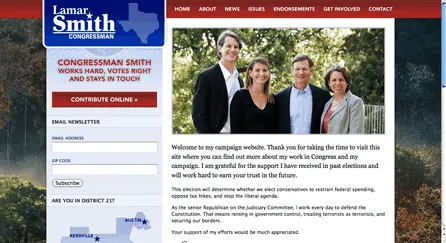
In Fitzpatrick’s article, found here, it is noted that the sponsor of the Stop Online Piracy Act (H.R. 3261) Lamar Smith has a copyright violation on his own website texansforlamarsmith.com.

The article follows a report from Jamie Lee Curtis Taete over at www.vice.com. Taete investigated Lamar Smith’s website for any potential copyright issues. You can see Taete’s investigation here. Taete describes describes the impetus for the investigation: “US Congressman and poor-toupee-colour-chooser Lamar Smith is the guy who authored the Stop Online Piracy Act. SOPA, as I’m sure you know, is the shady bill that will introduce way harsher penalties for companies and individuals caught violating copyright online (including making the unauthorised streaming of copyrighted content a crime which you could actually go to jail for). If the bill passes, it will destroy the internet and, ultimately, turn the world into Mad Max (for more info, go here).

I decided to check that everything on Lamar’s official campaign website was copyright-cleared and above board. Lamar is using several stock images on his site, two of which I tracked back to the same photographic agency. I contacted the agency to make sure he was paying to use them, but was told that it’s very difficult for them to actually check to see if someone has permission to use their images. (Great news, copyright violators!) However, seeing as they’re both from the same agency and are unwatermarked, it seems fairly likely that he is the only person on the entire internet who is actually paying to use a stock image (and he’d be an idiot not to).

So I took a look back at an archived, pre-SOPA version of his site.”

Caught Red Handed

The violation stems from Lamar Smith using this image:

On his site it appeared like this:

Taete fills in the full details of this violation: “I managed to track that picture back to DJ Schulte, the photographer who took it.

And whaddya know? Looks like someone forgot to credit him.

I contacted DJ, to find out if Lamar had asked permission to use the image and he told me that he had no record of Lamar, or anyone from his organization, requesting permission to use it: ‘I switched my images from traditional copyright protection to be protected under the Creative Commons license a few years ago, which simply states that they can use my images as long as they attribute the image to me and do not use it for commercial purposes.

‘I do not see anywhere on the screen capture that you have provided that the image was attributed to the source (me). So my conclusion would be that Lamar Smith’s organisation did improperly use my image. So according to the SOPA bill, should it pass, maybe I could petition the court to take action against www.texansforlamarsmith.com.’

Oh dear. Luckily for DJ, there are people out there like Lamar making new laws to protect the little guy against online copyright theft. Keep fighting that good fight, Lamar!”

No Response Yet

No spokespeople from Lamar Smith have been available for comment on this issue. Maybe when the egg on their faces is removed there’ll be time to address the silliness that stems from the SOPA sponsor not taking enough time to make sure his own site didn’t fall under the extremely broad language that would allow the Department of Justice to shut down his own site.

Luckily for Smith, the bill hasn’t been signed into law just yet, so Google doesn’t have to remove his site from their search engine, and his payment network provider doesn’t have to suspend transactions from the donation portion of his site.

For More Information

To find out more about the Stop Online Piracy Act, you can read the in-depth Host Merchant Services Analysis here.

To read the proposed legislation itself, you can download it here.

Stop Online Piracy Act Controversy [2023 Update]

The Official Merchant Services Blog is going to be quick today. The Holiday Shopping Season is still going great and merchants are still reaping the rewards of the boost in business. But we wanted to take a moment to step out of the holiday shopping mindset and look toward the future. We’d like to point you to a new law before Congress that could have a huge impact on e-commerce and your company’s website: The Stop Online Piracy Act.

The Basics

Let’s get the basics out of the way first. What is the Stop Online Piracy Act (SOPA)? The Stop Online Piracy Act (SOPA) is also known as H.R. 3261. It was introduced in the House of Representatives on October 26, 2011 by Lamar Smith [R-TX] and a bipartisan group of 12 initial co-sponsors. This bill, intended to help stem online piracy and backed by companies like Disney, Viacom, and Time Warner, has set off the alarms of many sites and companies on the internet because it essentially allows the government and private corporations to censor entire sites that they fear are illegally distributing copyrighted material.

Host Merchant Services has provided an extensive review and analysis of the bill here. We look at the entirety of the law and its controversy, as well as a very focused review of what the law has to say about merchant service providers so that our merchants can get an idea of what is in store for them if this bill passes.

What it Means for Merchants

SOPA is being fueled by the entertainment industry, and as such it contains language that allows for a very broad sweeping attack on copyright infringement –– throughout the internet. A Gamespot Article found here calls it “the law that will break your internet.” What it means for businesses and their websites, as well as payment processors, is the law allows copyright and trademark holders to contact advertisers and others who do business with sites that encourage or even allow infringement to ask them to stop. There is no requirement that those copyright holders contact the offending businesses first.

While on the surface this may seem like a great idea because it does give the Department of Justice the teeth it needs to attack online piracy, opponents of the bill argue that the legislation could have ramifications for innocent companies that provide a storefront for a wide variety of small businesses. With a large site like Amazon or eBay, having to take proactive measures to police piracy among their many sub-merchants is a herculean task that could all be unraveled by just one person with an axe to grind. And that gets right to the heart of the problem with the law: the way it is currently written there would be no way to determine that the person reporting the piracy was being truthful.

In short, your business could be interrupted by your website getting shut down. Your website could get shut down due to a report through one of many different channels. Since payment processors are included in this law, it could be something as simple as someone making a claim of piracy about your site, but doing so against your processor, and so your processor has to suspend your site’s ability to take payments.

Moving Forward

The Official Merchant Services Blog will keep you updated on this law as it develops. Currently the most interesting tidbits are:

  • Maria Pallante, Registrar of U.S. Copyrights, has endorsed the legislation.
  • Lamar Smith, sponsor of the bill, has backed off his initial aggressive support of the stance, and can be quoted as saying “I’m not a technical expert on this. I’m trying to ferret this out.”
  • Microsoft, Apple and other members of the Business Software Alliance have backed away from supporting the bill 5 days after the initial hearing before the House Judiciary Committee.

Any questions about SOPA? What are your feelings about this law? Do you think it could interrupt your business? Do you think it has the potential to be abused by web surfers with an axe to grind? Do you think it can effectively police online piracy?