

Tag Archives: International

foreign exchange 9978992

Cross-Border Ecommerce: Three Challenges Defining the Next Decade [2025 Update]

Cross-Border Ecommerce has been inviting for many people and businesses. People are interested in finding products from various corners of the world. Many people or companies also purchase items from countries that have lower tax levels. There’s also the advantage of groups expanding their reach by selling their wares to more parties.

There are many challenges surrounding the cross-border digital commerce industry that businesses must recognize. Any group that wishes to sell products to different countries must understand what they are doing when getting their plans ready. These entail more than just looking at how much it would cost to ship items out to different countries.

Cross Border Ecommerce

Localization

Localization is a significant challenge, as every international market has unique values and ideas. A business must use local concepts to help outside customers and provide them with shopping experiences that fit their needs. These include activities that match a customer’s culture, language, and other points. Before you begin you should always prepare a checklist about the probable e-commerce problems that you might face.

Localization is easy to follow if a few things work. A business can use a few of these points to make it easier to manage:

  • The business website must be multilingual. It should provide terms and ideas that the customers can understand.
  • Images and other media features can be adapted to fit unique outside needs. Some gestures and other concepts that are fine in one country may not be suitable in another, for example. New media points can highlight whatever values a culture may support.
  • A business should support whatever local payment methods work in an area. These include unique credit card networks, online payment systems, or anything else a country might support.
eCommerce trends for holidays in 2023

The best way a company can ensure localization is to consider whether its wares will be popular or viable in one country. For example, a tech goods store might not be as popular in countries with mostly rural populations or places where people don’t have access to some tech items. A business might also struggle to sell high-value goods in the poorest countries. Sticking with countries where a company could sell its items and be successful is ideal. It provides a safer approach to selling products while establishing a trustworthy environment for work.

Cross-Border Ecommerce – Shipping Issues

The next challenge to note involves shipping issues. International shipping is expensive enough. The cost can be high due to the extensive distance necessary for shipping items somewhere.

But many other points can influence what happens when shipping items. Some of these worries to watch for include these points:

  • Customs regulations can entail various new charges surrounding whatever products are being made available.
  • Shipping tariffs can also work alongside regular costs. A shipping company can impose unique tariffs surrounding sales to different countries as necessary.
  • The timeframe for shipping products across borders can vary surrounding time differences, weather changes, and the general distance. Some products might become obsolete or less viable if they take too long to ship out to some places.
  • Not all transit methods work in some parts of the world. Airfreight services may not be supported in some spaces, but land or sea shipments could work. Some transit options may also cost more depending on the situation at hand.
  • Some countries have restrictions on what products can and cannot be brought into their spaces. These limits may entail certain products being dangerous to a local ecosystem, for example.
  • Insurance may be required for some cross-border shipments. Insurance provides protection against items that are lost or damaged. But the extra cost may be too troubling, despite the insurance policy providing benefits if anything wrong happens.

All businesses that want to manage cross-border ecommerce efforts must understand the rules surrounding shipping products across borders. The added cost of shipping things overseas is a small part of the concern.

ecommerce store online
eCommerce Store Online

Currency Concerns With Cross Border Ecommerce

Every country supports unique currencies, whether it entails the American dollar, the Euro, the British pound, the Canadian dollar, or whatever else is around. But each currency is distinct in many ways. Some currencies might change in value a little more often than others.

But the most significant part of handling currencies involves how items are priced:

  • The exchange rate between a company’s native currency and a foreign can vary surrounding the two items. One currency may not be worth as much.
  • People in some countries have unique ideas for what they feel they should pay for items. These totals may be different from what people have in one country.
  • Some countries have unstable currencies, especially in places where the economy is volatile.
  • Some countries may support multiple currencies. These include countries where their economic structures aren’t fully organized. A country might list both the American dollar and the British pound as official currencies, for example.
  • While cryptocurrencies could help skirt one’s way around international exchange issues, not all countries will support them. People in some countries might not have the infrastructure or technical knowledge necessary to manage crypto payments.

All businesses interested in cross-border ecommerce must consider the currencies in the countries they will serve. They must review the exchange rates, the estimated values for products in those new currencies, and how these currencies are changing. Avoiding crypto options is also a sensible idea.

A business must also ensure its website can list a product with the right currency. A customer might abandon one’s shopping cart if that person sees a product in a currency outside what one normally uses. The customer might not feel the transaction is local. There’s also uncertainty over what a customer would have to spend in one’s regular currency.

These three threats are all essential concerns for businesses to consider if they want to engage in cross-border sales. These are worries that can influence how a business runs. But companies will have an easier time keeping things in check if they look at what works. Businesses can expand to more parts of the world if they use the right plans and consider what they will in new areas.

Qatar Bans Crypto Trading

On December 26, 2019, the Qatar Financial Centre Regulatory Authority (QFCRA) announced via a press release posted to Twitter that virtual asset services were no longer allowed in the Doha-based Qatar Financial Centre Authority (QFC). The QFCRA’s decision essentially cut off more than 500 financial firms and other businesses within that location from crypto trading. The QFCRA cited QFC Law No. 7 of 2005 and Financial Services Regulations (FSR) as the reasons and noted that it will penalize businesses that ignore the ban.

What Is Crypto Trading?

Crypto trading is when businesses purchase, sell and trade cryptocurrency, a type of digital asset that’s processed using secure digital encryption known as cryptography. Businesses who deal in cryptocurrencies trade one type for one or more others types of digital currency or physical non-digital assets like government-approved, legal tender, such as fiat money and commodity money backed by commodities like gold and silver. Crypto trading can also involve the use of cryptocurrency to buy products and services.

What Is the QFCRA’s Official Stance?

The QFCRA considers virtual assets to be any type of alternative digital currencies that aren’t related to fiat currency and other types of regulated “monetary instruments.” The QFCRA defined a virtual assets services provider as any “natural or legal person” who performs virtual asset services. It doesn’t matter if only one person initiates or accepts a transaction either. The QFCRA defined virtual asset services in the tweet to include exchange involving trade of virtual currencies for virtual currencies and fiat money, transfer of virtual assets and any transaction related to sale of virtual assets. It also banned the administration or holding of virtual assets and/or any tools that make it possible to control virtual assets.

Why Is This News Important?

Crypto trading is associated with high risk: It doesn’t require the use of a centralized bank or backing from a government entity. It occurs over decentralized networks using many computers, which means that the typically untraceable transactions are conducted without strict legal and regulatory controls. The exchange rates fluctuate wildly with little-to-no forewarning. Money launderers, tax evaders, thieves, terrorists and others often use virtual assets services to exchange cryptocurrency for fiat money or real-world assets in their criminal dealings. Although many standard fiat and commodity currency transactions are now conducted digitally, those transactions, unlike crypto trading, are heavily regulated, traceable and backed by real-world materials. Merchants need to recognize that they can face steep fines and other penalties in a growing number of countries if they’re caught performing business transactions using cryptocurrencies. For example, China and India have also enacted strict bans in recent years.

At Host Merchant Services, we believe that providing merchants with regular global economy updates can help them to adapt rapidly to changes in payment acceptance and protect them from fines and penalties. We want you to have the information you need to be an informed decision-maker so that you conduct transactions in a legal fashion. We also want to make it clear why we don’t offer certain payment acceptance and processing services. For more information about crypto trading or alternative transaction options, contact us today.

Retail Sales Have Plummeted In Hong Kong

Since March 2019, pro-democracy activists in Hong Kong have been staging massive rallies that often turn violent and destructive. Clashes between protesters and riot control police units have claimed more than 2,500 injuries and millions of dollars in damages. The lucrative tourism and retail industries of Hong Kong have also been deeply impacted; according to data compiled by regulators, sales transactions have plunged by more than $30 billion since November 2019, one of the worst plunges ever experienced by this autonomous region of China.

Hong Kong Digital PaymentsThe worst month for retail sales in Hong Kong was October, which posted a 24.4% drop on an annual basis. Amazingly, market analysts expected an even more calamitous report for November when considering just how violent the protests have turned since October. The resolve of activists in Hong Kong has not shown any signs of abatement; on New Year’s Day, one of the most impressive rallies drew hundreds of thousands out onto the streets of the Kowloon district, and leaders who spoke to international journalists explained that they are not ready to stop until the Communist Party of China gets the message: People of Hong Kong do not want to abandon the democratic system.
For small business owners, particularly retailers, the protests have been disastrous to their bottom lines. Hong Kong is one of the most active markets in terms of digital payments, but this is not an advantage when storefront operators are forced to shut down their establishments, which are often damaged by vandalism during protests. Being a leader in digital payments means little when shoppers are too nervous about visiting stores because they fear protests will get unruly.

At a time when holiday sales in Asia are posting record annual increases, the situation in Hong Kong is dispiriting. Luxury brands such as Louis Vuitton, which rely on purchases by foreign visitors, are closing up stores in some of the busiest districts. As for foreign tourist arrivals, their volume has dropped by more than 55% on an annual basis.

Needless to say, representatives from the Hong Kong Retail Management Association are dismayed by the current situation. A recent survey among retailers revealed that 7,000 business owners are planning on closing up shop over the next six months unless things improve and the protests stop. Sensing that the worst is still to come, government regulators have urged commercial space landlords to put a moratorium on raising lease contracts. A deteriorating retail economy is the last thing Hong Kong would like to experience; thus far, the hardest-hit in this regard have been luxury retailers such as jewelry stores, but thereare fears about protest leaders calling for shopping boycotts in 2020.

Planned Fee Schedule Limits Access to Free ATM Cash Withdrawals in the UK

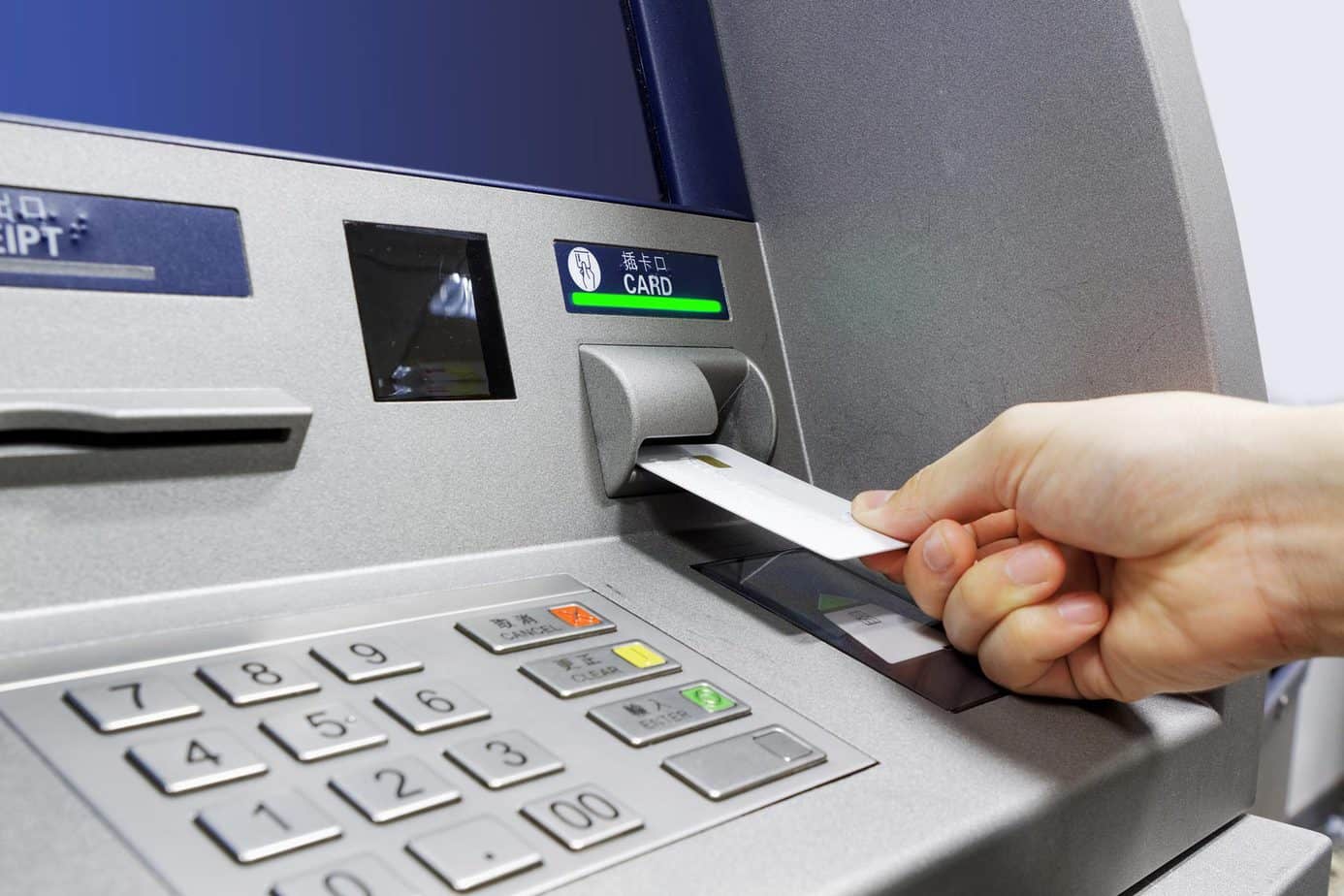
For many British consumers, using the ATM at their local convenience stores, which are colloquially known as corner shops, is the best way to access bank funds for free. The traditional arrangement consists of banks paying interchange fees to ATM operators; thus allowing account holders to enjoy free cash withdrawals they usually spend at the store, but this is changing to the detriment of consumers.

ATM ScamLINK, the business entity that controls the national network of cash machines located within corners shops across the United Kingdom, has sharply reduced the interchange fees, and it is planning even more cuts in the near future. ATM operators have taken swift action to cut their losses by removing machines from corner shops. The Association of Convenience Stores is now urging LINK to scrap the next fee reduction so that ATM operators do not end up removing all their cash machines, particularly in communities where residents do not have easy access to their banks.


The CEO of LINK has pointed out that the use of cash among British consumers has been falling in recent years thanks to the advent of mobile payments, thus doing away with the need of ATMs at corner shops. The ACS argues that mobile payments technology is not the only matter at hand; British banks have been shutting down branches across the country, thus leaving account holders with limited options such as making free withdrawals at local Royal Mail offices, which have also experienced rounds of closures.

There was a time when corner shop operators enjoyed direct profits from ATMs. Over the last few years, however, things have changed to the point of shop owners actually having to pay ATM operators to keep the cash machines in place. Consumer advocates estimate that at least two million individuals rely on cash withdrawals for various reasons, one of them being that not everyone can afford a smartphone with near-field communication features that would allow them to make contact-less payments.

For the payments industry, a strong transition to digital payments instead of cash transactions is good news, but market leaders agree that governments need to contribute with legislation conducive to inclusion, meaning that mobile payments should not be limited to NFC devices. In Commonwealth nations such as Kenya, the issues of ATM access and cashless transactions have been settled with M-Pesa, a mobile alternative to banking that works with just about any cell phone because it uses SMS technology.

One of the keys to ensuring easy access to digital payments is to take into consideration all consumers, even those who feel that they should be able to access cash at nearby locations and with reasonable fee schedules. Shifting all charges onto consumers, banks, or retailers is not the answer.

MasterCard Launches Global B2B Service

More than a year after announcing the launch of MasterCard Track, a B2B digital platform for improving global trade among small businesses, MasterCard has unveiled new plans to modernize business-to-business transactions even further. The new MasterCard Track Business Payment Service expands the focus of the digital platform for faster payments and data collection.

What Is MasterCard Track?

In 2018, MasterCard launched Track, a business-to-business platform to simplify and speed up global trade. The platform, powered by Microsoft Azure, connected buyers and suppliers with each other, lenders, and other networks.

Business-to-business transactions largely remain outdated despite rapid advancements in the rest of the business world. Manual invoicing and paper checks remain common with administrative costs nearing $500 billion. According to MasterCard, nearly 50% of all business-to-business transactions, or nearly $58 trillion, are still done on paper.

MasterCard Track partnered with nine procure-to-pay providers and business-to-business networks to help organizations maintain, exchange, and retrieve data about themselves and their partners. Track helps facilitate communication by connecting networks in a single platform.

What Is the Track Business Payment Service?

The Track Business Payment Service represents a new branch of the MasterCard Track platform that focuses on payments rather than networking and communication. The MasterCard Track Business Payment Service is the first commercial and global open-loop service built to automate business-to-business payments. The service modernizes payment processing by helping buyers and suppliers overcome outdated systems and improve the way businesses pay and get paid.

The Track Business Payment Service works as a single connection to combine multiple modern payment solutions with a focus on faster payments and real-time data collection.

All Payment Types in One Service

The Track Business Payment Service represents a new branch of the MasterCard Track platform that focuses on payments rather than networking and communication. The MasterCard Track Business Payment Service is the first commercial and global open-loop service built to automate business-to-business payments. The service modernizes payment processing by helping buyers and suppliers overcome outdated systems and improve the way businesses pay and get paid.

The Track Business Payment Service works as a single connection to combine multiple modern payment solutions with a focus on faster payments and real-time data collection.

Availability Begins in 2020

The MasterCard Track Business Payment Service is set to roll out across the world, beginning in the U.S. market in the first half of 2020. The service will be available to merchants and supplier partners who can incorporate it within existing products. Currently, the service is being piloted by partners including B2B payments optimizer Boost, payment solutions providers TSYS and CSI, Accounts Payable automation provider AvidXchange, and Accounts Receivable software providers HighRadius, YayPay, and VersaPay.

Frequently Asked Questions

What is Mastercard’s new global B2B service?

Mastercard’s new global B2B service is a suite of products and services that allows businesses to send and receive payments more efficiently and securely. Mastercard Track can be used by businesses of all sizes, in all industries, and all countries.

Who can use Mastercard’s new global B2B service?

Mastercard Track can be used by businesses of all sizes, in all industries, and all countries.

How does Mastercard’s new global B2B service work?

Mastercard Track works by using a network of banks and financial institutions to facilitate payments between businesses. This network allows businesses to send and receive payments quickly and securely, regardless of their location.

What are the benefits of using Mastercard’s new global B2B service?

There are many benefits to using Mastercard Track, including:u003cbru003e u003cbru003e●       Faster payments: Mastercard Track can help businesses send and receive payments up to 24 hours faster than traditional methods.u003cbru003e●       Increased security: Mastercard Track uses the latest security technology to protect payments from fraud and theft.u003cbru003e●       Reduced costs: Mastercard Track can help businesses reduce the costs associated with sending and receiving payments.u003cbru003e●       Improved cash flow: Mastercard Track can help businesses improve their cash flow by making it easier to track and manage payments.

Who can use Mastercard Track Business Payment Service?

Mastercard Track Business Payment Service can be used by businesses of all sizes, in all industries, and all countries.u003cbru003e u003cbru003eHere are some additional details about Mastercard Track Business Payment Service:u003cbru003e u003cbru003e●       Mastercard Track Business Payment Service allows businesses to send and receive payments using virtual cards. Virtual cards are one-time-use cards that are created for each payment. This helps to reduce fraud and improve security.u003cbru003e●       Mastercard Track Business Payment Service is available through a network of banks and financial institutions.u003cbru003e●       To get started with Mastercard Track Business Payment Service, you will need to contact your bank or financial institution.