Tag Archives: Interchange

credit card processing trends

Trends in Mobile Credit Card Processing for Fall 2021 and 2022

Over the last 12 months, almost every retailer felt the need to shift from the in-store traditional payment methods to the new-age digital methods. Businesses have also understood that this shift has a vast scope – it is not just a momentary reaction to the prevailing coronavirus pandemic, but a long-term trend. IBM’s U.S Retail Index study revealed that the transition to digital payment was speedy due to the pandemic, which otherwise would have taken five years. E-commerce purchases are predicted to grow by 20% this year. 

Even in these uncertain economic times, retailers can be confident that online and hybrid shopping will continue to grow. Today, the customers have become more aware and want more flexibility and security in mobile solutions from these brands. And therefore, brands cannot just sit quietly. 

We know that even if the pandemic ends, the e-commerce growth and related customer needs are here to stay. For businesses to keep up with the competition, they must shift to modern payment methods. This article will discuss six trends in mobile credit card processing for fall 2021 and 2022 that will make their way into the future.

#1 E-Wallets

With the increasing number of smartphones, e-wallets have become the most convenient mode of payment for consumers. A mobile wallet syncs your bank accounts and credit cards and turns your smartphone into a contactless payment device. According to some statistics, the global estimate of smartphone users in 2021 was 3.8 billion, compared to 2.6 billion in 2016. A smartphone has become a necessity as it gives you apps for every need from banking to driving, social to nutrition tracking related to all aspects of your life. 

55% of Americans use their smartphones when shopping, all due to the increasing use of e-wallets like Google Pay and Amazon Pay. With mobile wallets becoming popular and the growing use of peer-to-peer transfers, the security of these apps has also increased. E-wallets are going to change the way how we pay now. It is one of the most significant trends in mobile credit card processing that cannot go unnoticed. 

#2 Social Shopping

A retailer’s most remarkable ability is being able to use personal relationships to his advantage and engage their customers in their business. More than 78% of customers trust the recommendation of their friends and family for shopping, so brands can count on social media sharing and engagement as a better proof of purchase than a direct message to the consumer.

Retailers can hire social media influencers for promotion and make use of social media tools to get to know their customers better. They can further promote positive reviews, give better customer service and sell directly on the platform where their customers spend substantial time. 

#3 Contactless Payments

During the pandemic time and earlier, we would hesitate to touch cash as we did not know how many hands the bill was exposed to. With credit cards, handing them over to the cashier for a swipe and typing your card pin is avoided to minimize the touch. Things have changed much over the past months, and Mastercard’s survey suggests the same. The survey says that more than 51% of people use cashless payment in some form. Contactless payments are now more secure than the traditional swipe method with scanning technology to complete the transactions. All this is possible because of the encrypted microchips and mobile apps.

#4 Mobile POS Devices

As more and more consumers use contactless payments, retailers align their shopping experience with POS technology. With the help of mobile POS, retailers can accept payments anywhere as these are wireless devices and not connected to checkout locations. This gives even the smallest brick and mortar storse the flexibility to offer customers multiple checkout locations. With various payment solutions, customers can safely pay in line with social distancing norms. More than 73% of customers want more checkout options with advanced technology. Having said this, mobile point-of-sale devices are fast becoming a necessity for retailers large and small.

#5 Biometric Authentication

If someone had talked about authenticating a process using biometrics five years ago, it would seem like a scene from a futuristic movie. Now this process is everywhere and most of use this technology daily to unlock our phones. Biometric authentication consists of fingerprints, face, and voice recognition that we use today to unlock e-wallets. Biometric authentication gives more security as it is unique to each customer, and due to this trust, the technology attracted huge investments. According to a study by Mobile Payment Authentication & Data Security, by the year 2024, the use of biometric authentication is expected to grow more than 1000%, with a transaction value of more than $2.5 trillion. By the end of 2019, transactions valued at $228 billion were already authenticated by biometric technology.

#6 Flexible Payments

With consumers demanding more convenience and security while using mobile wallets for payments, the pandemic has also forced them to maintain and stick to a budget. Retailers now offer options like installments or Buy Now Pay Later to their customers. With enhanced security, convenience, and accountable spending, consumers have accepted these offers enthusiastically. Consumers get maximum flexibility with the zero-interest installment schemes which the retailers offer at the point of sale. It helps the customers to make large purchases easily without worrying about the having the full payment up front. The popularity of e-commerce and online shopping is growing drastically. The mobile payment strategy of the retailer will play a significant role in the purchase pattern of their customers. This strategy is almost 80% responsible for the rise or fall in sales. If the customer is getting complete flexibility in payments, multiple payment choices, and a streamlined checkout process, nothing can stop him from completing the decisive step of the final purchase. 

Bottomline

As the digital world is changing fast, all kinds of e-commerce stores and other retailers need to adapt to the latest payment trends as soon as possible. With contactless payments and e-wallets offering complete convenience to consumers, they are becoming popular at an unimaginable speed. If your customers get absolute security along with seamless checkout, they will keep coming back to shop at your store. Therefore it is important for all fintech companies to keep a watch on. One thing is certain – that even if the pandemic ends, the e-commerce growth and the related customer needs are here to stay. For businesses to keep in the competition, they must shift to modern payment methods.


businessman hand points to the word interest rate with a decreasing chart or graph 213338059

Interchange Downgrades: What They Are And How To Avoid Them

Interchange downgrades are a pretty complex subject to grasp. But, if you don’t take the time to learn how they work, you could be throwing a massive amount of your money down the drain each year.

Though many are avoidable, they are unfortunately quite common. Some providers intentionally allow customers to continue to experience downgrades because they make money in the margins based on their pricing strategies. In this article, we will be going over the fundamentals of an interchangeable downgrade, why they occur, and the things you can do to avoid them.

What Is An Interchangeable Downgrade?

Although you may not be familiar with this, interchangeable downgrades can happen anywhere and at any time. You may already be familiar with the term “interchange,” which is the cost card brands charge to conduct a credit or debit card transaction. 

So, each time you process a credit or signature debit card, it gets assigned to an interchange category. Each category differs depending on their rates and fees, which processors calculate the transaction’s cost. If everything runs smoothly, then each of the transactions will reach their target interchange category, which is a category that has the lowest possible rate and fee given the type of transaction. 

However, things can go wrong during this process. Whether this is because there wasn’t enough information provided or there were particular requirements that weren’t met, it allows transactions to jump from one category to another. This re-categorization can cause a transaction to be placed in an interchange category priced higher than the target category. 

When something like this happens, the rate increases, resulting in a more expensive transactional cost, and therefore the transaction has “downgraded.”

Why Do Interchangeable Downgrades Happen?

Unfortunately, downgrades are not uncommon to experience nowadays, and there are even specific situations that will immediately set off an interchangeable downgrade. The payment software, equipment, and processes that run the transactions play a massive role in ensuring everything goes according to plan. 

Not only that, but the more significant number of downgrades is because of how the business processes each transaction, or in other words, how it settles and authorizes transactions. Since these businesses tend to be the root of their downgrades, it welcomes the opportunity to look at the processing behavior to remove or reduce these downgrades.

What Are The Most Common Causes Of Downgrades?

Before you learn the ways, you can avoid these downgrades. It is essential to understand some of the common causes behind them, which are listed below:

  • Delayed Authorization

A “stale” authorization is another term for this situation. It happens when the interval between the first authorization and the credit card settlement is too long, usually exceeding 48 hours.

Authorizations must be settled for a business to receive money from a transaction. Cardholders must allow enough time to pass between authorizations and settlement. This will make sure they get their money in full in a timely way.

Many of them state the authorization needs to be settled within the first 24 hours, so you should make sure your batch settles at least once a day to avoid reductions due to stale approvals. If you don’t settle your transactions quickly enough, the authorization will expire, and the transaction will most likely downgrade.

  • Mismatched Authorization

It occurs when authorization and settlement amounts differ when they must always match. 

For a better understanding, let me give you an example:

Let’s say you are working as a cashier at a grocery store, and one of your customers just purchased $300 worth of items. You’ve swiped their card, but your customer decides they don’t want to buy a product.

When this change of heart happens, it brings their total down to $275. So now, the settlement amount is at $300 while the settlement amount has lowered to $275. You have to cancel the transaction and do it again; otherwise, you risk a downgrade. 

  • Failing To Use AVS

AVS stands for address verification system, a customer address verification tool that provides an extra layer of security for customers while at the same time simplifying the process for our payment gateway. The customer’s five-digit zip code, which stands for their address information, is necessary for card-not-present transactions to target their interchange categories. If a customer fails to enter their zip code, the transaction will downgrade.

How Can You Avoid Interchangeable Downgrades?

Although downgrades can’t always be avoided, you can make sure it doesn’t become a casual occurrence by following the measures listed below:

  • Pay special attention to the provider you are using, check that they offer different pricing programs that meet your needs, and provide all the information necessary about the practices you should follow.
  • Make sure AVS is required on any keyed transaction. Any trusted provider should make sure this feature is a requirement to avoid a breach in security and therefore downgrades. 
  • Always enter your sales tax and tip amounts separately from the total of your transaction. With a trusted provider, the system you are using for your transactions should have, without exception, separate fields for each amount to avoid mismatched authorizations.
  • Schedule your daily credit card batches to avoid stalling authorizations. You can even set up most POS systems, so your batches are settled automatically at a specific time every day. 

Final Thoughts

You need to understand every aspect of your credit card processing fees, and learning about interchange downgrades is an excellent way to start. Although they aren’t usually discussed, they are a widespread incident and can put you at a considerable disadvantage. However, now that you know all about them and the ways you can prevent them, this situation is bound to become a rare occurrence in your life. 

We hope you found the information valuable and exciting. Let us know in the comments other vital things you think we should know about our credit cards and processing fees. We would be glad to provide you with any extra information you need.

What is Interchange Plus Pricing in Credit Card Processing?

To increase transparency in the pricing of credit card processing, credit card processors offer interchange plus pricing, which is often compared to a wholesale processing fee. Under the interchange plus pricing format, businesses pay interchange fees and processing costs separately. Visa, MasterCard, and Discover charge the interchange fee, and a business’s credit card processor charges the processing cost. This model is unlike tiered pricing, which rolls all costs into one large payment leaving a business at risk of overpaying via hidden costs and surcharges.

Tiered Pricing Versus Interchange Plus Pricing

Tiered pricing, which was once the most common credit card processing service, groups interchange fees into rate tiers. Also known as bundled pricing, tiered pricing involves qualified, mid-qualified, and non-qualified rate tiers, giving the model its name. Credit card transactions are categorized according to card type, card category, transaction method, and more, which impact the tier level in which the transaction is placed when processed.

merchant services refund policyRather than pay interchange fees directly, businesses pay credit card processors according to these tiered rates. The processors then pay the interchange fees on behalf of the businesses. Instead of listing the actual interchange fees, credit card processors list only the qualified, mid-qualified, and non-qualified rates under tiered pricing. 

Rather than revealing the actual cost, credit card processors can place transactions in the more expensive non-qualified category, thereby increasing business costs while simultaneously keeping the same rates. An alternative to tiered pricing, interchange plus pricing bills interchange fees directly to businesses. Then, businesses pay the credit card processor a fixed percentage separate from the interchange fees. The fixed percentage markup and the interchange fees combine to form lower costs to businesses.

Interchange Plus Pricing Benefits

In addition to the lower costs presented by interchange plus pricing, the model also offers transparency to businesses. Credit card processing is easier to reconcile under the model. Eliminating surcharges and hidden costs, interchange plus pricing’s “interchange pass through” leads to optimized interchange costs, which is often compared to a wholesale model. The markup is equivalent to a membership fee in exchange for wholesale interchange prices.

Interchange +

The simplicity of interchange plus is in the name itself: “Interchange Plus.” A business pays the interchange rates, which are set by the major credit card companies. The “plus” is the markup charged by a business’s credit card processor. Within the simplicity of interchange plus pricing, businesses can further minimize costs by choosing a processor that offers a low markup.

Host Merchant Services

Before taking our first customer, Host Merchant Services studied the numbers and decided Interchange Plus pricing is the most cost-effective pricing model for businesses, not to mention the most transparent. We educate our customers to ensure they fully understand the pricing model. Knowing the details prevents businesses from overpaying with us or with any credit card processor. Host Merchant Services even explains where our profit lies in the pricing structure to be fully transparent in all directions. Pricing fairness and transparency is our strategy in helping our customers find success with their businesses.

Level Three Interchange Data Rates

What Are Level 2 and Level 3 Data?

Credit card brands divide their fee structure into three groups: Level 1, Level 2, and Level 3. The higher the level, the lower the interchange fees for the merchant. While a majority of businesses may only qualify for Level 1 processing, which is the level appropriate for B2C, or business to consumer, transactions, some businesses are exclusively B2B, or business to business, merchants, which can take advantage of the Level 2 and Level 3 interchange fee discounts. In this article, you will learn the differences in the different levels of data and how to use level data to reduce your business interchange fees.

The More Data, the Higher the Level

Level 1 DataLevel One Interchange Data Rates

The amount of data determines the level. The more data a merchant provides, the higher the level the transaction achieves. Level 1 is the most basic level requiring a minimal amount of data, namely the merchant name, the transaction amount, and the transaction date. As an example of Level 1 pricing, the Visa Commercial Card Present Level 1 fee is 2.50% + $0.10. If a majority of a merchant’s business is handled via consumer credit cards, that merchant only needs to provide Level 1 data.

Level 2 & Level 3 Data, B2B & B2G

Level 2 and Level 3 require significantly more data in exchange for a significant reduction in transaction fees. A merchant qualifies for Level 2 interchange fees if a majority of its business is B2B. If a merchant engages in mostly B2B or B2G, business to government, transactions, they can take advantage of the Level 3 interchange rates.

Credit card brands use these discounts to incentivize businesses to allow credit cards for use in major transactions, versus other forms of payment. Thus, the credit card brands require a minimum amount for the transaction. Or they offer a tiered discount, increasing in proportion to the size of the transaction.

Level 2 transactions require the following data in addition to all Level 1 data:

  • Level 2 Interchange Data RatesTax ID
  • Merchant minority code
  • Merchant state code
  • Merchant ZIP code
  • Sales tax amount
  • Customer reference number

In exchange for this level 2 credit card processing data, credit card brands reduce the interchange rate by roughly 0.50% for the transaction.

Level 3 data includes the following in addition to both Level 1 and Level 2 data:

  • Level Three Interchange Data RatesInvoice Number
  • Order Number
  • Ship-From Zip Code
  • Destination Zip Code
  • Freight Amount
  • Duty Amount
  • Item Extended Amount
  • Item Product Code
  • Item Commodity Code
  • Item Description
  • Item Quantity
  • Item Unit of Measure

In exchange for this level 3 credit card processing data, credit card brands reduce the interchange rate by up to 1.00% for the transaction.

Services that Support Merchants

Standard credit card processing terminals do not have the capacity for either inputting the data or forwarding the data to the credit card service. While Level 2 data is easy to enter, a separate credit card terminal or software can automatically populate the Level 2 data. Only certain gateways can process Level 3 data. Merchant credit card processing services can support merchants in handling Level 2 and Level 3 data through gateways and separate credit card processing terminals. Merchant support services also help businesses configure their information before sending Level 2 and Level 3 data to the payment provider.

B2B Credit Card Interchange Rate

B2B Payment Processing Solutions and Interchange Rates

B2B, or business to business, describes a transaction in which the customer is another business rather than of an individual. Whether it’s goods, services, or both, B2B payments include transactions such as purchasing supplies to do business, buying lunch for employees, or paying for travel expenses. Though the payment methods for B2B transactions are often the same as for B2C (business to consumer), credit card and checks – there are differences that need to be taken into consideration. Often times businesses use “business credit cards” which have a high interchange fee compared to consumer credit cards. In this article, you will learn about “Level 1, 2, and 3 data” – a way to lower interchange fees substantially for B2B transactions.

Transition to B2B Credit Card PurchasesB2B Credit Card Interchange Rate

Businesses are increasingly moving away from invoices and checks to pay for business to business goods and services and moving toward using a business credit card to separate business expenses from personal expenses.

When setting up business to business credit card purchases, merchants can qualify for lower B2B interchange rates when processing business credit cards. By leveraging lower interchange rates for B2B credit card processing, businesses can save potentially hundreds if not thousands of dollars.

The Cost of Doing Business – Without DataPayment Processing Credit card machine on a table

Without taking advantage of lower interchange rates, B2B credit card processing is expensive to process. The worst rate is 3.26% + $0.10 (the MasterCard rate with no AVS data). The lower rates require a business to jump through some hoops, also known as levels, in order to qualify for these lower rates. These hoops are data. The more data a business provides via a transaction, the smaller the interchange fee for that transaction.

Level 1, 2, and 3 Data – The Higher the Level, the Lower the Fees

Level 1 Data

The basic level, Level 1, is a transaction providing the least amount of data to the credit card brands. All transactions are required to reach Level 1 whether they are B2B or B2C. Merchants must provide the merchant name, purchase amount, date, and billing zip code. This level offers only a small reduction in interchange rates.

Level 2 Data

In order to reach Level 2 interchange rates, a business must provide Level 1 data, as well as other data including sales tax amount, tax indicator, and other details of the transaction. While Visa and Mastercard have different requirements for this level, Discover doesn’t offer lower rates for Level 2 or Level 3. And American Express supports Level 1 and Level 2 while it does not support Level 3.

Level 3 Data

Level 3 requires all of the data from Levels 1 and 2 plus other data such as item commodity code, SKU description, product code, and even more data points involving the transaction. Not only do the credit card brands vary in their interchange rates depending on the Level, but they also can change these rates. Thus, a merchant must be vigilant in checking the requirements.

Lower Interchange Fees for Businesses

Merchant credit card processing services can help businesses get the lowest rates possible by properly classifying the business’s MCC code, which can reduce interchange rates, by helping a business properly process large sales, over $6,500, which also can reduce interchange rates, and by providing a business software or terminals specifically for B2B sales equipped with the Level 2 and Level 3 information, which reduces interchange rates. While B2C transactions might focus on the markup, merchants want to look at the total cost for B2B transactions.

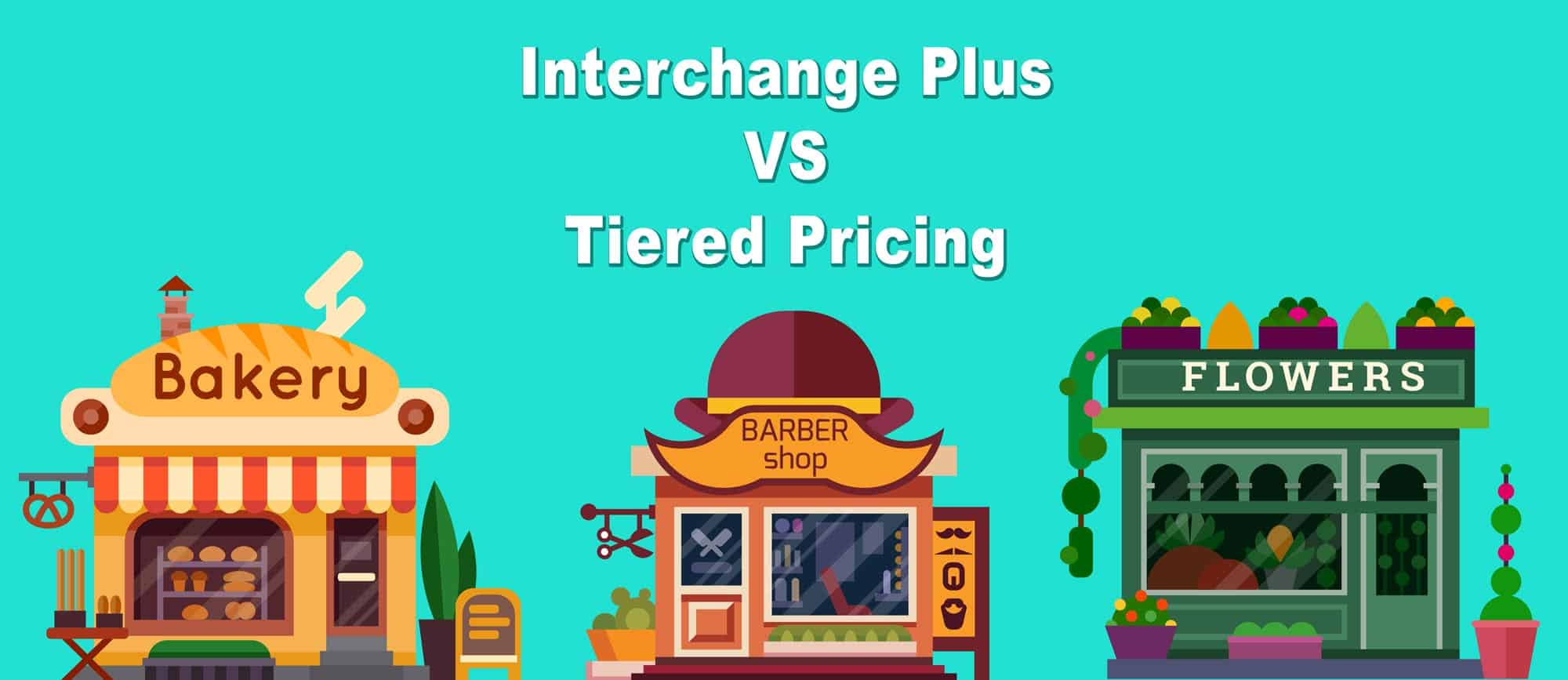
Interchange Plus vs Tiered Pricing

Interchange Plus vs Tiered Pricing

Interchange Plus vs Tiered Pricing

No one wants to pay more than necessary for credit card processing, which can already eat into profits. When comparing merchant services, it’s important to understand how different pricing systems work. Many merchant account providers advertise very low fees as a teaser, even though most transactions do not qualify for these rates.

There are two common pricing models used for payment processing: tiered pricing and interchange plus pricing. Here’s how they compare.

Tiered Pricing
Tiered pricing is probably the most common pricing model for merchant services. While it’s advertised as an easy pricing method that makes statements simpler, the truth is it merely lumps hundreds of interchange rates into just three tiers or buckets. The processor may advertise the rate of the lowest tier, but most transactions will fall into tiers with a much higher rate. A debit card, which usually has the lowest interchange rate, can be billed using the same high rate as a rewards credit card, for example.

There are no set guidelines that determine which cards go in which category which leads to massive overcharging to merchants. Some payment processors have an incentive to downgrade transactions into a lower tier to boost profits. Transactions can be downgraded for any number of reasons, including using terminal software that isn’t updated, tips and tax that aren’t entered separately, or batches that aren’t settled within 48 hours. Not all of these factors are in your control.

As a merchant, you will have no way to predict which rate you will pay for transactions or how much you are being charged above the set interchange rate. You can’t even effectively compare tiered pricing quotes between payment processors because you don’t know what the mid- or non-qualified rates are — just the lowest available rate — and you won’t know the criteria the processor uses to categorize transactions.

Interchange Plus Pricing
Rather than using tiers, the interchange plus pricing model passes the set interchange rates directly to the merchant “plus” a small markup. Because the interchange rates are not changed or lumped into arbitrary categories, you can predict your payment processing costs and know what you are paying above interchange.

The only downside of interchange plus pricing is it does take time to understand the different rates you will pay for different types of transactions and credit cards. Your statements will be longer, but with greater clarity and transparency.

In the not so distant past, interchange plus pricing was only available to merchants with high credit card volume of $25,000 or more. Today, interchange plus credit card processing can be available to small and even new businesses. Interchange plus pricing is a smart choice with only two rates to consider: the transaction fee and the interchange markup fee. This pricing model is the safe and transparent choice with no arbitrary criteria you must meet.

Trump to Repeal the Durbin Amendment

President Trump may be gunning to reform the Dodd-Frank Act, in particular one of the most contentious policies of the act: the Durbin Amendment.

The Durbin Amendment—passed as a stipulation of the Dodd-Frank Act—allows the government to set price caps on fees for card transactions. Before 2009, interchange rates were set by banks and merchants involved in the transaction process.

The passing of the Durbin Amendment resulted in the stagnation of free services offered to consumers: before 2009, 76% of banks offered free checking accounts. After Dodd-Frank and Durbin, that number dropped to 45% in 2011, 39% in 2012, and 37% in 2015. This decline has forced some Americans to avoid banking entirely.

The goal of The Durbin Amendment was to pass savings to consumers by giving merchants fee breaks on interchange rates. Instead, 77% of merchants’ prices have stayed the same, while 22% have increased.

What would happen if President Trump and congress overhauled Dodd-Frank and repealed Durbin in its entirety?

A return to the pre-2009 era of interchange rates would result in retailers negotiating the cost of card transactions. This could lead to larger businesses paying less per transaction, while smaller businesses could take a more significant hit.

There is something to be said for retailers’ motivations: the largest proponents of keeping Durbin in the Dodd-Frank Act are massive outlets like Walmart, Walgreen’s, etc.

For the individual consumer, this could mean a change in the price of goods, depending on where they shop. It could also mean an increase in the number of free services that many banking institutions provide to incentivize the clientele that they’ve lost since 2009 to return, now that the burden of card processing fees are no longer shifted onto the consumer.

Either way, these changes are not likely to take place any time soon: Height Securities analyst Edwin Groshans theorizes that these regulation changes may not take place for at least another year. Ultimately, the ability to amend or repeal Dodd-Frank lies with the regulators in charge of these sanctions, not just with the President or congress, and any changes made will be hard-fought, given that the act was initially considered to prevent the irresponsible banking practices that lead to the 2008 market crash.

Wal-Mart Sues Visa

The swipe fee antitrust lawsuit that The Official Merchant Services Blog has been covering for a few years now has an update: Wal-Mart, accusing Visa of excessively high card swipe fees, is suing Visa for $5 billion. The action by Wal-Mart is being taken because Wal Mart opted out of the settlement of the class action lawsuit between merchants and Visa and MasterCard.

This follows our previous report of the Minnesota Twins also opting out of the settlement. Wal-Mart filed the suit Tuesday, March 25, in the U.S. District Court for the Western District of Arkansas, where Wal-Mart is headquartered.

Wal-Mart’s Side of the Suit

Wal-Mart, the world’s largest retailer, is seeking damages from price fixing and other antitrust violations that it claims took place between January 1, 2004 and November 27, 2012.

In its lawsuit, Wal-Mart contends that Visa, in concert with banks, sought to prevent retailers from protecting themselves against those swipe fees, eventually hurting sales. Wal-Mart stated in court documents: “The anticompetitive conduct of Visa and the banks forced Wal-Mart to raise retail prices paid by its customers and/or reduce retail services provided to its customers as a means of offsetting some of the artificially inflated interchange fees. As a result, Wal-Mart’s retail sales were below what they would have been otherwise.”

Wal-Mart contends that that the way Visa set up the swipe fees violated antitrust regulations and generated more than $350 billion for card issuers over the time period in question, in part at the expense of the retailer and customers.

Case History

The antitrust case against Visa, MasterCard and several issuing banks stemmed from the dispute relating to the percentage of credit card transaction fees that retailers must remit to the credit card processing network. The fees generally range from 1.5 to 3 percent and are shared with the bank that issued the card. Also known as “swipe fees,” these charges serve to underwrite the supporting infrastructure that allows businesses to accept and process credit cards.

Large retailers and supporting associations have repeatedly complained about the costs associated with accepting credit cards and the fees for merchant services. These grievances resulted in a number of lawsuits filed in 2005, which were eventually consolidated into a single case known as the Payment Interchange Fee and Merchant Discount Antitrust Litigation.

There were 139 parties involved as plaintiffs, and the case was active for over eight years. In July 2012, a settlement was reached that provided $6 billion in damages to affected retailers and another $1.2 billion for a temporary reduction in interchange fees. As a further concession, Visa and MasterCard eliminated certain rules for merchant services that prohibited surcharging, which is a practice that allows retailers to recoup credit card costs by passing them on to the consumer.

After a settlement was reached in the case, major retailers such as Target, Nike, Home Depot, Lowes, Starbucks and Best Buy ultimately opted out of the settlement. Major trade organizations, including the National Restaurant Association (NRA), have voiced significant opposition to the agreement. In fact, the NRA strongly encouraged its constituent members to reject the settlement and highlighted the potential negative impact it could have on the emerging mobile payments market.

The Saga

To review the full extent of this ongoing saga, you can read our previous coverage of this settlement:

Swipe Fee Suit Ongoing After Fairness Hearing [2023 Update]

A $7.25 billion settlement relating to credit card interchange fees continues to encounter stiff opposition from a number of major retailers and several significant retail trade associations.

Case History

The antitrust case against Visa, MasterCard and several issuing banks stemmed from a dispute relating to the percentage of credit card transaction fees that retailers must remit to the credit card processing network. The fees generally range from 1.5-3 percent and are shared with the bank that issued the card.

Also known as “swipe fees,” these charges serve to underwrite the supporting infrastructure that allows businesses to accept and process credit cards. Large retailers and supporting associations have repeatedly complained about the costs associated with accepting credit cards and the fees for merchant services.

These grievances resulted in a number of lawsuits filed in 2005, which were eventually consolidated into a single case known as the Payment Interchange Fee and Merchant Discount Antitrust Litigation.

There were 139 parties involved as plaintiffs, and the case was active for over eight years. In July 2012, a settlement was reached that provided $6 billion in damages to affected retailers and another $1.2 billion for a temporary reduction in interchange fees. As a further concession, Visa and MasterCard eliminated certain rules for merchant services that prohibited surcharging, which is a practice that allows retailers to recoup credit card costs by passing them on to the consumer.

Opting Out

Almost immediately, opposition to the swipe fee settlement began to emerge. The primary objections centered on the belief that the agreement does not provide any meaningful reforms to the current model. Many merchants believe that market forces will not allow for credit card surcharges since consumers will object to the added fees. Other retailers oppose the stipulation in the agreement that prohibits future swipe fee lawsuits.

As a result, major retailers such as Target, Nike, Home Depot, Lowes, Starbucks and Best Buy ultimately opted out of the settlement. Major trade organizations, including the National Restaurant Association (NRA), have voiced significant opposition to the agreement. In fact, the NRA strongly encouraged its constituent members to reject the settlement and highlighted the potential negative impact it could have on the emerging mobile payments market.

Many retailers ultimately declined to participate in the settlement. Since the total number merchants who opted out exceeded 25 percent of the collective annual U.S. retail transaction volume, MasterCard and Visa could have elected to withdraw from the deal. However, they chose to continue with the process.

In September 2013, a fairness hearing was held in U.S. District Court under Judge John Gleeson that allowed dissenters to present final arguments. Gleeson is expected to issue a decision on the settlement sometime in mid-January 2014.

Recent Developments

After assessing their options, Target Corp. and 17 other retailers filed a separate lawsuit against Visa and MasterCard in May 2013. The plaintiffs charged that the banks and credit card companies have engaged in an “illegal and anti-competitive scheme.” They contend that the Visa Check Swipe Fee settlement did not adequately address the basic issues of the original case.

In the most recent action relating to the new litigation, Visa and MasterCard argued in federal court that the pending antitrust action initiated by Target Corp. is prohibited under the terms of the July 2012 settlement deal. The defendants contend that the retailers have misinterpreted the terms of release relating to the previous case for the sole purpose of instigating additional litigation.

MasterCard and Visa strongly reject the plaintiff’s arguments and contend that the Visa Check swipe fee settlement case preempts any new action relating to interchange fees, which they contend were adequately addressed under the previous settlement.

The Saga

To review the full extent of this ongoing saga, you can read our previous coverage of this settlement:

  • The Big Cash Comeback
  • Don’t Call it a Comeback
  • NRF Opposes Interchange Settlement
  • Interchange Settlement Nears Preliminary Approval
  • Merchants Appeal Key Part of Interchange Settlement
  • Interchange Settlement Given Preliminary OK
  • Challengers Awaiting Final Approval
  • What Does the Future Hold for Interchange