Today The Official Merchant Services Blog is going to step off its SOPA soap box and return to a much more focused and specific topic — Partial Payment Authorization.
In November, 2011 Partial Payment Authorization was mandated by MasterCard and Discover. This mandate requires merchants to support partial payments on their terminals. Host Merchant Services reported on this mandate and you can read about it here in our Article Archive.
Pay Attention To The Purchase
We’re bringing this back up because there has been some confusion lately among merchants about this particular issue and this mandate. What keeps happening is that merchants are not noticing when the partial payment pops up on their terminal. This is a problem because of the way these payments function. If you do not notice that it is a partial payment and do not obtain the rest of the payment from the customer, they can walk out of your store with their purchase and you lose money.
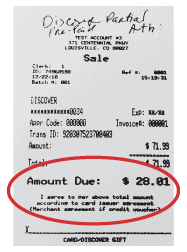
So you need to really pay attention to the purchase. It will show up on your terminal screen. It will also show up on the receipt. Here is an example of what a receipt will look like:
In cases where only a partial authorization is returned, the merchant will need to collect another form of payment for the difference. In the instance where the cardholder does not have another form or payment to pay the difference or wants to use a different form of payment for the full amount, a real time partial authorization reversal must be performed in order to free up the funds that were previously held up by the authorization.
Host Merchant Services offers step-by-step guides on how to perform these real time partial authorization reversals.
The other area of confusion that seems to be cropping up with Partial Authorization is which businesses are affected by this mandate. Not all businesses are currently required to use Partial Authorization. However, there is a long list of businesses that are, and this list includes the most popular merchant codes. Here is the list:
To Recap
So just to review, Partial Payment Authorization is mandated by MasterCard and Discover. The listed businesses above are absolutely required to utilize it. It is easy to lose track of when these occur if you do not pay attention to the receipt or to your terminal when running the transaction through. The most common mistake is someone processing the transaction is in a rush and the receipt looks very similar to a normal, approved, full transaction when run through. Terminals do not have a sound or warning that this type of partial payment happened. So time and attention to detail are required for these payments moving forward. When a partial authorization happens you need to have your customer offer an alternate payment for the remainder of the transaction or you need to reverse the transaction right then and there.
For More Information
Host Merchant Services is available to walk any interested merchants through this process. You can contact us and we will be glad to explain how partial authorization works. Or you can take advantage of the materials we offer on this very website. To get more information regarding Partial Payment Authorization, you can:
This is part 2 of The Official Merchant Services Blog‘s rebuttal of this New York Times Op-Ed piece titled “What Wikipedia Won’t Tell You” written by Cary H. Sherman, chief executive of the Recording Industry Association of America, which represents music labels.
The Real Slim Shady
Mr. Sherman in his article goes on to accuse Wikipedia of spreading misinformation. He tries to find a smoking gun by suggesting the tech giants have an agenda of their own. He accuses them of bias in terms of the story they present, saying they are bending the truth and not being neutral. He even attacks media outlets that supported SOPA for not “taking advantage of their broadcast credibility to press their case.”
This is amazing. In a piece crafted specifically to present the RIAA’s very biased agenda that is featured in one of those media outlets thus stretching the New York Times’ already damaged credibility — lest we forget Zachary Kouwe, Maureen Dowd or Jayson Blair — Sherman accuses his opposition of doing the exact same thing he is doing. Keep in mind, his own executives were gloating about how well the music industry is doing in 2011. But here he is saying the industry is still being harmed by piracy and that Wikipedia is not telling you the whole story. Sherman simply seems to not be as familiar with how the internet works as his employee Duckworth is. To borrow the ever-popular phrase, he’s doing it wrong. He says, “Misinformation may be a dirty trick, but it works.” Not on the internet. People find you lying to them, or manipulating them, and they either make a mockery of you or turn you off. Sorry Mr. Sherman but in this instance, Citation Needed!
First World Problems
Mr. Sherman makes another fatal mistake with his article when he types: “The conventional wisdom is that the defeat of these bills shows the power of the digital commons. Sure, anybody could click on a link or tweet in outrage — but how many knew what they were supporting or opposing? Would they have cast their clicks if they knew they were supporting foreign criminals selling counterfeit pharmaceuticals to Americans? Was it SOPA they were opposed to, or censorship?”
Sherman is playing off of a stereotype about the twitter-age, or Net 2.0 –that everything is simplified and broken down into tiny bits of information. That the online citizen isn’t getting the full story is in fact that’s his main idea. But Sherman has forgotten net 1.0, and the strength of what Google, Wikipedia and all of that data really is. Somewhere between twitter campaigns with STOP SOPA avatars and Sherman’s own e-mail inbox is this huge collective database of information, which includes the exact language of the legislation as written. Every single piece Host Merchant Services has written on SOPA has included this link:
Many other articles that covered this topic throughout the past year have given links to all of the relevant data and text. It’s the internet Mr. Sherman. The information is just a click away. Many people not only had access to the bill, they also read it. And so their protest was based on the bill itself. Not on the oversimplification you suggest.
Young, Wild but Not Free
Mr. Sherman then takes a wild swing at all of the people who protested SOPA, suggesting some of them are criminals: “But others may simply believe that online music, books and movies should be free. And how many of those e-mails were from the same people who attacked the Web sites of the Department of Justice, the Motion Picture Association of America, my organization and others as retribution for the seizure of Megaupload, an international digital piracy operation? Indeed, it’s hackers like the group Anonymous that engage in real censorship when they stifle the speech of those with whom they disagree.”
So just because people don’t agree with your agenda, they’re hackers who support Megaupload and want free music? That’s the kind of rookie debate tactic that gets you ridiculed throughout the internet. It’s also misinformation and a huge distraction from the topic. The Megaupload arrest is separate from the SOPA debate. This is obvious. The arrest was made under the current law. The FBI was able to crack down on piracy using what is currently in place. That the federal government was able to successfully attack piracy under the laws currently in place would seem to weaken Sherman’s position. In fact data collected on the topic has shown that once the government moved past the Napster issue that Mr. Sherman was so quick to cry about in the opening portion of his article, piracy started to take a huge hit. In fact, that PDF from the IFPI has some compelling statistics about how much piracy dipped after Limewire was shut down. Apparently the current laws have a lot of teeth if law enforcement goes after the pirates and doesn’t waste time going after citizens or forcing search engines and payment network providers to police the internet.
U Jelly?
The last straw with Mr. Sherman’s terrible presentation of his organization’s biased agenda comes from his short and shallow rejection of the Online Protection and Enforcement of Digital Trade Act (OPEN). This bill was drafted as an alternative to SOPA and PIPA. This bill was, excuse the irony, carefully devised by tech industry experts in the government — with an eye toward attacking online piracy but closing the wide open holes that the previous bills contained. The Official Merchant Services Blog helped break this story back in early December, with this blog, where we stated: “A bipartisan group of lawmakers have come out in support of a new law that has been proposed as an alternative to SOPA. Under this proposed legislation, the U.S. International Trade Commission (ITC) would be given the power to investigate claims of copyright infringement on foreign websites. The proposal would also allow the ITC to issue cease-and-desist orders to foreign websites that willfully engage in copyright infringement. The lawmakers demonstrate some clever ingenuity here with this proposal by tapping the ITC for the job of piracy oversight. The ITC already investigates patent infringement complaints and can bar infringing products from being imported into the U.S.”
In short, OPEN is an alternative that was everything Sherman asked for in online piracy legislation that we never received with SOPA or PIPA. It was well researched. It deals with the issues. It has input from tech industry savvy and knowledgeable politicians that know what they’re doing. But Sherman’s misinformation sums up OPEN like this: “The diversionary bill that they drafted, the OPEN Act, would do little to stop the illegal behavior and would not establish a workable framework, standards or remedies. It has become clear that, at this point, neither SOPA, PIPA nor OPEN is a viable answer.”
Forget You
Again Sherman glossed over some important aspects of his own organization’s rhetoric. This article found at The Verge cites the RIAA’s opposition to OPEN and its support of SOPA. The article quotes RIAA Senior Executive VP Mitch Glazier as saying that the ITC “clearly does not operate on the short time frame necessary to be effective.” Glazer cites the delays in the RIM vs. Kodak case — filed in January 2010 but now expected to be ruled on in September 2012 — as a prime example. Glazier sees these delays as hugely damaging, saying that each day a piracy-facilitating website stays online can cost millions of dollars to “American companies, employees and economy,” and be “an ongoing threat to the security and safety of our citizens.”
So again, it’s a case of what Sherman isn’t telling you, while simultaneously suggesting it’s Wikipedia or Google that are obfuscating the issue. The biggest problem with SOPA and what helped get it killed in Congress was that it left things extremely wide open to interpretation. The biggest boon to OPEN is that it requires investigation. Yes, that absolutely does take time. Time needs to be taken. The RIAA doesn’t seem to care about the affects that can happen when a law goes into place allowing swift shut down of websites based on willy nilly complaints or the hidden agendas of competitors. In fact, this is what is wrong with the RIAA’s stance on piracy. They want what caused the protest in the first place. They want to be able to quickly shut down sites with little to no oversight on how the plug gets pulled. So when an alternative is proposed that works more at the a proper speed with investigation, careful consideration of the circumstances and oversight, the RIAA has to denounce that suggestion.
The RIAA keeps pushing for legislation that mirrors SOPA. In fact, this will be the third consecutive year that Senator Ron Wyden [D-OR] will defend our country against the immense loopholes and abusive traits that the RIAA crusades for — Wyden took a stand and singlehandedly curbed the Combat Online Infringement and Counterfeits Act of 2010 (S. 3804) in 2010, and then was at the forefront of halting PIPA this year in the senate. What Sherman is telling us isn’t anything revealing about Wikipedia. No. What Sherman is telling us is that no matter how many times the government tells him that these laws are poorly written and open for abuse, Sherman will keep pushing for this to go through.
Courage Wolf
Host Merchant Services and all other payment network providers have a vested interest in this legislation because they keep getting named in it. These laws keep coming up that require payment processors to be involved in the policing of online content. The issue is just as important to merchant services as the Durbin Amendment. And so The Official Merchant Services Blog is once again here to keep people informed about these developments. The RIAA is singing the same old song about Napster and Piracy trying to push some sympathetic buttons with the people, but at the same time attacking the overwhelming opposition to their agenda, calling them misinformed — and criminal. Suggesting that internet users don’t go beyond twitter messages in the depth of their awareness of issues that pertain directly to the future of their internet usage. And the entire time the RIAA is engaging in this shell-game of misinformation, they’re also gloating about how profitable they’ve been able to make digital music transactions. They claim they know the internet. But Mr. Sherman acts like he still thinks it’s a series of tubes. He might know it’s not a truck, but he’s still doing it wrong.
We’ll leave you with the same message we had days ago when Sherman’s employees were tweeting “DECLARE THAT!”
The bottom line is if Lady Gaga and Pitbull online sales are robust and legit, it’s probably time to back off the Online Piracy rhetoric.
The RIAA just won’t quit. They’re taken up the crusade to push for anti-piracy legislation once again, as seen in this New York Times Op-Ed piece titled “What Wikipedia Won’t Tell You” written by Cary H. Sherman,chief executive of the Recording Industry Association of America, which represents music labels. The content of the piece is incendiary, and that’s being kind. The RIAA is adamant about their stance on piracy and are pressing the issue in every outlet they can. To quote Digital Underground from their Sons of the P album — which currently is not available for legal purchase online due to holes in the DU library in various legit digital music resources — “Like Ice Cube says, Once Again it’s On.”
Everyday They’re Shufflin’
The Stop Online Piracy Act and the Protect Intellectual Property Act were both killed in Congress — shelved because they were too wide open to abuse. The protest against these bills reached a collective crescendo when internet giants Wikipedia and Google and WordPress teamed up with a host of others for an internet blackout. When the largest source of internet information — and grade school kids’ favorite spot for help with their homework — goes dark and the search engine juggernaut that fuels the internet shines its spotlight on your bill, things have finally gotten serious. The U.S. citizens took notice of this blackout, and joined the internet in protest. And Congress heard the people and backed off this poorly written legislation.
But that hasn’t stopped the entertainment lobby. They went back to the drawing board and then returned mere weeks later with a new idea on how to combat online piracy. Unfortunately that new idea was the exact same idea as before. This was seen in the wishlist the International Federation of the Phonographic Industry (IFPI) released. The highlights of this list are essentially that the music industry wants pretty much the exact same things that were in SOPA, the same things that prompted the protest in the first place. A list of seven demands, which include the exact same far reaching calls for search engines and payment processors to police websites individually and be responsible to law enforcement for content they are indirectly connected to.
We’ll get back to this, but for now the point is the music industry felt the need to push for the same stuff that killed SOPA and PIPA. And that came right back to the forefront with Mr. Sherman’s opinion article in the New York Times. Essentially the RIAA wants a do-over and Mr. Sherman is here to tell us why that needs to happen.
Come At Me Bro
So today The Official Merchant Services Blog is going to try to put this issue in its place much like Blake Griffin did to Kendrick Perkins recently. Yes, we are going to Posterize the RIAA. Because the op-ed article indicates the RIAA has soft interior defense and can’t play man to man very well at all. First up we’ll start with the relative hypocrisy of Sherman’s ill-timed article found in this contextual relationship: Suggesting Wikipedia isn’t telling people everything, and then making this comment, “They knew that music sales in the United States are less than half of what they were in 1999, when the file-sharing site Napster emerged, and that direct employment in the industry had fallen by more than half since then, to less than 10,000.”
Cary Sherman, chief executive of the RIAA
This is hypocritical because Mr. Sherman is leaving out some very pertinent information — which his employees were just recently bragging about on twitter. As we reported on January 31, the RIAA was excited about the IFPI wishlist because it had a series of statistics that showed the music industry is doing well with digital sales. The music industry claims Wikipedia is being deceptive and then suggests that they are still reeling from Napster, which was effectively scuttled back in 2002. They’re making a play for sympathy from an issue that happened almost a full decade ago, and yet they just got finished gloating about how successful they were this year!
Jonathan Lamy, senior VP of Communications for the RIAA, tweeted that paid subscription services rose 65 percent to 13.4 million in 2011. This tweet was in response to figures released by the IFPI which Lamy was excited to read. Lamy also tweeted that paid digital music services are active in 58 countries, generating $5.2 billion in revenues.
And then Cara Duckworth. The VP of Communications for the RIAA also cited the IFPI figures and then said: “W/more than half of all music sales coming from digital services, we know how Internet works. “Music=Innovation. Declare THAT. #CES #SOPA.”
What the RIAA isn’t telling you is far worse than what Wikipedia isn’t telling you. But Mr. Sherman isn’t about to concede facts when the agenda needs to continue to be pushed. The music industry is finally getting the hang of the digital market. Their own people brag that they know how the internet works. Declare that! But Sherman’s still waving the Napster suit in your face trying to claim that Wikipedia is obfuscating the issue.
It gets worse.
Born This Way
Sherman writes, “While no legislation is perfect, the Protect Intellectual Property Act (or PIPA) was carefully devised, with nearly unanimous bipartisan support in the Senate, and its House counterpart, the Stop Online Piracy Act (or SOPA), was based on existing statutes and Supreme Court precedents.”
The only thing in that statement that is rooted in the reality of what happened with SOPA and PIPA is that there was a lot of bipartisan work. Unfortunately, the work was bipartisan unity on finding problems with the so-called carefully devised legislation. Tech industry experts on both sides of party lines found the problems and holes in the legislation. As we reported on December 27, 2011, SOPA sparked unity in the federal government. And as we’ve written in our in-depth analysis, the bill was not very carefully devised at all. In that analysis we lean heavily on discussion from Congresswoman Zoe Lofgren [D-CA], an expert in the tech industry. We’ll highlight just a bit of Lofgren’s criticism of this bill, with questions raised: “Section 103 also allows a “portion of” a website to be deemed “dedicated to the theft of U.S. property,” regardless of the culpability of the website as a whole. Like many important terms throughout H.R. 3261, the precise meaning of these words is ambiguous, and will require years of expensive litigation to clarify. However, the plain meaning of the words seems to indicate that any large website could face a risk of termination by payment and advertising providers based solely upon infringing material contained in a single web page. ”
This is not carefully devised legislation. And as we eventually reported, the bill’s own sponsor admitted he did not fully understand the technical aspect of the bill and he backed off of it. Bill sponsor Lamar Smith is quoted in various media sources as saying: “I have heard from the critics and I take seriously their concerns regarding proposed legislation to address the problem of online piracy. It is clear that we need to revisit the approach on how best to address the problem of foreign thieves that steal and sell American inventions and products.”
Today The Official Merchant Services Blog is going to give you a roundup of the latest news that is affecting merchants and payment processing. Our goal is to keep you informed and up to date on all the important news developments in the industry. Armed with that information you can make the decisions and the moves to keep your business ahead of the curve. The news roundup today focuses mainly on The Durbin Amendment and its continued impact on consumers, merchants and processors. The Durbin Amendment will continue to have a major impact on processing throughout 2012, and we’ll continue to keep you abreast of the topic.
Durbin Reactions
The first story we bring you is from the Los Angeles Times and it’s about the fallout from the Durbin Amendment. The article, found here, states that by the end of last year 610,000 U.S. bank customers switched to a switched to a smaller institution to protest plans by major banks to impose monthly charges for using debit cards. The article says the data was reported by Javelin Strategy & Research in a report and that the 610,000 figure represented 11% of the overall 5.6 million people who switched banks in that time period. The article also noted that: “In addition to the 11% who joined the Bank Transfer Day movement in October, November and December, an additional 26% told Javelin that they switched not as part of the protest movement per se but because the banks charged too many fees.”
Host Merchant Services Predictions Confirmed
The next news item we’re reporting is from The Denver Post. In this article the Post reports pretty much exactly what Host Merchant Services predicted would happen in its Durbin Amendment Analysis article.
The Denver Post writes: “Instead of one new fee, prepare to be sold more products, offered new services, lose rewards and face more fees in general.”
In the HMS Article from 2011, we wrote: “Merchants will end up having to shoulder the burden of the extreme cuts in revenue that this cap brings. Those who predict that merchants will end up worse off by the amendment suggest that the banks, not wanting to take a $9 to $10 billion dollar loss in revenues for the year, will simply add fees to other payment options or get rid of premiums and extras that they had been offering merchants prior to the cap being put in place.”
So essentially the Denver Post reports that the banking industry is reacting as expected to the Durbin Amendment. We even did an entire blog making the statement that the banking industry was going to go in stealth mode like a ninja.
The Denver Post article also gives a recounting of the tale of the Durbin Amendment as it took center stage in the media spotlight. This entire tale was chronicled as it happened by The Official Merchant Services Blog both in its Countdown to Durbin Series, as well as its ongoing Durbin Coverage after the October 1, 2011 date that saw the bill’s provisions begin. The Denver Post recap is succinct and states: “Several other banks already had either imposed debit card fees or were testing them, and analysts had predicted the trend would spread to the entire industry. But BofA’s plan, which leaked out at the end of September, produced an enormous surge of criticism. Protesters from the Occupy movement, consumer advocates and even President Obama questioned the move, and an online movement called Bank Transfer Day emerged to encourage people to switch to small banks and credit unions. Bank of America ultimately called off its plans without imposing the $5 charge, and the rest of the industry followed suit in allowing fee-free use of debit cards.“
Durbin Going Bye Bye?
The final piece of Durbin-related news comes to us from payment processing review site cardpaymentoptions.com. In this article, they give an extensive roundup of their predictions for 2012 — and one piece is sub-titled “Durbin May Get the Boot.” The article states the Durbin Amendment was originally designed to help merchants deal with high swipe debit card transaction fees, but now that it’s been in effect merchants are feeling the legislation has harmed them. The article specifically cites merchants getting hit with much higher for small ticket transactions — a noted loophole in the law that many media sources criticized while the amendment was still being discussed by Congress.
The article then makes this bold prediction: “Several retail organizations have brought suit against the Federal Reserve in order to repeal/modify the amendment and even the main author, Dick Durbin, has admitted the new law is flawed. With such disastrous results, merchants should expect to see the Durbin Amendment either repealed or greatly modified this year.”
The Official Merchant Services Blog has reported on a few of these suits as they’ve come up. And the backlash against Durbin has been significant. But with the election about to be in full swing it seems, to us at least, that the Durbin Amendment may continue to kick around for 2012. In fact, we’ve also reported that there is growing interest in a similar cap on credit card processing fees, swinging things even further in a direction that will burden consumers and incur ire with the banking industry. It just seems like it will be a lot more difficult to get rid of Durbin after it’s started and that the path of least resistance for Congress on this issue will be to continue to add to the law with more tweaks and changes, making it even murkier and over-legislated. That’s more the federal government’s style.
What do you think? Will 2012 see the end of the Durbin Amendment and the great experiment that was finance reform for payment processing fees? Or will the federal government just try to keep working with the law they have in place trying to smooth it out?
Today The Official Merchant Services Blog discusses a fascinating new development by Visa in the realm of credit card processing, security, and hopefully Mobile Payment Technology.
Smart cards have been slow in gaining traction, especially in the United States. But now Visa is making moves to drag the U.S. into the chip card realm, kicking and screaming if it has to. A recent article on Credit.com reveals as of December 31, 2011, Visa — the largest processor of both debit and credit card payments — had issued more than 1 million credit cards that use “chip” technology to sore consumer payment information. The article notes that this data is being announced rather quickly in relation to Visa’s August 2011 announcement that it planned to start issuing more EMV — Europay, Mastercard, Visa — smart cards to push the industry toward better security and an easier transition to mobile payments.
What is Smart Card Technology?
A smart card, or chip card, is any pocket-sized card with embedded integrated circuits. These cards contain volatile memory and microprocessor components, are made of plastic,and provide strong security authentication capabilities. Because of these characteristics, the technology is being utilized for credit cards by major card companies like Europay, MasterCard and Visa — garnering the nickname EMV. Visa has begun a major push of this technology because of the benefits the technology provides.
What are Those Benefits?
These kinds of smart cards can provide identification, authentication, data storage and application processing. A single contact/contactless smart card can be programmed with multiple banking credentials, medical entitlement, driver’s license/public transport entitlement, loyalty programs and club memberships to name just a few. Multi-factor and proximity authentication can and has been embedded into smart cards to increase the security of all services on the card. In one fell swoop, this technology can bridge the gap between card-swipe style processing and the mobile payment processing that the industry is striving to move toward. The technology lets virtual wallets and contactless payment happen, increasing convenience for consumers. And then it also boosts security, which is the largest concern consumers have with mobile payments.
The Credit.com article quotes Stephanie Ericksen, head of authentication product integration at Visa Inc. as saying “Migrating the U.S. market to chip will help build an infrastructure for accepting NFC mobile payments, enhance international acceptance and reduce fraud.”
TransFirst Sets Guidelines
TransFirst, Host Merchant Services’ acquirer and one of the premier providers of transaction processing services and payment processing technologies in the U.S., has issued a mandate in response to the EMV push. TransFirst says that Visa will require U.S. acquirer processors and sub-processor service providers to be able to support merchant acceptance of chip transactions no later than April 1, 2013. Visa also intends to institute a U.S. liability shift for domestic and cross-border counterfeit card-present point-of-sale transactions effective October 1, 2015, and for fuel-selling merchants by October 1, 2017.
Many of these dates are long-term projections and would seem to be a little far out there in comparison to the fast-paced results Visa is achieving already with their shift to chip cards.
The Carrot on the Stick
TransFirst explains that Liability Shift is often used as the incentive to encourage acquirers or issuers to move to chip transactions. For magnetic stripe swipe transactions, POS counterfeit fraud is mostly absorbed by the card issuers. But in the EMV shift Visa is pushing, the party that is not chip-capable will be liable for frauds that would have been prevented if the transaction were processed with a chip-on-chip connection.
It would seem that Visa is happy with the fast embracing of their chip transition but are still giving the acquirers and the merchant service providers and the merchants years to implement this fully before holding them liable.
In preparation for Visa’s Accelerated Chip Migration plan, TransFirst will migrate new terminal deployments on the following POS Terminals to chip capable versions of the same devices. Once implemented, non-chip capable versions of these terminals will no longer be available for purchase through TransFirst:
These new cards work in a similar fashion to the cards they are replacing. Users present them when making a purchase and from there the transaction follows the steps detailed in the Host Merchant Services Infographic found here. But the cards are different from swipe cards in some very important ways. Consumers do not swipe these cards. Instead they wave them over a sensor. This is the exact same style of payment that mobile phone based “virtual wallets” look to employ. You wave your smart card across a sensor, or you wave your smart phone across a sensor. Payment made. Visa also plans to allow chip cards to work with PIN codes, bringing debit under the umbrella.
The Mobile Payment Connection
Visa is heavily invested in the future of Mobile Payments. Which is not surprising as you can see from Host Merchant Services‘ coverage of the topic in its article archive. Past blogs have noted that the biggest obstacle Mobile Payments face with U.S. consumers is concern about the safety of the transactions. Visa’s hoping that the added security that the chip technology provides will overcome that obstacle and finally tap them into the billions of dollars of revenue that Mobile Payments are predicted to have in the coming years. As Ericksen says in the Credit.com article, “Since announcing our roadmap last year, we have seen strong interest among U.S. issuers large and small to invest in chip technology, as today’s milestone shows.”
Today The Official Merchant Services Blog is going to address an e-commerce issue that perhaps gets overlooked by a lot of merchants — effective design of your online shopping experience. Previously we offered a 2-part series on free, open source online shopping carts that are available. But just having the basic elements there for functionality is only part of the process. Your site should integrate e-commerce into its experience seamlessly so that visitors effortlessly make the transition from stopping by to actually purchasing.
Design plays a huge role in making this happen.
What is E-Commerce?
E-Commerce refers to the buying and selling of products or services over electronic systems such as the Internet and other computer networks. The term may also refer to the entire online process of developing, marketing, selling, delivering, servicing and paying for products and services. You can review a detailed explanation of E-Commerce in the Host Merchant Services Article Archive at this link here.
Why is E-Commerce Important?
E-Commerce is important because of how commonplace it has become in the daily lives of consumers. Shopping online has blossomed and grown in the past decade, and sales figures show that it is a standard. Merchants need to offer online shopping alternatives and can make quite a lot of profit by offering good online shopping solutions.
E-Commerce Tips
To assist merchants in making their e-commerce venture robust, well designed and profitable, we’re going to offer up a series of tips focused on improving e-commerce through strong design elements. Here’s our list of tips:
Navigation
Navigation is probably one of the most basic, and yet most often mangled aspect of strong e-commerce design. All online shopping sites have to allow their customers to navigate through the products to find the stuff the customer wants to buy. But so many sites out there have difficult or clunky navigation. Make sure your site offers a smooth, easy to navigate experience and you’ll get your customers clicking “purchase” much more frequently.
A Detailed Product Catalog
Tied right into navigation, is the single most important element merchants need to consider — the product catalog. This is what you are selling and it needs to be seamlessly incorporated into your website. Your product catalog needs to have detailed information about the products you are selling.
Database Search Capability
This is an extension of the previous element. If you have a large product catalog, then you need to offer your customers the ability to search through that catalog. Essentially you need to give your customers a database searching tool that will help them drilldown through your catalog to quickly find what products they are interested in.
Product Images
Your catalog needs to contain clean, easily readable images of the products. You should consider offering images from multiple angles — this is of course product dependent — so that your customers can feel safe that they are getting the most information possible about what they buy. One of the long-standing concerns about buying online is that customers feel like they’re being conned because they can’t view the product right there in front of them. Offering multiple angles can assuage some of those fears. Also you must balance the issue of image file size versus resolution and quality of image. You want to keep images small enough that they don’t distract from your catalog, but detailed enough that they give the customer a good look at what they’re buying. One solution that a lot of sites use these days is a Content Delivery Network (CDN).
Contact Information
Your E-Commerce solution needs to contain an easy to use, and easy to find, contact information area. Many sites make finding contact information a bit of a treasure hunt — sometimes requiring using the site map just like a treasure map. Keeping contact information visible and easy to use helps you with long-term customer service goals. And your contact information can also assist you in making sales. If a customer has special needs or requests involving a product they want to buy, they may need to contact your business directly. Making them hunt around for the ability to contact your business could cost you a sale.
Checkout Process
Integrating your online shopping cart into your site is extremely important. It was the primary reason we ran through our two-part series on open source shopping carts. Those 10 carts were advertised because of their cost efficiency (free) and because of their online support. Having a strong support community from an open source shopping cart gives you a safety net for things like your checkout process. Your checkout process needs to be smooth. It needs to be just a series of clicks and a small form (usually credit card information). Your customers want to click to purchase, click to confirm and get the shopping done. That’s the biggest draw of an online shopping cart — the internet makes it easy and convenient. So your checkout process needs to play on that, and get your customers through the checkout fields as easily as possible.
Payment Options
Building off of the checkout process, a good online shopping cart needs to present the various payment options to its customers in a clear, concise and easy to read manner. You want to offer your customers a variety of payment options. This includes all forms of credit and debit transactions, including gift card — even EBT where applicable. You want to make sure coupon codes and gift certificates are also shown clearly and have easy to use forms for completion. Merchant Services Providers, like Host Merchant Services, make it easy for merchants to offer any and all forms of payment for their online shopping cart. So it’s really just a matter of contacting your merchant services provider to make sure your e-commerce is customized to offer the maximum amount of payment options.
Related Products
This is an E-Commerce enhancement that helps improve your shopping experience. You an see this in a variety of forms. It can be something as simple as a list of products that fall under the same “category” your customer was searching, or as over the top as what Amazon does with its Customers Also Bought These Items lists that you get when shopping there. No matter what your approach, though, you should consider offering some type of related products feature in your online shopping cart. This helps establish return business in a very meaningful way as it gives customers targeted advertising to products they may also be interested in purchasing.
Shipping Rates Calculator
This should be standard on any and all e-commerce sites. Letting the customer control and maximize their shipping options directly will lead to more sales. Shipping costs have always been one of the biggest obstacles E-Commerce has faced, so making it transparent and giving customers the ability to reduce their costs manually helps keep them hooked on the potential sale of your product.
Store Policies
And last, but not least, try to make any and all relevant store policies displayed prominently on the site during the perusal and during the purchase portion of the experience. This includes things like return policies and refund policies. Be as up front about what it is you can and unfortunately can not do for your customers and your E-Commerce site will avoid some serious customer service headaches.
That’s just the basics of what The Official Merchant Services Blog suggests merchants do to make their E-Commerce and online shopping experience powerful and persuasive for their customers.
Today The Official Merchant Services Blog is here to talk about merchant accounts — specifically ways for business owners to maximize their usage of their merchant accounts.
The Basics
First we’ll address the most basic element of the topic: What is a merchant account?
A merchant account is a type of bank account that allows businesses to accept payments by debit or credit cards. A merchant account is established under an agreement between an merchant services provider, like Host Merchant Services, and a merchant acquiring bank for the settlement of credit card and/or debit card transactions.
Having a merchant account can really boost your business. It gives you more flexibility and lets you obtain revenue from a variety of sources consumers have for purchasing goods and services.
Payment Network Providers and Merchant Services Companies provide a wide variety of services. Host Merchant Services, for example, provides processing for retail merchants directly on their premisses. But HMS also provides e-commerce solutions in the form of online payment gateways — including Host Merchant Services’ very own HMSExpress — as well as mobile payment technology. Merchants have so many different options available to them that they can customize their merchant account to fit their flexible and ever-changing business needs.
Here’s a review of some of the most typical mistakes that business owners make with their merchant accounts, and a look at how Host Merchant Services Guarantee helps you avoid them.
Did Not Ask Questions
A lot of merchants are either lost in the details and fine print of payment processing or they are intimidated by the process and do not ask questions of their processor. Do not be intimidated. Always ask questions about your contract, your fees, your statement — everything. The jargon used in payment processing can sound like technobabble or biz-speak, so make sure you get all the clarification you need. High or hidden fees, bad service, long term contracts with hidden rules or steep penalties can have a negative impact on your business. So make sure you keep on top of the details.
Host Merchant Services provides a variety of online resources to keep merchants in the know.
They are always available to answer your questions and help guide you through the confusing maze that payment processing can be.
Lured in By Free Perks
Many processors offer perks, a common one being Free Equipment. This type of bonus is designed to get your attention, but many processors tack on hefty hidden fees to the deal, covering the cost of the freebie. The payment processing industry can be cutthroat at times and companies use aggressive tactics to board merchants. It’s very important for merchants to be aware of what they are signing up for and the true cost of the merchant services before they get locked into a bad deal.
Host Merchant Services offers a free equipment perk as part of its guarantee. The big difference with HMS and other processors is that HMS does not lock its customers into contracts. HMS also offers a transparent statement, with no hidden fees. The perk is exactly what it claims to be: Free Equipment. What you see is what you get.
Not Shopping Around
A lot of merchants find payment processing dense, sometimes confusing, and certainly a boring topic. So many of them will not comparison shop. This is a very big mistake. Take your time with offers and research the company pitching the offer to you. Read the fine print of each contract and see the differences in the numbers yourself.
Host Merchant Services offers a free statement analysis to every merchant they visit. HMS sales representatives will go over your statement, find the hidden fees and then go over step-by-step how the pricing structure HMS offers is different, and transparent. The HMS Guarantee even offers a free gift card if the company can’t save you money after the statement analysis.
The Cancellation Fee
Many merchants ignore or forget about the cancellation fee they face when changing payment processors. Cancellation fees are designed to keep a merchant locked into a contract. Some of these cancellation fees are exorbitant and restrict a merchant’s options. Some processors also tack on equipment fees for having to take back the used credit card processing terminal.
Host Merchant Services offers no cancellation fees. No fees for returning used equipment. And as part of the statement analysis and the sales pitch, the company takes any cancellation fees a merchant faces for switching into account and still finds a way to lower a merchant’s rates and save a merchant money.
Not Getting it in Writing
A salesperson in the ultra-competitive merchant services industry can sometimes make a pitch that sounds too good to be true. Always ask that salesperson to point it out in the contract they offer. In short, get it in writing. One common tactic merchants will find themselves being barraged with is a payment processor will offer a better specific rate. This shows up in Tiered Pricing models. But the way the pricing is structured, the reality is the merchant doesn’t get that savings when their monthly bill shows up. Some really bad examples will go a step further and hide the added fees, so the merchant won’t even know that they are being billed at a rate they weren’t quoted, because of the technical nitty gritty of the plan they signed up for. Hidden fees get abused quite a bit in situations like this.
Host Merchant Services adheres to no hidden fees. The company explains its pricing, and that’s the pricing you get. The company shows you your statement, goes over everything that is in writing and sees to it that you get exactly what you signed up for. It helps that the company utilizes the Interchange Plus pricing plan, which is far more transparent than the Tiered Pricing structure many other processors use.
The Official Merchant Services Blog ran a series on Tiered Pricing versus Interchange Plus Pricing back in 2011. You can review those blogs here and here and here.
That’s pretty much it in a nutshell. Merchants need to be focused and ask a lot of questions of their payment processor. If a merchant is relentless in their pursuit of understanding they will find that they can get quality processing with a good plan and great rates.
Today The Official Merchant Services Blog reacquaints itself with a very important topic: Security. Specifically we’re jumping back into the discussion about PCI Security standards. Consumers are using plastic, especially online, at record rates. But security is still a major concern. Credit card fraud, phishing scams, clickjacking and identity theft are all on the rise and transaction security is an increasing concern for more than just payment network providers — it’s a major issue for merchants as well.
As we’ve reported in past blogs, statistics show that merchants are still having trouble keeping up with PCI Compliance. Our October 7, 2011 Blog cited a study by Verizon that stated 79% of organizations were not fully PCI Compliant. Then our December 15, 2011 Blog cited a further study by Gartner Research that found 18% of merchants are not PCI Compliant at all.
Some Tips That Can Help
To help combat the issues these studies have raised, we’re going to offer five tips that can help merchants reassure customers that their credit card data is safe and secure. Following these tips can help build stronger customer loyalty and just generally promote the feeling of safety that comes with using your business among your consumers.
Start a Security Campaign
You can help assuage anxious customers through a marketing campaign that teaches them to protect their identities. Take the initiative and help them with their own private security. Host Merchant Services Article Archive provides a series of useful resources on combating identity theft here. You can point your customers to those resources, you can send regular emails, tweets and texts to customers that provide privacy tips and fraud-prevention tactics.
Remind Consumers Of Your Security Measures
Keep your own business’ fraud protection features prominent with a mailer or newsletter letting customers know the steps you have taken in the area of security. You can blend this with your security campaign, and keep your customers aware of the security features they have just by patronizing your business. Emphasize privacy rules you have in place and what steps you take to comply with standards like the PCI DSS.
Work With Card Companies
Beyond just PCI DSS, major credit card carriers like Visa offer fraud-prevention measures. Take advantage of these extra measures. And let your customers know you go this extra mile. Everything from regulations that prompt merchants to produce receipts with only partial card data to the use of special “codes” to hide card data on receipts. Every little bit helps.
Get Your Employees On Board
To ease consumer unrest over security issues, it will greatly help you to have your entire staff on board with your security measures and the marketing campaign that pushes those measures. Your employees are customer facing and so having them well versed in the steps you take to make transactions secure will make consumers feel a lot safer during the shopping experience.
Be Ever Vigilant
Just like in Batman or Superman adventures, the war on crime is a never-ending battle. To maintain your security measures and to consistently promote how well you maintain those standards, you need to be like Batman — ever vigilant. Always maintain good records. Keep those records secure. Keep credit card receipts away from the public. Make sure your data that you store is password protected. And always maintain your PCI Compliance.
That’s the basics of helping your customers feel safe about transactions. Go the extra mile, be ever vigilant, and let them know what you do for their benefit.
Today The Official Merchant Services Blog dives right back into the fire with the Stop Online Piracy Act (SOPA). We were kind of surprised to find out what this PC World Article had to say. Apparently the music industry is doing pretty good despite the issue of online piracy upon which SOPA hinges.
SOPA was shelved by Congress more than ten days ago, as we reported in our January 20 blog, but the lobby that fueled the bill is still pushing for federal government involvement in online piracy. In fact, much of the content of SOPA that caused the controversy has popped back up on a wishlist from the International Federation of the Phonographic Industry (IFPI) regarding what they think needs to be done to fight online piracy. The IFPI is a global group similar to the U.S.-based Record Industry Association of America (RIAA).
SOPA and PIPA Review
To recap what SOPA was about you can review our initial post about it from our November 20, 2011 blog. The Official Merchant Services Blog was out in front of this story and eventually the rest of the medial caught up with the impact that this House of Representatives bill and its twin in the Senate — the Protect Intellectual Property Act (PIPA) — were going to have on a variety of tech industry sectors, including Payment Network Providers. Host Merchant Services provides an in-depth analysis of SOPA here.
The Kids are All Right
According to the RIAA the music industry is outperforming other entertainment sectors in terms of digital sales. Jonathan Lamy, senior VP of Communications for the RIAA, tweeted that paid subscription services rose 65 percent to 13.4 million in 2011. This tweet was in response to figures released by the IFPI which Lamy was excited to read. Lamy also tweeted that paid digital music services are active in 58 countries, generating $5.2 billion in revenues.
Jumping into the tweets was another RIAA executive, Cara Duckworth. The VP of Communications for the RIAA also cited the IFPI figures and then said: “W/more than half of all music sales coming from digital services, we know how Internet works. “Music=Innovation. Declare THAT. #CES #SOPA.”
Throwing down the gauntlet, the RIAA is now essentially claiming that they have a viable working digital sales model that can exist on the internet. And yet still they pursue a lobby to crack down on piracy, and collateral damage that includes the internet and e-commerce.
Here’s a graphic detailing the top sales from 2011 according to the IFPI:
The Wishlist
The IFPI put out this PDF which details a very hardline stance on how to deal with Online Piracy. Perhaps the most entertaining aspect of this wishlist is that it essentially repeats the details of SOPA. According to the PCWorld article IFPI chief executive Frances Moore said record companies are building a business in digital music “in spite of the environment in which they operate, not because of it.”
Moore went on to say record companies are working with ISPs, search engines, governments, and law-enforcement agencies to reduce the number of illegal downloads and ensure that an ever-higher percentage of the music that is downloaded is bought legally. “Our digital revenues, at one-third of industry income (and now more than 50 per cent in the US), substantially surpass those of other creative industries, such as films, books and newspapers.”
So the IFPI establishes with facts and figures that the music industry is doing well on the internet. Digital Music services are getting traction, profits are rising and piracy is being challenged. The RIAA finds all of this so amazing and awesome that they go and re-tweet it to the world.
With all of this good stuff being said about digital music sales, why does the IFPI have a wishlist of demands to fight piracy that seem pretty much like the exact same thing SOPA wrote?
The Seven Demands
This arstechnica.com article goes into detail about the demands the IFPI has. The demands can be broken down to seven key elements:
Graduated response laws in which rightsholders can pass along notices about file-sharing to the accused party and possibly disconnect them from the internet.
Site blocking. The industry wants the ability to wall off infringing sites, however defined (yes, you read that right, they don’t currently define the criteria for being able to wall off the site), at country borders.
Search Engines need to help the industry. Search Engines need to remove links to infringing content that the industry identifies as well as prioritize links according to industry standards, not the engine’s own standards. Search Engines need to rank search results factoring legality or illegality into the ranking.
Payment Processors. Just like SOPA and PIPA, the wishlist also includes payment processors. Which is why The Official Merchant Services Blog is continuing its ongoing coverage of this topic. Payment Network Providers, Payment Processors, merchant services providers, whatever the entertainment industry wants to call us, are being targeted to police copyright infringement. It’s very strange. The IFPI wishlist demands processors cut off pirates voluntarily, much like SOPA tried to do. As the ars technica article states: “This was a theme of the recent Stop Online Piracy Act in the US, which originally featured a section encouraging companies like MasterCard to take unilateral actions against websites, and provided legal immunity for doing so. IFPI touts a deal with the City of London Police and credit card companies in which IFPI supplies the City of London Police with evidence that illegal downloads are being made available from an infringing site. The police review the evidence, verify its integrity and notify payment providers that their services should not be provided to such sites.”
Ad networks are being called on to cut off funds to suspected pirates as well. Even though some online advertising sites are themselves going through litigation for spams, scams and clickjacking.
Mobile operators need to get involved according to the IFPI wishlist. Because hey, why not? The IFPI’s paranoia suggests that outside the comfy confines of the U.S. where illegal downloaders just lazily go about swiping songs from their PCs, “piratical behavior increasingly takes place through phones and other mobile devices.”
And finally, the IFPI calls for increased litigation. Keep suing the big sites. The PDF report cites how much piracy dropped after Limewire was shutdown as the impetus to keep going after the big dogs in the world of online piracy. Compared to some of the other demands on this list, the final wish seems to be far more reasonable, logical and effective. Going after ad networks, especially those already mired in a legal quagmire of clicks and spam issues, might not do a whole lot in the war on piracy. Going after the big, popular piracy sites, though, might have an impact.
Where to go From Here?
It just seems tiresome that after all that went down with SOPA, PIPA, the internet blackout, and the controversy, the music industry just reloads and reuses the same exact talking points that got the laws killed in the first place. SOPA died because the things being asked for weren’t going to work. Banking on payment processors to police the internet was a bad idea. It still is a bad idea. This whole wishlist smacks of some old sitcom gag where a child asks one parent for a cookie, is told no, then goes and asks the other parent. The answer’s still no.
Payment Network Providers do not support online piracy. But the demands being given to them have loopholes where the Processor is being asked to shut down customers that are legitimate and not pirates, just on the whim of the entertainment industry.
And the real kick in the pants with all of this? At the exact same time the music industry makes this zealous push to continue to ask for wide open and ineffective legislation, they spend time gloating about how well they’re doing on the internet with legal, and apparently very profitable, digital transactions. All of course run through e-commerce sites supported by the same payment processors they are asking to shut down other customers at their fancy.
The bottom line is if Lady Gaga and Pitbull online sales are robust and legit, it’s probably time to back off the Online Piracy rhetoric.
Today The Official Merchant Services Blog takes a look at one of the latest and most twisted developments in online marketing: Clickjacking. This topic comes up because of a new lawsuit that is making the news. Facebook has filed a lawsuit against the company Adscend Media. The suit claims Adscend developed targeted spam campaigns and encouraged others to spread spam using a variety of tactics — including clickjacking.
According to Wikipedia, Clickjacking — also called User Interface redress attack, UI redress attack, or UI redressing — is a malicious technique of tricking Web users into revealing confidential information or taking control of their computer while clicking on seemingly innocuous web pages. A vulnerability across a variety of browsers and platforms, a clickjack takes the form of embedded code or a script that can execute without the user’s knowledge, such as clicking on a button that appears to perform another function.
Joining Facebook in filing against Adscend Media was the Washington State Attorney General Rob McKenna. A statement released by McKenna says: “We don’t ‘like’ schemes that illegally trick Facebook users into giving up personal information or paying for unwanted subscription services through spam. We applaud Facebook for devoting significant technical and legal resources to finding and stopping scams as soon as possible – and often before they even start. We’re proud to join forces in order to protect Washington consumers.”
In addition to Adscend, Jeremy Bash and Fehzan Ali, co-owners of the company, are named in the suit.
Jacking for Likes
Here’s how clickjacking scams, such as the ones described in this lawsuit, work:
Scammers design Facebook Pages to look like they will offer visitors an opportunity to view provocative content. They then require the user to complete a series of steps before they can view the content. These steps are designed to lure Facebook users into visiting websites that deceive them and get them to reveal their personal information.In terms of what this particular lawsuit is focusing on, Facebook users are encouraged to click the “Like” button on the scammers’ Facebook Pages. These like-clicks then alert the user’s friends to the existence of the scammers’ page. Then they are told that they cannot access the content unless they complete an online survey or advertising offer.
In one example noted in the complaint, the scammers overlay the Facebook “Like” button with a link that promises to reveal the results of: “This man took a picture of his face every day for 8 years!!” Of course, the promised content often does not exist and the tricked user is then directed through a series of prompts taking them off of Facebook and through a host of unrelated advertising and subscription service offers, where the scammers receive money for each misdirected user.
In another example, a Facebook user would see a link to a video on a friend’s wall. If the user clicked on the link, a pop up would appear asking the user to verify their age. Clicking on the verification box, the user would unknowingly share the video on their own Facebook wall.
In some cases, Facebook users don’t even need to click the “like” button to spread the spam on their Facebook pages. In the process called “clickjacking,” a hidden code in enticing-looking links activates Facebook’s “like” function and puts it on the users’ friends’ news feeds.
How this Affects SEO
We bring up this lawsuit to draw attention to this black hat and negative advertising practice. It can have a big impact on SEO and online marketing for businesses. Spam is never good and so on the most basic level if you get your own Facebook page wrapped up even indirectly with this type of scam, Facebook could take action against your business page. Beyond just that, there’s the negative PR that comes from being linked to a spam scam. If people think you are spamming them, you’ll lose more “fans” and “likes” than you would ever gain by the scam campaign.
Facebook is a powerful marketing tool, but as a merchant you should be aware of the pitfalls and obstacles you can encounter while using it. Stay on top of issues like this, and you can avoid any potential long-term harm to your SEO and consequently your business.
What to do if You Get Scammed
If you do make the mistake of clicking on a link spread via a clickjacking scam, follow these easy tips to lessen the damage:
Check your Facebook news feed and remove any offending links that you might have spammed out to your friends.
Hover your mouse over the top right hand corner of the post and you should see a small “x” which will allow you to remove it.
If you entered your mobile phone number, you should keep a close eye on your cellphone bill and notify your carrier to prevent bogus charges from stinging you in the wallet.
Remember to be wary of any suspicious links. If you really want to watch a video chances are that it’s available for free — without you having to complete any surveys — on legitimate video sites like YouTube.
Going forward, it’s essential that you stay informed about the latest scams spreading fast across Facebook and other internet attacks. Keep following The Official Merchant Services Blog, or the Host Merchant Services Facebook Page, as we routinely update both with the latest news and information on any tech industry issues that affect businesses and merchants.
Adscend Denies Clickjacking
According to this Computerworld article, Adscend Media has denied the allegations filed against them. The company said in its own statement responding to the filing of the two lawsuits, “At no time did we engage in the activity alleged in the complaints.”
The article also states that Adscend is pointing the finger at its own affiliates, claiming their customers shoulder the culpability: “Adscend is hired by advertisers that pay the company each time someone clicks on their page or advertisement. Adscend in turn often hires affiliates to drive traffic to the sites. It’s those affiliates that Adscend is now pointing a finger at. ‘We are undertaking an investigation to determine whether any of Adscend Media’s affiliates engaged in the activity alleged by the Attorney General’s office and Facebook. If they did, we are fully certain that the activity was conducted without the company’s knowledge,’ the company said in its statement.”
The Washington Attorney General’s office doesn’t buy that claim and replied in the suit that: “Defendants create and provide their affiliates with technology that is designed to deceive Facebook users into visiting websites that pay defendants for the referral traffic. Defendants encourage and pay their affiliates to create Facebook pages that are titled and designed to ‘bait’ users into visiting other websites.”















 It just seems tiresome that after all that went down with SOPA, PIPA, the internet blackout, and the controversy, the music industry just reloads and reuses the same exact talking points that got the laws killed in the first place. SOPA died because the things being asked for weren’t going to work. Banking on payment processors to police the internet was a bad idea. It still is a bad idea. This whole wishlist smacks of some old sitcom gag where a child asks one parent for a cookie, is told no, then goes and asks the other parent. The answer’s still no.


