Tag Archives: Host Merchant Services

Mobile Payments Descend on Delaware [2023 Update]

It’s here. It’s really finally here.

Mobile Payments are available in Delaware.

Barclaycard Mobile Wallet is an active program that participating merchants at the waterfront in Wilmington, DE, and along Main Street in Newark, are using. Right now you can use your phone to buy stuff!

For Me, This is Big

Normally I try to maintain some composure and tact when scribing The Official Merchant Services Blog but I’m a little too excited to keep calm. Mobile Payment Processing– as I noted in my last blog entry about how long it was taking Near Field Communication to get here — is a topic I’ve been fascinated with my entire time working in this industry. And I’ve reported how each new take on the technology has been inching forward, how the pieces are in place for X, Y or Z to finally break through and for U.S. consumers to be able to start waving their phones around like lightsabers, cha-chinging their way through purchases.

Got the Ball Rollin’

For the most part it’s been tiny test markets using the things that are active — test markets nowhere near me or my shopping stomping grounds. And then there’s been other technology riddled with delays. And then there’s been discussions about security issues. It just seemed like this crazy new purchasing power was not going to come to a store near me anytime soon. The Magic 8-Ball Blog I wrote back on October 18, 2011 seemed to have encapsulated the entire issue.

Me: When will Mobile Payments get here?

Magic 8-Ball: Ask Again Later.

And even just the other day I was stuck in the same morass of Mobile Payments taking too long to get going, as I reviewed the status of NFC and looked at Isis getting ready to finally hit test markets — in Utah and Texas.

Then I found out about Barclaycard and their Mobile Wallet. It’s here. It’s live. It’s working in the areas where I shop.
barclaycard mobile wallet logo on Host Merchant Services

So Let’s Get Started

All I had to do was sign up and start trying this technology out. This blog is as close as I will probably get to real-time reporting on the Credit Card Processing Industry. I’m going through the steps to acquire this purchasing power right now. Here’s what I’m doing:

  • Step 1: Visit this site and register for an account. This is key. You can’t just download the app and go. You need to register online first. Since you’re here online reading this blog, you can take a moment to click that link and get that out of the way.
  • Step 2: You go through the process of setting up an account. Choose a username, password, give  your information.
  • Step 3: You add the card you want the wallet to charge.
  • Step 4: You can then download the app from the app store or google play store.
  • Step 5: Activate the app on your phone, and go through the log in process. You’ll be asked for your passcode, and to log in with your username and password, and even one of the additional security questions. But then you go to …
  • Step 6: BOOM! Start buying stuff!

Now Where do I go to Buy Stuff?

I now wanted to witness the firepower of this fully armed and operational battle station … I mean Mobile Wallet. Here’s a list of participating merchants:

Newark
  • SAS Cupcakes
  • MainStream Nutrition
  • Switch Skateboarding
  • National 5 and 10
  • Caffe Gelato


Coming Soon to Newark:

  • Gecko Fashions*
  • Over Easy*
  • Moxie Boutique*
  • Cosi*


Wilmington:

  • Al’s Sporting Goods
  • Harry’s Fish Market & Grill
  • Dryrock Café
  • Veritas
  • FireStone
  • eeffoc’s
  • Water Street Deli
  • Olde World Cheese Steak Factory
  • Cosi
  • Bella Vista Pizzeria
  • Zaikka Indian Grill
  • Riverfront Produce
  • Harry’s Seafood
  • Extreme Pizza

But Wait, There’s More!

This is more than just a way to buy things with your phone instead of your wallet. This program is a combination of sales promotion and mobile payment power. Now that I’m signed up and active, I will be able to pay with mobile and receive special offers from local merchants. That’s the added value — merchants who participate in this mobile wallet community will be able to offer me deals and specials. Think of it like this: It’s a mobile wallet with a built in groupon. It’s merging the best aspects of QR-Code technology and consumer convenience.

The app functions off of the QR-Code technology that we’ve discussed multiple times in the past. This technology was already ahead of other options as it had been harnessed for marketing purposes in the previous few years. In fact, it’s the one mobile payment option I’ve already had the good fortune of experiencing back in May through Fandango. These mobile payment solutions are generally pretty straightforward. They usually consist of an application on a merchant’s device that allows them to scan a barcode, or a QR Code. The QR Code scanning is becoming extremely popular, giving companies the ability to run marketing promotions as well as purchases through the use of the QR Code and its ability to capture information. Fandango’s Mobile Ticket program allows you to purchase your movie ticket through their application and then just scan the QR Code they send to your device when you arrive at the theater. This program has been gaining increased success and popularity this summer, and as we reported, set record highs for the company with the release of the blockbuster Avengers Movie.

What Barclaycard is doing is in-line with this description. You will use QR Codes to make purchases with your phone. But the app also seamlessly fuses the marketing power into the experience. As a Barclaycard Mobile Wallet user, I have access to exclusive offers available and redeemable only through the wallet. Offers will update at least once a week. I currently have no offers, but I just signed up 10 minutes ago so I will have to check back.

Twitter Targeted Ads

Twitter Tune Up: Targeted Ads [2023 Update]

Today the Official Merchant Services Blog would like to focus on social media advertising, and the recent steps Twitter has taken in order to expand their marketing prowess and outreach.

The social media giant with its 140 million monthly active users is second only to Facebook.  As we have previously reported here, Facebook had taken steps to create a realm of e-commerce unseen before in the social media world.  By transitioning from the ‘Like’ button for certain pages and products, to the ‘Want’ button, in an attempt to allow users to create personalized wish lists, the move will eventually lead to more purchases through Facebook itself.

The move spurred social media innovation, and Twitter has since come up with its own targeted marketing approach.  The new capabilities will allow marketers to identify, advertise and even send direct messages to consumers based on interests and likes.  For example, a consumer who has indicated an interest in digital photography would see ads for cameras and other photography related products.

There are two main ways Twitter will attempt to narrow down its user base.

First, Twitter has divided its users into 350 different interest categories.  They range from “education” to “investing” to “sports,” and are further divided into subcategories.

The second way involves targeting a more specific set of users, by creating a custom list of usernames that are relevant to what they want to promote.  The custom segments would allow marketers to reach users who share similar interests with that username’s followers, however they cannot target that users’ entire following.

Twitter has given the example of an indie band promoter that creates a custom audience by adding the ‘@usernames’ of similar bands, ensuring an audience with a similar taste in music.

Questions still remain about the overall effectiveness of the targeted ads.  For example, the click through and conversion rates are still unknown.  Twitter has been testing the system using beta advertisers, who can attest that there has been “significantly increased audience reach” as well as high engagement rates.

To bring this all back home, I believe there is outstanding value in Twitters’ targeted advertising system.  It will allow marketers to go beyond ‘Promoting’ their tweets, a system that would raise your post to the top of users Twitter feeds for a short time, however there was no targeting involved whatsoever.  With this new system, end users see more products that appeal to them or are related to their interests in some way.  Thus driving sales for that particular product, if the right target market is reached. This could be especially useful to the average small business owner, who may only rely on social media to promote the company, instead of a dedicated web page.

This could lead to a large boost in mobile commerce, through Twitter users who simply find an advertised product to their specific liking.  The push is meant to increase ad dollars to Twitter from eager marketers, as well as more effectively reach its user base with relevant ads and content.  It seems logical that the next step would be for Twitter to implement a direct buying feature for their 140 million users, this would further spur innovation and the competitive mobile payments market, as well as open up new E-Commerce solutions for businesses and advertisers.

NFC Taking Too Long?

When I first started writing for this website, and The Official Merchant Services Blog, a topic I was both fascinated with and completely astounded by was Near Field Communication (NFC). It seems fitting that on the eve of the National Football League’s 2012-2013 season debut — a rare Wedensday Night Football game — which features a gridiron battle between the Dallas Cowboys and New York Giants, two mainstays of the National Football Conference (NFC), that I would once again be tackling the topic of NFC. The first time I saw the acronym I thought it was talking about football.

It wasn’t.

It was talking about technology that was poised to revolutionize payment processing and make everyone’s phone their wallet. We were going to be radically transformed from a cashless society relying on plastic cards with magnetic stripes into a cashless society relying on waving around your smartphone at registers and terminals who pick up your signal and magically charge your account. One swipe of the phone, and no hassle whatsoever, as Near Field Communication did all of the talking back and forth between devices while you figured out what you were going to buy next.

But over the past couple of years, the dominance of NFC has pretty much mirrored the Dallas Cowboys own dominance of the NFC in which they play. A lot of hype, but not a lot of tangible financial results. The biggest proponent of NFC has been Google Wallet, but another giant of the NFC industry-in-waiting has been Isis. Just like the NFL season, Isis — the mobile-payment joint venture backed by AT&T Inc., Verizon Wireless and T-Mobile USA Inc. — is poised to get underway in September too.

VeriFone Systems Inc., a maker of payment terminals that Host Merchant Services offers for free to qualifying merchants that sign up with them, is working on the Isis project. Chief Executive Officer Doug Bergeron said in an interview with Bloomberg that VeriFone is preparing to introduce Isis in Salt Lake City and Austin, Texas.

Isis had initially planned to roll out its NFC-based mobile payment service in the first half of 2012. The joint venture tweaked its strategy last year, opting to use credit-card companies to handle transactions rather than the carriers themselves. This shift has taken time to implement because its been focused on ensuring payments can be made securely — the single biggest fear that consumers have voiced about mobile payments.

Are You Ready for some Mobile?

So now that Isis is on the cusp of kicking off NFC-fueled mobile payments in select areas, is this validation for the technology? It doesn’t seem that way. Google Wallet’s NFC-integration still hasn’t come to my local shopping areas. But many other mobile payment options have. I can and have bought movie tickets on my phone. This was done using the QR-Code technology which seems to have had a quicker integration into the U.S. Economy at large. It was something that many companies were already using for their marketing so utilizing the technology to work for payments was faster as it relied on infrastructure already in place, and consumer fears of security were lower since consumers had already opted in with the codes.

Toss Square’s partnership with Starbucks and PayPal’s partnership with Discover into the mix and it seems like the Mobile Payments industry has decided it wants to score an industry-wide touchdown with or without the help of NFC. In fact, Devindra Hardaware suggests in a column for VentureBeat that the industry could still make use of the ideas in NFC, but completely bypass the ground game entirely by going with an aerial assault guaranteed to score big with consumers: “There’s still plenty of room for mobile wallets to disrupt the way we pay — just look at the Pay with Square with app, which lets merchants charge you just based on your name and face. In many cases, you won’t even need to pull your phone out of your pocket.”

Wal-Mart Tests “Scan & Go” iPhone app

Keeping the Official Merchant Services blogs’ focus in the technology and mobile realm, today we take a look at the newest tech to be utilized by the retail giant Wal-Mart, which could potentially make the process of checking out more personal and faster.

Last week, Wal-Mart initiated testing of its new “Scan & Go” iPhone app in a Rogers, Arkansas supercenter near the company’s corporate headquarters.  Employees who had Apple Inc. iPhones were among the first to be able to test out the new app and it’s features in store.  The app allows customers to scan products as they shop and put them in bags in their carts. When it comes time to check out, the app transfers the scanned items to the self-checkout kiosk and the customer pays with conventional means (cash, check, or credit card).

The app does not allow users to pay on their phones yet.  However, we recently reported here that Wal-Mart had joined forces with other large retailers to begin creating a retailer-focused mobile wallet app called Merchant Customer Exchange, or MCX.  I expect to see some sort of integration between the “Scan & Go” app and the finished MCX product after it is unveiled.

The new system intends to skirt long lines at the retailers’ checkout counters, a widely held complaint of Wal-Mart shoppers.  Customers have even taken to Twitter to vent frustrations at times. The push to eliminate the need for cashiers and baggers could save Wal-Mart millions of dollars, said Chief Financial Officer Charles Holley.  The company spends about $12 million dollars in cashier wages every second at its U.S. Wal-Mart stores.

Wal-Mart’s iPhone app already includes functions such as letting shoppers create lists and seeing which items are in stock. Spokesman David Tovar said of the program, “We’re continually testing new and innovative ways to serve customers and enhance the shopping experience in our stores.”

This test comes as many retailers attempt new ways to speed up the checkout process and become innovators.  Wal-Mart declined to give details on where the test might lead, but it doesn’t seem a far leap to other mobile phone platforms (Android and Blackberry) as well as mobile payment options in the future.

Alert: New Phishing Scam [2023 Update]

The Official Merchant Services Blog wants to alert its readers to a new fraudulent phishing e-mail scam that is going around the internet. Authorize.net, one of the leading providers of payment gateway services, has received reports that an e-mail is being sent to merchants. The e-mail claims to be from Authorize.net, but is actually a phishing attempt by an unknown source. If you receive an e-mail with the subject line “Successful Credit Card Settlement Report,” and the e-mail does not include your Gateway ID or Reseller ID, please disregard this e-mail and do not click on any of the links provided. It is not from Authorize.net. It is fraud.

Here is a copy of what this fraudulent e-mail scam may look like in your inbox:

Remember, do NOT respond to this or click any links provided in this scam e-mail. You can visit Authorize.net’s fraud resources here. But if you or someone working for you may have inadvertently responded to, or clicked a link, in this fraudulent e-mail, please contact us at Host Merchant Services for guidance on how to secure your account.

About Authorize.net:

Authorize.net has been a leading provider of payment gateway services since 1996, managing the submission of billions of transactions to the processing networks on behalf of merchant customers. Authorize.net is a solution of CyberSource Corporation, a wholly owned subsidiary of Visa. Authorize.net enables merchants to authorize, settle and manage credit card and electronic check transactions via Web sites, retail stores, MO/TO cell centers and mobile devices.

Industry Terms: NABU Fee

This is the latest installment in The Official Merchant Services Blog’s Knowledge Base effort. Well we want to make the payment processing industry’s terms and buzzwords clear. We want to remove any and all confusion merchants might have about how the industry works. Host Merchant Services promises: the company delivers personal service and clarity. So we’re going to take some time to explain how everything works. This ongoing series is where we define industry related terms and slowly build up a knowledge base and as we get more and more of these completed, we’ll collect them in our resource archive for quick and easy access. Today’s term is Network Access and Brand Usage (NABU) Fee. We chose this today because of all of the recent changes to Interchange fees released by the major credit card companies.

Network Access and Brand Usage Fee

The Network Access and Brand Usage (NABU) fee was created by MasterCard in 2009, and is fee imposed by MasterCard for all U.S. issued card transactions settled with MasterCard by a U.S. merchant. Effective January 8, 2012 MasterCard’s NABU fee was applied to authorization transactions instead of settlement transactions. MasterCard charges  $0.0185 on all settle or refunded credit and signature debit card transactions for its Network Access Brand Usage fee. Revenue generated from the NABU fee goes directly to MasterCard. It is not collected by credit card processors or issuing banks.

MasterCard began charging the NABU fee is April of 2009. Prior to the $0.0185 charge, MasterCard assessed a $0.005 Acquirer Access Fee to transactions run through its network.

Since revenue from the NABU fee goes directly to MasterCard, most processors assess the fee to businesses at cost. However, in the case of tiered pricing the NABU fee is bundled with a business’s general qualified, mid-qualified and non-qualified rates. Although uncommon, it is possible for processors to markup the NABU fee even for businesses that are billed via more transparent interchange plus pricing.

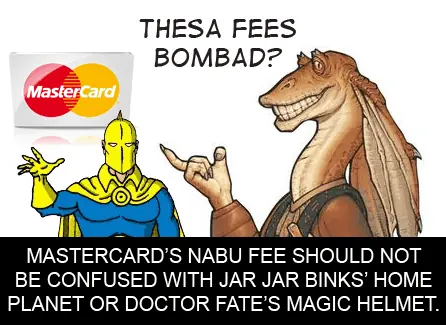
To avoid confusion, the NABU fee is NOT related to:


Changes to Interchange Fees

Breaking News from The Official Merchant Services Blog: MasterCard and Discover have announced interchange increases and modifications to take effect October 2012. Specific association modifications such as these are beyond the control of payment processors like Host Merchant Services. They come directly from the big card associations themselves. These changes affect all merchant card processors and their customers, meaning these changes in fees and rates travel in a straight line from Visa, MasterCard and Discover to the merchants.

The Meat and Potatoes

MasterCard will be reducing the Consumer Debit rate from 1.64% + $0.16 to 1.60% + $0.15. MasterCard will increase the Small Ticket Debit rate from 1.30 + $0.02 to 1.30 + $0.03.

Discover Card will be enacting several changes to their PSL Public Services interchange fee programs. Rates will increase from 1.50% +$0.10 to 1.55% + $0.10. Discover PSL Card-Not-Present/E-Commerce Premium Plus will increase from 2.30% + $0.10 to 2.35% + $0.10. Discover will also increase Key Enter Premium Plus from 2.10% + $0.10 to 2.15% + $0.10.

Add These Fees to the Pile

These changes come on the heels of a series of changes we reported back in February. Visa’s new Fixed Acquirer Network Fee and Transaction Integrity Fee made all of the headlines back then, but MasterCard also implemented its new annual Acquirer License Fee. This fee took effect in July 2012. MasterCard also implemented a new annual Type III Third Party Processor (TPP) Registration Fee in July 2012.

MasterCard based these fees on a full year of 2011 volume for each merchant, and for 2012 only the fees are 50% of the total fee calculated — since they cover only half of the year. MasterCard passed these fees through on a pro-rata basis and all acquired MasterCard credit and signature debit volume was utilized to determine the annual volume for both programs. PIN debit volume was excluded.

The changes to Discover Card’s PSL Public Services interchange fee programs are also in addition to a series of changes Discover announced back in February. Discover introduced a US Commercial Large Ticket Interchange program, increasing its assessment fee by .005%. Discover also changed existing card present Interchange rates for transactions less than $15 for Express Service merchants (Local Commuter, Bus Lines, Toll & Bridge Fees, Restaurants, Fast Food Restaurants, News/Dealer Stands, Laundries, Dry Cleaners, Quick Copy & Reproductions, Parking Lots/Garages, Car Washes, Motion Picture Theaters and Video Entertainment Rentals) and less than $25 for Taxi/Limo merchants.

Pay Attention to Your Statement

As stated above, these changes are made directly to Interchange rates from the Card Associations.  Unlike Visa’s much ballyhooed FANF, which is a completely new fee and not subject to regulation from the Durbin Amendment, these fees fall under the scope and purview of Interchange, and thus Durbin.

Merchants will begin to see the following text on their August Statements to explain the changing fees:

Visa, MasterCard, Discover Card Services have announced category introductions and modifications to their current interchange structures. These changes may affect your current pricing effective October 2012. Further detail specific to these changes and impacts to your merchant account will be detailed on your September merchant statement. As previously disclosed on your February and March merchant statements, MasterCard introduced the new MC licensing fee. Beginning in August 2012, the new licensing fee of $.005 will be included with the MasterCard NABU billing and appear as “MC assoc NABU/license fee”. Thank you for your continued business.

The Future of PCI and Data Security

Today The Official Merchant Services Blog marks the triumphant return to the timely topic of PCI DSS and cardholder data security. This tantalizing topic has been touted time and again in the peerless pages of our payment processing chronicles.

Days of Future Past

The crafty criminals that defraud, hack and swipe courageous consumers for their cardholder data are a constant concern for the entire credit card processing and data security sector. The industry has to be ever vigilant in its commitment to curb the high tech criminal activities and keep that cardholder data safe.

Retailers need to be eagle-eyed when it comes to defending data and securing customer information. They also need to be prepared for disaster, with a protocol-based plan of action for the worst case scenario — the dreaded data breach. But none of these advance preparations will save a merchant from data breach dangers if the merchant is unaware of PCI DSS, what it all means and what the requirements for PCI Compliance are.

The misdirection and misinformation out there about the process of PCI Compliance has led to complacency among many merchants. Face front true believers, we’ve even expressed the fantastic facts and figures to support merchant apathy regarding PCI Compliance in previous published purveyances of PCI related blogs.

The media gloms onto the gargantuan headlines of something as garish as a Global Payments data breach and the searing spotlight of data security dazzles the masses with the terrifying tidbits of these capricious crimes. But the nature of the crime has the danger spreading to small business merchants more and more frequently in the past few years. In fact, this article from Convenience Store Decisions, it is suggested that the heinous hackers and nefarious fraudsters are backing away from the big fish and targeting the smaller retailers with easier to breach defenses.

The CS Decisions scribe John Lofsock posits that one of the prime reasons for this shift can be pinpointed to an alteration in the criminals’ own dastardly demographics. Today’s hacker is becoming less the angst ridden, misunderstood teenager with whiz-bang keyboard and coding powers and turning into a far more treacherous group of villains. As the article puts it, “When hackers run up against businesses with sophisticated information technology and up-to-date security, they’ll turn to easier systems, including those of small non-profit agencies and family businesses.”

Datapocalypse Now

So what does a merchant do? The hale and hoary Host Merchant Services PCI Compliance pioneers readily suggest utilizing their very own PCI Compliance Initiative.  PCI Compliance is a fantastic foundation for top notch transaction security. The superlative standards and powerful protocols set up by the powers that be on the PCI-DSS Council are a forceful first step any enterprising merchant needs to take to protect their data. This is why helpful Host Merchant Services offers a power-packed PCI Compliance Initiative that gets merchants quickly and seamlessly up to speed.

Add to that amazing Initiative the second step that Merchants can take to shore up their security: Host Merchant Services Data Breach Security Program. Click that link to download a PDF explaining the value-added service HMS provides its merchants that goes above and beyond just simple PCI Compliance and helps ensure a merchant’s peace of mind. This program offers data breach insurance.

The article from CS Decisions quotes Trinette Huber, of Sinclair Oil Corp. in Salt Lake City as saying “as a merchant, I can go through all the steps to do this and do it in good faith, and yet if I have a breach — which is entirely possible — the PCI council will say I wasn’t literally compliant.”

This is where breach insurance comes into play true believers. The Data Breach Insurance that cutting edge and customer-oriented companies like Host Merchant Services offers can curb the pernicious penalties that merchants face when a breach occurs. As we’ve stated time and again here on The Official Merchant Services Blog, security only begins with PCI Compliance. It’s a never-ending battle for safety, justice and the power of payment processing. Merchant Services providers need to work in conjunction with merchants to stay out in front of any and all security issues. And even then, disaster can occur, so a solid data security plan will have backup protocols like data breach insurance.

The CS Decisions article also quotes Huber as saying that PCI “is asking thousands of merchants to do something (the credit card companies) should be doing themselves. They should be fixing the magnetic stripe (in credit/debit cards) so it’s not something that can be easily stolen, instead of asking merchants to fix (the security issues) for them.” 

That concern right there is why Visa has been pushing so hard for its EMV chip program with newer, more secure smartcards that have worked so well in Canada and Europe. Huber is noted in the article for describing the overbearing cost that the switch to EMV could entail for small business owners, as well as the fact that the EMV chips have been in place for decades and have already had data compromised before.

So if not EMV, Then What?

Will no canny crusader for competent credit card processing and dependable data transfer step up to take the challenge presented by the PCI DSS? John Lofsock, the audacious author of the article we’ve been analyzing, thinks that Point to Point Encryption (P2PE) might be the champion the industry needs. This tantalizing technology that is newer than EMV chips apparently ensures that credit card data is protected from the moment it is swiped all the way through to the nanosecond it arrives with the payment processor. This could curry favor with retailers because it completely eliminates the need for the retailer to secure cardholder data, as the retailer never has possession of said data.

The real boon, as noted by Lofsock, is that the P2PE method will make it much cheaper for merchants to be PCI Compliant by removing the need for merchants to deal with network segmentation and other costly and time-consuming parts of the compliance process like the audit.

It is noted that PCATS and PCI are preparing future standards that deal with P2PE so it is on their radar.

In the meantime, Host Merchant Services continues to offer the lowest PCI Compliance rates in the industry, as well as a vigorous PCI Compliance Initiative that seeks to inform and educate everyone interested as to the details of the process, step-by-step.

Discover Teams Up with PayPal

Discover Teams Up with PayPal [2023 Update]

The Official Merchant Services Blog continues to shine its spotlight of educational information directly on the Mobile Payments Industry. This bristling business sector keeps creating buzz among payment processing persons as well as overall economic assortments. One minute people are predicting hundreds of billions of dollars in revenue will get generated by consumers embracing the cashless society model and conveniently swiping their phones to pay for every little thing that catches their eye. The next minute people are predicting U.S. consumers are too wary and cautious and not ready to expose their information to the cloud and the criminals trying to crack their way into that cloud.

This titanic tug-of-war between “the next big thing” that economic analysts desperately desire M-Payments to become and the “hold your horses hombre” caution that those same analysts caveat the slow acceptance in U.S. markets has been defining the media coverage of the Mobile Wallet Madness for more than a year. But the potential for prodigious profits has pushed the possibilities of mobile payment processing through the morass of misgivings.

Merchants United!

As we purposely pointed out to our peerless readers just mere days ago, the Merchant Customer Exchange was formed. This epic assemblage of retail industry giants teams Wal-Mart Stores Inc., Best Buy Co. and Target Corp, 7-Eleven  Inc., Alon Brands Inc., CVS Caremark Corp., Darden Restaurants Inc., Lowes Co., Sunoco Inc., Sears Holding Corp. and the Publix Supermarket chains into a mega-group of retail merchant might on a mobile wallet mission.

Coming on the heels of Visa’s saturation of the 2012 London Olympics with all things Mobile and all things Visa, the mighty mingling of the MCX merchants applied unforeseen amounts of pressure on the mobile payment marketplace.

Mobile Payment Paring: Discover and PayPal

On August 22 PayPal, owned by eBay, announced a deal with Discover Financial Services to bring PayPal access to the 7 million merchants in Discover’s network. This deal will begin in the second quarter of 2013 and the announcement was made a mere two weeks after Square partnered up with Starbucks to let customers pay with Square’s app at the 7,000 U.S. Starbucks locations.

Excelsior! Retail titans are teaming up with mobile gadgeteers in one mass scramble to make it to market before the U.S. consumer becomes firmly affixed on the easiest and most widespread brand — as is wont to happen with U.S. shopper market behavior.

The PayPal deal is a particular point of note because PayPal itself is pushing from the online marketplace back into the physical realm of brick and mortar. This may indeed help bridge the gap from e-commerce to old fashioned commerce, and that bifrost of payment processing could very well buttress mobile payment processing in a brave new world of cashles-sness and contactless transactions.

The super-powered pairing of Discover and PayPal drove stock prices for each company, with Discover gaining 3.9% and eBay gaining 2.5% on the market the day the announcement was made. This arrangement will greatly accelerate PayPal’s in-store payment efforts. By riding on Discover’s network, PayPal can get into more locations  and get there quickly. Best of all this movement doesn’t requiring any significant integration work by merchants. That potentially puts PayPal at a big advantage against rival mobile payment systems such as Google Wallet, Isis, and Square.
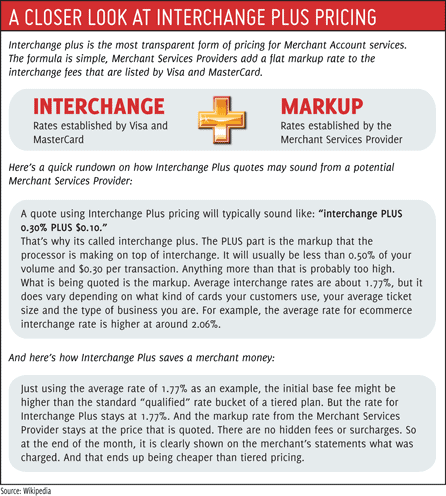
Discover is integrating PayPal’s payment system into its software, which will be uploaded to millions of point-of-sale terminals that support Discover Card payments. PayPal’s branding and rules will be presented to consumers who choose to pay in store with PayPal. PayPal currently has more than 50 million U.S. customers who will be able to take advantage of in-store payments.

Industry Terms: Merchant Cash Advance

This is the latest installment in The Official Merchant Services Blog’s Knowledge Base effort. Well we want to make the payment processing industry’s terms and buzzwords clear. We want to remove any and all confusion merchants might have about how the industry works. Host Merchant Services promises: the company delivers personal service and clarity. So we’re going to take some time to explain how everything works. This ongoing series is where we define industry related terms and slowly build up a knowledge base and as we get more and more of these completed, we’ll collect them in our resource archive for quick and easy access. Today’s term is Merchant Cash Advance.

Merchant Cash Advance

Merchant Cash Advance is a lump sum payment to a business in exchange for an agreed upon percentage of future credit card and/or debit card profits. The way this works is Merchant Cash Advance companies provide funds to businesses in exchange for a percentage of the businesses daily credit card income. This percentage is taken directly from the processor that clears and settles the credit card payment. A company’s remittances are drawn from customers’ debit- and credit-card purchases on a daily basis until the obligation has been met. Most providers form partnerships with credit card payment processors and take payments directly from a business owner’s card-swipe terminal.

A Merchant Cash Advance companies is most often used by retail businesses that do not qualify for regular bank loans. A business cash advance can be expensive compared with interest on a bank loan, ranging from 10% to 100% effective interest. Merchant cash advances are not loans – they are a sale of a portion of future credit and/or debit card sales. Therefore merchant cash advance companies claim that they are not bound by specific laws that would limit interest rates.

Despite the cost of merchant cash advances, the structure has many advantages over the structure of a conventional loan. Most importantly, payments to the merchant cash advance company fluctuate directly with the merchant’s sales volumes, giving the merchant greater flexibility with which to manage their cash flow, particularly during a slow season. Additionally, the ease, simplicity and speed of the application process, as well as the lower security position (i.e. behind that of the bank and landlord) associated with merchant cash advances are significant advantages.

There are generally three different repayment methods for the business:

  • Split Withholding, or Split Funding: When the credit card processing company automatically splits the credit card sales between the business and the finance company per the agreed portion (generally 10% to 22%). This is generally the most common and preferred method of collecting funds for both the clients and finance companies since it is seamless.
  • Lock Box or Trust Bank Account Withholding: All of the business’s credit card sales are deposited into bank account controlled by the finance company and then the agreed upon portion is forwarded onto the business via ACH, EFT or wire. This is the least preferred method since it results in a one-day delay in the business receiving the proceeds of their credit card sales.
  • ACH Withholding: When the finance company receives the credit card processing information and deducts its portion directly from the business’s checking account via ACH.


Find out more about Merchant Cash Advance options here.

And sign up for one here.