Tag Archives: holiday shopping

E-Commerce: Cyber Monday [2023 Update]

Today is Cyber Monday. And The Official Merchant Services Blog has been running a series on the Holiday Shopping Season that has basically been building up to today. Previous blog posts predicted that Online Shopping was beginning to really bit into Black Friday sales and that a general shift in consumer shopping habits was taking place. We had discussed that holiday shopping was beginning earlier and earlier each year due to the convenience of online shopping and the prevalence of deals to be had before Black Friday. We also pointed out that Cyber Monday had entrenched itself as a follow-up to Black Friday.

And judging by my own e-mail box today, Cyber Monday is taking no prisoners this year. I found deals from Amazon, LivingSocial and Newegg all waiting for me when I woke up. Each of these were targeted to my own buying habits too. So they got my attention.

Clicks Take it to the Bricks

Another thing that got my attention: The numbers coming in for Black Friday itself. As this article from Bloomberg stated quite clearly: “Online shoppers didn’t wait around until Cyber Monday to start their holiday shopping.”

The article references statistics from an IBM research unit called Coremetrics, and states that 20% more consumers shopped online this Black Friday than did last year. The data collected also states that 39% more online shopping happened on Thanksgiving Day itself. The ease of online shopping is infiltrating the traditional brick-and-mortar retail event and Host Merchant Services’ analysis of this year is holding true –– sales numbers across the board rose from 2010, so overall Black Friday had a boost for retail, but clicks from e-commerce continue to grow and cut into the sales from bricks.

Black Friday Was Still a Boom for Retailers

In fact, this article from Internet Retailer details some of the strong sales numbers from Black Friday: “Sales were also strong at bricks-and-mortar stores, reports ShopperTrak, which monitors traffic and sales at major malls and retail chains. Total Black Friday retail sales rose 6.6% year over year to $11.40 billion, while foot traffic increased 5.1%.”

Looking Toward the Future

The Black Friday business blitz also revealed some healthy news for another topic Host Merchant Services has been covering this year: Mobile Payments. According to this article from Seeking Alpha, mobile payments business increased 500% from 2010 on Black Friday. According to the article, PayPal mobile reported the huge increase, coming in at 511% to be exact. PayPal Mobile also noted that there was a 350% increase in mobile shopping on Thanksgiving 2011 when compared to 2010.

According to numbers from the aforementioned IBM research, 17.37% of all consumers used a mobile device on Black Friday to visit a retailer’s site. And 9.73% used a mobile device to make a purchase. The Seeking Alpha article quoted Amanda Pires from PayPal. Pires suggested that this year’s holiday is proving to be the largest mobile holiday shopping season PayPal and eBay has ever seen, and then quoted Pires directly as stating: “The retailers that are taking advantage of mobile shopping are going to win. We expect mobile shopping to continue to be strong throughout the holiday season.”

This is good news for Mobile Payments, as Host Merchant Services research has shown in the past that there have been some bold predictions for growth in Mobile Payments, but that the services were slow in taking hold this year in the U.S. Growth like the numbers cited from Black Friday 2011 should fuel more positive momentum for that consumer payment option.

What is Cyber Monday?

Cyber Monday is the Monday immediately following Black Friday. This day was created by companies who wanted to recommend people to shop online. What started off as a promotional strategy has quickly become one of the biggest online shopping days of the year. It is also the easiest way for analysts to break down the “clicks vs. bricks” battle of online shopping strength compared to retail store shopping strength.

What are the benefits of Cyber Monday?

  • Extremely last minute deals, since you’re online and can go right up to the very last second of the deal.
  • Online only deals, as e-commerce sites specifically target your business they offer deals online that you can’t find in brick and mortar stores.
  • Shop anytime you want, which is extremely attractive to consumers as they get to work shopping into their schedule.
  • Convenience of shipping, which is the ultimate thing that online will always have over retail. Just a couple of clicks and none of the hassles.
  • Greater range of shopping, which means consumers aren’t limited to places they can reach in their local area. Online shopping is worldwide.
  • Compare prices. As an online shopper you can pretty much just tab right over to the competition to directly compare prices.
  • Coupon or promo codes. Just like retail stores, coupons and promo codes fuel even bigger savings online.
  • No waiting in line. Back to the convenience, it can’t be stressed enough how much easier it is to shop online because of simple things like not having to stand in line.

E-Commerce is Thriving

All of the benefits of Cyber Monday play right into the bustling e-commerce industry. E-commerce continues to grow as it becomes a more and more accepted and convenient method of holiday shopping. Cyber Monday is today. The deals are most likely sitting in your email box as well. Click your way around and see what’s available. Holiday shopping is shifting rapidly and the power of e-commerce and online shopping solutions need to be embraced by merchants since consumers are embracing them so readily.
Merchant Services: Black Friday is Here

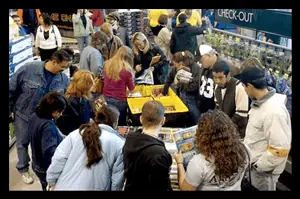
Let the shopping season begin! Black Friday is here, and the traditional marker for holiday shopping is off to an unusual start for 2011. The Official Merchant Services Blog is taking today’s blog entry to give you a bit of a roundup on the event.

It Started Early

The first sign that this year’s Black Friday was going to be different than others was that it got started earlier than ever. Crowds lined up for midnight openings at Best Buy, Target, Kohl’s and Macy’s as retailers angled to get first crack at consumers’ tight holiday budgets. Wal-Mart opened even earlier at 10 p.m. and Toys ‘R’ Us started at 9 p.m. The Holiday Shopping season, as reported by The Official Merchant Services Blog previously, has been adversely affected by online shopping and e-commerce. Statistics show that shoppers — using the convenience of clicks over the late-in-the-year discounts of bricks — had been starting their holiday shopping as early as May and as late as August. The kicker being, Black Friday was potentially going to lose some of its draw. So this year retailers pushed and pushed and pushed, edging the event right into Thanksgving Day — well evening — itself.

Consumers Are Out in Force

Right now there are contradictory reports coming in about how successful this move was for retailers. One article from CNN suggests moving Black Friday into Thanksgiving was a success. The article quotes Tom Julian, president of Tom Julian Group, a retail consultancy in New York as saying: “Taking Black Friday into Thanksgiving Thursday has proven successful.”

The article then goes on to say: “Despite some backlash against such early store openings on Thanksgiving Day, the move seemed to pay off. At some Target stores, lines were more than twice as long as last year, according to the company. Men’s Angry Birds pajamas were one of the biggest sellers, along with televisions, game systems and cameras, spokeswoman Kristy Welker said.”

The article pointed out that lines at Sears, KMart, Macy’s and Toys’R’Us were all longer than previous years and business was ready to boom.

The Impact Might Not Be High

Despite the good numbers and fast start for Black Friday this article from CBSNews and its Early Show says that this year’s holiday shopping season could be a “bit of a bust.” The article takes a look at the big-picture of the economy and tries to see how even with a fast start, 2011’s Holiday Shopping Season could end up being a negative. The article stated: “this year, it might take more than one Black Friday to get retailers – and the U.S. economy – out of the red. Quijano added on ‘The Early Show,’ that while analysts project a 2.8 percent increase in Black Friday sales this year, that’s actually smaller than 2010, which saw a 5.2 percent boost.”

The article suggested consumers are wary and though they may be out in force, their shopping habits are more selective than usual: “In a national survey by the National Retail Federation, more than 50 percent of those who plan on shopping said they will wait to see if this weekend’s bargains are worth getting out and fighting for.”

And the article quoted Marshal Cohen, chief retail analyst of NPD group, a marketing research services firm as saying: “There is no stimulus package, there is no jobs program, there is no tax rebate that the president’s put on the table, so it’s really up to the consumer to go toe the line themselves.”

Black Friday: Is It Worth It?

That brings us to this Digital Trends article, which suggests that Cyber Monday — and overall the convenience and growing popularity of e-commerce itself — is going to really cut into retail shopping and Black Friday in a big way this year and in the coming years. The article states: “Not only have brick-and-mortar retailers felt the push of Cyber Monday sales, but some companies like Amazon and eBay are beating in-store retailers to the punch by opening for business Thanksgiving morning. The lure and ease of the Internet has also evolved e-commerce and altered the shopper’s frame of mind, which all might be heralding the end of Black Friday as we once knew it.”

The article puts it simply that the lines and the hassle of sidewalk and mall shopping on one day of the year doesn’t give enough value to consumers when stacked up against the ease of click shopping online. The deals aren’t big enough compared to what shoppers find online. And there just isn’t any fighting that needs to be done to get to the products. No one shoves you out of the way when you slide your mouse or type in a browser menu bar.

Don’t Forget Groupon

Beyond the convenience factor, there’s also the fact that the deals on Black Friday are not as compelling as they used to be. And that’s because sites like Groupon and Living Social have been consistently blitzing consumers all year long with deep discount savings day in and day out. The Holiday Shopping Season is no exception. And so now consumers have a lot more options than just standing in line at BestBuy at midnight fighting over an item. They can shop around on the web and find something that may save them more and avoid the line entirely.

In Conclusion

It looks like this year’s Holiday Shopping Season has gotten off to a strong start. Black Friday is nowhere near being “dead.” It’s just that the numbers indicate this may be a really good year for shopping overall. Because of that, despite an increase in sales this year Black Friday’s impact might still be getting watered down. In other words, yeah, the numbers will be up for Black Friday, but that could just be a byproduct of all numbers being up this quarter. Holiday Shopping booms all over. And Black Friday numbers benefit. But many still feel that e-commerce is going to continue to grow faster and faster, eating into brick-and-mortar retail numbers. The Bricks vs. Clicks battle still seems to favor the clicks.

Host Merchant Services, payment network provider of both retail processing services and an entire lineup of customizable e-commerce solutions tailor made to a merchant’s specific needs, is able to help you maximize your potential in both areas. We can help you navigate through the busy bustle of holiday shopping and find the transaction processing services that serve you best.

Merchant Services: Why Should You Offer Gift Cards?

Today The Official Merchant Services Blog continues its ongoing series to get you ready for the Holiday Shopping Season. A previous blog entry looked at the next big thing, virtual gift cards. But we figured we’d take a moment to focus on the old school mainstay, and offer insight into why merchants should offer their customers regular old plastic gift cards.

The Numbers Are Telling

Getting the obvious out of the way first: Gift Cards, Gift Certificates and Loyalty Programs are big business. According to one report, businesses sold $23 billion in gift cards in the U.S. in 2010.  The consumer perspective is pretty straight forward: they are convenient for both the shopper and the recipient of the card. This blog article here goes into detail about why they are convenient and popular with shoppers.

But what about your business? Why would gift cards and loyalty programs be good for your business?

Here’s a rundown on some of the most prominent reasons to start running a loyalty program and offering gift cards:

Increase in Sales

You’re about to see a lot of new foot traffic (or click traffic if you’re reading this from an e-commerce perspective). And a gift card program will heighten the sales potential you have this Holiday Shopping Season. From impulse buys to people who just aren’t quite sure if the person they’re shopping for has a particular item, the gift card steps in and provides more chances for consumers to purchase something from your store.

Getting Sales Referrals

Gift Cards take two to tango. The person buying the card, and the person receiving the card, are both potential long-term customers for your business. It could be that the person buying the card knows the recipient likes your store but doesn’t know what specifically to buy from you for them. Or it could be the other way around, and the gift giver likes your business and wants to introduce the recipient to your goods or services. The real power in gift cards is that they inherently refer your business beyond just one customer shopping one time.

Free Marketing Tool

A Loyalty Program and the Gift Cards you run through it are powerful forces for the marketing of your business. Building off of the previous point of the ability of the cards to refer new business, Gift Cards put your brand and your business out there for new customers and for repeat customers. A good loyalty program spreads the word about your business with each individual gift card.

Customer Retention and Business Events

You can also use Gift Cards as rewards in events or campaigns your business engages in. Or just simply use them as rewards to loyal customers. The goal of long-term customer retention is made that much easier when you have the power to give back to your customer in such a way that it keeps them coming back. The customer gets the gift card in appreciation of their business. And then comes back to you to use it for more purchases.

The Opposite of ‘Breakage’

Breakage is described in this blog about gift cards as people purchasing a gift card, and then the card not being used. It often gets touted to merchants as a way to make money on gift cards as that is money being spent on future purchases in your store that never get made. So just using straight mathematics, you make more money from breakage. You get to virtually sell items more than once. But as that blog points out, the benefits of good loyalty programs and gift cards are really focused on lowering the amount of breakage.

You want the card to get used. Why? Because people tend to spend more than the gift card is worth. It’s been reported that consumers who do use gift cards tend to spend an average of 35% more than the value of the card. Which makes a lot of sense from a consumer stand point. Gift Cards let them make purchases on expensive items they may not have initially thought were in their price range. Simply put, you have a $50 gift card to a store you like, that $100 item you had your eye on seems a lot more within reach.

You want this business. You sell more than you initially sold the card for. And you cultivate long-term relationship potential. Breakage looks good in black and white numbers, but the goal is get happy customers that keep coming back to your business.

Get Going with Gift Cards Now

Those are some of the very basic reasons why Gift Cards and Loyalty Programs can help give your business a quick boost right as we enter the Holiday Shopping frenzy. Host Merchant Services offers a robust set of services to help you process gift cards quickly and easily. The company takes the hassle out of the process with complete turn-key solutions that are focused on increasing customer loyalty for you. And we offer tiered branding customization options for the card program you select. For more information on what Host Merchant Services offers, you can click here.

Superior Customer Service

As we close in on the Holiday Shopping Season, customer service becomes more and more important. That’s not to say customer service was unimportant prior to now; it’s just that most businesses –– e-commerce ventures as well as brick and mortar stores –– see a large increase in consumer activity during the Holiday Shopping Season. Any customer service mistakes that get made in this time period end up being magnified due to the time of year.

As part of its ongoing series about Holiday Shopping, The Official Merchant Services Blog wanted to take a moment to examine customer service.

By The Numbers

It’s important to not let customer service fall to the wayside in favor of more direct methods of obtaining profits. While marketing campaigns and aggressive sales techniques can see quick results in black and white numbers, customer service is the foundation for maintaining a long-term sales relationship. The old adage about how it costs more to acquire a new customer than it does to retain an old one is what’s at work here. A 2010 MediaPost report indicated that U.S. businesses lose approximately $83 billon each year as a result of poor customer service. The report also indicated that 71 percent of U.S. customers have ended a business relationship based on poor customer service. The report also noted that poor customer service has an impact on a business’ competition –– the study cited by MediaPost found that 61 percent of customers surveyed said that they take their business to a competitor when they end a relationship with a company due to poor customer service.

Do Not Panic

While those numbers from that survey are compelling, our first bit of advice is: Do Not Panic. Just like Customer Service is a long-term relationship building tool, it’s also an aspect of your business that you can take your time building. So even if you hit a few customer service snags on Black Friday, or there’s some pitfalls for your e-commerce business’ customer service on Cyber Monday, it’s not time to panic. Take it easy, and keep the focus on the long-term goal of quality customer service.

Anecdotes and Analysis

We’ve all experienced horror stories that back up the numbers cited above. It could be something as simple as walking into a store looking to purchase a specific product and not receiving any assistance. I’ve had this happen to me quite a lot when walking into a specific retail chain near where I live. I’ve gone there multiple times looking to purchase printer cartridges. And each time I have trouble finding the specific type I’m looking for and it seems I can never get an employee to even ask me if I need help. It’s made me stop going there and I now buy my printer supplies online instead.

What horror stories have you experienced? What’s the worst customer service incident you’ve encountered? Has it affected your approach to your own business and the customer service you provide?

Make Good Customer Service a Habit

Host Merchant Services makes customer service a part of their core business philosophy. It’s part of the Payment Network Provider’s overall goal to bring trust to the payment industry. And it’s part of why this merchant services blog exists. The company wants to share information with customers as well as potential customers, and take the time to explain the confusing aspects of the payment processing industry. Customer Service defines the approach to the customer relationship; it’s why Host Merchant Services makes guarantees such as no contracts and no termination fees; it’s the basis for how Host Merchant Services offers free terminals to our merchants.

Merchant Services and Payment Network Providers need quality Customer Service

Defining Good Customer Service

Using that background in customer service focus, Host Merchant Services offers some easy tips to help you enhance your customer service:

Make a Good First Impression

A customer’s first contact with your business should be a positive experience, no matter if that contact is a telephone call, an internet click through or face to face.

Real People Over Automated Responses

Contact between customers and potential customers hinges on interaction between real people. This applies mainly to the way your business takes phone calls or handles internet contact. Try to cut down on phone trees and automated telephone recordings with confusing menus. For your e-commerce businsess, make sure your website is designed well and easy to navigate. Give your visitors a convenient hub to continue to visit. And make sure you clearly mark how to contact you for customer service related issues.

Be honest, Offer Facts

Do not sugarcoat things when dealing with your customers. While it may be uncomfortable to deliver bad news, customers and potential customers prefer honest and factual information. Trying to sugarcoat things makes them feel like you are being manipulative and will have a negative impact.

Get Back To People

Follow up with people who contact you. Delays in returning voicemails, neglecting e-mails, not responding to posts to your twitter, are all negatives in customer service. If someone takes the time to try to contact you, the best thing you can do to maintain good customer service is to get back to them promptly.

Work With Your Customers

When you do interact with your customers via phone calls, e-mails or face to face, remember to work with them –– not against them. Listen to what they are telling you. They contacted you with a concern, so take in their information. Be polite. Most customer service issues revolve around customer complaints. But if you listen to them and are polite with them, you take a huge step forward toward getting their issue resolved. Customers want to be heard, and they want you take action on their behalf. Even if you can’t do exactly what they want, the process is there for you to help them feel like they are valuable to your business.

Stick To Your Plan

That’s the basics of it. It’s really just a process that involves you interacting with your customers on a human level. Getting back to them promptly. Giving them your focused attention. And doing what you can to make them feel like they are valuable to your business. This is all about building a long-term business relationship. So while you may experience an increase in the static you get from irate customers through November and December, if you stick to a plan that focuses on customer service and relationship building, you will navigate through the storm of the Holiday Shopping Season.

We want to hear from you. What does good customer service mean to you? Better yet, what does it mean to your customers? When they define good customer service, does your business immediately come to their minds? What are some tips you would offer for obtaining excellent customer service?

The Allure of Credit Cards for Holiday Shopping

With the Holiday Shopping Season fast approaching –– Black Friday is 11 days away, Cyber Monday is 14 days away –– the payment processing industry is still getting the last pieces in place for a brisk rush in the use of credit and debit cards. The Official Merchant Services Blog continues its series focusing on the impact the holiday shopping season is going to have on both the e-commerce industry and merchant services in general.

The battlefield is set between Debit cards and Credit cards. Debit cards received a huge boon from the federal government in the form of a cap on interchange fees that went live on October 1, 2011 in the form of the Durbin Amendment. This cap restricts the interchange fees that can be applied to Signature debit card transactions. The cap restricts the charge to between 21 and 24 cents per transaction. This is a huge cut from the previous average of 44 cents per transaction, and presents debit card transactions as an attractive option for merchants to start accepting right as we slip into the big holiday shopping rush.

That has left Credit card issuers scrambling for a response, trying to stay competitive and keep consumers answering “Credit” at the checkout line.

This Reuters article suggests one of the big campaigns that credit card issuers are going to push this year is a significant raise in rewards programs for their customers, tempting them to choose credit as their swipe of choice to get access to those sweet sweet rewards. A focus on cash back and travel rewards push the right buttons for consumers while holiday shopping.

A Look At The Numbers

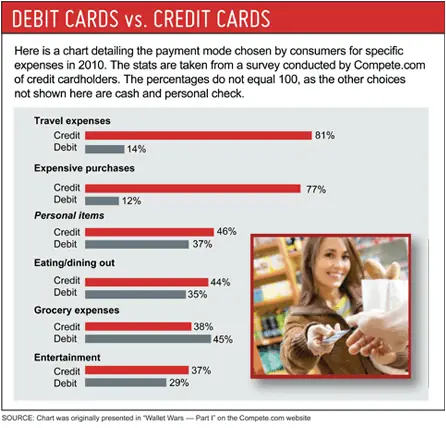
Here’s a small chart detailing the dichotomy between debit card usage and credit card usage from consumers in 2010:

The chart breaks down the chosen method of payment among a survey of credit card owners from 2010. Key numbers to note are the Travel category –– which is dominated by credit card use. It is unlikely that the Durbin Amendment and its changes are going to really affect that sector. But looking at the category listed as “Personal Items” –– which would tend to be the category for holiday gift purchases –– you’ll see a much tougher competition between the two transaction choices. This is where the Durbin Amendment changes to debit card swipe fees are going to have a large impact. And this is where the juicier cash back rewards have credit card issuers hoping they can keep things competitives.

According to the Reuters article: “For example, both Chase (CCF.A) and Citibank C.UL have cards that are offering new applicants $200 in cash back after they spend $500 on their cards.”

You Have to Dig to Find the Best Deals

Some of the best deals are not always displayed in easy to find places. The Reuters article cites a Citibank deal. On the Citi website it advertises the deal as $150 cash back on your first $500 of purchases. But then if you dig deeper by google searching “Citi Dividend $200” you find the better deal directly.

Making it Work For You

The really effective strategy to maximize these deals is to combine them with other deals you will be hit with during the holiday shopping season. The Reuters article notes: “Some cards (such as the Upromise card) have their own shopping portals that combine their rebates with rebates from merchants. In other cases, you can use your rewards points directly for holiday shopping; American Express (AXP.N) awards can be paid directly to Amazon for purchases, for example.”

This type of deal stacking gives consumers a lot of shopping incentive to choose credit as their swipe choice.

Use Analytics to Maximize E-Commerce

Then next phase in The Official Merchant Services Blog series on assisting merchants with beefing up their e-commerce presence this holiday shopping season focuses on web analytics. In a previous blog we gave merchants tips on how to improve the overall e-commerce picture. That blog focused on broad strokes and the process of landing on the merchant’s site and purchasing goods or services from the site. A second blog delved into Search Engine Optimization, assisting merchants with boosting their web site’s page rank when potential customers searched for the goods and services the merchant was selling.

Today’s blog brings both of those strategies together through web analytics. The process needs to be streamlined and strong. Your customers need to be able to find your page when they search, find your products when they get there and buy your products with no hassles. Click, click, purchase.

And how do you know if that is working? If your site is actually doing that and doing it well?

That’s where analytics come in.

Good website analytics take the mystery out of wondering who’s visiting your website and why. You don’t need to be an online marketing whiz to use them effectively. There are plenty of analytics packages for sale, but you can get started for free through Google Analytics. The Google service provides you with a line of code to plug into each of your website pages, and you can then start tracking your site’s data. You can get a breakdown not only of how many visitors came to the website, but how long they stayed, what site they previously came from, what search terms they used to reach the website, and which pages they visited the most.

Here are five questions to help you maximize your use of website analytics:

  • Do your visitors already know you? The whole point of the website is to link you with potential new customers who interested in your business. A well-designed website should only have a small percentage of visitors who have used the company’s name to find it in a search query –– suggesting they already know your business before they stopped by.
  • Are you bringing in potential customers? You want to make sure that people landing on your page are getting there using specific keywords. These keywords are relevant to the goods and services you provide. That way the traffic that seeks you out is the traffic that wants to purchase what your site is selling. Let’s say you’re a web hosting provider. You want the people searching for “web hosting” or “cloud hosting” to find you.
  • Does your social media presence work? Analytics let you monitor where your visits come from. So you can gauge how many visitors are coming from your social media activities. Google Analytics also lets you set goals, which can then be tuned to your social media outlets. Essentially you can judge how effective your Facebook Ad or Google Ad campaigns are by seeing what traffic they generate. And you can also tailor your goals section to track specific things related to your social media profiles. For example you can set a goal to monitor how much traffic you get from a specific Facebook ad or a Twitter Tweet.
  • Are visitors bailing from your homepage? Google Analytics tells you your homepage’s bounce rate, the percentage of homepage visitors who never clicked on additional pages. This is key for analyzing your e-commerce vitality. A lot of sites can generate visits, but if you’re not keeping people around and they’re not clicking through to your goods and services, you’re going to have a high bounce rate. If the bounce rate is more than 60 to 70 percent, you have a problem with your landing page, and possibly your marketing strategy. This problem is infecting your entire e-commerce setup and hurting your business. The search terms your visitors are using to find the site tell you whether they’re the people you want. If they are the right type of visitors and they aren’t delving deeper into the site, then the blame goes on the homepage.
  • Are they looking at your product or service pages? Your website is designed to generate sales or interest in your services. So beyond just the bounce rate of the homepage, it’s important to analyze your product pages. If website visitors aren’t looking at the pages that allow this to happen, then either your homepage is not doing its job or (if your bounce rate is not terrible, but your business isn’t being generated) there’s a problem with the product pages themselves. The homepage should be divided into decision-making paths that quickly separate visitors by their interests and lead them to the information they are looking for. The goal is to make the click through process easy and seamless. The customer arrives, finds what they want and goes and gets it.


That’s analytics in a brief nutshell. The data that programs like Google Website Analytics gives you can help shed light on problem areas with your e-commerce package. It is easy to use, so don’t be intimidated by the numbers. Take your time learning the program as these numbers are the key to finding out whether your website is effectively generating business.


E-Commerce SEO Tips for Merchants [2023 Update]

The Official Merchant Services Blog once again picks up its thread about the impact 2011’s holiday shopping season is going to have on e-commerce. Previously we gave merchants tips on improving their e-commerce experience for customers. These tips were primarily focused on things merchants can do with their website and their online shopping cart. Today we’re going to offer some tips on improving your site’s Search Engine Optimization (SEO). This is basically the other side of the coin. With the first set of tips the goal was to make it easy for your potential customers to use your site, and buy things from you effectively. With these SEO tips the goal is to make it easy for potential customers to find your web site in the first place.

What is SEO?

SEO

Search engine optimization (SEO) is the process of improving the visibility of a website or a web page in search engines via the “natural” search results that come up from using the search engine. SEO is absolutely vital to your online business. SEO is what helps the search engines such as Google find your website or your products in whichever marketplace you are using. In general, the earlier (or higher ranked on the search results page), and more frequently a site appears in the search results list, the more visitors it will receive from the search engine’s users. So the basic goal of SEO is to get a web site ranked on the first page.

How to Improve your SEO

Here are a few effective tips from Google itself and its SEO Report Card to help you use best SEO practices and boost traffic to your website or listings:

  • Offer Quality Content and Services

    –– According to Google, interesting websites will increase search engine recognition on their own. The internet is content driven. So the first step in improving your SEO is to make sure you have compelling, consistent content. In fact, here is what the Google SEO gurus have to say about your site’s content: “Creating compelling and useful content will likely influence your website more than any of the other factors discussed here.” Great content is more apt to be shared and linked to, which will help boost your rankings with the search engine results pages, or SERPs.

  • Create more descriptive title tags

    –– Optimized keywords and an effective URL naming structure can help the search engine understand the content of the page better. It is suggested to use a maximum of 60 characters on title tags as an opportunity to tell both users and search engines what the focus of the page is. There’s no need to go past this many characters, as most search engines will display ellipses ( … ) after this limit. Also, search engines may give less weight to words after a certain point.

  • Write Better Anchor Text

    –– What is anchor text? It’s the clickable text that users see as the result of a link and is placed within the anchor tag. This text tells Google and the other search engines, as well as internet users, a little something about the page you are linking to. You should use descriptive, concise text and format links so that they’re easily spotted. Don’t neglect your internal anchor text, either.

  • Create effective URLs

    –– Choose the form of the URL that is easiest to remember as the canonical and be consistent with this canonical form across all products. Think of the most common URL forms visitors are likely to try and then 301 redirect these to the preferred/canonical URL or be sure to use the rel=”canonical” link element if you cannot redirect.

  • Optimize Your Use of Images

    –– In the last blog post, we discussed the importance of using high quality images of your products in your shopping cart and how that helps you make sales. Those same images can help your SEO, if you utilize the text that comes with them properly. You can use a filename along with alt text for images and should take full advantage of both. The content of the alt attribute contains information about your image. Don’t scatter your image files in a bunch of directories and subdirectories, but store them all in a single directory. This will greatly simplify the path to your images. Use commonly supported file types such as PNG, JPEG, GIF and BMP.

The real work here for a successful e-commerce merchant is combining the strategies from the previous blog with the tips presented here. You need to make your site come up on the first page of a google search so customers can find you. Then once they click you need to have an strong, easy to use site so those same customers can make their purchase quickly and hassle-free. All of this leads up to the final submission of the sale, which is where Host Merchant Services steps in and makes the payment processing easy for you and completely worry-free. Let our tips and information help you with the first two steps, and then we’ll handle the processing.

Customer Service vs. Marketing? [2023 Update]

Much of the content I provide for The Official Merchant Services Blog I write like a news story. The goal there is to provide quality, insightful information on topics that relate to what we feel our visitors and merchants can use in their business. But this is still a blog. And today I’m going to take a more casual, more blog-like approach. In the end though it’s all going to come back to a very relevant point about customer service, e-commerce, and the holiday shopping season.

Good Call Gone Bad

I have ended my relationship with the Apple iPhone. Which is a pretty significant departure for me. I’ve had an iPhone since 2007. While I wasn’t the first in line to get one, I was still a very early convert and had one a couple of months after its launch. I “wow-ed” my friends with its touch screen technology, and became a loyal iPhone customer all the way up until this week.

What Caused Me to Leave the iPhone?

Poor customer service is what caused me to switch to a different smartphone plan and leave the iPhone. Here’s what happened:

I hadn’t upgraded my iPhone in awhile. I was still using the 3G. My battery was getting spotty. My internet connection through it was definitely showing its age. It was time for me to upgrade. And conveniently enough the iPhone 4S had just been released. I thought this was an amazing opportunity to upgrade right before Christmas. And luckily (or so I thought) for Apple, I had two phones to upgrade. I had purchased an iPhone as a Christmas present for my mom a couple of years back. And it was on my phone plan, and she was really unhappy with her internet speed on the phone. Win-Win for the Apple store right? Two phones to upgrade.

One Step Forward, One Step Out the Door

So I went into my local Apple store Monday evening looking to upgrade. At $200 per upgrade, I was basically walking through the front door with at the very least $400 to spend on their products.

That’s when things got all bizarro-world. Up was down, North was South, and making sales was not the salesperson’s goal this day. I was told that I could not upgrade my phone that day. That I had to do one of two things:

  1. Log onto their web-site and purchase the phone online directly from the apple store’s site. I was told this would take 1 to 2 weeks to deliver.
  2. Log onto their web-site and make a reservation to pick up a phone the next day. I was informed that I had a very specific window in which I could make this reservation (between 9 p.m. and 11 p.m. at night). I was told that I would run into high internet traffic and would likely have to refresh the page multiple times. I may not make it into the reservation quickly enough because of this (The salesperson compared it to bidding on something on eBay but in my head it sounded more like trying to obtain playoff tickets before they sell out). And I was told I had a very specific window of opportunity to make it into the store the next day to pay for my reserved iPhone.

And after explaining all that, I was ushered out of the store. Just like that, $400 walked out of their store.

Cool Like That

I have to ask: What is wrong with that business model? I mean, I fully understand there’s some marketing tactics being employed right now by Apple. Part of what makes Apple the brand that it is stems from their marketing of “cool.” That their style drives the demand in their product and that they can give that aura of being too cool to worry about beating their competitors with boring numbers. But how far does that extend? Is it a good move to let $400 walk right out of the door? What kind of customer service is that?

To get back to my misadventure, after walking out of the store with no service, I did indeed go home and jump onto the web that night. But instead of visiting Apple’s web site, I went to AT&T’s site –– my phone service and data plan provider. I just wasn’t even going to try and deal with Apple’s site. Especially with all of the obstacles they put in front of me. I did note that AT&T’s site would give me an upgrade to an iPhone 4S and promised 2-day  priority shipping. But I didn’t really investigate the details of what they were going to offer. I was that annoyed with the Apple Store’s treatment of me. I had been a loyal customer of this product for 4 years. I’d upgrade multiple times in the past. And never once experienced anything like this. Apple did not want my money. So as fascinated as I was by AT&T’s offer, it was time to move on.

Ex-Phone to the Next Phone

I upgraded my service plan and smartphone to a Samsung Galaxy S II. For the exact same price as the iPhone 4S.

My phone arrived last night. And now for the first time since 2007 I’m not using an iPhone. It all comes down to the customer service.

I’ve read stories explaining that demand for the iPhone 4S is higher than supplies. So that’s why this reservation process exists. However I question the circumstances that led up to this situation existing. The iPhone 4S was released in time for the holiday shopping season of 2011. The iPhone is an industry leader. And this is one of Apple’s biggest releases of the year. What prompted them to under produce?

I tend to think it’s part of their “oh so cool” marketing strategy. By under producing they help continue to stoke the flames of demand. It’s this slick new gadget from the hip tech company. And you want it even more because you can’t have it.

The Bottom Line

There is a lot of power in that strategy. But as I said to a friend of mine the other day at lunch, Microsoft will stay ahead of Apple on a lot of things simply because Microsoft would rather have my $400, and your $400 and everyone else’s $400. They’d rather make the sale. Customer service wins out over cool branding and hip marketing. And that’s something very important for merchants to remember heading into the most frenzied portion of the holiday shopping season. The iPhone 4S is trying to be the Tickle-Me-Elmo of the smartphone industry. The must-have/can’t-find item. And I am guessing that in the long-run losing out on my $400 isn’t going to hit them very hard. But that’s not a mistake smaller businesses can make.

It’s All About Service

Customer service is key. With e-commerce being so prevalent, consumers are blitzed by options. They can shop around by clicking from here to there. And your business needs to make an impression on customers. Especially those that walk into your brick and mortar operation with money in hand looking to purchase. If the Apple store had done anything to retain my business, they’d have kept me around for a few more years. Instead they showed me the door. Literally.

The Samsung Galaxy S2

I didn’t just decide to blast Apple without checking around to see what the deal was with this. And I do have a certain level of understanding about how the company has to now deal with their short supply and still move forward with trying to sell the product. I have a friend who went through the reservation process and was as flustered with it as I was just being told about it by the salesperson in the store. I also poked around to find some relevant stories and information on this.

Here’s a Conversation Marketing Blog about trouble with Apple Store customer service. The issue is completely different. But I did get a chuckle out of this image. And it underscores my overall theme here –– Customer Service needs to improve.

That blog led me to this article about Gary Vaynerchuk’s book The Thank You Economy. The book makes “a compelling case for why businesses need to adapt to the new reality that one-way push communications are no longer as effective as building a real, sustainable relationship with your customers.”

Which gets round to the whole reason this story exists on The Official Merchant Services Blog: Quality customer service is at the very heart of the Host Merchant Services business philosophy. As our CEO often says, “You stay with us because you’re happy.” It’s just that simple. No contracts, no termination fees, no tricks. Host Merchant Services will not run you off the way the Apple Store feels it can with customers who are looking to spend hundreds of dollars. It’s not part of the HMS philosophy.

E-Commerce Tips for Merchants [2023 Update]

The Official Merchant Services Blog continues its coverage of the holiday shopping season and its impact on the e-commerce industry. Today we’re going to give some very brief, incisive tips on how merchants can improve their e-commerce presence and hopefully improve their profits in the holiday shopping season.

Think Like a Consumer, and Put your Products in More than One Category

Make your online shop easy to navigate and your products easy to locate. The online businesses that make their goods and services easy to find reap rewards in two ways: people purchase more and they experience greater overall satisfaction with the web site. While reorganizing and streamlining your catalog, consider up-sell and cross-sell opportunities by offering products that make logical sense together. For example, if you sell paintings and frames, show the frames that best complement the paintings. If you sell a line of products that have a wide range of prices, show the progression from the least expensive to the most expensive. Customers may choose to purchase the higher priced items if they’re presented as options.

Keep it Simple

Many people cite overly complicated navigation or too many pages in the purchase path as reasons they don’t complete their online sale or abandon their shopping cart. Successful e-commerce sites simplify the checkout process and display clear pricing and shipping information –– making the shopping experience take the fewest amount of clicks possible to get from landing on the site to completing checkout. They also post clear return policies and access to customer service. Putting your brick and mortar store’s phone number in a visible place on your web site is also a good idea. Studies suggest that consumers feel more confident knowing you are readily available if they have a question or if there’s a problem with their order.

A picture really is worth a thousand words, so use quality photos of your products instead of long descriptive text blocks. Online usability studies suggest that people do not read, they scan. It’s harder to read text on computer screens, so keep these guidelines in mind for optimum readability: Headlines should be 8 words or less, shoot for 9-12 words on a line (people don’t want to read across the entire screen); keep sentences short (15-20 words) and try to keep summaries under 30 words; and hold paragraphs to 40-70 words. In this way you can maintain compelling product descriptions alongside your high quality images.

Market your Site Once it’s Live

It’s not enough to just build a web site. You need to make a focused effort to market and promote your web site to new and existing customers. Collect e-mail addresses on your site to help you keep in touch with customers and consider creating a newsletter or a blog. Seek back links from other sites that complement yours. Optimize your site’s content for relevance and submit it to the major search engines.

Make Payment Processing Easy

Online shoppers need a way to give you money online. That’s easy these days. You can accept credit card payments with merchant account from Host Merchant Services. HMS is ideal for anyone trying out the e-commerce waters since the company guarantees a low rate, and does not lock you into a contract or saddle you with termination fees. Host Merchant Services also offers a fully customized e-commerce solution tailored to your specific business. You can get further details simply by contacting the company or filling out this form here.

Virtual Gifting [2023 Update]

The Official Merchant Services Blog continues its series focusing on the upcoming holiday shopping season and how the e-commerce industry is shaping the future of shopping. Yesterday we looked at Mobile Gift Cards and studied their potential to be a popular gift giving idea. They can end up being extremely easy to use and very convenient for shoppers in a pinch, turning the process into a few simple clicks and an e-mail away from delivering a gift card the recipient can then use instantly, no matter the distance between gifter and giftee.

Today we’re going to look at what was a burgeoning gift giving idea last year, that we predict will continue to build steam and become a major choice in holiday shopping ideas: Apps. Smartphones are obviously a very popular part of peoples’ everyday lives. And with that comes the apps that fuel their usage. This makes virtual gifting of those apps a viable and useful purchase option for consumers looking to give someone that perfect, albeit tiny, little gift that they know the person will enjoy. Be it a fun game like Angry Birds or Words With Friends or Plants vs. Zombies, or something more functional like a flashlight or Facebook messenger app, virtual gifts are fast becoming stocking stuffers. And as such, both Android and Apple have created a gift-giving functionality for their apps.

Here’s a story that ran in India’s The Business Standard giving tips and advice on which apps that may work as stocking stuffers for Apple and Android users. The article states: “Mobile applications or apps can keep tablet PC and smartphone users engaged for hours. With hundreds of apps releasing every day, these are the best gift this season for your app-addict friends or family members.” 

List of Virtual Gift Ideas

Virtual Gift Ideas

For iPhone users, the article runs through the process of either using their iTunes gift card service or using their “gift” button to virtually gift an app. It then suggests a short list of gift ideas:

  • Tweet Speaker, an app that lets users hear their twitter tweets in a hands free, convenient process that avoids having to finger through the updates.
  • LoopyHD, a music app that lets aspiring mobile DJs and musicians record music loops, merge them, import them and keep them all in sync.
  • Bobo Explores Light, an interactive learning tool that takes children on an educational journey to discover how light interacts with the world.

For Android users, the article details how Amazon has an Amazon App Store for Android ready to go.  The article states: “Amazon’s Appstore in fact puts Android within striking distance of the iTunes store for the first time, from a functionality and desirability perspective. Amazon’s Appstore gift cards, which you can email, send via Facebook, or even print out for any amount. This way you can give the gift of apps to other Android users, or provide your kids with an app allowance of sorts. To redeem, simply enter the card’s code value while purchasing the app from Amazon store.”

The Android Apps that are suggested are the Paper Camera App that gives you preview functionality through a viewfinder, and the Easy Tether app that lets you siphon off the internet connection from your phone to your computer.

As smartphones ingrain themselves more and more into our society, virtual gifting is going to become a much more commonplace activity. Driving the strength of e-commerce higher and higher. So just be aware that the holiday shopping season of 2023 is going to keep that business sector thriving.