
Tag Archives: fuel merchants

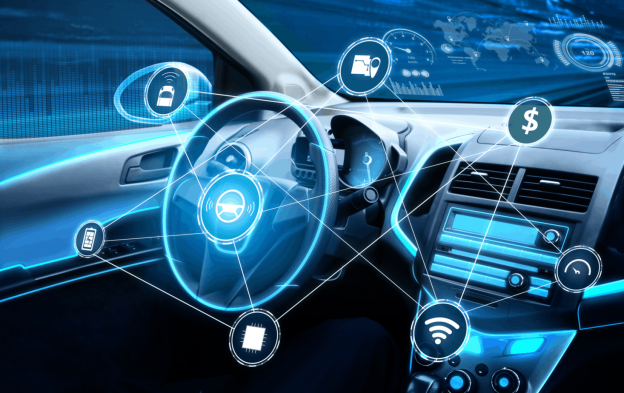
driverless car interior with futuristic dashboard for autonomous control system 192397485

What Are In-Vehicle Payments and How to Develop Such Solutions?

Inspired by the growing popularity of contactless payment after the COVID crisis, the in-vehicle payment solution has become a new trend in the post-COVID world. The data by Facts and Factors show that the market size of in-vehicle payments will reach $7.66 billion by 2026 from $3.09 billion in 2020. 

Recently, the payment processors, such as PayPal, are collaborating with the automobile industry to bring these latest payment solutions to the market. The companies that have reported a major contribution to the in-vehicle payment trend are BMW, General Motors Co., Honda Motors Co. Ltd., and more.

What is the In-vehicle Payment?

As the name suggests, the in-vehicle payment system allows drivers to pay for goods and services from the vehicle. Whether you are grabbing a coffee or getting fuel, the payment for just about any goods and services can be processed without the drivers having to step out of the car. So far, this payment system is expected mainly at tolls, gas stations, and parking spaces. 

Use-cases

Distance has become a crucial safety protocol in the post-covid-era, but despite the Government’s regulations, people are gathered in large crowds at parking spaces and fuel stations. The main purpose of launching the in-vehicle payment system is to eliminate customers’ struggles and save them time. Technically, it works as a virtual vehicle wallet that enables people to purchase and pay for fuel, parking lots, and other services without any hassle. Here are a few popular use cases of the in-vehicle payment solution.

  • It Enables Smart Parking

Finding appropriate parking lots is one of the biggest challenges for drivers. Whether it is a crowded shopping mall or the airport, getting your parking spot instantly is super difficult these days. However, the integration of the in-vehicle payment system with the IoT-powered applications can help drivers navigate to the available parking spaces and pay from the vehicle itself. 

The available parking lots are visible to the drivers around the parking space, thus offering hassle-free and the best parking experience. The driver can book the parking space from the vehicles and make the payment using any convenient payment mode. The whole process is executed without the driver having to leave the vehicle. Not only does it offer safety, but it is the most convenient way of getting your parking space.

  • Contactless Payment at the Fuel Station

The geofencing technology has already made it easier for drivers to get notifications about the fuel pumps located nearby. The integration of geofencing with the in-vehicle payment technology will not only enable drivers to locate gas pumps but process the transaction from the dashboard. The payment can be made when the driver is on his way to the fuel station

  • Smart Toll

Nothing is more annoying for a driver than the traffic at the toll booth. One way to make this process hassle-free is by introducing the in-vehicle payment system and embedding it in the vehicle’s license plate. With such a system in place, a certain amount of fee will be deducted from the driver’s account as soon as they cross the booth. In addition to eliminating the unnecessary traffic at the booth, smart tolls reduce pollution and make travelling convenient for drivers and passengers.

  • Automated Payments for Repairs

There are ongoing rumor’s about Tesla launching a system that supports self-analysis for repair and maintenance requirements. With these systems, cars can detect any repair or replacement requirements automatically and estimate the cost of repair. The advanced model of this technology will enable drivers to check and compare the repair cost before they head to the automobile repair shop

How to Develop In-vehicle Payment Systems?

Only a few customers have linked their smartphones to their vehicles. To be more precise, there are only 16.7% of people with their mobiles connected to cars. Mobile connectivity with the vehicle has become a necessity in today’s age when locating places and making contactless payments have become a thing. 

The main objective of the in-vehicle payment system is to help customers completely abandon their phones in the vehicle. Whether you want to find the nearest fuel station or pay for the groceries you bought on your way, the in-vehicle payment system can make everything possible for you. Here are a few important steps to building the in-vehicle payment units.

Infotainment Systems: A vast majority of cars come equipped with an infotainment system that can be used for a lot of activities. The developers need to incorporate the in-vehicle payment system into the infotainment units to streamline transactions and ensure faster and one-click payments.

Turning Vehicles into an Automated Payment System: Bluetooth and the RFID tools can turn your vehicle into an automated payment system where the payment for the toll, fuel, and other purchases can be made in simple clicks. The developers need to integrate the payment system with the infotainment units using the third-party API.

A Digital Wallet: The developers need to build a digital wallet for the vehicle to offer customers the convenience of making transactions using a comfortable payment mode. 

Customized to Individual’s Requirements: The in-vehicle payment systems are designed to make the lives of commuters easier. Building a system that enables drivers to pay for fuel and parking lots will not make the in-vehicle unit stand out. The developers should rather focus on a unit that’s customized to the commuter’s requirements. It should enable them to find and pay for the car repairs from the vehicle, find the nearest fuel stations, choose the best automobile repair shop based on the repair quotes, and so on.

Final Words

It’s obvious that convenience is the first and most important reason for the growing popularity of in-car payment systems. More and more people have started to embrace the system because of the safety concerns after the COVID outbreak. 

In addition, it is pretty convenient for customers to pay for fuel, repairs, and other purchases without stepping out. A solid and robust in-vehicle payment system can bring convenience, safety, and innovation to the way payments are processed.

man paying with smartphone at gas station 124516558

Less Than Half of Major Fuel Merchants Meet Extended EMV Deadline

ACI Worldwide reports that most major American fuel merchants do not meet EMV standards for their automated fuel dispensers or AFDs. The issue comes as the EMV deadline had already been pushed back by a few years. Some groups representing the fuel merchant industry are asking that the EMV deadline be pushed back once more.

ACI Worldwide reports that as of April 2021, about 48 percent of fuel merchants in the United States meet EMV standards. The number means that most automated fuel dispensers cannot support EMV cards. They can collect magstripe cards, but they don’t support EMV cards that are easier to read and reduce the risk of purchase theft. Because of this point, they could experience fraud and theft-related losses if any negative events occur in their spaces.

ACI gathered this information from fuel merchants that represent nearly 45,000 gas stations throughout the United States. These include stations at convenience stores, grocery stores, and other spots. About half of all merchants also expect to be EMV-compliant before the year ends.

What Is the Deadline?

The most significant concern surrounding fuel merchants not supporting EMV payments is that the EMV deadline has been extended a few times. The original deadline to become EMV-compliant was October 1, 2017. Businesses that were not EMV-compliant at the time would be held liable for any cases of fraud or other issues that develop due to not being compliant. Card firms would not be responsible for losses at businesses that don’t meet compliance standards.

The major credit card networks agreed to extend the deadline to October 2020. But the global pandemic caused a substantial disruption in efforts to become compliant. The extension was moved to April 17, 2021.

All the major credit card networks have agreed upon these deadlines. Visa and MasterCard established these deadlines at the start. American Express and Discover both joined in on those dates later. Whether each of these networks will agree to expand these deadlines remains unclear, especially since many businesses have held enough time to make their businesses compliant and ready to support these cards.

A Request For Another Extension

The deadline to be EMV-compliant has expired, but that hasn’t stopped gas stations from trying to extend the deadline. The National Association of Truck Stop Operates, the Society of Independent Gasoline Marketers of America, and Energy Marketers of American are all asking for another deadline extension. They want the deadline to move over to EMV support for AFDs to move to October 2021. They have sent requests to all the top card networks.

These groups claim that the pandemic has made it harder for businesses to switch their AFDs over to setups that can accept EMV cards. They argue that companies that can make these EMV devices have extended backlogs that make it hard for them to get new systems ready before the deadline. It could take two to three months after ordering something for a gas station to get the pumps it requires, for example.

The request is immediate and concerning for many businesses, especially as a business will be liable for any cases of fraud that develop. The potential losses from fraud can be dramatic, and most gas stations and truck stops cannot afford to manage those losses at this time.

Combinations Can Be a Concern

There’s also a concern over how many oil companies and store chains have an assortment of point of sale systems. They offer different fuel pumps, indoor card readers, and other systems that accept cards of all types. It might be tough for some companies to support one specific card type, especially as people use various card layouts in their spaces.

Each part of the payment chain at a location may use different readers and systems. Some chains argue that until each part of the chain uses the same readers and setups, it would be impossible for some sites to change their AFDs.

Important Statistics of Note

There are some interesting statistics to review surrounding how these oil companies are handling their EMV setups:

  • Royal Dutch Shell announced it was going to get all 14,000 of its stations EMV-compliant before October 2020. Although the company said a thousand stations were compliant at the start of 2020, Shell hasn’t offered any updates over what’s working.
  • About a fifth of places that don’t have EMV support on their pumps are undecided over what they will manage.
  • About a third of places without EMV pumps say they don’t have the software necessary to keep these systems running. A few others are also waiting to receive software certification.
  • Some chains have high store counts. They may not have enough funds to work with when getting their pumps ready for EMV standards.
  • Some businesses also aren’t convinced that these EMV pumps will work well. There is uncertainty over how well customers can start using EMV cards. Customers may feel that these chip-based cards aren’t going to work as well as older models.
  • There’s also the argument that some businesses might not be comfortable with some of the high interchange rates for EMV card transactions. Other businesses claim they manage enough cash-based transactions for fuel to where they might not need to get new pumps to work.

The general hope is that these businesses recognize how EMV cards are becoming more commonplace. As more stations start to get compliant AFDs, it will be a matter of time before more groups join in. Magstripe-only cards are also becoming less common, and some newer cards may not come with those stripes. The need to accept EMV cards will become more critical as time moves forward.

Whether these stations will get another deadline extension remains unclear. But the concern here is that most gas stations and truck stops don’t have AFDs that meet EMV compliance standards. The need for these businesses to get new pumps is critical, especially since they are liable for possible fraud issues that may develop.