Tag Archives: facebook

gafam the biggest companies in information technology 209504587

Big Tech Earnings Reveal Big Ideas For What’s Next In Commerce

Some of the top entities in Big Tech recently released their latest earnings reports. Amazon, Google, Microsoft, Apple, and Facebook all performed beyond what analysts predicted. Analysts also predict these earnings reports will highlight a greater emphasis on commerce soon. All of these entities have distinct plans for what they will do with their investments.

Ongoing Growth For Amazon

It is no surprise that Amazon is still growing in prominence. Amazon saw about half its revenue come from product sales. The company’s revenue rose by nearly a third to about $57.5 billion this past quarter. The company’s service portfolio also saw a 50 percent increase in revenue to $51 billion in the past quarter. The service portfolio includes Prime Video subscriptions and Amazon ad sales.

But Amazon Web Services saw a drop in its operating income in the first quarter. AWS had $4.2 billion in operating income, which is less than the 75 percent profit burden it had last year. But AWS’ income is still significant enough to make a substantial difference in how the business operates.

Amazon is expecting further growth, although its growth rate in the second quarter will likely slow by about a quarter. Amazon will still be raking in money, as it will likely see operating profits of at least $4 billion in that period.

The development comes as Amazon prepares for a significant transition. Founder and CEO Jeff Bezos will be departing from his position this summer, but he will remain an executive chairman with the company. AWS CEO Andy Jassy will replace Bezos as the company’s CEO. Whether there will be any other surprise announcements from Amazon remains uncertain, but Bezos’ influence will likely remain a constant at the company.

Amazon’s growth is no surprise, as the company continues to be a strong force in today’s economy. Amazon has been a company that people rely on for many reasons. The possible new things that Amazon will have to offer and its next innovations will be worth spotting, especially as they could make Amazon an even more profitable company.

Facebook’s Hope

While Amazon is continuing with business as usual in the commerce industry, Facebook has plans to enter the commerce field. Facebook promoted in its earnings report that the company has more than a billion Marketplace users. Facebook also plans on using virtual and augmented reality programs to help facilitate digital commerce activities.

Facebook has plans to boost its digital commerce activities. These include efforts on the Facebook and Instagram platforms alike. One potentially involves retailers being capable of directly selling products to people through their Facebook and Instagram profiles or feeds.

Facebook continues to be in the news for how it operates and how it regulates its content. But Facebook will soon start focusing more on commerce activities without relying too much on the communication features that people often expect to find through the company. This development will be something to watch for when looking at possible investments.

What Google Wants

Alphabet, the company that runs Google, also wants to do more in the commerce industry. Alphabet has reduced product listing fees on Google’s shopping section. The company has also reduced commission fees for sales facilitated by the Google shopping search feature. Google’s moves are helping people use the system while making it easier for them to manage various transactions while online.

Alphabet reports that its commerce efforts are working through a combination of traditional searches, Maps listings, and YouTube reports. People are searching for local businesses on Google more than ever, making Google a more viable solution for search needs. Google frequently updates its systems to make its data more visible and useful, especially when showcasing some of the specifics surrounding different businesses in local areas.

Google has also been helping businesses with omnichannel marketing. Retailers and other companies can use all of Google’s features to reach customers. They can use the Maps feature to highlight their locations and list their products on Google’s shopping search results. Retailers can also pay extra to advertise on Google and to have their products or services be the top results on searches. The system allows retailers to become more visible to everyone, providing further growth.

Google also has partnerships with PayPal and Shopify, two of the most prominent online shopping systems. Google’s work with these entities will make it easier for people to market their products and for customers to pay for their orders.

Microsoft and Apple Are Competing Well

Microsoft and Apple may be direct competitors, but they are both alike in how they want to reach more people through commerce. Apple regularly reviews different commerce opportunities through its products, including how its products can support NFC transactions and various apps provided by retailers. The Apple Pay contactless payment system has especially become a necessity for many retailers to have.

Microsoft’s commerce work also deserves notice. Microsoft has been highlighting its MS Cloud development and how it can help businesses organize their operations online.

Microsoft is also buying its way into the commerce field by purchasing the online communications system Discord. Microsoft is spending nearly $10 billion on its acquisition. The total is a fraction of the company’s $2 trillion market cap, but it shows how committed Microsoft is in finding ways to expand.

Microsoft also recently purchased Nuance Communications, a healthcare technology firm. The acquisition of Nuance will help Microsoft enter more healthcare-related activities. Nuance particularly focuses on artificial intelligence and speech recognition systems. The potential for Microsoft to use Nuance’s technology for more things could be worth watching, especially when looking at how it continues to thrive in the digital environment.

A Strong Future For All

The Big Tech companies have shown that they are all looking to grow further, and they are ready to use the commerce industry to make it happen. They will become more ubiquitous and inviting for all investors to explore as they look for growth opportunities that they could utilize.
chiang mai thailand july 7 2018 mobile phone using shopify ap 121690756

Shopify Expands Shop Pay To Facebook and Instagram

One-click checkouts are convenient for people to use. These checkouts help people pay for their items in moments. They can secure existing payment data and use that to cover whatever payments they wish to handle. Customers have been seeking out ways to make their transactions more convenient and efficient. Working with one-click payments is one of the top ways how companies can work for the unique needs people hold.

The Shop Pay payment tool from Shopify is one of the most convenient one-click checkout systems around. Shop Pay helps customers save their credit card and shipping and billing address info on their accounts. The customer can use Shop Pay to pay for an item in moments. The system is similar to what Amazon already uses for its One-Click setup.

Shopify estimates that by using Shop Pay, a customer can check out about 70 percent faster than through a traditional method. There are fewer forms to complete here, making the work easier. The system is also fully encrypted, ensuring the customer’s data stays safe.

Shop Pay is already useful, but it’s about to become even more helpful. Shopify will be expanding its Shop Pay feature to Facebook and Instagram merchants. The move marks the first time Shop Pay has been available outside of Shopify for payment purposes. It also adds a new approach to transactions that goes alongside what Facebook and its sister platform Instagram use when managing sales.

Shopify’s move is part of a long-term plan to offer more services to social media platforms. Shopify’s goal is to make social selling easier to follow. The work is also taking advantage of increased reliance on ecommerce sales, especially through social media platforms. Shopify has been expanding its social media reach for a while. This move is the most significant effort the company has made to date surrounding social media.

What Can a Facebook or Instagram Seller Do?

A Facebook or Instagram seller can use this new feature by signing up for a Shopify account. The seller can link one’s Shopify account to a Facebook or Instagram profile. The system lets the social media platform identify the profile as a Shopify seller. The effort then allows Shop Pay to be open for use.

The effort expands upon what sellers can manage for sales purposes. The only payment methods that customers used to utilize for Facebook or Instagram sales were from PayPal or from credit or debit card info that a customer manually enters. The Shop Pay integration feature marks the first one-click checkout option people can use on these social media platforms. The setup is one of the simplest for people to follow.

Also Works On Facebook Pay

Facebook Pay users can also use Shop Pay. Facebook Pay already features a convenient setup for transferring funds from Facebook accounts to sellers that use the platform. The Shop Pay system adds a new option for sales. It can work with whatever data is on a user’s Facebook Pay account and complete one-click transactions.

The process remains encrypted, as it uses the same security standards that Shopify already incorporates. The work ensures the safety of all transactions.

A Green Approach

Shop Pay will continue to offset all delivery emissions it produces with each order through Facebook or Instagram. Shopify has made a long-term commitment to offset the emissions it produces from its deliveries. Shopify has been planting trees and partaking in many other green activities based on the emissions it generates. The company is one of the world’s most sustainable businesses, and it will continue to be that way through its Facebook and Instagram sales.

A Possible Boon For Retailers and Facebook

The integration of Shop Pay in Facebook or Instagram could potentially provide more money to retailers. The ongoing pandemic has prompted a rise in online shopping this past year. Shopify saw its quarterly revenue nearly double over the past year. The company says it managed more than 135 million orders in 2020.

The company also expanded its services by offering buy-now pay-later sales options for some sellers. The solution is popular among those looking to purchase products but might have current economic struggles.  The system is not available for all transactions, but it is still popular with many platform users.

Facebook has also been actively trying to find new ways to utilize in-home shopping services. The new support for in-app transactions could also help Facebook expand its services soon.

Continued Growth of Shopify and Facebook

The expansion to Facebook and Instagram is the latest development in Shopify’s ongoing expansion. Shopify has launched a few share offerings in the past twelve months. The company brought in billions of dollars through its share sales.

Shopify already holds a partnership with the video-based platform TikTok. The company works with merchants on TikTok to advertise and sell products through that platform. The partnership with TikTok was first available only in the United States. The effort has since expanded to Canada and Europe.

Shopify is also continuing to sell stock to raise money. Shopify announced plans in February 2021 to raise more than $1.5 billion by selling more than a million subordinate voting shares. The money would be for expanding the company’s partnerships with various social media entities.

The move is also reflective of Facebook’s increasing effort to support online sales. Facebook has been heavily promoting many retailers who do business through the platform. Its Facebook Pay system has also expanded to include support for biometrics. It can read facial patterns or fingerprints to confirm a person’s identity before completing a sale. It also introduced a new payment feature on its Instagram system called Instagram Shops.

The increasing value of Shopify and Shop Pay has become a worthwhile point to spot. Expand Shopify’s sales to continue to rise as its Shop Pay one-click ordering system becomes available on Facebook and Instagram. Facebook and Instagram’s ongoing effort to increase ecommerce activities will also benefit from this work.

qr code mobile phone scan on screen business and technology concept 145543233

Facebook Pay Tests Use of Personalized QR Codes

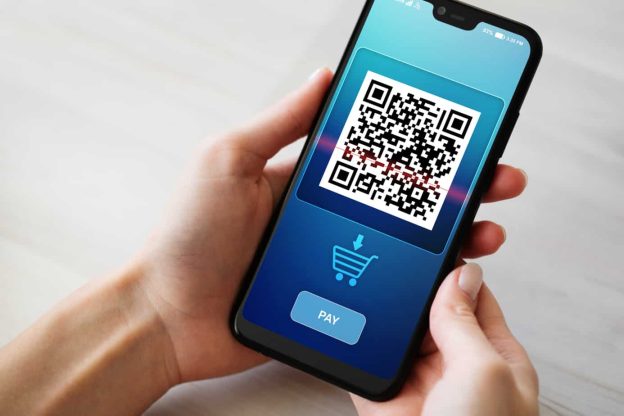
QR codes are already helpful for containing more data than UPCs, plus they are encrypted and more secure than UPCs. QR codes have been critical for many touchless payment activities. Businesses are looking to facilitate more touchless payment solutions, so QR codes have never been more of a necessity. Programs like Venmo have especially been using these codes to manage safe transfers between people.

Facebook Pay is taking advantage of QR codes by testing person-to-person QR code payments. It will allow people to transfer funds between each other with one scan. The system can work for P2P deals, but it may also work well for traditional business purchases.

Facebook has not released details on how many people are testing the system. The group is slowly rolling this system out to identify what is working and how it can be used by the public. An emphasis on efficiency and safety will be critical.

The new QR code system will be similar to what Venmo already uses. But the new codes will be personalized to focus on specific people. These unique codes will ensure they can only work for specific P2P moves. It is exciting to see what might happen when getting it to work well, although details on when these codes will be available to the public remain unclear.

How Does This Work?

Facebook Pay’s new personalized QR codes entail a few steps:

  1. The user goes to the Facebook Pay carousel at the top of the screen.
  2. The user selects the Scan button.
  3. A QR code will appear on the screen. There will also be a unique URL at the bottom. The URL displays a unique code that matches up with the QR listing, confirming the data.
  4. The app then uses the device’s camera to scan the other person’s QR code.
  5. The user chooses the amount of money that will be transferred. This work includes whether the user will send money to that other person, or if the user will receive the funds from that someone.
  6. The payment will then be transferred after everything is confirmed.

Facebook Pay will also produce a payment link for those who want to utilize a more direct approach to handling payments. The process facilitates a secure process for transferring funds.

Each transaction will come with a different code. These codes will ensure each transaction is unique. The risk of an outside party copying or hacking into a system will be minimal, as a distinct code will work for each situation.

Focusing on Physical Payments

The new personalized QR code system will allow Facebook Pay to work for direct in-person transactions. Facebook Pay has already been supporting various online payments since its introduction in 2019. Facebook Pay is already part of various Facebook apps like Messenger, WhatsApp, and Instagram. But all earlier moves have been through the Facebook and Messenger apps. The P2P transaction support that Facebook Pay is seeking will improve how well people can complete these deals and get their accounts up and running.

The system would work for cases where someone needs to complete a payment with someone as soon as possible. These include situations where someone needs to pay for unexpected costs, or someone needs extra funds for some sort of activity. The new QR code system would help ensure people can complete these payments sooner.

Bringing New Attention

A critical part of why Facebook Pay is offering this feature is to increase awareness of the system. Most people aren’t fully aware of how Facebook pay can be utilized to transfer money between parties. But many may know about how they can purchase items through Facebook ads or the Facebook Marketplace. Providing personalized QR codes for P2P transfers will help people recognize what Facebook has to offer here.

Terms For Use

There are a few terms for users to follow when using these personalized QR codes from Facebook Pay:

  • All users must be at least eighteen years of age.
  • The only users that can use this feature right now are American customers. Facebook hopes to move this out to other countries soon.
  • Each person must have a supported payment method. These include a PayPal account or a Visa or MasterCard debit card. Facebook Pay can also support various prepaid cards or government-issued cards.
  • The system will remain free to utilize.

The terms are simple, but there is a potential they may change. Facebook’s current testing process will identify what will work for the QR code system.

When Is the Test?

Facebook Pay is currently testing these QR codes and should have them available to the public soon. Facebook has not divulged info on when these tests started or when they will end. It is possible more people will get access to these codes as the year progresses and Facebook refines the technology. It will make for an exciting point for those looking for a unique way to transfer money to others.

What About Novi?

The new feature for Facebook Pay is separate from Novi, Facebook’s cryptocurrency wallet. But there’s a chance that Facebook Pay could start working with Novi. The effort comes as Facebook continues to consider looking at a possible crypto choice.

A Potential For Growth

The Facebook Pay system makes it easier for people to transfer funds. The new QR code feature from Facebook Pay will produce an even more convenient approach to handling the effort.

The most substantial potential for Facebook Pay is that it could help create a viable P2P payment solution. Many people see Facebook Pay as a niche solution available mainly for Facebook users. But the special QR code support that Facebook Pay can handle will possibly make it closer to Venmo and other contenders. It could create a new system that makes it easier for people to complete transactions. It will be inviting for people to see how well Facebook Pay can work for their general payment needs.

Facebook Libra Payment Processing Cryptocurrency

Understanding Facebook’s Ambitious Project Libra

Just a couple of weeks before Mark Zuckerberg, co-founder and CEO of the world’s most popular social network, was scheduled to appear before the United States Congress to answer questions about his cryptocurrency ambitions, he received disheartening news from some of the key partners in Project Libra. Payment processing giants such as Visa, MasterCard, PayPal, and Mercado Pago have decided to withdraw from the Libra Association Council, the organization tasked with governance and development of Project Libra’s underlying digital coin.

What is Libra?

As of October 2019, Project Libra mostly exists as a proposal to create a global payment processing system that will primarily serve users of the Facebook, Instagram and WhatsApp networks. The Libra token, along with a cryptocurrency wallet, are the intended pillars of the system, which would ostensibly enable payments, remittances, money transfers, and even investments. Even though Libra is being developed as a blockchain token, it will not be a pure cryptocurrency because it is planned to be centralized; moreover, it will operate as a “stablecoin,” meaning that its value would be pegged to the average exchange of major currencies such as the U.S. dollar, the euro, the pound sterling, and the yen.

There are various ways to interpret Facebook’s goals with Project Libra. On one hand, the prospect of a digital coin that reflect the value of major fiat currencies is certainly innovative; on the other hand, the Libra digital coin would be supported by a robust payment processing conglomerate. The prospective market is measured in billions of prospective users, and this is what attracted the likes of PayPal, Stripe, Visa, and MasterCard in the first place. Although no banks sought membership in the Libra Association after its white paper was published, financial non-profits such as Kiva and Women’s World Banking have expressed interest in making commitments to the project.

What are the Concerns?

On paper, Project Libra seems like a revolutionary idea with a potential to empower millions of people who lack access to traditional banking services. The only Libra prerequisite would be a Facebook, Instagram, or WhatsApp account; the range of benefits would be the ability to send and receive funds, exchange cryptocurrencies, make purchases, complete remittances, and more. The problem with Libra, and the most likely reason major providers of payment solutions have been abandoning the Libra Association, is that American lawmakers, regulators, and officials thus far believe that Facebook is not capable of abiding by “Know Your Customer” and anti-money laundering compliance measures.

Personal data privacy has been another area of concern related to Project Libra, and Facebook has a questionable track record in this regard. Even President Donald Trump has publicly commented on the matter; in July 2019, he posted a Twitter update stating that Facebook should obtain a banking charter if it intends to operate as a bank. Project Libra is also facing scrutiny in France, where regulators do not want to see a digital currency competing against the euro, and in Germany, where a Member of Parliament has stated that Facebook could easily become a shadow bank unless it is regulated.

Twitter Targeted Ads

Twitter Tune Up: Targeted Ads [2023 Update]

Today the Official Merchant Services Blog would like to focus on social media advertising, and the recent steps Twitter has taken in order to expand their marketing prowess and outreach.

The social media giant with its 140 million monthly active users is second only to Facebook.  As we have previously reported here, Facebook had taken steps to create a realm of e-commerce unseen before in the social media world.  By transitioning from the ‘Like’ button for certain pages and products, to the ‘Want’ button, in an attempt to allow users to create personalized wish lists, the move will eventually lead to more purchases through Facebook itself.

The move spurred social media innovation, and Twitter has since come up with its own targeted marketing approach.  The new capabilities will allow marketers to identify, advertise and even send direct messages to consumers based on interests and likes.  For example, a consumer who has indicated an interest in digital photography would see ads for cameras and other photography related products.

There are two main ways Twitter will attempt to narrow down its user base.

First, Twitter has divided its users into 350 different interest categories.  They range from “education” to “investing” to “sports,” and are further divided into subcategories.

The second way involves targeting a more specific set of users, by creating a custom list of usernames that are relevant to what they want to promote.  The custom segments would allow marketers to reach users who share similar interests with that username’s followers, however they cannot target that users’ entire following.

Twitter has given the example of an indie band promoter that creates a custom audience by adding the ‘@usernames’ of similar bands, ensuring an audience with a similar taste in music.

Questions still remain about the overall effectiveness of the targeted ads.  For example, the click through and conversion rates are still unknown.  Twitter has been testing the system using beta advertisers, who can attest that there has been “significantly increased audience reach” as well as high engagement rates.

To bring this all back home, I believe there is outstanding value in Twitters’ targeted advertising system.  It will allow marketers to go beyond ‘Promoting’ their tweets, a system that would raise your post to the top of users Twitter feeds for a short time, however there was no targeting involved whatsoever.  With this new system, end users see more products that appeal to them or are related to their interests in some way.  Thus driving sales for that particular product, if the right target market is reached. This could be especially useful to the average small business owner, who may only rely on social media to promote the company, instead of a dedicated web page.

This could lead to a large boost in mobile commerce, through Twitter users who simply find an advertised product to their specific liking.  The push is meant to increase ad dollars to Twitter from eager marketers, as well as more effectively reach its user base with relevant ads and content.  It seems logical that the next step would be for Twitter to implement a direct buying feature for their 140 million users, this would further spur innovation and the competitive mobile payments market, as well as open up new E-Commerce solutions for businesses and advertisers.

Social Media Commerce: Tweet, Like, Buy

Today’s installment of the Official Merchant Services Blog is on the rise of E-commerce in social media. Last week, we covered the E-commerce offerings of the video game industry in detail. Today, I’d like to take a look at the role E-commerce is beginning to play in the realm of Facebook, Twitter and other social media websites.

Social Media User Base

Social media sites have expanded rapidly over the last few years.  For those who don’t remember, Facebook started out as a place strictly for college level students to network. Now all-inclusive, Facebook is the world’s most populated social gaming and media platform with 955 million users worldwide.

Twitter is second with over 500 million users worldwide, LinkedIn is third with just about 175 million, and Google + trails all three with about 90 million. With such a massive user base to reach out to, an E-commerce presence is the next logical step, and as usual, Facebook is taking the lead. This article will focus on what Facebook has done to streamline the E-commerce aspect of social media.

“Like” Pages

It’s safe to say most Facebook users are familiar with the “Like” button and similarly, the “Like” pages. These pages describe the interests and activities of the user, offer updates to certain products and promotions, as well as allow users to share their thoughts on those products.

The end goal of any merchants Facebook “Like” page is the get the most number of “Likes” and subsequently the most number of page views and purchases of your particular product. The problem lies with differentiating potential customers from current ones. If someone “likes” a page for a product, they may already own it, be saving their money for that product, or just think its neat but don’t want or need it. As of right now, Facebook has no way to separate these users.

Social E-Commerce

According to Facebook’s SEC Form Q-10, 1.6% of users spent over $1 billion on Virtual goods (accessories for virtual characters, tools in Farmville, etc) in the first six months of 2012. That is money spent on items never seen outside of the browser. If the market for non-tangible goods can be that lucrative, the market for actual goods Facebook users enjoy must be bigger.

Carol Rozwell, Vice President at the tech research firm Gartner had a call to action for merchants unsure of the potential for social media e-commerce.  “It’s crucial that organizations implement approaches to handling social media now. The effort involved in addressing social media commentary is not good cause to ignore relevant comments or solvable issues.” According to Gartner, although more than 50% of organizations track social media only 23% actually collect and analyze data.

In June, Facebook made a move to simplify mobile e-commerce payments by decreasing the number of steps involved in checking out, from seven individual steps to two, and eliminating the need to type. The Facebook mobile app SkyBucks, is another innovation in E-commerce, it allows you to charge your virtual accessories to your phone bill directly.

More recently, the social media giant rolled out an offer for stores using Shopify.  Since partnering, Facebook is now offering free $50 Facebook Ad credits. This is in addition to the credits from Google AdWords and Amazon Products that Shopify merchants already enjoy. The promotion is another step for Facebook in the E-commerce direction.

The “Want” Button

Above I identified a need Facebook had, the ability to discriminate between current and potential customers for their advertisers and business users. In early July, the Ecommerce Times had a story on Facebooks next big thing: The “want” button.

The button will allow users to create ‘wish list’ of products that they like or want, but do not currently have. Merchants will want to focus on who has marked their product as ‘wanted’ and who has not. The benefits of the “want” button go beyond sales. The button would allow for highly targeted marketing as well as a sharing of ‘wish lists’ between users. Ultimately the goal should be for the wish list to take its place among the social media landscape, along side a user’s general info and status updates.

For the Consumer

To the average consumer and Facebook user, this should add to the ease of purchases that has increased recently. With the additional “want” info that the site will collect, you will be able to see what your friends and family want, add similar items to your personal wish list, and research potential gifts for you friends discretely. All of which add value to Facebook’s ever-increasing platform.

For the Merchant

For merchants looking to expand on Facebook, the E-commerce addition will do wonders. The added marketing affects will help businesses increase name recognition and sales, while still connecting with the end user. It seems to me, that Facebooks E-commerce push will benefit all involved.

Facebook Accused of Click Fraud

Today The Official Merchant Services Blog delves into the intricate and fascinating world of social media marketing and the pitfalls of Click Fraud. Our interest stems from a recent news story: Limited Pressing, an e-commerce company provides a platform for selling digital music and physical items, stated that they are dropping their Facebook page and removing their company’s Facebook presence because it determined that 80% of the clicks it paid for through Facebook advertising were fraudulent.

What is Click Fraud?

Click fraud is an illegal practice that occurs when individuals click through advertisements — either banner ads or paid text links — to increase the payable number of click throughs to the advertiser. The fraudulent clicks could either be performed by having a person manually click the advertising links or more typically by using automated software or Online bots that are programmed to click these ads repeatedly. Click fraud is sometimes perpetrated by individuals who use the tactic to increase their own personal banner ad revenues; but the most common strategy is click fraud gets harnessed by companies as a way to deplete a competitor’s advertising budget.

This is where Limited Pressing’s problems with their Facebook Page comes in. They feel that the click fraud was eating up their ad budget and making the oft-lauded and extremely popular advertising tool too costly and ineffective.

Limited Research

In this article at clickz.com, Limited states that it determined over a one-month testing period that 80 percent of their Facebook ad clicks were performed by bots. The company doesn’t really delve into where the bots come from, and instead focus their criticism on Facebook’s entire ad platform — suggesting its findings indicate Facebook has a big click fraud problem.

Limited detailed the process they used to determine this bold assertion of click fraud:

“A couple months ago, when we were preparing to launch the new Limited Run, we started to experiment with Facebook ads. Unfortunately, while testing their ad system, we noticed some very strange things. Facebook was charging us for clicks, yet we could only verify about 20% of them actually showing up on our site.

At first, we thought it was our analytics service. We tried signing up for a handful of other big name companies, and still, we couldn’t verify more than 15-20% of clicks. So we did what any good developers would do. We built our own analytic software. Here’s what we found: on about 80% of the clicks Facebook was charging us for, JavaScript wasn’t on. And if the person clicking the ad doesn’t have JavaScript, it’s very difficult for an analytics service to verify the click. What’s important here is that in all of our years of experience, only about 1-2% of people coming to us have JavaScript disabled, not 80% like these clicks coming from Facebook.

So we did what any good developers would do. We built a page logger. Any time a page was loaded, we’d keep track of it. You know what we found? The 80% of clicks we were paying for were from bots. That’s correct. Bots were loading pages and driving up our advertising costs.”

Clickz.com pressed the company for more details on the process they used and the data Limited obtained. But the company had nothing prepared to share with the site yet.

Facebook Strikes Back

Facebook defended its program and its protocols in response to Limited’s claims. The company has said it is investigating the claims that Limited has made, and noted that it has defenses in place for such kind of fraud. A fake click, Facebook said, would come from a fake account, which would be disabled immediately upon discovery.


This Computer World article details Facebook’s defense that the company supplied in an e-mail.  The article reveals that Facebook has systems in place that attempt to detect and filter certain click activity, including repetitive clicks from a single user, clicks that appear to be from an automated program or bot, or clicks that are otherwise abusive. Facebook’s systems also look at whether JavaScript is enabled in the browser. And the company reports that according to recent data, nearly all billable clicks resulting from desktop web browsers have JavaScript enabled.

Also, in a second quarter earnings report conference call Facebook said they are continually making efforts to reduce fraudulent activity and fake accounts by becoming better at detecting duplicate accounts.

As reported by clickz.com:

“On a macro level, Facebook now has independent ROI data from more than 60 advertising campaigns using a variety of third-party methodologies like panels and marketing mix models. The results show that 70 percent of campaigns resulted in a return on ad spend of 3x or better, and 49 percent of campaigns showed a return on ad spend of 5x or better.”

Facebook COO Sheryl Sandberg said during that conference call that “attribution is an issue. Marketers need to tie sales back to multiple touches; they may see on Facebook and search later. Our ads work and the ROI is there, so we’re focusing on education.”

The Big Picture

This issue is an important one for payment processors and merchants alike. Much has been made of social media and marketing. Facebook’s ad service is a huge windfall for the company. Much of what I myself have learned about marketing through social media has come directly from webinars and videos I’ve seen given by Sandberg. So if Limited’s claims are anywhere close to accurate, this could be devastating for Facebook — and equally positive for competitors like Google and its Google+ social media hub that still trails Facebook in popularity.

Essentially Facebook ads are at the forefront of the immense push people have made into spending money on social media marketing campaigns. So if only 20% of that money is doing the job, it’s an extreme waste of resources for businesses.

In Facebook’s Defense

There’s much to be said in defense of Facebook at this time however.

First of all, the company is very diligent in its pursuit of click fraud. In our January blog, we explored the activity called Clickjacking and detailed how Facebook has been fighting to curb that kind of fraud. And since the company is now extremely invested in its own profits after its IPO, it really is common sense that they are being forthright in their responses and really are doing the best job they can to curb fraud.

Secondly, Limited’s credibility takes a hit with the other issue it brought to light in its criticism of Facebook. It claimed that Facebook was  allegedly holding Limited’s  page name hostage. What Limited said was that it wanted to change its name on its Facebook page and that after repeated attempts to contact Facebook about the issue, Limited received a response. Facebook, Limited alleges, would make the name change for Limited if the company agreed to spend $2,000 a month or more in advertising.

Here’s where Limited’s credibility starts to wane. Limited Pressing wants to change its name to Limited Run. That name has been in use by a magazine since October 2010. So there’s no way Limited could get the name changed. Facebook also states that it does not charge for name changes. Facebook clarified that they have a process that business pages have to go through to get a name changed so that it doesn’t confuse its users if a business repeatedly changes its name or changes it to something unrelated. So Limited’s claims of Facebook holding its desired name hostage don’t seem to really pan out, hurting their credibility with their click fraud data.

And finally, the data itself. Limited’s claims tend to run extremely counter to all data released by Facebook itself and Limited has not shared the data or the services it used or page logger it created. They claim more details are forthcoming, but as we saw with the name change claim, the trustworthiness of the information could be very much in doubt.

The Bottom Line

So what are we to make of all this?

I’m taking it with a grain of salt. The accusation is strong enough and Limited does assure us all that they did a lot of data collection. If it turns out to be on the mark, then this is a really big hit for Facebook and something merchants need to consider in terms of how they go about using social media.

Also, a problem I have with Facebook’s defense is that there’s a loophole in the terminology they’re using in their statements: They say that when they detect fraud from fake accounts, they close the account. Simple right? Fraud, fake account, banhammer, done. But the loophole is that fake accounts need to be verified as fake to get closed. And skilled fraudsters will have these fake accounts looking as real as possible or simply replace it just as quickly as it gets nuked. My own experience with FB “drama” leads me to believe that on the one hand I believe Facebook is diligent in canceling the fake accounts it finds, but that the creation of fake accounts is too easy and too easy to fake properly that Facebook may not be affecting the fraud as much as it claims.

Still, I am very disconcerted by the name change issue as it’s pretty obvious to anyone who uses Facebook that it’s not Facebook’s fault you can’t have the name McDonald’s because McDonald’s already has the name.

In conclusion, I would say Facebook Ads are still right where I thought they were before I read these news articles. The huge push into social media is indeed a very powerful marketing tool that many merchants should embrace and utilize to their own benefit. But it’s a refined and subtle tool. It’s not something you just throw money at and expect clicks to turn to profits for your business. Host Merchant Services has found using Facebook ads increased our following quite a bit, but didn’t give us the targeted following of users that we really wanted. In short, we felt we got a lot of bots.

Part of that was our own inexperience with the tools available — though many video and webinar assistances later from Sandberg and Facebook we know how to use the tools much more effectively — and part of it was the Facebook culture itself. Businesses don’t always fit smoothly into the community. Facebook is far more casual and social so a business to business entity like our company, no matter how tech savvy we are, runs into some obstacles on Facebook. Finding the right people to send the ads to is difficult because our target audience isn’t as neatly confined by the tools Facebook provides — for example we found more success with the interest of “tacos” than we did for “business owners.” The more professional community of LinkedIn or the far more expansive twitterverse has ended up being a bit more successful for us.

I feel this might be part of what Limited was running into. I think there is indeed a substantial presence of fake accounts and bots on Facebook. But I also think that Limited’s target market, because of what they do as a business, isn’t exactly something folks on FB are hot to talk about and link-share. What is the hook that people on FB, already too distracted by pithy quotes and vaguebooking activities of their close knit group of friends, to talk about some business’ offer on stuff one of their affiliates can sell?

The TLDR version? Yeah, Facebook ads have a lot of bots and no Facebook can’t catch em all like Pokemons. But 80%? That number seems a tad high. And Social Media advertising is still a very valid and strong marketing tool for business owners.

Mobile Commerce

Mobile Commerce Concerns [2023 Update]

Today The Official Merchant Services Blog turns its tech-obsessed eyes once again to the Mobile Payment Solution sector. Recently, Host Merchant Services became fully mobile and able to offer a mobile payment solution for Android and iPhone devices. This expansion continues, and HMS now also provides a payment processing solution for iPads as well. You can read about the expanded HMS Services in our April 9, 2012 Blog Entry.

Mobile devices are ingrained in the lives of consumers these days. Like the recurring ad sarcastically states, the smartphone beta test is over. And people are wandering around everywhere with their phone bringing their social media, camera, and buying power with them.

Suri, the voice of the iPhone, is holding the hands of stars from Samuel L. Jackson to Zooey Deschanel, helping them manage such difficult life tasks as making gazpacho to putting off cleaning till the next day on one’s calendar.

Coming with this ingratiation into our daily lives are two key elements.

  1. We’re really just one artificial intelligence glitch/accident/sabotage away from launching the type of dystopian sci-fi worldview found in Terminator, The Matrix or Magnus Robot Fighter.
  2. We’re flying full force into a world where we’ll also start to wave our phones around like a Hogwarts Magic Wand, paying as we go from place to place, store to store.

Mobile Payments are brisk and bustling because people are buzzing to take advantage of the convenience they offer. Here’s a graphic based on data compiled by the AITE Group showing the trend in spending via smartphone in a 5-year stretch:

But it’s not all phones-n-roses. As one might expect, the state that’s home to Cyberdyne Systems and our eventual AI-overlords Skynet, has a university — the University of California — that did a study titled “Mobile Payments: Consumer Benefits and New Privacy Concerns.”

The bottom line of this study is that American consumers are still wary of what this convenient technology will bring. The study found some interesting answers to questions about consumer thoughts on their privacy.

The study found that respondents overwhelmingly oppose the revelation of contact information to merchants when making purchases with mobile payment systems and an even higher level of opposition exists to systems that track consumers’ movements through their mobile phones.

This article by Kit Eaton at Fastcompany.com dissects the numbers in the study. Eaton states that: “The numbers are stark. When asked if they thought their phones should “share information with stores when they visit and browse without making a purchase,” 96% objected to the tracking, 79% said they definitely would forbid it, and 17% said they “probably” wouldn’t allow it–meaning just 4% were indifferent or positive about the idea. When the question was instead about information sharing (phone number, address, and so on) at the actual point of sale, 81% objected to phone-number sharing–a mere 15% said they’d probably allow it and 3% definitely so. Similar figures emerged when the information shared was respondents’ home address. “

This is all well and good and you can download the study here at this link. But what the study seems to overlook is exactly how many people, many of the people most likely polled in that very study, are already well past the point of no return in terms of their privacy concerns.

Any of those who object to tracking are likely already being tracked by Google and Facebook, social media they use with ease and frequency from their smartphones.

All those who object to sharing contact information may have already shared this information easily and readily when making an online purchase in the past few years. And statistics indicate that e-commerce is booming and replacing brick and mortar in the retail sales tug-of-war.

Eaton catches on to this flaw in the study, and states in her article: “And that’s the key to unraveling this problem right there: When you do use a current-tech store loyalty card you are effectively voluntarily giving the store your personal information, and “tracking” yourself. It’s why the cards exist, of course–they’re partly there as a sales incentive, to get customers back in the door via money-off offers, but mainly so the store can collate information about customers and work out what kind of products to stock, what offers to run, and what future products to plan for.”

And Eaton even points out that in a Pew Research Survey, 71% of Americans use the internet for shopping — meaning that they’ve already typed in their personal contact information.

So essentially, Mobile Payments seem primed to take advantage of the marketplace. The worry over security is still genuine to some extent — identity theft and phasing scams and data breaches abound as we get more and more tech ingrained. But in the end, the American consumers already dove headfirst into this when they fell in love with social media. The tweets, the +1’s and the Likes have already been tracking you. So when Facebook transforms itself into Skynet, or simply when Facebook and Google go toe-to-toe with Visa in the titanic tussle for your smartphone swipes … your dollars will be as easy to find as your latest status update or check-in.

Trending … Social Gifting [2023 Update]

The Official Merchant Services Blog keeps its finger on the pulse of e-commerce, and today we’re giving you the scoop on the latest hot trend … Social Gifting.

What is Social Gifting?

Social Gifting is the activity where consumers on social media channels like Facebook can individually, or in groups, purchase gifts for their friends. Virtual Gifting, or the act of giving someone a gift through an app or a website, was covered right here on November 2, 2011. In our Virtual Gifting Blog we had these prophetic words to say about the activity: “As smartphones ingrain themselves more and more into our society, virtual gifting is going to become a much more commonplace activity. Driving the strength of e-commerce higher and higher. “

The Virtual Gifting Blog was a follow up to the November 1, 2011 blog entry on Mobile Gift Cards. We explained how the process of mobile gift cards works: “The standard way Mobile Gift Cards are designed to work is: The card is sent via email, Facebook or text. The recipient is notified that he or she has a Gift Card, and can take their smartphone into the store and use it immediately. The store clerk simply scans a bar code from the recipient’s phone, and the card is applied to the balance.”

The two key points to take from The Official Merchant Services Blog’s 2011 coverage are:

  • We recognized this trend as being on the cutting edge last year and have been staying ahead of the technology curve effectively.
  • Social Gifting is just the latest mutation in the process, adding in the social media and group aspect to virtual gift technology.

Wrapp That Gavel Up, B!

What prompted Social Gifting to get kicked up a notch in media coverage is that Swedish start-up Wrapp launched a U.S. version of its application with 15 high-profile merchants including H&M, Gap and Sephora. Wrapp takes the form of a mobile application for iOS or Android that you download and then connect to your Facebook account. Once you download the app, you can send gifts or promotional gift cards to people within your network. There is also a Web version of the application.

Since Wrapp launched its first app in November 2011, nearly 180,000 people have used it to give their Facebook friends more than 1.5 million free promotional gift cards for nearly 60 major retailers, according to the company’s background information.

The Pros and Cons

Wrapp cites its biggest strength is that the practice of social gifting often results in sales much larger than the original gift — each sale averages 4 times to 6 times the value. That’s an alluring idea that many retailers will find an attractive marketing tool. But there are some serious concerns about the trend as retailers still feel burned by the rise of the spammy empire that is “the daily deal.”

Groupon and its legion of imitators have helped undermine prices for some businesses (especially small ones) and downright burned others, when the businesses couldn’t keep up with the opportunistic one-time customers they acquired through the big one-time deals that trended in 2011. That has many people gun-shy in terms of social gifting, since the daily deal empire was also built through social media outlets like Facebook and Twitter.

This blog titled “Social Gifting: Helping or Hurting Business?” from techzone360 delves into the negative impact Social Gifting could have. The key criticism is made here: “As it turns out, the overwhelming majority of recipients make sure not to go a penny over the budget of the gift cards – which also isn’t very out of line or unreasonable either. The major flaw in this system is with the mom and pop stores. Sure, everyone wants a lot of business – how else would they make money? But when 500 people come swarming into a business that’s only prepared to deal with 10 or 15 customers at a time, things can get messy.”

But Wrapp CEO Hjalmar Winbladh told smartplanet.com in this blog: “You and I get to give our friends free gifts and promotional cards from great retailers, the gifts we give are stored in our friends’ phones so they’re always with them when they want to buy something they really want, and the merchants get a proven customer acquisition and retention platform built on Wrapp’s friend-to-friend marketing for conducting performance-based campaigns.”

The Full List

The company is comprised of executives that are big players in the retail and social media sectors.  The folks who founded Wrapp are: COO Carl Fritjofsson who was a strategy advisor to Groupon.se; CTO Andreas Ehn was Spotify’s first chief technology officer. The aforementioned Winbladh previously co-founded a mobile software company in Sweden called Sendit, which was acquired by Microsoft in 1999. Wrapp’s chairman, Fabian Månsson, is the former CEO of H&M and Eddie Bauer. In January, the company raised $10.5 million in Series A funding from Greylock Partners and Atomico. And LinkedIn founder Reid Hoffman is on the board of directors, along with Skype founder Niklas Zennström.

The full list of 15 retailers included in Wrapp’s U.S. service are:

  • Björn Borg – designer underwear
  • Brooklyn Industries – innovative designer clothes for men and women
  • Fab – daily design inspirations and sales
  • GANT – American sportswear with a European touch
  • Gap – casual, optimistic, American style
  • H&M – family fashion and quality at the best price
  • Happy Socks – designer socks online
  • Rovio Entertainment – creator of the globally successful Angry Birds franchise
  • Sephora – unparalleled beauty paradise of makeup, skincare, fragrances, hair care and more
  • SpaFinder Wellness – feel-good possibilities from massage to yoga, Pilates and fitness classes
  • The Wall Street Journal – the country’s largest newspaper and leading business publication
  • Threadless – amazing graphic tees from a global community of designers
  • Warby Parker – eyewear with a purpose
  • Wayfair – furniture, lighting, cookware, and more for the home
  • WeSC – street style clothing and accessories