Tag Archives: economy

finance and business concept invesment graph and coins rows 111488763

Yelp Reports Small Businesses Slowly Recovered at End of 2020

Since the time the overall fears of the pandemic got outspread in the United States of America in early March 2020, businesses across the country have endured as many as 6 months of uncertainty. Still, businesses are adapting and proving their respective resilience through reopenings, lockdowns, new coronavirus prevention rules, new ways of implementing business like outdoor dining, a summer-time surge in the overall cases, and major milestones like returning to school. Even amidst increasing closures all around, we can observe businesses effectively transitioning into new operating models while keeping the consumers and employees safe.

As per the latest closure data by Yelp, it has been observed that small businesses that provide local, professional, and home-based services are capable of withstanding the overall effects of the pandemic quite well. However, even after some light in specific sectors, retail & restaurants continue struggling while facing total closures across the nation. This figure has started to increase.

As per the last Yelp Economic Average reports, there has been a decreasing number of the total closures have been 132,580 in the total value. As per the reports until 31st August 2020, it was estimated that around 163,735 businesses in the United States on Yelp have experienced closure since the advent of the pandemic (observed as 1st March, 2020). There has been observed to be around 23 percent increase in the number of closures since the time of 10th July.

Amidst the number of coronavirus cases increasing, there have been local restrictions that continue changing in many states. As such, there has been observed both temporary as well as permanent closures rising across the country. Around 60 percent of such businesses that have been closed are not reopening –with 97,966 of them being permanently closed.

Business Closures Continue Increasing Nationally

There are some business sectors that have been capable of weathering the storm of COVID-19 especially well. Generally, professional services as well as solo proprietors together have been capable of maintaining the lower fraction of closures since the time of 1st March, 2020. The given group is known to include accountants, architects, lawyers, and real estate agents –all of them having only 2 out of 3 businesses getting closed until the time of 31st August, 2020. Businesses that are related to health especially have been capable of maintaining a lower rate of closures –including internal medicine, orthopedics, physicians, hospitals, family doctors, and others.

The closure data by Yelp reveals that the overall demand for automotive, local, and home-based services has been robust with a lower rate of total closures in comparison to retail and restaurants. Contractors, plumbers, and towing companies especially have been capable of maintaining the lower rates of closures. As a matter of fact, the overall share of consumer interest in local and home services is around 24 percent between 1st March & 31st August.

Restaurants Hit the Hardest –Temporary & Permanent Closures Increasing

The restaurant industry continues being the most impacted with an increasing number of coronavirus-related closures –reporting around 32,109 closures until the time of 31st August. Out of these, around 19,590 business closures have been permanent. Restaurants for brunch & breakfast, sandwich shops, burger joints, Mexican restaurants, and dessert places are some of the common types of restaurants featuring the highest number of business closures. Restaurant trends in 2021 show that they’re adapting by offering takeout and delivery services, which have slowed the rate of closure in comparison to other businesses. Such businesses include food trucks, pizza places, coffee shops, delis, and bakeries.

At the same time, bars & nightlife –an industry that turns out to be 6 times smaller than restaurants, have experienced higher closures rates during the pandemic. The given industry has experienced an increasing rate of closures that tend to be permanent. Until the time of August 2020, there have been reports of around 6,451 closures of such businesses. Out of these, around 3,499 businesses have been closed permanently. The overall share of closures that have been permanent within nightlife clubs and bars have increased by as much as 10 percent since the release of the Economic Average Report.

Shopping and retail businesses are known to follow behind the restaurant business with around 30,374 businesses getting closures. Out of these, 17,503 of them have been closed permanently. Similar to the businesses of nightlife and bars, the overall share of permanent closures of businesses in the retail & shopping sector have increased by 10 percent by the time of July 2020. Both men as well as women’s clothing –along with home décor, tend to feature the highest rate when it comes to business closures due to the pandemic.

The global beauty industry has observed around 22 percent of increase in the overall business closures in 2020. It reported around 16,585 closures in the United States alone. At the same time, the fitness industry has observed around 23 percent rise in the overall closures since the time of July.

Metros & Larger States Observing a Greater Pandemic Impact on Local Businesses

As the pandemic continued spreading across the nation, Yelp data on geographical grounds reveals the overall rates of business closures varying across the country. Metros and bigger states featuring higher rents & highly stringent local operations for smaller businesses across the period of last 6 months have observed a greater toll. This is true for businesses that are closely associated with physical locations requiring several consumers to ensure profitability. At the same time, solo operations and smaller cities that are capable of doing their operations virtually or one-on-one have been capable of better positioning for staying in business.

For states featuring significant business closures, the overall economic struggle is coupled with higher unemployment rates. Nevada, Hawaii, and California are known to feature the highest rate of total business closures along with permanent closures. These are also the states featuring the highest rates of unemployment while being the biggest states for promoting tourism. At the same time, states like the Dakotas and West Virginia tend to feature lower business closure rates.
uk flag and silhouettes 28533392

UK Celebrates Three Year Anniversary of Open Banking, Reflects on Significant Growth [2023 Update]

On 13th January 2021, the concept of open banking under the Payment Directive Services 2 in the European Union celebrated its third anniversary. Since 13th January, 2018, the concept of open banking went on to become a mandatory regulatory requirement in the United Kingdom. The given concept was put into execution with the purpose of introducing data-sharing initiative for increasing the overall competition as well as choice for small businesses and consumers.

Since the time of 2019, the total number of third-party service providers out there, the businesses using the technology of open banking, has observed an increase of around 294.

In the year 2018, around 320,000 payments related to open banking were executed. The same value rose significantly to reach more than 3.4 million in the year 2020.

The total number of individuals using the concept of open banking for moving, managing, and making the most of the respective money has increased from the mark of one million during January 2020. The same reached the mark of 2 million in August 2020. In the current scenario, the same value is around 2.5 million. The given mark shows the overall growth of 1 million new users in the period of every 6 months. In 2021, it is predicted that the use of open banking will double.

Rise in the Product Offerings

The total number as well as range of new product offerings has also increased substantially. As of the records of December 2020, around 294 regulated service providers had been present in the given ecosystem. Out of these, around 102 were featuring live offerings in the given market.

The total number of subsequent API calls has risen from the mark of 66.8 million in the year 2018 to reach around 5.1 billion in the year 2020. At the same time, the overall API call volume was capable of reaching around 6.5 billion between the period of 2018 & 2020.

Since the inception of the banking system, the OBIE or Open Banking Implementation Entity of the United Kingdom has been capable of working closely with the regulators and government for the creation of an ecosystem for the concept of open banking allowing for innovation.

OBIE revealed that open banking is on the way of revolutionizing the way in which businesses and individuals can leverage the financial data for the respective benefit. Imran Gulamhuseinwala –implementation trustee in OBIE, reveals that the concept of open banking has been the best kept secret in the field of financial services. Additionally, he added that the team at OBIE had worked hard towards the development of the open banking functionality & infrastructure over the period of last 3 years. As such, the overall significant progress gets reflected –not only amongst the millions of active users of the concept of open banking technology every month, but also in the overall sustained momentum of rapid growth that is being observed.

The agency has been capable of developing the world-leading & thriving ecosystem of around 300 regulated providers for collectively bringing innovative products as well as services to the ongoing market. While there are many things to be done, small businesses and individual consumers are already observing the overall benefits of the functionality & ecosystem in place.

New Phase of Development

Dan Weaver –Expert of Open Banking at Equifax in the United Kingdom, reveals that with the 3rd anniversary of the implementation of the concept of open banking, the given field is entering an all-new mature phase of the development. The credentials of the initiative are established widely while offering creditors the right covid-19 tool for assessing the most accurate image of the finances of an individual. 

Open Banking Implementation

Open Banking Implementation

The overall implementation of the concept of open banking can be now regarded in its final stages. The last one year had been predominantly focused on improving the overall usability as well as functionality such that the customers could leverage the benefits of the given technology. The range and number of new product offerings have also increased significantly. As per the reports in December 2020, it has been reported that around 294 regulated service providers are currently present in the ecosystem. Businesses as well as consumers can consider making use of the Open Banking App store for exploring which products enabled by open banking are perfect for them.

  • Implementation Roadmap: In the year 2020, the final stages of the given implementation roadmap had been approved. Eventually, the vital payments functionality including refunds would be delivered along with the enhancement of reliability and performance.
  • Innovation of the Ecosystem Product: In April 2020, the OBIE had gone forward with launching the campaign referred to as the “Power of the Network” for promoting as well as showcasing how the open banking environment had been responding to the pandemic crisis with products & services for assisting the affected groups.
  • App Store: In June 2020, the OBIE went forward with launching the leading Open Banking app store for helping companies and individuals come across the right financial products that were enabled by the concept of open banking. The app store is currently known to enlist as many as 96 apps as well as services that remain live for marketing.
  • Nesta Open Up Campaign: During October 2020, as many as 4 fintechs based on the concept of open banking had been announced to serve as the winning finalists of the Open Up Challenge of 2020. The given program had run in association with the partners of Nesta Challenges and was responsible for promoting the solutions enabled by open banking for individual users. The same has been built on the similar programme that has been aimed at the SMEs in 2019.
  • Report of the SME Financial Landscape: During December 2020, the OBIE went forward with publishing its research revealing that since the beginning of the pandemic, the small business community of the United Kingdom has been increasingly making use of the services that are offered by the providers of open banking services. This is because they aim at future-proofing the respective business operations.
pos terminal smartphone smartwatch contactless payments set 103888539

MasterCard Introduces Next-Generation Contactless Payments

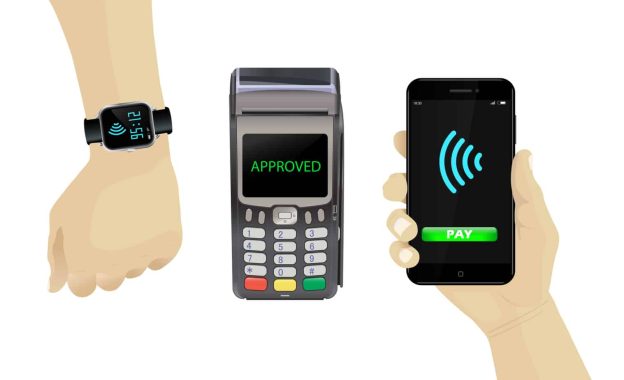
On 26th January 2021, MasterCard made the announcement that it is going to apply for the revolutionary range of quantum-resistant technologies for the development of next-gen contactless payments. The Ecos or Enhanced Contactless specifications will be the first-ever such technology in the industry. It helps in ensuring that as the dynamic digital landscape continues to evolve, and newer technologies including quantum computing are getting introduced, the technology of contactless payments will be future-proofed. At the same time, it also helps in ensuring that consumers would continue enjoying the same higher levels of security as well as convenience they have in the modern era, for several years to come.

The overall demand for safer, more convenient, and faster ways of payment has ignited the transition to the technology of contactless payments. At the same time, it is expected that the given trend will only grow in the coming years. As a matter of fact, during the 3rd quarter of 2020, contactless payments accounted for around 41 percent of transactions related to in-person purchases across the globe –witnessing an overall increase of 30 percent in comparison to the previous year.

MasterCard Introducing the Revolutionary Contactless Payment Technology

MasterCard has been accelerating the overall shift to the concept of contactless payment for several years. At the same time, the leading payment giant has been developing high-end specifications in the form of Ecos for supporting efforts related to industry standardization. At the same time, it can also help in ensuring that the overall ecosystem tends to benefit from increasing security levels.

Ajay Bhalla –President of Cyber & Intelligence at MasterCard, says that contactless technology serves to be the present as well as the future of in-person payments. The year 2020 had been responsible for bringing with it a significant rise of digitization while reinforcing the overall significance of digital solutions. One major instance of the given solution is contactless technology for helping in meeting the everyday needs. As the given ecosystem continues evolving, an increasing number of connected devices as well as the IoT (Internet of Things) are going to yield improved user demands. At the same time, it can also help in creating a greater need for continuous innovation for building next-gen capability while ensuring that technology would never outgrow trust.

Benefits of Ecos

With the help of Ecos or Enhanced Contactless specifications, some potential benefits to look out for are:

  • Improved Convenience: Over the passage of time, it is estimated that the respective in-store shopping experience will become contactless only. The latest specifications will help in delivering the assurance that any device is truly capable of serving as a payment device while getting rid of the overall need for the backup swiping or dipping of the card.
  • Improved Privacy: The all-new specifications will be helpful in delivering advanced protection when the existing account information will be getting shared between the digital wallet or card and the final checkout terminal. Ecos helps in building on the improved requirements for supporting a myriad of privacy regulations.
  • Improved Trust: Ecos is known to make use of the all-new quantum-resistant technology for delivering advanced algorithms as well as cryptography major strengths. At the same time, it also helps in maintaining the contactless interaction under the value of half a second.

As the all-new specifications get activated in the period of coming years, merchants as well as consumers can expect hassle-free transactions. Mobile payments, digital wallets, point-of-sale terminals, and contactless cards are going to continue working as they are doing in the modern era. Moreover, the overall compatibility with Ecos, along with the ongoing contactless specifications is going to be simple & straightforward.

Ecos is known to work behind the existing scenes while being delivered through some software upgrade. As such, no terminals or hardware specifications are required. The given investment tends to complement similar investments in the form of Click-to-pay, 3-D secure, and token technologies for delivering an improved merchant as well as consumer experience.

The Ever-increasing Demand for Contactless Payments

The overall demand for contactless payments is going strong and is increasing with each passing day. It is estimated that around 15 percent of the respective in-store purchases across the globe make use of the given technology. Realizing the immense opportunity to speed up the process of adoption, MasterCard has come up with a proper roadmap for setting out the specific requirements:

  • After the period of October 2018, acceptance terminals that are relatively newer in countries like Africa, the Middle East, Asia Pacific, Latin America, and Europe will be featuring the EMV chip while being contactless enabled.
  • After the period of April 2019, the cards that are issued new in the countries like Africa, the Middle East, Asia Pacific, and Latin America will be featuring EMV chip as well as the revolutionary contactless technology
  • By the time of April 2023, all the respective merchant terminals in countries like the Middle East, Europe, Africa, and Latin America will be featuring the EMV chip while being contactless-enabled

Markets across the countries of Africa and the Middle East have already embraced and implemented the high-end technology of contactless payments. The given momentum is expected to receive more momentum with the acceleration of the acceptance landscape in the given region.

Foundation for Improved Security and Enhanced Growth

In the modern digital world, transactions are going to get smarter. At the core of the given fact is dynamic authentication in which every transaction would be incorporating unique information. It would also make it virtually impossible to replicate. This helps in reducing the overall risk of ensuring fraudulent transactions.

As the issuers would be evolving the respective offerings with the merchants upgrading the existing terminals, the modern payment system will be becoming more secure. This is because the given form of dynamic data gets introduced into the payment transaction. As such, the roadmap by MasterCard aims at strongly encouraging the overall adoption of the most secure available technologies.