Tag Archives: ecommerce

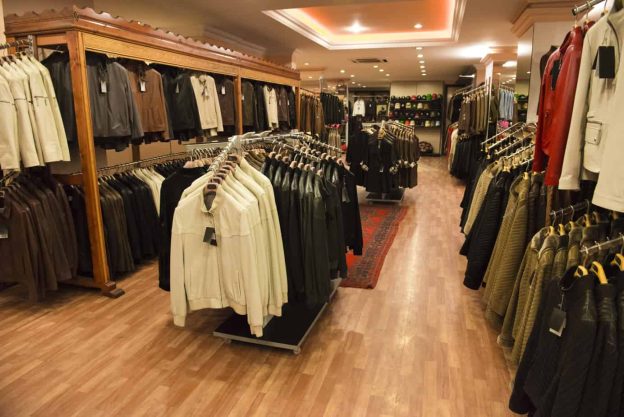
Leather Coats In A Retail Store Shop 26972495

Retail Trends for 2021

Times are changing in all industries, including the retail sector. Consumers don’t shop like they used to, but that doesn’t mean they aren’t spending money. They are just doing it in different ways and if retailers want to keep their sales high, they have to jump on board with what consumers want.

What do consumers want? Here are the latest trends.

Subscription Boxes Increase in Popularity

The subscription box sector is taking the world by storm and it’s not going anywhere anytime soon. Because of the personalization they offer and the excitement they bring for consumers, subscription boxes are popping up in places you’d least expect them. In fact, they could be a way to keep retailers in business when they otherwise may have lost their market.

Delivery is the New Norm

Stores are now offering delivery just like your local pizza joint and we’re not talking FedEx or UPS. Stores either have their own delivery service or they contract out to independent drivers. In our current climate, millions of consumers don’t want to leave their homes, but they want to shop. They’re more likely to shop at the stores that offer same-day or next-day delivery services.

Creating Fulfillment Hubs

Storefronts are quickly going by the wayside as fewer people shop in store. Large stores that were already hurting are quickly seeing a downfall in sales and many are going out of business. In their place aren’t new storefronts, but rather fulfillment hubs for larger stores and even places like Amazon. The distribution centers can offer faster shipping than they would from their central warehouses, increasing customer satisfaction.

Personal Shopping via Video

Video chat is becoming more and more popular and not just for business meetings. Today, personal shopping has gone virtual too. There’s something about being able to see the items even if it’s through a screen, but not on a webpage that makes people want to buy. It could have a lot to do with the personalization of having someone show you the products versus looking at them yourself online.

Private Labels are more Popular

Today, consumers are buying more private labels than ever before. They are skipping the brand names and opting for private labels – labels that provide a more intimate experience than customers are used to but want.

Merchants Have to Think Outside the Box

In today’s changing environment, every merchant must think outside the box. Shopping isn’t what it used to be, but many dare to say that it’s even better. If merchants do it right, shopping is more intimate, exciting, and fulfilling than ever before. Consumers get the products they want, the insight they want to provide, and the safety of contactless payments and curbside pickup.

It’s a changing world we’re living in, but it’s one that we need to continually adapt to and change if we are to compete. Merchants have a lot of opportunity in front of them and if they take advantage of it can be stronger and better than ever before.


How Is COVID-19 Transforming E-Commerce Merchants?

How Is COVID-19 Transforming E-Commerce Merchants?

There is no doubt COVID-19 has redefined our life, and its impact could, presumably, last for years. The way we socialize, work, and function has rapidly changed, and so has our buying behavior. Online shopping has become the new norm as consumers are finding it safer and more reliable. Even local businesses are turning to online platforms for sales and services, but the non-essential industry has suffered dramatically. Grocery, medical supplies, healthcare items have experienced a sudden boom while the tourism industry has collapsed. Meanwhile, beauty items, fitness products, and tech retail have seen slow but steady growth.

Many big brands have restructured to meet the changing demands and increase their endurance during the pandemic. Here are a few practical ways to transform in the wake of COVID-19.

1.   Entering New Markets

Corporations such as commercial airlines have entered new avenues to ascertain stable earnings. The unprecedented drop in commercial flights has led to large airlines like Virgin Atlantic, Lufthansa, and many others to switch to cargo flights. Passenger cabins are available for the transportation of grocery and healthcare items.

merchant covid19 e-commerce buying

COVID-19 is rapidly transforming e-commerce by affecting consumer buying patterns.

2.   Switching to Online Platforms

Grocery e-commerce soared during the pandemic as 72% shoppers used their mobile phones to buy household items. Due to this, many retailers and brands have launched user-driven apps and revamped their online stores to improve the online shopping experience. Encryption of personal details has become stringent to support safe and secure payment methods.

3.   Offering Sales and Other Incentives

Many beauty and skincare brands are offering sales and discounts. Around 72% of the top online retailers are running promotional activities to attract consumers. Many luxury brands, including exquisite jewelers, have slashed prices to recoup sales. At departmental stores, markdowns are even steeper for steady revenue.

4.   Setting Up Curbside Pick-ups:

Amidst the COVID-19 outbreak, many businesses have switched to BOPIS (buy online pick-up in-store) and curbside delivery methods. Since early January, around 55% of the consumers placed online orders and opted for BOPIS for convenience and safety. However, the industry is still in its developing stages as we can often see long queues at pick-up points. Digital check-ins and scheduled pick-up times could be a few ways to enhance the experience.

5.   Strengthening Customer Relationships

To strengthen their brand image, many companies are supporting front-line fighters by providing them various incentives. Many cosmetic and alcohol brands have distributed hand sanitizers and protective gear among front-liners such as healthcare providers, law enforcement agents, and other essential workers. It is to show gratitude to those who are putting their lives at risk for our safety.

However, it is still too early to predict the implications as the circumstances are uncertain. The shopping behavior of millions of consumers has changed within just a few months. Besides, time-saving and convenience has put considerable strain on e-commerce merchants. Many are striving to remove friction in online shopping to build a loyal customer base. Nevertheless, there is a consensus among buyers and retailers that old shopping habits will resume once the lockdown ends. This would slow down the growth rate of e-commerce sales, thus giving them ample time to adapt to the new retailing landscape.

Offsite Payment Processing

Merchants that sell goods through an online store have many decisions to make when it comes to setting up and running their new ecommerce business. Just one of these is how will they process payments when customer are finished with their shopping and ready to pay for their transaction.

One option is to setup what is known as “offsite processing”. This form of online payment processing allows merchants with little or no technical knowledge have the same security and convenience advantages as those merchants that use payment gateways.

First, we should explain what exactly a payment gateway is. Also referred to as “onsite processing” payment gateways utilize a link to Authorize.net through an API. This means that it uses software to call out from the merchant’s website to the Authorize.net systems to complete the transaction. Using this method also requires the business’ website to have an SSL certificate, meaning it is a secure website.

The distinction between onsite and offsite processing comes down to one simple difference. Onsite payments are processed on the merchant’s website without ever leaving. Offsite payments are directed to, you guessed it, a page off the merchant’s site. Other than where the payment actually takes place the process is identical and there is no difference in security or information required.

Business owners with little or no technical or web savvy may have no idea what any of the last paragraph means. Even those merchants who may have more knowledge of web design, online payments, and API integrations may not have the time or desire to set this up for themselves.

That’s OK because Host Merchant Services has the capability to setup offsite processing for merchants that don’t have the technical knowledge or spare time to setup this extra piece of the puzzle. HMS can provide your online store with a branded payment page that eliminates the need for setting up your own SSL certificate or learning how to work with Authorize.net. When customers reach the payment stage of their transaction, they are simply directly over to your offsite payment page. The advantage this provides to customers of Host Merchant Services is that we can put our years of programming knowledge to work for your business.

We have setup and example page at processnow.hostmerchantservices.com and below is a screenshot.

To learn more about getting an offsite payment processing page setup for your online business or any other merchant services questions contact us now!

Top Free Online Shopping Carts, Part 2

So let’s take a look at Beal’s list of the best free online shopping carts. It starts off with:

Number One: Agora Shopping Cart

AgoraCart heads up Beal’s list and is described as a customizable and secure open source shopping cart that you can install on an existing website. Beal says you get templates for setting-up your store, support for different product categories, options for different tax rates and back-end store management tools. Beal notes that this cart is PCI compliant and supports more than 10 payment gateways.

Beal notes that the free edition (5.2.x) is only supported through online community forums — but that an upgraded Gold edition is available for a fee. This upgraded edition offers additional license, features and support options.

Number Two: Broadleaf Commerce

The next entry on Beal’s list is the Broadleaf Commerce solution, an open source alternative for enterprise e-commerce companies. It’s enterprise-level platform, according to Beal, is built on Java integration technology and can be customized to specific business needs. Beal notes that with this software retailers can manage customer accounts, upset, create promotions and manage e-mail marketing campaigns. She says the platform supports social integration and search engine optimization tactics, gives catalog browsing capability, and can integrate any existing business database or fulfillment system with Google Analytics. Support and assistance, according to Beal, comes primarily from an online forum for discussion and contributions, articles, development guides and project API documentation. Broadleaf Commerce uses the Apache license.

Number Three: Commerce.CGI

Beal’s third entry in her top 10 is Commerce.CGI, the first free Perl shopping cart on the web. This software was first released in 1998 and is a fully featured shopping cart for Unix-based servers. But Beal notes it can run on Windows NT with a minor code adjustment. Commerce.CGI is flexible enough to be an add-on to an existing site or installed and configured to manage a new product website. Beal states that it has the standard features of a shopping cart — templates, tools to configure e-mail management, product search capability and payment method management. It supports sales tax, multiple shipping options, and discount calculations. The software is supported through the Commerce.CGI mailing list or BBS.

Number Four: Loaded Commerce

Beal’s fourth entry in the top 10 list is Loaded Commerce, version 6.5 of the popular CRE Loaded program. The Community Edition (CE) is a shopping cart designed for the small office or home office storeowner who wants to add trisection capabilities to an existing website. The program includes security modifications, as well as a number of features for product, customer, order and content management. It’s customization is robust according to Beal, and customers can change their site design — choosing from hundreds of templates — as well as edit customer information, orders, invoices and more.

Number Five: Magento

Magento clocks in at number five on Beal’s top 10 list. Magento offers an enterprise-class e-commerce platform that is supported by a global ecosystem of solutions partners and third-party developers, says Beal. Magento was acquired by eBay in 2011 and is part of eBay’s X.commerce business unit. This involvement from partners and third-party developers combined with the backing of eBay gives Magento a wide range of support and flexibility.

As an enterprise-class option Magento offers merchants marketing tools, search engine optimization assistance, product catalog management and browsing capability, one-page checkout service and a number of other tools for managing shipping, tax and customer service.

The latest release of Magento Community Edition (version 1.6.1.0) was reeled on October 19,2011 and is available under the open source OSL 3.0 license.

Continue reading for the rest of Vangie Beal’s list, when we reveal numbers 6 through 10.

Continue Reading – Top Free Online Shopping Carts, Part 3

Top Free Online Shopping Carts, Part 1

Industry Terms: AVS

This is the latest installment in The Official Merchant Services Blog’s Knowledge Base effort. We want to make the payment processing industry’s terms and buzzwords clear. We want to remove any and all confusion merchants might have about how the industry works. Host Merchant Services promises: the company delivers personal service and clarity. So we’re going to take some time to explain how everything works. This ongoing series is where we define industry related terms and slowly build up a knowledge base and as we get more and more of these completed, we’ll collect them in our resource archive for quick and easy access. Today’s term is the Address Verification System, or AVS.

The system was designed by card issuers to aid in the detection of suspicious credit card transaction activity, and verify that the cardholder’s address info matches what the banks have on file. The service is provided as part of a credit card authorization for mail order/telephone order transactions (MOTO) or Internet e-commerce transactions.  A code is received with an authorization result that determines the level of accuracy of the address match. This verification helps secure the most favorable interchange rates for the merchant.

Visa, MasterCard, Discover, and American Express support this service, and when paired with a CVV confirmation the result is a secure, verified transaction. To verify a customer’s address, a merchant will need the cardholder’s billing ZIP code and the house or apartment number of the billing address.  The merchant does not need to enter in the street, city or state of the cardholder.  While AVS is not intended for use as absolute protection against suspicious transaction activity, it is an important step in securing non-face-to-face transactions. Host Merchant Services recommends to all merchants that they secure these types of orders with both AVS and CVV.