Tag Archives: ecommerce

light blue and yellow color shopping paper bag on colorfull background 152247970

Shopify vs. Etsy: Which Is Better In 2021?

The Internet has exploded since the days of its conception. Before, computers took up an entire room and had to be run with thousands of buttons and dials. Then, we got a dial-up Internet making strange screeching noises through the phone, and then we got discs. Now navigating the internet has become a lot easier, too. The Internet now offers millions of services, including information, educational resources, tests, quizzes, and ecommerce. The days of camping out outside of stores have long since passed. Now anything you want is just one click away!

Navigating has become a lot easier, too. The Internet now offers millions of services, including information, educational resources, tests, quizzes, and shopping. The days of camping out outside of stores have long since passed. Now anything you want is just one click away!

And not only has it never been easier to buy something, but it’s also never been easier to start a business! Nowadays, anyone can create an account for free and start selling their products, no matter how niche they are!

However, if you’re an online seller, you may be overwhelmed by the number of choices you have at your disposal. Most people have narrowed it down to two main platforms: Shopify or Etsy. But how can you decide which one is best for you? 

That’s precisely what we’re going to figure out on this edition of : Shopify vs. Etsy. 

Overview

Before we get into the actual fight, let’s look at our fighters. In one corner, we have a tech giant that has been on the Internet for about as long as Queen Elizabeth II has been alive, Etsy. Etsy is the online equivale; Ent of a flea market: you can sell just about anything, at any price, and people can even get into bidding wars over your products! 

However, the bad part about Etsy is that it’s hard to develop your brand image there. Because Etsy currently doesn’t offer any ways to make your market store stand out, it can be easy to get lost in the sea of painted spoons. Still, millions of people use Etsy every day, and it is widely successful and reliable. 

And in the other corner, we have Shopify, the young buck who’s threatening to take down Etsy! Shopify has a significant advantage in that it is highly customizable. Platforms can easily use it to create their online stores and build a group of reliable customers to keep them afloat during hard times. 

Let the fight begin!

Anyways, now that you have some background on each of our fighters let’s look at their stats. Let’s see who comes out on top in each category!

Round 1: Ease Of Use

This is a hard one to measure up since both platforms are relatively easy to use. The user interface is intuitive, so it doesn’t take a rocket scientist to buy or sell products on each platform. 

However, Shopify has an advantage in the sense that everything on their website is built in. Because it’s so easy to attract customers, all you have to do is create an attractive website and market it throughout all social media platforms. 

Etsy, on the other hand, takes an entirely different approach to online sales. Instead of redesigning your website in the way that you would your physical shop or boutique, you set up a business in an already existing marketplace, sort of like hitching up a tent at a local flea market. 

This means that setting up when you are brand new is easy. But, sticking out and getting customer retention is hard because everyone is competing in the same marketplace with no options to differentiate themselves and stand out. 

Round 2: Domains And URL

Believe it or not, this is an essential part of growing your online business. Your URL is like your store’s address. It’s how people can find you in the ocean of other internet sites and know who you are and where to buy your products. 

Shopify has this covered by allowing buyers to buy their ion domain name so that they can make it something easy to search. Etsy, however, doesn’t allow for this type of customization, so you run the risk of customers having to paste a very long list each time or having to scroll past hundreds of results before they even get to you. 

Round 3: eCommerce Features

Now, this is the thing every online entrepreneur wants to know about: how easy is it to sell on either one of these platforms? Well, Shopify makes it extremely easy to run a business on their platform by giving you tons of valuable tools. For example, creating unique product pages, figuring out check out experiences that can’t be found anywhere else online, and offering a wide range of payment options so that no customer is left out!

On the other hand, Etsy doesn’t offer as many attractive features for sellers, but it does have its own set of assets. It offers entrepreneurs an effortless way to get started since they give access to an existing audience. 

Because pretty much everyone uses Etsy, your store can benefit from that traction as well. Other significant advantages to online sellers include shipping labels, discount codes, and vouchers, which are great for maintaining customer retention, advertising opportunities, email alerts sent directly to customers when products are back in stock, etc. 

The Bottom Line

So, who won the fight? Well, it’s really up to the owner of the online business. Some businesses prefer making their shops as customizable as possible to get traction, and others would prefer to lean into Etsy’s already existing popularity to gain customers. 

Some buyers may prefer Shopify’s web design and various payment options, and others may go for Etsy’s shipping labels and the possibility to make discount codes for customers. All in all, the true winner is always decided by you, the business owner. So, try out these two options and see which one is best for you!
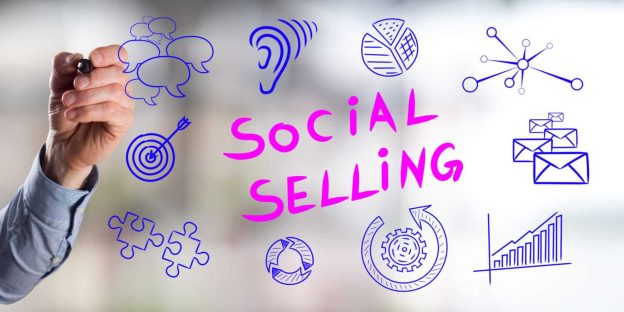

social selling concept drawn by a man 115748588

A Complete Guide To Social Selling

These days, everyone is selling online, from teenagers with toilet paper earrings to grandmas who crochet and want to make extra money to spend at the casino to giant corporations selling CBD gummies

But with so many people selling all kinds of things, how are you supposed to remain competitive? After all, with how vast the internet is, no matter how niche you may think your products or services are, there’s a high chance someone else is doing it better and more effectively than you. So, what can you do to stand out? Here is where social selling comes in. 

If you have no idea what that means and want to learn more, you’ve come to the right place. Keep reading to learn everything about social selling and how you can implement it to boost your online business!

What Is Social Selling?

This is a great place to start. In a nutshell, social selling is boosting your brand through social media platforms and using these to build a relationship with your customers so that they keep coming back to your online store. You can do this in many ways; for example, you can set up a profile for your brand and offer your customers a place to ask questions and get insight and exclusive deals!

If you’re the skeptic type, you may be thinking this is a waste of time, but the numbers back it up. Studies show that 90% of buyers are more likely to engage with an industry leader or vendor to offer industry insights. 

Social selling is also a much better alternative to cold calling. Do you know when you get phone calls in the middle of the afternoon from some random guy trying to sell you toner? Yeah, that’s cold calling, and it’s just not adequate, simply because people hate getting calls from strangers trying to get them to buy random things they don’t need. 

Social media, however, changes the game entirely. Social media gives the illusion of authenticity. Customers feel closer to you and your brand if you have an Instagram account that they can follow. This way, they can watch your Instagram stories with videos of you packing up products carefully and smiling all around, rather than getting a ring in the middle of the afternoon that they’re probably not even going to answer. 

Gen Z kids don’t know what a landline is, and they’re not going to interact with one anytime soon, so you might as well meet them where they’re at. 

Why is Social Selling Important? 

If you’re a member of the older generations, then chances are you’re not comfortable with social media, and you don’t know how to use it, nor are you excited to learn. Learning how to use social media can feel like trying to get acquainted with a city you’ve never been in. 

You don’t understand the road signs because they’re in a different language, you don’t know where people are coming from or where they’re going, and you always somehow find yourself at a dead end. 

However, social selling is very much worth the painstaking task of learning how to manage a social media account. For one, social selling is one of the only ways to keep you competitive in the vast online marketplace. 

Studies show that up to 78% of businesses use social selling to outsell their competitors. So, if you don’t want to get left behind eating dust, then you’re going to have to look up that YouTube tutorial on how to film stories on Instagram and get acquainted with it fast. 

Let’s say that you’re a member of the younger generations, and you already have a social media account, but it’s not growing as fast as you want it to. This can be frustrating, but the truth is that nothing worth having comes easy. That’s why social selling is a slow-burning strategy that takes a while but ultimately pays off well because you’ll have grown a large audience that can boost you up, even during hard times. 

Social Selling Tips and Tricks

Alright, now that you know what social selling is and why it’s such an essential step to growing your online business, it’s about time we showed you some tips and tricks of the trade so that you can stay on top of your game.

Anyway, here are some of the most important strategies for online selling so you can crush your competitors and remain on top!

  • Understand How Social Selling Works Across Various Platforms

While social media may at times blend into one big blur, the truth is that not all platforms are built the same or used by people for the same purposes. Let’s take you through some of them so that you can get the gist:

  • LinkedIn

This platform is best suited for people selling informational content like courses and programs since this platform is most used by business people trying to network. On LinkedIn, everyone is trying to find the quickest way up the ladder, and if you put your course on there, chances are people will be interested and sign up!

  • Instagram

This platform is perfect for brands that want a youthful clientele and sell things that are very visually appealing like clothes, jewelry, stationery, etc. This platform relies heavily on visual appeal, so your account needs to be full of things that pop!

  • Become a Thought Leader

A great way to grow your brand is attaching it to a charismatic person who can sell it well. Nowadays, people don’t just want to buy products; they want to be a part of something. And by turning your brand into a think tank, you’ll be able to do just that!

  • Connect with prospects

Another great advantage of social media is how quickly and directly it connects people. Customers can leave a comment on one of your posts, and you’ll see it a few seconds later, almost like it’s a message to you. Be sure to engage with your comment section and answer people’s questions; that way, you can build trust with your customers and get them to keep coming back!

Conclusion

Social Media it’s an essential aspect when we talk about digital marketing. So, building a solid strategy around social media, it’s the best you can do to make your business grow faster!

attraction, conversion, retention business concept

6 Customer Retention Strategies That Can Boost Sales For eCommerce

eCommerce is a bustling industry full of bright, wonderful people who sell all kinds of exciting products that can’t be sold in traditional physical stores. This can make the world of eCommerce fun and exciting, but it can also make it highly competitive. You’re up against millions of other sellers with tons of advantages over you, such as more experiences and more money to invest in website design, packaging, and faster deliveries. 

So, how are you supposed to remain competitive? Well, one way to do that is to look at ways to retain customers. This means getting new customers and finding strategies to get them to come back to your online store again and again so that you can increase your revenue by up to 30%. 

So what are these strategies, and how can you implement them? We’re going to talk about that on this list of 6 customer retention strategies that can boost your sales and make you a top seller in a blink of an eye!

  1. Upsell and Cross-sell

Upsell and Cross-sell are probably the easiest strategies to implement. They’re easy to understand, and you can start applying them right now. These strategies are also some of the most effective since they’ve been shown to increase revenue.

Alright, let’s explain them one at a time. Upselling is simply charging a little extra for a product you’re already offering. Cross-selling is when you get your customers to buy more products than they intended to purchase when entering your online store. 

You can implement these strategies right now by offering special deals and discounts to new customers. Add pop-ups to your website that give rewards to new customers and show more products on a scroll at the bottom, so customers who come in to buy one item can see others they may also be interested in purchasing.

These are the easiest strategies to implement since they only require a few tweaks in pricing and some additions to your website.

  1. Personalization

Every savvy eCommerce salesperson knows that personalization is what turns people into online businesses in the first place. Stores online can offer something that physical stores simply can’t, allowing customers to get special offers, recommended products, and deals as soon as they enter your store.

Having consistent language on your website is the best way to implement this. Pop-ups, scrolls showing limited edition items, and related products can genuinely boost your sales by keeping your customers on the site for longer and getting them to look at other products. Showcasing customer reviews is also a good strategy since it plays into the human bias that if other people liked it, they’ll probably like the product. 

  1. Segmented Loyalty Program

Customer loyalty programs are another fantastic way to grow your business by forming a base of loyal customers that keep coming back and that you can rely on when things get tricky. There are many different types of loyalty programs out there. Some of these include:

  • Point-based programs: these are implemented in physical stores as well, and they’re pretty simple. Every time a customer buys something at your store, they get a certain number of points, and they can later cash in those points for special offers, deals, and novelty products like t-shirts and tote bags! It’s simple, it’s easy to use, and it works. 
  • Spending-based programs: this one is very self-explanatory. If customers spend a certain amount of money at your store, they can get special deals like free shipping or a free gift!
  • Tier-based programs: these are a little harder to implement but just as fun to make! You have different tiers that customers can reach, and each tier comes with certain rewards. The higher they go up (meaning, the more they spend,) the better rewards they can get, which is a win-win for everyone.
  1. Recurring Subscriptions

Do you know why Netflix is so popular? Because it feels like you’re paying close to nothing for thousands of movies and TV shows. By charging your customers a small monthly fee in exchange for special deals and offers, you too are offering your customers the opportunity to spend very little, support your business and get the things they want! 

You can quickly implement this by adding a pop-up on your website that encourages people to subscribe for a small monthly fee in exchange for tons of exclusive deals and new products. 

  1. Customer service

Excellent customer service is the key to making your online business pop. By having an interactive chat available on the website that immediately puts people in contact with one of your sales reps, you can help them by answering any questions they may have (therefore ensuring that they buy from your website). 

This way, you can also offer them discounts and extraordinary deals! This is how you can also get five-star reviews pretty much anywhere. People value excellent customer service, and the better it is, the more they’ll want to tell their family and friends about it, giving you free promotion as well as more customers.

  1. Email Marketing

If you haven’t heard about this before, you need to catch up immediately because email marketing is the future of online sales and sales in general. The problem with eCommerce is that since there are so many online stores, it’s easy for customers to go into one, buy one item and then forget it exists. There are so many choices out there. Customers don’t feel tied to anything unless you give them the incentive to stay with you!

This is where email marketing comes in. By sending new customers emails every month reminding them of special deals, discounts, and offers, you can keep them on your website for quite a while.

By following all these strategies, you’ll be able to boost your eCommerce and become a reference out there!

conversion rate on paper 158680566

Is Your Ecommerce Conversion Rate Good Enough?

It is true to say that people are in business to make money, no doubt. And some are in business to make more money apart from their jobs. However, it is not easy to sell if your site is not attractive enough. 

You might be tired of paying for ads to attract people to your store and watching them leave without buying anything. Yes, that can be very frustrating. 

Many people ask themselves whether their conversion rate is optimal or simply good enough. Well, many factors will determine that question, for example, the product or category. It is not the same to sell cars as to sell clothes. To be clear, the conversion rate is given by the seller’s sales transactions divided by the number of people who viewed the item. 

To know that, you first need to know what your conversion rate is, and you need to know the averages to compare those numbers to yours. 

Average Rates

As stated above, you need to know the average rates compared to yours, and this way, be better informed. The average conversion rate from 2015 till 2020 for E-Commerce is about 2.63%. That means that around 2.63% of the people who view the product buy it. You might think this number is minimal, but in reality, it is quite a lot. However, as we will examine later, many factors will impact those numbers.  

What is a reasonable conversion rate for your business? 

There are a couple of things to look at. First, if your rate is improving, then it is a good one. However, all businesses are compared to their nearest competitor. While that is very important, you need to know something: the most crucial competitor to you, it’s you! 

However, we will go through all the significant factors to understand your averages better, so you can analyze and see where these are standing.

First, a significant factor is the industry. It is not the same conversion rate when a child goes into a store to buy candy compared to when an adult goes into a website to buy a watch. For you to know, the average conversion for arts and crafts is at 4%, while the baby and child industry is at 0.7%, the lowest for all industries. Here are some of the industries you might be interested in: 

  • Electrical Equipment—2.7%
  • Pet care—2.5%
  • Cars & motorcycling—1.4%

Another factor you should take into consideration is the product type. This could determine your conversion rate significantly. So, if you think that you have low conversion rates, you might just be trying to sell a low-converting product. 

Moreover, a factor that will significantly change your conversion rates is the country you are trying to sell in. For obvious reasons, it is not the same to sell a smartphone in Germany as in Thailand. Especially when it comes to E-commerce, there are populations more used to others, and there are populations that tend to buy more online instead of in an actual store. 

Take this case: Germany has the highest conversion rates, averaging 2.2%, while Italy has the lowest average conversion rate of 1%. So, if you want to know if your conversion rates are reasonable, take a look at where your customer base is coming from. Having a 1.5% in Italy is good but having the same rate in Germany is not.  

There is one factor that might be the most impactful in the data, and that is the traffic source. Traffic source refers to where your customer comes from. There are two sources: warm and cold. Warm sources refer to referrals or emails, and their conversion rates are way higher than cold sources, which refer to sources like paid advertising or social media. 

Email and referral convert at 5.2% and 5.4%. The higher rates are mainly because traffic has already heard about you before going into your web page. Cold source traffic converts at 1.4%, which is not as bad as you think since it is pretty close to the overall E-Commerce average. 

Also, it is not the same as which device is used when navigating through a webpage. Usually, web pages are better designed for laptops or computers, so people trust computers better than phones. It is not always the case, but it varies the conversion rates. The conversion rate for smartphones is 1.8%, while desktops’ rate is 3.9% on average. 

You must know this; all these factors will influence your rates, so be sure to know all you need to know before saying that your rates are either good or bad.  

Constant Progress 

It is vital to understand that conversion rates will not grow or decrease significantly overnight unless something catastrophic happens, which is not usually the case. Typically, the case is that you have to work hard to see some results constantly. You can do more with what you have, which is good; you always have room for improvement. 

Conclusion

To sum up, the conversion rates will never be as reasonable as they can be, but you might as well try it. As I’ve said before, anyone in the business world is there to make money, and since you are interested in making it, conversion rates should be a significant concern. People who think that their conversion rates are optimal are wrong. They can always do better. So, if you feel like yours are good enough, there is probably something you can do to make those numbers rise. Considering all the factors and planning a good strategy can result in more revenue without spending much money on advertising.

businessman shopping online 40190793

How to Continuously Innovate your eCommerce Checkout Process

More and more businesses have pivoted from brick-and-mortar operations to an online presence. The prohibitive costs of physical outlets in urban centers coupled with the growing success of online platforms such as Shopify, Facebook, and Instagram, among many more, have fueled the shift. The technology and payment platforms have also facilitated businesses to transact efficiently, making eCommerce and mobile commerce the commerce of choice among consumers.

As a result of these changes, major eCommerce businesses have invested in augmented reality and other technologies to recreate virtual rooms to “try on” their products to gauge fit and appearance. However, imagine ten people walking into a retail outlet and filling up their carts with items throughout the store, and then eight just decide to leave without making a purchase. They abandon their carts right there and walk out. That is the current state of the eCommerce business.

Businesses can continue to innovate in the current environment by focusing on areas of friction, such as the eCommerce checkout. There may be many drivers for the current predicament, but the checkout process is one worth examining. Below, we look at some reasons to continuously innovate the eCommerce checkout process to help nudge consumers past the finish line.

What is the checkout page?

The checkout page on an eCommerce site is the last step of a consumer’s online journey map. Consumers land on this page after selecting one or more items they’d like to purchase after navigating the eCommerce site. At the checkout page, the visitor would submit their order, enter the billing and shipping information, along with their payment method and details.

The state of the current eCommerce checkout process

According to market research by Baymard Institute, nearly 70% of online shopping carts are abandoned. These are for consumers shopping on their desktops. The abandonment rate is over 80% on mobile devices. These rates are a testament to the fact that the eCommerce checkout process requires continuous innovation.

There are several reasons that consumers abandon a purchase at the checkout stage. Some of these include:

Unforeseen charges – additional fees are a significant reason consumers abandon a purchase as they can start to question the value of the item being purchased in light of higher cost. When the likes of Amazon offers 2-day shipping, even same-day shipping in specific markets, consumers may be dissuaded by a particular site still charging for it.

Burdensome process – maybe the eCommerce site requires you to set up a new account or log in to an existing one. Perhaps the overall checkout process has too many details required adding to the friction of completing a purchase. Maybe the site is just too slow. These points create a strain for the consumer and work against the business, leading to lost customers and sales.

Payment options – More and more consumers are shifting spending from cash to non cash methods such as debit and credit cards or even mobile wallets. Is your business equipment able to process payments for all the major non-cash payment options currently preferred by consumers?

Why do you need to innovate continuously?

Businesses need to tweak the user interface and experience for optimal results continuously. They also need to understand the exact drivers behind consumer behavior on their site to leverage that to convert a more significant number of visitors into paying customers.

A/B testing is an excellent way to learn where the friction is the greatest. Maybe customers don’t mind setting up a user account as much as they pay for shipping costs. Businesses may be offering too much incentive to nudge clients to set up an account; 10% may have sufficed instead of 15%.

All are a great way and reason to continuously test and innovate scenarios to learn from them and utilize the results to grow the business optimally.

Some areas to continuously innovate your checkout process.

Don’t require users to log in – yes, your business would have a treasure trove of data on visitors if they set up an account. However, getting them to make a purchase is the goal. Once you have contact, shipping, and payment details after completed purchase, you can continue to monitor visitors, build a profile of them, and offer incentives to create an account.

Don’t charge for shipping – This is difficult to stomach for small businesses, especially with shipping logistics stressed, and prices increase for transportation of goods. However, many prominent companies have spoiled consumer expectations in offering specific shipping for free. You may want to default to next-day shipping at a cost, which the customer can change to 2-days for the free version or vice versa. Offering alternatives still offers the free-of-cost option and the control to pay more to get the product faster.

Accept the right payment types: Payments and Fintech is a fast-growing and thriving industry. Currently, the most valuable venture-backed company is Fintech. There’s a tremendous amount of innovation in Fintech, with mobile wallets and a host of other payment options quickly experiencing mass-market adoption. If customers prefer to transact via specific payment methods, ensure that your business can accept it.

There have been many iterations in the ways consumers shop to the benefit of online eCommerce businesses. However, there are challenges for eCommerce businesses in monetizing consumer interest, and web traffic as nearly three-quarters of online shopping carts are abandoned. There is a tremendous opportunity to capitalize on this friction and continuously innovate the e-commerce checkout to improve the customer journey and convert more visitors into customers.

Frequently Asked Questions

text sign showing loyalty program conceptual photo marketing effort that provide incentives to repeat customers 174820251

How To Start an Ecommerce Customer Loyalty Program

eCommerce has been steadily rising for nearly two decades. For many, shopping on their laptop or smartphone is the preferred method of shopping. Over the last couple of years, there are numerous ways companies are exploring how to improve the customer experience. There is tremendous competition on price, and eCommerce merchants almost always bear shipping costs. The question remains, how does a merchant differentiate itself among a slew of others to establish and build on the client relationship.

One area that merchants can utilize is an eCommerce customer loyalty program. Such a program has proven to be pivotal in establishing customer loyalty to maintain market share. If consumers already have an affinity towards a brand, they are likely to develop a prime market share for any of its new product launches.

However, businesses have been slow to adopt loyalty programs, let alone a meaningful one. These programs aren’t cheap and require an investment of time to establish and analyze on an ongoing basis to evaluate results. However, it can be made effective with sufficient financial and strategic planning and discipline. Below we look for some ways to optimally start an eCommerce customer loyalty program.

What is an Ecommerce Customer Loyalty Program?

The main idea of a customer loyalty program is to show the customer that they are valued and are an essential part of the company. Although the practice is applied to the relatively new eCommerce field, it dates back to the 1800s, when consumers could earn copper tokens to be later used towards their purchases. A more refined strategy in the form loyalty program has taken shape ever since, quickly incorporated into business strategy in both traditional and eCommerce businesses alike.

Why does your eCommerce business need a Customer Loyalty Program?

There are numerous benefits of businesses adopting a customer loyalty program. These programs increase the profitability, but it also allows the company to build a treasure trove of data on their customers’ profiles and preferences.

Based on numerous research available, three-fourth of U.S. businesses see a positive return on investments from their customer loyalty program, despite an initial outlay to establish the program. The practice is so ingrained in business practices that 63% of businesses track customer retention, referrals, and new companies as a barometer of success and continuously targeted to improve on.

Furthermore, based on dual research by Harvard Business School and Bain & Company, customer loyalty programs improve retention by as much as 5% and profitability by as much as 95%.

Many companies view the costs associated with customer loyalty programs in contrast to customer acquisition costs. If the acquisition price of a new customer is $25 and a loyalty program costs $10 per customer, it is better to focus on retaining an existing customer. At least, the strategy should be maintaining relationships with new and existing customers in tandem. Another benefit is that loyal customers can serve as brand advocates and sources of new referrals. They effectively do the marketing for you, for free!

Types of Customer Loyalty Programs

So, what are some ways your business can implement an eCommerce customer loyalty program?

Points system

A points-based loyalty system is one of the most common loyalty programs in practice. Customers earn rewards points based on their purchases. Those points are then used to discount new purchases, give away freebies, or qualify customers for promotional offers.

Spending program

In this program, the rewards or benefits are more targeted. Customers maintain a certain level of spending within a specific time and are either given store gift cards or store credit.

Tiered Loyalty Program

One of the most preferred loyalty programs by eCommerce customers is the tiered loyalty program. As the name suggests, it is a system through which customers move up in a hierarchy based on their spending history. Each tier of the system earns customers additional benefits. The higher the tier a consumer achieves, the more exclusive and VIP the tier becomes, the better the rewards available.

Customers prefer this loyalty program because the status signaling a higher tier of the program brings a form of bragging rights. Customers are also likely to spend more simply to maintain their position within the loyalty program, especially if it is a level that requires a certain level of spending and time to reach.

A Hybrid Model

Another customer loyalty program incorporates elements of all other programs mentioned above. It is more data-driven to offer a certain number of discounts to a particular segment of customers or offer exclusive promotional offers to an upper tier of loyal customers.

An eCommerce customer loyalty program is a great way to build and maintain customer relationships and extend customer lifecycle value. A customer loyalty program has been very effective in establishing customer retention and market share. Customer loyalty programs have also been effective in launching new products as there may be a readily available addressable market based on your existing loyal customer base.

Businesses have been quick to act on loyalty programs. Many are clear on the benefits of such programs, as their companies’ long-term profitability and viability depend on a first-class customer loyalty program. As a result, such program’s KPIs are carefully tracked and have been very effective in engaging with customers to establish a feedback loop.

computer for bitcoin mining and bitcoin coin on a stock market charts 101144504

Cryptos’ Place In Digital Commerce’s “Walled Gardens”

Cryptocurrencies have become controversial for many reasons. These currencies are volatile, and it is hard to tell who will support them and which authorities will refuse to accept them. There’s also a sense of immaturity in some segments, as many people post social media messages bashing some currencies, not to mention some currencies are promoted more as a joke. Increased worries about how cryptocurrencies are contributing to global warming only make things harder for some parties.

There is still a potential for cryptocurrencies to become more valuable in the digital commerce world. The walled garden approach may be a necessity for the industry’s future. It will bring in many retailers who might be interested in doing business with cryptocurrencies.

The walled garden approach entails buyers and sellers getting together through many settings or a singular platform. People can exchange currencies in the environment through one infrastructure that can support all these settings or other features. A digital wallet platform can be essential to the success of the process.

The setup allows for a space where people can handle their assets. While there are rules on who can enter a walled garden ecosystem, the platform still offers a useful system that everyone can follow.

Understanding How a Walled Garden Works

The idea of a walled garden sounds like it is restrictive, what with it being in a closed setup. But the system itself can be advantageous, as it provides a more controlled approach to managing cryptocurrency payments. It can create an organized setup that allows transactions to work effectively and in moments.

A walled garden operates as a closed ecosystem. The end-user is limited to whatever services or apps one can utilize. The end-user will be led towards specific apps or solutions for handling transactions or other activities.

For cryptocurrencies, the walled garden will entail people being limited to using a specific app or exchange to handle currency transactions. The ecosystem will support various cryptocurrencies and can handle as many apps or other platforms as it wishes. The walled garden operator has control over whatever it wishes to program or utilize.

What Organizations Could Use These Walled Gardens?

There are no limits over who could use these walled gardens to keep their setups up and running. One example to explore entails how PayPal is managing cryptocurrencies.

PayPal has an ecosystem where users can link their wallets to Coinbase. Customers can then buy currencies through the exchange. PayPal’s goal is to make these currencies accessible for shopping purposes. Customers can use the crypto items they have in their wallets and use them to pay for items through various participating merchants. PayPal has reported substantial growths in its user base and activities over crypto payments, especially as the system makes it easier for people to complete these payments.

The retailer and auction site eBay also has hopes to establish a crypto walled garden. eBay hasn’t participated in the crypto market since abandoning its support of Facebook’s Libra project a few years back. But eBay has expressed some interest in returning to the crypto field, particularly with an ecosystem that supports crypto payments. The walled garden system would likely entail eBay limiting people over what they can use for collecting crypto funds and moving them. But with eBay having so many retailers out there, the places where people could spend those assets would be varied and diverse.

Will Amazon Take Flight?

Amazon could also start a separate ecosystem where it can handle cryptocurrencies. As the world’s most influential retailer, Amazon has been at the forefront of impacting different transactions in many forms. The potential for Amazon to start accepting more currencies and to use a walled garden that links customers with various entities could be significant.

Upcoming new Amazon CEO Andy Jassy has expressed an interest in entering the crypto industry. But most people who use Amazon Web Services systems use it to manage data and not handle cryptocurrency payments. But AWS will support blockchain transactions soon and could start making use of Bitcoin and other currencies. Such support might push the crypto industry further, especially since Amazon has immense influence over the digital commerce environment.

Some places have already been using cryptocurrencies in their platforms. Newegg has been a longtime supporter of Bitcoin, and Shopify has allowed business operators to accept currencies of all sorts. Shopify even joined the Facebook Libra project, possibly linking it with a new currency that the social media giant might produce someday. Facebook has been trying to produce something new for a while, but whether it will come to fruition remains unclear.

The Walled Garden Is An Evolution

The walled garden approach that so many providers might use shows how the crypto industry has evolved over the years. The walled garden allows for more freedom to manage currencies. While there are rules as to what platforms can work and who people can contact, there is greater flexibility over what assets can work on the platform. More retailers and parties can link with one another if they stay within the same walled garden system.

The walled garden system is an evolution over the Facebook Credits platform from nearly ten years ago. Facebook Credits had a platform that didn’t offer much of an incentive to retailers, keeping it from going far. But today’s new walled garden setup makes it easier for businesses to grow and succeed. They can work with a more thorough infrastructure that includes more trusted sources for funds.

People looking for new ways to spend money should see how the walled garden ecosystem can work when handling cryptocurrencies. The physical and digital fields are uniting, as more people can use cryptocurrencies for payments now than ever before. There’s a great potential for more parties to complete transactions in secure environments. People who are interested in cryptocurrencies will need to see how these could work well soon.

start and fund online boutique

How to Start & Fund an Online Boutique [2023 Update]

Getting to start an online boutique for many aspiring entrepreneurs can be a dream come true. It’s an opportunity to color the lives and styles based on your creativity. However, getting to start a boutique involves a tremendous amount of work that can be daunting, and almost discouraging. You need to find the appropriate retail and warehouse space, acquire the right employees and all the relevant business licenses, and ensure that you have all the proper tax and incorporation paperwork filed with municipalities.

start an online boutique

Of course, with the help of the internet, starting an online boutique is much easier. Business owners can set up eCommerce stores and manage warehouse activities away from populous and in-demand urban centers as the storefront is now online. This degree of freedom can help merchants focus more on securing finances, the appropriate marketing channels, and the design aspect of their work. Whether you’re a serial online entrepreneur or a novice, below we look into what you need to do to start and fund an online boutique.

What’s your niche?

One of the best ways to build brand recognition and clientele is to be known for quality and have the best of something. You need to decide on what that something is. Specializing in a niche market within an online boutique will help focus on one specific small area, as you’ll be in the beginning phase of starting your online boutique.

Focusing on a niche will help to build expertise and further perfect that craft. This can generate cash flows that can fund other ventures as you branch out beyond your niche. A perfect example would be Donna Karan, who started with her Essentials line, which included seven articles of clothing positioned around the bodysuit to be mixed and matched. Donna Karan’s niche was the bodysuit. She later expanded a full clothing line a few years later with DKNY, followed by DKNY Jeans and DKNY for men in the years to follow.

You can grow to have many different design lines under your umbrella, but you need a cornerstone niche to get you started. That is just the beginning – it is the first step. There is still a tremendous amount of work yet to be done.

Start an Online Boutique – Sourcing material

Once you’ve decided on what your niche focus will be, you need to ensure your materials. This is one of the most critical elements for an online boutique. Once online shoppers receive their first order from you, their first impression of your product will be the material they feel. Quality and durability are vital for your branding and one that is expected to remain consistent at the very minimum or improve over time.

Start an Online Boutique - Sourcing material

Developing the proper relations for inventory and materials partners can be beneficial as you may get bulk discounts with some degree of assurance on quality, logistics, and delivery times. Unfortunately, developing this relationship takes a lot of effort and thorough vetting of numerous suppliers, checking hundreds of samples. The result will be the backbone of an online boutique’s operations and branding.

Online Presence

Establishing an online presence for your online boutique will be the next hurdle to cross. Since your online boutique may not have a brick-and-mortar presence initially, your storefront is your website. Merchants need to ensure an intuitively designed website interface guiding potential visitors through the consumer journey from landing to purchase.

There are several other strategies online businesses need to employ to spread the word, such as social media. There are numerous platforms merchants can use to target specific audiences.

Similarly, the online boutique can also set up accounts on popular online platforms such as Shopify, Amazon, or Etsy to reach consumers via established online marketplace brands.

Business Formation and Tax Registration for Online Boutique

Another fundamental requirement that entrepreneurs need to pay keen attention to is the different conditions of business formation. This may require a lawyer to guide you through the process and an accountant for the various financial and clerical paperwork to be completed. You must decide which state you should register your business in, where a company may be required to have a legal presence, etc.

Business owners will also be required to get a Federal Employer Identification Number from the IRS and form the basis of their state-level documentation. There will be requirements for state sales tax registrations that must be filed with respective state departments of finance/treasury. 

Compliance with federal and state-level tax authorities does not stop there. On an ongoing basis, the business will need to collect all relevant state-level sales taxes and file them with the tax bodies. Similarly, if companies hire employees or pay themselves, the applicable payroll taxes will need to be deducted from their paychecks and submitted to state and federal tax departments with their required tax filings.

Finally, businesses will need to ensure they can accept online payments. Merchants should carefully evaluate payment processing services to see that pricing is detailed and straightforward. What type of tertiary services do they offer, online gateways, virtual terminals, assistance in registering, and developing a website? Are there any early termination fees? These are all characteristics of payment processors that merchants would need to consider carefully.

Starting and managing a business is no easy feat. The internet and numerous online marketplaces and platforms have made that task a lot more feasible. Social media has helped eliminate intermediaries and reach consumers directly. Nonetheless, entrepreneurship still requires meticulous planning, a fanatical focus, tremendous grit, and a bit of luck. With hard work and time invested in the right partnerships, online presence, brand development, and compliance with tax regulations and business formation laws, aspiring entrepreneurs can be well on their way to starting their online boutiques.

kyc do you know your customers 144484249

The 6 Parts of an eCommerce Customer Persona

Have you considered the ecommerce customer persona your business is contacting lately? The odds are you might not be aware of what that is or how you can create one.

An ecommerce customer persona is a character of sorts that a brand creates to represent targeted customers. The brand uses customer data to figure out who is more likely to buy something on a website. 

A customer persona helps you understand the unique buying experiences and behaviors your customer holds. You can use this to produce distinct marketing efforts. Generic marketing plans aren’t likely to work in your business, as your customers will likely have distinct backgrounds or beliefs that lead them towards what you provide.

You can use six parts of an ecommerce customer persona to help you identify who you should be targeting in your work. These segments combine to create someone that will utilize your wares and appreciate what you provide.

  1. Demographics

Start by looking at the demographics of your customers. You can use these demographics to get an idea of what your customers are like and what they have to offer your business.

These demographics can include:

  • Age
  • Gender
  • Profession
  • Education level
  • How much money one earns each year
  • Physical location

You can use as many demographics in your work as you wish. You can target specific audiences, but you should also see how the demographics on your website can vary. Sometimes you might have multiple demographics who support your business, but they could also be united by certain factors.

  1. How that Customer Finds and Uses Your Business

Every customer goes through a unique journey to find a business. You can research how customers are likely to find yours by looking at these five factors:

  • How someone learns about what you offer
  • How the person becomes more interested in what you are providing
  • When the customer develops an intent to buy what you offer
  • The purchase process, including what influences the customer to go forward with the purchase
  • How that customer will engage with your website; the work includes looking at other products, viewing your social media pages, and other features
  1. The Unique Mindset

Your customers also have distinct mindsets that influence how they will go ahead with buying things. Your ecommerce customer persona should include a review of these factors:

  • What the customer thinks about something you offer
  • What your customer is feeling when considering your work
  • Whether that person has had a positive experience with your work, including if there are unique problems in the work
  • The perception someone has towards your business
  • What someone expects to get from your business
  • The solutions they need for their lives, plus how you can provide answers to those points

Your business messages can focus on whatever people are thinking. You can proactively answer whatever questions your customers might hold, giving them the trust they need to do business with you.

  1. Unique Triggers

Everyone will have different triggers for when they purchase what you offer. A trigger is something that encourages a person to buy something or do something else of value. Your customers can act upon different points:

  • Internal – An internal trigger involves something relating to the customer’s feelings. The person might think that you offer something that satiates one’s desires or alleviates one’s fears.
  • External – An external trigger can entail anything outside the customer’s control. It could entail needing to replace something or requiring a service due to a sudden event in one’s life.
  • Seasonal – A seasonal trigger entails events that can influence purchases. A person might be more likely to buy something during a specific time of year. Maybe what you offer will be enticing for weddings, birthdays, or other special occasions.

Your goal is to review how your customers might follow some triggers and then promote yourself based on these things. You can highlight certain things and explain to people that whatever you offer is more worthwhile to their needs. Your marketing efforts can also be based around those triggers that influence people to buy what you offer. Sometimes a single trigger can make a difference when getting someone to do business with you.

  1. Language

The language you use can make a difference. You can use language that highlights the interests and needs your customers have.

You can use technical or industrial terms if you’re trying to target customers who have prior experience with what you offer. You can show those people you know what you’re talking about and that you can be a trustworthy business partner.

You could also use phrases or ideas that might reflect someone’s age, community, or general background. The goal is to get on the same level as the customer you’re contacting.

  1. Community

The last part of your ecommerce customer profile to use involves the community you support. You can explain to people that you’re part of a community that understands the needs people hold.

Some customers may have interests in things and will talk about them in their own unique communities. For example, cat owners are likely to talk about cats climbing trees, cat food products, and other cat-related items alongside other cat owners and enthusiasts. They aren’t likely to talk about these things in their workplaces.

You can look at what your customers are interested in when they come to your website. You could establish a community that focuses on whatever you sell or whatever needs your customers have when entering your website. Linking to a vast community of people can help you market your work and make it more viable to customers.

All six of these segments are essential to note when looking at your ecommerce customer profile. Be aware of how you see your customers. You can tailor your marketing and promotional efforts to them when you see what they may be interested in the most. The effort is about bringing in more satisfied customers and having them see what makes your business advantageous.

credit card phishing 45625405

Ways To Detect Phishing Attacks On Your E-Commerce Business

Phishing is a dangerous threat to every ecommerce business that no one should ignore. Phishing can entail people sending emails that claim to be from legitimate companies. It could also involve people getting links through text messages telling them to do something. There might even be emails or messages promoting unique things that you aren’t offering. 

Those emails and links will ask customers and other readers to send sensitive bits of data to them, including credit card numbers, tax identification numbers, passwords, and other things. Phishers can use these things to steal customer data and to make unauthorized purchases in their names. The effort can be risky and potentially harmful to anyone.

Your ecommerce business could experience a phishing attack. You can use a few points to help you identify phishing attacks and to keep them and the possible damage to your business’ reputation from becoming worse.

Review Your Communications

Phishing often comes from hackers and thieves using your identity to communicate with people. Thieves can create unique emails, texts, phone calls, and other forms of communication to try and reach others.

Check on the messages people are receiving and how you’re creating something unique and distinct. You can tell you’re dealing with phishing attacks if someone tries to create different messages that are different from what people might expect to find where you are.

Look At Your Checkout Page

Phishing attacks also entail hackers adding questionable JavaScript pieces to your website. They can add new JavaScript data to a WooCommerce or Magento page, for example. The extra data can move people towards a malicious website. Check how your checkout page is working and that the code here is the same as what you have been using for a while to ensure there are no threats.

You can also check on how often people access your checkout page. Sometimes you might experience less traffic than usual. The regular traffic you get might be going to a phisher’s checkout page. There might also be links on your current page that move people away from whatever you’re trying to support.

Your PayPal Account Is Suspended

PayPal is one of the most popular online payment platforms ecommerce businesses can use today. PayPal’s security measures are part of why it is popular. PayPal can temporarily suspend accounts if it notices unusual activities. These include cases where an outside party might get access to funds.

A phisher can collect enough data from your customers to where they can get access to their financial contents in moments. They can use those details to do illegitimate business with you, including making purchases that might be extremely expensive.

PayPal can temporarily shut off your account if it sees too many questionable things happening with your account. This problem is a sign you’re dealing with a phishing attack, as multiple users’ accounts will have been compromised.

What Are Other Parties Reporting?

You can also spot phishing attacks based on what other parties you work with are reporting surrounding your business. A delivery service or ordering platform might report it is receiving unusual amounts of data surrounding your business. But that data could be from a phishing attack as a party impersonates your business. The partner you work with might suspend your access to something, making it harder for you to get online and do business with others.

Check with your work partners to see how much business you’re getting at a time. Watch for sudden spikes or changes in your business efforts, and check why these things are happening. Anything unusual in your business could be a sign of a phishing attack.

Watch For URL Copycats

One trick that phishers use when stealing data is to copy your URL and make slight alterations to the content. They can use a slight change in spelling or a different extension to look legitimate. People often fall for these shifts because the URLs look similar to what you hold.

Check online to see if there are any URLs out there that are similar to what you utilize. Anything that looks too similar and is active could be a sign of a phishing scam.

Review the Tone of Messages

Sometimes people might contact your business and say they received harsh messages from you. These include messages that might feature aggressive wording and suggest that someone should do something or else face significant consequences. The note may also feel cold and emotionless to where it isn’t suggesting much of anything.

Look at what your customers are saying about whatever messages you are supposedly saying. Any situations where people say your messages aren’t like what you normally send could suggest you’re dealing with a phishing attack.

Account Numbers Aren’t Matching Together

The last tip to see when identifying phishing attacks is to look at how the account numbers on your invoices work. You’ll need a master list of all your account numbers. The list will include legitimate customers you routinely contact and how much they are spending with you. The numbers can be predictable after a while, as some people will use specific amounts of money or pay for things at particular times.

Sometimes the seller data and their sales totals aren’t adding up to whatever you are reporting. The totals could be dramatically higher than what you are showing. The point suggests these people are sending their funds to phishers instead of your business. You are not only losing money from people, but you are also losing their trust. They may wrongfully think you are handling their business the wrong way.

Be cautious when looking for phishers while online. Watch how your ecommerce business is running and that you have an idea of what people might do when engaging in phishing attacks while online. Be aware of any sudden changes in how your business is running, especially when it comes to how you’re taking in payments and receiving messages from other people.