Tag Archives: E-Commerce

Global Data Breach Update

Today The Official Merchant Services Blog is updating its coverage of the Global Payments Data Breach. The current update revolves around the expansion the duration of the breach as well as the number of cards potentially affected. It has been a virtual roller coaster ride in terms of narrowing down a number for the cards that were compromised. When the news of this breach initially hit on Friday, March 30 there were reports that a mere 50,000 cards were compromised. Then at the height of the story’s initial frenzy it was reported that the number of compromised cards might be closer to 10 million. Attempting to quash that frenzy, payments processor Global Payments Inc. itself released a statement that the number was closer to 1.5 million cards. And now, after some relentless coverage and work by Brian Krebs — the blogger who first reported the breach — it appears the number is once again creeping back towards the 10 million mark.

“That’s No Moon” 

The size of the Breach keeps expanding after Global Payments initially made statements that downplayed both its size and its impact.

Global’s statements have all been very succinct, and the company says it reported the breach immediately when it found out about the breach. Global also stated that the breach is contained and only affected 1.5 million cards or less when it occurred in February 2012.

But Visa and MasterCard issued new alerts on May 15 and suggest the breach dates back to January 2011 — an exposure window significantly longer than what was originally reported when news of the breach surfaced in late March. Visa’s alerts in March, which Brian Krebs used to break the story,  indicated the breach occurred sometime between Jan. 21, 2012, and Feb. 25, 2012. Global used those alerts to help underscore their assertion that the breach was small and contained. But on April 26, an updated advisory from Visa put the suspected intrusion date closer to June 7, 2011. Setting the length of exposure for compromised cards back six months. And then Visa and MasterCard released information that pushed the date back an entire year from the initial alert, to January 30, 2011. This vaults the figure of compromised cards to 7 million — much higher than the 1.5 million “or less” suggested by Global in their official statement.

All this wiggling over the timeline and severity of the breach has been met with silence from Global Payments. They have offered no further comment other than to link to their website.

So About Those Compromised Cards …

And apparently the Breach may not have been contained, or at least not contained quickly enough to prevent fraud. Krebs says on his blog, krebsonsecurity.com, “Debit card accounts stolen in a recent hacker break-in at card processor Global Payments have been showing up in fraud incidents at retailers in Las Vegas and elsewhere, according to officials from one bank impacted by the fraud.”

This is a pretty big break in the ongoing story, as details of fraud have been danced around previously and Global’s not released any statements other than their initial commentary that suggested the breach was not going to produce any meaningful fraud. Krebs says that in March of this year the Danbury, Conn. based Union Savings Bank began seeing an unusual pattern of fraud on a dozen or so debit cards it had issued, noting that most of the cards had recently been used in the same cafe at a nearby private school. The bank noted that the school was a customer of Global Payments and so the bank contacted Visa to see if this was related to the breach.

According to Krebs, that’s when USB heard from Tony Higgins, then a fraud investigator at Vons, a grocery chain in Southern California and Nevada owned by Safeway Inc. Higgins contacted Doug Fuller, Union Savings Bank’s chief risk officer. And Krebs’s blog describes the way the fraud worked: “According to Fuller, Higgins said the fraudsters were coming to the stores to buy low-denomination Safeway branded prepaid cards, and then encoding debit card accounts issued by USB onto the magnetic stripe on the backs of the prepaid cards. The thieves then used those cards to purchase additional prepaid cards with much higher values, which were then used to buy electronics and other high-priced goods from other retailers.”

Krebs then goes on to report that the fraud described by Higgins matched the unauthorized activity seen stemming from accounts used at the private school cafeteria. Fuller said Visa alerted Union Savings Bank that about 1,000 of its debit accounts were compromised in the Global Payments breach — including the dozen or so card accounts that initially prompted USB to investigate. Krebs reports that USB officials say the bank has suffered approximately $75,000 in fraudulent charges, and that it has so far spent close to $10,000 reissuing customer cards.

Track 1 Not Needed

The details revealed by Krebs on the fraud perpetrated upon Union Savings Bank illustrates how the criminals can extract value from debit cards even if they only have some of the data associated with the accounts. This is important to understand because Global’s statements have stated that only Track 2 data was taken during the breach. Global maintained that cardholder names, addresses and other Track 1 data was not obtained by criminals in the breach. The indirect suggestion Global was making with that statement was that counterfeit cards could not be produced with the data obtained in their breach. However, the details of what happened to USB shows how Track 2 data alone was enough for the criminals to encode the card number and expiration date onto any cards equipped with a magnetic stripe. Those cards were then capable of being used at any merchant accepting signature debit — transactions that do not require the cardholder to enter a PIN number.

HMS Solutions

Looking at the threat of a data breach, Merchants must wonder what the solution can be. Is there protection available? PCI Compliance is a great foundation for transaction security. The standards and protocols set up by the PCI-DSS Council are the first step a merchant needs to take to protect their data. And Host Merchant Services offers a PCI Compliance Initiative that helps its merchants quickly and seamlessly take that step.

Also, one thing to consider if you are a merchant and you are worried about data breaches affecting your bottom line: Host Merchant Services Data Breach Security Program. Click that link to download a PDF explaining the value-added service HMS provides its merchants that goes above and beyond just simple PCI Compliance and helps ensure a merchant’s peace of mind.
 

Reminder: Hypercom Name Change

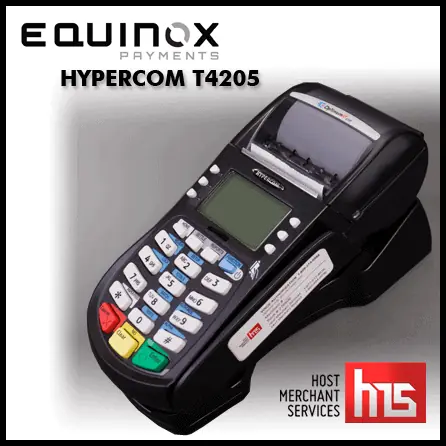
Host Merchant Services wants to take a quick moment to remind readers of The Official Merchant Services Blog, as well as its own merchants of a change that took place in 2011 with Hypercom — the company that manufactures one of the most popular brands of point of sale terminals that HMS provides.

In October, 2011 it was announced that Hypercom USA formally changed its corporate name to Equinox Payments, LLC. In addition to selling new Equinox terminals, software and services, the company continues to support the very popular Hypercom-branded products in the U.S.

Hypercom US was sold to private equity firm The Gores Group in August 2011 as part of a deal to allay competition concerns when Verifone acquired the rest of Hypercom’s global business.

Former Hypercom product names have remained unchanged, but products are now showing up in marketing materials as branded Equinox or co-branded Equinox and Hypercom. Equinox says they will maintain the Hypercom brand for an extended period of time to reinforce Equinox’s continued support of Hypercom-branded products and services. So it’s been a slow evolution, which is why HMS is offering this reminder. We wish to clear up any confusion with our merchants regarding Hypercom and Equinox due to the popularity of the T4205 Hypercom terminal among our various customers.

The Companies Involved

Equinox Payments, headquartered in Scottsdale, Arizona, is a leading payment terminal manufacturer and related secure software provider. Through its commercial offices in the United States, Latvia, Manila and Australia, and a service repair facility in Mexico, Equinox’s more than 200 employees deliver secure payment terminals, applications and services to hundreds of thousands of merchants. Equinox is a portfolio company of The Gores Group, LLC.

The Gores Group, LLC is a private equity firm focused on acquiring controlling interests in mature and growing businesses which can benefit from the firm’s operating experience and flexible capital base. The firm combines the operational expertise and detailed due diligence capabilities of a strategic buyer with the seasoned M&A team of a traditional financial buyer. The Gores Group, which was founded in 1987 by Alec E. Gores, has become a leading investor having demonstrated over time a reliable track record of creating substantial value in its portfolio companies alongside management. The firm’s current private equity fund has committed equity capital of more than $4 billion. Headquartered in Los Angeles, The Gores Group maintains offices in Boulder, CO, and London.

Industry Terms: Point of Sale

This is the latest installment in The Official Merchant Services Blog’s Knowledge Base effort. Well we want to make the payment processing industry’s terms and buzzwords clear. We want to remove any and all confusion merchants might have about how the industry works. Host Merchant Services promises: the company delivers personal service and clarity. So we’re going to take some time to explain how everything works. This ongoing series is where we define industry related terms and slowly build up a knowledge base and as we get more and more of these completed, we’ll collect them in our resource archive for quick and easy access. Today’s terms is Point of Sale (POS).

Point of Sale (POS)

The location at which a payment card transaction occurs, usually by way of a device such as a credit card terminal or cash register. The term is usually associated with retail points-of-sale, but also applies to any initial point where the customer presents payment to the merchant, such as by telephone or Internet.

The location is also sometimes referred to as Point of purchase (POP) or Checkout.

Point of Sale Terminal (POS Terminal)

A terminal at the point of sale, connected via telecommunication lines to a central computer. Authorization, recording and transmission of electronic transactions are performed through the terminal. A POS terminal manages the selling process by a salesperson accessible interface. The same system allows the creation and printing of the receipt.

The retail industry is one of the predominant users of POS terminals. A Retail Point of Sales system typically includes a computer, monitor, cash drawer, receipt printer, customer display and a barcode scanner, and the majority of retail POS systems also include a debit/credit card reader.

Restaurant POS refers to point of sale (POS) software that runs on computers, usually touch screen terminals or wireless handheld devices. Restaurant POS systems assist businesses to track transactions in real time. Typical restaurant POS software is able to print guest checks, print orders to kitchens and bars for preparation, process credit cards and other payment cards, and run reports. In addition, some systems implement wireless pagers and electronic signature capture devices.

Merchant Services Assemble!

Today we’re going to take a flight of fancy with The Official Merchant Services Blog. It is Friday after all, and with a long holiday weekend about to start, we figure it’s just the perfect time to do something silly at the blog.

With the Avengers movie setting box office records, the mighty month of May has been an amazing improvement for the Merry Marvel Marching Society as the massive amounts of money multiply and their movie studio is magnified in the public eye! Excelsior!

Mobile Movie Tickets

So I was inspired to do an Avengers themed take on Merchant Services today. What sparked this inspiration was a combination of much of my recent writing on Mobile Payments, and the fact that I utilized Fandango’s Mobile Ticket app to purchase my own ticket for the big blockbuster. Apparently I wasn’t the only one to do this. According to this article at Techcrunch.com, the Avengers set a mobile sales record for Fandango. Fandango did not release the full data to Techcrunch, but the article notes that on Sunday of the opening weekend, Mobile Ticket sales accounted for 42 percent of all sales. This figure dwarfed the previous high for mobile penetration, The Vow, which had 26 percent of its opening weekend sales via Mobile Ticket.

So here’s this bristling new technology pushing Fandango’s e-commerce forward with the convenience and ease of mobile purchasing power, mixing itself into the biggest blockbuster film opening of all-time. And of course, I got to be a part of that. Toss in the offhanded fact that The Avengers is one of my all-time favorite comic books and I simply could not resist thinking … What If?

A Marvel-ous Idea

So imagine if you will, true believers, a different world … a parallel earth. A mirror universe with an ultimate world of dopplegangers. An earth-2, a 616th out of 617 variations, where the battle cry rings forth not “Avengers Assemble!” Nay. The battle cry rings forth … Merchant Services Assemble!

And the tagline to such a bold new universe goes a little something like this: “And there came a day, a day unlike any other, when Earth’s mightiest merchants found themselves united against a common threat. On that day, the Avengers Merchant Services were born — to fight the fees no single payment processor could withstand! Through the years, their rates have prospered, charging low fees, and their service has never been denied! Heed the call, then — for now, Merchant Services Assemble!”

Box Office Smash!

Find that hard to visualize? We here at TOMS-Blog will do the visualization for you! First we have a fascinating infographic that breaks down the revenue generated by a payment processor if the Avengers Movie Box Office (as compiled by May 18) had been a Merchant Account’s May Transactions. Gaze in wonder at the nigh omnipotent processing power and infinite optimization of such a bold and titanic statement of payments:

Those are some mighty revenues that could have been generated in our alternate earth, protected by our alternate Avengers. Debuting in 1963, the Avengers comic book became one of the cornerstone’s of the Marvel Universe crafted by Stan Lee and Jack Kirby. For generations the comic has wowed its readers with a roll call of the most popular and powerful heroes that the company publishes banding together to save the world from would-be conquerors and major disasters month after month after month. One of the key characteristics of the Avengers has been its revolving door style membership, with a large variety of heroes heeding the call and joining the team. The roster has changed so often throughout the years, including everyone from the re-discovered Captain America (which contrary to the film, was not an original member of the team), to Wolverine to Spider-Man. An odd statistic that reflects how inclusive the team’s membership can be is that over the years 3 of the 4 members of the Fantastic Four have been card carrying members of the Avengers. The sole exception was the Human Torch, but the original Human Torch (an android created in the late 1930s with no actual relation to the Fantastic Four member) was a member of the West Coast Team.

Assembling the Perfect Team of Services

With this in mind, I felt the best way to finish off our flight of fancy would be to craft the ultimate roster of services and products for Avengers Merchant Services, Earth’s Mightiest Processor! Who would make the cut? And what would they bring to the table?

There’s no better Avenger than Captain America. He’s the heart and soul of the team, and their recognized leader. An Avengers roster based on Merchant Services would have to include the aspects of Cap that make him the legend he is. Trust and Integrity would the core foundation. And superior customer service from the super soldier himself would be the end result of that trust and integrity.

For decades the Avengers existed on Tony Stark’s dime. The technological edge that Iron Man brought to the team helped put them one step ahead of their foes and prepared them for any threat they would have to face. He supplied their headquarters, their vehicles and their government security clearance. So any Merchant Services team based on the Avengers would need to include an Iron Man. With E-Commerce pushing the payment processing industry quickly into the future, Iron Man would keep his Merchant Services team ahead of the game in those areas. Iron Man would offer the latest in payment gateway support and e-commerce tech, assisting those in need with a complete e-commerce solution.

The Avengers always boasted the heaviest hitters in its roster, and because of that they could always take on the toughest foes and handle the largest threats. Thor and his enchanted hammer embody this aspect of the team. Its the basic, fundamental power that Thor brings to the table that makes the Avengers not just a global criminal deterrent, but as seen in many of the comics, a more cosmic level of deterrence. A Merchant Services team based on the Avengers would place the power of Thor squarely in its core payment processing area: Retail. Powerful processing solutions that included free equipment granting every potential customer the ability to swipe cards as often as Thor swung his hammer and took to the skies.

Simply put: The Hulk smashes! So an Avengers team assembled to bring the power of Merchant Services to the world would have its Hulk smash prices. The strongest pricing there is, smashing the high fees of all those who opposed the Avengers. The gamma-infused pricing model would obviously be an Interchange Plus plan. There’s no other choice more suited to the Hulk’s strength and determination.

Security, backup, and data protection are all key for running a safe Merchant Services operation. So any Avengers themed Merchant Services team worth its salt would need a member focused on security. Like the Black Widow, who would make it easy for the team’s merchants to stay up to date with PCI Compliance standards and have a plan in place for Data Breach Security protocols.

An Avengers team providing Merchant Services would need extensive resources at its fingertips. So Nick Fury, with the full backing of SHIELD would be an absolute requirement. Fury would provide a knowledge base, an active up to date feed of industry related information, and an archive of articles and resources specifically tailored to educating and supporting a Mighty Merchant Services team assembled to Avenge the downtrodden.

The Avengers have long relied on members like Hawkeye to help the team stay on target. The sharp eyed and sharper witted archer has always helped the team stay grounded and flexible in its ability to tackle both big and small adventures. A Merchant Services team assembled to fit the model of the Avengers lineup would need a Hawkeye among its ranks that allowed it to offer extremely flexible and viable customization. Hawkeye lets the team find the right suite of services for each individual merchant it helps.

Face front true believers! A blueprint for an Avengers themed Merchant Services team. A team assembled to combat the tricky foes and villains of the industry that sucker merchants in with gifts and promises of savings but actually tie them down to long term contracts rife with hidden fees and surcharges and penalties. The Avengers Merchant Services team is assembled to provide trust and clarity in this parallel payment processing industry. It’s not much of a surprise to this scribe, however, that the entire roster is comprised of features found here, in this world, on this earth. Each team member reflects some amazing aspect of Host Merchant Services. A super powered formula that merchants seeking payment processing solutions can already find right here!

Industry Terms: Card-Not-Present

This is the latest installment in The Official Merchant Services Blog’s Knowledge Base effort. Well we want to make the payment processing industry’s terms and buzzwords clear. We want to remove any and all confusion merchants might have about how the industry works. Host Merchant Services promises: the company delivers personal service and clarity. So we’re going to take some time to explain how everything works. This ongoing series is where we define industry related terms and slowly build up a knowledge base and as we get more and more of these completed, we’ll collect them in our resource archive for quick and easy access. Today’s terms are card-not-present and card-present.

Card-Not-Present

card not present transaction (CNP) is a credit card purchase made over the telephone or over the Internet where the physical card has not been swiped into a reader. We touched lightly on the topic in our Knowledge Base Entry on MO/TO found here.

CNP  can be a major route for credit card fraud. If a fraudulent transaction is reported, the bank that hosted the merchant account that received the money from the fraudulent transaction must make restitution. Whereas in a swiped transaction the bank that issued the credit card is liable for restitution. Because of the higher risk, CNP transactions have a specific set of rules that is more restrictive than the rules for retail merchants.

CNP merchants must take extra precaution against fraud exposure and associated losses, and they pay higher rates for the privilege of accepting cards. Fraudsters bet on the fact that many fraud prevention features are not used for small transactions. Merchant associations have developed some prevention measures, such as single use card numbers, but these have not met with much success. Customers expect to be able to use their credit card without any hassles, and have little incentive to pursue additional security due to laws limiting customer liability in the event of fraud. Merchants can implement these prevention measures but risk losing business if the customer chooses not to use the measures.

Card Present

A type of transaction in which the card is present and is swiped through an electronic device that reads the contents of the magnetic stripe on the back of the card. Most transactions run through a payment processing terminal are of the card present type and that’s essentially what the terminal is there to do — validate the presence of the card by recognizing the consumer is present at the point of purchase.

Mastercard Credit Card 19100982

MasterCard Site Tools

Today The Official Merchant Services Blog takes a close look today at card association juggernaut and industry titan MasterCard. A card association is a network of issuing banks and acquiring banks that process payment cards of a specific brand, and along with Visa, MasterCard is one of the big wigs in the industry — Card associations Visa and MasterCard each comprise over 20,000 card issuing banks.. They help set the standard for the payment processing industry. Other payment card association brands include Discover, Diner’s Club, American Express and JCB. Among United States consumers alone, over 600,000,000 payment cards are in circulation. Visa, MasterCard and American Express issuers co-brand with the individual card association, for example, “WellsFargo-Visa” or “Citi-MasterCard.”

Making Moves

It was reported here in our May 4, 2012 Blog Entry, that MasterCard was gaining ground in the Swipe Debit sector of revenue, potentially crowding in on Visa’s dominance.  Speculation suggested that the hard cap on Debit Card Swipe fees imposed by the Durbin Amendment from October 2011 may have helped MasterCard take some of that market share away from Visa.

MasterCard has been winning deals to handle processing of debit transactions according to the company’s Chief Financial Officer Martina Hund-Mejean. Bloomberg quotes Hund Mejean as saying in a conference call to analysts: “In every quarter we’re going after business very surgically and opportunistically. You can see those results in our numbers.”

And according to Tien-tsin Huang, a JP Morgan Chase & Co. analyst in a May 1 research note, Bank of America Corp. — the biggest debit-card issuer and catalyst of post-Durbin media frenzy — switched to MasterCard.

Mastercard Credit Card 19100982

Collaboration on Chip Cards

On May 21, MasterCard proposed the formation of a cross-industry group to foster collaboration and alignment between networks, issuers, merchants, acquirers, processors, terminal manufacturers, card manufacturers and other groups for the implementation of EMV technology in the United States. This proposal comes from MasterCard’s January Roadmap for the transition to EMV, something the entire credit card industry is moving toward including Visa and which we discussed in our February 7, 2012 Blog Entry. MasterCard emphasized this need for a payments ecosystem to be fully aligned across the board, citing the upcoming implementation of EMV standards in the U.S. as the catalyst for that need.

You can read more about MasterCard’s take on EMV at their Website Here.

MasterCard’s Web Site Tools

Speaking of their Website … MasterCard has a very useful resource available to its visitors.

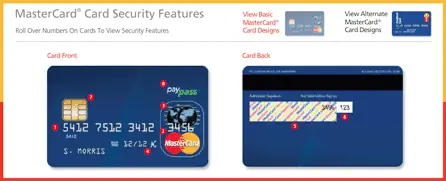
It’s Demos Page, FOUND HERE, has a flash demo that goes through the anatomy of a credit card. This helps people understand the process of using them for payments by breaking the entire item down visually. As it says in the demo, a card is more than just a piece of plastic.

Here’s a screenshot of the demo in action:


CLICK HERE to view it.

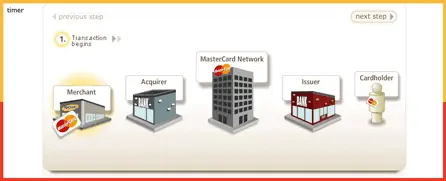
More interesting to us in the Merchant Services industry, is the next demo, the anatomy of a transaction demo. It’s a flash graphic that walks you through, step by step, a transaction. It gives you an nice journey through each step your payment takes from the moment of purchase.

Here’s a screenshot of the demo in action:


CLICK HERE to view it.

The demo page is a useful resource for any readers at all interested in how payment processing or credit cards work and should at least be thought of as an addition to one’s “favorites” tab.

Mobile Commerce

Mobile Commerce Concerns [2023 Update]

Today The Official Merchant Services Blog turns its tech-obsessed eyes once again to the Mobile Payment Solution sector. Recently, Host Merchant Services became fully mobile and able to offer a mobile payment solution for Android and iPhone devices. This expansion continues, and HMS now also provides a payment processing solution for iPads as well. You can read about the expanded HMS Services in our April 9, 2012 Blog Entry.

Mobile devices are ingrained in the lives of consumers these days. Like the recurring ad sarcastically states, the smartphone beta test is over. And people are wandering around everywhere with their phone bringing their social media, camera, and buying power with them.

Suri, the voice of the iPhone, is holding the hands of stars from Samuel L. Jackson to Zooey Deschanel, helping them manage such difficult life tasks as making gazpacho to putting off cleaning till the next day on one’s calendar.

Coming with this ingratiation into our daily lives are two key elements.

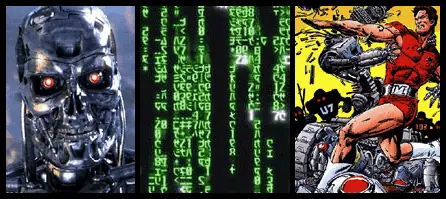
  1. We’re really just one artificial intelligence glitch/accident/sabotage away from launching the type of dystopian sci-fi worldview found in Terminator, The Matrix or Magnus Robot Fighter.
  2. We’re flying full force into a world where we’ll also start to wave our phones around like a Hogwarts Magic Wand, paying as we go from place to place, store to store.

Mobile Payments are brisk and bustling because people are buzzing to take advantage of the convenience they offer. Here’s a graphic based on data compiled by the AITE Group showing the trend in spending via smartphone in a 5-year stretch:

But it’s not all phones-n-roses. As one might expect, the state that’s home to Cyberdyne Systems and our eventual AI-overlords Skynet, has a university — the University of California — that did a study titled “Mobile Payments: Consumer Benefits and New Privacy Concerns.”

The bottom line of this study is that American consumers are still wary of what this convenient technology will bring. The study found some interesting answers to questions about consumer thoughts on their privacy.

The study found that respondents overwhelmingly oppose the revelation of contact information to merchants when making purchases with mobile payment systems and an even higher level of opposition exists to systems that track consumers’ movements through their mobile phones.

This article by Kit Eaton at Fastcompany.com dissects the numbers in the study. Eaton states that: “The numbers are stark. When asked if they thought their phones should “share information with stores when they visit and browse without making a purchase,” 96% objected to the tracking, 79% said they definitely would forbid it, and 17% said they “probably” wouldn’t allow it–meaning just 4% were indifferent or positive about the idea. When the question was instead about information sharing (phone number, address, and so on) at the actual point of sale, 81% objected to phone-number sharing–a mere 15% said they’d probably allow it and 3% definitely so. Similar figures emerged when the information shared was respondents’ home address. “

This is all well and good and you can download the study here at this link. But what the study seems to overlook is exactly how many people, many of the people most likely polled in that very study, are already well past the point of no return in terms of their privacy concerns.

Any of those who object to tracking are likely already being tracked by Google and Facebook, social media they use with ease and frequency from their smartphones.

All those who object to sharing contact information may have already shared this information easily and readily when making an online purchase in the past few years. And statistics indicate that e-commerce is booming and replacing brick and mortar in the retail sales tug-of-war.

Eaton catches on to this flaw in the study, and states in her article: “And that’s the key to unraveling this problem right there: When you do use a current-tech store loyalty card you are effectively voluntarily giving the store your personal information, and “tracking” yourself. It’s why the cards exist, of course–they’re partly there as a sales incentive, to get customers back in the door via money-off offers, but mainly so the store can collate information about customers and work out what kind of products to stock, what offers to run, and what future products to plan for.”

And Eaton even points out that in a Pew Research Survey, 71% of Americans use the internet for shopping — meaning that they’ve already typed in their personal contact information.

So essentially, Mobile Payments seem primed to take advantage of the marketplace. The worry over security is still genuine to some extent — identity theft and phasing scams and data breaches abound as we get more and more tech ingrained. But in the end, the American consumers already dove headfirst into this when they fell in love with social media. The tweets, the +1’s and the Likes have already been tracking you. So when Facebook transforms itself into Skynet, or simply when Facebook and Google go toe-to-toe with Visa in the titanic tussle for your smartphone swipes … your dollars will be as easy to find as your latest status update or check-in.

hms news merchants

HMS News: For Our Merchants [2023 Update]

Today The Official Merchant Services Blog is just going to offer a quick update on some services Host Merchant Services provides directly for its current customers. Today our site launched a page for our current merchants to go to in order to access online assistance services. There are currently two:

TRUPCI

We’ve pushed our PCI Compliance Initiative for quite some time now. Host Merchant Services goal is to make it easy for our customers to stay PCI Compliant. The details of the PCI Compliance Initiative are:

  • A Free PCI Compliance Analysis of your business by HMS.
  • A Free PCI Compliance Scan.
  • A report compiled for your business regarding its PCI Compliance issues and what it needs to do to become PCI Compliant.
  • All totaled, this is a suite of services with a $100 value that you get at no extra cost.

And finally we’ve gotten great results from the program. For our current merchants who wish to roll up their sleeves and get into the process with us step-by-step, they can go to their TRUPCI assistant.

LOGIN HERE

Additional Resources 

If you choose to process with HMS, we will also walk you through the entire procedure step by step, making PCI Compliance an easy and hassle free operation for you.

  • You can also access our PCI Compliance FAQ here.
  • And read our step by step guide to becoming PCI Compliant as a level 4 Merchant (the most common level used for PCI Compliance).

Host Merchant Services knows that your business needs secure transactions to function. And we’re here to make the process of PCI Compliance easy, understandable and consistent for you each year.

In House Gateway

We’ve also been pushing our custom designed E-Commerce packages. And part of that offer includes the in-house payment gateway that lets you run your transactions completely online.

To access the Host Merchant Services in-house Payment Gateway:

LOGIN HERE