Tag Archives: durbin amendment

Industry Terms: Debit Cards

This is the latest installment in The Official Merchant Services Blog’s Knowledge Base effort. Well we want to make the payment processing industry’s terms and buzzwords clear. We want to remove any and all confusion merchants might have about how the industry works. Host Merchant Services promises: the company delivers personal service and clarity. So we’re going to take some time to explain how everything works. This ongoing series is where we define industry related terms and slowly build up a knowledge base and as we get more and more of these completed, we’ll collect them in our resource archive for quick and easy access. Today’s term is Debit Cards.

Debit Cards

debit card (also known as a bank card or check card) A debit card looks like a credit card but works like an electronic check. The thin plastic card that provides the cardholder electronic access to a bank account at a financial institution. Payments made with Debit Cards are deducted directly from that checking or savings account. If a cardholder uses a debit card at a retail store for example, the cardholder or the cashier can run the debit card card through a scanner — oftentimes the very same terminal credit card purchases are swiped through. This action enables the financial institution to verify electronically that the funds are available and approve the transaction. Most debit cards also can be used to withdraw cash at Automated Teller Machines (ATMs).

Unlike credit and charge cards, payments using a debit card are immediately transferred from the cardholder’s designated bank account. This difference is key in one sense, as it creates a completely different set of protocols and standards for debit transactions in the payment processing industry. This can be seen most recently in the Durbin Amendment of the Dodd-Frank Act. The financial reform legislation set a hard cap on debit card swipe fees. But has absolutely no affect on credit card transactions.

For many consumers, the card they carry can be used as both a credit and a debit card when presenting it at a retail store for purchase or using it online. Oftentimes, a consumer is asked to choose between credit or debit.

For the consumer the distinction can have this impact:

  • The card’s individual rewards program can vary depending on debit or credit. In many cases, a credit transaction reaps greater points  or rewards from these types of programs.
  • A debit transaction can allow for cash back right at the point of sale.
  • A credit card transaction can have stronger protection. It takes time before it is “batched” out by the merchant. And the credit cards themselves have more fraud protection layers than debit cards typically have.

For the merchant and for the banks involved the impact is this:

  • The transaction network that the purchase is run through is separate for debit and credit.
  • The fees associated with the transaction are different. After Durbin, the fees face a hard cap ceiling on what the merchant can be charged. Credit has no such ceiling and so smaller transactions — say purchases under $10 — can end up costing a merchant a bit more in fees.

The distinction between credit and debit was stronger in the 1980s and 1990s, but it still exists. It’s worth knowing what your options are as both a consumer and a merchant.

Ending Sales Tax Discrimination [2023 Update]

Today The Official Merchant Services Blog is taking a look at a bill being debated on the U.S. Senate floor this week.  Senate Bill 1832, also known as The Market Place Fairness Act could be the cause of the next big debate in the Payment Processing Industry.

The Law of the Land

In 1992 the Supreme Court ruled in the case Quill v. North Dakota that companies without a “substantial nexus” in the state where their customer lived didn’t have to charge sales tax.  Seemingly favoring Internet companies, this ruling was actually handed down two years before the first Web browser, and three years before Amazon ever sold it’s first book.  This law still stands today, and is the precedent for online retailers not having to pay state taxes on products shipping nation wide. This new bill looks to rectify that apparent “oversight.”

The Act Itself

The Marketplace Fairness Act would pave the way for states to require online sellers from out of state to begin paying the sales tax they’ve escaped for years. Senator Dick Durbin (D-Ill.) said “The Marketplace Fairness Act would level the playing field for small businesses by allowing states — if they so choose — to treat brick and mortar retailers the same as remote retailers.” Durbin, who is sponsoring this bill, is best known for authoring the Durbin Amendment, a piece of legislation that caused much controversy in the Payment Card Industry when enacted.

The National Conference of State Legislatures estimates the lost tax revenue at $23 billion annually. Senator John Rockefeller (D-W.V.) spoke on the issue, attempting to clear up some of the confusion, “To be clear this debate is not about imposing new taxes. Instead it’s just allowing a state to collect taxes they are currently owed under existing law, but are being systemically avoided.” As another benefit to small business owners, the law would only apply to business processing more than $500,000 annually.

Amazon Action

Amazon has been the most vocal in its support of the Marketplace Fairness Act since it’s introduction last year. Speaking before a congressional hearing, Amazon VP of Global Public Policy Paul Misener told lawmakers that the bill would facilitate the collection of one kind of tax that is already due, but goes largely unpaid.  Supporting the argument that it is not a new tax increase.

Opposition

Senator Jim DeMint (R-S.C.) published an op-edin the Wall Street Journal entitled “No Internet Taxation Without Representation.”  In the piece DeMint argues that citizens should not be taxed by governments in which they have no political voice — in this case states where they or their company are not physically based.  I would argue that this is a cost of interstate commerce, which has been reborn as interstate e-commerce.

DeMint does have a point when he mentions the nearly 10,000 state, local and municipal tax jurisdictions businesses would have to comply with nationwide.  He forgets to mention, however, that businesses have access to advanced tax software, such as TaxCloud, which can easily compute the sales tax for any state.

The Verdict

Here at The Official Merchant Services Blog, we see the potential savings this offers to the owners of small businesses nationwide.  The Marketplace Fairness Act provides an incentive for states to simplify their sales tax laws, as well as increase revenue from the ever-booming e-commerce industry. Hopefully this will decrease the sales tax burden shared by many small businesses. It simply makes it much easier for millions of business owners — and in turn the states — to collect the taxes already due. Only time will tell how much impact this legislation will have on e-commerce and credit card processing. We will stay on top of any new developments on this law, and how they affect you.


The Big Cash Comeback?

Today, The Official Merchant Services Blog is going to tackle a big picture topic in the world of credit card processing. Two weeks ago there was a proposed settlement of a lawsuit against Visa Inc., MasterCard Inc. Lawyers involved in the case claim it is the largest antitrust settlement in U.S. history. The card companies agreed to pay more than $6 billion to settle lawsuits from retailers claiming that the card issuers engaged in anti-competitive practices.

The July 13 settlement proposal — which still needs the OK by a judge — has stipulations that drop requirements that retailers charge the same price for cash and credit purchases. This opens the way for millions of businesses to add checkout fees when customers pay with plastic. In short, the settlement lets retailers push the cost of swipe fees off of them and onto the consumer directly.

A Paradigm Shift

This decision has really started to hit home for me personally. Just last week I was in the emergency room at Christiana Hospital waiting for a family member to be admitted. I got there around 5 a.m. and was in a rush so didn’t really bring much of anything with me. Hours later, I was hungry and in need of a snack. And I didn’t have any cash on me. But the vending machines at this hospital are state of the art. Which means they have fully equipped credit card swipers, allowing you to purchase snacks from them without pocket change or single dollar bills. That realization hit home with me as I noted both the power of credit card processing to be present in all aspects of my own life, and just exactly how much closer we’ve really gotten to being a cashless society. One of the last holdovers from the previous generation’s use of coins — vending machines — were now accepting credit cards. It was convenient and really helped me out in a time where I was far too worried about everything but having cash on me.

Cash Still Rules

But then came this settlement, and a quick reminder of the Wu-Tang Clan credo: Cash Rules Everything Around Me (C.R.E.A.M.). This decision will do two things:

  1. It will allow merchants the power to offset their processing fees in a very direct fashion that gives them control and power.
  2. It will give the consumers themselves the incentive to start using cash again.


That first bullet point is good for the credit card processing industry as it allows merchants to feel more in control of their business and lets credit card processors offer more attractive savings directly to potential merchant accounts. But that gets offset by the second bullet point, as the consumer is then the direct decision maker on the purchase and has the power to affect the entire credit card processing industry by not using the plastic at all.

So Something’s Gotta Give, Right?

This boils down to an issue of convenience for the consumer. Plastic has always been the more convenient option. It’s easier to carry around than cash. And with a huge push still being made by Mobile Payment Processing Technology to make it even easier than plastic, cash still seems like it can be on the way out as we still careen quickly toward a cashless society.

But when faced with a choice between using cash and saving money, or using plastic and taking the hit on added surcharges directly, there will be a lot of consumers who will gladly switch back to cash. It won’t be that hard an adjustment to ease back into one’s daily life for shopping habits.

But, E-Commerce

The thing is, though, there’s still a really big chance these surcharges are going to hit consumers hard as too much advancement has been made in the technological infrastructure of a cashless society — namely the rise of e-commerce. Consumers today have taken to shopping online, and all of those sales utilize a credit card. A Rasmussen Reports poll in April 2012 showed that 43% of Americans said they have gone through a full week without paying for anything in cash or coins. And The Official Merchant Services Blog has reported avidly on how pervasive and commonplace online shopping has become for the typical U.S. Consumer. A move back to cash may simply not be all that effective now that people are used to the convenience and control that online shopping — and mobile shopping — provides.

Don’t Forget Durbin

This decision is the second major event concerning limitations placed on swipe fees in credit card processing. Last year the Durbin Amendment to the Dodd-Frank Act took effect. This amendment placed a hard cap on debit card swipe fees. And it’s affect is still rippling through the payment processing industry as big banks, the credit card associations, and processors all try to figure out ways to recoup the billions of dollars in projected losses that stem from having the swipe fee capped at 24 cents or so.

The one thing we can learn from the Durbin Amendment, however, is that the use of convenient swiping that debit cards provide has not been ground to a halt by Durbin, and e-commerce is still booming. It seems unlikely that this settlement concerning credit card swipe fees will curb the growth of e-commerce to the point where we take a huge step back into a cash-filled society.


Mastercard Credit Card 19100982

MasterCard Site Tools

Today The Official Merchant Services Blog takes a close look today at card association juggernaut and industry titan MasterCard. A card association is a network of issuing banks and acquiring banks that process payment cards of a specific brand, and along with Visa, MasterCard is one of the big wigs in the industry — Card associations Visa and MasterCard each comprise over 20,000 card issuing banks.. They help set the standard for the payment processing industry. Other payment card association brands include Discover, Diner’s Club, American Express and JCB. Among United States consumers alone, over 600,000,000 payment cards are in circulation. Visa, MasterCard and American Express issuers co-brand with the individual card association, for example, “WellsFargo-Visa” or “Citi-MasterCard.”

Making Moves

It was reported here in our May 4, 2012 Blog Entry, that MasterCard was gaining ground in the Swipe Debit sector of revenue, potentially crowding in on Visa’s dominance.  Speculation suggested that the hard cap on Debit Card Swipe fees imposed by the Durbin Amendment from October 2011 may have helped MasterCard take some of that market share away from Visa.

MasterCard has been winning deals to handle processing of debit transactions according to the company’s Chief Financial Officer Martina Hund-Mejean. Bloomberg quotes Hund Mejean as saying in a conference call to analysts: “In every quarter we’re going after business very surgically and opportunistically. You can see those results in our numbers.”

And according to Tien-tsin Huang, a JP Morgan Chase & Co. analyst in a May 1 research note, Bank of America Corp. — the biggest debit-card issuer and catalyst of post-Durbin media frenzy — switched to MasterCard.

Mastercard Credit Card 19100982

Collaboration on Chip Cards

On May 21, MasterCard proposed the formation of a cross-industry group to foster collaboration and alignment between networks, issuers, merchants, acquirers, processors, terminal manufacturers, card manufacturers and other groups for the implementation of EMV technology in the United States. This proposal comes from MasterCard’s January Roadmap for the transition to EMV, something the entire credit card industry is moving toward including Visa and which we discussed in our February 7, 2012 Blog Entry. MasterCard emphasized this need for a payments ecosystem to be fully aligned across the board, citing the upcoming implementation of EMV standards in the U.S. as the catalyst for that need.

You can read more about MasterCard’s take on EMV at their Website Here.

MasterCard’s Web Site Tools

Speaking of their Website … MasterCard has a very useful resource available to its visitors.

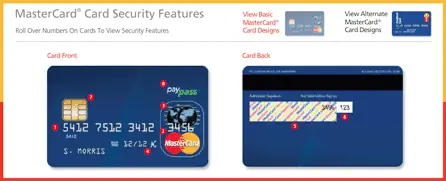
It’s Demos Page, FOUND HERE, has a flash demo that goes through the anatomy of a credit card. This helps people understand the process of using them for payments by breaking the entire item down visually. As it says in the demo, a card is more than just a piece of plastic.

Here’s a screenshot of the demo in action:


CLICK HERE to view it.

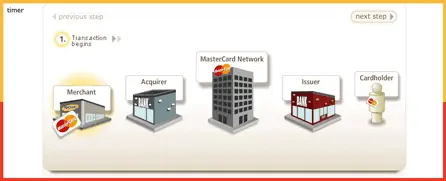
More interesting to us in the Merchant Services industry, is the next demo, the anatomy of a transaction demo. It’s a flash graphic that walks you through, step by step, a transaction. It gives you an nice journey through each step your payment takes from the moment of purchase.

Here’s a screenshot of the demo in action:


CLICK HERE to view it.

The demo page is a useful resource for any readers at all interested in how payment processing or credit cards work and should at least be thought of as an addition to one’s “favorites” tab.

Debit, Merchants and Durbin

Today The Official Merchant Services Blog jumps feet first into an update on everyone’s favorite payment processing industry-focused legislation, the Durbin Amendment. We’ve covered the topic extensively since the blog began. You can read the Host Merchant Services in-depth and official analysis of the legislations itself by CLICKING HERE.

The legislation took effect October 1, 2011. With May beginning its seventh month of officially being on the books, some studies on its impact are starting to come to light.

CardHub’s Interchange Fee Study

According to a study released by Card Hub, the Durbin amendment will cost big banks $8.06 billion and smaller banks $329.4 million on an annual basis. The study, FOUND HERE, also notes in its 2012 impact assessment that the interchange fees charged by large banks (those with more than $10 billion in total assets) have decreased significantly since the Federal Reserve’s interchange fee cap took effect – falling 59.3% for signature transactions and 32.4% for PIN transactions.

The CardHub study is a work in progress and has been updated multiple times with new information as the Durbin Amendment made its way through Congress and ultimately took effect on October 1, 2011. On May 1, 2012 the Federal Reserve for the first time announced hard data on the law’s practical effect, and Card Hub’s 2012 Impact Study concluded that the law has ended up costing banks almost $8.4 billion on an annual basis.

Speaking of the Fed …

The Federal Reserve released statistics on May 1 summarizing the Durbin Amendment’s actual affect on the banking industry through the first six month’s of the law’s existence. The central bank found that in those six months of Durbin’s controversial cap on debit swipe fees being in place, banks subject to the cap saw their average fees drop by 45 percent. This makes some very simple mathematical sense when you consider that prior to Durbin the average fee was 43 cents per transaction, and Durbin itself set a hard cap of 21 cents and 5 basis points — essentially coming out to a 24 cents per transaction upper limit. The only wiggle room on the entire process is found in small banks, who are not subject to the hard cap, but those banks, according to the CardHub study only account for 15 percent of the total market share, so their variance will only have a small impact on the data. And as noted in the Federal Reserve’s data, small banks have held steady with their interchange fees on swipe debit, keeping them at the pre-Durbin height of 43 cents per transaction average.

S&P Releases a Study As Well

Standard and Poor’s released its Durbin Amendment Impact study as well, titling it “U.S. Banks are Changing Their Strategies to Mitigate The Financial Impact Of The Durbin Amendment.”

You can read the study at THIS LINK HERE. The basics of the study echo much of what Host Merchant Services‘ analysis predicted last year.

Essentially banks are going to make up the loss incurred by the hard cap in other areas. They are already well on their way to cutting out special programs and offers such as free checking and subsequently raising fees and instituting new fees into their services throughout their bank’s offerings. In short, banks simply moved the fees to other things consumers have to pay for.

The study concludes: “The Durbin Amendment has affected the financial industry in a number of ways, but perhaps not in the ways legislators intended. The benefits to consumers seem largely negligible as banks have sought other ways to generate revenue or cut services.”

Fuel is the Fire

Added to the 6-month impact studies, the Durbin Amendment also popped up into the news at the end of April due to a bold claim made by the Electronic Payments Coalition: Gas retailers were pocketing $1 billion in windfall from the Durbin Amendment and not passing any savings on to consumers. The math behind this claim is not nearly as direct as the headlines made it out to be. So follow along on this. According to the EPC:

  1. The Durbin amendment to Dodd-Frank legislation has seen interchange rates slashed by about 70% for debit card payments for fuel.
  2. With high gas prices likely to play a major role in this year’s presidential elections, the EPC commissioned research from Phoenix Marketing International on the prevalence of debit card use at the pump.
  3. A poll of 5166 consumers shows that 36% of all payments for fuel are made with a debit card – half of all non-cash transactions. The debit card share of both transactions and dollars is higher than any other payment method.
  4. With US Energy Information Administration figures showing that nearly 134 billion gallons of gas were sold in 2011, this means that approximately 48 billion gallons were purchased using debit, claims the EPC.
  5. Yet, despite the $1 billion a year this gives merchants “there continues to be no evidence that retailers are passing along savings,” according to the EPC.

That’s a bit of a leap. Using data from about 5,200 people in a poll and then tying it into the full figures from the US Energy Information Administration on fuel consumption ties two pieces of data together in a relationship that is not a direct connection.

CLICK HERE to view the full Phoenix Marketing Report.

Not so Fast

The National Association of Convenience Stores (NACS) and the Petroleum Marketers Association of America (PMAA) strongly condemned the findings of the EPC report. Both organizations claim the data is seriously flawed.

The NACS replied to the EPC report in multiple media outlets, stating the EPC the study is based on simple arithmetic that shows a lack of understanding about what causes high fuel prices and whether retailers even profit from them. NACS spokesman Jeff Lenard said: “When prices rise, retailers usually cut margins because they want to remain price competitive even if their wholesale costs increased. Data from OPIS shows that the average national markup (gross margin) for gas was 13.0 cents per gallon over the first quarter of the year. We estimate that expenses to sell gas are around 15 cents per gallon, so average retailers experienced an entire quarter where they lost money selling gas.”

Lenard also cited the NACS Fuels Report for 2012 as showing consumer price sensitivity with gas purchases, saying that consumers are aware of discounts and have used them. You can read that Fuels Report at THIS LINK HERE.

In Conclusion

Six months into the Durbin Amendment things are shaping up much like Host Merchant Services predicted. The legislation remains controversial, but that is largely due to the way the legislation was written with large enough loopholes for the banks to easily adjust to the restrictions of the reform. The gas price gouging story seems more sensational sizzle than quantitative substance. Proving that gas prices remain a hot button political talking point in election years, but the whole issue, to us here at Host Merchant Services, seems to be blown out of proportion when you consider that credit cards get used at the pump and they are not subject to any reform legislation currently.


Visa’s Ups and Downs

The Official Merchant Services Blog takes a look at Visa’s wild ride between May 2 and May 3. In the midst of a very active first quarter of 2012, Visa’s earnings report came in. The San Francisco based credit card giant then took a ride on a roller coaster in the span of two days after the report was released.

The Up Vote

The company had good news to report on May 2: Visa said Wednesday that its profit for the first three months of the year was up 30 percent from the year before, primarily because credit card use rose in the United States and overseas. Bloomberg broke down some key statistics from the report in their story here: “The company said Americans rang up 12 percent more on their charge cards for the quarter. Debit card use grew by only 4 percent to $284 million, however, the slowest growth in a year.”

So the boost in Visa profits is tied to an increase in the use of credit cards in the first three months of the year. But it appears the Durbin Amendment, financial reform legislation designed to address problems with swipe debit fees, has slowed down debit card use. As the Bloomberg article reports, the Durbin Amendment appears to be having an impact on profits: “Banks have eliminated some debit card rewards programs since October, when the government limited the fees banks can charge stores for card transactions.”

The profit breakdown for the quarter paints a very rosy picture. Visa’s net income was $1.3 billion, or $1.60 per share. Wall Street was expecting $1.51. Revenue rose 15 percent to $2.6 billion. Wall Street was expecting $2.48 billion.

The Down Turn

And then the roller coaster ride took a dip. Bloomberg reported the next day, May 3, that Visa stock took a decline based on the details of a U.S. Antitrust Probe into Visa’s Debit Strategy. The article states: “Visa Inc., the payments network that has lost market share amid new debit-card rules, slid as much as 4.5 percent in extended trading after disclosing a U.S. antitrust probe into the firm’s pricing and strategy.”

Visa adjusted the network’s fee structure to defend its leading market share after the Durbin Amendment took effect in October. On March 13, the U.S. Justice Department’s antitrust division issued a civil investigative demand asking for information about Visa’s debit strategy. Bloomberg quotes Visa Chief Executive Officer Joseph W. Saunders as saying in a conference call: “We are confident our actions are appropriate and that our response to the DOJ supports that.”

According to Saunders Visa has received four other requests for information from the Justice Department since 2007, and all have been resolved with Visa’s full cooperation.

The Durbin Factor

The Visa news comes after recent announcement from MasterCard, which stated that their own first-quarter profit increased 21 percent to $682 million. Like Visa, MasterCard’s profits also beat Wall Street estimates.

Speculation suggests that the hard cap on Debit Card Swipe fees imposed by the Durbin Amendment from October 2011 may have helped MasterCard take some market share away from Visa. MasterCard has been winning deals to handle processing of debit transactions according to the company’s Chief Financial Officer Martina Hund-Mejean.

Bloomberg quotes Hund Mejean as saying in a conference call to analysts: “In every quarter we’re going after business very surgically and opportunistically. You can see those results in our numbers.”

And according to Tien-tsin Huang, a JP Morgan Chase & Co. analyst in a May 1 research note, Bank of America Corp. — the biggest debit-card issuer and catalyst of post-Durbin media frenzy — switched to MasterCard.

Visa’s Fees Bite Back

Visa changed its debit-card fees in April, creating new fees like the Fixed Acquirer Network Fee (FANF) in an attempt to create incentives for merchants to route more transactions on the company’s network. The fees, which had been variable were broken into various components. To read more about those fees, you can CLICK HERE to see Host Merchant Services‘ own coverage of the April fees. The Bloomberg article suggests that Bank of America switched to MasterCard in reaction to the new Visa fees and MasterCard’s own surgical strike against Visa’s market share.

Visa, MasterCard Add New Fees

The Official Merchant Services Blog has just learned that Visa and MasterCard are planning to add new processing fees in the coming months — fees specifically targeted toward Debit Card Swipe transactions. These new fees, which we are consolidating and dubbing as “Card Association Fees” are going to complicate the pricing process for Merchant Services Providers in 2012.

Tricky Fees

Visa, MasterCard and Discover are the main players in the “card associations” and they are the driving force behind interchange and interchange rates. These associations periodically review and modify their interchange rate structures and billing strategies. What this means is that normally each year the big credit card companies get together and increase interchange rates. But after the Durbin Amendment went into effect in 2011, the credit card associations are taking pause and tweaking their own strategy. So effective April 2012 there are new Card Association Fees being implemented and these fees are not interchange fees. These are brand new processing fees created by the associations.

Visa’s New Fees

Visa has announced that beginning April 1, 2012, it will be introducing a trio of new fees:

  • A Transaction Integrity Fee
  • Revisions to its Network Acquirer Processing Fee
  • A Fixed Acquirer Network Fee (FANF)

Transaction Integrity Fee: Visa’s Transaction Integrity Fee is a new $0.10 fee that will apply to U.S. domestic regulated and non-regulated purchase transactions made with a Visa Debit card or Visa Prepaid card that fail or do not request Custom Payment Service (CPS) qualification. The CPS rates are Visa’s best rates and apply to both regulated and non-regulated transactions. This new fee can be viewed as a definite response from Visa to the Durbin Amendment’s interchange rate cap and finance reform/regulatory changes.  This is part of the ninja-style set of moves The Official Merchant Services Blog has cited would be the reaction to the Durbin Amendment.

Network Acquirer Processing Fee: The Network Acquirer Processing Fee on Visa-branded signature debit will be reduced — going from $0.0195 per authorization to $0.0155 per authorization. The fee for credit card authorization will remain $0.0195 per authorization.

Fixed Acquirer Network Fee: FANF will apply to the acceptance of all Visa-branded products and is based on both the size and the number of merchant locations. The FANF fee will be based on volume reported in July 2012. Visa will require U.S. acquirers to provide new merchant location reporting for the tracking of this fee. The new reporting requirements will include a monthly breakdown of acquired merchants, number of merchant locations, and merchant sales volume by merchant Taxpayer ID. For Card Present merchants, with the exception of Fast Food Restaurants, a merchant Taxpayer ID with physical locations will be assessed FANF on a per-location rate basis. For example, Card Present Merchants with one to three locations will see a pass through per location per month fee of $2. Price per location per month will increase according to the number of locations – upwards of $65 month for merchants exceeding 4000 locations. Card Present High Volume MCC Merchants with one to three locations will see a pass through per location per month fee of $2.90. Price per location per month will increase according to location — upwards of $85 month for merchants exceeding 4000 locations. Customer Not Present, merchant aggregators and merchants primarily operating as Fast Food Restaurants (MCC 5814) will be assessed based on gross merchant sales volume originating from any Visa-branded card. Merchants that fall into this category with monthly gross sales volume ranging from less than $50 a month on the low end will see a $2 a month fee- to merchants with gross sales exceeding $400 million at a $40,000 a month fee. There are some 18 tiers, with a merchant falling into a volume tier of $8,000 to $39,999 a month seeing a new $15 per month FANF fee.

Visa will also effectively waive the FANF for eligible Charitable and Social Service Organizations (MCC 8398). The FANF waiver for Charitable and Social Service Organizations will be provided through a quarterly rebate process that Visa has indicated will be defined at a later date.

Continue Reading – Visa, MasterCard Add New Fees, Part 2 

Durbin Amendment Fallout

Today The Official Merchant Services Blog offers a really quick update on the fallout from The Durbin Amendment. You’ll recall Host Merchant Services offered a thorough analysis of the legislation before it took effect.
Much of the current media coverage for this topic revolves around something we predicted in that analysis: “The banks, not wanting to take a $9 to $10 billion dollar loss in revenues for the year, will simply add fees to other payment options or get rid of premiums and extras that they had been offering.” We also stated: “Higher fees on checking accounts and the removal of debit card rewards programs were suggested as a response banks would have.”

Banks Lead the Charge With New Fees

This article from twincities.com reports pretty much what we’ve been reporting about the response banks are having with the Durbin Amendment. The article, dubbing this strategy as Bank Fees 2.0, states: “Three months after banks scrapped plans for debit card fees, it’s becoming clearer how they intend to recoup money lost in the Dodd-Frank financial reform law. Instead of one new fee, prepare to be sold more products, offered new service packages, lose debit rewards and face more fees in general.”

This creditcards.org article reports the same: “So [the banks] enter 2012 chastened … and still facing a revenue gap. How are they going to make it up?  In fees, of course!  Just not the fees you were expecting. The Bank of America mess taught them a lesson; trying to unilaterally slap all their customers with a new fee is going to end badly, especially in the current climate, where the man on the street is hopping mad about big bank behavior.  So instead, they’re going to be sneaky about it.”

The article then offers a checklist of fees that could be forthcoming.

  • Minimum Balance requirements to increase for formerly free services such as checking accounts.
  • Penalty fees to go up.
  • One-time service fees — such as for opening a safety deposit box, or taking out a money order — to go up.

And then finally The Baltimore Sun offered this article which states that banks plan to add a wide variety of fees to help offset the losses from the Durbin Amendment. The article states “There are nearly 50 different fees consumers can wind up paying, depending on the services they use and how they use them, according to some consumer advocates’ latest estimates.” The article then quotes Alex Matjanec, co-founder of MyBankTracker.com, a consumer-finance information website describing the fees, “Most of these fees are not the in-your-face charges, such as the debit-card fee that caused the big uproar. Many are flying under the radar. But they could have a big long-term effect on your money if you aren’t paying attention.”

The sneaky fees were something we covered in The Official Merchant Services Blog entry on November 16, 2011: “Banks are now going ninja style with their plan of action. Sneaky fees hidden and peppered about their services. All combining to help make up the ground they were going to lose. But most of them deposited around their whole suite of services that it is much harder to latch on like a pit bull and berate them for doing this.”

Big Bank, Big Losses

The losses that banks need to make up are starting to come in and be reported. It was predicted they would be in the billions, and the latest analysis of fourth quarter earnings reports state that right now it’s about $6 billion in loss. The two largest banks handling these types of transactions — Bank of America and Wells Fargo — equal roughly $800 million of that loss. Here is an infographic breaking down the four biggest banks and their fourth quarter losses from the Durbin Amendment cap:

payment processing

Payment Processing News Roundup [2023 Update]

Today The Official Merchant Services Blog is going to give you a roundup of the latest news that is affecting merchants and payment processing. Our goal is to keep you informed and up to date on all the important news developments in the industry. Armed with that information you can make the decisions and the moves to keep your business ahead of the curve. The news roundup today focuses mainly on The Durbin Amendment and its continued impact on consumers, merchants and processors. The Durbin Amendment will continue to have a major impact on processing throughout 2012, and we’ll continue to keep you abreast of the topic.

Durbin Reactions

The first story we bring you is from the Los Angeles Times and it’s about the fallout from the Durbin Amendment. The article, found here, states that by the end of last year 610,000 U.S. bank customers switched to a switched to a smaller institution to protest plans by major banks to impose monthly charges for using debit cards. The article says the data was reported by Javelin Strategy & Research in a report and that the 610,000 figure represented 11% of the overall 5.6 million people who switched banks in that time period. The article also noted that: “In addition to the 11% who joined the Bank Transfer Day movement in October, November and December, an additional 26% told Javelin that they switched not as part of the protest movement per se but because the banks charged too many fees.”

Host Merchant Services Predictions Confirmed

The next news item we’re reporting is from The Denver Post. In this article the Post reports pretty much exactly what Host Merchant Services predicted would happen in its Durbin Amendment Analysis article.

The Denver Post writes: “Instead of one new fee, prepare to be sold more products, offered new services, lose rewards and face more fees in general.”

In the HMS Article from 2011, we wrote: “Merchants will end up having to shoulder the burden of the extreme cuts in revenue that this cap brings. Those who predict that merchants will end up worse off by the amendment suggest that the banks, not wanting to take a $9 to $10 billion dollar loss in revenues for the year, will simply add fees to other payment options or get rid of premiums and extras that they had been offering merchants prior to the cap being put in place.”

So essentially the Denver Post reports that the banking industry is reacting as expected to the Durbin Amendment. We even did an entire blog making the statement that the banking industry was going to go in stealth mode like a ninja.

The Denver Post article also gives a recounting of the tale of the Durbin Amendment as it took center stage in the media spotlight. This entire tale was chronicled as it happened by The Official Merchant Services Blog both in its Countdown to Durbin Series, as well as its ongoing Durbin Coverage after the October 1, 2011 date that saw the bill’s provisions begin. The Denver Post recap is succinct and states: “Several other banks already had either imposed debit card fees or were testing them, and analysts had predicted the trend would spread to the entire industry. But BofA’s plan, which leaked out at the end of September, produced an enormous surge of criticism. Protesters from the Occupy movement, consumer advocates and even President Obama questioned the move, and an online movement called Bank Transfer Day emerged to encourage people to switch to small  banks and credit unions. Bank of America ultimately called off its plans without imposing the $5 charge, and the rest of the industry followed suit in allowing fee-free use of debit cards.

Durbin Going Bye Bye?

The final piece of Durbin-related news comes to us from payment processing review site cardpaymentoptions.com. In this article, they give an extensive roundup of their predictions for 2012 — and one piece is sub-titled “Durbin May Get the Boot.” The article states the Durbin Amendment was originally designed to help merchants deal with high swipe debit card transaction fees, but now that it’s been in effect merchants are feeling the legislation has harmed them. The article specifically cites merchants getting hit with much higher for small ticket transactions — a noted loophole in the law that many media sources criticized while the amendment was still being discussed by Congress.

The article then makes this bold prediction: “Several retail organizations have brought suit against the Federal Reserve in order to repeal/modify the amendment and even the main author, Dick Durbin, has admitted the new law is flawed. With such disastrous results, merchants should expect to see the Durbin Amendment either repealed or greatly modified this year.”

The Official Merchant Services Blog has reported on a few of these suits as they’ve come up. And the backlash against Durbin has been significant. But with the election about to be in full swing it seems, to us at least, that the Durbin Amendment may continue to kick around for 2012. In fact, we’ve also reported that there is growing interest in a similar cap on credit card processing fees, swinging things even further in a direction that will burden consumers and incur ire with the banking industry. It just seems like it will be a lot more difficult to get rid of Durbin after it’s started and that the path of least resistance for Congress on this issue will be to continue to add to the law with more tweaks and changes, making it even murkier and over-legislated. That’s more the federal government’s style.

What do you think? Will 2012 see the end of the Durbin Amendment and the great experiment that was finance reform for payment processing fees? Or will the federal government just try to keep working with the law they have in place trying to smooth it out?

Durbin Amendment Back In the News [2023 Update]

The Official Merchant Services Blog returns to a topic that it covered thoroughly throughout 2011: The Durbin Amendment. With the Stop Online Piracy Act getting most of the headlines lately, Durbin Amendment’s continued impact on the payment processing industry has gone into stealth mode. Until today that is. Stick with us as we offer a whirlwind roundup of all things Durbin related.

Bank of America Took a Beating

We’ll start off our tour Durbin tidbits with this article by ABC News. Apparently Bank of America took a substantial hit from their plan to charge $5 per month to use debit cards. According to the article: “Bank of America’s failed plan to impose a $5 monthly debit card fee led to a 20 percent increase in closed accounts in the last three months of 2011 and a public relations headache.”

The article quotes Bank of America CEO Brian Moynihan as saying, “yes, we had some impact from the $5 debit fee. That’s why we made a decision to reverse it.”

It wasn’t all bad news for Bank of America though, as the bank reported earnings of $2 billion in the last three months of 2011, up from a net loss of $1.2 billion in the same period a year ago, boosted in part from a one-time gain on the sale of China Construction Bank.

Small Lenders Strike it Big

The next little bit of Durbin aftermath comes from this article by NACS online. As was seen in the Host Merchant Services in-depth analysis of the legislation, The Durbin Amendment only applies to lending institutions with assets over $10 billion. Smaller banks and credit unions are exempt from the Durbin Amendment. As a result of being exempt, a Wall Street Journal report cited by the NACS article states that these institutions have been “collecting fees that are often three times those imposed on cards by large banks.” 

For comparison, the article says: “The WSJ notes that a $100 sweater purchased with a debit card would incur a fee of 95 cents on a card issued by a smaller bank and only 26 cents for those issued by big banks. “

The article also suggests that banks face further uncertainty by April 1, 2012, when “all U.S. banks and credit unions must offer retailers more choices of companies used to process debit card transactions, a move that is expected to lower interchange fees further.”

New Target: Credit Card Swipe Fees

Time Magazine Online Feature Moneyland reports something that Host Merchant Services has already touched on before in The Official Merchant Services Blog — that Credit Card Swipe Fees may be the next target of legislators and financial reform. From the Time article: “There’s another interchange fee fight in the offing — this time over credit cards. According to CNBC, equity analysts who cover the financial sector have expressed worry that ongoing litigation involving several major banks could lead to a cap of 0.5% on credit interchange fees — one-fourth of what’s currently charged — potentially dragging down bank earnings. If that happens, consumers who are used to generous credit card rewards programs complete with double miles, accelerated earnings, and big sign-up bonuses might get a rude awakening.”

The Official Merchant Services Blog on December 13, 2011 covered the topic of a Credit Card Swipe Fee. In that blog we wrote: “the plan would end up working much like the Durbin Amendment has worked. Where the idea of reform would get overshadowed by how banks and credit card companies reacted to the law. There would be some shifting, so in that sense the reform would cause change. But that eventually the burden for paying for any losses that banks and credit card companies get forced into through reform would end up squarely on the shoulders of the consumers.”

The Time article notes something that Host Merchant Services already pointed out regarding a Credit Card version of the Durbin Amendment — Banks would take another huge hit because Durbin has language that freed up banks and merchants to market and promote options to the consumer directly. In short, Durbin’s language freed merchants up to promote credit over debit. And because of that, a lot of merchants did just that as Banks offered new programs to make credit the more attractive choice. Subsequent changes that would now penalize Banks for doing that would create a lot of negative momentum for Banks and added onus for consumers who get stuck with no good choices overall.

New Hampshire Law

This article from credit.com reveals that one state legislature is already making moves to see a Credit Card Swipe Fee Cap become reality. As the article states: “A piece of legislation introduced in the New Hampshire House of Representatives, House Bill 1319, has drawn some attention for the way in which it would drastically alter the credit card landscape between businesses and payment processors. The law will limit the amount banks chartered within the state are able to charge businesses for processing credit card transactions to just 1 percent of the total purchase value.”

The article goes on to state that many businesses pay costs that range from 0.67 percent of the transaction’s value to 4.76 percent and that a MasterCard spokesperson told the Nashua Telegraph that the average 1.75 percent.

Cash Still Rules Everything Around Me

Our last news brief on the topic of the Durbin Amendment and swipe fee caps is a little different. This article from the Huffington Post shows a study that reveals cash is still king. The gist of the article: “More than three-quarters, or 79 percent, of consumers said they made a cash purchase in the last seven days, according to a report released on Tuesday from Javelin Strategy & Research, a market research group for financial services. Compare that to about 65 percent of credit and debit cardholders who say they swiped their plastic in the last week.”

The article suggests that this is a consumer reaction to card swipe fees. The article states that consumers are choosing to pay for items with cash to avoid fees on small, everyday purchases. The convenience of plastic gets overrun by the savings consumers perceive they get from going back to cold, hard cash. The study indicates that cash is replacing debit for small purchases, and credit is replacing debit for big purchases and the Durbin Amendment’s lasting legacy may simply be that it pushes Debit out of the consumer’s arsenal of payment options.