Tag Archives: Digital sales

yum brands logo 99912309

Yum Brands Acquires “Chat Commerce” Company Tictuk to Boost Digital Presence

The Louisville-based Yum Brands company operates various prominent fast food and quick-service restaurant chains worldwide. The company owns the KFC, Taco Bell, and Pizza Hut brands alongside a few others. The entity remains one of the world’s top food business organizations around, and it is continuing to grow thanks to its recent acquisition of the “chat commerce” company Tictuk.

Tictuk is a software startup that produces a platform that helps people engage with brands. People can place orders with these brands through various messaging platforms. These include connections with WhatsApp, Facebook Messenger, Telegram, and different SMS-based systems. The setup helps people interact with the company for many intentions. It reviews customer behaviors and creates new marketing options and promotional efforts based on what people are interested in, helping businesses attain better overall sales.

Yum’s acquisition of Tictuk comes as part of the company’s efforts to use technology to build its business operations. Yum also acquired the AI analytics company Kvantum, giving Yum access to a platform that creates customer behavior models to establish marketing insights.

Yum has also seen a rise in digital ordering activities as of late. Yum saw a rise of 45 percent in digital sales in 2020, equaling a total of $17 billion. The effort comes as Yum’s digital ordering tools are being refined and have become more accessible. Increased demand for online interaction and orders have helped place Yum in a positive position. The acquisition of Tictuk will help Yum in retaining the newfound digital business it has gathered this past year.

Yum also sees an ongoing rise in its stock value as the news evolves. The stock, which trades on the New York Stock Exchange under the YUM symbol, has gone back over the $100 mark after struggling to stay there in late 2019.

What Is Tictuk?

Tictuk is a privately-held company from Tel Aviv that was formed in 2016. Tictuk produces a conversational commerce program that lets users complete their orders with different companies and other brands. Customers can interact with these brands through various social media and chat channels, digital apps, and other programs. Tictuk supports communications through Facebook Messenger, WhatsApp, QR codes, SMS, and many other activities.

The online ordering program from Tictuk supports various engagement-based solutions, including marketing-based activities. Tictuk uses intelligent marketing to review customer behaviors and to create new messages and promotions based on what people might respond to the most. The effort entails promoting things that individual customers might be more interested in, including items that are potentially more viable.

An entity can use Tictuk by joining the program, uploading one’s catalog of products or services, and utilizing the interface provided to integrate with the Tictuk API. The system provides a flexible approach that can integrate with other items in moments.

Tictuk’s platform integrates with POS setups and other payment systems. It can work for pick-up, dine-in, and delivery services alike. It can also work with smartphones and tablets alike, giving businesses more control and access to their customers.

Tictuk is most commonly associated with online food ordering, but it can also be utilized for other applications. Tictuk promotes itself for ecommerce, instant checkout, and product delivery services.

In addition to boosting customer engagement, Tictuk also increases the likelihood of sales conversions. It reduces the risk of abandoned shopping carts, plus it can retarget customers based on what they purchase or what they’re interested in the most. The live order monitoring system also reviews how customer behaviors work, what interests people hold, and many other points of value, making it easier for them to handle transactions and other activities in moments.

Currently Used At Yum Spots

Yum has been using the Tictuk platform in some of its locations to gauge customer activities and review what they are managing in many forms. The company uses Tictuk in about nine hundred KFC, Taco Bell, and Pizza Hut locations outside the United States. Yum will expand Tictuk’s reach and bring it to more countries soon. The timing for when it will reach the United States remains unclear, but the effort may be inevitable at this point.

Further Growth For Yum

Yum is expected to continue growing, especially as it expands its reach and acquires more restaurants and develops more appealing ideas for marketing. The Tictuk investment is part of its ongoing plans. Yum has been expanding its reach in many countries and has experimented with various fast-casual and quick-service restaurant concepts. The company also acquired the Habit Burger Grill chain in 2020, giving Yum nearly 300 fast-casual hamburger locations and drive-thru spots for ordering. Most of these sites are in California, but it also has a presence in twelve other states, China and Cambodia.

Yum also acquired the Kvantum AI insights company for additional help. Kvantum focuses on building unique sales opportunities and supporting the right media budgets for promotional purposes. Part of the work entails monitoring customer behaviors and identifying trends in different geographic areas and cases where menus and promotions start changing.

Ongoing Competition

Yum’s acquisition also comes as other companies have been leveraging technology to grow. Domino’s has recently partnered with the machine learning company Datatron to identify marketing potentials and to create personalized promotions for customers. Other companies are using AI-based analytics to personalize loyalty programs and other offers. For example, El Pollo Loco uses AI programs to review the rewards it offers and to provide unique options for regular customers to enjoy.

The work Yum is putting in with Tictuk will help keep its brands more viable and profitable as people become more interested in online ordering. Tictuk provides a distinct setup that helps manage transactions in various forms, producing a better approach to sales that all parties can utilize for many purposes. People who regularly order from Yum restaurants may start to notice some of these changes and other developments very soon as Tictuk starts to roll out and become more accessible at Yum locations.
About $11 Out of Every $100 in Digital Sales is Fraud

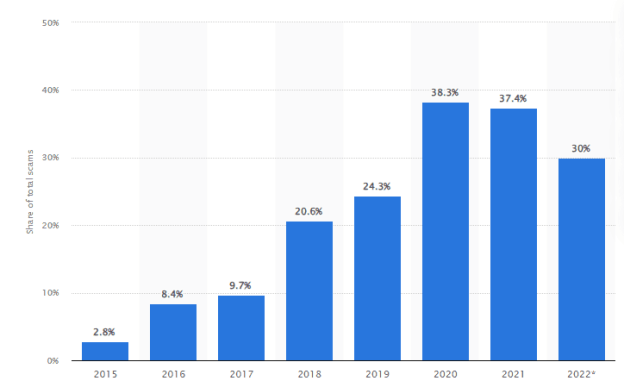
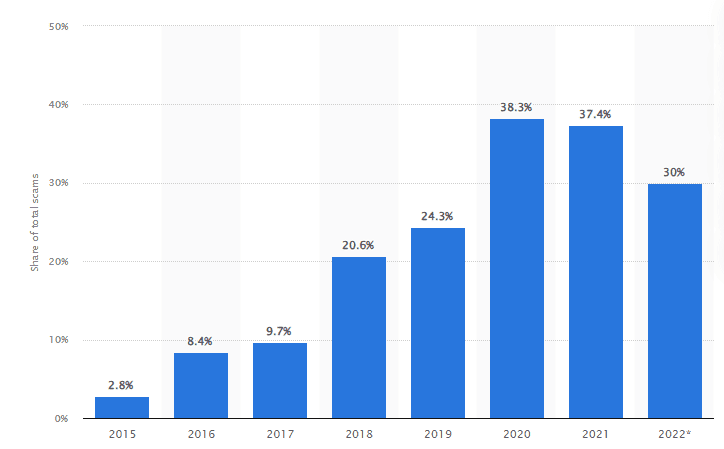
As online sales continue to trend up, there is an increased exposure to digital sales fraud specifically for card-not-present related fraud.

According to Forter, a fraud protection company, fraudulent activity accounts for about $11 of every $100 in digital sales nowadays. Fraudsters are remaining flexible in fighting the industry’s effort to stop these criminal acts. In response to changes in the marketplace, some of these criminals have found ways around the new mitigation techniques.

A large part of this trend is due to the introduction of EMV, which is the chip that most credit cards now have. On one hand, the chip has been successful in mitigating point-of-sale fraud in traditional brick-and-mortar stores. However, this has resulted in an upward trend for card-not-present issues for e-commerce merchants, resulting in an overall upward trend for digital sales fraud.

Online digital sales fraud

Source: Statista

The hardest impacted segments of the market are the merchants who deliver digital products such as music, movies, and other on-demand content. This makes sense when you consider the nature of their business in which the consumer expects their product at the time of purchase. Digital goods merchants do not have the luxury of time to mitigate fraud on those transactions. This results in a significant amount of chargebacks. A whitepaper published by Javelin indicates that the amount of chargebacks that come from online transactions is almost triple that of in-person transactions.

Not only do merchants have to deal with the losses directly related to the transactions impacted by these types of criminal activity, but there is also the indirect cost of managing and mitigating fraudulent transactions. Based on Javelin’s whitepaper, fraudulent activity costs e-commerce merchants 7.9% of their revenue. The effort required to reduce and manage these effects accounts for a whopping 74% of fraud-related costs.

One thing is for certain if e-commerce merchants want to remain profitable, combating fraud-related activities will continue to be at the forefront of their operations. Fortunately, there are companies that specialize in this very thing, giving merchants an alternative to solving this in-house. This gives merchants the ability to focus on what they do best, sales.

What is Digital Sales Fraud?

fraud in MOTO

Digital sales fraud encompasses fraudulent practices that occur in online transactions. It involves exploiting technology and digital platforms to deceive individuals or businesses resulting in financial loss compromised information or both. These scams manifest in ways, such, as websites, phishing emails, counterfeit goods, and identity theft.

One common form of fraud is called “phishing.” It happens when scammers send emails pretending to be companies to trick people into revealing sensitive information, like passwords or credit card numbers. Another type of fraud involves creating marketplaces where sellers advertise products at unbelievably low prices but never deliver them after receiving payment.

Scammers also employ tactics like creating replica websites that closely resemble well-known e-commerce sites but have variations in the URL. They may even use social engineering techniques to manipulate individuals into sharing information.

The consequences of falling prey to sales fraud can be severe. Not only can you lose your hard-earned money but your data may also end up in the wrong hands leading to identity theft or financial ruin.

To safeguard yourself against sales fraud it’s crucial to remain vigilant and skeptical when engaging in transactions. Exercise caution when sharing information and always verify the authenticity of a website before making a purchase. Watch out for warning signs such as bad grammar, website email addresses, and offers that seem too good to be true.

Types of Digital Sales Fraud

digital sales fraud


Digital sales fraud is a growing concern in today’s online world. As technology advances, so do the tactics used by scammers to deceive unsuspecting consumers. It is important to be aware of the different types of digital sales fraud so that you can protect yourself and your hard-earned money. Always remember, educating yourself is the best prevention from such frauds.

One of the most common types of digital sales fraud that you might also know is phishing scams. These are common globally. A fraudulent email or a website that resembles well-known brands are some of the most common ways fraudsters use to rob you. An individual is tricked either to spend money on the site or share his or her personal information. Personal information may include passwords, credit card details, or other types of personal information.

Another very common way of online sales fraud is by using counterfeit products. Ecommerce has grown exponentially over the years. Fraudsters use counterfeit products to lure people. These products are exact replicas of the original product and for a layman, it is difficult to differentiate. Usually, this type of fraud is done by launching a new eCommerce website where these products are sold. Once the fraudster generates the expected income the website is removed and it becomes difficult for the buyer to contact the seller.

Online auction fraud is also prevalent in the digital sales world. Scammers may create fake listings, bid on their items, or fail to deliver goods after receiving payment. To avoid falling victim to this type of fraud, research sellers thoroughly and read reviews from other buyers before participating in an online auction.

Identity theft scams are unfortunately common where criminals aim to steal information to commit fraud like opening credit card accounts or making transactions. To safeguard your information it’s crucial to use strong passwords and enable two-factor authentication whenever available. Regularly keep an eye on your financial statements for any signs of suspicious activity.

How to Spot and Avoid Digital Sales Fraud

The rise of digital technology has undoubtedly made our lives more convenient, but it has also given rise to a new kind of threat – digital sales fraud. As consumers increasingly turn to online platforms for their shopping needs, scammers have found new ways to exploit unsuspecting buyers. However, by staying vigilant and following a few simple tips, you can spot and avoid falling victim to digital sales fraud.

One telltale sign of potential fraud is when a deal seems too good to be true. If you come across an offer that promises unbelievable discounts or prices significantly lower than the market value, proceed with caution. Scammers often use these tactics to lure in victims and make quick profits.

Another red flag is poor website design or unprofessional appearance. Legitimate businesses usually invest in well-designed websites that are easy to navigate and provide clear information about their products or services. On the other hand, fraudulent websites may appear hastily put together with spelling errors or inconsistent branding.

It’s essential always to do your research before making a purchase from an unfamiliar seller or website. Look for customer reviews and ratings on independent review platforms or social media channels. If there is limited information available about the seller or numerous negative reviews, consider it a warning sign.

Additionally, pay attention to secure payment options provided by sellers. Reputable e-commerce platforms typically offer secure payment gateways such as PayPal that protect your financial information during transactions. Be cautious if a seller insists on alternative payment methods like wire transfers or cryptocurrency since these options are harder to trace if something goes wrong.

Furthermore, be wary of spammy emails or messages offering incredible deals from unknown sources—especially those requesting personal information such as passwords or credit card details through links embedded within them (phishing). Legitimate companies rarely ask for sensitive data via email and will usually direct you back to their official website for any account-related actions.

Conclusion

Digital sales fraud is a growing concern for businesses and consumers alike. With the increasing reliance on online transactions, it’s important to be aware of the various types of fraud that can occur and take steps to protect yourself.

By understanding what digital sales fraud is and being able to spot the warning signs, you can avoid becoming a victim. Remember to always research sellers before making a purchase, use secure payment methods, and be cautious of deals that seem too good to be true.

Additionally, staying informed about emerging trends in digital sales fraud can help you stay one step ahead of scammers. By following these tips and remaining vigilant, you can protect yourself from falling victim to digital sales fraud.

So next time you’re browsing online or making an e-commerce transaction, keep these tips in mind. Stay safe and enjoy your online shopping experience without worrying about falling prey to digital sales fraud!