Tag Archives: debit card transactions

Credit Cards

Can Chip Cards Stop the Hax? [2023 Update]

The massive data breach at Target is a big shining beacon illuminating exactly how behind the times the United States remains when it comes to credit card security — namely EMV® chip technology.

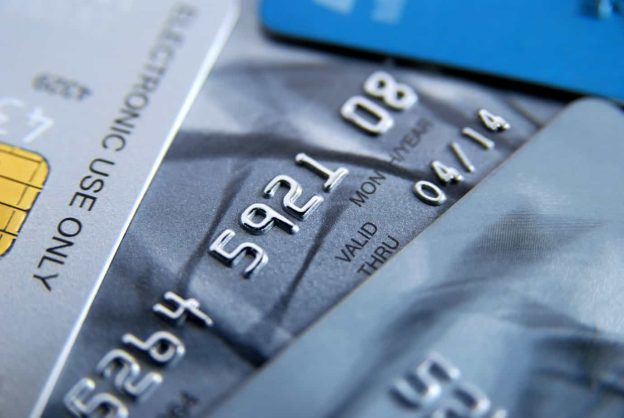
EMV is a worldwide standard for credit and debit card payments based around the use of chip card technology. The acronym stands for Europay, MasterCard, and Visa, who collaborated to create the technology. The goal of this project was to create a card that worked based off of a microprocessor chip that is read by the payment terminal. Because the U.S. has yet to widely deploy embedded chip technology, the nation has increasingly become the focus of hackers seeking to steal such information. The stolen data can easily be turned into phony credit cards that are sold on black markets around the world.

In fact, KrebsOnSecurity, the website that broke the news of the Target hack, has reported that the card information stolen in the Target Data Breach has been showing up on the black market. Credit and debit card accounts stolen during the security breach have reportedly flooded underground black markets, going on sale in batches of one million cards. The cards are being sold from around $20 to more than $100 each.

Over the last decade, most countries have moved toward using credit cards that carry information on embeddable microchips rather than magnetic strips. The additional encryption on these aptly named smart cards has made the kind of brazen data thefts suffered by Target almost impossible to pull off in other countries. Which is why as of Q4 2012, there were roughly 1.62 billion EMV cards in consumers’ hands and 23.8 million terminals deployed throughout Europe, Asia, and Africa. About 80 countries have adopted the technology as a standard. By comparison, about 1% ofcredit cards issued in the U.S. contain such technology, making the United States a tasty target for hackers.

“The U.S. is one of the last markets to convert from the magnetic stripe,” Randy Vanderhoof, director of the EMV Migration Forum told the LA Times. “There’s fewer places in the world where that stolen data could be used. So the U.S. becomes more of a high-value target.”

The credit card industry reports the U.S. accounted for only 24 percent of global credit card payments by volume in 2012, but it accounted for 47 percent of the fraud.

So Why No Chips in the U.S.?

According to experts the reasons the U.S. lags so badly in adopting smart cards are complicated. In part, there hasn’t been the political will to demand that businesses and financial institutions make the change. One might think the Target data breach would spur politicians to action or at least get consumers to light a fire under those politicians. But the Target hack is just one in a growing list of data breaches, and the 40 million compromised cards are rather mundane.

In April of 2011, the Playstation Network was hacked, compromising the vital information of 77 million accounts, and 24.5 million Sony Online Entertainment accounts. This has been touted as one of the largest personal data heists recorded in history, and prompted Sony to shut down its services for a month. In 2009, credit card processor Heartland Payment Systems disclosed that thieves had broken into is internal card processing network, and installed malicious software that allowed them to steal track data on more than 130 million cards.

If neither of those data breaches could spur on the adoption of EMV cards, it’s unlikely the Target hack will move the needle. The inertia built up against the smart cards then must be due to some other reason Analysts also say the payment processing system in the U.S. is more complicated, with merchants, credit companies and banks reluctant to spend the big bucks it would take to convert a system with 1 billion credit cards to EMV from magnetic stripes. But that’s still too murky.

The primary reason such technology has taken so long to make its way into the U.S. is far more simple: Chip-embedded cards are more expensive to produce. Each merchant would have to purchase new equipment to hand them.

What the Future Holds …

The good news for consumers is that the U.S. is indeed moving to embrace smart credit cards. The Official Merchant Services Blog reported almost two years ago that the United States was moving slowly but surely toward adopting chip cards. Visa took the lead in the U.S. push, reporting that as of December 31, 2011, the credit giant had issued more than 1 million credit cards that use “chip” technology to store consumer payment information. Visa made an announcement in August 2011 hat it planned to start issuing more EMV — Europay, Mastercard, Visa — smart cards to push the industry toward better security and an easier transition to mobile payments.

In the last couple of years major card issuers have laid out road maps for upgrading the card technology, and many have set out to achieve this by October 2015.

TransFirst, Host Merchant Services’ acquirer and one of the premier providers of transaction processing services and payment processing technologies in the U.S., issued a mandate in response to the EMV push. TransFirst said that Visa will require U.S. acquirer processors and sub-processor service providers to be able to support merchant acceptance of chip transactions no later than April 1, 2013. Visa also intends to institute a U.S. liability shift for domestic and cross-border counterfeit card-present point-of-sale transactions effective October 1, 2015, and for fuel-selling merchants by October 1, 2017.

Ocotber 2015 was chosen because at that point major credit card companies will change their rules about who is liable for fraudulent purchases caused by security breaches. Under the new rules, the entity in the payment chain — merchant, credit card, banks — deemed to have the weakest security will be liable. Credit card companies can’t make anyone adopt the technology, but they’re giving them a hard nudge.

The Bottom Line

While the Target Data Breach once again brings up the topic of credit card security, it seems like the U.S. is still poking along with its slow adoption of EMV chip cards. Hackers will still continue to target the low hanging fruit that the largely magnetic stripe based U.S. credit card industry still works with. But EMV chips and increased digital security of cardholder information is coming. October 2015 looms closer and closer.

How to Save Money on Credit Card Processing Fees

Here at Host Merchant Services we guarantee to save our customers money every month on their credit card processing. We understand that some of you are wondering how we do this! Transparency is a key cornerstone of our customer service values, so we have no problem sharing our secret formula and show everyone out there exactly how we carve out superior savings for every single one of our customers. We believe that when you get your statement every month, you should understand every item, and it should match what you were promised in the sales process. One of the first things to understand when switching to Host Merchant Services is we utilize the most cost effective and fair pricing available in credit card processing. It is called interchange plus or “cost plus pricing.” Interchange is a set of rates and fees determined by the card associations (Visa, Mastercard, and Discover). What this means is that our merchants are able to clearly see what interchange categories they qualify for. Here are a few different interchange categories that merchants pay with the same consumer visa credit card. Keep in mind each interchange category has a percentage and a dollar amount included in the category.

Supermarket Credit 1.22% + $0.05
Small Ticket (Transactions under $15) 1.65% + $0.04
Standard Retail / Restaurant 1.51% + $0.10
Charity 1.35% + $0.05
Service Station 1.15% + $0.25
e-Commerce / Mail order & Telephone order 1.80% + $0.10

These examples are based on interchange plus pricing. They also don’t include processor markup, and we have the lowest in the industry! There are other types of pricing that processors will use. You may encounter three-tier pricing (1.79% Qualified, 2.49% mid-qualified, and 3.29% non-qualified) for example. Some merchants are priced flat rate (2.9%, or 2.75%) or flat rate plus surcharges. There is also the dreaded enhanced bill back! Once you understand your pricing and category you need to look at how you are accepting your credit cards. Credit cards that are taken face-to-face (card present) often cost less than cards that are taken over the phone or on the Internet (card not present). For example, retail swiped transaction of 1.51% versus an e-Commerce transaction of 1.80%. Card associations justify this increased interchange rate due to transactions not being face-to-face. The next step in saving money is learning how much money is currently being spent on average to take in each dollar on credit cards. This is called your effective rate. This is calculated by totaling all the money you are paying in fees divided by the total amount your business processes in sales and refunds. For example a merchant who pays $300 in fees to bring in $10,000 in credit cards has an effective rate of 3.00% ($300 / $10,000 x 100 = 3.00%). A few other pieces of information are important to solving the puzzle. The average ticket or average transaction amount is also critical to understanding your rates. The reason being is that a $.20 transaction fee is not a substantial amount of an average ticket of $100 ($.20 / $100 = 0.20%). However, take that same transaction fee on an average ticket of $10 ($.20 / $10 = 2.00%). This goes to show that merchants with larger average tickets pay lower effective rates on average. Lastly we want to look at other fees; many processors will charge monthly fees, statement fees, administrative fees, regulatory and product fees, PCI fees, and annual fees. Host Merchant Services will help you save money on these fees as well! You can learn more about this process through our Official Host Merchant Services Road to Savings Infographic. The best way to start the process is to have one of our industry experts analyze a current merchant statement. We will walk you through the confusing process by explaining what you are currently paying versus what you would pay with HMS. Along with the potential to save hundreds to thousands of dollars each year on your credit card processing, we’ve upped the ante with our new $100 Challenge.

Call us today at (877) 517-4678 and let us design a solution that dramatically improves your bottom line – we guarantee it!
Can Durbin Debit Rates Go Even Lower

Can Durbin Debit Rates Go Even Lower? [2025Update]

A new U.S District Court ruling could lead to major changes in debit card processing fees. Will the Durbin debit rates go lower with this? Let us understand.

On July 31, U.S. District Judge Richard Leon swept aside the Federal Reserve‘s 2011 implementation of the Durbin Amendment. Passed in 2010, this amendment to the Dodd-Frank law was intended to limit the upward trajectory of debit processing rates. According to Leon, the Fed’s 2011 regulations directly counteracted the original intent of the Durbin Amendment. Though the Fed capped the base rate for debit processing fees at 21 cents, they raised debit rates for transactions under $12. Essentially, the Fed lowered the debit price for large transactions while raising them substantially on small transactions.

Can Durbin Debit Rates Go Lower?

Durbin Debit Rates

In general, debit card caps are highly advantageous for retail businesses. However, the current implementation of the Durbin debit amendment creates grave concerns for many retailers. It is sensible to lower debit card interchange fees at a time when many retail companies are struggling with low consumer demand. Months will pass before the nation sees new, concrete debit processing rules. In the meantime, the response to Judge Leon’s ruling starkly illustrates a growing conflict between the retail industry and major banks.

In this struggle to define the costs of merchant services, both sides claim to represent the best interests of the public. However, the banking industry is so politically influential and entrenched that it is hard to see this industry as truly vulnerable or consumer-focused. Retailers are achieving broader public support as they tout their intentions to lower costs for ordinary Americans.

To be fair, it is demonstrably true that banks could lose enormous profits in the wake of Judge Leon’s ruling. Undoubtedly, the banking industry will pass some of these costs on to consumers in the form of higher fees and tighter restrictions. A strong, profitable American banking industry is vital for the United States and the global economy. 

At the same time, history has shown that the banking industry is far less volatile than the retail sector. When banks are in danger of failing, they can often use their political influence to gain unique concessions and loans from the government. In stark contrast, retailers must stand on their own during problematic times. In light of this power imbalance, the public may well benefit from retailer-friendly debit price controls.

The new ruling on Durbin debit rates represents a fascinating turn of events. However, only time will tell if Judge Leon will have the final word in Durbin implementation. The Federal Reserve and large banks have many more tools at their disposal in their quest to control the state of debit processing fees.

What Is the Durbin Amendment

The Durbin Amendment is a part of the Dodd-Frank Wall Street Reform and Consumer Protection Act, a law enacted in 2010 in the United States. It was named after Senator Richard Durbin, who played a role in its development. This amendment primarily focuses on the fees that merchants pay to banks for processing debit card transactions, known as interchange fees.

What Is the Durbin Amendment

The key features of the Durbin Amendment are as follows

Regulation of Interchange Fees: The Durbin Amendment introduced regulations to limit the interchange fees charged by banks to merchants, for processing debit card transactions. The aim was to make these fees more reasonable and transparent.

Exemption for Smaller Financial Institutions: These regulations specifically apply to institutions that surpass a certain asset threshold. Smaller banks and credit unions generally do not have to follow the restrictions on interchange fees.

Choice of Network Routing for Merchants: Another objective of this amendment is to promote competition among payment card networks. It allows merchants to select which network they prefer for processing debit card transactions. This provision encourages competition. May potentially reduce costs, for merchants.

Prohibition of Exclusive Network Agreements: The Durbin Amendment prohibits card networks from imposing agreements that would restrict merchants from routing their transactions through networks.

Measures to Protect Consumers: The amendment included provisions that aimed to strengthen consumer protection. One of these provisions required issuers to offer consumers a choice, between two payment card networks that were not affiliated with each other for each debit card. This gave consumers options and flexibility.

Challenges in Implementation

The implementation of the Durbin Amendment faced some difficulties, which sparked debates about its effectiveness and potential unintended consequences. While some believed that it successfully achieved its goal of reducing interchange fees others had concerns about effects on smaller banks and financial institutions.

Impact on the Debit Card Industry

The Durbin Amendment had an impact on the debit card industry by changing the dynamics of interchange fees and fostering competition among payment networks. It continues to be a regulation in the United States influencing the relationships, between banks, merchants and consumers when it comes to debit card transactions.