Tag Archives: Cryptocurrency

cryptocurrency payment gateways

Top Cryptocurrency Payment Gateways in 2025

There can be no doubt that 2021 was a fantastic year for cryptocurrencies, with Bitcoin hitting an all-time high, and El Salvador becoming the first country to accept Bitcoin as legal tender.

In light of crypto’s growing popularity across various sectors, merchants may want to set up cryptocurrency payment systems or find a crypto payment processor.

Although crypto payment processing is still in its early phases, this article covers various options for companies interested in engaging with cutting-edge alternative payment technology.

Why Are Companies Accepting Cryptocurrencies?

Several reasons have led to companies accepting crypto as a payment option, from their increased adoption to targeting specific customers. Here’s a more detailed breakdown of these reasons:

  • Several crypto enthusiasts choose to trade to take advantage of the market’s volatility, while others are interested in using the technology to implement payments, non-fungible tokens, and decentralized finance (DeFi). According to a study conducted by the University of Chicago, about 13% of Americans trade cryptocurrency. In the eyes of these people, cryptocurrencies are a valuable investment and infrastructure that will eliminate the need for credit card networks and banks.
  • Crypto users are typically a more avant-garde clientele that values transaction transparency. According to a recent survey, around 40% of crypto buyers are first-time buyers, with their purchase amounts more than twice those of credit card users.

Best Crypto Payment Gateways in 2025

Cryptocurrencies are usually sent peer-to-peer via QR codes or crypto apps using hashes which can be emailed, texted, copied, or pasted. However, payment gateways and similar services provide additional payment processing functionality and efficiency to cryptocurrency transactions. Highlighted below are some of the biggest cryptocurrency payment gateways available now:

Coinbase Commerce

Coinbase is one of the world’s largest cryptocurrency exchanges, and it’s the most popular in the United States. Its large user base enables it to provide users with incredible features that make their lives easier.

For individuals who wish to enter the crypto market, Coinbase serves as an on-ramp and off-ramp, enabling them to buy, sell, and trade crypto in their local currencies. Coinbase offers this service for free for the first $1 million in transactions, after which it charges a 1% merchant fee.

Coinbase also provides a cryptocurrency gateway through which merchants can make sales. WooCommerce and Shopify are both supported by Coinbase Commerce. On the other hand, one of the main drawbacks of the platform is that it is custodial. In other words, merchants will not have complete control over their private keys when holding crypto in a Coinbase account, resulting in the possibility of losing money.

BitPay

While cryptocurrency is still a relatively new technology, BitPay has been involved in cryptocurrency payments for more than a decade.

The cryptocurrency payment gateway technology offered by BitPay relies on an invoicing system based on a simplified QR code. By locking in the currency rate at the time of sale, BitPay protects businesses from market volatility. This process lets you accept a cryptocurrency payment while never having the money pass through your hands unless you don’t want your payments in cryptocurrency.

BitPay business uses the auto conversion feature to receive every cryptocurrency accepted in dollars and euros via direct bank transfer.

With the BitPay cryptocurrency payment gateway solution, you can accept payments using your tablet or laptop. Merchants can deposit funds in the BitPay Wallet, a one-of-a-kind custodial wallet. They can also use their cryptocurrency to make purchases from other cryptocurrency merchants.

CoinGate

Coingate offers an advanced, user-friendly app that enables merchants to set up and manage payments directly from their phones. It also supports 40 other cryptocurrencies, which means that companies may significantly increase the number of payment methods they provide by utilizing this crypto payment gateway.

To make things even more interesting, Coingate offers a range of plugins and even supports the integration of the bitcoin payment button on any website. Coingate charges a 1% fee on all transactions, typically taking roughly an hour.

AlfaCoins

AlfaCoins, unquestionably one of the top bitcoin payment processors, enables users to split payments between cryptocurrency and fiat currency. It is an excellent option for merchants who want to keep some bitcoin from each transaction to profit from rising prices, as it allows them to protect their interests without risking the entire amount of the transaction. 

While AlfaCoins offers a slightly lower transaction charge of 0.99 %, it does not give the $1 million in free transactions as Coinbase does. However, AlfaCoins charges no additional fees to establish the bitcoin payment system and does not require a subscription. Aside from Iran and North Korea, AlfaCoins can be used in any country. It is also possible to withdraw funds in USD or EUR.

NOWPayments

NOWPayments is one of the more basic and uncomplicated crypto gateways on this list with no custodial features. While most crypto gateways provide low rates to businesses, NOWPayments has some of the lowest available, as long as you don’t mind being reimbursed in the same currency you were paid in.

It can process over 50 different coins, which should satisfy most of your needs if you want to expand your payment alternatives beyond the typical suspects. Transaction costs start at 0.5% and drop as your monthly sales volume increases. If you’re going to settle for a currency other than the one you received, you must pay an additional 0.5%. There is also a fixed rate exchange option to protect you from volatility, which increases the base charge to 1%.

GoCoin

GoCoin is popular among developers all around the world. This is because it provides a fundamental and simple API for them to use. GoCoin has a plethora of plugins, allowing it to be utilized on various online shopping platforms, including Shopify.

This cryptocurrency payment gateway’s customer service is well rated. It offers payouts in USD and levies a flat 1% fee on all transactions. It is supported in all but a few nations worldwide, making it a viable option for merchants.

Conclusion

Choosing a cryptocurrency payment processor is one of the first steps on your route to success. While crypto payments are still in their early stages, they can be a low-cost alternative to processing non-cash transactions when credit card transaction rates are increasing. Make sure you choose a provider with a good reputation and affordable rates that will provide you with the desired exposure level to cryptocurrency.


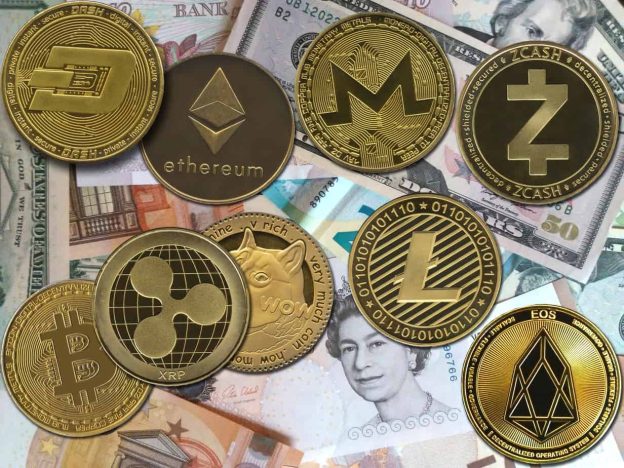
bitcoin ethereum and other cryptocurreny coins on top of lottery tickets and money 219344635

Resorts World Las Vegas Partners with Gemini Crypto Exchange to Allow Patrons to Use Crypto Wallets

Resorts World Las Vegas is aiming to be the next exciting casino and resort on the Las Vegas Strip. Resorts World opened late June and is already accepting reservations for hotel stays.

The property made headlines nearly a month before it opened, as it will accept cryptocurrency payments. It is working with one of the world’s top crypto exchange teams to help take in these payments, making it all the more convenient for people to enjoy.

How the Cryptocurrencies Will Work

Resorts World will be unique from other resorts on the Las Vegas Strip in that Resorts will soon allow people to use their cryptocurrency wallets to complete transactions. Resorts is partnering with Gemini Crypto Exchange to produce new programs where patrons can use crypto payments while on site.

The two parties are planning efforts to make crypto payments available around all parts of the property. These include dining and entertainment spots. There are also plans to allow people to convert their dollars to crypto assets while at the property. Further details on what Resorts and Gemini will be doing soon remain unclear. But no matter what happens, Resorts World will become the most crypto-friendly casino and resort on the Strip.

The development is exciting, as Resorts World has been one of the most highly-anticipated properties in Las Vegas in years. The site is the first new ground-up resort development on the Las Vegas Strip in more than ten years. The property is also expected to become highly popular this year, as travel demand will likely increase as the year progresses.

What Potentials May Occur?

There are no details over how people can use their cryptocurrencies just yet, but it is expected that various spaces throughout the property will support these currencies. These include support for Bitcoin and other common choices.

The setup will likely entail people using digital currency wallets to pay for items. These include wallets that Gemini may support, although whether people will need to be members of the Gemini Crypto Exchange remains unclear.

The crypto support feature will help customers pay for many items with their currencies. A customer can possibly use an app and send a payment out through a QR code that links one’s private and public keys. The QR code transfer process ensures all payments are made safely and in moments.

Proper hardware and software will be necessary throughout the property to ensure these transactions can safely go forward. Whether people can use cryptocurrencies to get funds to play casino games remains unclear, although it is possible people could exchange whatever chips they win for cryptocurrencies. Proper support for various currency blockchains would still be necessary, especially since it can take a while for some chains to process transactions.

What Is Gemini?

Gemini Crypto Exchange is one of the world’s top cryptocurrency sales groups. Gemini provides a platform where customers can buy and sell cryptocurrencies. The platform is accessible at Gemini.com.

Gemini is one of the world’s oldest exchanges, as it was formed in 2014. Crypto traders worldwide trust Gemini for how it offers a simplified approach to managing cryptocurrencies. It is also a fully secure system that ensures all data remains encrypted and that all crypto transactions remain safe through the proper private and public key exchanges.

Gemini is popular for offering support for various cryptocurrencies. It can handle major options like Bitcoin and Ethereum, but it can also use small-value choices like Dai and Filecoin. People can also earn interest on some of their investments by securing their assets in unique accounts.

The service also simplifies how people can find currencies. It offers analytics systems to help people see what is happening with certain currencies. They can make decisions based on how these currencies are trending, plus they can use the data to back further research surrounding whatever is open for investment purposes.

About Resorts World Las Vegas

Resorts World Las Vegas opened in late June at 3000 South Las Vegas Boulevard. The new property is in between the Circus Circus resort and the Fashion Show Mall on the Strip. The area is in the middle of one of the world’s most popular thoroughfares for leisure and entertainment.

The property is associated with Hilton Hotels and Resorts. The Malaysian group Genting Berhad is behind the development, with the Nevada Gaming Commission providing full support. The property incorporates a few local Hilton hotels, including the Conrad Las Vegas and the Las Vegas Hilton. There will be more than 3,500 rooms and suites at the property.

Resorts World will be the most prominent opening on the Strip in years. The venue features a full casino with a poker room and sportsbook. The property is also home to the Sky Casino, a high-value property on the sixty-sixth floor. It is an intimate site that people can only access through reservations and by providing the necessary assets for playing games there.

The property also features a new theater operated by AEG Presents. The theater already has a few high-end bookings, with Celine Dion, Carrie Underwood, Katy Perry, and Luke Bryan all planning residencies at the theater in late 2021 and early 2022. Resorts World features multiple dining spots, including quick bite eateries and high-end restaurants like the Genting Palace and Kusa Nori restaurants. Additional features will appear throughout the resort in the coming years.

Customers can pay for experiences at many of these things at Resorts World Las Vegas through cryptocurrencies thanks to the property’s partnership with Gemini Crypto Exchange. This development will be an intriguing point to watch, especially as cryptocurrencies continue to be popular. Giving patrons at the resort the option to use cryptocurrencies to pay for what they enjoy at Resorts World Las Vegas will be a noteworthy move that other properties in the city could copy.

computer for bitcoin mining and bitcoin coin on a stock market charts 101144504

Cryptos’ Place In Digital Commerce’s “Walled Gardens”

Cryptocurrencies have become controversial for many reasons. These currencies are volatile, and it is hard to tell who will support them and which authorities will refuse to accept them. There’s also a sense of immaturity in some segments, as many people post social media messages bashing some currencies, not to mention some currencies are promoted more as a joke. Increased worries about how cryptocurrencies are contributing to global warming only make things harder for some parties.

There is still a potential for cryptocurrencies to become more valuable in the digital commerce world. The walled garden approach may be a necessity for the industry’s future. It will bring in many retailers who might be interested in doing business with cryptocurrencies.

The walled garden approach entails buyers and sellers getting together through many settings or a singular platform. People can exchange currencies in the environment through one infrastructure that can support all these settings or other features. A digital wallet platform can be essential to the success of the process.

The setup allows for a space where people can handle their assets. While there are rules on who can enter a walled garden ecosystem, the platform still offers a useful system that everyone can follow.

Understanding How a Walled Garden Works

The idea of a walled garden sounds like it is restrictive, what with it being in a closed setup. But the system itself can be advantageous, as it provides a more controlled approach to managing cryptocurrency payments. It can create an organized setup that allows transactions to work effectively and in moments.

A walled garden operates as a closed ecosystem. The end-user is limited to whatever services or apps one can utilize. The end-user will be led towards specific apps or solutions for handling transactions or other activities.

For cryptocurrencies, the walled garden will entail people being limited to using a specific app or exchange to handle currency transactions. The ecosystem will support various cryptocurrencies and can handle as many apps or other platforms as it wishes. The walled garden operator has control over whatever it wishes to program or utilize.

What Organizations Could Use These Walled Gardens?

There are no limits over who could use these walled gardens to keep their setups up and running. One example to explore entails how PayPal is managing cryptocurrencies.

PayPal has an ecosystem where users can link their wallets to Coinbase. Customers can then buy currencies through the exchange. PayPal’s goal is to make these currencies accessible for shopping purposes. Customers can use the crypto items they have in their wallets and use them to pay for items through various participating merchants. PayPal has reported substantial growths in its user base and activities over crypto payments, especially as the system makes it easier for people to complete these payments.

The retailer and auction site eBay also has hopes to establish a crypto walled garden. eBay hasn’t participated in the crypto market since abandoning its support of Facebook’s Libra project a few years back. But eBay has expressed some interest in returning to the crypto field, particularly with an ecosystem that supports crypto payments. The walled garden system would likely entail eBay limiting people over what they can use for collecting crypto funds and moving them. But with eBay having so many retailers out there, the places where people could spend those assets would be varied and diverse.

Will Amazon Take Flight?

Amazon could also start a separate ecosystem where it can handle cryptocurrencies. As the world’s most influential retailer, Amazon has been at the forefront of impacting different transactions in many forms. The potential for Amazon to start accepting more currencies and to use a walled garden that links customers with various entities could be significant.

Upcoming new Amazon CEO Andy Jassy has expressed an interest in entering the crypto industry. But most people who use Amazon Web Services systems use it to manage data and not handle cryptocurrency payments. But AWS will support blockchain transactions soon and could start making use of Bitcoin and other currencies. Such support might push the crypto industry further, especially since Amazon has immense influence over the digital commerce environment.

Some places have already been using cryptocurrencies in their platforms. Newegg has been a longtime supporter of Bitcoin, and Shopify has allowed business operators to accept currencies of all sorts. Shopify even joined the Facebook Libra project, possibly linking it with a new currency that the social media giant might produce someday. Facebook has been trying to produce something new for a while, but whether it will come to fruition remains unclear.

The Walled Garden Is An Evolution

The walled garden approach that so many providers might use shows how the crypto industry has evolved over the years. The walled garden allows for more freedom to manage currencies. While there are rules as to what platforms can work and who people can contact, there is greater flexibility over what assets can work on the platform. More retailers and parties can link with one another if they stay within the same walled garden system.

The walled garden system is an evolution over the Facebook Credits platform from nearly ten years ago. Facebook Credits had a platform that didn’t offer much of an incentive to retailers, keeping it from going far. But today’s new walled garden setup makes it easier for businesses to grow and succeed. They can work with a more thorough infrastructure that includes more trusted sources for funds.

People looking for new ways to spend money should see how the walled garden ecosystem can work when handling cryptocurrencies. The physical and digital fields are uniting, as more people can use cryptocurrencies for payments now than ever before. There’s a great potential for more parties to complete transactions in secure environments. People who are interested in cryptocurrencies will need to see how these could work well soon.

money and crypto 216802268

Consumers Eye Retail Settings For ‘Spendable’ Crypto

The cryptocurrency market is growing, as there are hundreds of currency options available today. People can buy and sell cryptocurrencies in more places than ever. The global market cap of the crypto market is close to $1.5 trillion. That value will likely increase further as the industry evolves and cryptocurrencies become more popular.

Most of the stories surrounding cryptocurrencies entail people holding them and waiting for their values to change. Not all people are interested here, as they might prefer to spend their currencies. 

People have been willing to make digital payments with cryptocurrencies over the past few years. But some have been interested in making crypto payments for everyday purchases. The development shows that businesses might need to consider supporting cryptocurrency payments when selling their items. But there are a few obstacles that might get in the way, including concerns over how well these currencies will run and work.

Are People Willing To Pay?

The website PYMNTS.com conducted a survey with people who have cryptocurrencies or have considered buying cryptocurrencies soon. The survey found that people would consider buying things with cryptocurrencies if there was such an option.

PYMNTS.com reports that more than 90 percent of people who own cryptocurrencies would be interested in paying for certain things with their currencies. Nearly 60 percent of people who have never owned cryptocurrencies say they would consider paying for those items with those cryptocurrencies.

While not all people are familiar with the crypto market, they might be willing to invest in it if they can find things of value. People are naturally willing to explore new things and enjoy a change from the norm. But the things people will be interested in the most are worth keeping an eye on.

Other Interesting Developments

There are many other factors in the PYMNTS.com survey to see:

  • People are comfortable with spending small amounts with cryptocurrencies. Nearly half of people who have bought things with cryptocurrencies spend less than $100 on their purchases.
  • People who earn less than $50,000 a year are willing to pay with cryptocurrencies. Those who make more each year will spend more at a time, but the lowest-earning people will still spend less than $100 on some payments if necessary.
  • Millennials and Generation Z members are more likely to have made crypto payments in the past. Bridge Millennials have also made some payments, although not as often.
  • People in the Generation X and Baby Boomer demographics aren’t as likely to have made crypto purchases. But at least 80 percent of people in those fields would consider spending crypto on things.
  • The real estate market is the most popular segment that people would consider for crypto payments. The secure nature and the lack of third parties in the process may help, as those features could reduce the costs of purchasing a home.

Volatility Is a Concern

There is one significant worry about whether spendable crypto will be prominent soon. The volatility of the crypto market could cause currency values to rise or fall without warning.

The unregulated nature of the crypto market is also a problem. Since there are no specific laws or standards surrounding how these currencies can work, it could be easy for people to manipulate the market. They could change and shift many things in the market, making it harder for people to profit from what is open.

Technology Points

The technology necessary to access crypto payments is another thing to note. People need dedicated crypto wallets that are easy to load. They’ll need to provide fiat currency data to help them complete their payments. They must also use those wallets to complete their purchases.

There’s also the issue of how some tech items might not be easy for some people to access or use. They may not understand how smartphones or other items that hold crypto wallets work. They also might not get how alternative wallet solutions work, including physical wallets that require proper storage and security for all of one’s currency content.

Variety Is Essential

One other factor about cryptocurrencies involves how there are so many available to trade. There are hundreds of currencies today, with many new ones being released every month.

Estimates show that Bitcoin is the most prominent currency. This crypto choice covers nearly four-fifths of the currency market based on what people hold.

The Cryptocurrency Payments Report from PYMNTS.com states that close to half of people who have Bitcoin have also held another cryptocurrency. People who own crypto investments are willing to try different choices and see what is open on the market.

There are limits over what currencies are the most popular. Binance Coin, Cardano, Ethereum, and XRP have massive market caps, but not all people are familiar with what these have to offer. Dogecoin has been in the news quite often, as the currency and its developers have been trying to get people to take it seriously. But not all people are familiar with this currency, plus it could be even more volatile than Bitcoin.

Anyone looking to accept crypto payments will need to select their currencies with care. Bitcoin is an obvious choice, as it is easier to accept in more places. But offering an alternate option may also be worthwhile, especially if that new option is something that might be viable and easy for people to purchase and use anywhere.

What Does This All Mean?

Everything here suggests that there is some sort of interest in the cryptocurrency market. People are willing to purchase things with cryptocurrencies, and they’re fine with spending small amounts for each deal.

It will be up to individual retailers to see how they can handle crypto payments. They’ll need to target the right audiences, although that aspect might be easier to manage than people expect. The volatility of the market might be a challenge, as not all people are confident in how the market works.

Frequently Asked Questions

federal reserve facade 2 779123

Fed Chair Remarks Further Distinguish Between Cryptocurrency and Digital Dollars

Digital dollars have become very popular among people discussing currency affairs and issues as of late. These dollars are unique digital representations of liabilities as listed in dollars. Such dollars can entail Federal Reserve Notes, bank deposits, and many other liabilities.

Many people might figure that digital dollars and cryptocurrencies are one in the same. Cryptocurrencies are often seen as representations of physical currency. But the Federal Reserve Chair recently remarked that cryptocurrencies aren’t intended to be basic commerce tools like digital dollars. Rather, he says that the crypto market is speculative and impossible for people to predict.

digital dollars

But whether the digital dollar will be a viable asset in the future remains uncertain. The Fed continues to assert that fiat currencies are more valuable. It would take more effort for the United States to try and enter the digital dollar industry.

Remarks Against Cryptocurrencies

Chairman Jerome Powell talked about cryptocurrencies during a virtual panel meeting with the Bank for International Settlements. He said that cryptocurrencies are too volatile and are not useful stores of value. He also said that these currencies aren’t backed by anything, suggesting that these currencies are substitutes for gold instead of for the dollar.

digital dollars - Remarks Against Cryptocurrencies

Powell stated that the dollar is strong against “private cryptocurrencies.” He feels that Bitcoin and other similar currencies haven’t done much in trying to supplement fiat currency.

His remarks prompted the value of Bitcoin to enter a downturn. The currency’s value fell to about $56,500 after his address. The currency had been trying to break its current resistance and go past the $60,000 mark. As of the afternoon of March 25, Bitcoin has slipped to a value of about $52,000.

The changes in the market come amid many conflicting attitudes towards the currency. Bobby Ong, the chief operating officer for CoinGecko, remarked in an interview with TheStreet.com that Bitcoin has a realistic chance of reaching $100,000 this year. But Bank of America also published a recent report saying that Bitcoin is too impractical and that it takes too long to handle transactions with that currency.

Could Cryptocurrencies Be Outlawed?

The odds of cryptocurrencies being outlawed in the United States are minimal. But the fact that Jerome Powell referred to them as “private cryptocurrencies” isn’t helping the market. That term was also used in a bill in India that aims to ban private currency offerings. The Indian bill would make it where only notes issued by the country’s central bank would be legal.

While the Fed may not be overly supportive of cryptocurrencies, many other financial services providers in the United States are okay with them. PayPal, Visa, MasterCard, and some top American banks have been supporting cryptocurrencies as of late.

digital dollars - Could Cryptocurrencies Be Outlawed

There’s also the consideration of financial service providers learning towards the account-to-account relationships that people often have in crypto-based platforms. While many financial service providers focus on making profits through interest rates, fees, and other expenses, an approach involving closer relationships might be more viable for people to follow. People could produce a trust-based approach to work that is easy to follow and entails many unique ideas for operation.

Possible Digital Dollars

It is possible that digital dollars could be made available in the United States. These dollars directly link with various traditional currencies. Powell says that these digital dollars are an improvement over cryptocurrencies, but he doesn’t feel that fiat-backed crypto options are as viable as people like to believe.

Financial service providers have been hesitant to support the idea of a CBDC or central bank digital currency. A currency of this type would eliminate controlling parties who can manage banks, credit card transactions, and other activities. Such parties are necessary for ensuring all transactions that go through are safe.

A CBDC works differently, as the Federal Reserve has the right to control interest rates and send funds directly to consumers. Such CBDCs work mainly in cases where a country can handle its funds without relying on any outside parties for assistance. The United States is a large enough country to where it could go at it alone if desired, but the odds of the country going that far in the effort aren’t as great as people like to assume they would be.

Illegal Activity Considerations

While Jerome Powell didn’t specifically mention anything about illegal activities when talking about his concerns over cryptocurrencies, that point remains a worry. Treasury Secretary Janet Yellen remarked a month earlier that cryptocurrencies are likely being used less for transactions and more for managing illegal finance activities. The increased electricity and energy needed for facilitating cryptocurrency transactions and mining efforts is another worry that the American government and financial sector hold.

Digital dollars could be distinguished from cryptocurrencies for how they could be safer. Since digital dollars may be linked a little closer to traditional currencies, it becomes sensible for transactions to go forward. These deals are faster and safer and are less likely to be utilized for illegal purposes. It would also be cheaper and more energy-efficient to handle these currencies than if other solutions were utilized here for different intentions.

What Would It Take For America To Use Digital Dollars?

It is possible that the United States could utilize digital dollars soon, but there are too many issues to note. Powell stated in his meeting that the Fed isn’t trying to get into digital dollars right now. He says that Congress and the Biden administration would need to support digital dollars if they were to move forward. A substantial buy-in from the public would also be necessary, and whether the public is supportive of the concept remains uncertain.

The United States would need to focus on safety and transparency when looking at digital dollars and how they can work. The American dollar remains the world’s top reserve currency, meaning the country wouldn’t benefit much if it tried to be the first to go after using digital dollars for any intention. Sticking with fiat currencies appears to be the path the country is sticking with at this point.

bitcoin cryptocurrency and banknotes of one us dollar next to mobile phone showing candlestick chart 142334515

Square Buys $170 Million Worth of Bitcoin

Bitcoin continues to remain one of the most intriguing investments on the market. Bitcoin has seen a massive rise in its value in the past year. Its value has risen from $30,000 at the start of 2021 to nearly $50,000 in March. Bitcoin also had a record high value of about $57,000 in late February.

One of the largest American financial service providers around is doubling down on its support for Bitcoin. Square announced it had purchased $170 million in Bitcoin. The total equals approximately 3,500 BTC as of March 4.

Much of Square’s support for Bitcoin comes as Cash App customers have helped boost the company’s revenue. Cash App is a mobile payment system developed by Square. Cash App consumers have been trading Bitcoin more than ever, leading to Square doubling its revenue in the fourth quarter of 2020. Cash App helps facilitate Bitcoin transactions to make them easier to run, helping boost peoples’ involvement with the currency.

Square’s purchase is the second such move the company has made. Square purchased $50 million in Bitcoin in October 2020. The total was about one percent of their assets. The company purchased Bitcoin, believing it would be a more viable currency for future international transactions. Bitcoin had a value of about $12,000 at the time.

Bitcoin now makes up about five percent of Square’s assets. These include its cash, securities, and cash equivalents.

Square is the latest company to focus on Bitcoin to diversify its investments and to bring in a potentially higher return on its cash. Other companies like Tesla have been investing in these currencies in the last few years. Tesla particularly acquired more than $1.5 billion in Bitcoin in early 2021, making it where Tesla’s share price is directly linked to Bitcoin’s value.

But the rise of Bitcoin for Square and others comes at high risk. Bitcoin is one of the most volatile investment options on the market today.

Statistics For Square

Square reported a few prominent statistics for Bitcoin and its Cash App use. These points are parts of why Square has invested so much money in Bitcoin:

  • Square reported there were about 36 million monthly Cash App users as of December 2020.
  • At least a million Cash App users bought Bitcoin for the first time in January 2021.
  • At least three million Cash App users utilized Bitcoin payments on the app in 2020. These include people who either purchased or sold Bitcoin.
  • The company’s fourth-quarter revenue from 2020 was $3.16 billion. The total is more than double the $1.31 billion it had in the fourth quarter of 2019. The value is also slightly over the $3.1 billion forecasts from industry analysts.
  • At least half of the quarterly income came from Bitcoin.
  • Square had a minimal customer acquisition cost in 2020. The company spent less than $5 per user. The effort is a sign of the company’s viral marketing efforts helping make it easier for the company to reach more people.
  • More money is flowing through Square’s platforms from both its mobile payments and its traditional storefront kiosks. The gross payment value in 2020 was $32 billion, a $4.6 billion rise from the prior year.

Cash App has also shown it is more viable to Square than its traditional seller business platform. Square had slightly less than $1 billion in revenue from its seller business platform in the fourth quarter of 2020. Part of the move could be due to many physical stores not being open and people focusing on online payments. But contactless payments and the simplicity of Cash App have helped, especially as people become more invested in the currency.

Focusing on Simplifying Bitcoin Efforts

Bitcoin trades are easy to complete with Cash App. Square developed the app to help people transfer funds, and its cryptocurrency feature helps people acquire Bitcoin and others in moments. The company focuses heavily on ensuring people can acquire these currencies while also helping them learn more about how they work. By providing these details, trading efforts can become more viable and accessible.

Stimulus Checks Helped

One reason why Square saw a significant amount of activity in 2020 came as Americans used Cash App to pick up their government stimulus checks. Americans were using Cash App to facilitate the collection process and to ensure they had the funds they needed as soon as possible. The app’s ability to convert funds to Bitcoin and other cryptocurrencies also helped people become more aware of these currencies and how they function.

How Square Stock Is Changing

Square’s Bitcoin investment has helped the company’s stock value rise in the past year. Square trades on the New York Stock Exchange with the symbol SQ.

Square has a value of about $215 as of early March 2021. The stock value grew from $65 in May 2020 to $150 in October 2020. The value went over the $200 mark in November and has stayed over that total since.

Square reports that its net income went from $391 million in the fourth quarter of 2019 to $294 million in the fourth quarter of 2020. Much of this may be due to the increased infrastructure necessary for keeping Square operational. But the ongoing growth of Square and the increased value of Bitcoin will help the company continue to grow and become useful for traders to explore.

Are There Risks?

There is one risk associated with Square’s move. While Square feels confident in Bitcoin, it remains one of the most volatile investments on the market. Bitcoin has a potential to rise or fall by thousands of dollars in value each day. Any investor who is interested in Bitcoin or any other similar investment should watch for the risks associated with doing so.

But the growth of Square and Cash App through Bitcoin shows how appealing the currency will be for many. Expect Square to become a more prominent company as it continues to support one of the most noteworthy trends on the market.

Qatar Bans Crypto Trading

On December 26, 2019, the Qatar Financial Centre Regulatory Authority (QFCRA) announced via a press release posted to Twitter that virtual asset services were no longer allowed in the Doha-based Qatar Financial Centre Authority (QFC). The QFCRA’s decision essentially cut off more than 500 financial firms and other businesses within that location from crypto trading. The QFCRA cited QFC Law No. 7 of 2005 and Financial Services Regulations (FSR) as the reasons and noted that it will penalize businesses that ignore the ban.

What Is Crypto Trading?

Crypto trading is when businesses purchase, sell and trade cryptocurrency, a type of digital asset that’s processed using secure digital encryption known as cryptography. Businesses who deal in cryptocurrencies trade one type for one or more others types of digital currency or physical non-digital assets like government-approved, legal tender, such as fiat money and commodity money backed by commodities like gold and silver. Crypto trading can also involve the use of cryptocurrency to buy products and services.

What Is the QFCRA’s Official Stance?

The QFCRA considers virtual assets to be any type of alternative digital currencies that aren’t related to fiat currency and other types of regulated “monetary instruments.” The QFCRA defined a virtual assets services provider as any “natural or legal person” who performs virtual asset services. It doesn’t matter if only one person initiates or accepts a transaction either. The QFCRA defined virtual asset services in the tweet to include exchange involving trade of virtual currencies for virtual currencies and fiat money, transfer of virtual assets and any transaction related to sale of virtual assets. It also banned the administration or holding of virtual assets and/or any tools that make it possible to control virtual assets.

Why Is This News Important?

Crypto trading is associated with high risk: It doesn’t require the use of a centralized bank or backing from a government entity. It occurs over decentralized networks using many computers, which means that the typically untraceable transactions are conducted without strict legal and regulatory controls. The exchange rates fluctuate wildly with little-to-no forewarning. Money launderers, tax evaders, thieves, terrorists and others often use virtual assets services to exchange cryptocurrency for fiat money or real-world assets in their criminal dealings. Although many standard fiat and commodity currency transactions are now conducted digitally, those transactions, unlike crypto trading, are heavily regulated, traceable and backed by real-world materials. Merchants need to recognize that they can face steep fines and other penalties in a growing number of countries if they’re caught performing business transactions using cryptocurrencies. For example, China and India have also enacted strict bans in recent years.

At Host Merchant Services, we believe that providing merchants with regular global economy updates can help them to adapt rapidly to changes in payment acceptance and protect them from fines and penalties. We want you to have the information you need to be an informed decision-maker so that you conduct transactions in a legal fashion. We also want to make it clear why we don’t offer certain payment acceptance and processing services. For more information about crypto trading or alternative transaction options, contact us today.

The Sand Dollar is a New Caribbean Digital Currency

Of all regions in the world, the Caribbean may seem one of the least likely to officially adopt digital currencies, but that is exactly what has been taking place this year. In October 2019, the Eastern Caribbean Currency Union launched a pilot program to turn the EC dollar into an electronic form of cash, which residents of eight island nations can now use through the DXCDCaribe mobile app. Not to be outdone by this technology advancement, the Bahamas has launched its own pilot program to go cashless before the end of 2019.

Business owner happy with loanProject Sand Dollar went live just two days after people across the Bahamas celebrated Christmas with a traditional dinner of baked ham, rice and peas, and potato salad. Central bank officials explained that although there is a blockchain enabling the circulation of the sand dollar, which is pegged to the value of the Bahamian dollar, this is not a true cryptocurrency since it is centralized and does not allow mining.

There are certain initial restrictions in place for Project Sand Dollar. Individuals can only hold $500 sand dollars in their accounts, which are can be managed by means of a mobile app similar to the aforementioned DXCDCaribe. Business entities are limited to holding no more than $1 million, and the sum of monthly transactions may not exceed 1/8 of capital. Central bank officials see the sand dollar as being a natural progression in the sense that residents of the islands are not as enthusiastic about using banks as they used to.

Equal access to the banking system is something that the Bahamas and many other nations have curtailed through the enactment of anti-money laundering and “know your customer” legislation and regulations. In many jurisdictions, it is simply too late to reverse the effects of AML and KYC, which is why initiatives such as Project Sand Dollar are welcome since they can empower individuals who have been left out of the banking system, but who wish to make digital payments and money transfers.

As for the government of the Bahamas, financial regulators actually prefer to see digital payments taking place since they reduce the burden of physical currency controls and management. The goal is to get people used to holding sand dollars and generating quick response (QR) codes on their smartphones when they settle retail POS transactions or pay utility bills. The project will begin on the Exuma island and will later roll out to the Abaco islands. On the day the pilot program started the value of one sand dollar was equal to the United States dollar.

A Digital Version of the Dollar Will Take Longer Than Expected

In the world of cryptocurrencies, Bitcoin is the leading token in terms of circulation, but this has a lot to do with being the most valuable digital asset, which means that most transactions are related to speculative trading and investing. Ripple, a centralized digital currency that trades under the symbol XRP, gets more circulation than BTC, but mostly in the remittances and international money transfer arenas.

Bitcoin Online E-commerce CryptocurrencyThere are two emerging cryptocurrencies making a circulation splash, and they share one factor in common: their value is tied to the United States dollar. Tether (USDT) and U.S. Coin (USDC) are known as “stablecoins” which means that their currency exchange value will always be the same as the American dollar because this is the business plan of their respective development teams. In the case of USDC, which is backed by investment banking giant Goldman Sachs, its market capitalization has increased considerably this year because users of this digital currency enjoy its stability and trust in Goldman Sachs as the manager of the underlying blockchain.

With the profile of stablecoins rising, it stands to reason that the U.S. Treasury could soon develop a digital version of the greenback, but this is not likely to happen as long as Chairman Jerome Powell leads the Federal Reserve Bank. Powell recently sent a letter to Congress for the purpose of answering questions related to cryptocurrency use, and it was clear that Powell does envision a sovereign blockchain for the USD.

It should be noted that the Russian central bank has already developed a digital version of the ruble, and a similar approach has been taken with the Singapore dollar. As of October 2019, the Eastern Caribbean Dollar was undergoing a digital pilot program to test if going cashless is in the future of various island nations. These three digital currency projects are based on the open-source Ethereum blockchain, and they are being monitored by American financial regulators, but there does not seem to be an interest in emulating projects.

Powell’s letter to Congress included his opinion of the American banking and payments systems, which he thinks are advanced, secure, dynamic, inexpensive, and robust; this opinion was clearly meant to underscore why the Fed Reserve Chairman does not think a crypto-greenback is needed, but those who work in the U.S. payments industry know that this is not the case. Asia and Europe are the leading markets in the digital payments arena, and a major reason why the American market lags behind is because of inflexible financial and banking regulation. Refraining from testing the waters of digital currencies will only make the U.S. less competitive in the global payments arena.

Facebook Libra Payment Processing Cryptocurrency

Understanding Facebook’s Ambitious Project Libra

Just a couple of weeks before Mark Zuckerberg, co-founder and CEO of the world’s most popular social network, was scheduled to appear before the United States Congress to answer questions about his cryptocurrency ambitions, he received disheartening news from some of the key partners in Project Libra. Payment processing giants such as Visa, MasterCard, PayPal, and Mercado Pago have decided to withdraw from the Libra Association Council, the organization tasked with governance and development of Project Libra’s underlying digital coin.

What is Libra?

As of October 2019, Project Libra mostly exists as a proposal to create a global payment processing system that will primarily serve users of the Facebook, Instagram and WhatsApp networks. The Libra token, along with a cryptocurrency wallet, are the intended pillars of the system, which would ostensibly enable payments, remittances, money transfers, and even investments. Even though Libra is being developed as a blockchain token, it will not be a pure cryptocurrency because it is planned to be centralized; moreover, it will operate as a “stablecoin,” meaning that its value would be pegged to the average exchange of major currencies such as the U.S. dollar, the euro, the pound sterling, and the yen.

There are various ways to interpret Facebook’s goals with Project Libra. On one hand, the prospect of a digital coin that reflect the value of major fiat currencies is certainly innovative; on the other hand, the Libra digital coin would be supported by a robust payment processing conglomerate. The prospective market is measured in billions of prospective users, and this is what attracted the likes of PayPal, Stripe, Visa, and MasterCard in the first place. Although no banks sought membership in the Libra Association after its white paper was published, financial non-profits such as Kiva and Women’s World Banking have expressed interest in making commitments to the project.

What are the Concerns?

On paper, Project Libra seems like a revolutionary idea with a potential to empower millions of people who lack access to traditional banking services. The only Libra prerequisite would be a Facebook, Instagram, or WhatsApp account; the range of benefits would be the ability to send and receive funds, exchange cryptocurrencies, make purchases, complete remittances, and more. The problem with Libra, and the most likely reason major providers of payment solutions have been abandoning the Libra Association, is that American lawmakers, regulators, and officials thus far believe that Facebook is not capable of abiding by “Know Your Customer” and anti-money laundering compliance measures.

Personal data privacy has been another area of concern related to Project Libra, and Facebook has a questionable track record in this regard. Even President Donald Trump has publicly commented on the matter; in July 2019, he posted a Twitter update stating that Facebook should obtain a banking charter if it intends to operate as a bank. Project Libra is also facing scrutiny in France, where regulators do not want to see a digital currency competing against the euro, and in Germany, where a Member of Parliament has stated that Facebook could easily become a shadow bank unless it is regulated.