Tag Archives: credit card processing

Changes to Interchange Fees

Breaking News from The Official Merchant Services Blog: MasterCard and Discover have announced interchange increases and modifications to take effect October 2012. Specific association modifications such as these are beyond the control of payment processors like Host Merchant Services. They come directly from the big card associations themselves. These changes affect all merchant card processors and their customers, meaning these changes in fees and rates travel in a straight line from Visa, MasterCard and Discover to the merchants.

The Meat and Potatoes

MasterCard will be reducing the Consumer Debit rate from 1.64% + $0.16 to 1.60% + $0.15. MasterCard will increase the Small Ticket Debit rate from 1.30 + $0.02 to 1.30 + $0.03.

Discover Card will be enacting several changes to their PSL Public Services interchange fee programs. Rates will increase from 1.50% +$0.10 to 1.55% + $0.10. Discover PSL Card-Not-Present/E-Commerce Premium Plus will increase from 2.30% + $0.10 to 2.35% + $0.10. Discover will also increase Key Enter Premium Plus from 2.10% + $0.10 to 2.15% + $0.10.

Add These Fees to the Pile

These changes come on the heels of a series of changes we reported back in February. Visa’s new Fixed Acquirer Network Fee and Transaction Integrity Fee made all of the headlines back then, but MasterCard also implemented its new annual Acquirer License Fee. This fee took effect in July 2012. MasterCard also implemented a new annual Type III Third Party Processor (TPP) Registration Fee in July 2012.

MasterCard based these fees on a full year of 2011 volume for each merchant, and for 2012 only the fees are 50% of the total fee calculated — since they cover only half of the year. MasterCard passed these fees through on a pro-rata basis and all acquired MasterCard credit and signature debit volume was utilized to determine the annual volume for both programs. PIN debit volume was excluded.

The changes to Discover Card’s PSL Public Services interchange fee programs are also in addition to a series of changes Discover announced back in February. Discover introduced a US Commercial Large Ticket Interchange program, increasing its assessment fee by .005%. Discover also changed existing card present Interchange rates for transactions less than $15 for Express Service merchants (Local Commuter, Bus Lines, Toll & Bridge Fees, Restaurants, Fast Food Restaurants, News/Dealer Stands, Laundries, Dry Cleaners, Quick Copy & Reproductions, Parking Lots/Garages, Car Washes, Motion Picture Theaters and Video Entertainment Rentals) and less than $25 for Taxi/Limo merchants.

Pay Attention to Your Statement

As stated above, these changes are made directly to Interchange rates from the Card Associations.  Unlike Visa’s much ballyhooed FANF, which is a completely new fee and not subject to regulation from the Durbin Amendment, these fees fall under the scope and purview of Interchange, and thus Durbin.

Merchants will begin to see the following text on their August Statements to explain the changing fees:

Visa, MasterCard, Discover Card Services have announced category introductions and modifications to their current interchange structures. These changes may affect your current pricing effective October 2012. Further detail specific to these changes and impacts to your merchant account will be detailed on your September merchant statement. As previously disclosed on your February and March merchant statements, MasterCard introduced the new MC licensing fee. Beginning in August 2012, the new licensing fee of $.005 will be included with the MasterCard NABU billing and appear as “MC assoc NABU/license fee”. Thank you for your continued business.

The Future of PCI and Data Security

Today The Official Merchant Services Blog marks the triumphant return to the timely topic of PCI DSS and cardholder data security. This tantalizing topic has been touted time and again in the peerless pages of our payment processing chronicles.

Days of Future Past

The crafty criminals that defraud, hack and swipe courageous consumers for their cardholder data are a constant concern for the entire credit card processing and data security sector. The industry has to be ever vigilant in its commitment to curb the high tech criminal activities and keep that cardholder data safe.

Retailers need to be eagle-eyed when it comes to defending data and securing customer information. They also need to be prepared for disaster, with a protocol-based plan of action for the worst case scenario — the dreaded data breach. But none of these advance preparations will save a merchant from data breach dangers if the merchant is unaware of PCI DSS, what it all means and what the requirements for PCI Compliance are.

The misdirection and misinformation out there about the process of PCI Compliance has led to complacency among many merchants. Face front true believers, we’ve even expressed the fantastic facts and figures to support merchant apathy regarding PCI Compliance in previous published purveyances of PCI related blogs.

The media gloms onto the gargantuan headlines of something as garish as a Global Payments data breach and the searing spotlight of data security dazzles the masses with the terrifying tidbits of these capricious crimes. But the nature of the crime has the danger spreading to small business merchants more and more frequently in the past few years. In fact, this article from Convenience Store Decisions, it is suggested that the heinous hackers and nefarious fraudsters are backing away from the big fish and targeting the smaller retailers with easier to breach defenses.

The CS Decisions scribe John Lofsock posits that one of the prime reasons for this shift can be pinpointed to an alteration in the criminals’ own dastardly demographics. Today’s hacker is becoming less the angst ridden, misunderstood teenager with whiz-bang keyboard and coding powers and turning into a far more treacherous group of villains. As the article puts it, “When hackers run up against businesses with sophisticated information technology and up-to-date security, they’ll turn to easier systems, including those of small non-profit agencies and family businesses.”

Datapocalypse Now

So what does a merchant do? The hale and hoary Host Merchant Services PCI Compliance pioneers readily suggest utilizing their very own PCI Compliance Initiative.  PCI Compliance is a fantastic foundation for top notch transaction security. The superlative standards and powerful protocols set up by the powers that be on the PCI-DSS Council are a forceful first step any enterprising merchant needs to take to protect their data. This is why helpful Host Merchant Services offers a power-packed PCI Compliance Initiative that gets merchants quickly and seamlessly up to speed.

Add to that amazing Initiative the second step that Merchants can take to shore up their security: Host Merchant Services Data Breach Security Program. Click that link to download a PDF explaining the value-added service HMS provides its merchants that goes above and beyond just simple PCI Compliance and helps ensure a merchant’s peace of mind. This program offers data breach insurance.

The article from CS Decisions quotes Trinette Huber, of Sinclair Oil Corp. in Salt Lake City as saying “as a merchant, I can go through all the steps to do this and do it in good faith, and yet if I have a breach — which is entirely possible — the PCI council will say I wasn’t literally compliant.”

This is where breach insurance comes into play true believers. The Data Breach Insurance that cutting edge and customer-oriented companies like Host Merchant Services offers can curb the pernicious penalties that merchants face when a breach occurs. As we’ve stated time and again here on The Official Merchant Services Blog, security only begins with PCI Compliance. It’s a never-ending battle for safety, justice and the power of payment processing. Merchant Services providers need to work in conjunction with merchants to stay out in front of any and all security issues. And even then, disaster can occur, so a solid data security plan will have backup protocols like data breach insurance.

The CS Decisions article also quotes Huber as saying that PCI “is asking thousands of merchants to do something (the credit card companies) should be doing themselves. They should be fixing the magnetic stripe (in credit/debit cards) so it’s not something that can be easily stolen, instead of asking merchants to fix (the security issues) for them.” 

That concern right there is why Visa has been pushing so hard for its EMV chip program with newer, more secure smartcards that have worked so well in Canada and Europe. Huber is noted in the article for describing the overbearing cost that the switch to EMV could entail for small business owners, as well as the fact that the EMV chips have been in place for decades and have already had data compromised before.

So if not EMV, Then What?

Will no canny crusader for competent credit card processing and dependable data transfer step up to take the challenge presented by the PCI DSS? John Lofsock, the audacious author of the article we’ve been analyzing, thinks that Point to Point Encryption (P2PE) might be the champion the industry needs. This tantalizing technology that is newer than EMV chips apparently ensures that credit card data is protected from the moment it is swiped all the way through to the nanosecond it arrives with the payment processor. This could curry favor with retailers because it completely eliminates the need for the retailer to secure cardholder data, as the retailer never has possession of said data.

The real boon, as noted by Lofsock, is that the P2PE method will make it much cheaper for merchants to be PCI Compliant by removing the need for merchants to deal with network segmentation and other costly and time-consuming parts of the compliance process like the audit.

It is noted that PCATS and PCI are preparing future standards that deal with P2PE so it is on their radar.

In the meantime, Host Merchant Services continues to offer the lowest PCI Compliance rates in the industry, as well as a vigorous PCI Compliance Initiative that seeks to inform and educate everyone interested as to the details of the process, step-by-step.

Discover Teams Up with PayPal

Discover Teams Up with PayPal [2023 Update]

The Official Merchant Services Blog continues to shine its spotlight of educational information directly on the Mobile Payments Industry. This bristling business sector keeps creating buzz among payment processing persons as well as overall economic assortments. One minute people are predicting hundreds of billions of dollars in revenue will get generated by consumers embracing the cashless society model and conveniently swiping their phones to pay for every little thing that catches their eye. The next minute people are predicting U.S. consumers are too wary and cautious and not ready to expose their information to the cloud and the criminals trying to crack their way into that cloud.

This titanic tug-of-war between “the next big thing” that economic analysts desperately desire M-Payments to become and the “hold your horses hombre” caution that those same analysts caveat the slow acceptance in U.S. markets has been defining the media coverage of the Mobile Wallet Madness for more than a year. But the potential for prodigious profits has pushed the possibilities of mobile payment processing through the morass of misgivings.

Merchants United!

As we purposely pointed out to our peerless readers just mere days ago, the Merchant Customer Exchange was formed. This epic assemblage of retail industry giants teams Wal-Mart Stores Inc., Best Buy Co. and Target Corp, 7-Eleven  Inc., Alon Brands Inc., CVS Caremark Corp., Darden Restaurants Inc., Lowes Co., Sunoco Inc., Sears Holding Corp. and the Publix Supermarket chains into a mega-group of retail merchant might on a mobile wallet mission.

Coming on the heels of Visa’s saturation of the 2012 London Olympics with all things Mobile and all things Visa, the mighty mingling of the MCX merchants applied unforeseen amounts of pressure on the mobile payment marketplace.

Mobile Payment Paring: Discover and PayPal

On August 22 PayPal, owned by eBay, announced a deal with Discover Financial Services to bring PayPal access to the 7 million merchants in Discover’s network. This deal will begin in the second quarter of 2013 and the announcement was made a mere two weeks after Square partnered up with Starbucks to let customers pay with Square’s app at the 7,000 U.S. Starbucks locations.

Excelsior! Retail titans are teaming up with mobile gadgeteers in one mass scramble to make it to market before the U.S. consumer becomes firmly affixed on the easiest and most widespread brand — as is wont to happen with U.S. shopper market behavior.

The PayPal deal is a particular point of note because PayPal itself is pushing from the online marketplace back into the physical realm of brick and mortar. This may indeed help bridge the gap from e-commerce to old fashioned commerce, and that bifrost of payment processing could very well buttress mobile payment processing in a brave new world of cashles-sness and contactless transactions.

The super-powered pairing of Discover and PayPal drove stock prices for each company, with Discover gaining 3.9% and eBay gaining 2.5% on the market the day the announcement was made. This arrangement will greatly accelerate PayPal’s in-store payment efforts. By riding on Discover’s network, PayPal can get into more locations  and get there quickly. Best of all this movement doesn’t requiring any significant integration work by merchants. That potentially puts PayPal at a big advantage against rival mobile payment systems such as Google Wallet, Isis, and Square.

Discover is integrating PayPal’s payment system into its software, which will be uploaded to millions of point-of-sale terminals that support Discover Card payments. PayPal’s branding and rules will be presented to consumers who choose to pay in store with PayPal. PayPal currently has more than 50 million U.S. customers who will be able to take advantage of in-store payments.

mobile wallet

Mega Retailers Jump into Mobile Wallets [2023 Update]

Today the Official Merchant Services Blog will continue with our Mobile Commerce theme. A group of 14 Major U.S. Retailers recently announced that they have decided to join forces and create their own mobile wallet application. The group, which includes Wal-Mart Stores Inc., Best Buy Co. and Target Corp., will call itself Merchant Customer Exchange, or MCX.

MCX has no official launch date as of today, but the merchants are determined to jump head first into the expanding mobile payments market. The network of merchants also includes 7-Eleven  Inc., Alon Brands Inc., CVS Caremark Corp., Darden Restaurants Inc., Lowes Co., Sunoco Inc., Sears Holding Corp. and the Publix Supermarket chains.

Merchant Customer Exchange

MCX seeks to corner a piece of the mobile payments market, expected to balloon from $172 billion this year to $600 billion by 2016. The new merchant super group plans on offering a mobile-commerce solution capable of seamlessly integrating a wide range of consumer offers, promotions and retail programs. The application will be available through virtually any smart phone.

This move comes about a week after Starbucks announced partnering with Square, a mobile processing start-up that uses smart phone attachments to accept credit cards. Now MCX will not only compete with Square, it has taken away 14 potential partners from the processor. MCX is also bad news for Google, which has been expanding its own mobile wallet platform, called Google Wallet over the past year. Google Wallet uses NFC, or near field communication to transmit payment data from a customers smart phone to an NFC-enabled payment terminal.

Mega-Merchants

With these mega retailers coming together, a new perspective can be used to develop mobile wallet apps. The retailers want to focus on ease of use and security for the consumer.

“As merchants, no one understands our customers’ shopping and payment experience better than we do, and we’re confident that together we can develop a technology solution that makes that experience more engaging, convenient and efficient,” said Mark Williams, president of financial services at Best Buy.

Mike Cook, corporate vice president and assistant treasurer of Wal-Mart said, “the MCX platform will employ secure technology to deliver an efficiency-enhancing mobile solution available to all merchant categories, including retail stores, casual dining, petroleum and e-commerce.”

Now with many more contenders in the mobile commerce arena, the only thing consumers can do is wait for the dust to settle. The great race to mobile wallet supremacy has begun!Host Merchant Services will keep you up to date on all new technology developments and potential partnerships relating to the mobile payments world.

Olympic Payments: Cash Takes Gold

Today the Official Merchant Services Blog will take a look at the role Mobile Payments played in the 2012 London Olympic Games.

Visa, the official Payment Payment provider of the Olympics pushed for Mobile Payment Technology as a safe and convenient payment option for consumers throughout the London games. Jim McCarthy, Head of Products at Visa Inc., said “This summer we will be demonstrating the future of payments in London – a future where most consumers will rely on mobile devices, tablets and PCs to manage their daily financial lives.”

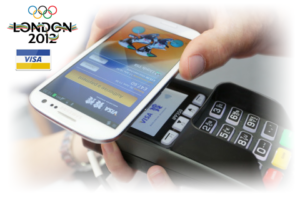
As a part of Visa’s Olympics marketing push for the future of Mobile, a limited edition Samsung Galaxy S III was provided to some Visa sponsored athletes and trialists. The device featured an Olympic-branded version of Visa’s mobile payment application, Visa payWave which uses Near Field Communication technology, or NFC. To make purchases, consumers simply needed to select the Visa icon on the Samsung device and hold the phone to a contactless payment terminal to pay.

It seemed as though Visa had all the pieces in place to make this Olympics a Mobile Payments success; a dominant payment network, including Visa only ATMs positioned throughout the games, NFC-enabled vendors able to take the mobile payments, and spectators with smart phones who could pay via mobile. The only problem was competing against an Olympic veteran of every games, cash.

During Great Britain’s Men’s Soccer match versus the United Arab Emirates, spectators were unable to pay for food and drinks at Wembley Stadium by credit card or mobile payment after terminals went down.  Many ticket holders described the lines that subsequently built up as ridiculous and said a lack of cash machines at the west London ground added to the problem.

A spokesman for Visa was quick to point the finger at Wembley officials, placing the blame firmly on the stadium’s network infrastructure saying, “We understand that Wembley’s systems failed and therefore they were only accepting cash at the food and beverage kiosks.”

Twitter was bombarded with thousands of angry posts from people who found it completely unacceptable that they couldn’t feed themselves. This was due to the fact that the only available way to pay was with old-fashioned cash and coins, a means of payments Visa wanted to push away from with its mobile payment implementation.

In these games, mobile payments did not expand as much as Visa had anticipated.  Add that to the complete network failure at Wembley Stadium and it would seem that mobile payments were a flop at this year’s Olympic Games.  The silver lining however, is that mobile payments did have a huge presence at the games.  And the uproar caused by the network failure seems to prove that we are moving away from cash as a society.  Just a few years ago, credit card terminals going down at the Olympics might not have been such a big story, let alone a trending topic on Twitter.  It seems for the London Olympic Games, cash took the gold medal yet again in payments, but with the doubling of Mobile users here in the U.S. and the increase globally; cash may soon be unseated by mobile payments.

Industry Terms: Discount Rate

This is the latest installment in The Official Merchant Services Blog’s Knowledge Base effort. Well we want to make the payment processing industry’s terms and buzzwords clear. We want to remove any and all confusion merchants might have about how the industry works. Host Merchant Services promises: the company delivers personal service and clarity. So we’re going to take some time to explain how everything works. This ongoing series is where we define industry related terms and slowly build up a knowledge base and as we get more and more of these completed, we’ll collect them in our resource archive for quick and easy access. Today’s term is Discount Rate.

Discount Rate

The simple definition of the term Discount Rate as it applies to merchant accounts — it is a combination of the fees charged by the card acquirer to the merchant for processing payment card transactions. So what that’s really saying is the Discount Rate is what the payment processor charges the merchant so that they can make profit off of the transaction — it’s not really a discount in any sense of the word when defined like that.

So let’s break this down a little more to understand this buzzword beyond just the obvious. A Merchant Account has a variety of fees. Some of these fees are charged periodically, such as a monthly service fee. Others can be charged on a per-item or percentage basis, such as a Chargeback Fee. Some fees are set by the merchant account provider.

The majority of the per-item and percentage fees, however, are passed through the merchant account provider to the credit card issuing bank according to a schedule of rates called interchange fees, which are set by Visa, Discover, and Mastercard.

Each merchant services provider has real costs in addition to the wholesale interchange fees, and creates profit by adding a mark-up to all the fees they have to take on to provide their services in the first place. The discount rate comprises the combination of dues, fees, assessments, network charges and that additional mark-up merchants are required to pay for accepting credit and debit cards. The largest of these fees by far is the Interchange fee.

There are a number of pricing models that merchant services providers utilize, but Host Merchant Services uses the Interchange Plus pricing plan.

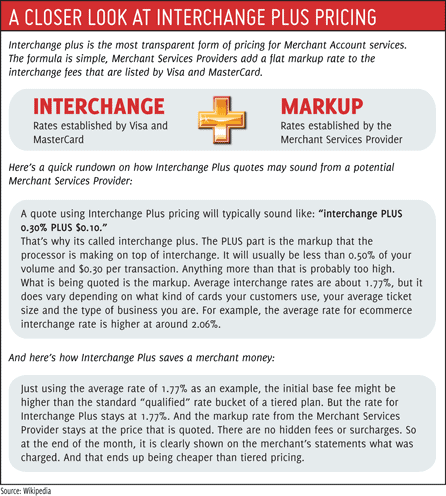
Interchange Plus pricing means that the acquirer charges you a variable MSC consisting of the cost price plus a fixed markup. Interchange Plus Pricing  is exclusively how we quote at Host Merchant Services. Interchange Plus, also known as Cost Plus, pricing gives the customer a fixed rate over published Interchange Fees. This pricing format is normally quoted as a discount rate (percentage fee) along with a per item or authorization fee. The great thing about Interchange Plus pricing is that you always know exactly what you are paying to your processor to services your account. Think of Interchange, and all the associated fees, as an unavoidable cost. No matter who you process with, you have to pay these fees. They may be labeled differently, or wrapped up in a confusing pricing tier, but one way or the other, you are paying Interchange fees. By understanding the markup you pay over Interchange, you know exactly what you pay to your processor and exactly what is going to the card associations. That allows you to make a decision on whether or not the markup seems reasonable for the service you get and choose your processing partner accordingly.

Here’s a small graphic explaining the basics of how Interchange Plus works.

Industry Terms: Payment Gateway

This is the latest installment in The Official Merchant Services Blog’s Knowledge Base effort. We want to make the payment processing industry’s terms and buzzwords clear. We will eliminate any and all confusion merchants might have about how the industry works. At Host Merchant Services, we promise to deliver personal service and clarity. So we’re going to take some time to explain how everything works. This ongoing series is where we define industry related terms and slowly build up a knowledge base and as we get more and more of these completed, we’ll collect them in the resource archive for quick and easy access.

Payment Gateway

Today we will focus on Payment Gateways and how they work, in order to wrap up our week of E-commerce driven content. A payment gateway allows E-commerce merchants to accept credit cards on their websites. Sensitive payment information is encrypted by the gateway to ensure that it passes securely between the customer and the merchant. We have defined a POS, or point of sale system already for the Knowledge Base. A payment gateway can be considered a virtual point of sale system. The gateway acts as a “middle man,” allowing communication between online shopping carts or virtual terminals and the banks processing the transaction.

The process can be broken down like this, it starts when a customer places an order on a website by pressing the “Submit Order” button in an online shopping cart. The payment gateway then forwards the transaction information to the payment processor used by the merchant’s acquiring bank. From there the payment processor forwards that information to the appropriate card association (ex Visa, MasterCard). The credit card issuing bank receives the request, or the Authorization and does the necessary credit or debit check and then sends a response back to the processor in the form of an approval code (ex approved, denied). Next the processor forwards the authorization response back to the payment gateway. After receiving the response, the gateway forwards it on to the website, which then evaluates it as a relevant response and relays the outcome to the merchant and cardholder. Finally, the merchant then fulfills the customers order, then after a batch the acquiring bank receives the funds, and deposits them into the merchants bank account.

Payment gateways can be stand-alone systems designed for integration with other 3rd party systems, or they can be bundled with their own shopping carts and virtual terminals. It’s worth noting that most merchants will not need to install additional software on their own servers to run a basic payment gateway. Some payment gateway providers are simple to implement, but do not offer much customization. Others are more complex but can be customized to your needs.

Host Merchant Services offers a variety of E-commerce solutions to fit your business, including Transaction Central, our own cutting edge in house payment gateway. HMS is able to interface with most of the major Payment Gateways out there, including Authorize.net. We also offer unparalleled protection for all of our merchants in the form of our PCI Compliance Initiative.


Industry Terms: CVV

This is the latest installment in The Official Merchant Services Blog’s Knowledge Base effort.  We want to make the payment processing industry’s terms and buzzwords clear.  We will eliminate any and all confusion merchants might have about how the industry works.  At Host Merchant Services, we promise to deliver personal service and clarity.  So we’re going to take some time to explain how everything works.  This ongoing series is where we define industry related terms and slowly build up a knowledge base and as we get more and more of these completed, we’ll collect them in the resource archive for quick and easy access.

Card Verification Value (CVV)

In continuing with our E-Commerce focused blogs this week, I thought it would be appropriate to introduce the term Card Verification Value, or CVV. There are two types of CVV codes, called CVV1 and 2, respectively. The CVV1 is embedded in the magnetic stripe of track 2 of a card. The purpose of the first CVV is to verify data stored on a card is valid and was issued by a bank when used in person.

The second and more prominent CVV2 is a three-digit code (Visa, MasterCard) printed on the back of credit and debit cards.  American Express cards have a ‘Unique card code’ that is four-digits long and printed on the front. Discover has a 3-digit code on the back of its cards, but refers to this as a CID (Card Identification Number). These codes are used in card not present transactions occurring over the Internet, or MOTO as an added security feature to prevent fraudulent purchases. The code is meant to verify that the customer has the card in their possession.

Security Benefits

For Merchants:

Merchants requiring CVV2 codes for their card not present transactions can dramatically reduce fraud in their businesses. Using this extra layer of protection can stop breached or fraudulent cards from going through. Avoiding potential retrievals and chargeback fees.

For Consumers:

Entering your CVV2 code when purchasing online products verifies that you are who you say you are. Under Visa regulations, merchants cannot store CVV2 codes in their databases.  This means any card numbers lost in a breach would be less useful. In this sense, a consumer is protected on both sides of a transaction, once when verifying the purchase, and then again in terms of breach or fraud security.

Industry Terms: Debit Cards

This is the latest installment in The Official Merchant Services Blog’s Knowledge Base effort. Well we want to make the payment processing industry’s terms and buzzwords clear. We want to remove any and all confusion merchants might have about how the industry works. Host Merchant Services promises: the company delivers personal service and clarity. So we’re going to take some time to explain how everything works. This ongoing series is where we define industry related terms and slowly build up a knowledge base and as we get more and more of these completed, we’ll collect them in our resource archive for quick and easy access. Today’s term is Debit Cards.

Debit Cards

debit card (also known as a bank card or check card) A debit card looks like a credit card but works like an electronic check. The thin plastic card that provides the cardholder electronic access to a bank account at a financial institution. Payments made with Debit Cards are deducted directly from that checking or savings account. If a cardholder uses a debit card at a retail store for example, the cardholder or the cashier can run the debit card card through a scanner — oftentimes the very same terminal credit card purchases are swiped through. This action enables the financial institution to verify electronically that the funds are available and approve the transaction. Most debit cards also can be used to withdraw cash at Automated Teller Machines (ATMs).

Unlike credit and charge cards, payments using a debit card are immediately transferred from the cardholder’s designated bank account. This difference is key in one sense, as it creates a completely different set of protocols and standards for debit transactions in the payment processing industry. This can be seen most recently in the Durbin Amendment of the Dodd-Frank Act. The financial reform legislation set a hard cap on debit card swipe fees. But has absolutely no affect on credit card transactions.

For many consumers, the card they carry can be used as both a credit and a debit card when presenting it at a retail store for purchase or using it online. Oftentimes, a consumer is asked to choose between credit or debit.

For the consumer the distinction can have this impact:

  • The card’s individual rewards program can vary depending on debit or credit. In many cases, a credit transaction reaps greater points  or rewards from these types of programs.
  • A debit transaction can allow for cash back right at the point of sale.
  • A credit card transaction can have stronger protection. It takes time before it is “batched” out by the merchant. And the credit cards themselves have more fraud protection layers than debit cards typically have.

For the merchant and for the banks involved the impact is this:

  • The transaction network that the purchase is run through is separate for debit and credit.
  • The fees associated with the transaction are different. After Durbin, the fees face a hard cap ceiling on what the merchant can be charged. Credit has no such ceiling and so smaller transactions — say purchases under $10 — can end up costing a merchant a bit more in fees.

The distinction between credit and debit was stronger in the 1980s and 1990s, but it still exists. It’s worth knowing what your options are as both a consumer and a merchant.

E-Commerce and Video Games

Today I’d like to take a moment to venture somewhat further afield than I usually do — and then bring it all back home to settle into some insight about E-Commerce. Primarily what I want to look at is the evolution of video games in the past couple of years and how things seem to be gravitating so much more toward E-Commerce friendly offerings while leaving Brick and Mortar video game retailers scrambling to keep up.

Just the other day, EA Games (Electronic Arts) released its financial results for the first quarter of this year and among the most eyebrow-raising statistics to come out of the figures was the breakdown of EA’s profits by platform. Of the three platforms for EA, PC delivered $276 million, the Xbox 360 $292 million and the PS3 $267 million. That means PC games eclipsed the Playstation 3 platform and made a strong bid to catch up to XBox 360 earnings.

PC’s strong showing can be tracked to increased revenues from digital sales. Which says a lot about how video games are changing in their format, evolving to suit consumer needs, and fully embracing the power of E-Commerce. This isn’t exactly a new trend, but it’s solid evidence of the paradigm shift that’s taken place. Video games are ingratiated into our culture these days. The FX Channel exists, and is extremely gamer-centric. People play things like Farmville online and let everyone they can know about their successes in their virtual farmland. Games like Halo and Call of Duty drive console game sales higher and higher. And PC games ranging from World of Warcraft to Minecraft take up large chunks of peoples’ time.
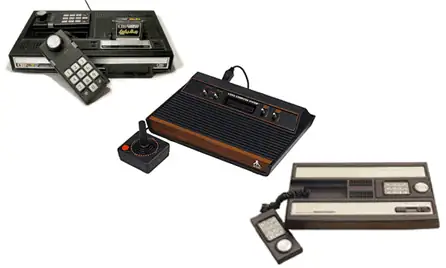
I’ve grown up with video games and am one of the first generations to pretty much be around them for my entire life. So developments like EA’s earnings statement tweak my interest.
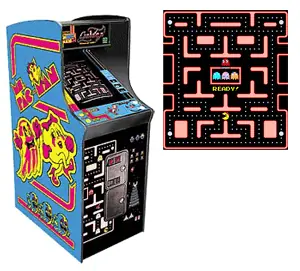
Atari’s Raiders of the Lost Ark game that was roundly criticized for how unplayable it was (Spoiler Alert: You had to navigate yourself while using a parachute to break the chute on a branch at the proper angle of descent so you’d slide into the cave under the branch, then dig a hole with the shovel that most people never knew you needed. Yeah, I beat it with luck!) Then we get into Nintendo, Sega, and things ramp up quickly to the current PS3 vs. XBox wars that EA has situated itself comfortably between by making many of its titles accessible on both platforms.

This entire time, the video game market was dominated by a brick and mortar outlet. The arcade of my childhood was a place you went to. The EB Games store I bought Madden Football from was a store I had to visit. I started using pocket change to pay for games and ended up swiping a credit card through a machine, but it was always at a location.

Then came my experience with Massively Multiplayer Online Role Playing Games, and a huge introduction to gaming through E-Commerce. I started out buying a game like Everquest or World of Warcraft from a box at a store. But it had a subscription cost attached to it to keep playing it. And the model was to continue playing it month after month after month after month. The subscription cost was a recurring payment, made through the game’s website. It was e-commerce. And it was just the first step.

Eventually the games stopped shipping boxes. You could buy the expansion directly from the gaming company. It would download directly to your machine. And your game would update. Then companies like Steam got involved. You could now buy games directly from their site and download them. No more going to a store to buy a game. Unless you still played console games. Though all of the most successful Brick and Mortar game shops were also offering their games through their online shopping center.

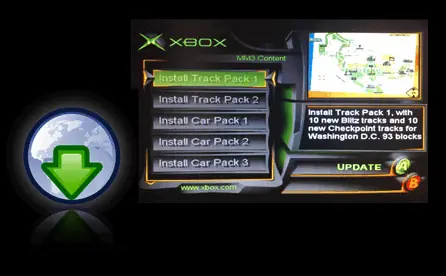
And the console platforms jumped in big-time, with downloadable content. XBox 360 demonstrates how readily acceptable this evolution has become, and this is why XBox 360 still outpaced PC games in EA’s earnings report. You subscribe to XBox’s “live” service, and you get access to apps and content. You can download new games, updates to games, as well as movies and television shows, all through your XBox.

My own personal example, last winter I ordered NBA2K12 through Gamestop’s online shopping center. Got the game, and downloaded roster updates through XBox live immediately. Then went and watched a movie on Netflix through my XBox. It’s all digital content available directly from your interface. This is growing in leaps and bounds with all gaming companies. PC Gaming’s healthy revenues for EA are because of digital content that is available.

What this means is that video games are now becoming something people purchase online, and download directly to their gaming system. It’s a 100% E-Commerce transaction. For credit card processors that means that cash is no longer involved in the competition for video gamers’ money. It’s quickly becoming all plastic all the time.
Another wrinkle added into this which impacts E-Commerce is the shift away from the subscription based model for those MMORPGs I mentioned above. This is also something revealed in the EA earnings report. Last year EA launched its MMORPG Star Wars: The Old Republic. It won a lot of gaming industry awards, and quickly announced it had over 1 million subscribers. It’s goal was to compete with World of Warcraft, Blizzard Entertainment’s MMORPG giant which had dominated that sector of gaming for years. Unfortunately, the subscription model is a dinosaur and not even the power of the Jedi Knights and their Midichlorian fueled lightsaber gimmicks could change this shift.

Freemium Models had been the new thing in MMORPGs. These were touted as “free to play” games. You purchase the game (though this cost tends to not be all that high since you can get a lot of these games very cheap on Steam for instance), and then you play it without a subscription fee. You then pay for things you want in the game — a common example is bag space to store all of the items and junk you pick up while playing — through micropayments. The game’s free for the basics, but you pay for premium additions. So say you want another bag to store more orc fangs in? You pay a couple of bucks and you get that bag. You want to play the new expansion with the new quest zone? You pay a few more bucks and that expansion is yours. You want a horse to go from place to place faster? You pay a few more bucks. Your game is free, but the stuff you want in the game or the new additions to your game, they all cost money.

This is the model that EA’s Star Wars: The Old Republic announced it was changing to with its earnings report. This effectively killed the only real subscription based MMO left besides World of Warcraft. And it’s not that surprising. The Freemium model makes money and keeps the games going strong. And it keeps getting adapted to the point that its being used in the Console Platform system as well. You can buy added content to many of the most popular XBox games being played right now. You have your XBox Live account, you pay some extra bucks for a new part of the Half-Life story or more stuff to do in Skyrim.

It’s where Video Games are headed. The arcade is dead. The stores selling boxes of games are almost dead. It’s all online and it’s all 100% completely tied in to e-commerce and credit card processing.

To answer an old goldfarmer’s joke from the comic strip VG Cats: “How I mine for fish?”

With a credit card and a microtransaction.