Tag Archives: credit card payment

electronic payments and secure transactions 199796283

Five Reasons to Accept Credit Card Payments through a Virtual Terminal

The economy has been on a roar, and consumers are confident and are happily opening up their purses to get out, spend, and plan vacations they’ve been delaying for some time. Today the U.S. economy is bigger than it was at the beginning of 2020, primarily driven by consumer spending. This is giving rise to more and more business starting up. In 2020, 4.4 million new companies were started, increasing 24% from the year prior. 

This is all welcome news for businesses looking to cater to such consumers ready to spend. However, challenges abound for businesses as the spending habits of consumers have significantly changed over the past two years. Cash is no longer king. People just don’t like to use cash as a means of transaction. In fact, three out of ten consumers don’t even use any cash in any given week. While there has been a strong surge of cashless transactions over the past year, not all businesses are prepared to thrive in this rapidly fluid environment. These businesses need to accept noncash modes of payment such as credit and debit cards and ACH/eCheck payments seamlessly and securely.

Point of Sale (POS) systems are aplenty, but not every business needs POS equipment as they may not be client-facing. Or they may not have the wherewithal to outlay cash for such devices just as they are starting to bootstrap their business. For many companies, the best solution is a virtual terminal. Below, we look at a virtual terminal, how it works, and why your business may need one.

What is a Virtual Terminal?

A virtual terminal is an internet-based payment processing application that lets merchants accept payments anytime, anywhere, on any device with an internet connection. Whether a business accepts payments via phone, mail, fax, email, or in person, merchants can use their existing devices such as a desktop PC, a laptop, or a mobile device such as a tablet or smartphone as their POS.

To make life easier, you can purchase a small card reader to plug into your laptop or smart device. However, it isn’t a necessity. All your business needs are internet access, a merchant account, a payment gateway, and a browser.

How does a Virtual Terminal work?

Virtual terminals are set up in coordination with your payment processor/ payment gateway. You start by simply logging into your merchant account or payment gateway and initiate the virtual terminal. From there, you would select the payment type, debit, credit, or ACH, and enter the sales details such as the amount to be processed and any other information pertinent to the transaction.

To enter the card data, you can key it in and any billing/security information required. If the business has a USB card reader plugged into the laptop or mobile device, the card data can easily be swiped. The transaction is then submitted, and within seconds, the merchant receives confirmation of the card either being approved or denied. With a virtual terminal, businesses have the option to email the receipt to the client and process any refunds or track the sales history of the company.

Keep in mind that if a business is not using a card reader to collect card data instead of keying it in, it is classified as a card not present transaction, even if the cardholder is right there in front of you. This results in higher processing rates, which can be mitigated by accepting ACH/eCheck payment and utilizing a card reader.

Why does your business need a Virtual Terminal?

Below are some reasons why your business may need a Virtual Terminal.

Save money on POS equipment – merchants don’t need to buy additional equipment to process payments via a virtual terminal. Businesses can use their laptop, tablet, or smartphone. With a virtual terminal, companies quickly eliminate a major headache of paying hefty upfront equipment costs and reading the fine print of equipment agreements to ensure they are not locked into a long-term non-cancelable contract for outdated POS.

Ease of use – A virtual terminal offers much peace of mind given all the friction it eliminates. A retail business that may have relied on a single POS device to be shared at peak times to get payments processed can now have each of its employees log into the virtual terminal account to process the payment. Businesses can easily track which employee processed which transaction; a level of accountability is not readily available with a single POS passed around.

Recurring Payments – businesses can easily set up recurring payments by scheduling a specific transaction on repeat. Once you process a payment for a particular service or product and enter all the card and billing details, it can be set as a recurring transaction.

Insight: The data stored on a virtual terminal lets business owners track their payment history and can help them plan for peak times in terms of inventory and staffing. Critical data about consumers, what they spent money on during a particular time of the year is also easy to track. This level of insight can help businesses build a loyalty program or run a very targeted marketing campaign.

Over the last few years, consumer spending habits have experienced seismic shifts driven by smartphone technology and a lesser inclination towards the hassle of carrying around currency and coinage. It’s much easier to swipe a phone to pay for something rather than pull out a wallet, hand over cash, and possibly hear that they don’t have change. If they do, count it and stow it all away.

Even as merchants come to terms with the new paradigm, they still loathe spending an excessive amount upfront for POS equipment. Alternatively, virtual terminals are an excellent option for businesses to accept all types of payment methods. Traditional laptops or smartphones can easily be used as the makeshift POS device to settle the transaction as long as you have a payment gateway and merchant account setup up.

guest takes room key card at check in desk of hotel close up 71533469

How to Handle Check-In and Checkout Processes Through Merchant Services For Hotels

Merchant services for hotels work a little differently from what you’d find in other industries. Instead of processing sales or issuing refunds, you will check in and checkout your customers. The process sounds simple, but you could potentially deal with chargebacks if you aren’t careful in your work. 

You must provide the proper dates for checking your customers in and out of a hotel when handling their credit cards. The customer’s issuing bank must receive the data necessary for ensuring an authorization for using the card. The effort ensures the customer’s protection while also keeping you covered if the customer has a later dispute.

The Consideration of Extended Authorizations

Hotels can utilize extended authorizations when collecting credit card payments. Your hotel can collect a guest’s credit card data and keep it on file. Your hotel can then authorize the card when the customer arrives. The customer will not be fully charged, as the authorization will stay on the card until your hotel finishes the sale.

The entire sale will not be fully authorized until the customer’s stay ends. It could take a few days, or it could take a couple of weeks. The extended authorization process can be risky, but you can keep it under control by running proper check-in and checkout processes.

You can use a new system to reduce the risk of chargebacks due to a card being open longer than necessary. The setup lets you list the specific time you’ll be keeping a person’s reservation open. You can charge the customer for whatever one uses at your hotel, plus you won’t risk a chargeback from billing someone for more than necessary.

Steps For Handling the Transactions

You can use these steps to manage the check-in and checkout processes when managing a sale at your hotel:

  1. You can check your guest in through a point of sale terminal you use through a merchant service provider. You’ll enter the card data and the amount you plan on charging the customer.
  2. Enter the room number the guest will use. You can produce a temporary key that works for whatever room the guest will utilize.
  3. List the number of nights that the person plans on staying in that room.
  4. You should get an invoice number for your guest’s stay. You can use this to manage the checkout effort later.
  5. The checkout process will start after the guest’s stay ends. It can start after the proper number of nights, or it can begin early if the guest has to leave on short notice. You’ll enter the guest’s invoice number here.
  6. Enter the final amount you will be charging. The total should reflect the daily room rate.
  7. Enter the tax rate you will charge. The tax rate will vary by location.
  8. Confirm the checkout time.
  9. The transaction will close, as the guest will have fully completed one’s stay at your hotel.

You can manage this process for merchant services for hotels to ensure you’re managing card transactions well. The effort should be about preventing chargebacks by listing the stay data for each guest.

Mobile Payments vs. Credit Card Payments

Mobile Payments vs. Credit Card Payments

Mobile payments have never been more popular. People are using mobile payments these days to complete quick transactions through their mobile devices. You’ll notice a few distinct differences when looking at mobile payments vs. credit card payments. Many of these entail the technologies used and how people may find mobile payments to be more useful for their needs.

The Concept of Mobile Payments

Payment Orchestration is an Important Piece of the Global Commerce Puzzle

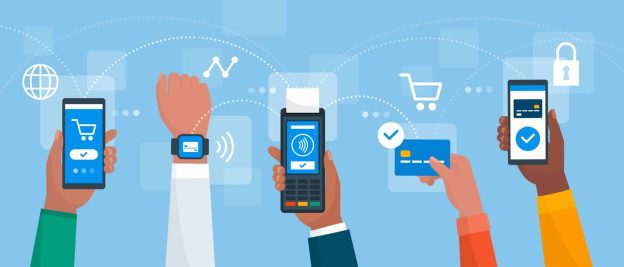
A mobile payment entails a transaction made through a mobile device. The customer can use a smartphone, smartwatch, or even a wristband. 

The user will pay for something with a mobile payment solution like Apple Pay or Google Pay. The system incorporates credit card or bank data in one platform. The user will transmit one’s payment information from that account to the retailer to complete the purchase.

Each mobile payment comes from a digital wallet. The wallet will link to an appropriate interface or platform. The wallet will include the bank or card info. The mobile payment system takes the payment info from the digital wallet and uses it to cover the transaction. Some digital wallets, like what PayPal uses, can include specific amounts of money someone withdraws from a bank or credit line before spending that total.

The system simplifies how people can pay for their purchases. Customers don’t have to get a physical credit card out to complete a transaction. The buyer will have more control over the purchase experience, especially as that person can handle the payment in less time. The customer may also feel more comfortable with the transaction process when using a mobile payment system.

Mobile Payments vs. Credit Card Payments – A Safer Solution

One difference between mobile payments and credit card deals is that mobile transactions are safer. A mobile payment can help the customer send data from a digital wallet to the retailer, completing the transaction without providing any cards. The mobile payment system ensures full security over a deal.

Mobile Payments vs. Credit Card Payments

You won’t see that same security with a credit card. Although credit cards have evolved to feature a chip-based system that is harder to hack, there is always the potential for someone to steal a card. A person can always steal a card or its identifying numbers and use it to commit fraud.

But with a mobile transaction, the thief would have to use a thumbprint scan or other system to confirm one’s identity. It would be tough for that person to try and duplicate that thumbprint in this process. Many mobile devices are also locked through PINs or other biometric features, so that adds extra security to the deal.

How People Get These Systems

People will apply for credit cards by filling out the proper forms to get them ready. People will submit credit info to highlight their ability to pay their balances. Some people may be rejected for cards if they have poor credit ratings. The ones that do get accepted may be subject to high-interest rates and restrictive charges.

A mobile payment is different, as a customer will require a suitable payment app on one’s device. Google Pay and Apple Pay are the most prominent apps, although Samsung Pay is available on many Samsung devices. The user will link one’s existing bank or card info to the app. The system is simple and gives the customer more power over how one will pay for items.

Since people don’t need credit to get a mobile payment account, you can expect these payments to be more common. People prefer payment choices that don’t require lots of effort or risk. Some of these payments will entail direct bank transfers, making the transaction process easier to follow.

Convenience For the Customer

Customers also use mobile transactions because they are more convenient:

  • There’s no need for the customer to keep lots of cards on hand. The customer’s payment info is all on the same mobile payment app.
  • It takes less time to complete a mobile payment than it does to run a credit card.
  • It is easier to track a phone or other smart device if it gets lost than if one’s credit card is lost.
  • Mobile payment platforms can inform customers of whatever coupons or other discounts they have stored with them. They will not forget about these like they would if they had traditional coupons they would use with a credit card.

What Systems Accept These?

One difference between mobile payments and credit cards entails the point of sale or POS systems that can accept these choices. Most POS setups can accept credit cards, with the technology being so common.

However, not all platforms can accept mobile payments. A POS system must support a system like Google Pay or Apple Pay to complete mobile payments. A POS setup can also work with different integrations with systems like PayPal, Venmo, or anything else a customer wants to use.

The extra effort necessary to accept mobile payments makes it tough for some retailers to support them. As more people start using mobile payments and the technology becomes more commonplace, you can expect to find more POS solutions that can support mobile deals.

Will Mobile Payments Take Over?

Mobile payments may become more popular than credit cards after a while. It will take a long time before anyone can figure out what will happen.

The problem with mobile payments is that many people are uncertain about how they work. They also might not have the mobile devices necessary to complete these payments. Some are also comfortable with credit cards, especially since chip-based ones are more secure than older magstripe models.

Will Mobile Payments Take Over

You can expect mobile payments to become more prominent, especially as mobile devices become more accessible. Potential advances in payment technology will also help increase the chances for these payments to be popular and useful among people. Whatever happens, it will be exciting for people to see as they look at how payment trends change, and people start to see what’s more efficient and effective.

FAQ

stack of credit cards and doll 2162005 (1)

Is Not Accepting Credit Cards Hurting Your Bottom Line?

You might be worried about accepting credit cards at your business. You could have concerns surrounding how much it costs to purchase the equipment necessary for reading these cards. The fees for each transaction may also be a problem. You might not be comfortable with spending a percentage of each card transaction on handling the work.

Maybe your business is a cash-only entity by design. There are many cash-only businesses and operators, like food trucks, laundromats, and nail salons. People who provide at-home services like dog-walking or babysitting may also operate on a cash-only basis.

But you might be leaving out a significant number of customers if you don’t accept credit cards. Accepting these cards can be a worthwhile investment, as they can increase your potential to make more money and bring in more customers.

Why Aren’t You Accepting These Cards?

You could have plenty of legitimate reasons why you aren’t accepting credit card payments:

  • Your business platform might be one that doesn’t manage credit cards.
  • You might live in an area where online connections are poor. It is often tough for people in rural areas to get reliable online signals.
  • Maybe you want to simplify your accounting efforts. It is easier to review your account details through cash accounting. You’re only reviewing the cash that comes in and out of your business here.
  • You might want to wait to collect the funds you require. Credit card payments have to be held in a merchant account before you can get it ready for use elsewhere.
  • There’s also the chance you might be hesitant in accepting cards. Your business might have been around long enough to where you aren’t all that concerned about accepting credit card payments. You might figure there’s no more of a need for you to accept these cards.

These are understandable reasons, but the problem is that people want choices when paying for things. They appreciate how credit cards can help them pay for things in moments. Not accepting these cards can be a risk if you aren’t cautious enough over what you manage.

The General Risks of Not Accepting Cards

The issues that come with not accepting cards are plentiful:

  • You may develop a negative reputation among others if you don’t accept credit cards. People might not see you as being overly reliant.
  • There could be suspicion among some people surrounding your business efforts if you run a cash-only business. Many companies might fabricate their earnings for tax purposes if they don’t accept cards.
  • People are becoming more in tune with digital payment solutions. These include Apple Pay, Google Pay, and other systems that link with credit cards. Failing to accept these choices could cause you to lose customers.
  • People who earn more money are more likely to use cashless transactions. You could earn more money if you accept cards, as you’re targeting people who are more likely to afford whatever you’re selling.
  • It will be harder to issue refunds to your customers if you run a cash-only business. It is easier to provide refunds through credit card deals, as you can trace a customer’s transaction and refund it from there.
  • Customers expect businesses to be up-to-date when handling various technologies. A company that doesn’t accept credit cards might be interpreted as being behind the times and unable to process deals.

Is It Possible To Spend Less When Accepting Credit Cards?

Accepting credit cards is one of the best things you can do when running a business. By accepting these cards, you let people know that you have a full infrastructure where you can support whatever transactions people wish to manage. But you can also establish a few policies surrounding what you support when getting these cards ready for use in any case.

You can utilize a few points to help you accept credit cards while spending less than you might expect:

  • You can select the specific cards you wish to accept. You could decline to accept American Express cards if you cannot afford the higher-than-average interchange fees Amex charges. Most customers use Visa and MasterCard credit and debit cards, so sticking with those two choices will be necessary.
  • You can establish a $10 minimum on card purchases. The minimum encourages people to use cash when they aren’t buying too many things. It also reduces the risk of people trying to use counterfeit bills when handling high-value cash payments.
  • There are many small POS systems you can utilize if you aren’t willing to commit to a full-size platform. Companies like Square and Clover have various POS solutions that fit everyone’s needs.
  • You can also incorporate online-only credit card processing systems in your work. PayPal is one of the top online-only options you can incorporate in your work, especially if you do much of your business online.
  • Be sure to check the terms surrounding each credit card processing provider on the market. All parties have unique rules for operation and different rates and fee schedules. You can compare options to find a solution that fits your budget.
  • There’s an option to add a fee to your purchases to offset any interchange fees you will spend on a deal. Be sure the move is closely integrated with your orders and that you don’t charge more than necessary to cover the total.
  • You could also produce a policy where you only offer store credit if you have to give a refund to a customer. The policy can reduce the risk of chargebacks. You can use this if you have a high percentage of return at your business.

Remember that credit card payments are critical to your business’ success. Failing to accept these payments will keep you from earning more money. You could also hurt your reputation if you don’t accept these payments. But by doing your research and coming up with a plan, you’ll have an easier time accepting credit card payments without spending more than you can afford.

Tiered vs. Interchange Plus Part 2

The Official Merchant Services Blog continues it’s two-part series on Tiered Pricing vs. Interchange Plus. After yesterday’s blog defined what Three-Tier pricing looks like, we now take a closer look at how it falls apart and does not save merchants money. Then we’ll outline Interchange Plus pricing and highlight why Host Merchant Services uses this plan to save its merchants money.

Where the Problems Occur

The three tiers of a typical Tiered Pricing plan are commonly referred to as rate buckets or buckets. And Merchant Service Providers who use tiered pricing structures for their customers utilize a “qualification matrix” that dictates which rate bucket the various interchange categories will qualify to. That means that the fees can shift from month to month as a merchant consistently fails to meet the “standard” transaction of the Qualified bucket. Thus each month they consistently have to pay surcharges from the other two buckets which aren’t adequately displayed or described on their statement.

And because these fees and surcharges from the other two bucket rate tiers are often hidden, that makes it difficult to accurately compare rates and fees from competing providers unless a merchant knows how each provider will be qualifying those categories. Because the categories aren’t directly comparable and because the qualification matrix can shift fees on a merchant from month to month, a common occurrence is a merchant can look at two separate tiered pricing offers from different Merchant Services Providers that look nearly identical because they use the same language for each tier, and yet could be different by hundreds of dollars each month.

Merchants Have to do the Hard Part

This puts the responsibility squarely on the shoulders of the merchant. They need to read the fine print of their statement and understand the subtle differences between the tiers to note when they get shifted to a different tier. This is the most common way Merchant Services Providers make money. The sales pitch when signing the merchant focuses on the low end bucket that saves the customer the most money. But then once the processing starts, buckets shift and the merchant gets a lot more charges than they initially signed up for.

So if your statement shows that you have a lot of mid-qualified or non-qualified surcharges each month, it’s time to consider switching to Interchange Plus, the pricing structure that Merchant Service Providers like Host Merchant Services offers.

The Advantage of Interchange Plus

Interchange Plus pricing is based on the “interchange” tables published by both Visa and MasterCard. At first that may seem like a daunting pricing plan. But it ends up being a lot easier to understand, completely transparent to the merchant, and less expensive than tiered pricing plans. Interchange plus pricing has the merchant pay the exact interchange fee from the tables in addition to a flat markup fee from their Merchant Services Provider. That’s where the name comes from: It’s the Interchange fee Plus the markup fee. This eliminates all of the hidden fees you would find in a tiered pricing plan. And gets rid of surcharges that merchants would incur for transactions that don’t fit the standardized portion of the rate bucket matrix. You pay what you are told you will be paying.

This makes it less popular than tiered pricing plans where Merchant Services Providers can make quite a bit of money off of those surcharges due to the latitude they have in defining their tiered bucket rates. But Interchange Plus makes statements easier to read, customer service easier to provide to merchants, and savings much easier to guarantee. All of those elements are cornerstones of Host Merchant Services. So Interchange Plus is the best fit for the company and for their customers.

Tiered Pricing vs. Interchange Plus

Today The Official Merchant Services Blog is going to delve into the murky world of hidden fees and tiered pricing plans. This is the first in a two-part series and it focuses on Tiered Pricing. Host Merchant Services offers an Interchange Plus pricing plan. The company offers this plan because of its transparency and the savings it can provide when compared to the far more popular tiered pricing plans. To get a better grasp of why Interchange Plus works so good for Host Merchant Services, it helps to understand what is happening with a tiered pricing plan and how that kind of plan works.

Hidden Fees From Tiered Pricing Plans Unfair to Merchants

Tiered credit card pricing can be unfair to small business owners. Many credit card payment processors calculate merchant costs using a tiered pricing structure. These tiered pricing levels increase the costs for merchants by suggesting they are paying one rate, but hiding other fees into the statements and in the end the merchant is paying a higher percentage. The answer to this problem is Interchange plus pricing.

Host Merchant Services uses Interchange Plus. And this pricing structure is the most transparent and easiest to read system in terms of the statement and the way fees are charged. The merchant sees everything they are being charged for in their statement. Nothing is hidden, and there are no shenanigans employed in getting merchants to think they are saving with a low rate that ends up being made up for in a series of other fees snuck into each statement.

Three tier pricing is currently one of the most popular pricing structures used in the payment processing industry. Here’s a table that defines the three tiers:

It’s all About The Surcharges

Tiered pricing plans start with the qualified rate. This is the standard fee a merchant is charged when they accept and process a credit card or debit card transaction. This is also the lowest rate the merchant can incur. Transactions that don’t qualify for the standard set forth at that rate get hit with various surcharges. And its these surcharges where the processor starts to make a lot of profit. And its these surcharges which are usually the hidden fees that don’t show up on a merchant’s statement.

There are over 500 different interchange categories between the major credit card companies and each category has its own charge that is comprised of a percentage and often a per transaction fee. The three tier pricing structure merges all of these charges into three buckets. And a Merchant Services Provider has its own discretion, to an extent, as to which bucket or tier they place these categories.

These underlying interchange categories are not disclosed on a tiered pricing plan so there’s no way of knowing into which bucket each category is being charged. This is where hidden fees crop up.