Tag Archives: credit card

bank balance english money 14800439

Lloyds Bank Credit Card Holders Can Use MasterCard’s Open Banking Connect

Lloyds Bank Credit Card Holders Can Use MasterCard’s Open Banking Connect

The MasterCard Open Banking Connect service provides support for managing payments the right way. With this system, users can start a PISP or Payment Initiation Service Provider payment and pay off their credit card balances. The user can create a credit card bill through a mobile app and then withdraw funds directly to their credit card account, ensuring they can manage their payments as necessary.

The Open Banking Connect service has been available in many places, but it is now available in the United Kingdom for the first time. Lloyds Banking Group is giving its members access to the Open Banking Connect system.

The MasterCard will be available to people who use all the bank’s brands. These include the Bank of Scotland, Halifax, and Lloyds Bank brands. These brands are available in many places around the United Kingdom and have some support overseas with different partner banks.

People can use the Open Banking Connect system to help them handle their credit card payments well. The setup will do well for Lloyds Bank, as it helps them run their payments right without struggling to try and keep them running well.

A Focus on Simplicity

The Open Banking Connect service provides a simple approach to paying bills and facilitating transactions. It offers third-party service providers the option to link to different financial institutions. The customer will provide data on one’s financial efforts to Lloyds and MasterCard, and their app will provide access to the details they need.

Open banking activities can work on the system regardless of the API being used or the method for how the API runs. The setup time for handling things will be minimal. Service providers can instead focus on different projects they would prefer to complete for their growth.

The new PISP lets customers choose how they will pay their credit card balances. The effort saves time, plus customers don’t have to enter their debit card data all the time. The customer also doesn’t have to set up a credit card to where the person paying for it is doing so through an account on another banking app. The same Lloyds app may work when paying off one’s MasterCard dues.

The design comes as people are constantly looking for new ways to handle their funds. People appreciate it when financial service providers help them handle their content well.

Open Banking Is Exciting

MasterCard’s Open Banking Connect is a solution that concentrates on keeping financial transactions open and easy to follow. The concept of open banking will be sensible for managing many unique needs that people hold.

Open banking is a process that will benefit customers in many forms. Open banking gives a bank the power to share consumer data with third parties. The customer agrees to have one’s data shared before the process works. Open banking provides better functionality regardless of the API. Offering the Open Banking Connect feature from MasterCard will expand upon what Lloyds will do when supporting its consumers’ financial activities.

An Expansion of Lloyds’ Services

The work Lloyds Bank is managing is an expansion of sorts of different services Lloyds is aiming to handle. Lloyds has been supporting open banking in the last few years. Open banking lets people manage their funds in many accounts. People can even handle accounts from different banks through the same Lloyds platform.

Lloyds Bank continues to be one of the United Kingdom’s top financial service providers. Lloyds continues to offer loans, insurance services, and other financial points for everyone to follow. The new partnership with MasterCard shows how Lloyds wants to make its services more convenient and useful to everyone who wishes to use the system. It becomes easier for people to handle their funds when they know what to expect and see in their efforts.

Essential Features to Note

There are some additional features of the MasterCard Open Banking Solutions system that Lloyds Bank can utilize. Many of these focus on the developmental processes involved, but they can be worthwhile when used right:

  • The fast onboarding system keeps the setup time for producing content down. A bank can get this ready in moments, keeping the development costs down. The program can also be customized for whatever unique needs specific customers may hold.
  • The secure sandbox MasterCard provides helps companies test their banking efforts. The open banking testing makes it easier for a group like Lloyds to see that its environment works well.
  • The authorization system that MasterCard uses ensures a secure system that maintains proper connectivity and stays intact for as long as possible.

These features make it easier for MasterCard to provide its services to people. It also works well for people looking for something sensible for any need. The program is especially worthwhile in an environment where people are looking for convenient things they can use right now. People are tired of waiting for services, so they’ll want something useful they can trust immediately.

Expanding Services In Europe

The move from Lloyds Bank will help expand MasterCard’s services throughout Europe. MasterCard recently established a partnership with the payment technology company CleverCards to support digital cards throughout Europe.

But while this move may be appealing, there also exist concerns over how much it may cost to use a MasterCard credit card for some things in Europe. MasterCard recently increased its interchange fees by at least five times for customers in the UK who wish to buy from companies based out of the European Union. The move came amid the recent Brexit move that did not have any deals between the UK and the rest of the EU.

But whatever happens in the future, it will be necessary for people to see how well this system from Lloyds Bank works. The MasterCard Open Banking Connect platform will be worthwhile for many needs. It can be exciting for people to see how well the MasterCard system works as they aim to become closer with their money.
Credit Card Machine and POS System

Differences Between a Credit Card Machine and POS System

Starting out, many new business owners may feel baffled by a huge list of technologies and terms, especially in the payment industry, such as POS systems, credit card terminals, credit card processing, and so more. Many startups may feel confused when selecting the right device or technology for handling their day-to-day transactions and sales.

Today we will analyze the difference between credit card machine and POS system and where they can be used in a shop or any organization. before deciding on the right system for you, you need to assess what your particular organization needs.

Although both POS systems and credit card terminals allow merchants to accept multiple payment forms besides cash, they have their differences. In truth, we cannot say that one is better than the other. However, there is always the most suitable device based on your business model and requirements.

What is a Credit Card Machine?

cash on credit card machine 16156434

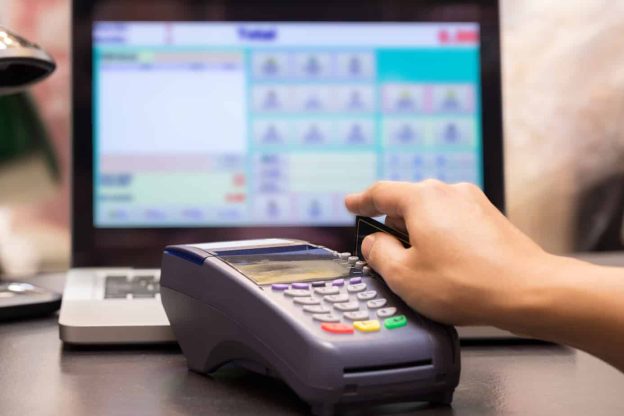
A credit card terminal is a payment gateway that doesn’t come with many features and capabilities besides its fundamental ability to process credit cards. In other words, a credit card terminal, also known as EDC Terminal (or Electronic Data Capture Terminal), enables merchants to accept debit or credit card payments.

Based on the terminal you are using; some credit card devices may come with unique features like connecting to a check reader or even processing loyalty cards or gift cards. However, most of them are simply responsible for swiping or tapping debit or credit cards to read the information encrypted in the customers’ cards.

The moment the customer’s card is swiped against the credit card terminal device, the information stored on the card is submitted to the machine for further processing. This method is considered highly cost-effective and, in fact, an eCommerce business depending heavily on its online sales cannot do without a credit card terminal.

There are numerous types of credit card terminals, including smaller, hand-held ones, which are generally easy-to-use and lightweight. Some of these devices come with a screen, a magnetic stripe reader, an EMV-chip reader, a keypad, and a signature pen. What’s more, some of them even come with a printer for payment receipts.

To put it briefly, not all credit card terminals are the same. They vary depending on the manufacturer and the brand selling it.

Therefore, finding the most suitable credit card terminal for your specific business is crucial. Besides, businesses whose sales are extended beyond one single market or location, would require a wireless terminal machine to cater to its unique payment processing needs.

What is a POS System?

POS system in a restaurant

A POS system has the same ability to process credit or debit cards but usually comes with additional features and smarter functionalities. The role of a point-of-sale system is not simply to process cards. Instead, these machines are designed to help the merchant manage his/her business by offering full integrated features and tools.

Generally, most POS systems would offer –

  • Credit card processing
  • Receipt printing
  • Cash-drawer management, specifically designed for enhancing cash sales
  • Barcode scanning
  • Inventory system to help merchants track stocks and merchandise
  • Business reporting and real-time analytics
  • Employee time clocks

Businesses must choose their POS system based on their specific preferences and requirements. In short, the advanced features of a POS system enable merchants to manage their core business areas, and not just their sales.

A good example of a POS system would be Clover Station from the payment solutions provider First Data. This system accepts cash, all card types, and prints receipts. Additionally, modern POS machines also have the capability to track employee activity, inventory, and generate real-time analytical reports for merchants.

Some point-of-sale systems are best suitable for people owning supermarkets and retail stores. These are usually the industries in which merchants don’t usually accept payments for their consumers on-the-go, mostly because POS devices cannot be transported easily.

These types of POS machines come with EMV-chip and magnetic stripe readers, keypads, etc., which are similar to terminals. Other tools and features included in a POS system are printers, larger screens, and cash drawers.

Types of Credit Card Terminals

Credit Card Terminal

The three basic kinds of credit card machines include –

  • Traditional or Conventional Terminals: Traditional terminals usually come with a small display screen, a magnetic stripe reader, and a keypad. These devices are also known as physical terminals, and they help to save both time and money.
  • Virtual Terminals: These machines are best suitable for merchants who use the phone, internet, fax, and others, to conduct their day-to-day business operations. For these merchants or business owners, traditional credit card terminals are not the right solution. Some merchant account providers, in these cases, offer business owners a virtual terminal as well as software to help manage their everyday credit card transactions.
  • Wireless Credit Card Terminals: The wireless credit card machines are more beneficial for mobile businesses as they help to increase their efficiency. Further, merchants using these terminals can accept credit cards even from temporary locations. Besides, some wireless terminals also come with inbuilt printers for faster checkouts and transactions.

The best thing about these wireless credit card terminals is that they are small, reliable, and are quite simple and uncomplicated to use. However, one downside to these otherwise amazing devices is that they can become quite expensive at times, especially for those business owners who don’t require them much. Also, one can easily lose these terminals since they are carried around more frequently.

But whatever be your credit card terminal, you can never accept card payments without one.

Credit Card Machine and POS System: What is the Right Solution for My Business?

While deciding whether to opt for a credit card machine or a POS system, the key factor to consider is which one is more advantageous and profitable for your business in the long run. Ask yourself questions like –

  • Where and how do you accept payments from your customers? Accepting credit card for your business can increase your sales by 40%
  • Which device is going to cater to your needs most efficiently and cost-effectively?
  • What are the additional features or services you would receive from your machine brand/manufacturer, and how is it going to help your business succeed?

As mentioned earlier, businesses accepting payments in one location, like a restaurant or a clothing store, would find a POS system more beneficial for them. However, companies or contractors who travel from client to client to make a sale, would prefer a credit card terminal, since they need to receive payments on-the-go.

To conclude, whichever solution you choose, make sure to check the key features it is offering. Look for some common features that almost every credit card processor or reader is providing.

Woman Doing Online Shopping Using Credit Card 103311834

The Best Credit Card Offers for 2020 and 2021

If you have a New Year’s resolution to get your finances in order, that may include finding the right credit card. If you have a high-interest card that doesn’t provide you with any rewards or benefits, you could be missing out.

The Top Credit Card Offers for 2020 and 2021.

Here are the top credit card offers for 2020 and 2021.

Discover-It Cash Back

If you want a simple credit card that pays you for your purchases, Discover-It is it. You earn 5% back on your purchases up to $1,500 each quarter. The reward categories change, but you always have options, and they are typically categories everyone spends in or specific stores everyone shops at (such as Amazon).

Discover also doubles the cashback you earn after your first year. In other words, you earn ‘free money’ if you keep your card in good standing for the year.

Citi Double Cash Card

Earn 1% back on all purchases and an additional 1% when you pay your bill. Even if you pay your balance over a few months, you still earn 1% of what you pay. So it totals out to 2% cashback as long as you don’t let interest charges take over your rewards.

The Citi Double Cash card doesn’t have a reward bonus like most cards, but it comes with a 0% balance transfer APR for 18 months. That’s a nice long period to pay off your balance before interest accrues.

Chase Freedom Unlimited

chase freedom unlimited

If you like tiered rewards, check out the Chase Freedom Unlimited card. There’s no annual fee, and you earn cashback year-round in a tiered manner.

It’s best for people who travel as you get the largest reward on travel purchases (5%). It also pays 3% back on restaurant purchases, 3% back at drugstores like CVS, and 1.5% back on all other purchases. So, no matter where you spend money, you’ll earn cashback.

Bank of America Cash Rewards Credit Card for Students

Students sometimes have a hard time finding a credit card that provides them any benefits besides a small credit line. The Bank of America card is a great place to start and it offers students rewards.

Students earn 3% cashback on a category that you choose, whether it’s groceries, dining out, or gas. Students can also earn 2% cashback on groceries, including Sam’s Club and Costco, and 1% back on everything else.

The 3% bonus category and 2% rewards can be used up to $2,500 per quarter, and then it falls to 1%, which is the perfect amount for students.

Look at the Credit Card Rewards you Need

Rewards Cards

Before you take just any credit card, determine your needs. What rewards will you use and what categories do you spend money in the most? Why not take advantage of what credit cards have to offer by finding the card that pays you back in ways you’ll use it and for purchases you already make?

If you aren’t sure which one is right for you, pull out your bank and credit card statements for the last year and total up your spending in each category to make the right choice.  

Visa Looks to Make Plastic Cards Sustainable

Visa has an ambition to improve the world and minimize its environmental impact. Thus, they are collaborating with the CPI Card Group to produce ‘Earthwise High Content Card’ for Visa cardholders. The credit card, made of 98% upcycled plastic, would enable both contactless and contact payments. Besides this, the aim is to make cards EMV compliant with dual-interface capability.

Contactless Credit Card Payments

A closer look at the credit card’s composition details shows that it comprises a post-industrial upcycled plastic, rPETG. This step makes eliminating plastic waste possible. The material does not come from scrapped plastic. The upcycled approach involves using plastic derived from existing materials or used packaging. An example could be that of the industrial products detracted from the landfills.

Moreover, the company understands the negative impact of issuing more credit cards. Despite the fact that they want more customers, they are taking this step to reduce the damage to the environment. Hence, they took it as their responsibility to make efforts for a sustainable future.

Due to recent guidelines, the use of plastic is under great scrutiny. The rampant disposal of plastics cast a significant impact on the oceans and landfills. This issue requires an immediate solution.

Douglas Sabo, a leading figure at Visa, said that the company does not produce credit cards. However, they realize their responsibility and are collaborating with companies that make cards.

It marks a significant milestone in our pursuit of minimizing the negative impact on the environment. Additionally, he pointed out that the offering will protect the environment and prove beneficial to the payment industry.

The announcement about the introduction of the Earthwise High Content credit card came with a CPI survey. The survey showed that 73% of the participants want financial institutions to operate sustainably. On the other hand, 57% of them said that they are interested in and looking forward to new cards made of recycled materials.

The Other Side of the Coin: Issuers’ Take on the Collaboration

The card’s “life cycle” is the fulcrum of the collaboration between Visa and CPI Card Group as they make it available to numerous FI issuers. The company aims to produce a card with EMV technology while being sustainable. The process will impact the material used as well as distribution of the cards.

The initial feedback has been positive and encouraging from the issuers’ side, and consumers are more than willing to embrace the development owing to its environmental-friendliness.

PayPal to Roll out Branded Venmo Credit Card

PayPal has announced plans to introduce Venmo Credit Cards in the year 2020. This is going to be a strategic move aimed at improving peer-to-peer payment services with additional options that give users more benefits.

PayPal has partnered with Synchrony to achieve this goal. PayPal, a foremost player in the peer-to-peer payment industry, will become the first service in that sector to offer its users an opportunity to own a credit card affiliated with its brand.

The market projections look encouraging, with a PayPal alternative, more users, mostly younger people, can access the Venmo Branded credit cards and enjoy the benefits of using a Venmo service at businesses that use a traditional credit card processing service.

PayPal aqcuired Venmo back in 2013, after buying Braintree, the parent company of Venmo. PayPal will be taking a step further by expanding the Venmo payment processing platform to include credit card processing and payments.

The Task Ahead for Synchrony

Venmo Credit Card Processing Backed By PayPaySynchrony will leverage its digital technology assets to forge a path to success for this new deal. Synchrony is entering the credit card processing industry that already has established brands such as MasterCard, Visa, American Express, Chase, among many others.

The agreement between PayPal and Synchrony is structured as a profit sharing deal, which may begin with minimal gains, and eventually more profits as people subscribe, to gain access to the Venmo credit card.

The new credit card offer will give consumers more purchasing power and access to credit. Since it is the first of its kind, using the PayPal alternative will give consumers an opportunity to have a new experience, much different from Peer-to-Peer payments.

Possible Benefits for Users

Owning a credit card gives the user a flexible spending limit that is convenient. Considering the reputation of all the brands involved, it is expected that the new Venmo credit cards will have standard and possibly better security features.

Strategic partnerships between Venmo and brands such as Uber, Chipotle, among others, will go a long way to attract more customers who want to enjoy discounts and participate in promotions offered by brand partners.

PayPal has earned the trust of many users. In such a significant strategic business move, the brand’s reputation is important. From our perspective, the Venmo credit card is positioned for success because of the vast customer base and stakeholders in this deal. 

Before its acquisition, Venmo already had a large subscriber base, with over 40 million active users.

Using the Venmo Credit Card

Credit Card Processing E-commerce SolutionsPeople who already have active Venmo accounts will be granted access to manage their new credit card with the Venmo mobile app. All the main features of the credit card will be accessible through the Venmo mobile app. However, PayPal is yet to disclose the exact features of the credit card.
We expect a full disclosure a few months before the launch of the Venmo credit card next year.

Credit Card Vs Debit Card Processing Trends

The Millennial Generation is the Debit Card Generation

Cash or plastic? When members of Generation Y are asked this point-of-sale (POS) question, they are more likely to choose plastic, but not necessarily a credit card. According to research by PSCU, a payment processing provider for American credit unions, older members of the Millennial Generation, those who are between the ages of 31 and 38, tend to prefer debit card payments over lines of credit by a margin of 40% versus 36%.

Credit vs. Debit

The PSCU survey shows that paying with credit is more popular among members of Generation X, but things get interesting with younger members of the Millennial Generation, those who are between the ages of 23 and 30, who happen to prefer credit at an even higher rate than their Generation X counterparts. The youngest in the Millennial Generation cohort are evenly split in their credit over debit cards preferences at 29%; they actually prefer to make payments with cash, but instead of bills and coins they really like digital platforms such as Venmo, Google Wallet, Snapcash, PayPal, Facebook Messenger, and others. These young consumers, who are between the ages of 18 and 22, really like the idea of doing away with plastic and using their smartphones, which suggests that they are the perfect segment for digital currencies.

Young adults who are part of the Millennial Generation may not always realize that the payment processing structure of their beloved digital wallets are actually debit cards, but this is not something they worry about; they do not like carrying plastic cards and only keep a small amount of cash on hand just in case. They understand the concept of credit over debit, and this is probably why they prefer the latter; when they learn about the struggles many of their parents went through when revolving consumer credit was widely available, they prefer not to bother with this aspect of personal finance.

What Should Credit Card Companies Do?

Other personal finance research studies on the payment patterns of the Millennial Generation shed light on another aspect of credit and debit cards that young adults dislike, specifically data breaches. Such security issues are being considered by younger consumers, but there is also a certain aversion to the traditional banking system. It should be noted that a little over 25 percent of younger Americans have never used a credit or debit card, they think that checks are antiquated, and they dislike the idea of having to stand in line at the bank. They don’t mind using prepaid cards, which are another form of debit cards, as long as they are tied to mobile apps and have a disposable feel to them.

What should banks and issuers of payment cards do to entice the Millennial Generation? Mobile apps and innovation are clearly the answer, and they should start looking into digital currencies, perhaps beginning with safer options such as the USDC managed by investment banking giant Goldman Sachs. Something else to keep in mind is that younger consumers like rewards, social media features, and the ability to instantly transfer small amounts of cash.

iPhone and NFC issues

The iPhone and NFC issues [2023 Update]

Apple’s Latest iPhone 5S and iPhone 5C Lack NFC Support, Market Setback Expected

The iPhone and NFC issues can lead to a market setback. The sphere of influence of the iPhone apparently extends into industries that develop products for mobile payments. Mobile credit card processing and various merchant services, including various point-of-sale applications, are also influenced by Apple’s decisions. The close relationship between these technologies is most visible in the market for mobile payments.

Specifically, there is a lack of near-field communication, or NFC, support inside the iPhone 5. The absence of this capacity could delay the standardization and adaptation of associated applications. This restriction is already creating waves, which are rippling throughout Western Europe as well as North America; however, Asian markets are not expected to sustain any substantial impact.

Apple’s main competitors fully embrace NFC technology, and the mobile credit card processing market is also doing very well. This situation certainly begs the question: Is this a part of a larger marketing strategy, or did Apple simply drop the ball when developing compatibility for merchant services?

Facilitating mobile credit card processing and other instant transactions does not constitute small potatoes, so it is worth taking a closer look at the situation.

iPhone and NFC issues – Motives and Methods

iPhone and NFC issues - Motives and Methods

Two items seem to be present and capable of driving the decision to scrap the addition of NFC compatibility within the iPhone. First, it is possible that Apple might be attempting to undercut certain competitors. Since these products are targeted at initiating a new method for making fast and secure mobile payments, there could also be a conflict of interest lurking in the background.

Apple could also be attempting to establish a position of influence in the market for merchant services by changing the company tune only when outcry for their support reaches a high point. In addition, Apple has elected to develop the iPhone technology by using iBeacon, which employs similar transmission functions, but it is done via Bluetooth Low Energy or BLE.

Analysts observe that this single decision could put certain product developments for processing mobile payments behind for at least two years. Retailers have certainly responded by delaying their financial commitments for relevant point-of-sale devices and supporting products.

Since several alternatives to NFC are already in development, it seems like a stretch of the imagination to assume that this move is indeed strategic or even deliberate. Perhaps Apple is simply unresponsive to the various market dynamics created by its key decisions; however, this decision could also be motivated by its desire to control the technology and shift market dynamics with iBeacon. Only time will reveal the details.

About NFC

About NFC

One remarkable technological innovation that has transformed our interaction with devices is NFC! Abbreviated as Near Field Communication NFC has gained attention in years, particularly in the realm of ecommerce business. So, what exactly is NFC? How does it work its enchantment?

What is NFC?

NFC, also known as Near Field Communication is a technology that enables devices to communicate and share information within distances. It works on the principle, of Bluetooth and Wi-Fi connections by utilizing radio frequency waves. However, what makes NFC unique is its ability to establish a connection by bringing two devices close together.

Unlike communication methods that require complicated setup processes or pairing codes, NFC allows for seamless interaction with just a tap or touch. This convenience has made NFC widely popular across applications such as payments, ticketing systems, smart home automation, and data transfer between smartphones.

One of the features of NFC is its compatibility with existing infrastructures. Many modern smartphones already come equipped with an integrated NFC chip that enables users to make payments using wallets like Apple Pay or Google Wallet. Additionally, businesses can utilize NFC-enabled point-of-sale terminals for transactions without the need for cash or physical cards.

NFC tags are another aspect of this technology. These small adhesive stickers can be programmed with instructions such as launching apps connecting to Wi-Fi networks or even triggering actions, on your device when tapped against them.

NFC is a way of communicating that makes it easier for devices to connect through close interactions. Its flexibility and user-friendly nature make it a valuable tool, for improving user experiences in industries and everyday situations alike.

Use Of NFC

One of the applications of NFC is for making mobile payments. With a tap of your smartphone or smartwatch, you can conveniently and securely make purchases at stores and restaurants without having to take out your wallet.

Another purpose of NFC is to transfer data between devices. By touching two devices together you can easily share photos, videos, contacts, and more. No need for cables or complicated setup processes.

NFC also finds its usefulness in access control systems. Imagine the convenience of entering your office building or hotel room by tapping your phone on a reader. This eliminates the need for keys or swipe cards. Provides a seamless experience.

Moreover, NFC tags have the ability to automate tasks on your device. For instance, you can program an NFC tag in your car to automatically launch navigation apps or enable Bluetooth connectivity with a tap using your phone.

In addition, to these applications, NFC technology is also being incorporated into marketing strategies. Brands are leveraging this technology to offer engaging interactions, for their customers through posters and product packaging. These interactive elements can activate content when touched with a device that supports Near Field Communication (NFC).

As demonstrated by these examples Near Field Communication has a range of applications, in our lives. It enables us to make payments share files, access buildings, and even enhance marketing initiatives. The potential seems limitless!

How Does NFC Interact With My Device?

How Does NFC Interact With My Device?

When you tap your smartphone against another NFC-enabled device like a payment terminal or another phone the two devices establish a connection. This connection enables them to exchange information without any delay.

The interaction between your device and the NFC-enabled one happens because of fields. When the devices come close to each other their antennas generate these fields that facilitate communication between them.

Once the connection is established data can be transferred between the two devices. This could include making payments at stores or sharing files like photos and videos between smartphones.

One of the things about NFC is its simplicity. There’s no need, for setups or passwords – just a simple tap is all it takes to initiate communication.

It’s worth noting that both devices involved in an NFC transaction must have hardware and software for it to work correctly. Fortunately, most modern smartphones already come equipped with NFC capabilities.

NFC interacts with your device by utilizing fields generated by antennas. It makes things easier, such, as paying and sharing files by creating connections, between devices that work together with a simple tap. So the time you come across that NFC” symbol on a device you’ll have an understanding of its functionality!

Know more about NFC here.

Zero Dollar Authorization

Visa’s New Zero Dollar Authorization Helps Merchants Keep Consumers Happy

Many merchants that offer free trials and accept credit cards via the Internet, phone and fax, perform what is commonly referred to as a one dollar authorization on Visa credit cards and debit cards with the Visa logo before approving a customer for a free trial, subscription service or future charge. Now, merchants who accept credit cards and debit cards with the Visa logo online can run a zero dollar authorization instead.

In the past, running a one dollar authorization was the only way that merchants that accept cards via the Internet, phone or fax could verify that a credit card or debit card was valid and that the cardholder is who they say they are. Due to on-going problems, Visa announced its plan to allow merchants to begin running zero dollar authorizations instead.

The decision to allow merchants to run what Visa refers to as “ghost” authorizations came after finding that their dollar authorization program was prompting calls and complaints from consumers. Many consumers call Visa, banks and merchants directly after finding a charge on their statement for what is supposed to be a free trial. Even if the charge is expected to drop off the statement in the future, many consumers disapprove of the charge for a service or product they have not yet decided to buy.

In some cases, the transaction never drops off and the consumer winds up paying a dollar even if he or she decides to cancel the trial. This led to additional problems for merchants, banks and Visa. By the time the consumer calls the merchant directly to find out why his or her Visa credit card or debit card has been charged, they are extremely frustrated. At the end, placing a one dollar authorization on a consumer’s credit card or debit card was causing more problems than Visa, consumers and merchants bargained for. This is one reason why Visa is now allowing merchants to process “ghost” authorizations.

Merchants were losing a tremendous amount of business. To avoid problems, merchants are now processing “Ghost” authorizations. To do this, merchants simply have to configure their payment processor to transmit and run the customer’s name, address, credit card number, expiration date and CVV number for verification. For merchants who run these transactions online, their payment processing page can be configured to run these types of verifications automatically. After running this type of authorization, merchants will know that the credit card is valid and the cardholder’s address is correct.

Visa’s zero dollar program gives merchants the added reassurance they need when accepting credit cards. The zero dollar transaction is also helping keep consumers happy. Consumers like being able to try out a product or service without feeling as though they have to make an upfront payment. Although the one dollar may not seem like much, consumers who sign up for a free trial do not expect to pay anything until their free trial period is over. This is why so many merchants are taking advantage of Visa’s new authorization.

Merchants who have started running “ghost” authorizations have fewer issues to deal with and an easier time retaining new customers. If you have not started running zero dollar authorization, then you should consider how Visa’s new program can help grow your business on and offline.

About Mobile Payment Processing

Mobile Payment Processing

In modern business, those businesses without a mobile device card reader are missing out on substantial income. Anyone who sells merchandise or services on site will benefit from mobile payment processing through a card reader attachment. Customers are currently paying via mobile devices at a rate of $240 billion annually, and this figure is expected to increase substantially in the coming years.

Landscapers, caterers, repairmen, or anyone who deals with customers outside of their shop or office will benefit from a mobile device payment system. The system is perfect for those attending trade shows or other networking functions.

Cards vs. Cash or Check

Due to the ballooning use of credit cards and debit cards, people do not carry cash like they did in the past. Customers are more likely to spend more with a credit or debit card, because they have immediate access to more resources than the cash they have on hand. Checks must be deposited and there must be sufficient funds for the check to clear. The physical trip to the bank, as well as waiting for the check to clear, takes time and resources away from the business owner.

On the other hand, mobile payment processing insures immediate payment from the customer. The money is electronically deposited into the business owner’s account. An email receipt can be sent directly to the customer for payment. There is an immediate electronic record of the transaction for the merchant.

Initial Investment for Mobile Payment Processing is Small

Some are hesitant because they believe there is large start-up costs or expensive equipment to purchase. Most likely, the small business already has the equipment needed. All it takes is an iPhone or Android smartphone. There is no expensive or bulky card reader to carry around. The reading device is provided free of charge to the merchant.A small device attaches directly to the phone, and an app is downloaded into the phone. The merchant is then ready to accept mobile payments. All the equipment used can be attached to the merchant’s belt. The service is compatible with both iPhone and android software and can be used with all types of mobile calling services, including Wi-Fi, 3G and 4G networks.A reputable mobile processing service will provide state of the art security for the transaction, ensuring proper encryption of the process. The system can be argued to be safer than carrying large amounts of cash or checks on the merchant’s person.

Costs of Mobile Processing

The merchant pays a small percentage of the payment for the cost of the service, often less than 3% of the payment. The small percentage per transaction far outweighs the lost income the merchant suffers. Increased sales means increased profits. Without the cost of equipment purchases, the small fees for the service become even more attractive.

There is no longer any reason for the mobile merchant to remain in 20th century technology for payment processing. Adding another function to their iPhone or Android allows them to use state of the art technology at little cost.