Tag Archives: coronavirus

Stimulus Bill Provides Second Round of PPP Loans

Stimulus Bill Provides Second Round of PPP Loans

Congress finally passed the much-awaited bill of further COVID-19 relief, which is especially beneficial for small businesses. This second stimulus bill was passed this week and included a second round of PPP loans to support all the affected range of small businesses.

The bill is also quite favorable to PPP borrowers as it comes with loan-forgiveness rule changes. This second round of PPP loans made to help small businesses are known as “second draw loans”. However, the law is still awaiting President Trump’s signature.

Although the rules for these second draw loans are quite similar to the original one, and businesses would be quite familiar with it, there are some drastic changes compared to the original program. Therefore, lenders and small businesses need to speed up to get hold of the process.

The legislation, further, includes some favorable changes to the loan forgiveness taxation rules. It has also added a simplified single-page loan-forgiveness application eligible for loan amounts of $150,000 or less.

How Significant is the Second Draw PPP Loans for Small Businesses? How to Qualify for It?

The second draw of PPP loans is considered to be the most significant development in the US legislation, particularly for the small business owners. Besides, the new legislation bill allocates approximately $284 billion. Under this scheme, the new loans are termed as second draw loans.

The loan limit allowed is $2 million. Also, the amount a particular business will be qualified to draw is estimated by taking the average monthly payroll in the previous year, which is then multiplied by 2.5. This means that with the help of the second draw of PPP loans, you can get funding to support 2.5 months of your payroll expenses.

Furthermore, the bill has special provisions and calculations for food businesses and restaurants. For them, the legislation has offered a larger loan amount, which is estimated by taking the average monthly payroll of 3.5 months.

For instance, if you are a small business owner having an average monthly payroll of $100,000 in 2019, then it would qualify for a loan amount of $250,000. And if you are a restaurant or a food chain owner with the same average monthly payroll last year, then you would qualify for a loan amount of $350,000.

As per the eligibility criteria, to qualify for this second round of PPP loans, you must have less than or equal to 300 employees. This has been reduced from the 500 employee threshold seen in the first round. Next, being a small business owner, you must have already used or are planning to use your original funding.

As seen in the first draw, small businesses can use their loan proceeds within 24 weeks. Additionally, they can use the borrowed funds for rent, payroll, and mortgage expenses.

The good news is that the bill has added some new expenses to their original list of “qualifying expenses.” These include workplace protection costs to safeguard one’s employees from COVID-19, operating expenses, and property damage cover.

Additional Criteria: 25% Revenue Loss

A small business applying for the second draw of PPP loans must prove and certify that it has lost a total revenue of 25% or higher in order to get qualified. This new feature is quite different from the original rules set up for qualifying for PPP loans.

In this rule, the small business just needs to state that its financial instability and uncertainty have made the owner go for the PPP loan. Under this 25% loss-of-revenue estimation, small businesses will need to compare their 2020 quarterly revenue, that is, their gross receipts, with the first, second, and third revenue quarters in the previous year.

To qualify for the second round of PPP loan, a borrower must show a loss of 25% revenue or more from a minimum of one quarter of this year compared to that particular quarter last year.

Besides, the second round of PPP loans is forgivable. However, one must spend 60% of the funds on payroll costs. Also, a majority of the small businesses will likely be using 60% of the loan amount on their payroll costs, since the amount depends upon 2.5 months of average payroll. And because they can utilize the funds over a period of 24 weeks.

When Forgiven, PPP Loans Won’t Be Taxable

As per the new legislation, the forgiven PPP loans won’t be taxable for the small business owner. It is applicable to all the existing PPP loans that fall under the original CARES Act, while also including the new second draw ones.

Previously, before the legislation was framed, the IRS (Internal Revenue Service) used to levy taxes on small businesses for their PPP loans. One good news for all small business borrowers is that their PPP loan will be forgiven while still being capable of deducting all their qualifying expenses, such as payroll.

Further, the new law states that emergency EIDL Grants and Advances will also not be taxable to the small businesses. The emergency EIDL Grants and Advances don’t need repayment in most cases and are considered forgiven.

The Simplified Forgiveness Application

The legislation further said that the SBA needs to create a simplified version of the PPP forgiveness application form suitable for small businesses requiring less than $150,000 PPP loans. This simplified application should be designed in a way to fit in one page.

The application will also include loan information, along with a valid certification from the small business owner, wherein s/he must declare and prove that the funds were appropriately used for the purposes and expenses qualified for. However, the certification should not include any calculations or any other additional or unnecessary information.

In fact, the SBA (Small Business Administration) already launched a single-page simplified PPP forgiveness application for all borrowers requiring a loan amount of $50,000 or less. Moreover, it is quite likely that the SBA will be using a similar application for other borrowers with less than $150,000 loans.

After the President signs the law, which is likely to happen as indicated by the White House, the Treasury and SBA are responsible for offering detailed and interpretive guidance and forms associated with the updated forgiveness rules. They are also tasked to provide thorough guidance on loan guidelines and application processes for the second draw of PPP loans.
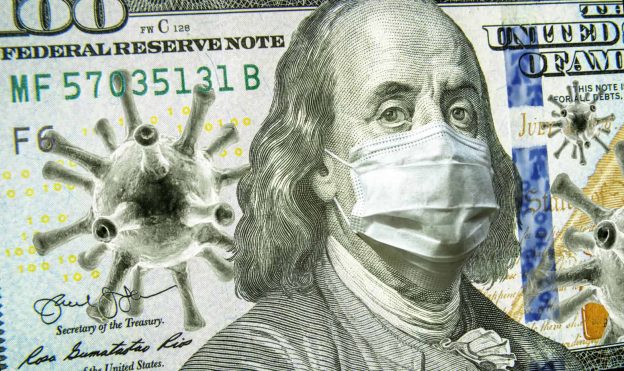
Covid 19 Business And Financial Crisis Concept Dollar Money Bill With Coronavirus Icons 3d Illustration Covid Impacts Global 180851930

COVID19 Drives Adoption of Contactless Payments and Curbside Pickup

Today, shopping retail and even picking up food at a restaurant looks different. Most customers prefer contactless payments and curbside pickup. They are the norm – they are expected. Contactless payments are just one more way to reduce the risk of sharing the virus. With less cash flowing around, the risk lessens, especially when consumers can pay online before they arrive or can use a digital wallet, like Apple Pay.

Curbside pickup used to be a luxury and one that not many customers used. COVID-19 turned the tide on it and so far it looks like there is no going back. Stores and restaurants need to offer curbside (touchless) pickup if they want to remain competitive.

Adopting Contactless Payments

Most stores and restaurants accepted the standard payments – credit and debit cards and some accepted digital wallets, but not many. Fast forward to today and it’s rare to see a business that doesn’t accept contactless payments, whether online payments, digital wallets, or direct transfer from PayPal or Venmo.

Consumers look for those extra payment options. They want the choice of how they’ll pay whether it’s online or in person. Everyone’s looking for contactless payments so even if they shop in-store, they don’t have to touch the credit card machine that everyone else touched too.

Curbside Pickup is the New Norm

Customers today want to walk into a store as little as possible. Rather than paying shipping costs and waiting days for it to arrive, they want instant gratification with curbside pickup. This means two things for retailers:

  • Your inventory system must be up-to-date in real-time all the time. You can’t have customers buying products to pick up that day only to find out a few hours later that it’s not in stock. You won’t have happy or repeat customers.
  • You need a seamless curbside pickup routine. This may mean hiring more staff, setting up new procedures, and creating new routines. The key is keeping a steady flow in the lot, and getting customers their items fast.

Buy Now Pay Later Plans are Important Too

During these trying times, many consumers need help. They don’t want to change their normal holiday shopping routine and give less during such a treacherous time in our lives, but many can’t afford it.

Buy Now Pay Later options give customers more choice. They can shop like they used to despite not having the cash resources today. Adding Buy Now Pay Later options on your website makes it easy for customers to apply in the privacy of their own homes. With an instant answer, they’ll know their options without facing anyone face-to-face.

Getting with the Times

COVID-19 changed a lot for retailers, and the changes are continuing. It’s important to adapt to what consumers need today to keep them and yourself safe, but also your business thriving. The right business model will help your business get through the pandemic and all that it’s changed.

How Will the Pandemic Change the Landscape for Restaurants in the US?

The Coronavirus pandemic has been wreaking havoc on the hospitality industry worldwide. However, some unexpected casualties are on their way for the US as a surprisingly large percentage of its restaurants decline and are forced to shutter their doors permanently.

Due to a mix of lockdowns and social distancing restrictions, many restaurants have frantically tried to adapt their business model to the “new normal.”  Since eateries could only send out their orders through takeout, online ordering, delivery etc. and many were forced to decrease their dine-in occupancy count, the sharp decline had to happen. In fact, experts suggest that the above factors are enough to lead many restaurants to shut their operations.

An Overview of the Current Condition of the US Restaurants

According to celebrity chef Wolfgang Puck, around 25 percent of small US restaurants will never see the light of dawn. He said, “They’re going to stay closed because they ran out of money and the landlords are evicting them. So it’s a really tough time.”

Running a restaurant is a challenge in a healthy economy, let alone managing a tattered one. For a restaurantowner to generate and maximize profits, he/she needs to fill at least 80 to 85 percent of the seats. Only then they can achieve break-even.

Now, with a pandemic-stricken economy, the costs and risks have greatly increased. The food delivery services, such as Uber Eats, keep 15 to 20 percent of the overall restaurant payment bill. Other than this, hosting customers means added costs to ensure that SOPs are followed, and safety measures like hand sanitizers, masks, and shields are available in quantities. However, not every restaurant can survive with these restrictions.

“The reality is not all of these restaurants are going to come back,” says Christopher Gaulke, a lecturer in the food and beverage area at Cornell University’s School of Hotel Administration. “Expectations are that as many as 30 to 40% may not come back, of the independent restaurants, your mom-and-pop-style sit-down [restaurants].”

On the other hand, restaurants like Domino’s and Chipotle, who solely thrived on takeout and delivery, are coping well.

The Takeout Restaurants Are Doing Fine

“Anyone that was in the takeout and delivery game before this has just done incredibly well,” Gaulke points out. “If you look at Domino’s, Chipotle, these chains that had invested so heavily in the technology for enabling third-party delivery or online ordering, etc., they’re all doing well.” Since their dine-in facility was only more or less an extra source of revenue, they don’t feel threatened and aren’t expected to lose everything to the pandemic.

The only way US restaurants can survive the COVID-19 crises is through innovation and working on their ability to adapt. They need to go beyond standard menus and design meal kits to cater to the masses. As Gaulke puts, “We have a company here in town that has started selling meal kits and groceries, as well as pre-made foods.”

Final Thoughts

It is never too late! Restaurants heavily dependent on in-house dining will continue to suffer compared to the delivery and takeout spots. Hence, it is advisable to invest time, energy, and money to redesign the restaurant business models and prioritize delivery, meal or grocery kits, and takeout if restaurants want to remain in the business through the COVID-19 pandemic.

How Is COVID-19 Transforming E-Commerce Merchants?

How Is COVID-19 Transforming E-Commerce Merchants?

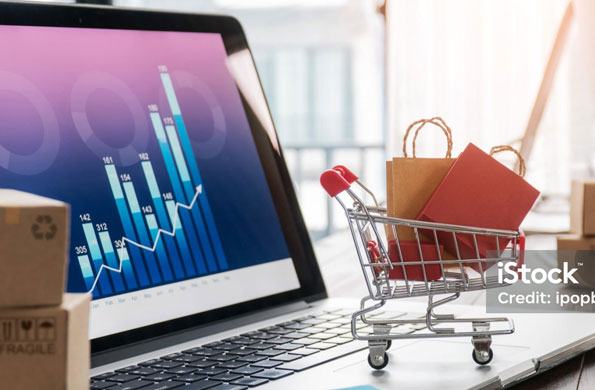
There is no doubt COVID-19 has redefined our life, and its impact could, presumably, last for years. The way we socialize, work, and function has rapidly changed, and so has our buying behavior. Online shopping has become the new norm as consumers are finding it safer and more reliable. Even local businesses are turning to online platforms for sales and services, but the non-essential industry has suffered dramatically. Grocery, medical supplies, healthcare items have experienced a sudden boom while the tourism industry has collapsed. Meanwhile, beauty items, fitness products, and tech retail have seen slow but steady growth.

Many big brands have restructured to meet the changing demands and increase their endurance during the pandemic. Here are a few practical ways to transform in the wake of COVID-19.

1.   Entering New Markets

Corporations such as commercial airlines have entered new avenues to ascertain stable earnings. The unprecedented drop in commercial flights has led to large airlines like Virgin Atlantic, Lufthansa, and many others to switch to cargo flights. Passenger cabins are available for the transportation of grocery and healthcare items.

merchant covid19 e-commerce buying

COVID-19 is rapidly transforming e-commerce by affecting consumer buying patterns.

2.   Switching to Online Platforms

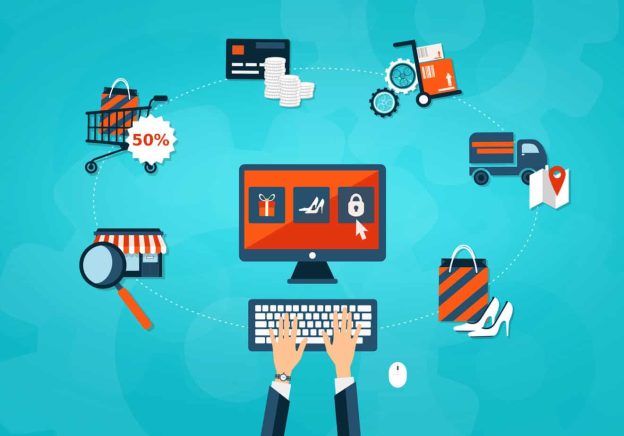
Grocery e-commerce soared during the pandemic as 72% shoppers used their mobile phones to buy household items. Due to this, many retailers and brands have launched user-driven apps and revamped their online stores to improve the online shopping experience. Encryption of personal details has become stringent to support safe and secure payment methods.

3.   Offering Sales and Other Incentives

Many beauty and skincare brands are offering sales and discounts. Around 72% of the top online retailers are running promotional activities to attract consumers. Many luxury brands, including exquisite jewelers, have slashed prices to recoup sales. At departmental stores, markdowns are even steeper for steady revenue.

4.   Setting Up Curbside Pick-ups:

Amidst the COVID-19 outbreak, many businesses have switched to BOPIS (buy online pick-up in-store) and curbside delivery methods. Since early January, around 55% of the consumers placed online orders and opted for BOPIS for convenience and safety. However, the industry is still in its developing stages as we can often see long queues at pick-up points. Digital check-ins and scheduled pick-up times could be a few ways to enhance the experience.

5.   Strengthening Customer Relationships

To strengthen their brand image, many companies are supporting front-line fighters by providing them various incentives. Many cosmetic and alcohol brands have distributed hand sanitizers and protective gear among front-liners such as healthcare providers, law enforcement agents, and other essential workers. It is to show gratitude to those who are putting their lives at risk for our safety.

However, it is still too early to predict the implications as the circumstances are uncertain. The shopping behavior of millions of consumers has changed within just a few months. Besides, time-saving and convenience has put considerable strain on e-commerce merchants. Many are striving to remove friction in online shopping to build a loyal customer base. Nevertheless, there is a consensus among buyers and retailers that old shopping habits will resume once the lockdown ends. This would slow down the growth rate of e-commerce sales, thus giving them ample time to adapt to the new retailing landscape.

PPP Funds Still Available yet Applications Slowing Down [2023 Update]

PPP funds disappeared in as little as 2 weeks when first released. The relaunch occurred on May 11, allowing more small merchants to take advantage. But, today the funds still exist and applications for the help are slowing down.

What are PPP Funds?

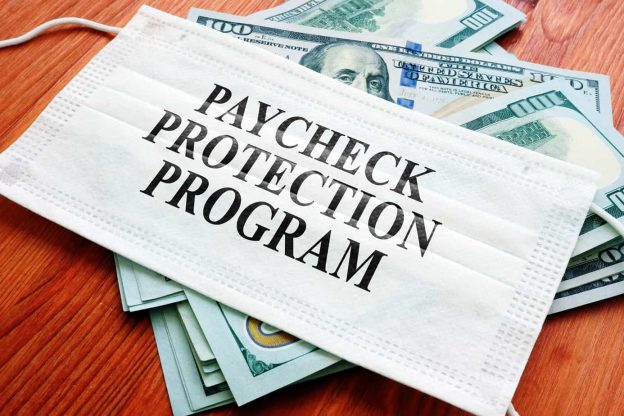
If you haven’t heard, PPP funds or the Paycheck Protection Program is a Small Business Administration Program providing small businesses with financial relief. The program gives employers an incentive to keep employees on payroll rather than letting them go.

With PPP, employers must keep employees on payroll for 8 weeks during the pandemic. The employer must also use the funds for payroll and other important bills, such as rent, mortgage, or utilities. The PPP funds should help keep the business running and employees off unemployment. In other words, it’s an attempt to keep your business open.

Why are Applications Down?

Many small merchants figured out their plan by now. They had their moment of panic when the PPP emptied within 2 weeks, leaving millions of businesses wondering ‘what now?’ That moment is gone. Businesses have done one of two things:

• Closing up shop and cutting their losses
• Created a plan to adapt to the current economy, change their offerings, and move forward

Many businesses think the Paycheck Protection Program has too many ‘unknowns’ and/or requirements. Yes, the loan may be forgiven, but only if you meet strict requirements. Many small business owners wonder if they met those requirements. What if things change?

ppp merchants loan covid-19 coronavirus

PPP is a program designed to assist merchants with maintaining payrolls through COVID-19

Worse yet, if you don’t apply for forgiveness, you must repay the loan. Many small business owners don’t want this extra load on their shoulders right now.

Are Small Merchants Coming Back?

As economies open up, with Georgia one of the first, business owners wonder if they should come back too. Is the largest worry over? Are consumers ready to spend money again?

All small merchants agree on one thing – we have to start somewhere. This may be why PPP applications are down. Business owners don’t want a bailout – they want to get back to doing what they love and that’s serving customers. If they delay things, take PPP and take their time planning, they may miss the boat.

The businesses that put their neck out there and tried it may succeed, leaving those that took the PPP in the dust. Is that where you want to be? Would you rather test the waters and slowly make a comeback on your own? Do you want government regulations breathing down your neck or do you want to reopen your business at your pace, doing what you’re comfortable doing?

PPP is a great opportunity for those that need it, but the numbers show that’s not a lot anymore. Small merchants want their business back. They don’t want another potential debt on their back that they can’t repay. It’s time for businesses to make a plan and see where they go.

Merchant Services and Payments Impacted by COVID19 [2023 Update]

The COVID-19 pandemic and the resulting stay-at-home orders across the globe and country during the past few months has led to a significant reduction in both the number of merchant services transactions and dollar sales in our country. With predictions of a global decline in GDP, there are few bright spots in the economic fallout. One concrete result of the pandemic is a move to touchless transactions in efforts to reduce the spread of the virus.

Cashless Society

merchant cash discount covid19

COVID19 Pandemic Has Merchants Looking for Solutions

After the World Health Organization warned that banknotes may spread coronavirus, they recommended using contactless payments to mitigate the spread. Not to mention, microorganisms can transfer to credit cards at point-of-sale terminals during credit card processing, and PIN pads carry similar health risks. And because retailers had to shut down and sell online exclusively, the use of cash is disrupted due to the shutdown.

Global Scale

Depending on the spread of the virus, the public health response, and the effectiveness of the fiscal, monetary, and broader public response, the global GDP would potentially decline by 1.5% in 2020 after two to three months of economic lockdown in Europe and the United but would decline by 4.7% after a resurgence of the virus in China and continued spread in the United States and Europe.

A slowing global payment-revenue growth is expected to cost the payment industry $165 billion to  $210 billion in 2020 revenue. The net interest-margin component, which is the source of 60% of payments revenues, accounts for 20% of the decline. The transaction component, which is the source of 40% of payments revenues, is responsible for 80% of the decline. A 1.5% economic contraction would lead to an 8-12% reduction in payment volumes.

Local Scale

Due to stay-at-home orders and the close of non-essential businesses, total transactions and dollar sales fell nearly 50% and more than 25% respectively in the weeks following shutdown orders. Active merchants dropped by 25% with more than a quarter of merchants posting no transactions at all. Urban areas showed sales decreasing by 22.5% since the first week of March while medium-sized cities have decreased 26.5%, small cities 26.5%, and rural areas 31.1%.

Despite the drop in card-present sales (nearly 50% drop in March), card-not-present sales only decreased by 15.2%. Sales for on-site technical services such as plumbing, heating, and contractors remains steady perhaps due to stay-at-home restrictions. Also sales between 5 am and 11 am are increasing, accounting for the special hours for seniors and high-risk shoppers, as well as for customers looking to shop outside of traditionally busy hours.

Host Merchant Services

During these turbulent economic times, depend on a stable and reliable payment processor to partner with your business to minimize the impact of worldwide instability. Payment processing should be the least of your concerns. Delivering personalized service and clarity, Host Merchant Services takes the time to explain your payment processing. We want you to understand your monthly statement, and we will ensure that your statement matches our promises during our sales presentation. If you do have questions, you can reach a live representative any time, any day. HMS offers wonderful customer service, as well as great rates.

Host Merchant Services even explains where our profit lies in the pricing structure to be fully transparent in all directions. Pricing fairness and transparency is our strategy in helping our customers find success with their businesses.