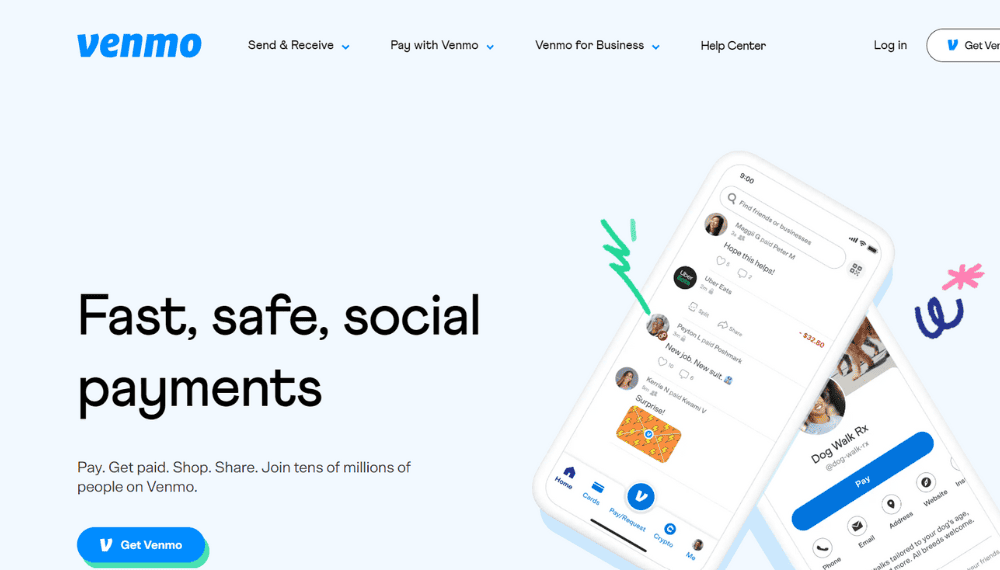
Venmo started as a fun way for peers to pay one another, but it’s quickly becoming the payment method of choice at retailers too.
Venmo has become a household brand – it’s the brand consumers trust when paying friends and family, and now they want retailers to use it too. While contactless payment options are more available than ever before, consumers don’t trust all of them, but Venmo is an exception.
Venmo Has an Incredible Following
Over 65 million people use Venmo to send and receive funds. Much of the audience is the younger generations, but it also includes affluent and educated older generations who’ve embraced contactless payments today.
Venmo users love the versatility Venmo offers including splitting the bill with family and friends. It’s a natural transition to use it to pay retailers, especially in restaurants when out with a group, and splitting the bill always causes that award silence everyone hates.
Consumers Want to Change Their Habits
At the start of the pandemic, consumers shopped mostly online as many retailers were closed while the entire country was shut down. The trend continued for a while, but slowly, retail trends indicate that consumers are shopping in-store again.
When they do, they want options to stay safe and that includes contactless payment options, of which Venmo is a top choice.
Since consumers are already comfortable with it, they don’t have to learn a new platform or discover if it’s safe or not. They know Venmo is safe. With consumers able to add funds to their Venmo account and/or pay their balance over time, Venmo is quickly the most popular choice.
What Troubles Would Retailers Face?
While consumers are on board with paying for retail purchases via Venmo, the platform itself isn’t quite ready.
While some retailers use Venmo, they are few and far between. It’s primarily a peer-to-peer app that doesn’t need to consider taxes or fees. With the onslaught of changes accepting retail payments would offer, Venmo’s platform would have to change considerably to handle the pressure of accepting retail payments.
As the pandemic continues, consumers want contactless payment options. It creates the best of both worlds for consumers – they can shop safely, in person, and not have to worry about touching shared devices or even exchanging payment with the cashier.
The more hands-off the shopping experience can be, the better off we’ll be in the end. Not using cash and using phones to pay is the epitome of cashless spending. You can check out with ease, shop in person, but not have to worry about the risk the virus poses with shared devices.
Will Venmo Jump on Board?
The jury is still out if Venmo will become the way of the future. But one thing is for certain, all consumers want contactless credit card processing systems. Whatever you can do to make that happen in your store will help increase your sales.
The past few months, especially since the pandemic outbreak, saw rapid development in contactless payments. The rising need to accept or adopt cashless or contactless payment modes was mainly in response to preventing the spread of coronavirus.
Nowadays, more advanced and smarter technologies are being deployed across several mobile devices, mostly due to factors like convenience, flexibility, and speed. And this is the reason why contactless payments are gradually being moved to the cloud.
With that, the card brand, MasterCard announced on January 11, 2021, that it has partnered with payments gateway NMI, financial tech company Global Payments, and IT services provider CEG (Computer Engineering Group) to launch its first pilot for the new cloud-based point of sale (POS) technology, called Cloud Tap on Phone.
Their aim is to broaden the acceptance of contactless payments for merchants since today’s consumers prefer paying for their purchases using mobile payments on their smartphones. In addition to enhancing and expanding its point-of-sale solutions, MasterCard is also working on improving its cloud POS systems.
The card network’s goal is to make its Cloud Tap on Phone openly available across various cloud-based environments. It will empower different solution providers and ecosystem partners to build their own cloud POS offerings by integrating newer features, tools, and functionalities. The process, therefore, is also expanding the acceptance of this new cloud-based payment and POS technology.
Nili Klenoff, Senior Vice President, Global Acceptance Solutions at MasterCard, revealed that the pilot for their new cloud POS system is based on three major dynamics in the marketplace:
The digital shift, which she believes won’t change soon, even if the pandemic recedes.
The acceleration in the need for adopting a contactless infrastructure within the retail industry.
The advantage of switching to cloud solutions, which Klenoff believes is democratizing access to digital payments solutions and apps.
MasterCard has further said that in Q3 2020, contactless payments accounted for 41% of global in-person transactions. This was a significant increase from the previous year’s 30%. It indicates that amid the pandemic situation, this new offering received much popularity and acceptance.
As a result of this launch, other payment players have innovated their digital POS solutions to make them more widely accessible.
For example, towards the end of 2020, Visa came up with its Tap-to-Phone solution across several global markets. Just like MasterCard’s Tap on Phone solution, Visa provides businesses with a mobile POS solution that one can deploy without requiring any additional hardware.
Klenoff reportedly said that the company’s new cloud solution is designed to help users develop and expand the entire payment ecosystem. This is mainly targeted at enabling businesses to enhance their customer engagement and improve their shopping experiences.
This new system from the card company can be especially beneficial for SMBs (small- and medium-sized businesses), who are affected by the pandemic outbreak. Hence, the cloud-based POS solution might also accelerate the global expansion and evolution of digital transactions.
MasterCard Contactless Payments – Key Points
Cloud Tap on Phone is one of the card network’s next-gen innovative acceptance products. Furthermore, the software is hosted on the powerful Azure Cloud platform from Microsoft.
Microbusinesses and SMBs can gain access to a more cost-efficient contactless POS system without investing in any external hardware. MasterCard’s Cloud Tap on Phone can help businesses with fewer resources for purchasing additional POS hardware.
During the COVID-19 crisis, 34% of SMBs have adopted contactless payment solutions to optimize their checkout processes. This was a result of a study conducted by Paysafe that analyzed several SMB checkout processes used in various countries like the US, UK, Italy, Canada, Austria, Bulgaria, and Germany.
The Tap on Phone solution from MasterCard is also designed to expand the acceptance of contactless payments across global markets.
By introducing this cloud-based POS system, SMBs can also keep pace with larger enterprises that provide a number of different payment modes. It further enables MasterCard to increase their volume of payments.
Since the company’s new offering is spreading across numerous countries, businesses operating in markets where digital transaction infrastructures are developing, such as parts of Asia and Africa, are expected to gain access to this cloud POS system. It will further push contactless payment acceptance forward, thus accelerating MasterCard’s payment volume potential.
For instance, micromerchants running in India who have seen significant growth in cashless payments are more likely to take up the card network’s offering. Therefore, it will expand the overall acceptance of contactless payments in the near future.
Using the Tap on Phone solution, businesses, irrespective of their size, can deliver the best-in-class contactless payment expenses to their consumers via their own smartphones.
MasterCard’s new cloud system democratizes POS technology by converting an Android device into an acceptance device. It enables businesses to implement more contactless payment systems at checkout, while cutting down costs on external hardware terminals and other tools or features.
The system will help merchants to provide better curbside pay on delivery or pickup facilities for faster checkouts at the store, thus eliminating long queues. It’s a convenient, touch-free, cash alternative for consumers.
MasterCard’s cloud POS has become a new channel for businesses to provide more meaningful and value-added services to their consumers.
At present, MasterCard’s Tap on Phone software has been rolled out across 16 markets, including Asia Pacific, Europe, Latin America, North America, Africa, and the Middle East. Additionally, pilots are occurring with respective partners in Hong Kong, Costa Rica, Poland, Romania, Kazakhstan, Russia, Canada, the UK, Belarus, Turkey, and several other markets.
The card network’s new product development wing, MasterCard Labs, spearheaded the development of the cloud POS technology and its new cloud-based Tap on Phone product. The pilot working with CEG is following product testing sessions on the New York campus of MasterCard’s Purchase.
The product, Cloud POS, is a result of the company’s multi-cloud strength, meeting several businesses, financial institutions, partners, and consumers in the Cloud using innovative solutions and applications.
MasterCard has been planning this transition to contactless digital transactions for years. The rising demand for faster, safer, more convenient, and flexible methods to make payments has been a driving force behind this transition.
Today, consumers are willing to use this touch-free transaction experience permanently, even after the pandemic ends.
Mobile technology continually improves and 2021 is bound to see some of the greatest changes. As we move into another year of living with social distancing, consumers want contactless payments and more capabilities from the comfort and safety of their own homes.
Mobile Wallet Security
It’s not enough to offer mobile wallet payment options next year. While customers want contactless payments, they also want security. Double authentication with mobile wallet payments is crucial.
Rather than just scanning the payment, users will need to enter a PIN or use the facial recognition feature. While it’s another step in the payment process, it’s still touchless and it decreases the risk of fraudulent charges.
Mobile Point of Sale
The Apple store used to be one of the only places you’d find a mobile ‘register.’ Today because of the need to have contactless payments and a way to get in and out of a store fast, mobile point of sale is more common everywhere.
mPOS units are great inside a store, checking customers out where they are rather than making them stand in line. Even big stores like Target are doing this. But, mPOS also helps merchants sell their products anywhere – farmer’s markets, trade shows, or mobile trucks.
Increased Use of AR and VR
Augmented Reality and Virtual Reality are becoming more mainstream for all industries, not just by technical companies. Healthcare companies travel, and educational companies are taking advantage too. They also provide more opportunities for companies to increase sales without seeing customers in the physical store.
Increased use of Chatbots
No one likes to sit on hold waiting for a customer service representative. Chatbots are making it easier than ever to answer customer questions instantly. This is just what customers want. In addition to everything mobile and touchless, they want instant answers without wasting time sitting on hold. Chatbots answer the most frequently asked questions quickly and if they can’t answer the question, they pass the customer onto a human advisor.
Social Shopping
There’s a reason social media influencers are the ‘big thing’ right now. Everyone wants what everyone else, which is why the rise in social shopping is so great. With the ability to scroll through Instagram or Facebook and buy what you see others buying, it increases sales quickly. Social shopping decreases the lag time between seeing an item and finding it in store or even online. It uses that instant gratification that customers love, making it easy to make impulse buys or just buy products/services they wanted while they’re thinking about it.
Mobile Technology is Making Changes
2021 is bound to be a year of big changes in the mobile technology industry. With possibilities abound, merchants can make the most of the opportunities to serve customers where and how they want service. With the ability to offer mobile and contactless payments, shopping opportunities, and even sales demonstrations, 2021 should be a year of promise and growth for merchants in all industries.
COVID-19 has changed the way restaurants operate in a big way. In some states, they still aren’t fully operating, which leaves restaurants thinking outside the box longer than they ever thought necessary.
2021 looks like it will shape up much how 2020 ended, which means restaurant owners must continue being creative and figuring out ways to make the most of their business as it is right now.
Top Restaurant Trends for 2021
Focusing on Take-Out, Delivery, and Contactless Payments
No one knows when restaurants will open again (for indoor seating). This means all business owners must rely on take-out and delivery. Anything they can make contactless (including payments) is what will bring in the customers. Curbside delivery, online payments, and as little contact as possible are what will bring the business.
Creating a Brand for Themselves
Restaurants shouldn’t rely on just the food that they serve, but on the brand, they want to create. Think about what audience you serve. What are their pain points? What do you offer that helps them? That’s the brand you want to focus on and portray to your audience to bring in more business.
Providing Healthy Foods
Everyone loves to eat out (or order in), but today’s consumer is health conscious. You’ll still have those who love their favorite comfort foods, but including at least a few healthy foods on the menu will cater to a larger crowd.
Pop-Ups and Special Menus
Restaurants today are getting with the times and realizing many of their services may be short-lived. For example, if they can open for in-person dining, it may be for a short period. So instead, they think outside the box and have specials and limited opportunity pop-ups that bring a sense of urgency and excitement.
Online Reservations
Today consumers have to make reservations for just about everything, including any type of dining. The days of popping into a restaurant when you feel like are gone. Merchants need to adopt an easy reservation method, of which online reservations is the easiest. Whether you have a mobile app or just a website, enabling customers to reserve their time easily brings in more business.
Provide Quick Dining Opportunities
Anything you can do to make the diner’s experience contactless will take you far in 2021. Diners want to get in and get out. This includes when they’re taking the food to go. Self-service kiosks and contactless payments (online) let customers come in, get their food, and leave with little to no contact with others.
2021 is all about staying healthy. From serving healthy foods, ensuring the utmost safety precautions, and offering contactless opportunities for ordering, paying, and picking up food is important.
No one knows when the pandemic will end, but restaurants can stay strong by implementing the trends consumers want to see and that makes them feel safe. As we continue to navigate our new normal, it’s time to adapt to what’s in front of you and give your audience what they need to remain loyal.
More than 100,000 restaurants have closed since the start of the pandemic and as many as 40% of restaurant owners don’t think their restaurant will make it through the winter if things continue the way they are going according to the National Restaurant Association.
The pandemic isn’t just affecting independent restaurants either. Chain restaurants are just as much at risk as the smaller establishments.
Costs aren’t any Lower
A big part of the problem is not only that sales are down, but costs are just as high as they were before. In fact, some restaurants state their labor costs exceed their pre-pandemic level because of the stricter measures put in place to ensure everyone’s safety.
Relief isn’t Coming
Another big part of the problem is the lack of relief. While the restaurant industry is grateful for the relief they received, it’s not enough to keep them going. They’ve waited as long as they could and now with the winter months upon us and outdoor dining nearly impossible in many areas of the country, more restaurants will hurt in a big way.
More Workers will be Furloughed or Laid Off
The restaurant industry fully expects to have to lay off or furlough even more workers during the winter months. With most restaurants restricted to curbside pickup and delivery, there is a much lower need for employees in the restaurant. Beyond a few kitchen staff and one or two front-of-the-house employees, restaurants can’t afford to keep others on staff for much longer if they want to try to stay in business.
Most restaurants are running at less than 80% of their normal staffing levels and many other restaurants had to pull back even further.
A Bleak Outlook
Restaurants have a bleak outlook for the winter and even the spring months. Even the restaurants that are making it right now have a meager outlook for the future. Only 6% of restaurant owners think things will get better for them by March.
What can Restaurants Do?
Right now without more relief, there isn’t much restaurant owners can do but try their best. They can offer new services, foods, and market their curbside and delivery services, but beyond that, their hands are tied.
They have little money to do much else and have to preserve what they have so they can keep their doors open and potentially keep some staff working.
It’s a bitter pill to swallow for the entire country. No restaurants in any state are doing well right now. Everyone is just getting by, but with the winter coming, everyone can’t help but worry about what comes next.
Who will be the next restaurant to close? Will the government pull through in time to save more restaurants during their time of need? Only time, patience, and a lot of thinking outside of the box will tell what the future holds for our restaurant industry.
Today, shopping retail and even picking up food at a restaurant looks different. Most customers prefer contactless payments and curbside pickup. They are the norm – they are expected. Contactless payments are just one more way to reduce the risk of sharing the virus. With less cash flowing around, the risk lessens, especially when consumers can pay online before they arrive or can use a digital wallet, like Apple Pay.
Curbside pickup used to be a luxury and one that not many customers used. COVID-19 turned the tide on it and so far it looks like there is no going back. Stores and restaurants need to offer curbside (touchless) pickup if they want to remain competitive.
Adopting Contactless Payments
Most stores and restaurants accepted the standard payments – credit and debit cards and some accepted digital wallets, but not many. Fast forward to today and it’s rare to see a business that doesn’t accept contactless payments, whether online payments, digital wallets, or direct transfer from PayPal or Venmo.
Consumers look for those extra payment options. They want the choice of how they’ll pay whether it’s online or in person. Everyone’s looking for contactless payments so even if they shop in-store, they don’t have to touch the credit card machine that everyone else touched too.
Curbside Pickup is the New Norm
Customers today want to walk into a store as little as possible. Rather than paying shipping costs and waiting days for it to arrive, they want instant gratification with curbside pickup. This means two things for retailers:
Your inventory system must be up-to-date in real-time all the time. You can’t have customers buying products to pick up that day only to find out a few hours later that it’s not in stock. You won’t have happy or repeat customers.
You need a seamless curbside pickup routine. This may mean hiring more staff, setting up new procedures, and creating new routines. The key is keeping a steady flow in the lot, and getting customers their items fast.
Buy Now Pay Later Plans are Important Too
During these trying times, many consumers need help. They don’t want to change their normal holiday shopping routine and give less during such a treacherous time in our lives, but many can’t afford it.
Buy Now Pay Later options give customers more choice. They can shop like they used to despite not having the cash resources today. Adding Buy Now Pay Later options on your website makes it easy for customers to apply in the privacy of their own homes. With an instant answer, they’ll know their options without facing anyone face-to-face.
Getting with the Times
COVID-19 changed a lot for retailers, and the changes are continuing. It’s important to adapt to what consumers need today to keep them and yourself safe, but also your business thriving. The right business model will help your business get through the pandemic and all that it’s changed.
In early August 2020, eight banks in the US have announced that they are partnering with Google to offer digital-first bank accounts directly in the Google Pay app. The partner banks will manage the financial side of these accounts while Google will provide the front-end, intuitive user experience, as well as financial insights exclusive to Google’s digital bank accounts.
Offering built-in budgeting tools, as well as the financial insights, the Google Pay app will launch sometime next year. Known internally as the “Cache” project, the partnership originally started out last year with two financial institutions.
An extension of Google’s original ventures into digital bank accounts from Citi and Stanford Federal Credit Union (SFCU), the partnerships now include six additional banks, namely Bank Mobile, BBVA USA, BMO Harris, Coastal Community Bank, First Independence Bank, and SEFCU.
With the intent to help customers benefit from useful insights and budgeting tools while keeping their money in an FDIC or NCUA-insured account, Google will enable a digital experience that can meet the evolving needs of a new generation of customers.
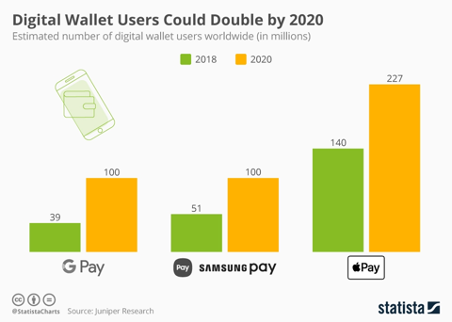
Up from 39 million global users in 2018, Google Pay is estimated to grow to 100 million users this year. Offering a complete digital banking service next year, Google did not indicate whether or not customers will have access to physical debit cards issued either through Google or through its partners.
Google Pay is an app allowing users to pay online or make contactless payments with their phone. Protected with multiple layers of security, paying with Google Pay is a fast and simple alternative to paying with cards. Using an encrypted number instead of your actual card number, Google Pay allows you to pay with your phone while your details stay secure. In addition to enabling rewards programs and cash back programs from a bank or PayPal, Google Pay also enables loyalty programs from chains.
Host Merchant Services
Depend on a stable and reliable payment processor to partner with your business during the upheaval of 2020. Payment processing should be the least of your concerns. Delivering personalized service and clarity, Host Merchant Services takes the time to explain your payment processing. We want you to understand your monthly statement, and we will ensure that your statement matches our promises during our sales presentation. If you do have questions, you can reach a live representative any time, any day. HMS offers wonderful customer service, as well as great rates.
Contactless payments have been there since the 1990s, but the COVID-19 pandemic has brought it to the limelight. Moreover, the trend is here to stay for a more extended period, given the circumstances.
Recently, the global beverage brand, Coca-Cola, is all set to add a variant by launching a contactless option for its consumers’ feasibility regarding pouring their beverages. A touchscreen-operated dispenser would deliver around 200 drink options with a simple tap on the smartphone.
According to Chris Hellmann, Coca-Cola Freestyle’s vice president, “All Coca-Cola beverage dispensers are safe with recommended care and cleaning. However, given these uncertain times, people may prefer a touchless fountain experience.”
Speaking of this, this newly launched contactless solution makes selecting and pouring a drink just a few clicks away for consumers.
How Pour By Phone Works
All it takes for the customer is to scan the QR code on display, leading them to the cloud, bringing the Coca-Cola Freestyle user interface to the phones. Following this, they can feel free to select their favorite drink and flavor from the menu. Before making its way to the Coca-Cola, the idea was run through initial testing at Firehouse Subs, Five Guys, and Wendy’s locations in Atlanta.
We intentionally designed this so anyone with a smart device could pour a drink,” Michael Connor, chief architect of the Coca-Cola Freestyle, said in a statement. “When you have a tray or a sandwich in one hand, you don’t want to deal with downloading an app.” He also added that they have invested time and effort and went the extra mile to ensure necessary steps have been taken to make the solution easy and fast and the experience super-reliable.
The Need of the Contactless Technology
By this summer, the software will be available at around 10,000 Coca-Cola Freestyle dispensers. Also, all of the dispensers will be compatible with contactless technology by the year-end.
As per a study from Civic Science, about 65 percent of people going to a restaurant choose to pour drinks on their own than having a waiter do it for them.
It is pertinent to mention that QR code now making waves once enjoyed a maligned status. However, it has managed to come up as the enabler of contactless commerce. This development came in when China-based Alipay and rival Tencent’s started making use of QR code and went to fulfill their endeavor of standardizing it.
Subsequently, a consortium of platforms has emerged normalizing the use of QR codes to process transactions. Walgreens now accepts payment through the platform of Alipay while Apple is upping its game via Apple Pay. In addition to this, even Walmart has also altered its Walmart Pay app to incorporate QR codes and adopt the new touchless technology.
Final Thoughts
Ever since the COVID-19 crises erupted, many experts suggested contactless payments to curb the spread of the virus through cash, debit, or credit cards.
The news of contactless dispensers is another addition as going contactless became the new normal amidst the COVID-19 global crisis considering that many businesses resorted to the contactless payment option. All eyes are now on how these touchless dispensers by Coca-Cola would fair in the coming future.
Your customers don’t want to touch your credit card machine.
It’s nothing personal, they don’t really want to touch anything that they don’t have to these days. Luckily for those of us that still use hand held or counter top credit card machines to either swipe or dip the chip to accept payment, contactless solutions are easy and inexpensive to implement. Chances are, the machine you currently have already has the hardware required to do this, so it might just be a matter of calling your merchant services provider to get instruction on how to enable it and allow your customers to utilize their contactless payment methods on it.
Contactless payment methods come in three common forms. Your customers will either have a smart phone, a smart watch, or an NFC enabled credit card. All of these use NFC, short for Near Field Communication, as the underlying way to perform the transaction. How exactly NFC works is beyond the scope of this article, suffice it to say, it allows your device or card to talk to a properly configured credit card terminal so long as it is within about 1 inch of the reader. It’s easy, it works reliably and it’s reasonably secure.
You might be wondering, ‘if all you need to be is an inch away from a reader, isn’t it possible for someone to get close to my customer and steal their card information?’ Yes and no. While it is technically possible to intercept the signal, the hacker wouldn’t be able to do much with the information. Smart pay devices like Apple Pay do not directly transmit sensitive card holder data in the transaction. Instead, they submit a unique one-time pass code to the credit card reader, which then sends that pass code to a very secure data center operated by your bank. The bank is then able to communicate with Apple to retrieve the actual card information. A process that happens within a fraction of a second and is completely out of scope of the interaction of the customer with the payment device itself.
To start allowing your customers to use contactless payments, start by checking if you’re already setup with it. The best way to check is to read the wording of the credit card machine when it comes time for the customer to give their payment. If it only says “swipe, dip or enter card” when it is ready to accept payment, it might not be setup for contactless. If you see the word “tap” anywhere, you’re already good to go. Find a customer that wants to use their phone, watch or NFC enabled credit card and try it out. It’s nothing more than holding the device within an inch of the face of the credit card machine.
If you don’t see the word “tap” and holding an NFC enabled payment method near the machine does nothing, you still likely do not need to buy a new machine. Now is the time to call your merchant services provider. Either you have a machine made in the last 5 years and it’s just a matter of asking customer service to help you get it enabled, or you’re due for a new machine. Most providers will provide a free terminal replacement. If they don’t, get a new merchant services provider. They fight fiercely to acquire and retain customers, so the relatively small cost of replacing your terminal for free is worth it to them to keep you as a customer. If not, there are plenty of providers out there that will happily give you a modern terminal if you switch to them.
As consumer sensitivity to sanitary habits in the retail environment continue, NFC is a great way for you as a retailer to make sure your customers continue to feel safe making purchases. The security of the payment itself, coupled with the fact that any would-be coronavirus’s can’t make the 1 inch jump through thin air, make NFC the go-to choice for payment acceptance. It’s either already ready to go, or you have a couple of free options to get it setup, you’ve got nothing to lose.
Amidst the global pandemic, many countries are resuming the routine life and easing the lockdown. However, recent studies have shown that around half of the US population is still worried about their health and how shopping, eating, and social interaction can affect it. Therefore, many businesses and shoppers are more inclined to make contactless payments, which has shown a 40% jump in the first quarter of 2020. As the payment trend has grown prominence, NFC-enabled payments across the world can exceed $130 billion within 2020.
What are Contactless Payments and Their Global Outreach?
Contactless payment is a well-encrypted, secure payment mode to buy products or services using NFC (near field communications) enabled devices or cards. When the reader and payment device are near, it activates NFC chips to exchange encrypted data for money transfer. In simple terms, you wave your device in front of an NFC powered payment terminal to make purchases, contact free. But you also require NFC-encrypted payment apps such as Apple Pay, Google Pay, Fitbit Pay, or Samsung Pay on your mobile device to make the contactless payment happen. Some credit and debit cards also have contactless capability embedded in chips that you can then wave or tap to pay on an NFC enabled reader.
Before the Coronavirus outbreak, this global trend wasn’t prevalent in the US, as only 10% of the consumers were using the technology. Europe however had the largest share in the contactless payment terminal market, due to an increase in smartcard rollouts and technological advancement. According to UK Finance, around 1/3rd of all the card-based payments happened through contactless methods in Q1, 2019. However, the Asian region has been slower to adopt NFC based technologies due to its efficient QR code system that doesn’t require select apps, or POS systems.
Coronavirus – The Driving Force for Contactless Payment in the US
The number of digital wallet users worldwide has doubled in 2020, with Apple Pay and its 227 million users becoming the most prominent, according to the Wall Street Journal.
The pandemic has redefined consumer priorities, making no-touch payments a necessity. New York Transit Authority laid the groundwork in May 2019, when it announced contactless payments for select subway lines. Being early adopters, they were still pretty late in the global market in relation to other significant metropolises, including London Underground System which adopted the technology in 2014. It is not only public transport, but the worldwide financial industry that relies on contactless payments today. In the Netherlands, every store allows no-touch payment methods, whereas the US didn’t have major adoption for NFC until 2019 when contactless payments increased by 150%.
Meanwhile, food services brands such as Starbucks, McDonald’s, and Dunkin’ led the way with their contactless payment apps. The wearable market also accelerated the adoption rate in the US with the popularity of smart watches and similar devices. The tech-giant, Apple, teamed up with many different brands to improve mobile payment experience. Scooter rental company Bird and clothing retailer Bonobos some notable partners offering NFC-enabled payment to Apple users, without the need for any third-party apps. Small businesses have also reported a 27% growth in the contactless payment made through smart cards and mobile phones.
Nevertheless, card issuers control the widespread adoption of contactless payment in the US. Analysts believe NFC-enabled technology can coexist with traditional card systems and mobile wallets as depicted by tech-savvy nation worldwide.