Tag Archives: chip cards

Chip Card Checkout

Speeding up Chip Card Checkout Times with Visa

Over the last couple of years, more retailers and providers of merchant services in the United States have been settling into the new Europay, MasterCard and Visa (EMV) credit card processing system. As EMV acceptance expands, business owners will start to see more technology upgrades offered by through their merchant services providers.

One current quirk of chip card acceptance is that shoppers believe it takes too long in comparison to the old magnetic stripe system that enabled the swipe transaction. Current EMV implementations do not allow swiping; instead, shoppers have to insert their cards into the credit card processing terminals and wait for the processes of verification and authorization to be completed.

What is a Quick Chip?

Quick Chip, a new EMV technology improvement by Visa, which is starting to make its way to select merchants, aims to make transactions smoother at the register. With Quick Chip, chip card acceptance will be vastly improved for Visa chip card holders.

How Quick Chip Benefit the Shoppers and Business Owners

In essence, Quick Chip speeds up the checkout process for the benefit of shoppers and business owners. This new merchant services upgrade allows shoppers to insert their cards into the terminal and wait just one or two seconds. Upon receiving acknowledgment, shoppers can retrieve their cards and put them away in their wallets, purses or pockets.

To a certain extent, the Visa Quick Chip emulates the swipe transactions of yesteryear, which were very satisfying for both store clerks and consumers. With this upgrade, which rolled out in select California stores in late July, the crucial check out experience speeds up considerably for the purpose of making shoppers happier.

A very advantageous aspect of Quick Chip is that it can be rapidly implemented. The first installation in California was a network of chip card terminals at a chain of grocery stores with seven locations. In only one week, the new system was running flawlessly.

When it comes to credit card processing, speed is of the essence. The Quick Chip system comes at a time when shoppers at major metropolitan areas have noticed that lines at the cash register are getting longer and moving slower due to the new chip card systems. This could be a good argument in favor of near field communications (NFC) payment systems and smartphone wallets, but this transition will take a while. For the time being, solutions such as Visa Quick Chip are the kind of technology upgrades that merchants and shoppers are looking for.

Visa’s Take on EMV Liability & Chargebacks

Credit card processors and merchants in the U.S. are starting to experience the true implications of the enormous switch to the EMV system, which stands for Europay, MasterCard and Visa.

In the wake of several terrible data breaches by hackers who went after major retailers such as Target and Home Depot, the payments industry has made it clear that merchants in the U.S. need to implement the EMV chip card system, which has proven to be much more secure than the status quo of magnetic band swipes.

There is no question that the new EMV system needs to be adopted as soon as possible.  This was actually foretold by the major credit card companies as early as August of 2011. All the industry stakeholders, from credit card companies to merchants and from issuers to regulators, knew that completion of the switch wouldn’t happen overnight due to the size of the American retail landscape.

In an attempt to speed up and reinforce the transition, a deadline for liability shift was set for October 2015. This meant that merchants who for whatever reason had not fully adopted the new system yet could now be the ones liable for chargebacks caused by fraudulent use of credit cards.

Many merchants in the U.S. have complained that they are absorbing major hits because of the liability shift. Specifically, they are being affected when they swipe a magnetic strip card that was fraudulently copied from a different card. If the swipe is done at a traditional terminal that is not EMV chip card supported, then the burden of liability falls onto the merchant.

As to be expected, many merchants are fighting against the EMV chargebacks, particularly when they have already made the effort of becoming compliant by obtaining new POS terminals, which are not being used only because they have not been certified yet.

For smaller merchants who operate with only a few Point-of-sale terminals, the EMV switch has mostly been a smooth process because they don’t face the same problems as big retailers when it comes to certification. Multiple point-of-sale terminals connected to a local network that works with custom coding take longer to certify, therefore it is not too surprising to learn that retail chains are the ones being affected the most by the new chargeback structure.

According to Visa, the continuing chargeback issue is not as tricky as it seems. Visa has pledged to work with merchants and issuers with regard to the certification process. They believe that credit card fraud will be greatly reduced within the next few years.

Visa and MasterCard Sued by Home Depot over Chip Card Security

Around the world, 80 countries have added EMV chips to their credit cards. These chip cards are more secure than credit cards with only a magnetic strip and have helped to reduce credit card fraud in many places. As a result, these cards are now being introduced in the United States. Many retailers, however, are alleging that Visa and MasterCard are not utilizing the chip to its fullest potential. Home Depot has joined other retailers, like Wal-Mart, by filing a lawsuit against the credit card issuers. Mark Horwedel, CEO of the trader group The Merchant Advisory Group expects more lawsuits to follow.

The lawsuit contends that Visa and MasterCard are not doing enough to prevent credit card fraud, yet are forcing retailers to carry more of the cost and liability for fraudulent credit card transactions. Though the chip cards used around the globe may look the same, they aren’t processed the same way. In most of the countries that have adopted EMV technology, a PIN number is required to complete a credit card transaction. In the United States, however, Visa and MasterCard are requiring only a signature. This makes transactions less secure than they could be. Since retailers are now responsible for fraud, Home Depot alleges that card issuers are not doing enough to protect them from it.

Failure to require a PIN also creates problems for online customers, where credit card processing is done without a signature or other verification steps. For these transactions, chip card security doesn’t help at all unless it is coupled with a PIN.

Home Depot also claims that it costs them more to process non-PIN transactions, forcing them to pay $750 million dollars a year in credit card processing fees. According to the retailer, Visa and MasterCard are intentionally blocking the store’s ability to protect itself from fees and fraud on purpose to drive their own profits. They claim chip card security that requires a PIN would better protect consumer and reduce credit card processing costs.

The Home Depot has reason to be concerned, as the company was the victim of a data breach in 2014 that affected 56 million credit and debit card numbers. The retailer immediately implemented credit card processing that incorporated the chip technology, but would like to do more to protect itself and its customers. The company fully supports chip card security and EMV technologies, but wants American consumers to enjoy the same meaningful fraud protection that Europeans have been enjoying for more than a decade.

Hackers Rush to Cash In Before Chip Cards

Hackers Rush to Cash In Before Chip Cards Take Over

While plans are being initiated that will reduce credit card fraud, it appears the problem is going to get worse before it gets better. Credit card issuers are rushing to send new EMV enabled cards to their customers. These cards, also known as chip cards, contain technology that makes credit card theft much more difficult. Knowing this, hackers and fraudsters are in a rush to steal as much credit card information as they can before their job gets harder.

According to CNBC, as much as $10 billion dollars in fraudulent credit card charges are anticipated between 2016 and 2020 as retailers and card issuers finish adopting EMV cards and technology. As of May 2016, only 20% of credit cards and 10% of debit cards were chip enabled, leaving lots of people still at risk for a security breach. The bad guys know this and are scrambling to take advantage of security weaknesses in cards with magnetic strips.

On the other side of the table, retailers and banks are rushing to get chip cards into the hands of consumers. PYMNTS.com reports that, on average, 23,000 merchants per week are installing chip technology in their businesses. Overall, the number of retailers using the chips to read cards has increased by 12.5% since the technology’s introduction. Progress is clearly being made, but not fast enough to protect everyone.

Once all of the credit cards have chips and the bad guys have used up their stolen cards, card not present fraud is expected to decrease. However, a different kind of fraud is expected to take its place. With credit card numbers being harder to steal remotely, experts anticipate that more people will fraudulently apply for credit card accounts. Using a temporary address, these fraudsters will get credit cards mailed to them using an address they will later abandon. With the card in hand, they will still be able to make fraudulent purchases.

Though the criminals aren’t going anywhere, neither are those who fight them. New technologies are being considered and developed even as EMV chips are being instituted. In the meantime, the best way to protect yourself is to watch your accounts carefully and use caution when using your card online.

Visa Kicks Open the Door for Chip Cards

Today The Official Merchant Services Blog discusses a fascinating new development by Visa in the realm of credit card processing, security, and hopefully Mobile Payment Technology.

Smart cards have been slow in gaining traction, especially in the United States. But now Visa is making moves to drag the U.S. into the chip card realm, kicking and screaming if it has to. A recent article on Credit.com reveals as of December 31, 2011, Visa — the largest processor of both debit and credit card payments — had issued more than 1 million credit cards that use “chip” technology to sore consumer payment information. The article notes that this data is being announced rather quickly in relation to Visa’s August 2011 announcement that it planned to start issuing more EMV — Europay, Mastercard, Visa — smart cards to push the industry toward better security and an easier transition to mobile payments.

What is Smart Card Technology?

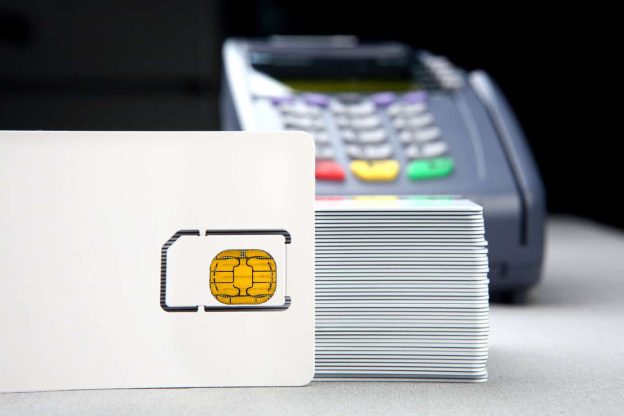
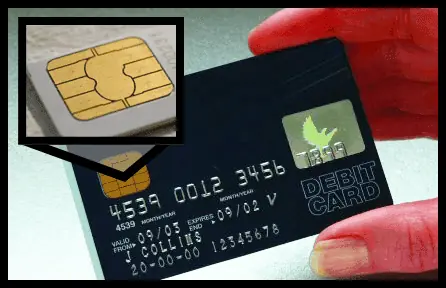
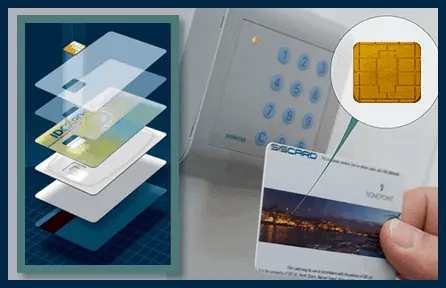
A smart card, or chip card, is any pocket-sized card with embedded integrated circuits. These cards contain volatile memory and microprocessor components, are made of plastic,and provide strong security authentication capabilities. Because of these characteristics, the technology is being utilized for credit cards by major card companies like Europay, MasterCard and Visa — garnering the nickname EMV. Visa has begun a major push of this technology because of the benefits the technology provides.
What are Those Benefits?

These kinds of smart cards can provide identification, authentication, data storage and application processing. A single contact/contactless smart card can be programmed with multiple banking credentials, medical entitlement, driver’s license/public transport entitlement, loyalty programs and club memberships to name just a few. Multi-factor and proximity authentication can and has been embedded into smart cards to increase the security of all services on the card. In one fell swoop, this technology can bridge the gap between card-swipe style processing and the mobile payment processing that the industry is striving to move toward. The technology lets virtual wallets and contactless payment happen, increasing convenience for consumers. And then it also boosts security, which is the largest concern consumers have with mobile payments.

The Credit.com article quotes Stephanie Ericksen, head of authentication product integration at Visa Inc. as saying “Migrating the U.S. market to chip will help build an infrastructure for accepting NFC mobile payments, enhance international acceptance and reduce fraud.”

TransFirst Sets Guidelines

TransFirst, Host Merchant Services’ acquirer and one of the premier providers of transaction processing services and payment processing technologies in the U.S., has issued a mandate in response to the EMV push. TransFirst says that Visa will require U.S. acquirer processors and sub-processor service providers to be able to support merchant acceptance of chip transactions no later than April 1, 2013. Visa also intends to institute a U.S. liability shift for domestic and cross-border counterfeit card-present point-of-sale transactions effective October 1, 2015, and for fuel-selling merchants by October 1, 2017.

Many of these dates are long-term projections and would seem to be a little far out there in comparison to the fast-paced results Visa is achieving already with their shift to chip cards.
The Carrot on the Stick

TransFirst explains that Liability Shift is often used as the incentive to encourage acquirers or issuers to move to chip transactions. For magnetic stripe swipe transactions, POS counterfeit fraud is mostly absorbed by the card issuers. But in the EMV shift Visa is pushing, the party that is not chip-capable will be liable for frauds that would have been prevented if the transaction were processed with a chip-on-chip connection.

It would seem that Visa is happy with the fast embracing of their chip transition but are still giving the acquirers and the merchant service providers and the merchants years to implement this fully before holding them liable.

In preparation for Visa’s Accelerated Chip Migration plan, TransFirst will migrate new terminal deployments on the following POS Terminals to chip capable versions of the same devices. Once implemented, non-chip capable versions of these terminals will no longer be available for purchase through TransFirst:

  • Verifone’s Vx570
  • Hypercom’s T4205
  • Hypercom’s T4220
  • Hypercom’s M4230

How Chip Cards Work

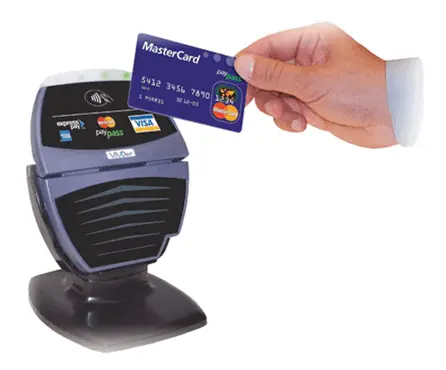
These new cards work in a similar fashion to the cards they are replacing. Users present them when making a purchase and from there the transaction follows the steps detailed in the Host Merchant Services Infographic found here. But the cards are different from swipe cards in some very important ways. Consumers do not swipe these cards. Instead they wave them over a sensor. This is the exact same style of payment that mobile phone based “virtual wallets” look to employ. You wave your smart card across a sensor, or you wave your smart phone across a sensor. Payment made. Visa also plans to allow chip cards to work with PIN codes, bringing debit under the umbrella.
The Mobile Payment Connection

Visa is heavily invested in the future of Mobile Payments. Which is not surprising as you can see from Host Merchant Services‘ coverage of the topic in its article archive. Past blogs have noted that the biggest obstacle Mobile Payments face with U.S. consumers is concern about the safety of the transactions. Visa’s hoping that the added security that the chip technology provides will overcome that obstacle and finally tap them into the billions of dollars of revenue that Mobile Payments are predicted to have in the coming years. As Ericksen says in the Credit.com article, “Since announcing our roadmap last year, we have seen strong interest among U.S. issuers large and small to invest in chip technology, as today’s milestone shows.”