Tag Archives: Cash Discount

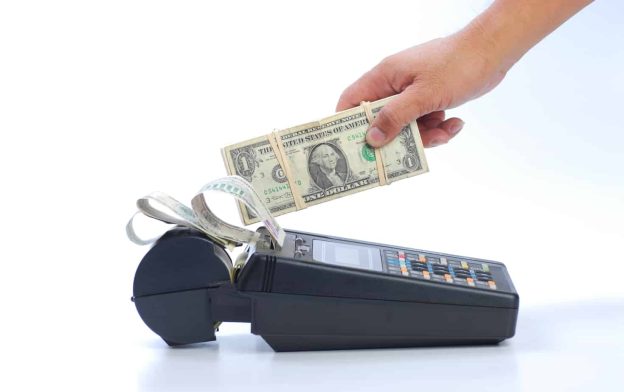
cash on credit card machine 16156434

Understanding How Cash Discount Merchant Services Work [2023 Update]

A cash discount program can be useful if you’re aiming to accept credit card payments, but you want to avoid the fees associated with the effort. Cash discount merchant services can provide this by passing the cost of acceptance or processing fees on to the customers. The customers will pay extra for something to cover the cost you’d normally spend on processing fees.

You could spend about 3 to 5 percent in fees for each credit card transaction you complete. Cash discount merchant services will add that percentage to the customer’s transaction, meaning the customer will pay that extra to offset the charge for accessing and maintaining a credit card network.

How Does This Work?

A cash discount merchant works with a general standard for how you’ll charge your customers. You can encourage people to pay for their items with cash. They will save on their cash purchases because they won’t be subject to a surcharge through a credit card transaction.

For example, a customer might receive a 4 percent surcharge on one’s order when using a credit card. A $30 purchase would become $31.20. The customer pays the extra $1.20 for the privilege of using a credit card. The $1.20 will offset whatever processing charges and interchange fees you’d spend on a card transaction. But if the customer chose to pay with cash, that person would pay $30 for the order.

Will the Customer Appreciate This?

You will let the customer know before completing a transaction about the cash discount offer. The customer won’t be surprised when getting a bill that it costs extra to utilize a card.

The process works best if your business focuses on small-value transactions. A cash discount would be welcome for cases where you handle $50 or less in most transactions. But for high-ticket sales, this effort could be excessive. 

Is This a Legal Solution?

Cash discount merchant services are legal, as you can partner with a service provider to produce a promotion where someone can spend less money on straightforward cash orders. The cash discount effort is different from a credit card fee, which is illegal in some states.

How Is This Different From a Surcharge?

Cash discount merchant services don’t entail surprise charges. With a cash discount program, you are letting your customers know beforehand that they can get a good deal on something of value.

Customers will be more likely to accept a discount deal than a surcharge. The point is especially true for businesses that accept tips. Customers might not be willing to provide tips if they notice there are surcharges added to their transactions.  Therefore, you would have to offer something friendlier like a cash discount to make this point more marketable or easier for people to support.

You can benefit from providing cash discount merchant services for your transaction needs. The system is direct and lets customers know what they are getting out of their orders. You’ll also ensure you can cover the costs for accepting card payments.

Frequently Asked Questions

closer up credit card 44525311

Current Changes To Interchange Rates For 2021

Visa and MasterCard were both planning on changing their interchange rates in 2021. But pandemic-related issues and concerns have prompted them to delay their increases. They will change their interchange rates in April 2022. 

These rate changes reflect various ways how Visa and MasterCard operate. Your business will experience a significant impact, as the higher rates will cut from your profit margins and cash flow. You can keep these changes from being a problem if you plan ahead.

Changes Through Visa

Visa was planning on putting in a few changes to its interchange rates and fees in April 2020, but they were delayed by a year due to the pandemic. They have been delayed another year due to worries about how businesses can recover from the pandemic.

Visa’s first change will entail how it will handle card-not-present or CNP transactions. The fee for a traditional Visa card on transactions of $100 or more will rise from $1.90 to $1.99. For premium cards, the fee will go from $2.50 to $2.60.

Visa also has plans to increase the interchange rates for supermarkets and grocers. But it has not been open about how much of an increase will occur here. Visa has since announced it will delay the increase to 2022.

The highest rates for Visa cards are around 2.95%. The company will likely go past the 3% mark in 2022, although how high the network will go remains unclear.

Visa did make one other move, as the Electronic Interchange Reimbursement Fee or EIRF has been eliminated. The EIRF entails proper reimbursement for some losses in downgraded transactions.

What MasterCard Is Planning

MasterCard has announced it will be increasing the interchange rates for various industries. These include supermarkets, convenience stores, and some physical retailers. These increases will help MasterCard manage its network and handle its reward programs.

MasterCard has not been forthcoming on what it will specifically do with its increases. MasterCard will likely add a few tenths of a percentage point to each rate it offers for these businesses. The company will not go forward with these increases until 2022.

MasterCard offers various protective features for cardholders and offers support for anti-fraud measures. MasterCard often charges slightly higher rates than Visa offers, so you can expect MasterCard’s rates to continue to remain high. But the rates MasterCard charges are nowhere near as significant as what American Express charges to businesses that accept their cards.

What Everything Means

The plans for Visa and MasterCard to increase their rates in 2022 means that businesses may struggle to keep their cash flows under control. The problem with interchange rates is that they have been rising, which is problematic in industries where credit transactions have become more common.

All businesses that accept credit cards will require an analysis of their efforts in how they accept these payments. They must look at how much they are collecting from customers versus what they are losing in interchange charges. Businesses can recognize how their customers are spending money to see what changes they need to consider for their operations.

What Can Your Business Do To Offset These Increases?

The potential increases that Visa and MasterCard will impose will be substantial concerns for businesses to watch. You can offset these increases by using a few measures to help you keep these changes from being as significant:

  1. Use a sensible pricing model for your industry.

Merchant account providers can help you find different pricing models that fit your business. These include providers that will offer an interchange-plus or tiered pricing platform. A tiered program may work if you accept specific card payment types versus others. An interchange-plus platform is best if you accept a variety of cards.

  1. Look at a possible cash discount system.

You can use a cash discount program where you can promote that people will spend less on their orders when they pay with cash. You can adjust the prices at your store to cover the increase in the interchange rate, and then offer a percentage discount for people who pay for something with cash. The effort is useful as it doesn’t entail an additional surcharge that might not be legal in some places. But the cash discount should be promoted well, and any prices you list should be reflective of what people will spend if they pay in cash.

  1. Enter a Level 2 or 3 tier for how you collect credit card payments.

You will qualify for a lower interchange rate if you provide more information on your business. Card networks will assign a specific tier level to your business based on how much information you provide. A Level 1 business will pay the highest rates and only submit its name, the purchase amount, the date, and the billing zip code in each transaction.

A Level 2 business will include these features plus a tax indicator, a customer code, a merchant tax ID, an invoice and order numbers. A Level 3 business will add a product or SKU description, details on each unit price and the quantities available, discount amounts, and any shipping totals and duty charges.

You will pay less in interchange totals if you gather more data on each card payment. The increased info will help a network identify your business transaction and will produce a lower rate. You could save a few tenths of a percentage point on interchange fees if you use the right measures.

  1. Use anti-fraud measures to prevent chargebacks.

Sometimes a high interchange rate may be due to your business being at risk of chargebacks and fraud. You can use a few anti-fraud measures to keep these in check, thus reducing your average rate:

  • Conduct transactions by phone or mail when possible.
  • Use an address verification service to confirm one’s address when processing an order.
  • Settle the purchase authorization within two days of shipping a product.
  • Provide as many details on a product or service to the customer as possible. The customer will be less likely to require a chargeback when one knows what is happening at a time.
Amazon Convenience Store Steering Away From Cashless

ACLU Makes the Case Against Cashless Stores

The American Civil Liberties Union, or ACLU, has been defending individual rights and freedoms guaranteed by the Constitution, as well as by the laws of the United States of America for close to 100 years. Most recently, the ACLU turned its focus to cashless stores.

Reasons ACLU Says No to Cashless

Cashless Store Credit Card Transactions

Consistent with the ACLU’s campaign to install privacy protections in the digital age, the civil liberties nonprofit addresses the anonymity of cash, but they also recognize the impact a cashless society would have on low-income, homeless, and undocumented people. In addition, the ACLU points out that a cashless trend negatively impacts small merchants who avoid credit card processing fees by doing a cash-only business or who offer cash discounts. Not to mention, the ACLU points out that cash always works while technology often lets us down, from technology failures to privacy and security breaches.

Cashless Bans Across the Country

Amazon Convenience Store Steering Away From Cashless

The ACLU’s robust statement is in response to the cashless trend, most notably Amazon’s backpedaling on only offering cashless and cashier-less convenience stores. In response to criticism, both Amazon and Sweetgreen, a salad chain, reversed their decisions to implement a cashless business. Beyond public sentiment, actual legislation outlawed cashless stores starting in 1978 when Massachusetts banned the practice. Current backlash moved New Jersey, as well as San Francisco and Philadelphia to do the same.

Private Matter

Cash prevents anyone from knowing anything about your purchases. With the convenience of credit cards comes the potential of the credit card company not only obtaining but leveraging data about you and your purchase. Cash does have its limits, specifically the limit of $10,000, which is the starting amount one must report to the government as a cash transaction.

Fully Banked

Both low-income populations and large percentages of people of color are not “fully banked,” meaning they do not have a checking or savings account, barring them from the cashless society. Specifically, the ACLU points out, 6.5% of U.S. households have no checking or savings account while only 52% of Black people and 63% of Latino people have bank accounts. Plus, more than 18% of U.S. households have a bank account but still need to check cashing and payday loans.

Cash Discount Merchant Services

Businesses can avoid backlash while simultaneously embracing cash-paying customers by adopting cash discount merchant services. With this model, merchants can offset service fees while avoiding an increase in prices by enrolling in a cash discount program. Unlike surcharging, which charges customers an extra fee for paying with a credit card, businesses can instead add a service fee to all customers while applying a discount equivalent to this service fee when customers pay by cash or check. This platform incentivizes the use of cash.


Businesses should carefully consider whether or not their customers would not appreciate a service fee added to their bill. Service-based industries, including auto shops, landscapers, and electricians are well-suited for the service fee. Ultimately, the business owner will know best if a cash discount will work for their business.